How Many Days in Skopje? A Realistic Trip-Length Verdict
Two full days covers Skopje's Old Bazaar, fortress and Matka Canyon; a third adds Vodno and Gorno Nerezi. Here is how to split your time by traveler type.
On this page
Two full days is enough for Skopje. That gives you one day in the Ottoman Old Bazaar and the monumental center across the Vardar, and a second for Matka Canyon, which sits about 30 minutes outside the city and is the one excursion nearly everyone recommends. Add a third day if you want Mount Vodno and the frescoes at Gorno Nerezi without sprinting between them.
The city is compact and pedestrian-friendly in the middle, so day counts here are governed by day trips rather than by sights within the center. Travelers who build Skopje into a longer North Macedonia route often treat it as a two-night stop between Lake Ohrid and points north or east. Before you commit to a length, it helps to know what kind of city you are buying into.
The verdict: two days, three if you want the canyons and mountains
Plan two full days in Skopje. Day one stays in the city on foot: Macedonia Square, the Stone Bridge, the Art Bridge, the Old Bazaar, Bit Pazar and the fortress walls at sunset. Day two belongs to Matka Canyon, whether that means a boat into Vrelo Cave or a kayak on the water, and a half-day trip is a fair call for most people.
The third day is what separates a comfortable visit from a rushed one. Gorno Nerezi's Church of St. Panteleimon, a 12th-century building with frescoes whose expressions of grief are its draw, sits on the Vodno flank and pairs naturally with the mountain. Travelers who make Skopje the base for a week can push further west to Ohrid or south to Bitola without doubling back.
One thing to be clear about: time at Matka is day-trip time, not city time. Counting a canyon morning and a full afternoon of museums as a single day in Skopje is how itineraries end up overpacked and disappointing.
Who two days suits, and who should give Skopje less
Two days suits most first-time visitors to the Balkans, anyone flying into Skopje airport, and travelers who care more about food, markets and Ottoman streetscapes than about polished attractions. The Old Bazaar was the single favorite stop for one visitor who spent three days in the city, and it is the part most people underestimate before arriving.
Choose somewhere else if your heart is set on alpine lakes and quiet stone towns: for many travelers Lake Ohrid outranks the capital outright on scenic appeal, and a road-trip itinerary can reasonably give Skopje one day en route instead of two. Museum-heavy travelers and families with small children can also trim to a single city day plus Matka.
Several days elsewhere in North Macedonia is a sensible frame: seven to ten days covers the country well, though three days is workable for a tight trip. Skopje rarely deserves the lion's share of that; a short visit with a day trip is the usual booking.
What the city actually is
Skopje reads in layers, and knowing them turns the monuments from oddity into context. The 1963 earthquake destroyed much of the center, and the reconstruction brought modernist and Brutalist buildings, with Japanese architect Kenzo Tange involved in the planning. The old railway station's clock still stands at 5:17, the moment the quake hit.
Decades later, the Skopje 2014 project added the statues, fountains, colonnades and triumphal arch that now dominate the riverfront. The project drew criticism for its cost and for a neoclassical look the center never actually had. Admire it or roll your eyes at it, but cross the Vardar toward the bazaar and you leave that stage set behind entirely.
That crossing is the heart of the trip. One half is bronze and marble and enormous fountains; the other is cobblestones, mosques, copper workshops and coffee. Spending your days between the two is what a Skopje visit is.
Day 1: the city on foot
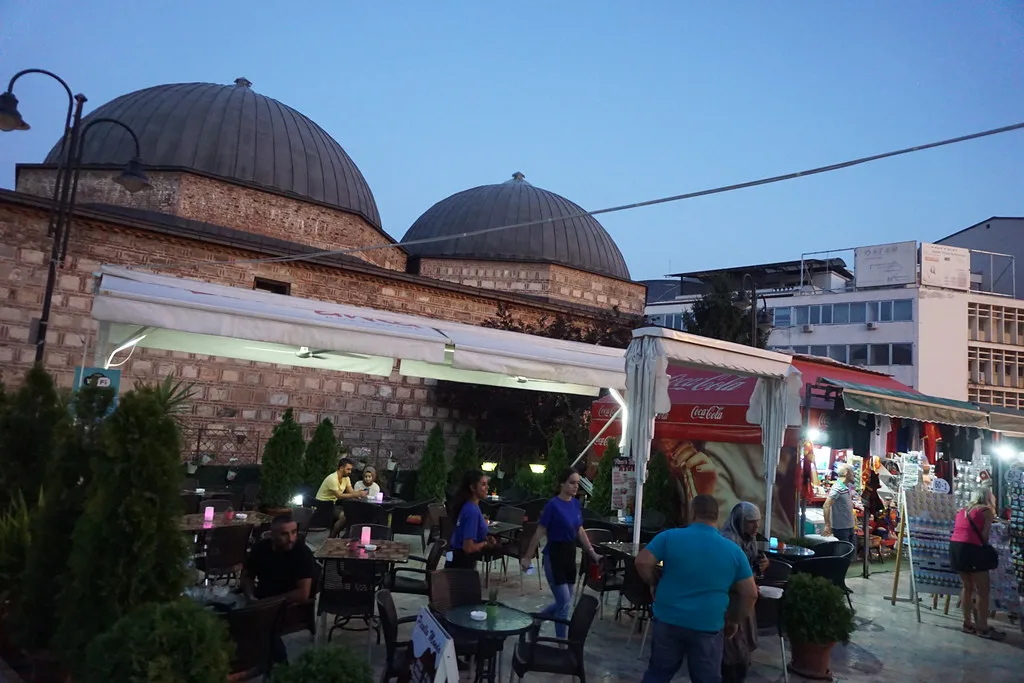
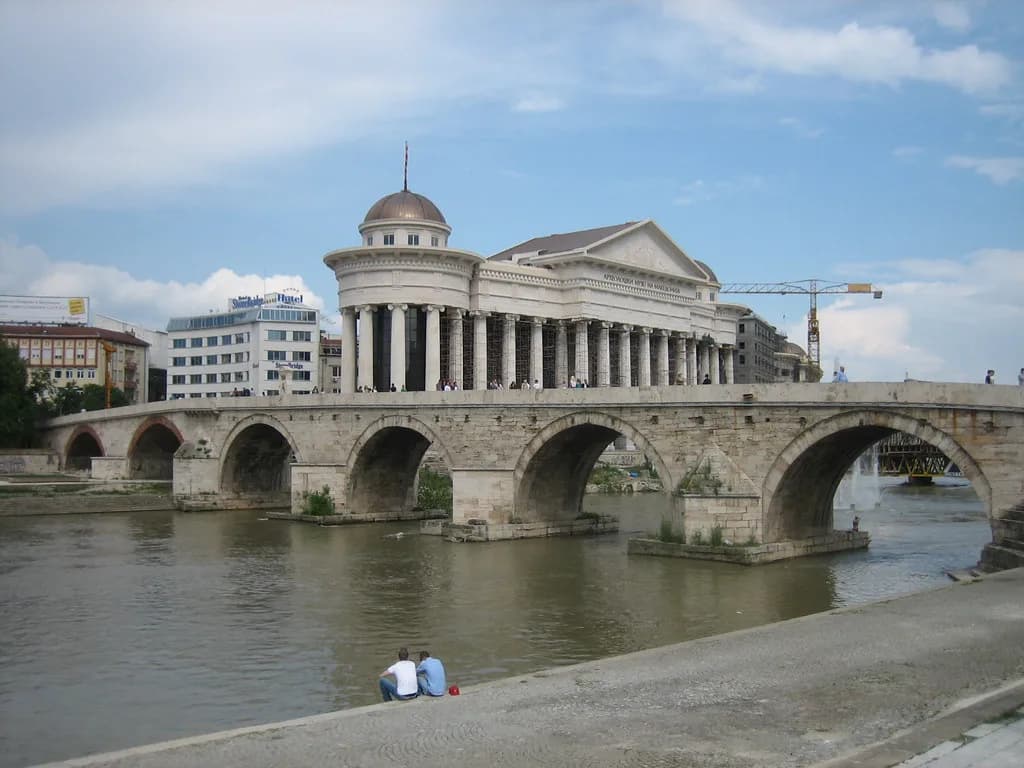
Start at Macedonia Square under the Warrior on a Horse, then cross the Stone Bridge, an Ottoman-era landmark, into the old town. The Art Bridge, lined with figures of Macedonian writers and scholars, sits nearby along with the Holocaust Museum, which documents the deportation of more than 7,000 Jews from Macedonian territory in 1943.
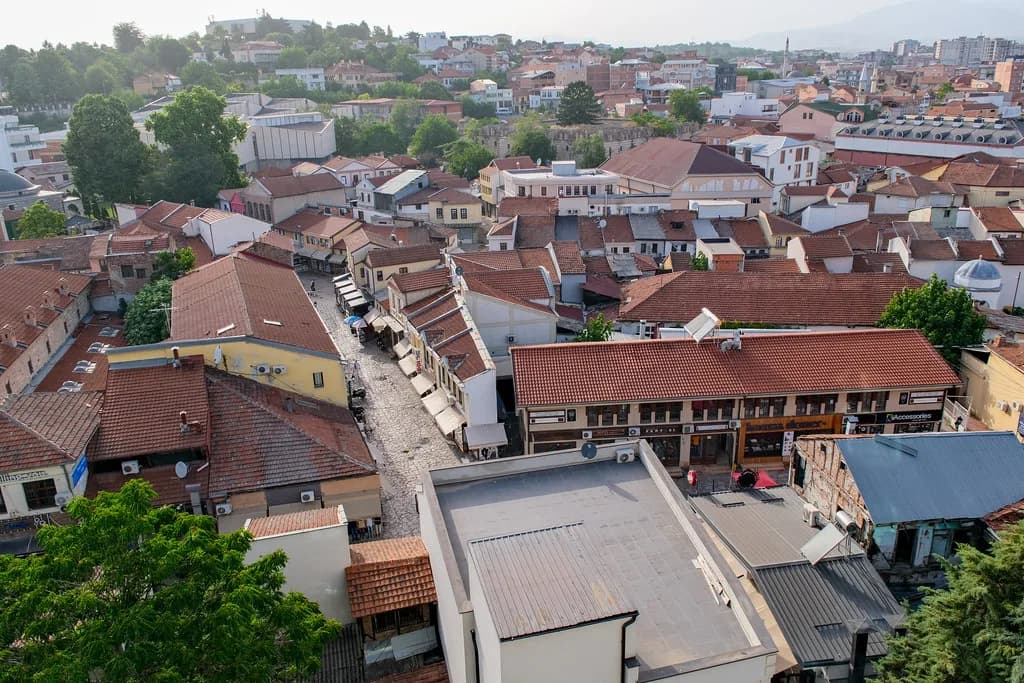
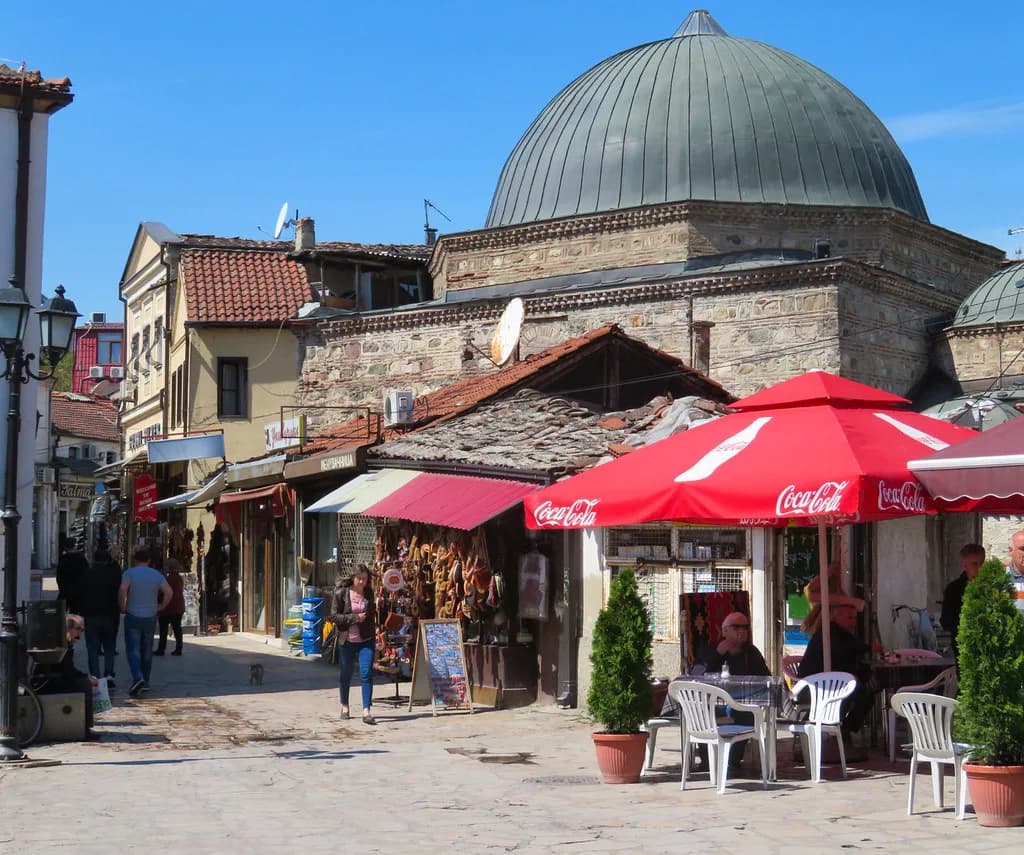
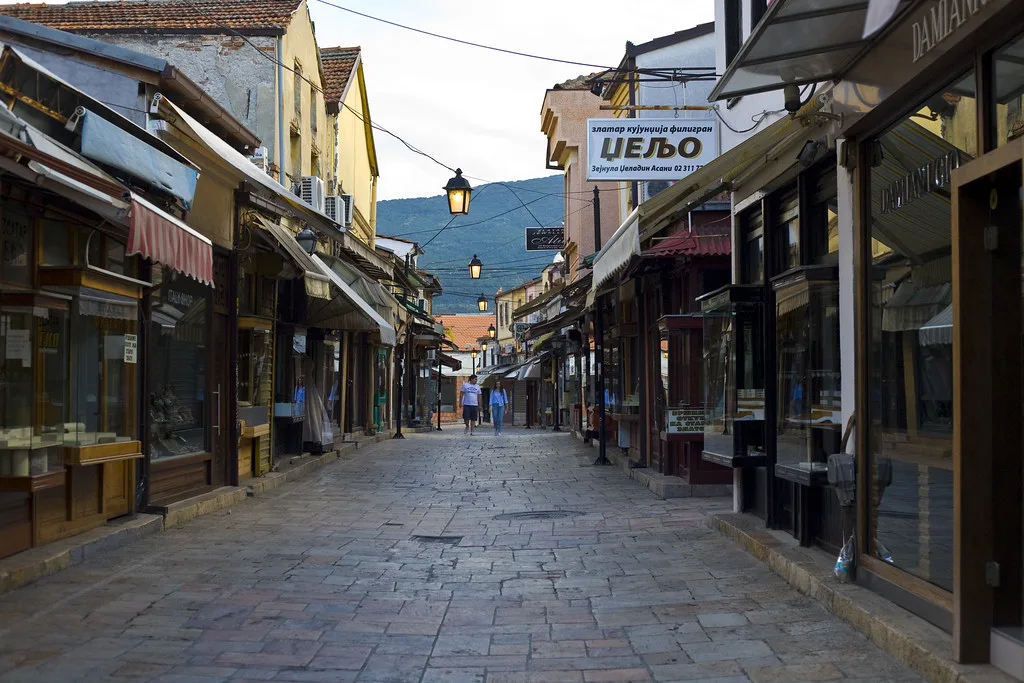
Give the Old Bazaar a couple of unhurried hours. Look for the filigree silver shops, stop for a simit or a burek sandwich, and step into the Church of the Holy Savior for its carved wooden iconostasis, unexpectedly rich behind a plain exterior. Bit Pazar, the city's oldest green market, is a short walk further and worth the detour for produce and spices.
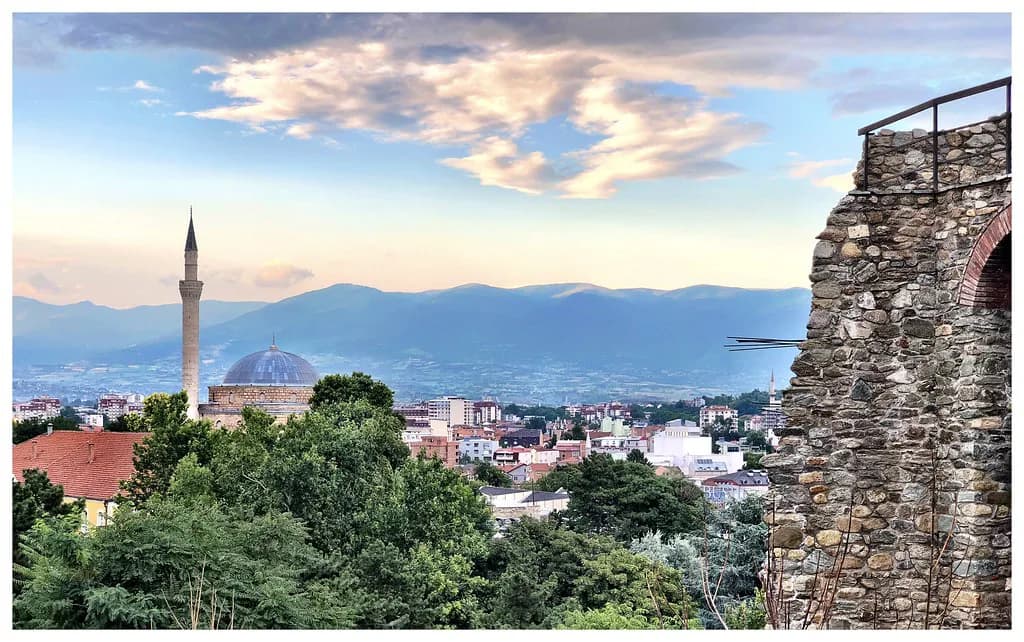
Finish at Skopje Fortress, free to enter, where the walls look out over minarets and the Vardar. Sunset is the right slot. Walking tours covering these sights run three hours from 10am and are tip-based, which is a cheap way to get the historical layering explained on your first morning.
If your dates fall in spring, the city is at its most comfortable for this much walking; our guide to Skopje in April covers what the weather does to a day like this one.
Day 2 morning: Matka Canyon
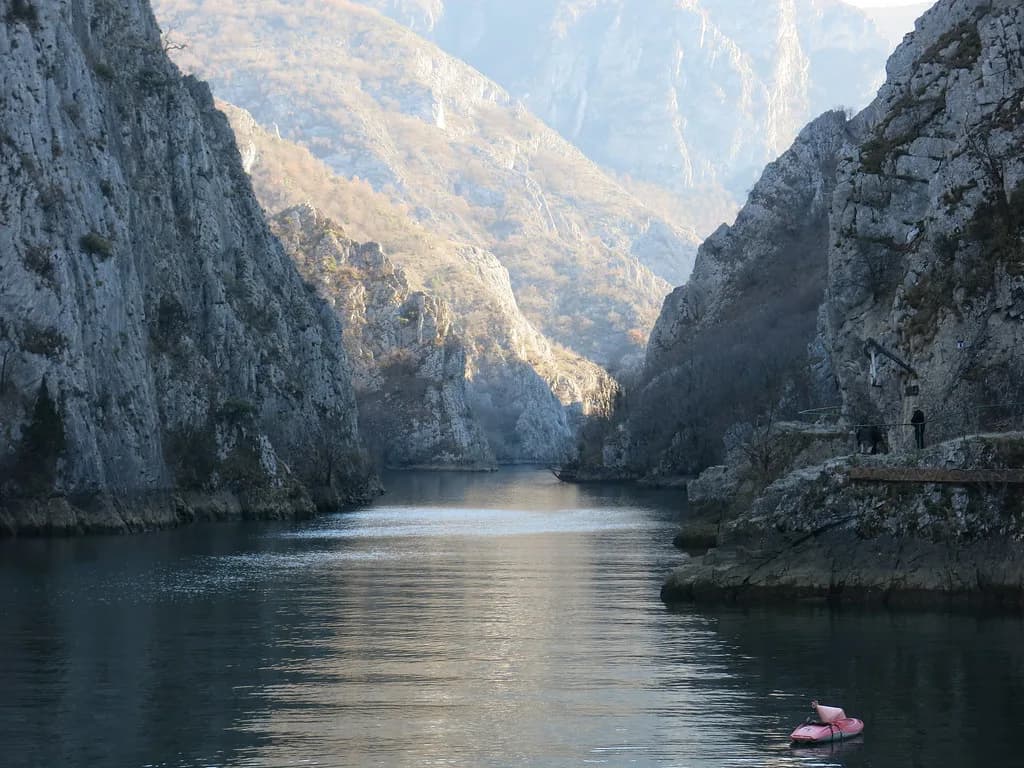
Matka Canyon, roughly 30 minutes from the center, is cliffs, green water and quiet, and it is the day trip every local contact pushes you toward. The standard package is a short boat ride to Vrelo Cave. If that sounds underwhelming, it often is: colored lights inside the cave make the rock formations look artificial, and the boat moves you through rather than letting you absorb the place.
Kayaking is the better use of the morning for active travelers, and it is the one change repeat visitors most often say they would make. Independent travelers should plan their own transport or join an organized half-day tour, since the canyon is a reserve rather than a stroll from town.
Day 2 afternoon: Mount Vodno and the Millennium Cross
The 66-meter Millennium Cross on Mount Vodno is visible from most of Skopje and is the weakest half-day in the city. The cable car ride can be foggy, the ground around the cross has been neglected, and the elevator inside was not running on at least one visit. None of that is a reason to skip the mountain; it is a reason to hike it instead.
Hiking up gives you the exercise and the views and makes the cross an actual destination rather than a photo stop. Pair it with Gorno Nerezi on the same slope if you have the third day, or take the cable car one way and walk down if you are short on time.
The third day: frescoes and museums
The Church of St. Panteleimon in Gorno Nerezi is a small 12th-century building whose frescoes, particularly the Descent from the Cross, carry a startling amount of visible emotion in the faces. It is the single most rewarding cultural stop within easy reach of Skopje, and it deserves an unhurried visit rather than a photo stop.
Fill the rest of the day with the Mother Teresa Memorial House, built near her birth site and holding photographs, letters and personal items, and with a return to the Old Bazaar for shopping rather than sightseeing. Filigree jewelry is the local purchase worth bargaining over.
Half-day and one-day versions
With a single afternoon, skip Matka and Vodno and walk the center: Macedonia Square to the Stone Bridge, through the Old Bazaar, up to the fortress for the view, and back along the river. That is a satisfying four hours and covers the city's essential contrast.
With one full day, add the morning walking tour and either Matka or Vodno in the afternoon, not both. Travelers on a Balkan road trip who sleep in Skopje one night should choose Matka; the cross is a five-minute lookout, not an afternoon.
Skopje as a base: Ohrid, Bitola and Prizren
Skopje works as a road-trip hinge. Bitola is about two hours from Ohrid and worth a leg-stretch along Širok Sokak, its pedestrian main street of cafés and colorful facades; travelers with more time can add the drive from Ohrid to Skopje itself, which runs about four hours through tobacco fields and vineyards with a Bitola stop in the middle.
Prizren in Kosovo is a realistic lunch stop on the route south toward Tirana, with a castle above town and a compact old center. Crossing the border has been quick in practice, but schedules and driving times vary by transport company, so check arrangements with your chosen provider rather than assuming a fixed timetable. If you are weighing how far south to push, is Albania worth visiting is the next decision on the same route after Kosovo.
If you have a full week, give Ohrid at least two nights and Skopje two; that split matches how most travelers rate the two. Treat Bitola and Prizren as en-route pauses of 90 minutes to two hours rather than destinations in their own right.
Weather by month and how it changes the plan
Skopje has a continental climate: hot, dry summers and cold winters, with spring and autumn the most comfortable for walking the bazaar and the fortress. Summer heat makes the canyon and the mountain more appealing than midday city sightseeing, and pushes walking tours earlier.
Winter is cold enough that the fortress and Vodno lose much of their appeal, and snow can affect mountain roads, though the city itself stays walkable. Check the national weather service for typical conditions in your month rather than relying on a general description; our guide to Skopje in October covers the autumn window when temperatures ease and crowds thin.
Typical costs
Skopje is one of Europe's cheaper capitals. Museum entry is modest: the Archaeological Museum and the Museum of the Macedonian Struggle have been around two euros, and the fortress is free to enter. Street food, coffee and the bazaar keep daily spending low, and North Macedonia uses the denar, so carry some cash for markets and small vendors.
Walking tours are tip-based, so the cost is what you decide it was worth. Matka transport and tours vary by operator and season and are best priced directly with the provider or your hotel before you commit.
Getting there and getting around
Skopje has an international airport and rail and bus links to the rest of the region, though overland journeys are slow; the drive from Ohrid is about four hours, and private transfers are common for travelers who do not want to lose a day to connections. Verify times with the operator before booking your onward leg.
Inside the city, the center is walkable and most sights sit within 20 minutes of each other on foot. For Matka and Vodno you need wheels of some kind: a taxi, a tour, or the cable car. Renting a car makes sense only if you are continuing to Ohrid, Bitola or Prizren afterward.
In early summer the city fills with outdoor cafés along the Vardar and the squares; our Skopje in June guide covers what that does to a two-day plan.
Verdict by traveler type
First-timers should book two full days and one night more than they think they need; the city rewards a slow morning in the bazaar. Balkan road-trippers can compress Skopje to one day and spend the saved time at Lake Ohrid. Hikers should give Matka and Vodno a full day between them and skip the cable car on the way up.
Museum people will want the third day for Gorno Nerezi and the Holocaust Museum, and families with children will get more out of the fortress, the fountains and a canyon boat than out of the frescoes. Whatever your type, the honest answer is the same: two days is the floor, three is comfortable, and anything longer belongs to the rest of North Macedonia.
Plan Your Visit
Book two nights in Skopje, plan one city day and one Matka day, and hold the third day for Vodno and Gorno Nerezi if your schedule allows. Travelers passing through on a longer Balkan route can trim to a single city day without missing the essential contrast between the Ottoman bazaar and the monumentalism across the river.
Sort out Matka transport and your onward leg before you arrive, since those two logistics dictate how much of the city you actually see. Everything else in Skopje you can decide on the morning of, over coffee in the bazaar.
Frequently Asked Questions
How many days do you need in Skopje?
Two full days covers the city center and Matka Canyon comfortably. A third day adds Mount Vodno and the Church of St. Panteleimon at Gorno Nerezi without rushing, and most travelers find three days the comfortable ceiling for the capital before moving on to Lake Ohrid or Bitola.
Is two days in Skopje enough?
Yes, if you split them sensibly: one day on foot through Macedonia Square, the Stone Bridge, the Old Bazaar, Bit Pazar and the fortress, and one day at Matka Canyon. Trying to fit Vodno into the same day as Matka is what makes two days feel short.
What can you see in Skopje in one day?
A single day is best spent walking the center: the square and its statues, the Stone Bridge and Art Bridge, the Old Bazaar with its mosques and workshops, a stop at the Church of the Holy Savior, and the fortress walls at sunset. Skip the mountains and canyon on a one-day visit.
Are Matka Canyon and Vodno worth a day of their own?
Matka is worth a half day, ideally with a kayak rather than only the cave boat. Vodno and the Millennium Cross are better hiked than ridden, and pair well with Gorno Nerezi on the same slope. Neither needs a whole day unless you walk slowly and stop often.
Is Skopje worth more time than Ohrid?
Usually not. Many travelers rate Lake Ohrid above the capital for scenery, and a sensible split gives Ohrid at least two nights and Skopje two. Skopje's case rests on the bazaar, the food and the day trips rather than on lakeside beauty.
When is the best time to walk Skopje's Old Bazaar?
Spring and autumn give the most comfortable temperatures for a long walking day, and mornings are quieter than afternoons. Summer heat pushes sightseeing earlier, and winter cold makes the fortress and Vodno less appealing, so check typical conditions for your month before booking.
Sources
Trip-decision notes
Optional updates when we publish or revise a destination verdict.
You might also like
Continue reading
More guides you'll find useful