Is Zadar Worth Visiting? A Candid Zadar Travel Guide
Yes, Zadar is worth visiting for Roman ruins, the Sea Organ and a calmer Old Town than Split or Dubrovnik. Here is who should skip it, and why.
On this page
Yes, Zadar is worth visiting — if you want a walkable Dalmatian old town with genuine Roman remains, a waterfront sound installation and a pace that leaves room to wander. It is not the right pick for a beach holiday, since the peninsula itself has no sand, and it is not a party town.
The city suits travelers who treat a base as somewhere to eat well, drift through marble streets and take a boat or a bus out to islands and parks. Anyone whose Croatia wishlist is mostly sunbathing and nightlife should look at the coast further south or at an island.
The verdict
Zadar works as a compact, low-key base on the Dalmatian coast, and its Old Town sits on a peninsula small enough to cross on foot in minutes. It is one of the longest continuously inhabited cities on the Adriatic, with layers of Roman, Byzantine and Venetian history still visible in the streets.
The trade-off is focus. Zadar gives you history, sunsets and island ferries rather than beaches and big-night energy, and the headline sights cluster so tightly that a single day covers the Old Town core. Travelers who want a full week of swimming and beach clubs will find the city thin.
The other decision is crowds. Zadar draws visitors, but nothing like the crush inside Dubrovnik's walls or Split's palace quarter, and it feels noticeably more local as a result.
What Zadar actually is
The historic core — locals call the peninsula Poluotok — is a walled grid of polished stone lanes, squares and churches, entered through gates such as the Bridge Gate and the Land Gate. Almost everything worth seeing in the center lies within a short walk of the Roman Forum.
That compactness cuts both ways. You can see the cathedral, the Forum, St Donatus and the waterfront in a morning, which makes Zadar ideal for a stop between Zagreb and Split but leaves little to fill a lazy week inside the walls.
Who will love Zadar
History-minded wanderers get the most from Zadar. The Roman Forum, the round ninth-century Church of St Donatus and the Cathedral of St Anastasia sit within a couple of minutes of each other, and the streets between them are made for drifting rather than ticking off sights.
Travelers based in the city for day trips also do well. Zadar has a working ferry port with routes to Ugljan, Dugi Otok and the Kornati islands, plus road access to Krka, Paklenica and the Plitvice Lakes, so the city functions as a hub rather than a single-stop destination.
Budget-conscious travelers notice the difference in the day-to-day: food and drink generally cost less here than in Split or Dubrovnik, even though summer rates still climb. Our guide to whether Zadar is expensive breaks down where the money actually goes.
Who should choose Split, Dubrovnik or an island instead
Beach-first travelers should look elsewhere. The Old Town has no beach of its own, so swimming means a drive to Pag or the nearby coast, a boat trip to Ugljan, or a walk to the small swimming spot along the Foša harbour wall.
Nightlife-led groups and travelers who want a big-city buzz will find Zadar quiet after dark, and the evenings are more about sunsets than bars. Split has the larger urban energy and the ferry network to the main islands, which is the core of the Zadar vs Split decision.
Anyone set on Dubrovnik's walled-city drama should go to Dubrovnik and accept the crowds and prices that come with it. Zadar offers atmosphere at a smaller scale rather than a substitute for that spectacle.
The sights that justify the trip
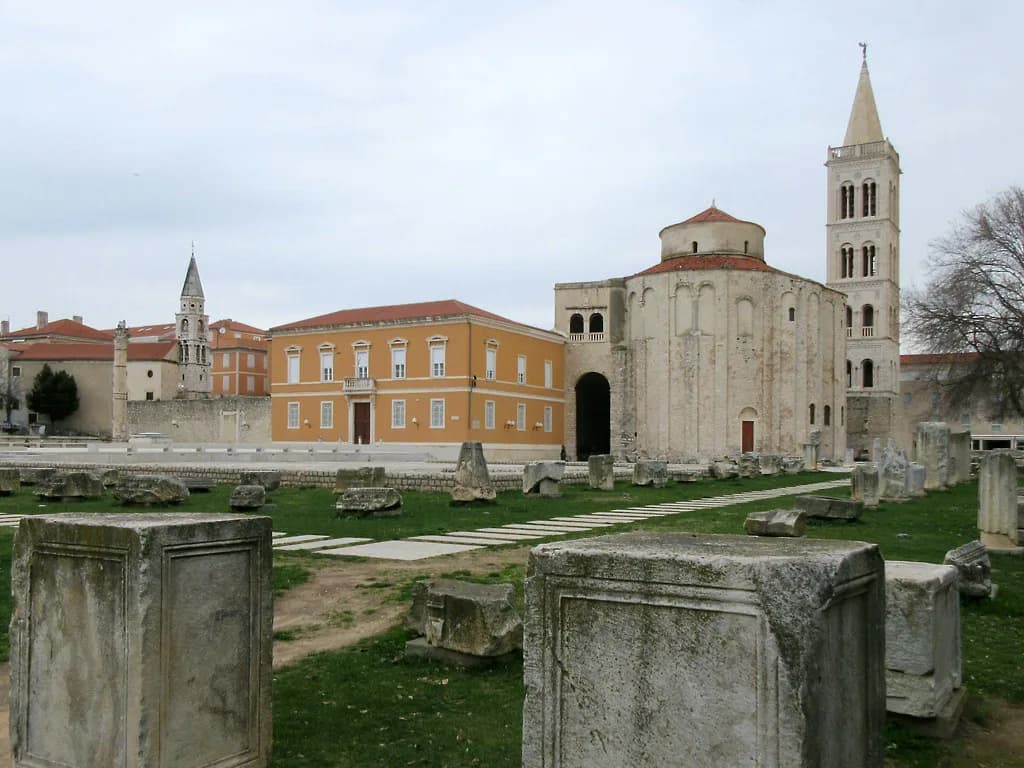
Start at the Roman Forum, the original civic center whose pavement, stairs and columns survive beside the cathedral. Construction ran from the first century BC into the third century AD, and much of the site was later flattened by an earthquake, which is why you read ruins rather than a complete square.
The Cathedral of St Anastasia is the largest church in Dalmatia and free to enter, so it costs nothing to look inside and be respectful of dress and behavior. Beside it, the Church of St Donatus is the largest pre-Romanesque building in Croatia, a circular ninth-century structure now used for exhibitions and concerts.
The cathedral bell tower gives the best view over the rooftops and coast, and it takes around 200 steps to reach the top. The climb costs a small fee of about 2 euros and the tower opens only in season, so a March visit may find it shut.
The Sea Organ and the Greeting to the Sun
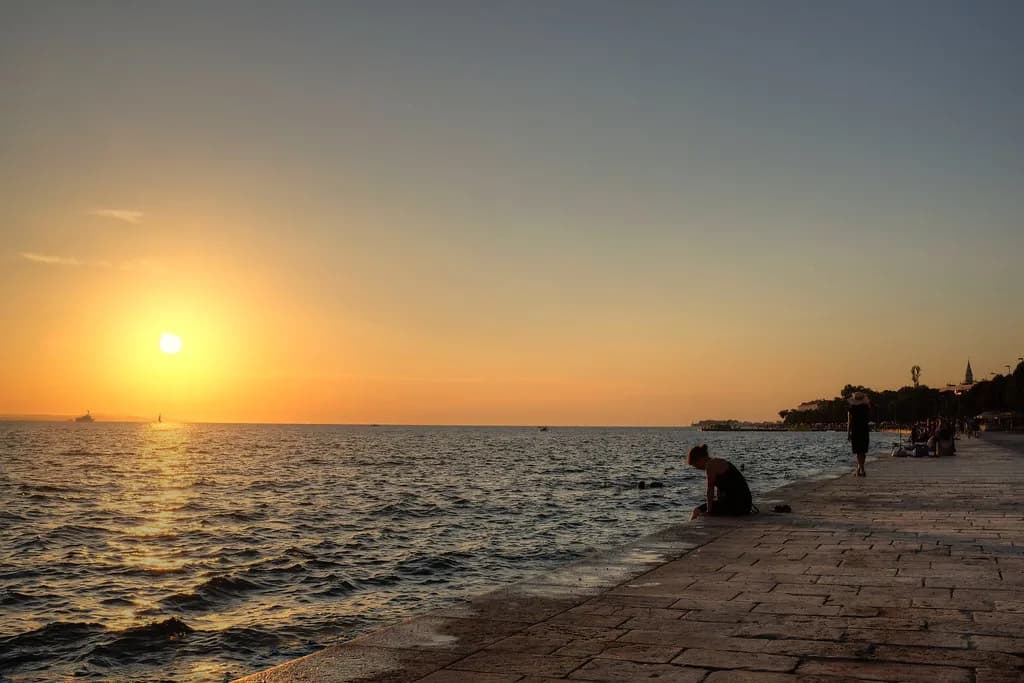
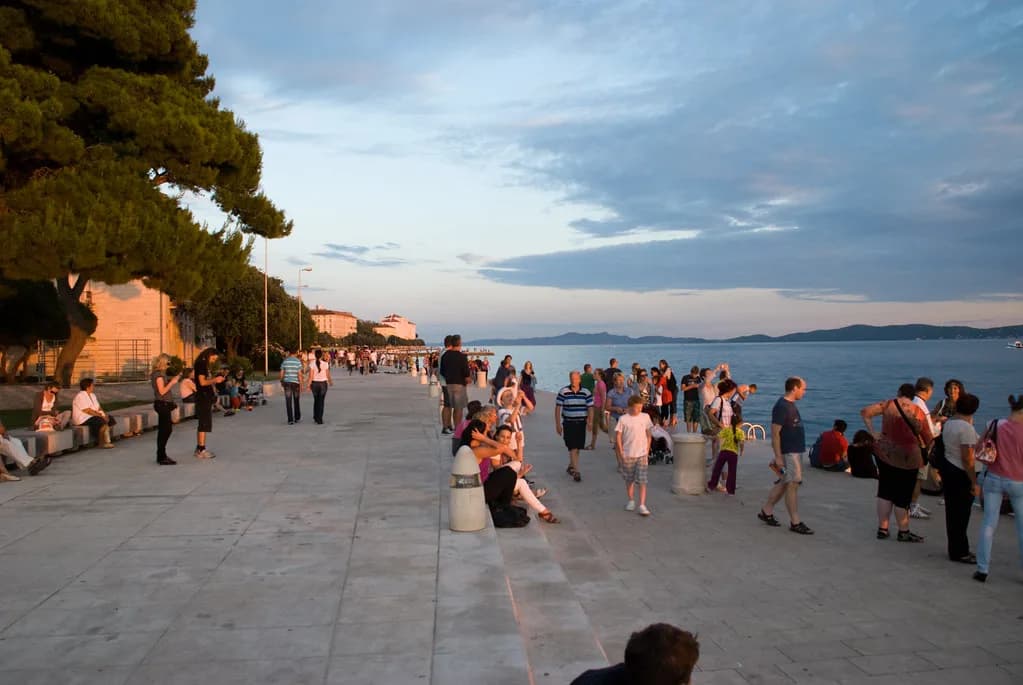
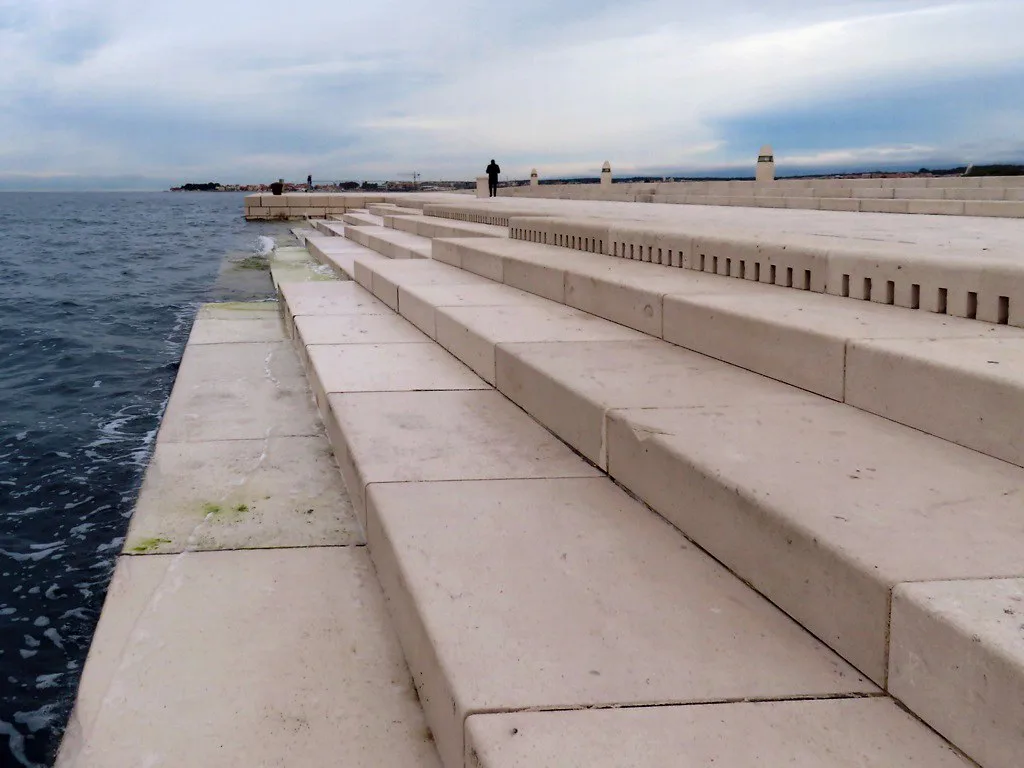
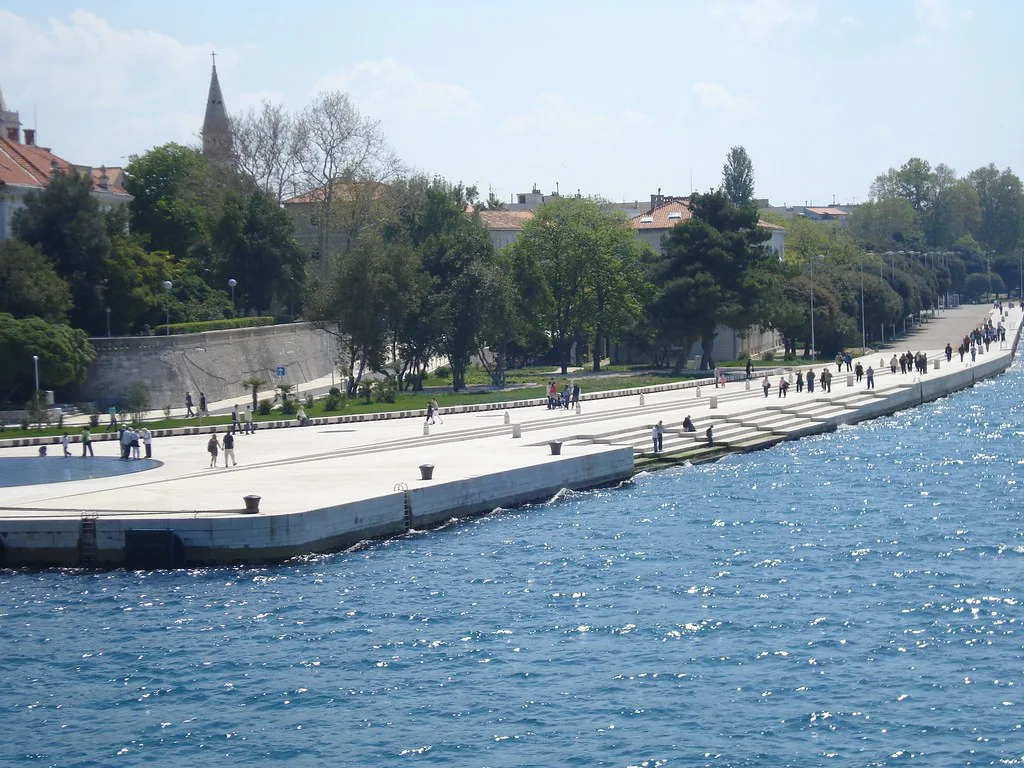
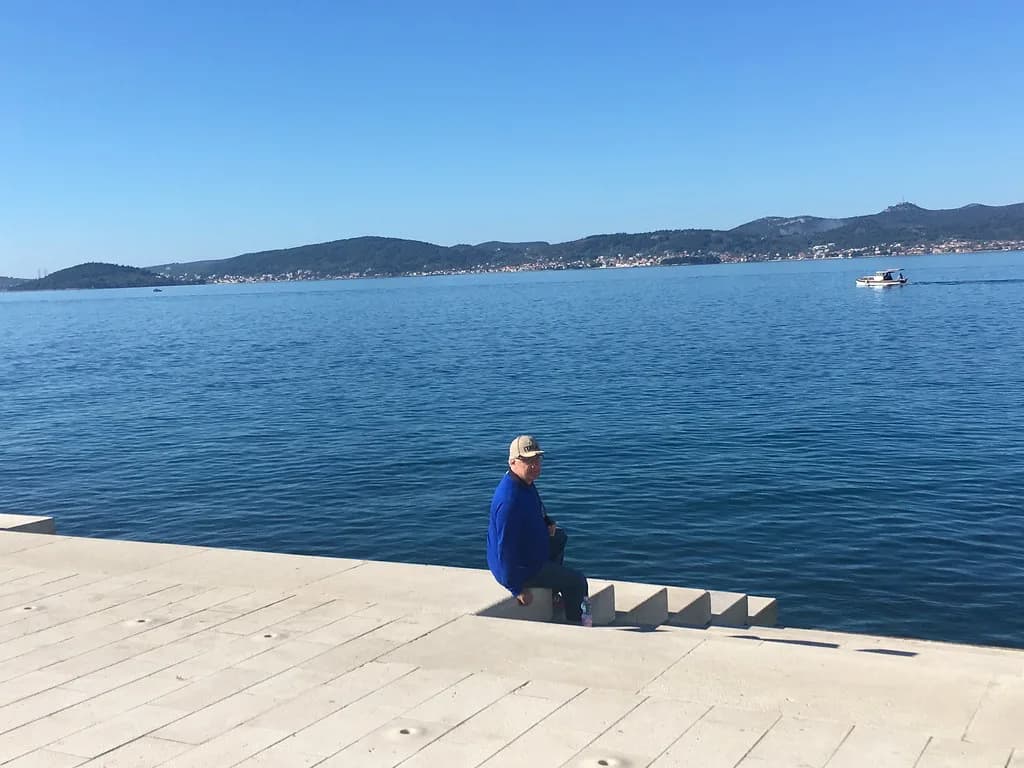
The western waterfront is the reason many people come. The Sea Organ runs 70 meters of steps and pipes beneath the promenade, turning waves and wind into a low, shifting tone that grows louder when a boat passes or the sea turns choppy.
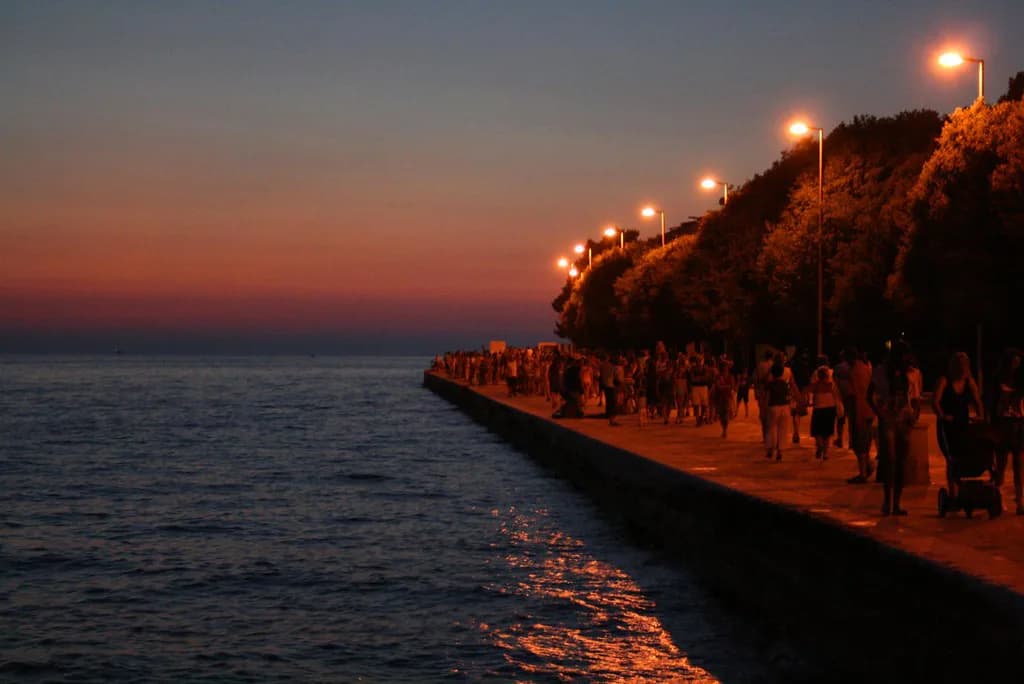
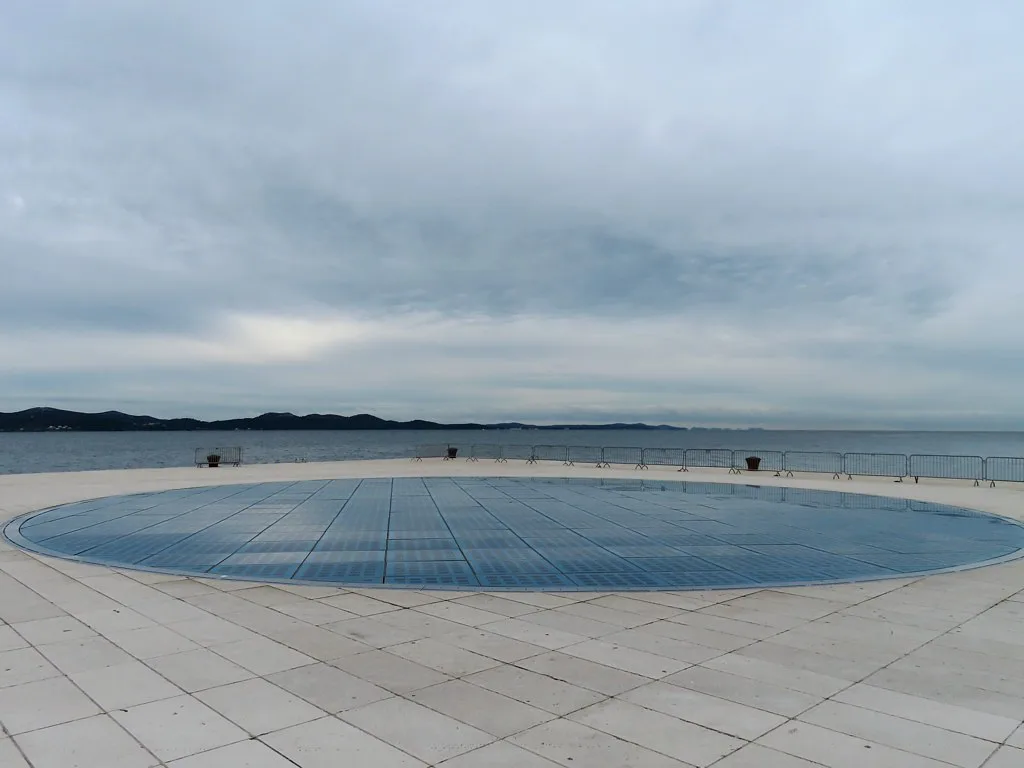
Beside it, the Greeting to the Sun is a 22-meter circle of solar panels set into the pavement that stores daylight and releases it as a light display after dark. Together they make the sunset slot the city's main evening event.
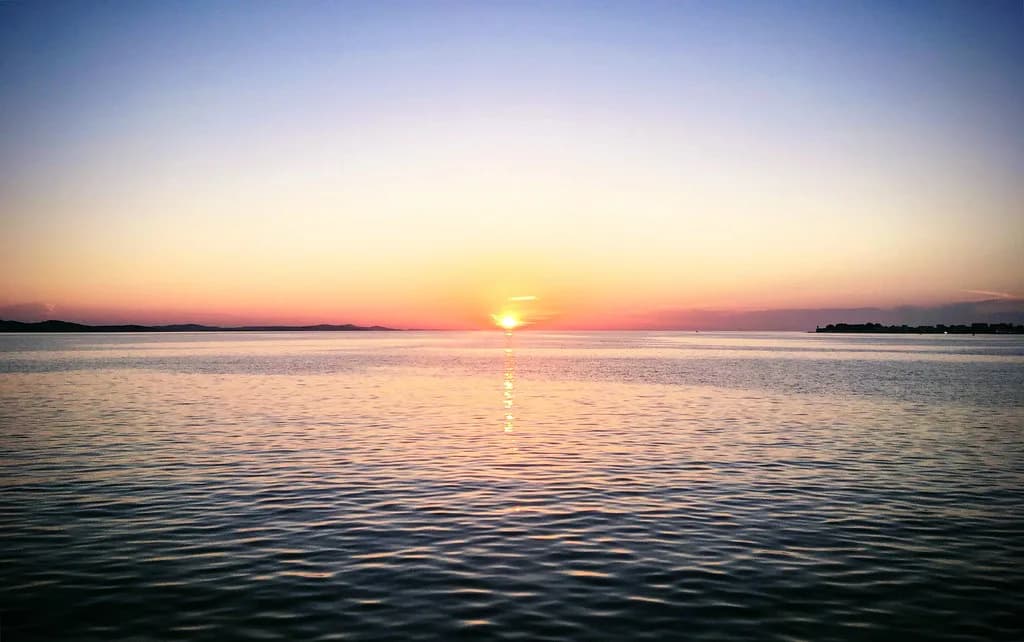
Time it deliberately. Arrive well before sunset to claim a spot on the steps, then stay on after the day-trippers thin out for the light show, when the waterfront is calmer and easier to photograph.
Museums worth your hours
Two museums justify indoor time. The Archaeological Museum, founded in 1832, is Croatia's second oldest and holds more than 100,000 artifacts tracing the city from prehistory through early Croatian settlement, with admission and hours posted at the entrance.
The Museum of Ancient Glass occupies the nineteenth-century Cosmacendi Palace above the Jazine harbor, displaying Roman glass vessels recovered across Dalmatia alongside temporary exhibitions included in the ticket. Both are useful in the middle of the day, when the heat or a passing storm makes walking less appealing.
Beyond the walls: parks, squares and the harbor walk
Five Wells Square holds the ornamental wellheads of a large sixteenth-century Venetian cistern built to keep the city supplied during sieges. Next door, Queen Jelena Madijevka Park was laid out in 1829 as the first public park in Dalmatia and still offers shade above the old bastion.
Walk to the Land Gate, built in 1543 by the Venetian architect Michele Sanmicheli, at the small Foša harbor. From there a low walkway circles the water back toward the Forum, with a modest swimming spot along the way and a good lunch view over the boats.
Narodni Trg, the People's Square, anchors the everyday city with its clock tower, loggia and café tables. It is the natural place for a mid-morning coffee and a pause between sights rather than a destination in itself.
The beach question
Zadar is not a beach destination in the way Split or the islands are. The peninsula has no sand, and swimmers either use the harbour-wall spot or travel: Pag island and the nearby coast are within reach by car, and boat trips run to Ugljan and the village of Preko.
If water time matters more than architecture, budget for a boat trip or a rental car, or split your stay between Zadar and an island. Treating the city as a beach base will leave you disappointed.
How many days you need
One full day covers the Old Town comfortably: the Forum, both churches, the waterfront and a museum or two fit without rushing. Two to three days lets you add a half-day boat trip to the islands and a slower evening at the Sea Organ.
Beyond three days, the city itself runs out of headline sights, and extra time is better spent on day trips or on a second base along the coast. This is a long-weekend city, not a week-long one, unless you plan to use it as a hub.
Getting there
Zadar Airport sits about 12 kilometers from the center, and a local bus connects it with the Old Town roughly every couple of hours between about 06:00 and 22:00, taking around 30 minutes. A taxi makes the run in roughly half the time at a much higher fare.
By road from Split, the highway route takes about two hours and 15 minutes, while the slower coastal road adds over an hour and rewards you with sea views; sit on the left side heading north. The main bus station sits around 1.5 kilometers from the Old Town, so factor in a walk, a local bus or a short taxi on arrival.
Trains do not serve the coast here, so buses, flights and ferries do the work. The ferry port also makes island hopping straightforward, which is a genuine advantage over inland bases.
Zadar vs Split
Split is bigger, busier and better connected to the main islands, and its old town inside Diocletian's Palace is more dramatic to walk into. It is also about two hours further down the coast by highway, which changes how much of Dalmatia you can reach in a short trip.
Zadar is calmer, cheaper on food and drink, and easier to enjoy in high summer when Split's center becomes a bottleneck. Choose Split for ferry access and urban energy, Zadar for room to breathe.
Zadar vs Dubrovnik
Dubrovnik delivers the postcard walled city, with the crowds and prices that come with it; walking the main street at midday in summer can feel like queueing rather than sightseeing. Zadar gives you a fraction of that atmosphere without the crush.
If Dubrovnik is the reason for the trip, go, and plan around early mornings and late afternoons. If you want a Dalmatian city that stays relaxed, Zadar is the better fit.
When to go
June to August is peak season, with the warmest sea and the thickest crowds, and the bell tower open along with everything else. Late September and early October bring warm water, thinner crowds and lower prices, which makes them the strongest window for most travelers.
Spring is quieter but riskier: some sights close outside the season, and afternoon thunderstorms can roll in, as they did on a mid-May trip described by one visitor. Pack for a wet hour and keep museum options in reserve.
Typical costs in words
Compared with Split and Dubrovnik, Zadar is the cheaper Dalmatian city for everyday food, coffee and drink, though summer pricing still applies on the waterfront. The cathedral costs nothing to enter, while the bell tower charges a token fee.
Everything else — boats, tours, museum tickets, taxis — varies by operator and season, so compare at the point of booking rather than budgeting from a fixed figure.
Drawbacks to plan around
Summer brings cruise and coach traffic, most of it concentrated midday on the peninsula, so the Sea Organ at sunset and the streets before 10am are noticeably better. Seasonal closures are the second trap: the bell tower and some sites open only in season.
Arrival friction is real, since the bus station sits about 1.5 kilometers from the Old Town and airport buses run only every couple of hours. Late arrivals should line up a taxi or a local bus in advance rather than assume a shuttle will appear.
The beach gap remains the biggest planning issue. Anyone who assumed a Dalmatian city comes with swimming on the doorstep needs to rewrite their days around boats, buses or a car.
Day trips that make Zadar a base
Krka National Park, Paklenica National Park and the Plitvice Lakes are the headline inland trips, all reachable by road in a day. Šibenik makes an easy coastal stop, and the islands of Ugljan and Dugi Otok are a short ferry ride away, with the Kornati islands further out on organized boat trips.
Ferries leave from the city port, and half-day boat trips around the Zadar channel run in the morning and afternoon, which lets you keep a day for the city and still get on the water.
For comparison with Croatia's other coastal cities, is Pula worth visiting covers the Istrian Roman port in detail, but Zadar's advantage is its position between the Dalmatian coast and the parks.
Plan Your Visit
Zadar earns its place on a Dalmatian itinerary for the traveler who wants Roman streets, a waterfront sunset and a city that still feels lived in. Build in one full day for the Old Town, add a second for a boat or an island, and use the ferry port for the rest.
Skip it if the trip is about beaches or nightlife, and do not expect the drama of Dubrovnik. If you go for the calm version of the Dalmatian coast, choose late September or early October and keep an indoor plan for a passing storm.
Explore more Zadar trip-decision guides
Frequently Asked Questions
Is Zadar nicer than Split?
They suit different trips rather than one being better. Zadar is smaller, calmer and generally easier on the wallet for food and drink, with Roman remains, the Sea Organ and a compact peninsula you can cross on foot. Split is larger, has more urban energy and a stronger ferry network to the main islands, and its old town inside Diocletian's Palace is more dramatic. Pick Zadar for a relaxed base, Split for ferry access and a busier city.
How long should you spend in Zadar?
One full day covers the Old Town: the Roman Forum, the Cathedral of St Anastasia, the Church of St Donatus, the waterfront and a museum or two. Two to three days lets you add a half-day boat trip to Ugljan or Dugi Otok, or a slower evening at the Sea Organ. Past that, the city runs out of headline sights and extra time is better spent on day trips or a second coastal base.
What is special about Zadar?
Three things stand out. The Sea Organ turns waves and wind into a shifting tone along 70 meters of waterfront steps, and the Greeting to the Sun beside it releases stored daylight as a light display after dark. Behind them, the Roman Forum and the round ninth-century Church of St Donatus sit within a minute of the cathedral, giving the city genuine ancient fabric rather than a reconstruction. The Old Town is also one of the longest continuously inhabited urban sites on the Adriatic.
Does Zadar have a beach?
The Old Town peninsula has no sand. Swimmers use a small spot along the Foša harbour wall, take a boat to Ugljan and the village of Preko, or drive to Pag island and the nearby coast. Half-day boat trips around the Zadar channel run in the morning and afternoon. If swimming on the doorstep is the priority, plan a rental car or split your stay with an island rather than expecting a city beach.
Is Zadar worth visiting for a week?
Not for the city alone. One day covers the Old Town core, and three days is generous once you add a boat trip. A week only works if you use Zadar as a hub: Krka National Park, Paklenica, the Plitvice Lakes, Šibenik and the islands of Ugljan and Dugi Otok are all reachable on day trips. Travelers who want a week of swimming and beach clubs should base themselves elsewhere on the coast.
Is Zadar expensive?
Zadar generally costs less than Split or Dubrovnik for everyday food, coffee and drink, though waterfront prices climb in summer. The Cathedral of St Anastasia is free to enter, and the cathedral bell tower charges a small entry fee posted at the tower entrance. Boat trips, tours, museum admission and taxis vary by operator and season, so compare quotes at the point of booking rather than working from a fixed daily figure.
How far is Zadar from Split?
By highway the bus trip takes about two hours and 15 minutes. The slower coastal road adds over an hour but delivers sea views, and sitting on the left side heading north gives the better ones. Zadar's own bus station sits roughly 1.5 kilometers from the Old Town, so allow time to walk, take a local bus or grab a short taxi to your base.
Sources
Trip-decision notes
Optional updates when we publish or revise a destination verdict.
You might also like
Continue reading
More guides you'll find useful