Zadar in May: Weather, Crowds and Whether It's Worth It
Zadar in May brings mild days around 14-20°C, thinner crowds than summer and a sea still too cool for most swimmers. Here's who May suits and who should wait.
On this page
Yes, May is a good time to visit Zadar, provided you are coming for the old town, the islands and long walks rather than beach days. Daytime temperatures typically sit around 14-20°C (57-68°F), which is comfortable for sightseeing but cool enough that many travelers will find the Adriatic bracing rather than inviting.
The trade-off is straightforward: you get pre-season calm and room to move around the Roman Forum and the waterfront, but you give up reliable swimming and the settled, hot weather of high summer. If your trip is about sightseeing and day trips, May is close to ideal. If it is about lying on a beach, June or September is the better call.
The verdict
May is one of the best months for sightseeing in Zadar and one of the weakest for swimming. The city rewards walking: a compact peninsula old town, a Roman Forum you can wander without queues, and a seafront that stays pleasant when the afternoon breeze picks up. Cool evenings mean you will want a layer, but the days are long enough for a full itinerary. For a broader view of what the city offers outside one month, our take on whether Zadar is worth visiting covers the sights and the drawbacks.
Who May suits: sightseers, couples, walkers, photographers, and anyone who prefers a quieter Dalmatian town to a packed one. Who should choose another month: travelers whose main goal is swimming, families planning beach-centred days, and anyone who needs guaranteed sunshine. For those, look at later in the season and compare it against the shoulder weeks before committing.
What the weather in May actually feels like
Expect mild, breezy days with typical highs around 20°C (68°F) and lows near 14°C (57°F). AccuWeather's monthly page for Zadar shows the pattern day by day, including cooler, unsettled spells that can drop daytime temperatures well below the monthly norm. Treat all of it as typical conditions rather than a forecast for your dates.
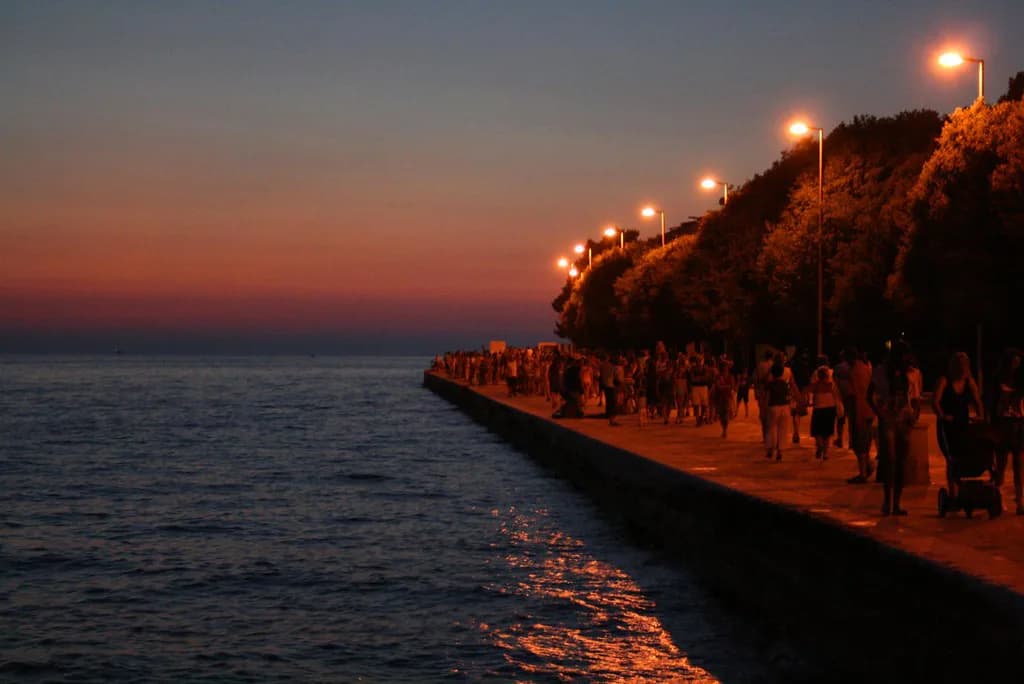
The breeze off the Adriatic is the defining feature of a May day in Zadar. It keeps the old town comfortable when the sun is out, but it also makes the shade feel cool and the waterfront chilly after sunset. A light jacket earns its place in your bag more in May than in July.
Rain is possible in May, and the month's weather is changeable rather than uniformly sunny. Build flexibility into your plan so a wet morning can become a museum or church visit and a clear afternoon can be saved for the Sea Organ and the islands. Spring conditions in Zadar are generally mild and sunny, but they do not rule out a grey, windy day.
Sea temperature and swimming
May is a walks-and-cafés month, not a beach month. The air can feel warm in the sun, but the Adriatic warms slowly and lags well behind the air temperature in spring, so the water is bracing for most swimmers. If you want to swim comfortably, plan for later in the season.
That does not mean the coast is wasted in May. The beaches north and south of the city are pleasant for walking and sunbathing in a jacket, and the islands are quieter than at any point in summer. Just treat swimming as a bonus for the hardy rather than the point of the trip.
Crowds and cruise-ship days
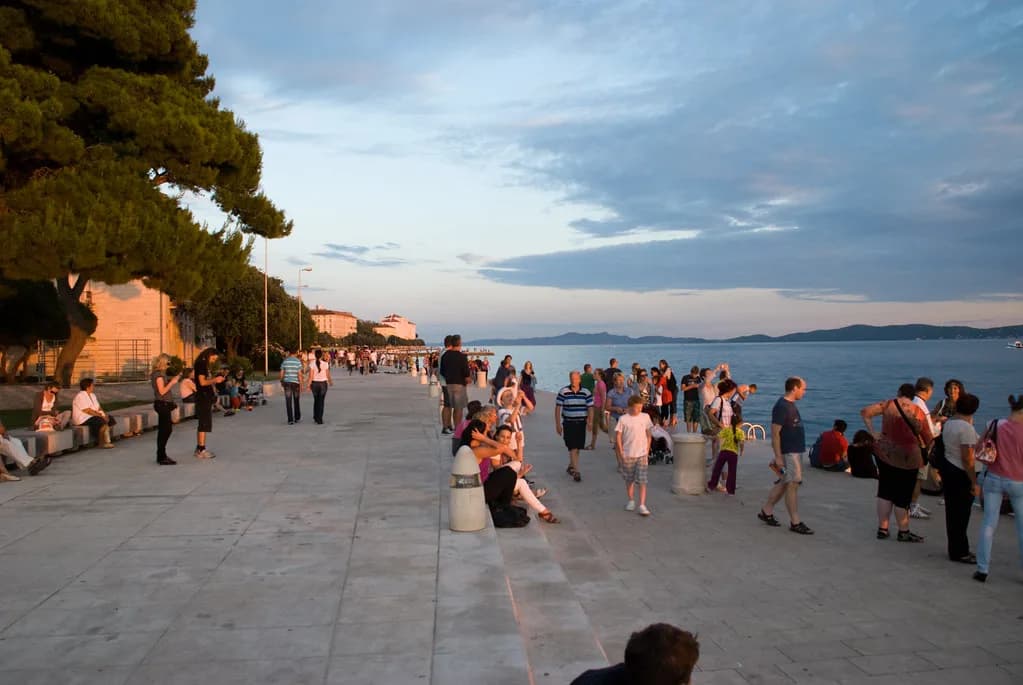
May sits in the sweet spot before the summer surge. Cruise traffic and holiday crowds build through June and peak in July and August, when the old town's narrow streets and the Sea Organ steps fill up. In May you can usually see the main sights without much waiting, though a large ship in port can still make the waterfront busy for a few hours.
Timing your day helps. Early mornings and late afternoons are calm even when ships are in, and the Greeting to the Sun is at its best after dark when the crowds thin. If you are comparing months for a quieter trip, the pattern in Zadar in April is even calmer, at the cost of cooler weather.
What to see in the old town on a May day
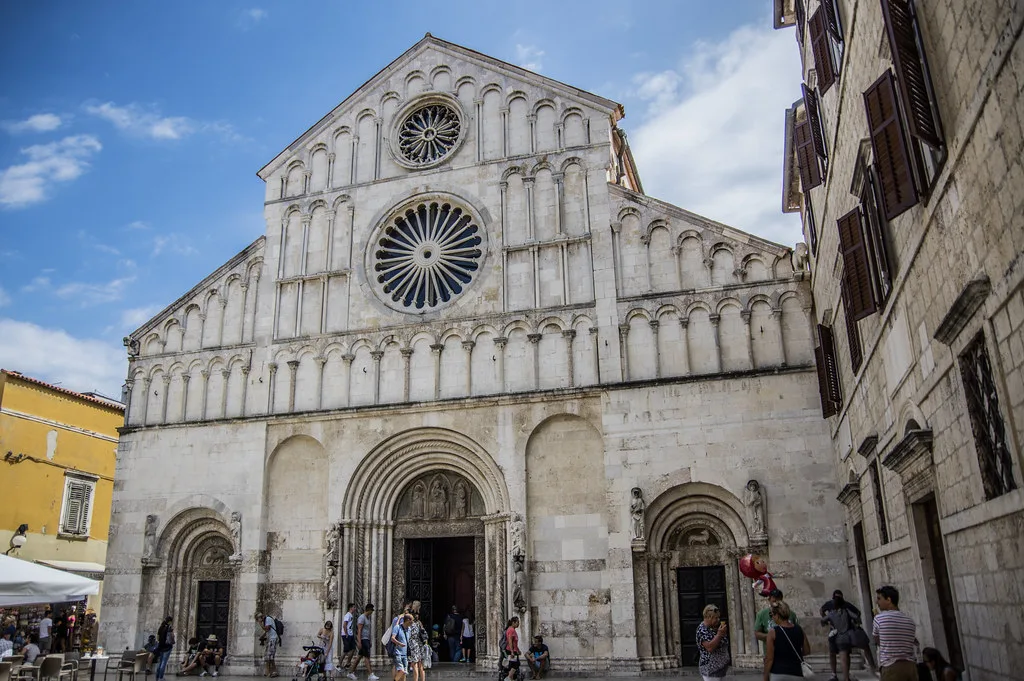
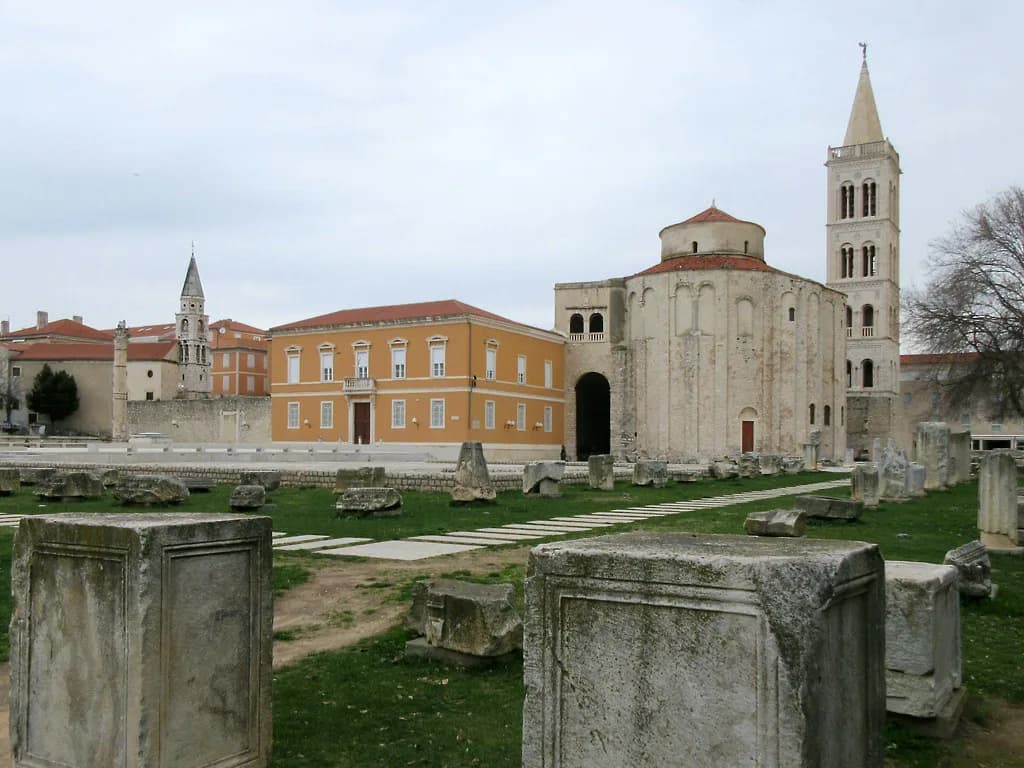
The Roman Forum is the natural starting point: a compact square of paved stone and standing columns that sets the tone for the whole peninsula. From there, St Donat's Church, the round pre-Romanesque building beside it, is the city's most distinctive landmark and quick to visit. Neither needs a full day, which is exactly why May works so well.
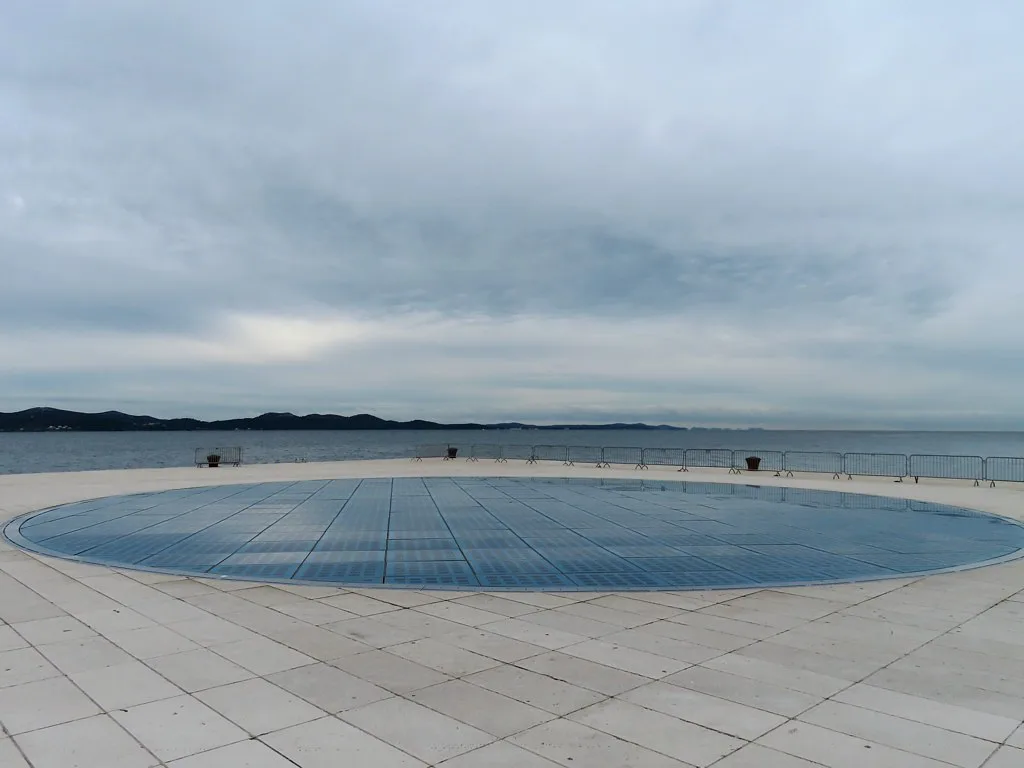
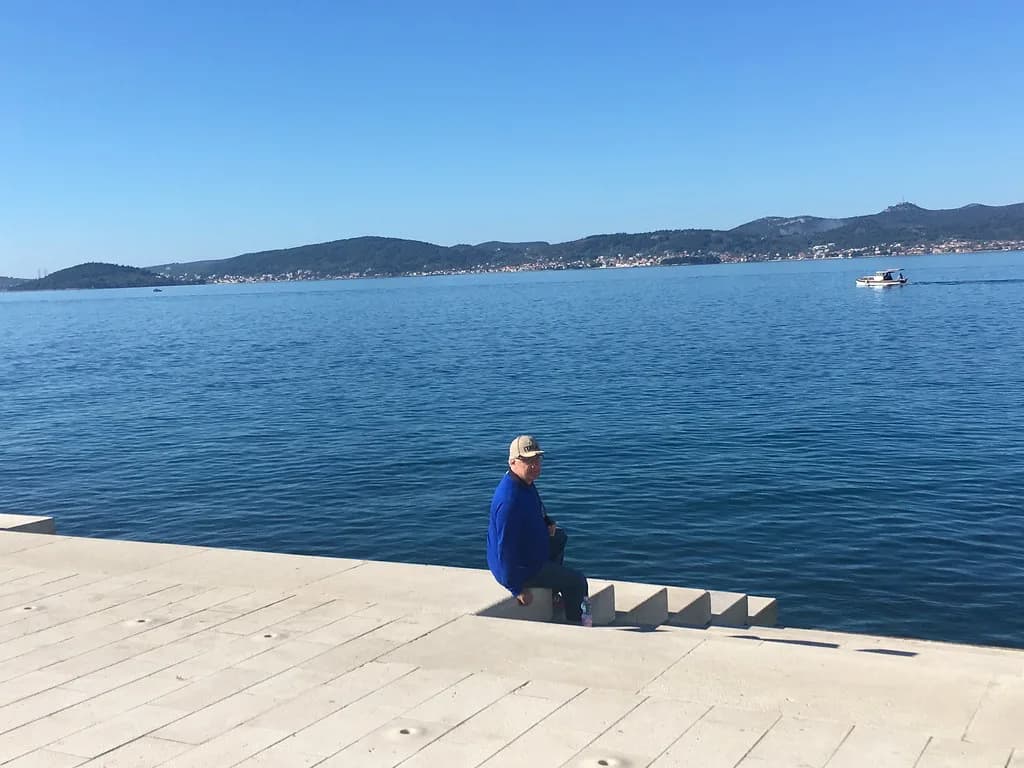
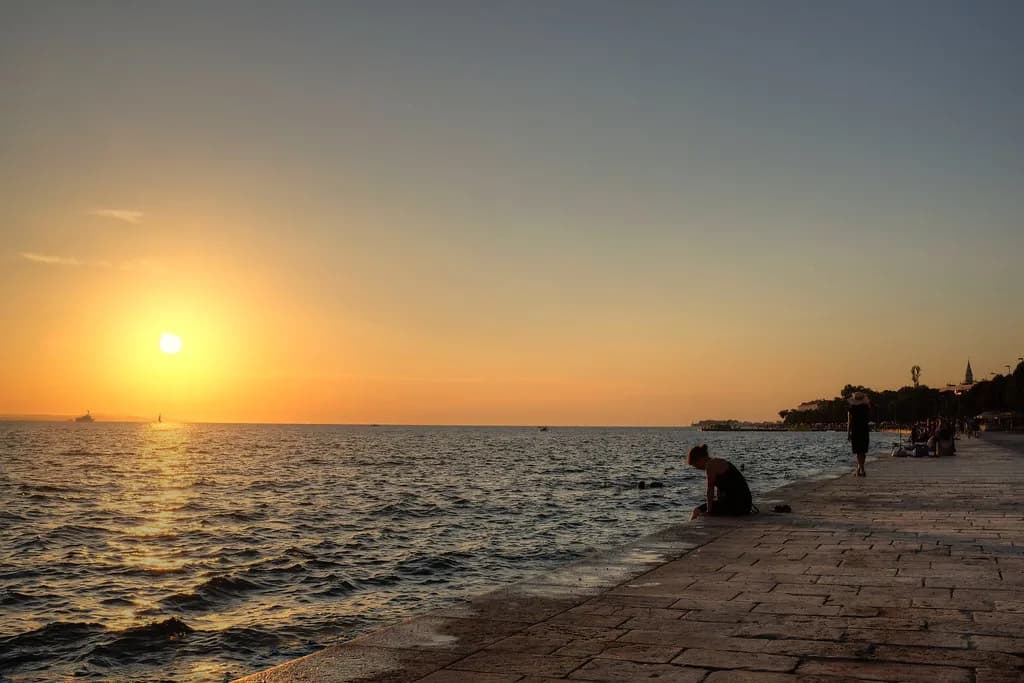
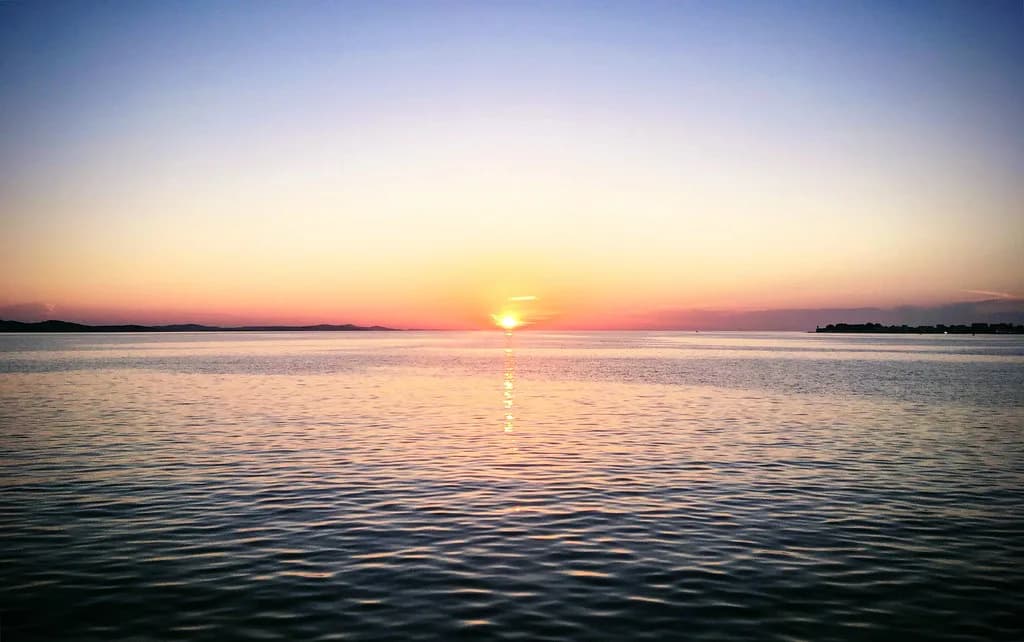
Save the seafront for late afternoon. The Sea Organ, a set of steps that plays notes as waves push air through pipes, and the Greeting to the Sun, a glass solar disc that lights up after sunset, are both free and best experienced when the light softens. On a breezy May evening, the organ is often at its most dramatic.
The rest of the old town rewards slow wandering rather than a checklist. The waterfront promenade, the small churches and the cafés on the squares fill a comfortable half day, and May's mild temperatures make walking pleasant rather than exhausting.
Day trips that work well in May
May is a good month for day trips because the roads and sites are quieter than in summer, but some depend on settled weather and boat schedules. Nin and its lagoon are an easy trip for a half day, while Paklenica National Park suits walkers who want cooler hiking temperatures before the summer heat.
Krka National Park and the islands, including Ugljan and Dugi Otok, are the bigger excursions and need a full day each. In May, boat connections and park services run, but the season is still ramping up, so plan around the published timetables of the boat companies and Krka National Park; check current departure times before you travel. For a sense of how much the city alone deserves, the honest verdict is that Zadar rewards two days, with day trips on top.
How many days you need in Zadar in May
Two full days cover the old town comfortably: one for the Forum, St Donat's and the seafront, one for the museums and a slower loop of the peninsula. Add a third day if you want Nin or Paklenica, and a fourth if Krka or an island is on your list.
May makes those extra days easier to justify because you are not losing hours to heat or crowds. A three-day stay gives you a proper look at the city plus one day trip, which is the version most travelers remember fondly.
Typical costs in May
May is pre-season, so accommodation and tours generally cost less than in July and August, though the city is not a budget destination at any time of year. Expect mid-range prices for meals and drinks on the peninsula, with the biggest savings coming on rooms rather than food. Our guide to whether Zadar is expensive breaks down where the money goes.
Because prices shift with the season and with individual businesses, the reliable approach is to price your own dates directly with hotels, tour operators and the national park you plan to visit. Treat any figure you see quoted for a previous year as a rough guide only.

Getting there
Zadar Airport sits inland from the city and handles seasonal European routes that ramp up in late spring. From the airport, buses and taxis run into town, and the old town itself is small enough to explore on foot once you arrive. Check the airport's own site and your airline for the schedule on your dates, since routes change by season.
If you are arriving overland, Zadar sits on the Dalmatian coast bus network, with connections along the coast and inland to Zagreb. May is a comfortable month for that kind of travel, with cooler conditions than midsummer.
Drawbacks
The honest downsides of May are unsettled weather and cool evenings. You can get a grey, windy day that makes the waterfront unpleasant, and the sea is cold enough that swimming is a minority activity. Anyone expecting guaranteed sunshine should look at later months.
Beach weather is limited, and some seasonal businesses and boat services are still opening up for the year. If your trip depends on a specific tour or island connection, confirm it is running before you build your plan around it.
May vs June vs September
June brings warmer days and a sea that is finally inviting, at the cost of rising crowds and prices. September keeps the warm water and calmer conditions while the summer surge eases, which makes it the strongest all-round month for most travelers. May wins on quiet and value, and loses on swimming.
If you are weighing Zadar against Croatia's bigger coastal city, our comparison of Zadar vs Split sets out the trade-offs in size, sights and atmosphere. Split has the bigger urban draw and the ferry hub, while Zadar is more compact and easier to cover in a short trip. If you prefer a smaller Istrian town instead, our guide to Rovinj in May covers the same month on the other side of the Adriatic.
Our recommendation by traveler type: sightseers and photographers should choose May; swimmers and families should choose June or September; budget travelers get the best value in May and late September. If sun and sea are the priority, later in the season is the better bet.
Plan Your Visit
May is the month to choose if you want Zadar's old town, its Roman Forum and its seafront without the summer crush, and you are content to leave swimming for another trip. Pack a layer for the breeze, keep a wet-weather plan, and book day trips around the timetables operators publish for your dates.
If the sea is the point of your holiday, shift to June or September and treat May as the sightseeing month it is. Either way, Zadar rewards travelers who give it two or three unhurried days rather than a rushed stop.
Explore more Zadar trip-decision guides
Frequently Asked Questions
Is May a good time to visit Zadar?
Yes, for sightseeing. May brings mild, breezy days with typical temperatures around 14-20°C (57-68°F), thinner crowds than July and August, and easier walking around the old town. It is a weaker choice for beach holidays because the Adriatic is still cool.
What is the weather like in Zadar in May?
Expect mild days with highs near 20°C (68°F) and lows around 14°C (57°F), plus a steady sea breeze and changeable spells. These are typical conditions rather than a forecast, so treat any specific daily figure as a guide.
Is the sea warm enough to swim in Zadar in May?
For most travelers, no. The air warms faster than the Adriatic, so the water stays bracing in May even on sunny days. Hardy swimmers go in; everyone else should plan beach time for June or September.
How many days do you need in Zadar?
Two full days cover the old town, the Roman Forum, St Donat's Church and the seafront. Add a third for Nin or Paklenica, and a fourth if you want Krka National Park or a full island day.
Is Zadar crowded in May?
Less crowded than in summer. Cruise and holiday traffic builds through June and peaks in July and August, so May usually leaves the main sights and the Sea Organ steps manageable, with busier spells when a ship is in port.
Is Zadar or Split better in May?
Zadar suits a compact, quieter trip with easy walking and day trips to Nin, Paklenica and the islands. Split is larger, busier and better placed for ferries to the islands. Choose Zadar for calm and Split for scale and connections.
What should I do on a rainy May day in Zadar?
Keep the old town for the wet hours: the Roman Forum, St Donat's Church and the city's museums are all close together on the peninsula. Save the Sea Organ, the Greeting to the Sun and any boat trip for a clearer day.
Sources
Trip-decision notes
Optional updates when we publish or revise a destination verdict.
You might also like
Continue reading
More guides you'll find useful