Rovinj in May: Weather, Crowds and Whether It's Worth Going
Rovinj in May means mild 21.7°C highs, about eight and a half hours of sun and a sea still cool for most swimmers. Here is who May suits.
On this page
Yes, May is a strong month for Rovinj if you want the old town without the August crush and long, bright days for walking the coast. It is not a beach-first month: the Adriatic averages 18°C (64°F) in May, which is bracing for most swimmers. Think of May as the month for stone lanes, hill towns and coastal paths, with a possible swim for the hardy.
The verdict on Rovinj in May
May suits walkers, couples and anyone whose idea of Istria is the Venetian old town, the hill villages inland and long lunches by the harbor. Daytime highs average 21.7°C (71°F) and the sun is out for around eight and a half hours a day, so you get real warmth without July's heat. If you are still deciding between Rovinj and a bigger Dalmatian city, our verdict on whether Rovinj is worth visiting puts the town's scale and charm in context.
Who should wait: families who want the sea to be the main event. The water stays cool enough that the source's own advice is to swim from roughly July to September. Anyone hoping for guaranteed wall-to-wall sun should also note that spring rain is normal here, with roughly ten wet days across the month.
Weather in May: what to expect
The 1971–2000 climate averages give May a mean minimum of 11.6°C (53°F), a mean maximum of 21.7°C (71°F) and an overall mean of 16.6°C (62°F). Evenings can be genuinely cool, especially when the bora — the cold northeast wind — blows, so a jacket matters for dinner outside. These are typical conditions rather than a forecast for your week.
Expect a mix rather than a guarantee: warm afternoons on the riva, some overcast spells and the occasional sharp shower. Rovinj sits on the Upper Adriatic close to the Alps, and spring weather here swings more than on the southern Dalmatian coast. Build one flexible indoor or inland day into a short trip and the rain costs you little.
Sea temperature and whether you can swim
The sea averages 18°C (64°F) in May, climbing to 22.5°C (73°F) in June, 25°C (77°F) in July and 25.5°C (79°F) in August before easing to 23°C (73°F) in September. In practice May is a toe-in, quick-dip month: fine after a walk on a hot afternoon, uncomfortable for children who want to stay in for an hour.
That single figure is the clearest reason to choose May or to skip it. Old-town wandering, coastal cycling and boat trips along the Istrian shore all work well; lazy beach days do not, at least not without accepting cold water.
Sunshine and rain days
May averages 8.5 sunshine hours per day, roughly three hours more than April and only two fewer than July's peak. Rain totals around 55 mm over about ten days, which is more than July's six wet days but far from a washout. Practically, that means a couple of unsettled afternoons in a week-long stay.
If you are weighing an earlier spring trip against this one, Rovinj in April is cooler and greener but noticeably shorter on sun. May is the point where the coast starts to feel like summer without the crowds that follow.
Crowds and the old town in low season
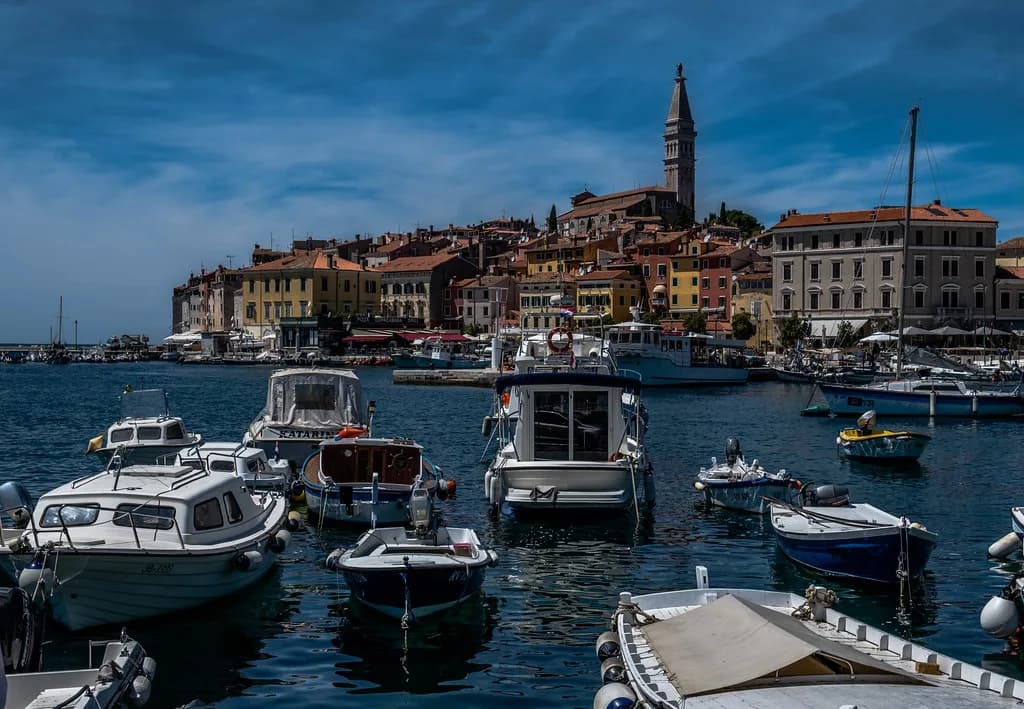
May sits in the shoulder season, before the July and August peak, so the peninsula's lanes and the harbor front are busy but walkable. You can usually find space on the rocks below the church and get a table without booking days ahead. The bigger tour groups and cruise traffic build through June.
The trade-off is that not everything is fully open: some seasonal bars and boat excursions start later in spring, so a few waterfront spots may still be shuttered. That is a minor cost against the pleasure of photographing the old town without a queue.
What to do: the old town and St. Euphemia
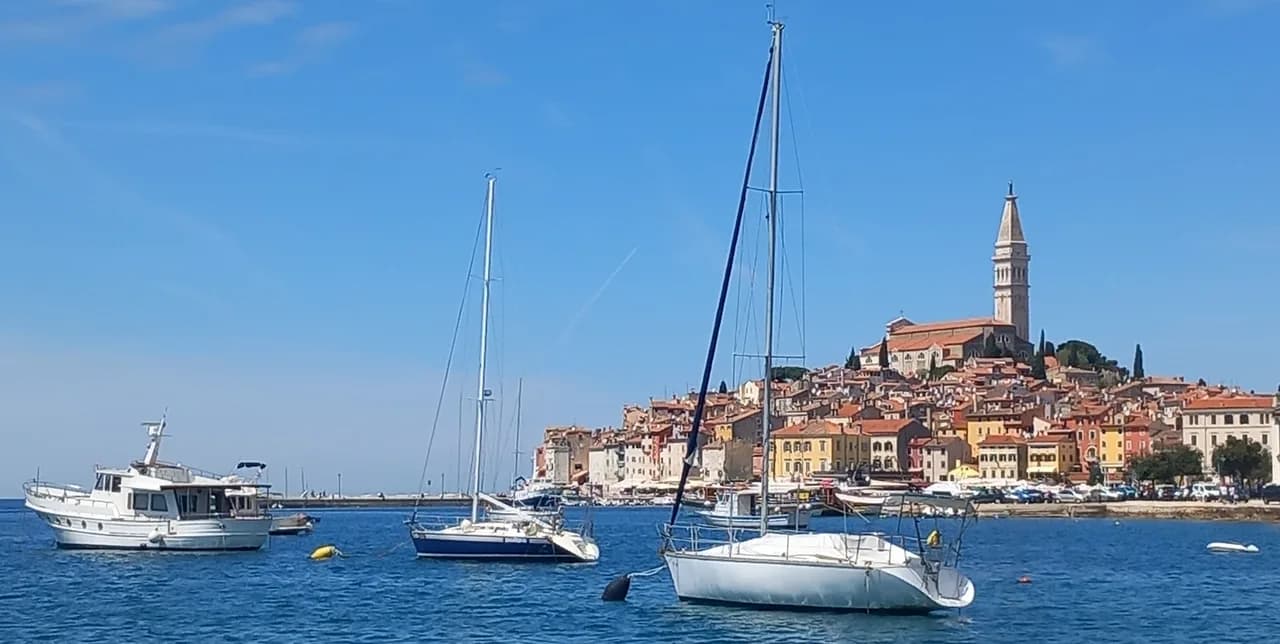
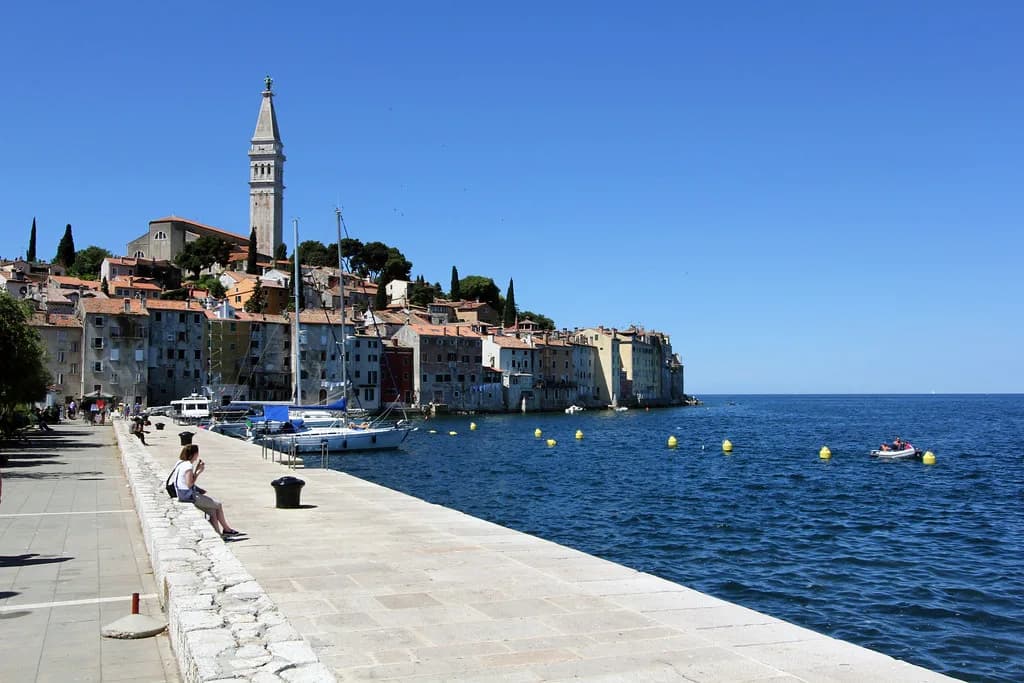
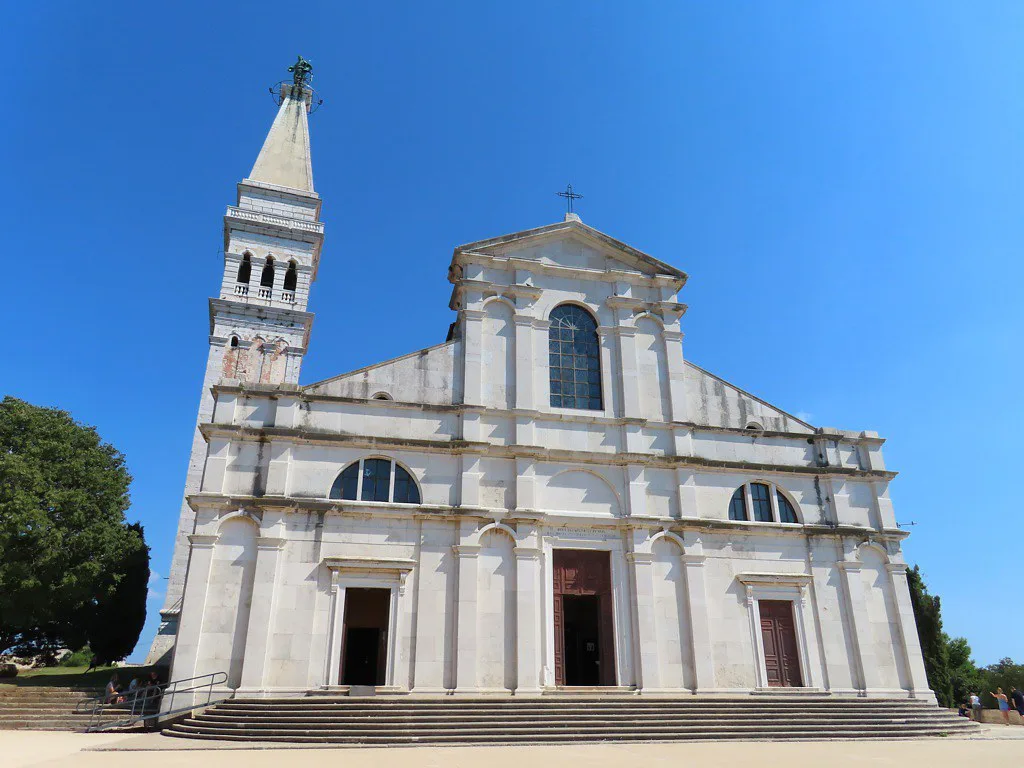
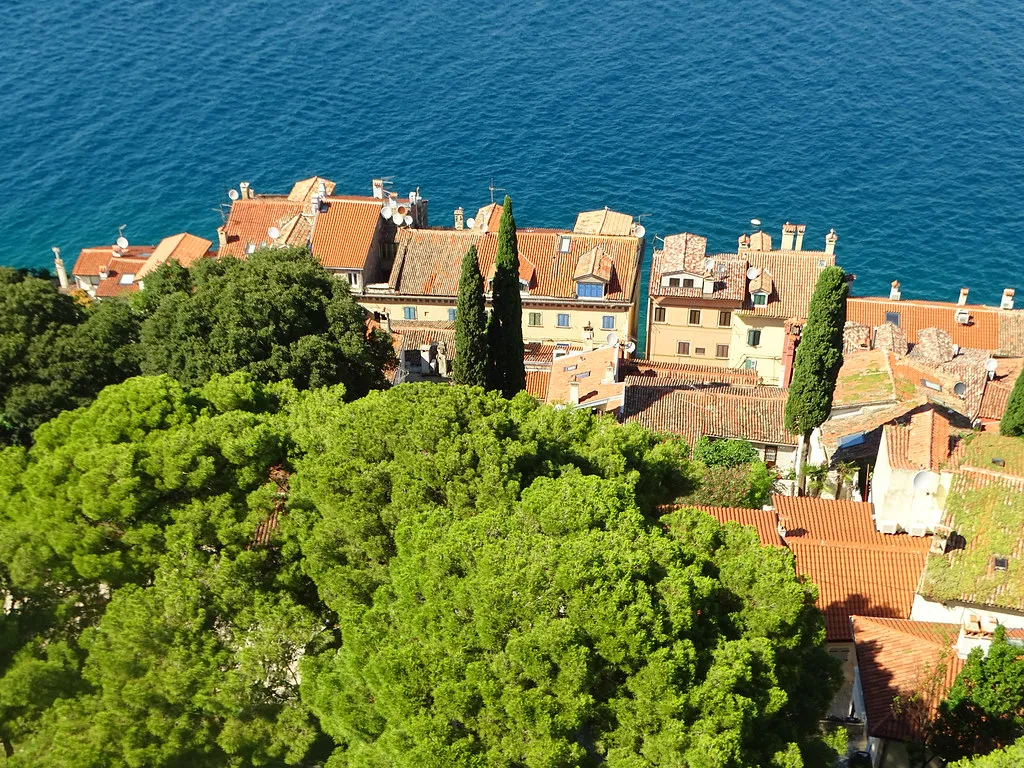
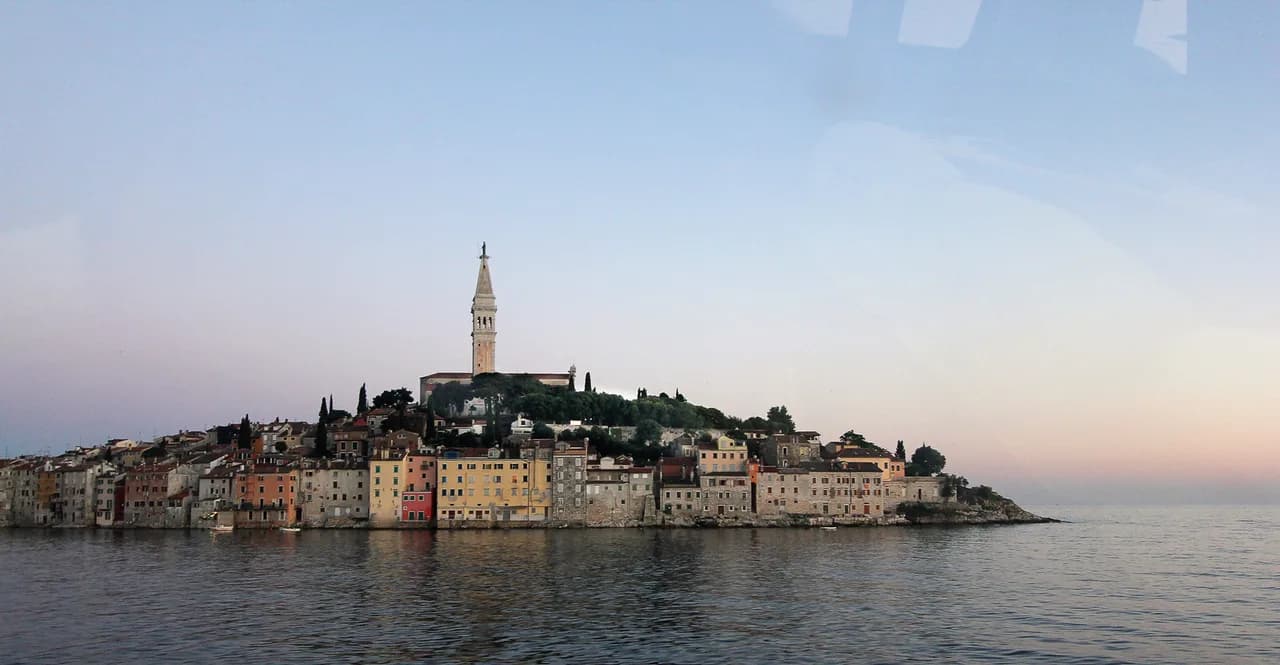
The compact old town is the reason to come, and in May you can walk it slowly: the Grisia street of galleries, the balconies over the water and the climb to the Church of St. Euphemia, whose bell tower gives the best view over the rooftops and out to the islands. Cooler temperatures make the tower climb far more pleasant than in August.
Beyond the church, the batana boats, the small town museum and the shoreline path toward Zlatni Rt forest park fill an easy couple of days. The park's pines and rocky coves are ideal for a spring walk with a picnic rather than a full beach day.
Beaches and the coastline around Rovinj
Rovinj's swimming is mostly rocky and platform-based rather than sandy, with the Zlatni Rt peninsula and the Lone bay area the standard choices near town. In May these are quiet and pleasant for sitting, sunbathing and the occasional brave dip. Water shoes help on the rocky entries.
If a proper beach day is non-negotiable, look at the calendar honestly: the sea reaches comfortable temperatures in July and August, and September keeps warm water with fewer people. For more context on the wider Adriatic in spring, Zadar in May shows how the Dalmatian coast compares.
Day trips from Rovinj in May
May is excellent for inland Istria: hill towns such as Motovun, Grožnjan and Bale are cooler to walk and less congested than in high summer, and truffle and wine season is in full swing. Closer to the coast, Poreč and its UNESCO-listed Euphrasian Basilica make an easy half-day by bus or car.
Pula, with its Roman amphitheater and compact center, is the other obvious day out and works comfortably before peak-season crowds arrive; Pula in May covers the same weather and timing questions for that city. Getting there is straightforward by car or bus, and our guide to how to get to Rovinj explains the regional connections.
Prices and what May saves you
May is cheaper than July and August for accommodation and boat trips, though Rovinj is not a budget destination at any time of year and the old town commands a premium. Croatia uses the euro, so there is no currency surprise for travelers from the eurozone. Our Rovinj costs guide breaks down what a trip realistically involves.
Restaurant and cafe prices in the old town are highest on the waterfront and lower a street or two back, a pattern that holds in May as much as in summer. Expect mid-range European prices rather than bargain Balkan ones.
What May is not good for
Beach holidays with children, guaranteed sunshine and warm evening swimming are the weak points. Ten rain days and an 18°C sea mean you should treat swimming as a bonus, not the plan. Anyone who wants the Adriatic to feel like the Mediterranean at its warmest should book July or August instead.
Rovinj in May vs June vs September
June warms the sea to 22.5°C (73°F), extends the sunshine and opens the full summer season, at the cost of higher prices and more people. It is the better pick for mixed beach-and-town trips where children will swim.
September keeps the sea at 23°C (73°F) and the town stays lively after the August peak, which makes it the strongest alternative to May for travelers who want warmth without crowds; Rovinj in September covers the details. May wins on freshness, green hills and the lowest shoulder-season prices.
Who should go in May and who should wait
Go in May if you are a couple, a walker, a cyclist or a photographer who wants the old town and hill villages at their most comfortable. Wait for July or August if the trip is built around swimming and sunbathing, or choose September if you want warm water with a calmer town.
Plan Your May Trip
May gives you Rovinj at its most walkable: mild 21.7°C (71°F) highs, long sunshine and a town you can explore without the summer crush. Accept a few wet afternoons and a cold sea, and it is one of the best-value months on the Istrian coast.
Decide your priority first — old-town wandering or warm-water swimming — and the month follows. If it is the town, book May; if it is the sea, push to July or September. Entry rules for Croatia are on the official Croatian government site.
Explore more Rovinj trip-decision guides
Frequently Asked Questions
Is Rovinj worth visiting in May?
Yes, for old-town sightseeing, coastal walks and day trips into Istria. May averages 21.7°C highs with around eight and a half hours of sunshine, and the town is less crowded than in July or August. It is a weaker choice for a beach holiday because the sea averages 18°C.
Can you swim in Rovinj in May?
The sea averages 18°C in May, which is bracing for most people. Short dips are possible on warm afternoons, but comfortable family swimming usually starts in July and continues through September, when monthly sea averages reach 23°C or more.
How busy is Rovinj in May?
May is shoulder season, so the old town and harbor are busy but manageable and you can usually find space without booking far ahead. Crowds build through June toward the July and August peak, when cruise and tour traffic is at its highest.
Does it rain in Rovinj in May?
May averages about 55 mm of rain across roughly ten days, so expect a few unsettled afternoons in a week. That is wetter than July, which averages six rain days, but far from a washout given the 8.5 daily sunshine hours.
Is Rovinj cheaper in May than in summer?
Accommodation and boat trips generally cost less in May than in July and August, though Rovinj is a mid-range European destination rather than a budget one. Croatia uses the euro, and the old town's waterfront restaurants are the priciest places to eat.
How many days do you need in Rovinj in May?
Two full days cover the old town, the Church of St. Euphemia and the Zlatni Rt coastal paths. Add a third or fourth day for inland Istria, Pula or Poreč, which are easier to enjoy in May before peak-season crowds and heat arrive.
Sources
Trip-decision notes
Optional updates when we publish or revise a destination verdict.
You might also like
Continue reading
More guides you'll find useful