Piran vs Rovinj: Which Adriatic Old Town to Choose
Piran is smaller, quieter and in Slovenia; Rovinj is bigger, busier and a stronger base for Istria. Compare crowds, beaches, day trips and getting there.
On this page
Choose Rovinj if you want a base for the Istrian peninsula, a food scene that stretches beyond the waterfront and enough sights to fill three or four days. Choose Piran if you want a small Venetian town you can walk end to end in an afternoon, with Slovenia behind you and Trieste within easy reach.
The two towns are close enough to share a trip: the direct drive covers roughly 80 km and takes a little over an hour in normal traffic, so pairing them costs you half a day of travel rather than a whole one.
The verdict
Rovinj wins for a longer stay and for anyone building an Istria itinerary around day trips. Almost everywhere on the peninsula sits within about a 90-minute drive, from hill towns to the southern cape, which means you can change your scenery daily without changing hotels. If you are still weighing the town itself, is Rovinj worth visiting comes down to whether you want a working base or a postcard stop.
Piran wins for a short stop, a quieter pace and a route that continues into Slovenia or Italy. Travelers who have stayed in both tend to describe them as similar in look, with Rovinj coming out slightly ahead — which tells you the gap is about scale and substance, not beauty.
Piran vs Rovinj at a glance
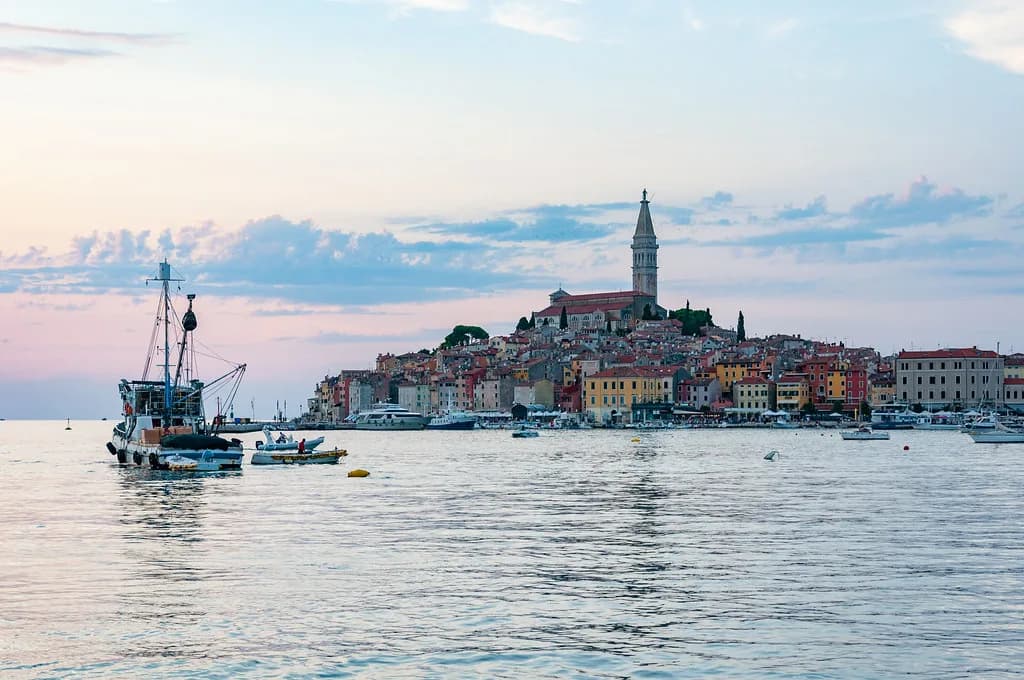
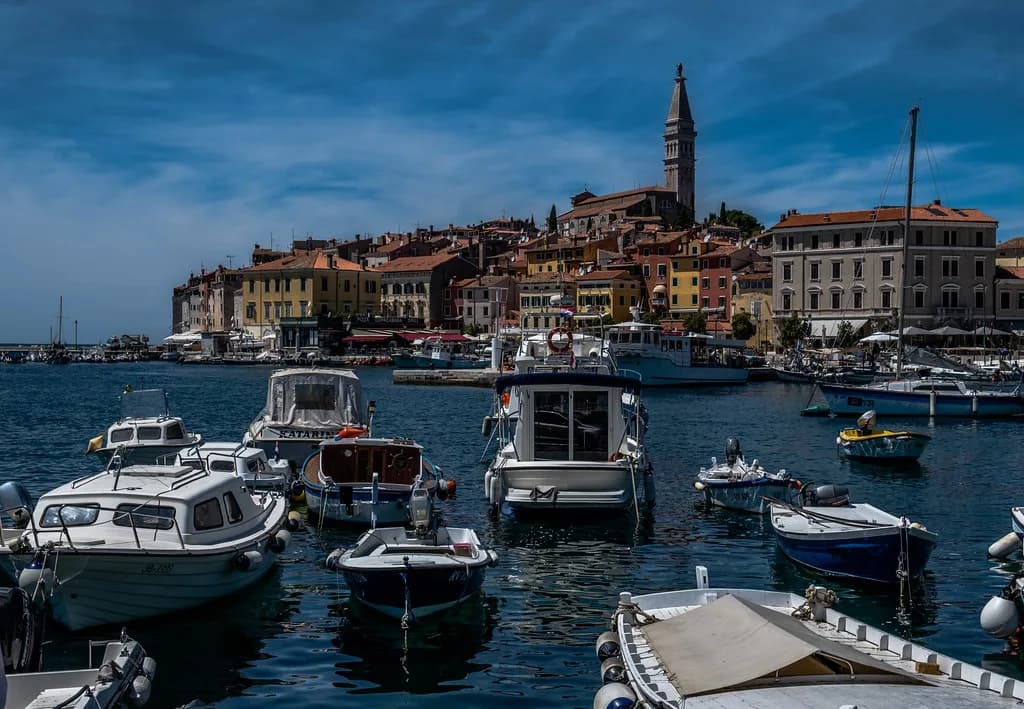
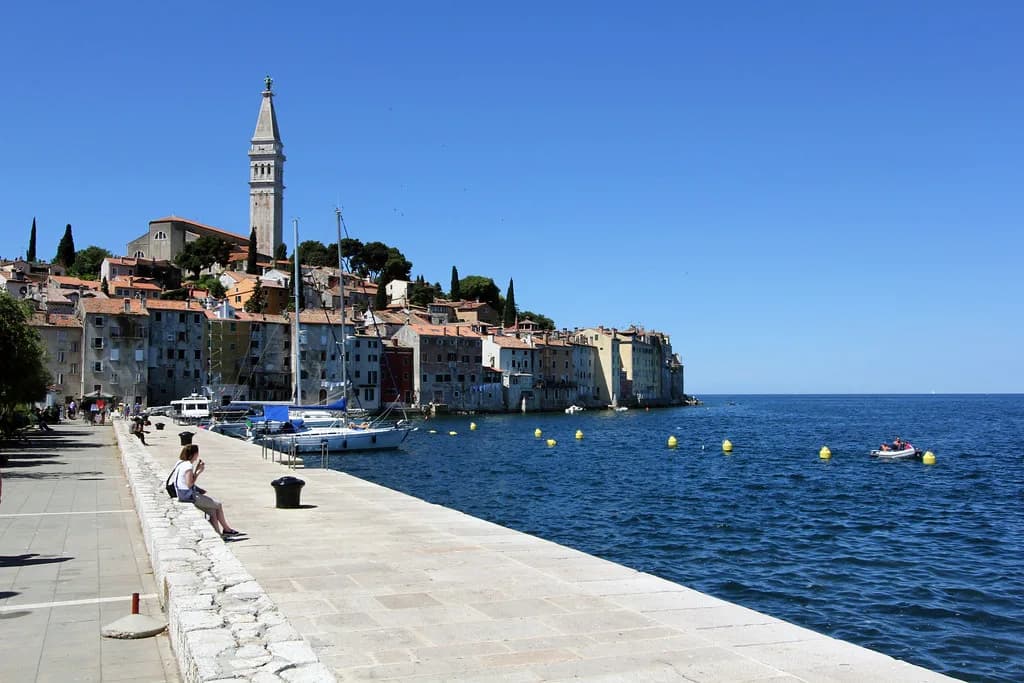
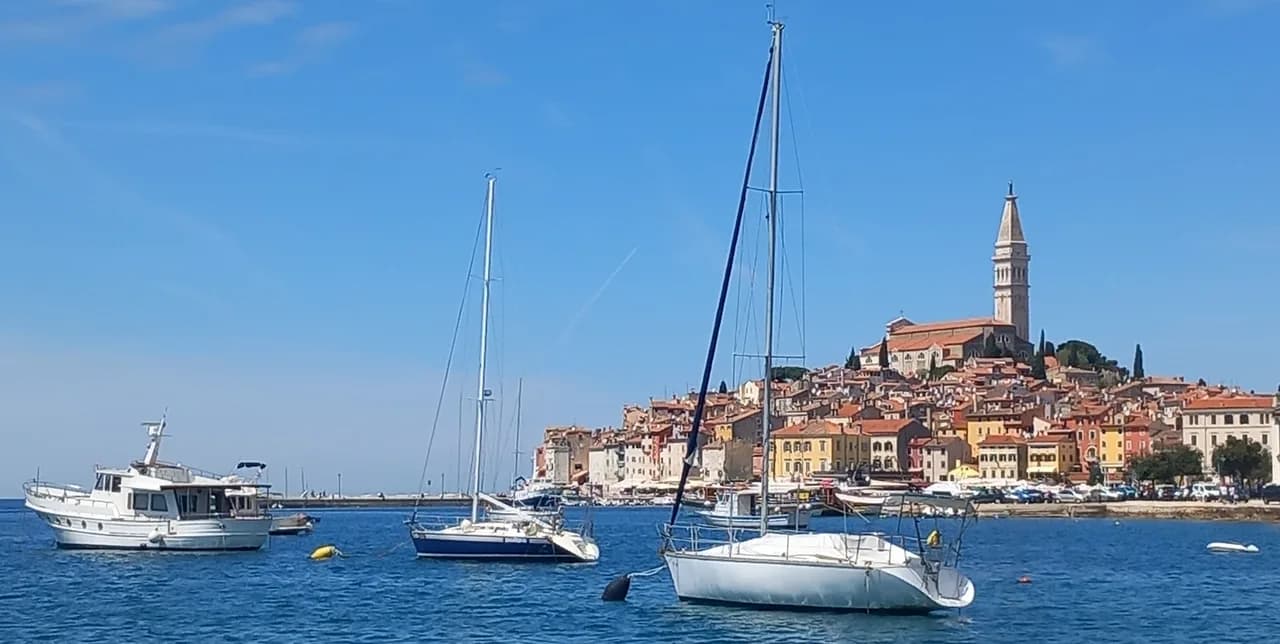
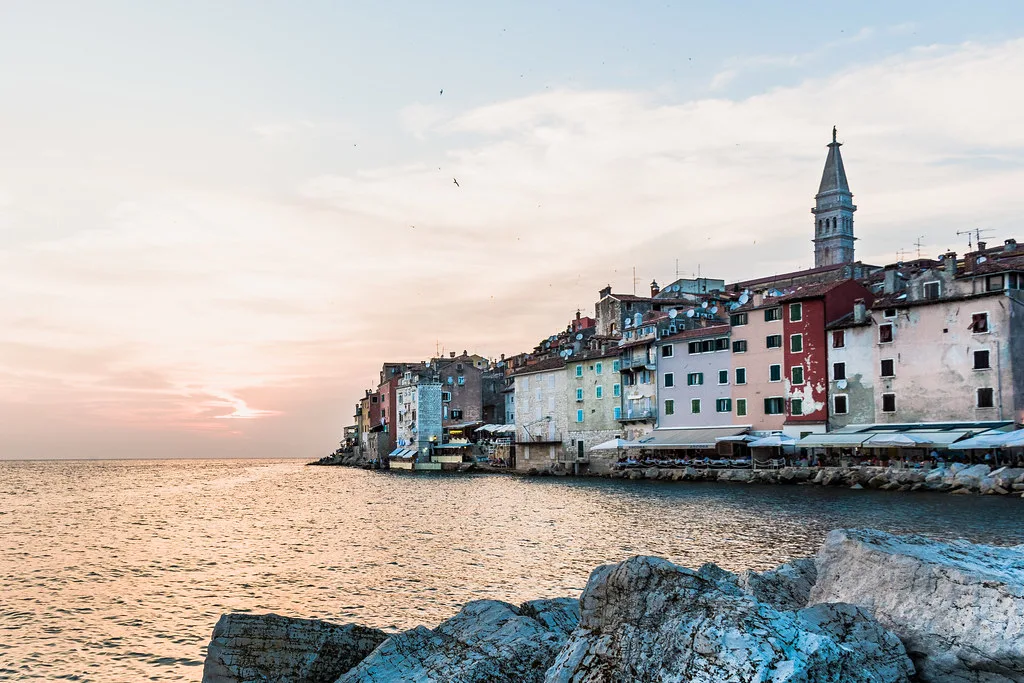
Rovinj is the larger town, with a car-free old town wrapped around a hill and crowned by a 60-meter bell tower that dominates the skyline. Piran is tighter: a seafront square, a peninsula of lanes and a church above it, all walkable in a couple of hours.
Rovinj sits in Croatia, which has used the euro since 1 January 2023, and Piran sits in Slovenia, also a euro country. That makes price comparison across the two straightforward, though the cost of a night and a meal differs by season and by how close you are to the water.
Character matters more than size. Rovinj reads as a small city with restaurants, galleries and boats; Piran reads as a town where you circle back to the same square by evening. Neither is a resort in the package-tour sense, and neither has a long sandy beach.
What Rovinj gives you
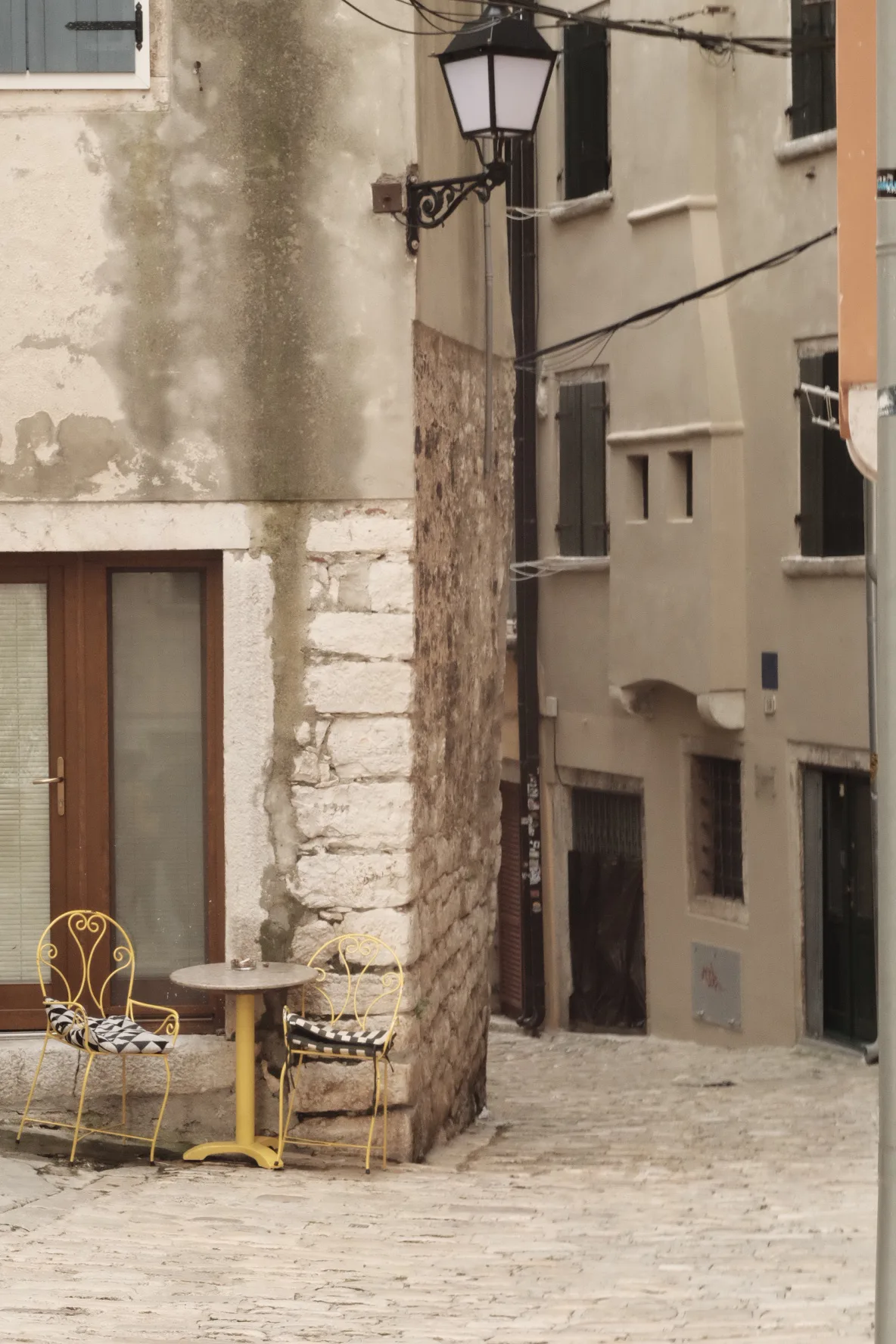
Start with the old town: Grisia Street is the artists' lane of shops and galleries, and the surrounding lanes climb steeply enough that decent shoes matter more than a map. The cobbles are smooth to the point of slippery, and the stairs make much of the centre hard going for anyone with mobility difficulties, though the edges along the waterfront are far easier.
Climb the bell tower of the Church of St. Euphemia for the harbour, the islands and the red rooftops; the payoff is the one view in town that still includes the town's own landmark. South of the centre, the Zlatni Rt park forest offers walking and biking trails, tall cedars and cypress, and pebbly swimming spots about 2.5 km from the centre.
St. Katarina Island is a short boat hop from the old town, with pebble beaches facing the city on the eastern side. Boat excursions also run to the Lim Channel, a sunken canyon rather than a true fjord, where tours combine the scenery with a seafood lunch.
What Piran gives you
Piran's draw is compactness: Tartini Square as the seafront living room, lanes stacked up the slope behind it, and the church of St. George above with the sea on both sides. You do not need a plan to see it; you need an afternoon and comfortable shoes for the climb.
The wider Slovenian coast adds salt-pan heritage and the Venetian-influenced towns of the short shoreline, with Trieste across the border as an obvious half-day addition. That combination makes Piran the better fit if your trip is a coastal run through Slovenia and northern Italy rather than a single-country stay.
What Piran lacks is range. There is no equivalent of Istria's hill towns and southern cape within a short drive, so a third day in Piran is a day of lingering rather than exploring.
Beaches and swimming
Rovinj is not a beach destination in the classic sense: the city edges offer rock slabs for a quick dip, and the better swimming is further out at Zlatni Rt and on St. Katarina Island. If you want to lie on sand for hours, neither town delivers.
Piran's swimming is similarly urban — bathing spots at the edge of town rather than long stretches of coast. Travelers who care most about water should treat both as towns with swimming attached, not as beach bases, and look south along the Istrian coast or toward Kamenjak for a proper beach day.
Crowds and season
Both towns are honeypots in July and August, when daytime heat and day-trippers compress into narrow lanes. Rovinj carries the bigger load because it draws from the whole Istrian peninsula and hosts cruise and excursion traffic; Piran's crowds are smaller in absolute terms but concentrated in a much smaller space.
May, June, September and October are the fairer months in Rovinj, with warm but not punishing conditions and more room to move; July and August are hot and crowded. If you want the same town with a calmer temperature and thinner lanes, Rovinj in September is the sharper choice for swimmers and walkers alike.
Shoulder months help Piran too, but the town's scale means a single busy afternoon can feel full. Arriving early and leaving late is the practical trick in both places, since the middle of the day belongs to excursions.
Day trips: where Rovinj pulls ahead
Rovinj is the stronger base because Istria packs a lot into short drives: Motovun and Grožnjan are about an hour away, Poreč roughly 40 minutes, Pula about 45 minutes and Kamenjak about an hour. Poreč's Euphrasian Basilica is the peninsula's UNESCO World Heritage site, with Byzantine mosaics and a much flatter old town than Rovinj's. If you are deciding whether that 40-minute drive is worthwhile, our Poreč verdict weighs its Roman and Byzantine sights against Rovinj's old town.
Inland, Motovun is the hill town you see coming for miles, with a car-free centre and a steep cobbled climb, and Grožnjan is the artists' village 20 minutes from Motovun. Both suit a single full day with lunch in Motovun and galleries in Grožnjan, and both are rough on anyone with mobility difficulties.
Piran's day-trip map points the other way: Trieste, the Slovenian interior and the short coastal towns. That is a genuine advantage if your itinerary runs Venice–Trieste–Slovenia–Croatia, and a limitation if you want truffle country and Roman ruins on consecutive days.
How many days each one needs
Give Rovinj two full days for the town, the park forest and the island, and a third or fourth day if you are using it as a base for Istria. A half day each for Poreč and Pula, and a full day for Motovun and Grožnjan, is the shape most itineraries settle into.
Piran needs one full day and a second only if you want a slow morning and a Trieste excursion. Anyone allocating three or more nights to Piran should expect to spend them on day trips rather than in town.
If you are combining them, two nights in Rovinj plus one in Piran covers both without rushing, and the drive between them is short enough to do in the morning and still have the afternoon free.
Getting there and between them
Rovinj has no rail link, so arrivals come by road — car, bus or transfer from Pula, Trieste or Zagreb. How to get to Rovinj depends on whether you are touring by car or relying on buses, and the car option is what unlocks the Istrian day trips.
Piran is reached by road from Trieste, Koper or Ljubljana, with coastal buses serving the Slovenian shore. The border crossing between the two towns is routine for drivers, but allow for it in your timing rather than assuming a clean run.
Once in Rovinj, the old town is car-free and best covered on foot, with bikes useful for the park forest. Piran is small enough that a car is a liability inside the centre; park outside and walk in.
Typical costs in euros
Both countries use the euro, so you can compare like for like. Expect Rovinj to run higher on accommodation and on waterfront dining, especially in July and August, and Piran to be somewhat gentler on a short stay, though its small size limits the budget end of the market.
Meals drive the difference: Rovinj has a deeper restaurant scene built on Istrian truffles, olive oil, Malvasia wine and seafood, and you pay for it at the top end. Piran's eating is good but narrower, and the bill is easier to keep modest.
Beyond food and beds, add parking outside both old towns, boat trips, and — for Rovinj — a rental car if you plan the Istria circuit. Those extras, not the town themselves, decide most budgets.
Who should choose Piran instead
Choose Piran if you have one or two nights, want a quiet evening on a small square, and are moving on to Slovenia or Trieste. It also suits travelers who prefer a town they can learn in an afternoon and who do not need a car.
Choose Rovinj if you want a base, a restaurant list worth working through and a reason to rent a car. Anyone planning a first trip to the Adriatic with Istria as the focus will get more out of Rovinj.
Skip both if your priority is sandy beaches, all-inclusive comfort or nightlife: neither town is built for that, and the Istrian coast and the Slovenian interior offer better answers.
Plan Your Visit
The decision is about role, not beauty: Rovinj is the base, Piran is the stop. Pick Rovinj for three or more nights and day trips across Istria, and Piran for a compact pause with Slovenia and Trieste at hand.
Travelers who want both can do it on one itinerary, since the drive between them is just over an hour. Book the Rovinj nights first, then slot Piran in at the end before you head north.
Explore more Rovinj trip-decision guides
Frequently Asked Questions
Is Piran or Rovinj better for a first trip to the Adriatic?
Rovinj is the better first base because it gives you a larger old town, a wider restaurant scene and quick access to the rest of Istria. Piran works well as a shorter second stop on the same trip, especially if you are continuing into Slovenia or Italy.
Can you visit Piran and Rovinj on the same trip?
Yes. The direct drive between them is roughly 80 km and takes a little over an hour in normal traffic, so two nights in Rovinj and one in Piran is realistic without losing a day to travel.
Which is cheaper, Piran or Rovinj?
Both countries use the euro, and Piran tends to be gentler for a short stay while Rovinj commands more for waterfront dining and peak-summer rooms. Your total depends more on season and whether you rent a car than on the town itself.
Does Rovinj have good beaches?
Not in the sandy-resort sense. The town edges have rock slabs for a dip, and the better swimming is at the Zlatni Rt park forest and on St. Katarina Island; travelers who want long beach days should look further down the Istrian coast.
How long is the drive from Piran to Rovinj?
About 80 km, or roughly an hour and six minutes in normal traffic. Allow extra time at the border crossing and for summer congestion around the coastal towns.
Is Piran worth visiting?
Yes, for a day or two. It is a compact Venetian town with a seafront square, lanes climbing to the church and easy links to Trieste and the Slovenian coast, but it does not offer the range of day trips that Rovinj does.
Sources
Trip-decision notes
Optional updates when we publish or revise a destination verdict.
You might also like
Continue reading
More guides you'll find useful