Is Tirana Worth Visiting? An Honest Tirana Guide
Tirana is worth visiting for an affordable, walkable capital with raw communist history, strong coffee and easy day trips, not for blockbuster sights.
On this page
Yes, Tirana is worth visiting — as two days inside a longer Albania trip, not as a standalone city break. The capital is compact enough to walk, carries a serious communist-era history in Bunk'Art and the House of Leaves, and stays noticeably cheaper than Western European capitals for food, drink and beds.
The honest trade-off: there are few blockbuster sights to tick off, and time in Tirana competes directly with the Albanian Riviera and the Alpine north. If you have a week and want beaches, the capital is the day you can cut. If you have ten days or more, it gives the rest of the country its context.
The verdict: who Tirana suits and who should skip it
Tirana suits travelers who like a lived-in capital over a polished one: people who will spend a morning on surveillance history and an afternoon over coffee, and who use the city as a base for Krujë, Bovilla Lake or Mount Dajti. It is also one of the region's easiest capitals to explore on foot.
It suits poorly anyone building a trip around famous landmarks or a short fly-in weekend. On a one-week trip focused on the coast or the Albanian Alps, the capital is the segment to drop — Albania packs a great deal into a small country, and the beaches and mountains are the stronger draw.
The practical version: include Tirana on a one- or two-week Albania route as a two-day bookend, ideally at the start while you adjust and gather context. Give it a full day if time is genuinely tight, and expect that day to be about atmosphere rather than attractions.
What Tirana is actually like: a capital still in transition
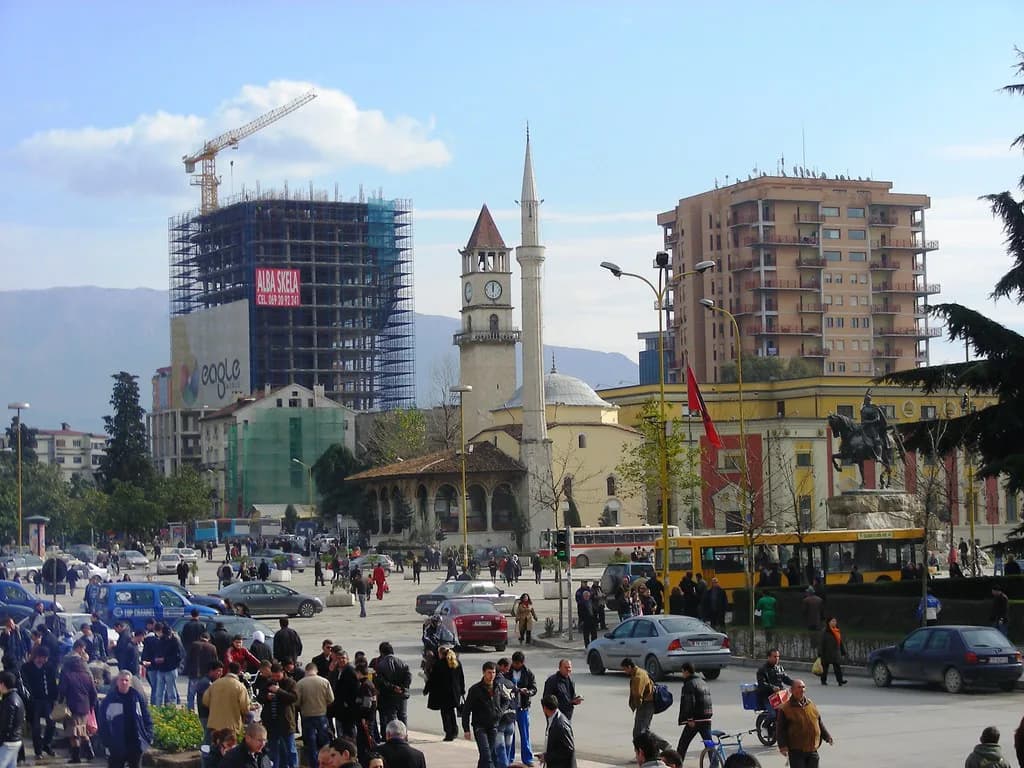
Tirana is mid-transformation. Construction cranes and new towers sit beside communist concrete, apartment blocks wear bright oranges, pinks and teals, and murals cover entire facades after a city-led color campaign that began under mayor Edi Rama. The unfinished look is the character of the place, not something you discover on arrival and have to forgive.
That matters for expectations. There is no preserved old town to wander; the historic core is a handful of set pieces around one large square, and the pleasure comes from everyday life — a bakery byrek, a fruit stall, a low-key bar on a leafy boulevard. Travelers who need a full sightseeing schedule will run out of city before they run out of days.
On timing, the city sees warm, dry summers and mild winters, and spring and autumn are the comfortable windows for walking all day. Summer afternoons can be hot enough to push you into shade and cafés, which is exactly how locals use the city; check the best time to visit Tirana before fixing dates.
Skanderbeg Square and the compact historic core
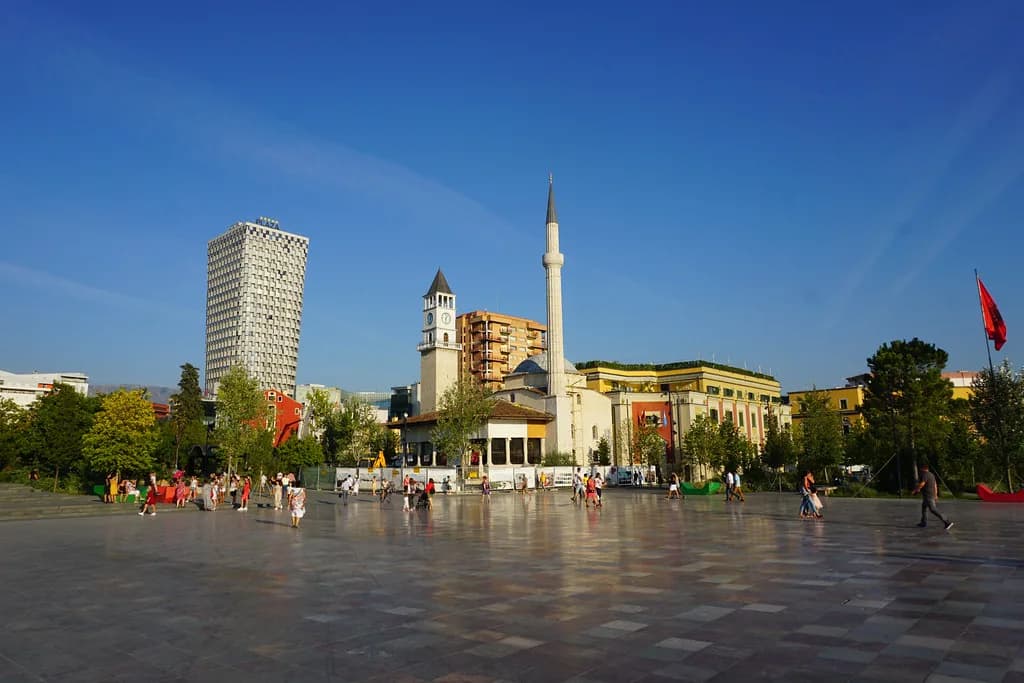
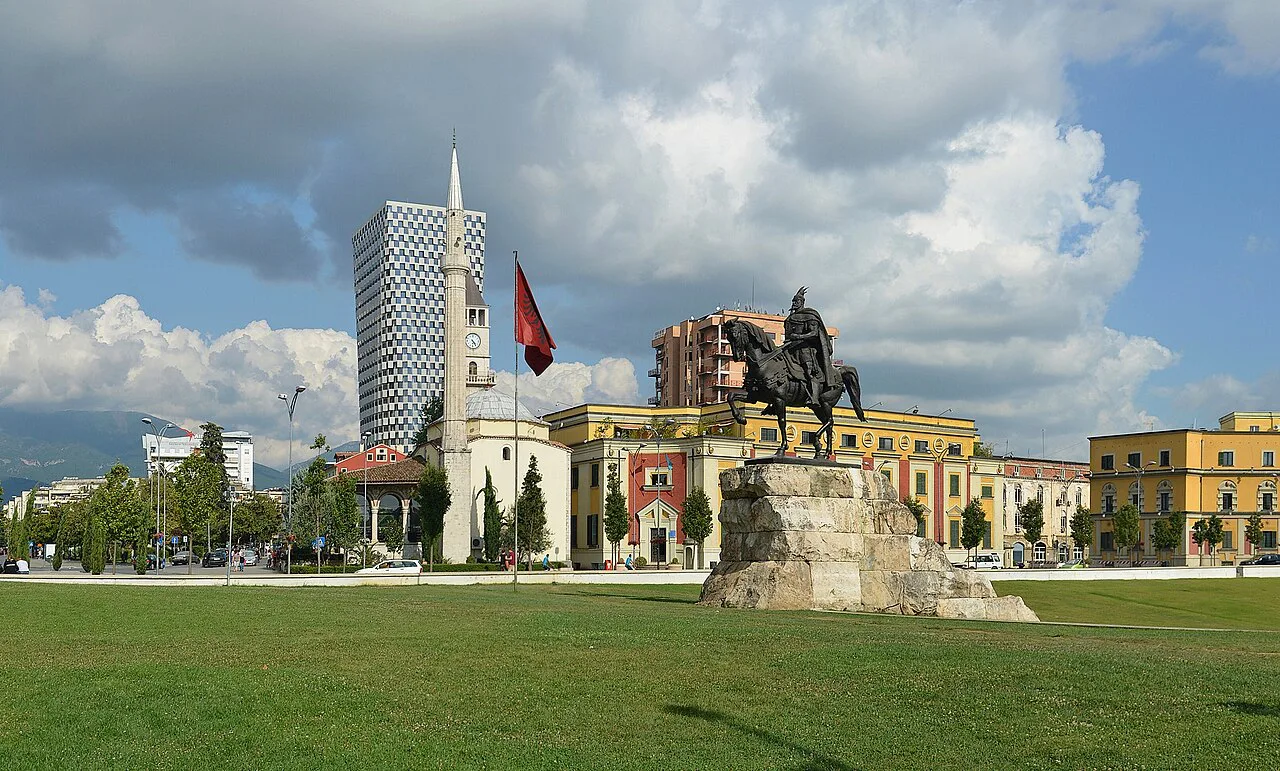
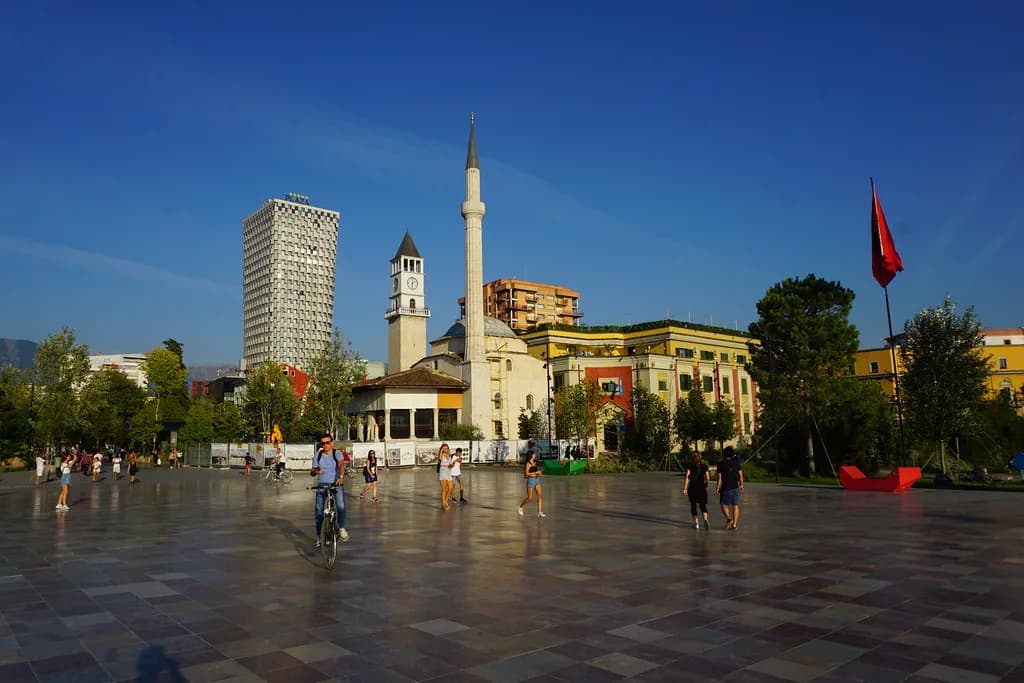
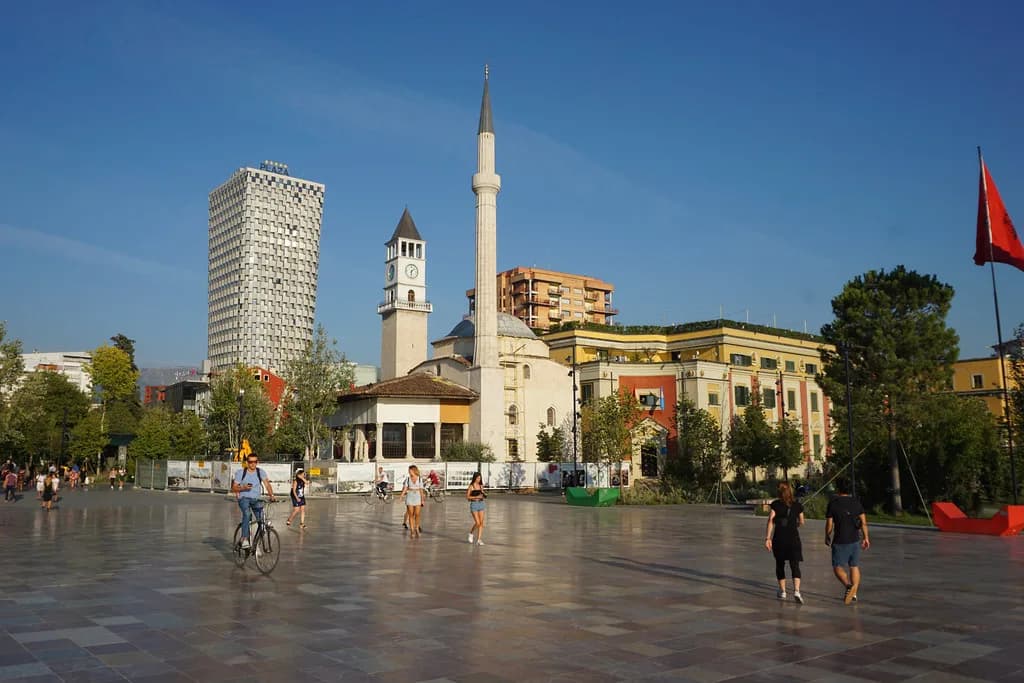
Skanderbeg Square is the natural starting point and the densest cluster of sights in the city: the equestrian Skanderbeg statue, the National History Museum, the Et'hem Bey Mosque and the Clock Tower all sit within a few minutes of each other. It is a big, open, paved space that works better as an orientation point than as a destination in itself.
Of the museums here, the National History Museum covers Albania from Roman times forward, but its labels are thin in English, so non-Albanian speakers get less out of it than the scale suggests. If you are choosing one paid sight in the center, spend it on the House of Leaves instead and treat the square as a free walk-through.
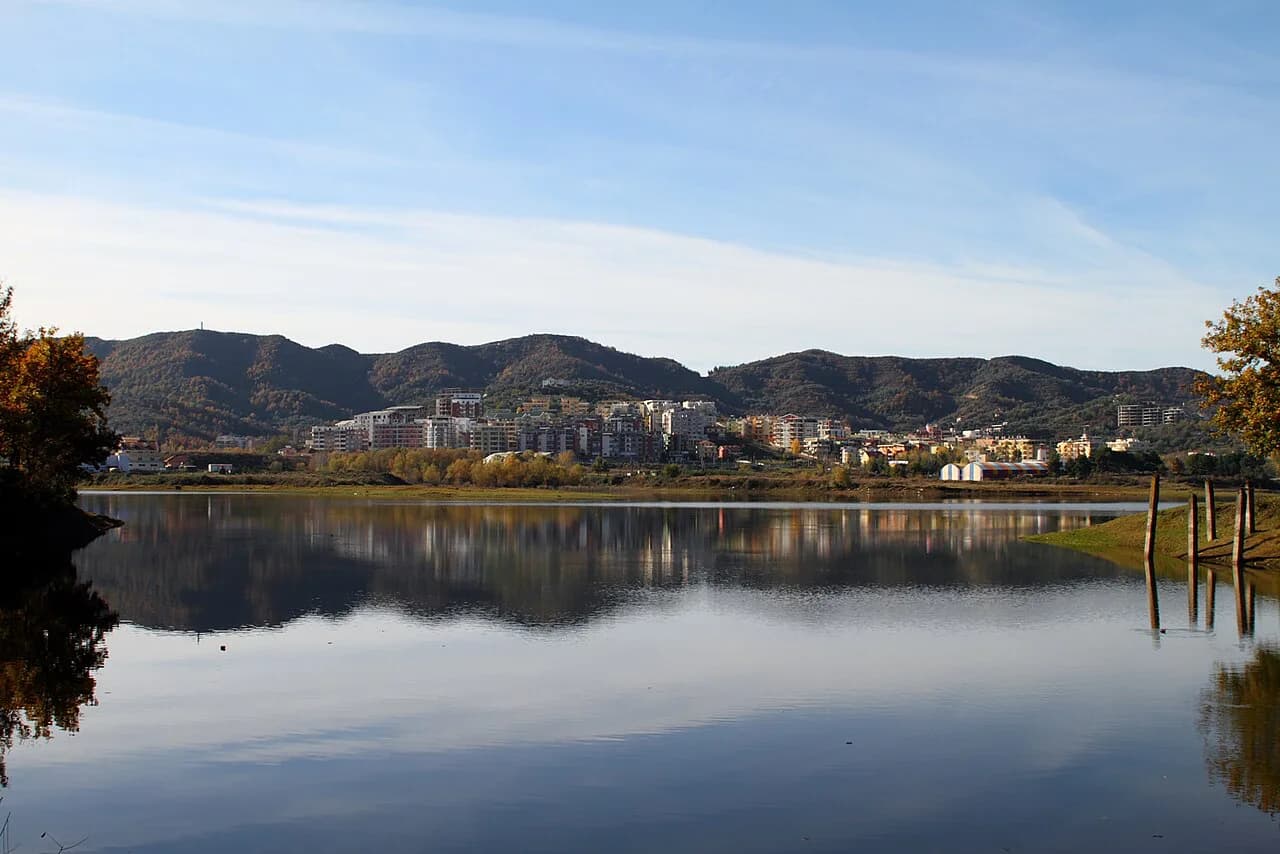
The center rewards a slow loop rather than a checklist: from the square down Murat Toptani and the boulevards, past the Pyramid, and out to the Grand Park of Tirana, where an artificial lake and shaded paths give the city its breathing room. This circuit is flat and easy, and it can be done in a morning at an unhurried pace.
Communist-era history: Bunk'Art 1, Bunk'Art 2 and the House of Leaves
This is Tirana's real argument for inclusion. Bunk'Art 2 sits in the center, inside a converted bunker, and focuses tightly on the Sigurimi secret police, surveillance and repression — it is small, immersive and easy to fit into a walking day. Entry is 400 lek, which makes it the cheapest of the serious history sights.
The House of Leaves Museum, once a medical clinic repurposed by the security services as a covert operations and interrogation site, is the best-curated of the group and worth around 90 minutes. Tickets are 700 lek; if you are picking only one paid museum on a budget, this is the one to choose.
Bunk'Art 1 is a different proposition: Enver Hoxha's vast underground presidential bunker on the city's outskirts, with more than a hundred rooms and exhibits on the regime as a whole. It takes a transfer and a bigger time block, so pick it over Bunk'Art 2 only if the period genuinely interests you, or see both across two days.
The Pyramid, Pazari i Ri and the everyday city
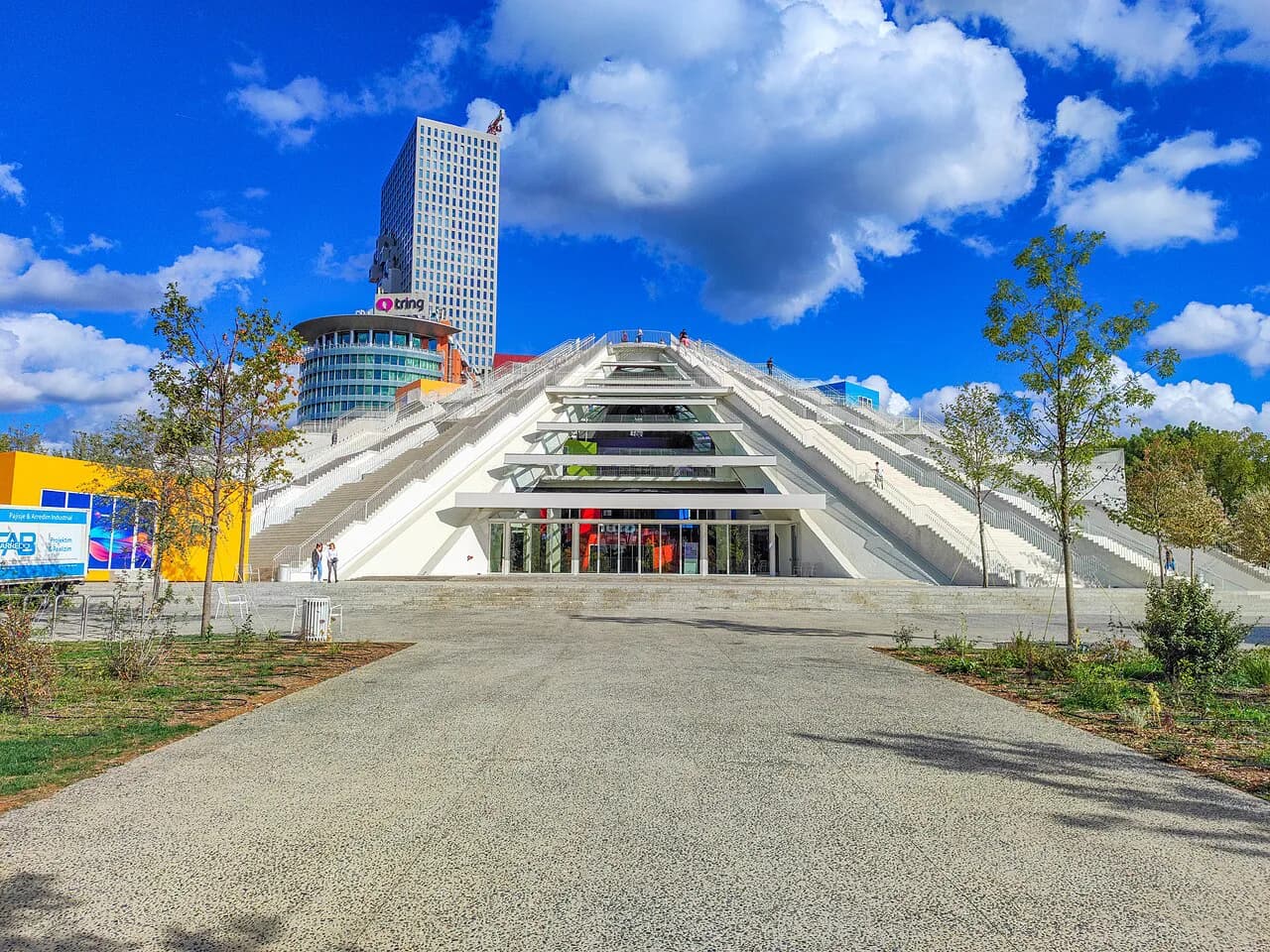
The Pyramid of Tirana, built in 1988 as a museum to Hoxha and long a contested brutalist landmark, has been reworked as a youth tech and culture hub. Its sloping exterior is climbable via a set of steps and gives a raised view back over the city — a good late-afternoon stop rather than a scheduled sight.
Pazari i Ri, the New Bazaar, is one of the oldest market areas in the city and has been spruced up without losing its function: rugs, pottery, produce, antiques and small bowls rather than tourist tat alone. Go in the morning when the food stalls are busiest and combine it with a coffee nearby.
Beyond the set pieces, the texture is street-level: painted apartment blocks, murals such as the large Selena piece by GERA, dogs being walked in the parks, and a general absence of tour groups. That is the version of Tirana most people end up liking, so leave unstructured hours in the plan.
Coffee, food and prices: what a day out costs
Coffee is a genuine local institution, from the Mulliri i Vjetër chain — reliable for espresso and free Wi-Fi — to specialty spots like Antigua. For food, Tirana runs from flaky byrek at corner bakeries to Oda and Mrizi Zanave for traditional dishes and Mullixhiu for a modern tasting menu.
Day-to-day costs are low for Europe. Food and drink are the real saving — a beer or a carafe of wine costs little enough that an evening out stays modest even by Balkan standards — while beds vary more in quality than in price. Anything quoted in euros should be read against the lek, which is what you actually pay.
Budget properly and the city is a bargain; for a full breakdown by category, use the Tirana costs guide. The short version is that two days here costs a fraction of comparable time in Rome or Vienna, which is part of why the capital earns its place on a longer route.
Blloku and Kavaja Street: two different evenings
Blloku, once the restricted residential quarter for the communist elite, is now the polished end of the city: rooftop restaurants, cocktail bars and the densest concentration of upscale places to eat. It is convenient and lively, and it is also where prices and crowds run highest.
Kavaja Street and its side streets feel more local, with low-key bars and simpler restaurants where you are more likely to be the only visitor in the room. Neither area is a night out in itself, but they show the two speeds of the city, and one evening in each is a fair split.
Walkability, crowds and how much time you need
Almost everything described here is within walking distance in the center, and the city does not yet see the crushing peak-season crowds of Italy or Spain. Locals honk, traffic is brisk and pavements are uneven in places, but a full day on foot is realistic and a taxi is rarely needed.
One day covers the square, one museum and a meal; two days let you add the cable car, both bunker museums and a slower evening. Three days only pays off if you are using Tirana as a day-trip base — otherwise the city runs out of things to show you before you run out of time.
Day trips that justify a longer stay: Durrës, Krujë, Bovilla Lake and Mount Dajti
The strongest case for a second or third day is what sits around the city. Durrës, the old port and beach town on the Adriatic, is about 45 minutes away by public transport, and Krujë, with its hilltop castle and bazaar, makes an easy half-day.
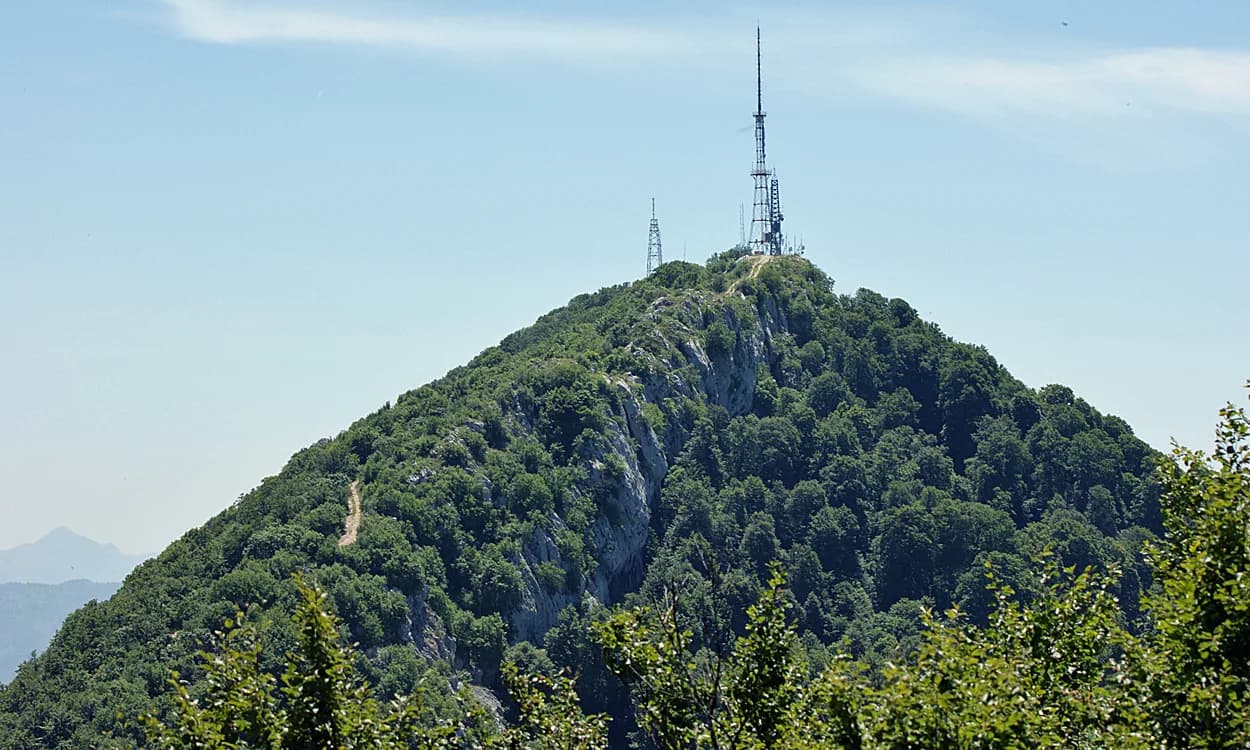
For landscape rather than towns, Bovilla Lake's reservoir and cliffs and the Petrelë Castle viewpoint about 30 minutes from the center give you mountains without a long transfer. The Dajti Ekspres cable car lifts you from the city edge into forest trails in roughly a quarter of an hour, with a restaurant at the top.
For travelers weighing a coastal base against the capital, the Tirana vs Durrës comparison sets out the trade-off plainly. The pattern that works: base in Tirana for history and day trips, then move to the coast rather than commuting to it.
Drawbacks: construction, thin sightseeing, accommodation quirks
The honest negatives are few but real. Construction noise and dust are part of the center, the sightseeing list is short relative to Athens or Istanbul, and the city can feel unpolished in a way that some travelers read as charm and others as shabbiness.
Accommodation deserves care: quality varies widely at similar price points, and some apartment bookings are settled in cash on arrival, which eats time and requires planning. Recent reviews and established properties reduce the risk, and central apartments remain good value when they are good.
The bigger structural drawback is opportunity cost. Albania's coast and northern mountains are exceptional, and every Tirana day is a day not spent there — which is why the capital is best kept to two days inside a longer trip rather than a week of its own.
Getting there and getting around
Tirana International Airport, Nënë Tereza, is the country's main gateway and sits a short drive from the center, with buses and taxis covering the transfer. The city itself is walkable enough that you can skip car hire entirely for a Tirana stay and pick up a car only when you leave for the coast or mountains.
Within the city, walking plus the occasional taxi covers everything in this guide; public buses reach Durrës and the airport but are not needed for the center. If your dates are flexible, Tirana in April and Tirana in May are comfortable months for a walking-heavy visit.
Tirana versus the rest of Albania: when to include it and when to skip it
Include Tirana when you have ten days or more, when you want context for the bunkers and monuments you will see elsewhere, or when you want a cheap, walkable city with strong food before or after the coast. Two days at the start of a two-week route is the sweet spot.
Skip it, or cut it to a single day, when you have a week built around the Albanian Riviera, when you are traveling primarily for beaches, or when you want a classic European city break with dense monuments — in that case look elsewhere in the region. If you are still deciding on the country as a whole, is Albania worth visiting covers that question separately.
If you visit in autumn, October is a strong month for the city and for day trips, with the summer heat gone and the coast still workable. Late spring and early autumn are the two windows that best balance walking weather and open businesses.
Is Tirana worth visiting? The final answer by traveler type
History-focused travelers, slow travelers and anyone building a two-week Albania route should include Tirana for two days — Bunk'Art, the House of Leaves and a day trip to Krujë or Mount Dajti justify it. Beach-first travelers on a short week should skip the capital and put the days into the Riviera instead.
City-break travelers looking for a dense, monument-filled European weekend will find Tirana thin, and should treat it as a stopover rather than a destination. Everyone else: arrive with realistic expectations, walk the center, spend on the museums and leave the rest of your time to the country.
Explore more Tirana trip-decision guides
Frequently Asked Questions
Is Tirana worth visiting for a first trip to Albania?
Yes, for two days within a longer route. It gives you the country's recent history, an easy walking center and useful day trips to Krujë, Durrës and Mount Dajti, which makes the rest of Albania easier to read. It is a weaker choice as the sole purpose of a trip.
How many days do you need in Tirana?
One full day covers Skanderbeg Square, one history museum and a good meal. Two days let you add the Dajti Ekspres cable car, a second bunker museum and a slower evening. Three days makes sense only if you are using the city as a base for day trips.
What is there to actually see in Tirana?
The core is Skanderbeg Square with the Et'hem Bey Mosque and Clock Tower, the two Bunk'Art museums, the House of Leaves, the Pyramid, Pazari i Ri market and the Grand Park. It is a short list, which is why the city works better as a two-day stop than a week-long stay.
Is Tirana expensive?
No — by Western European standards it is cheap, especially for food and drink. Museum tickets are modest, beds vary more in quality than price, and an evening out costs far less than in Rome or Vienna. Prices have been rising, so budget with some slack.
Is Tirana worth it if I only have a week in Albania?
Usually not. With seven days, the Riviera beaches and the northern mountains give you more per day than the capital. Limit Tirana to one day if your flight arrives there, or skip it and start south.
What are the drawbacks of visiting Tirana?
Construction and an unfinished look, a modest number of traditional sights, uneven accommodation quality, and the opportunity cost of days not spent on the coast or in the mountains. None of these are deal-breakers for a two-day visit.
Sources
Trip-decision notes
Optional updates when we publish or revise a destination verdict.
You might also like
Continue reading
More guides you'll find useful