Tirana in June: Weather, Crowds and How Long to Stay
Tirana in June brings warm days near 26°C, long evenings and a lively city. Here is who the month suits, what to see and how many days you need.
On this page
June is worth it: it is one of the two strongest months for Tirana, pairing warm but rarely brutal days with late sunsets and a city at full cultural swing. If you want the capital as a city break before the August heat peaks, this is the window most travelers should target.
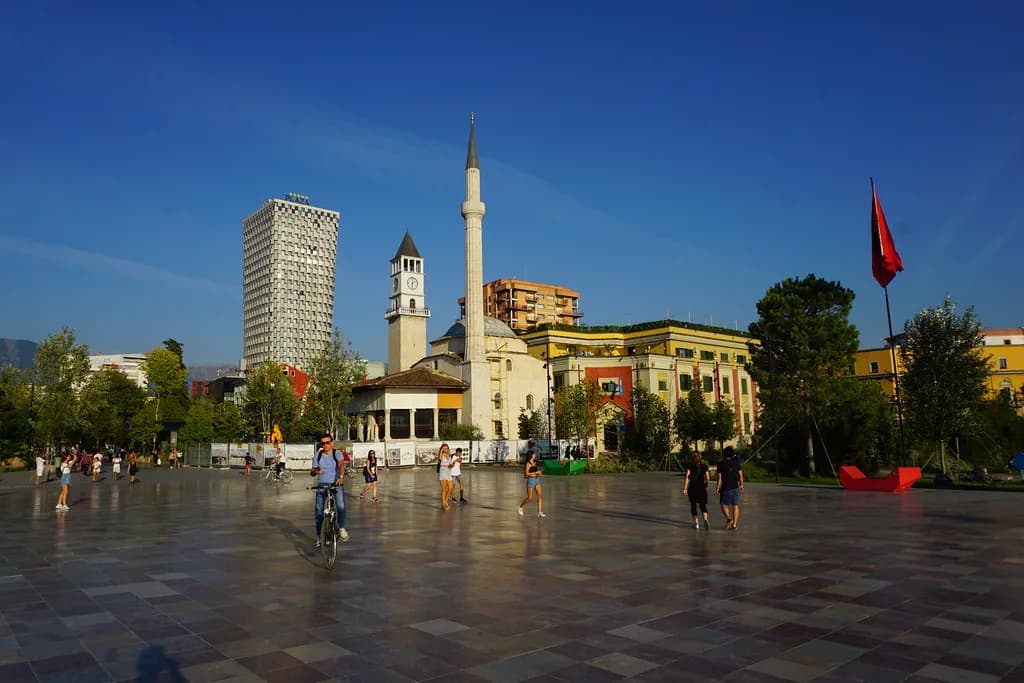
The trade-off is straightforward. June is busier and pricier than spring, and the open expanse of Skanderbeg Square becomes a midday sun trap, so you plan mornings and evenings outdoors and use the middle of the day for museums or a long lunch. This guide sets out the typical weather, the sights worth your hours, the day trips that work and what to expect to spend.
The verdict on Tirana in June
June delivers the version of Tirana that convinces doubters: café life spilling onto pavements, a packed events calendar and enough daylight after work to walk the whole center twice. If your question is whether Tirana is worth visiting at all, June is a flattering month to test the answer, and the city's mix of Ottoman, Italian and communist-era architecture reads best in good light.
Where June loses points is value and comfort. Late June pushes toward high summer, so expect the warmest afternoons of the month by the final week, more competition for the best-known sights and a city center full of construction and traffic. Travelers who hate heat or want the cheapest bed should look at the best time to visit Tirana and weigh spring against autumn instead.
What June weather in Tirana actually feels like
Treat June as reliably warm rather than guaranteed. The nearest month-by-month figures show September in Tirana averaging highs around 26°C (79°F) and lows near 16°C (61°F), and June sits in the same warm band, with long days and a moderate chance of a passing shower rather than a washout.
For context, the same climate data puts April at roughly 17°C (63°F) highs and 8°C (8°C) lows, while August peaks near 32°C (89°F) with lows around 20°C (68°F). June sits comfortably between the two, which is exactly why it works: warm enough for terraces and the Dajti cable car, short of the August furnace.
Practical planning beats chasing a forecast. Build outdoor blocks for morning and after 5pm, keep one indoor museum as a midday fallback, and carry water for the walk across the unshaded stone of the main square.
Who will love Tirana in June
First-time Balkan travelers who want a compact, walkable capital with strong food and a youthful buzz will get the most from June. The city's own tourism board leans hard on exactly those themes, selling a colorful, mixed-architecture city with history from antiquity to modernity, mountain-and-lake scenery nearby and a food scene it describes as affordable.
Museum and history travelers also do well, because June daylight lets you pair a bunker museum with an evening walk instead of choosing between them, and the communist-era sights reward a full day rather than a hurried hour. Couples and solo city-breakers who care more about terraces, coffee and street life than beach time will find June close to ideal.
Who should pick a different month or skip Tirana
Skip June if you cannot handle afternoon heat on open pavement, if you want the lowest prices of the year, or if your main goal is the Albanian coast, where the capital becomes a sweaty transit stop rather than the point of the trip. Travelers who prioritize cool walking weather should book spring or move to September.
If you are comparing months directly, Tirana in September offers a very similar temperature profile with the summer crowds thinning, while Tirana in May trades a little warmth for greener hills and a calmer center. Neither is a compromise so much as a different balance of heat, cost and buzz.
The city at street level: Skanderbeg Square, Et'hem Bey Mosque and the Clock Tower
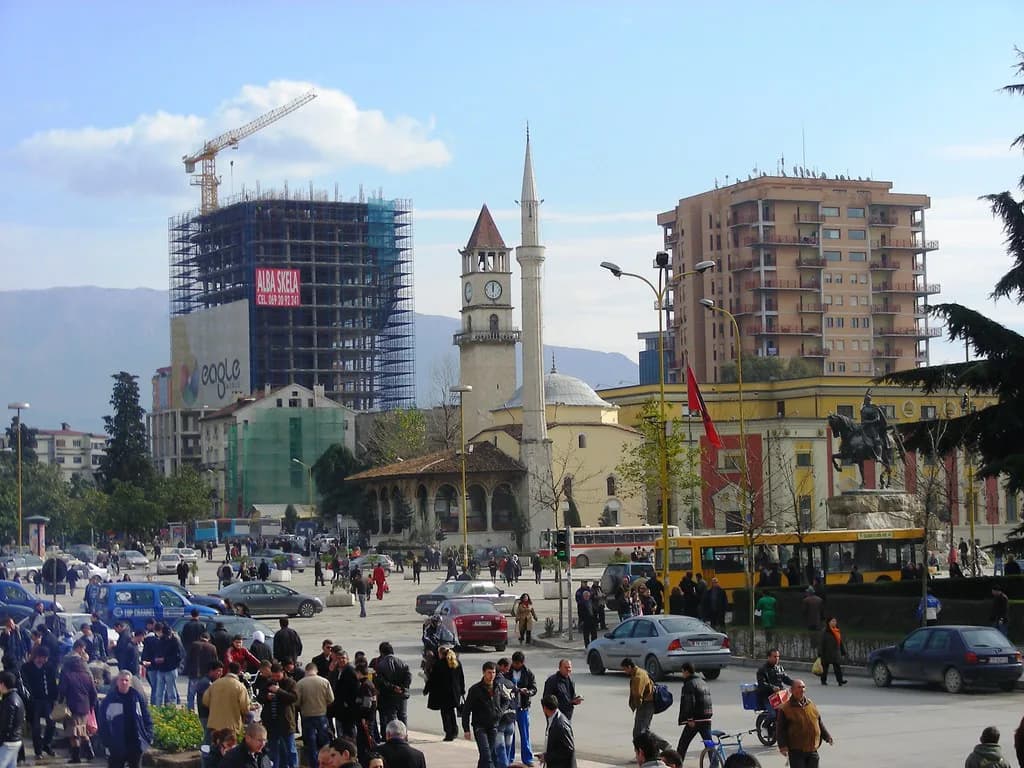
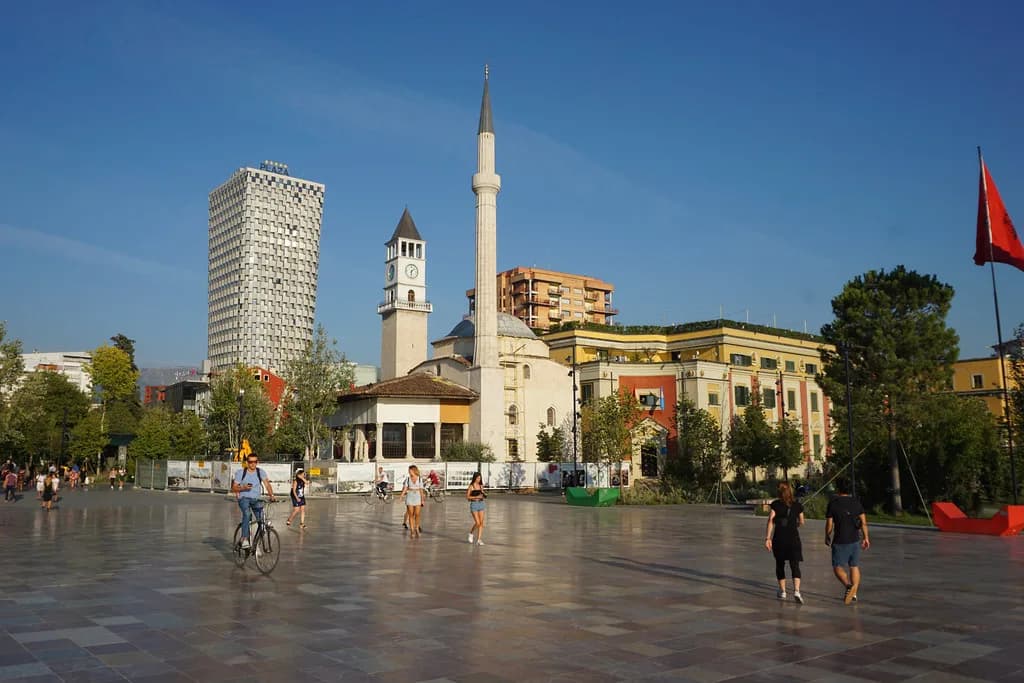
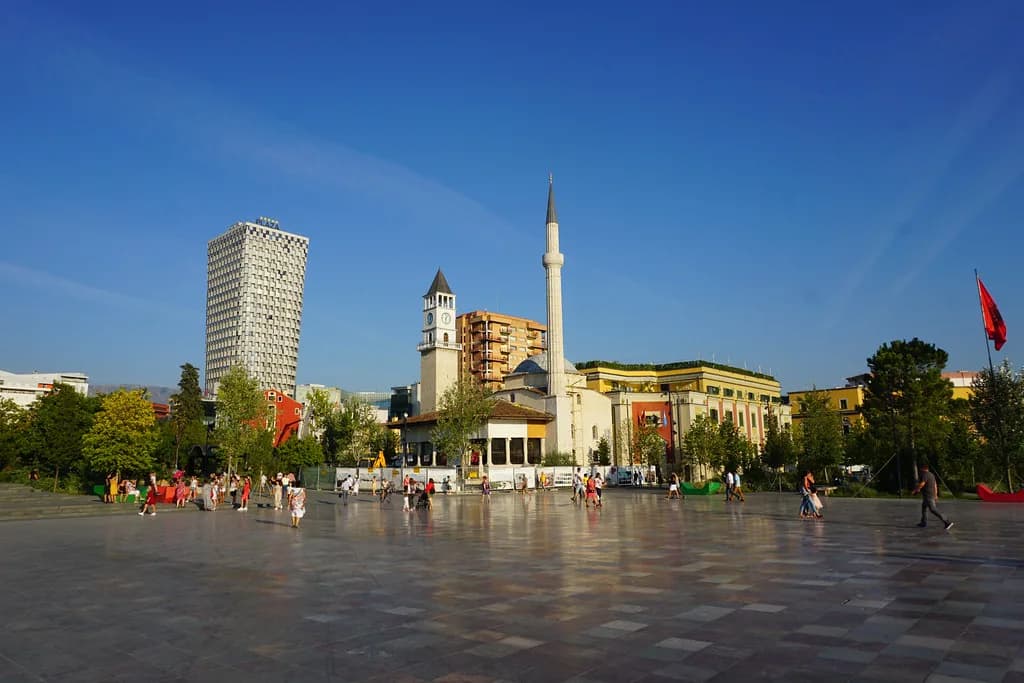
Start where the city starts. Skanderbeg Square is the central hub, anchored by the equestrian statue of the national hero and ringed by the Et'hem Bey Mosque with its painted frescoes, the Clock Tower, the National Historical Museum with its huge facade mosaic and the Opera and Ballet Theatre.
Walk it in the early morning or after the day cools, because the square is broad, pale and almost entirely without shade. The mosque, tower and museum sit within a couple of minutes of each other, which makes this the single most efficient sightseeing block in Tirana, and the pedestrian lane toward Blloku plus the New Market at Pazari i Ri are easy add-ons on foot.
Bunk'Art 1 and Bunk'Art 2: which one to choose
Tirana has two separate bunker museums and they are not interchangeable. Bunk'Art 1 occupies Enver Hoxha's vast underground presidential bunker on the city's edge, with 106 rooms and a large assembly hall now used for concerts, and it tells the story of the socialist regime through art and historical display.
Bunk'Art 2 sits in the center and narrows the focus to the secret police and the security apparatus, with surveillance and human-rights narratives told through interactive exhibits. If you have time for one, pick Bunk'Art 2 for convenience and a tighter story; choose Bunk'Art 1 if you want scale, atmosphere and a half-day commitment.
The Pyramid, Pazari i Ri and the walk toward Blloku
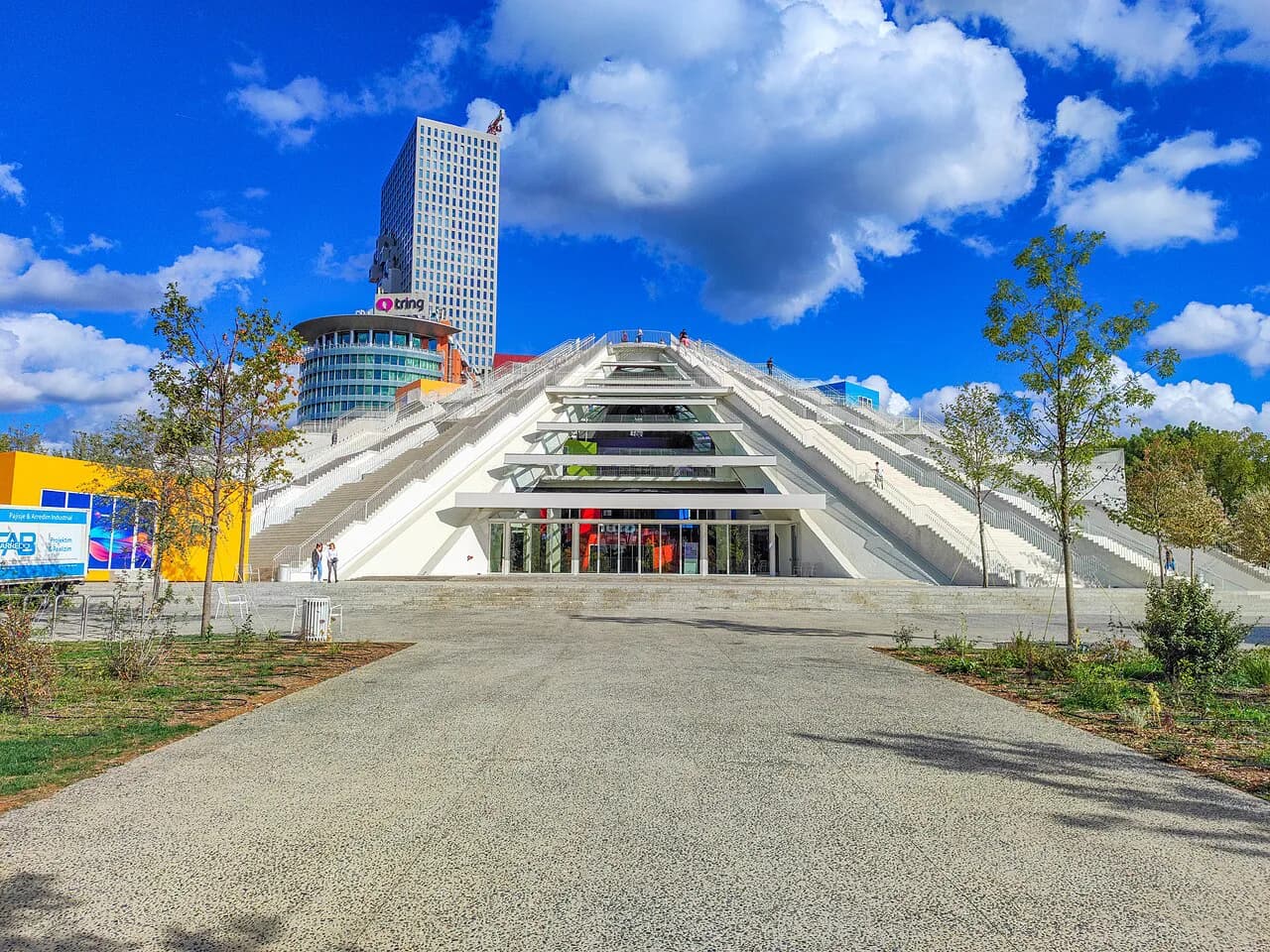
The Pyramid of Tirana, opened in 1988 as a museum to Hoxha, is now the city's most argued-over landmark, with around a hundred steps up to a panoramic view that taller buildings have partly eaten into. Go for the climb and the sunset crowd rather than a long visit, and expect company on clear June evenings.
From there, the natural loop runs through the New Market at Pazari i Ri, where produce and local food stalls give a break from monuments, then along the pedestrian streets toward Blloku, the former party enclave turned café and restaurant district. This is the stretch where June earns its keep: long light, open terraces and a walkable evening.
Dajti Mountain and the cable car as a half-day escape
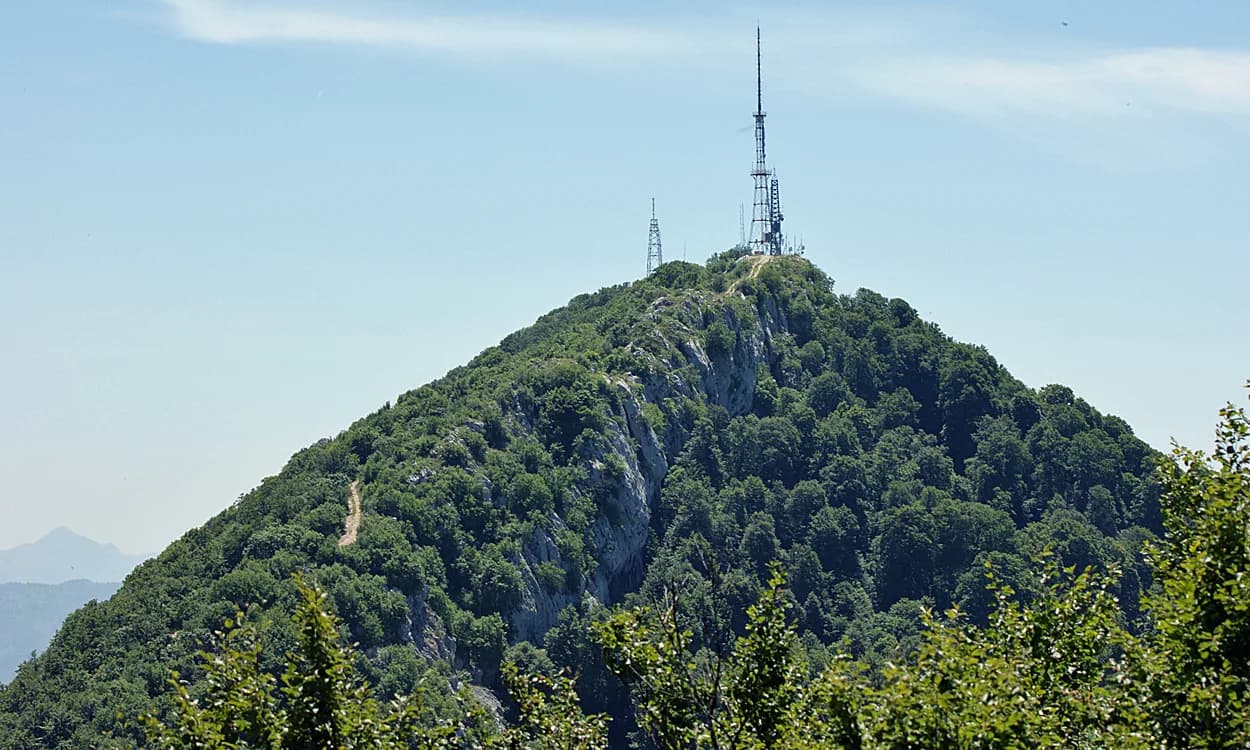
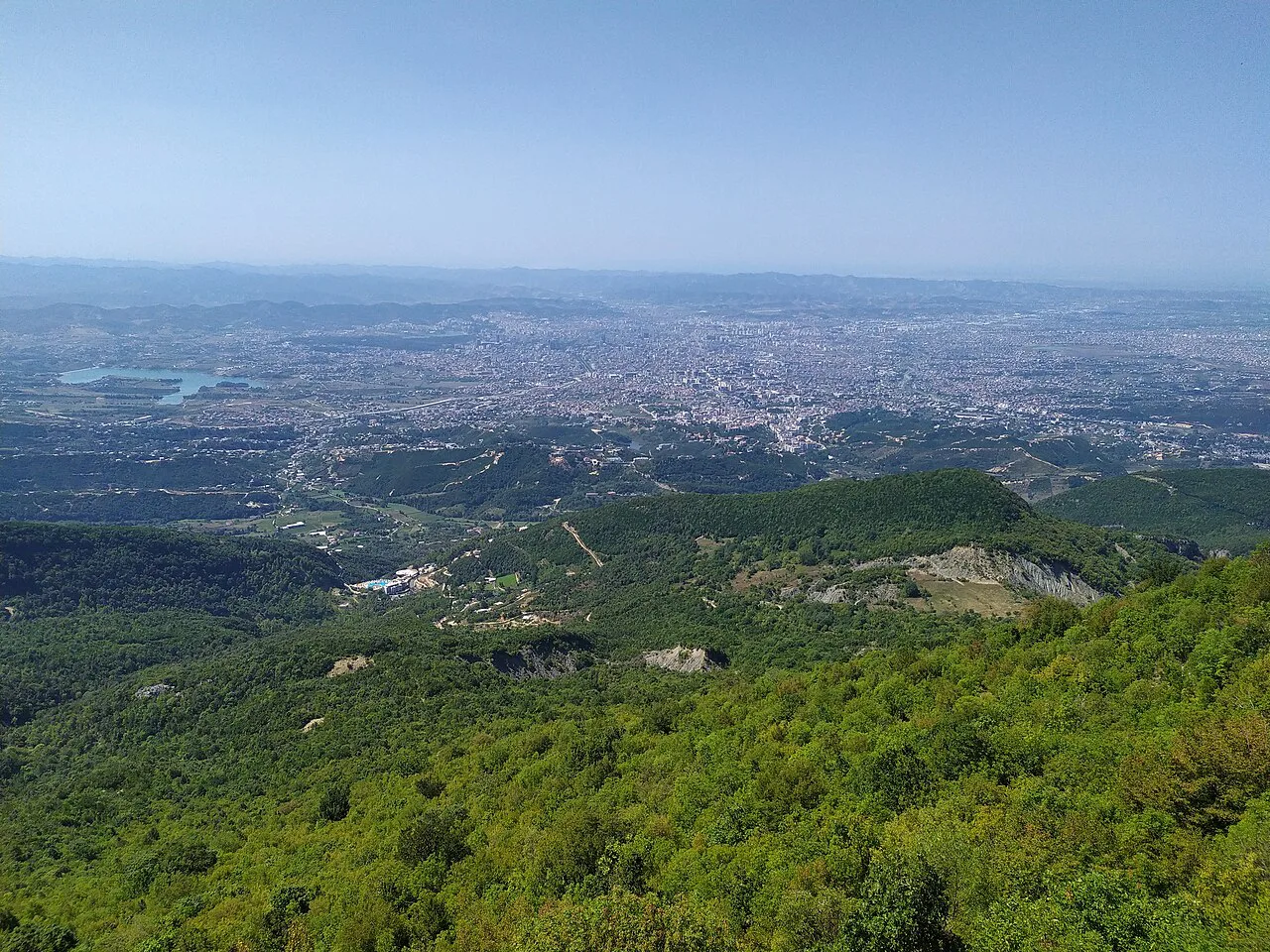
Dajti Mountain National Park is the best half-day from the center. The Dajti Express cable car climbs in about 15 minutes to the mountain, where trails, an adventure park and viewpoints over the city make a real change of air, and June is the sweet spot before summer heat and afternoon storms build.
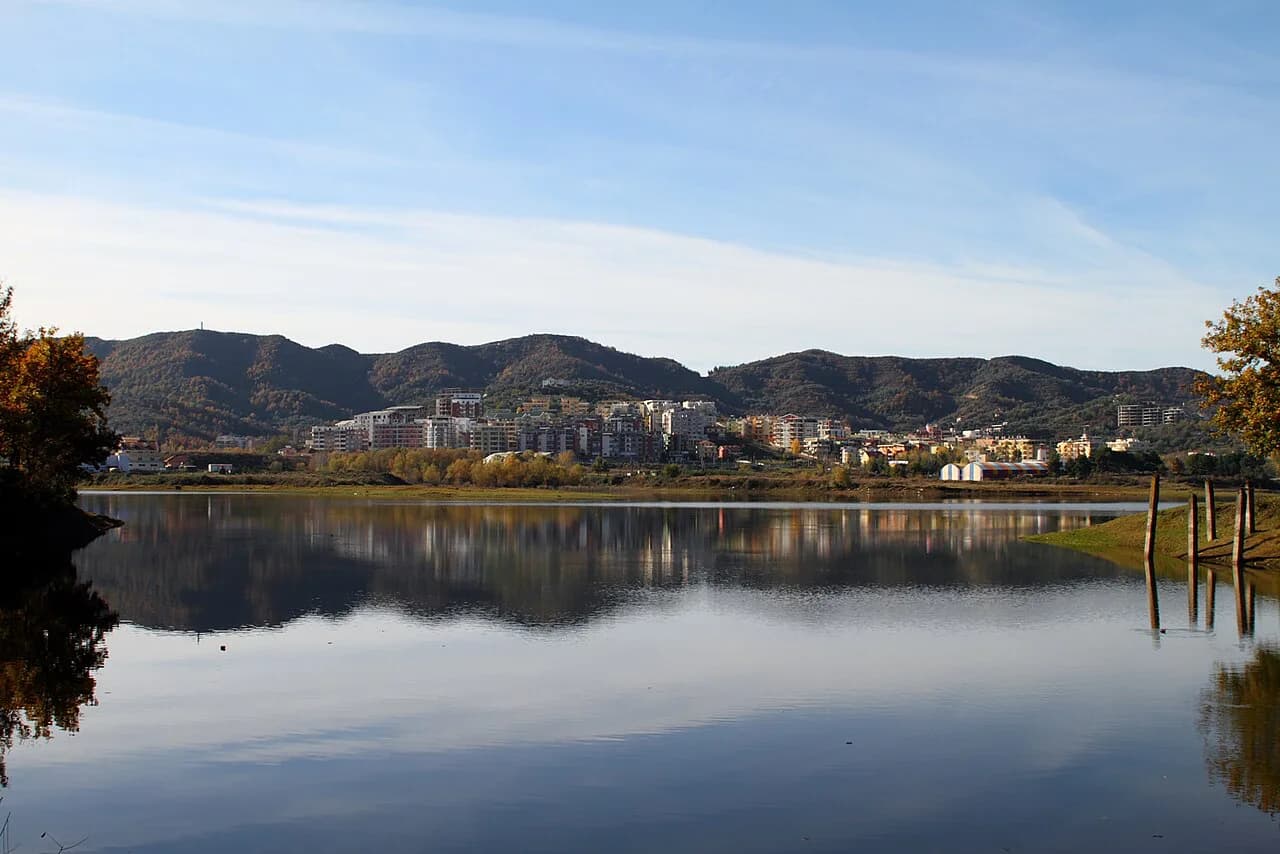
Give it a morning: ride up early, walk or hike while it is cool, and come down before the afternoon haze thickens. Cheaper alternative for a green break in the city itself: the Grand Park of Tirana, with its lake, botanical garden and shaded paths.
Day trips that fit a June trip: Krujë, Berat and Durrës
Tirana works as a base, not just a stop. Krujë, with its hilltop castle and bazaar, is the classic short run from the capital, and the city's own tourism platform treats Krujë, Berat and Durrës as standard day trips, with Berat described as a UNESCO city roughly two hours away.
Berat is the strongest full-day choice for architecture, while Durrës gives you an Adriatic shoreline and Roman remains on a short ride. If you are weighing a coastal base against the capital, read the Tirana vs Durrës comparison before you commit your nights.
How many days you need in Tirana
Two full days covers the center properly: one for Skanderbeg Square, the mosque, the tower and one bunker museum, and one for the pyramid, the New Market and the Blloku walk. Add a third day if you want Dajti Mountain or a day trip, and a fourth if you plan both.
June's long evenings effectively buy you extra hours, so a two-day visit feels fuller than it would in winter. Resist the urge to over-schedule the middle of the day, when heat and traffic slow everything down.
Typical costs and how to read Tirana's price level
Tirana remains a comparatively inexpensive European capital, with the city's own tourism board pitching affordable prices as part of its appeal. That is a price level in words, not a quote: for museum tickets, cable car fares and meals, read the current published rates at each venue and restaurant rather than trusting an old figure.
June nudges costs up because it is high season for the city break market. If you want the full breakdown of daily spending, including how far the lek goes on food and transport, the Tirana costs guide sets out what a trip actually adds up to.
Getting there and getting around without a car
Tirana International Airport Nënë Tereza is the entry point for most visitors, with the city center a short road transfer away. Once in town, the historic core is genuinely walkable, and the cable car base for Dajti is reachable by local transport or taxi rather than a rental car.
Driving in the capital is the weakest option: traffic, informal parking and construction make a rental a liability for a city stay. Use buses and taxis inside Tirana and save any car hire for a multi-stop Albania itinerary, keeping in mind that the local currency is the lek.
Drawbacks: heat, dust, traffic and construction
June's honest downsides are physical. The main square and the walk to the pyramid offer little shade at midday, construction sites and traffic add noise and dust to the center, and afternoon heat can flatten a tightly packed schedule.
The city is also changing fast, which means some museums and sites can close for renovation or shift their hours mid-season. If a specific sight is the reason for your trip, confirm its current opening days with the venue before you build a day around it.
Tirana in June versus May and September
May is cooler and greener, with April showing highs around 17°C (63°F) and lows near 8°C (8°C), so late spring still needs a layer in the evening. September lands near 26°C (79°F) highs and 16°C (61°F) lows, close to June but with the season winding down.
The verdict by traveler type: choose June for long evenings and a city at full energy, May for cooler walking and softer prices, September for similar warmth with fewer peak-season crowds. Anyone sensitive to heat should default to May or September, and October is the quieter fallback once the terraces thin out.
Practical notes for June travel
Plan around the sun, not against it: outdoor sights before 11am and after 5pm, indoor museums and long lunches in between. The city's events calendar runs through the summer, so check what is on at the main square and the opera house during your dates, since large events can briefly close streets or fill the center.
Carry some cash in lek alongside a card, since smaller venues and market stalls may not take plastic, and keep a flexible afternoon in your plan for heat or a passing shower. For entry rules and document requirements, use your own government's official Albania travel page once before booking.
Plan Your June Trip to Tirana
June is the month to take Tirana as it wants to be taken: a walkable, sociable capital with serious history under a long evening sky. Book two full days, add one for Dajti or a day trip, and structure each day around morning and evening walking rather than a midday march across the square. If you are weighing whether to push on into the Balkans after Albania, our Kotor verdict applies the same month-by-month logic to Montenegro's bay town.
If you are still deciding whether the city deserves your time at all, start with the full Tirana verdict, then match your dates to the month that fits your tolerance for heat and crowds. June rarely disappoints; it just asks you to plan around the sun.
Frequently Asked Questions
What is the weather like in Tirana in June?
June is typically warm and mostly dry, with long days and occasional passing showers rather than sustained rain. The nearest month-by-month climate figures sit close to September, which averages highs around 26°C (79°F) and lows near 16°C (61°F), while August runs hotter at about 32°C (89°F). Use those as typical conditions and check a short-range forecast before you travel.
Is June a good time to visit Tirana?
Yes for most city-break travelers. June pairs warm days with late sunsets, a full events calendar and terraces in use, which suits sightseeing on foot and outdoor evenings. It is less ideal if you dislike heat or want the lowest prices, in which case May or September gives a similar trip with a gentler edge.
How many days do you need in Tirana?
Two full days cover the center comfortably: the main square, mosque, clock tower and one bunker museum on day one, then the pyramid, the New Market and the Blloku walk on day two. Add a third day for Dajti Mountain or a day trip to Krujë, Berat or Durrës, and a fourth if you want both.
Is Tirana expensive in June?
Tirana is a comparatively inexpensive European capital, and the city's tourism board promotes affordable prices as part of its appeal. June is high season, so accommodation and the most popular experiences cost more than in spring or late autumn. Check current museum, cable car and restaurant rates, since published figures change.
What can you do on a day trip from Tirana?
Krujë is the classic short run, with its hilltop castle and bazaar, and Berat is the strongest full-day choice for architecture at roughly two hours away. Durrës offers an Adriatic shoreline and Roman remains on a shorter ride. All three work as day trips with the capital as your base.
Sources
Trip-decision notes
Optional updates when we publish or revise a destination verdict.
You might also like
Continue reading
More guides you'll find useful