Tirana in May: Warm Days, Rain Risk and Your Trip
Tirana in May brings warm days, mild evenings and frequent showers. Here is what that means for crowds, timing and how many days to plan.
On this page
Yes, May is a good time to visit Tirana — one of the better months on the calendar, in fact, as long as you accept that showers are part of the deal rather than an unlucky interruption. Days are warm and evenings mild, and the city is still running at something close to its own pace before the summer peak.
The practical question is not whether May is pleasant but how you spend it. Build your days around outdoor mornings and indoor afternoons, and a wet spell costs you one museum instead of a whole day. Go in expecting guaranteed sunshine and you will spend a lot of time under café awnings watching the pavement.
The verdict: who May suits and who should wait
May suits travelers who want to walk a compact capital in shirtsleeves, sit outside in the evening and see the main sights without queueing behind tour groups. It is also the month for anyone combining a city break with a day trip to Berat or Kruja, since the roads and sites are open and the heat has not yet turned a mid-afternoon walk into a chore.
Choose June or September instead if your priority is reliable dry weather, if you are travelling mainly to swim or hike, or if you want the fullest possible outdoor programme without a plan B. May rewards flexibility; it punishes a rigid itinerary.
What May weather in Tirana actually feels like
May in Albania means warm days, mild evenings and plenty of rain. In a typical May around half the days reach 25°C (77°F) or more, and roughly one day in ten climbs above 29°C (84°F), so afternoons can feel distinctly summery.
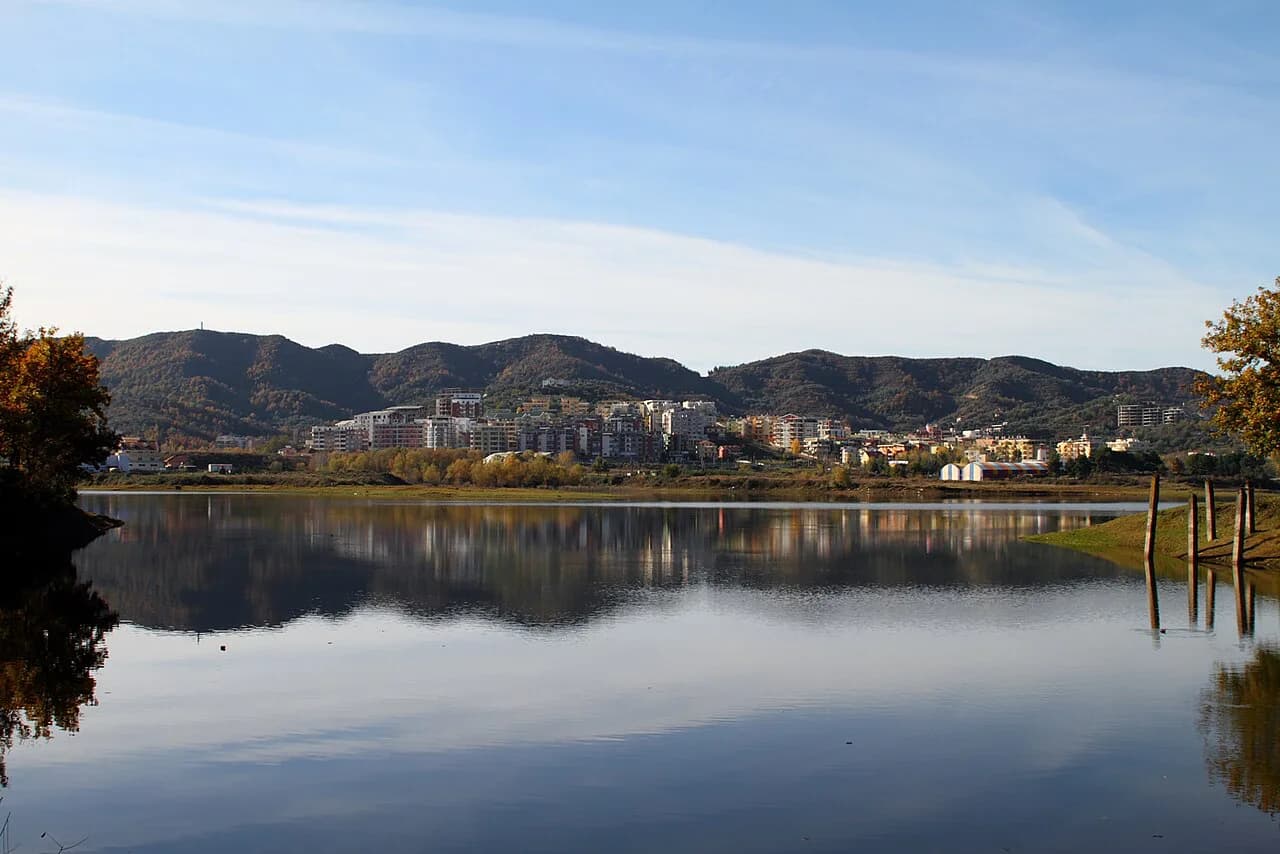
Treat those as typical conditions rather than a forecast. The number that should shape your planning is the rain: wet days are frequent enough in May that an itinerary built entirely on outdoor sights is a gamble. Tirana sits in a basin with mountains to the east, and spring showers can build through the afternoon after a clear morning.
For a longer view of how May compares with the months either side, the month-by-month picture in the best time to visit guide is a more useful planning tool than any single forecast.
Warm days, wet afternoons: how to structure a day
Front-load the outdoors. Start with Skanderbeg Square and the surrounding streets while the light is good and the pavements are quiet, then move indoors when the clouds build in the early afternoon. This is also the best window for the walk up to Tanners' Bridge and the old castle quarter around the Murat Toptani promenade, both of which are short strolls rather than full excursions.
Keep one indoor anchor in reserve for each day — a museum you genuinely want to see — rather than saving them all for a single washout. Two or three hours in a gallery while a shower passes is a good trade; three consecutive museum afternoons because you did not plan is not.
Why May sits before the summer peak
Tirana's calendar fills up from late spring onward, and the city's own events listings show a dense programme of festivals, races and cultural events running through the autumn. May sits at the front edge of that season: the city is lively but not yet saturated, and you are competing with fewer visitors for tables and museum space than in July or August. Event dates shift year to year, so check the Visit Tirana listings for your dates.
The trade-off is the weather, not the crowds. You are effectively buying quieter streets and softer light in exchange for a higher chance of rain, which is a good deal if you are city-focused and a poor one if your trip depends on mountain views.
Skanderbeg Square and the city centre on foot
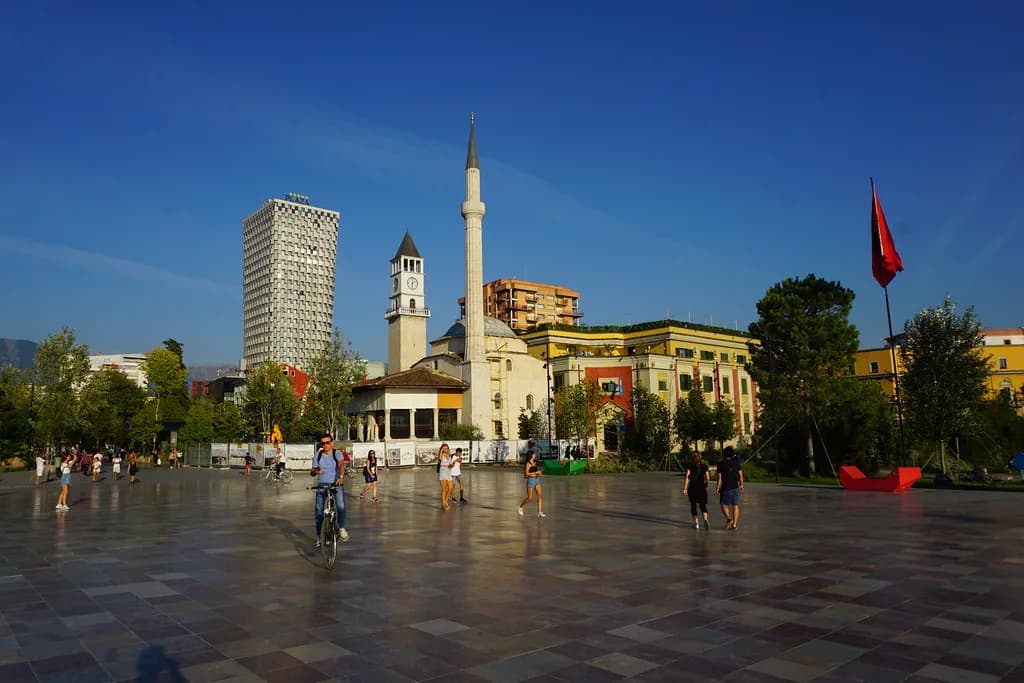
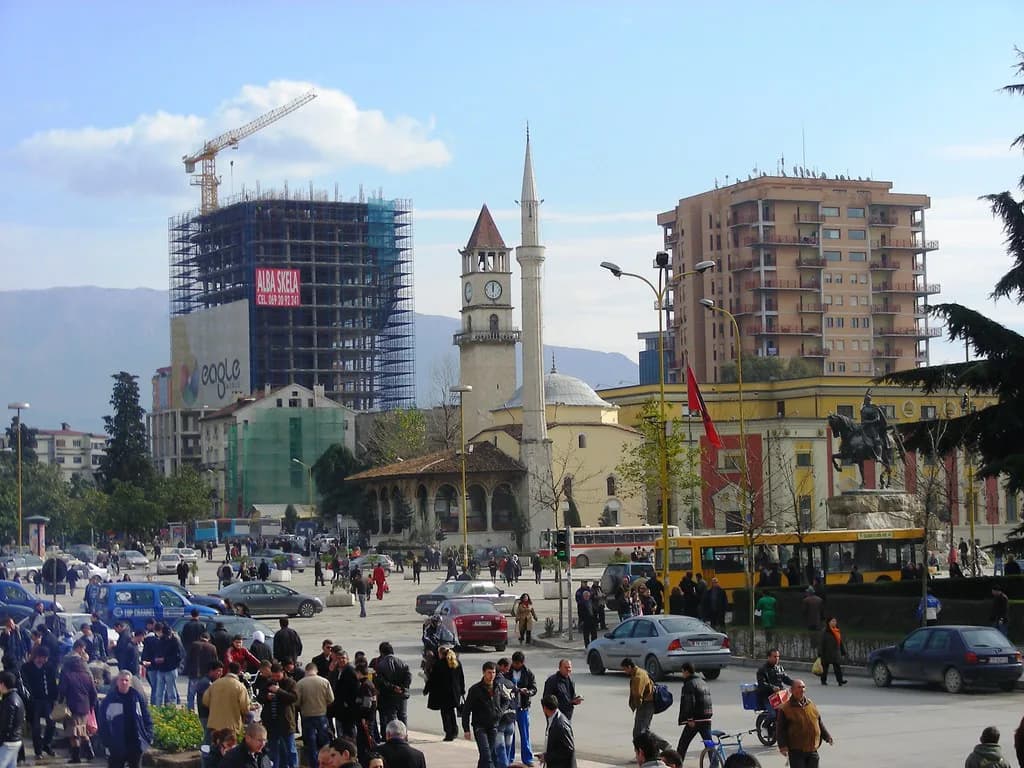
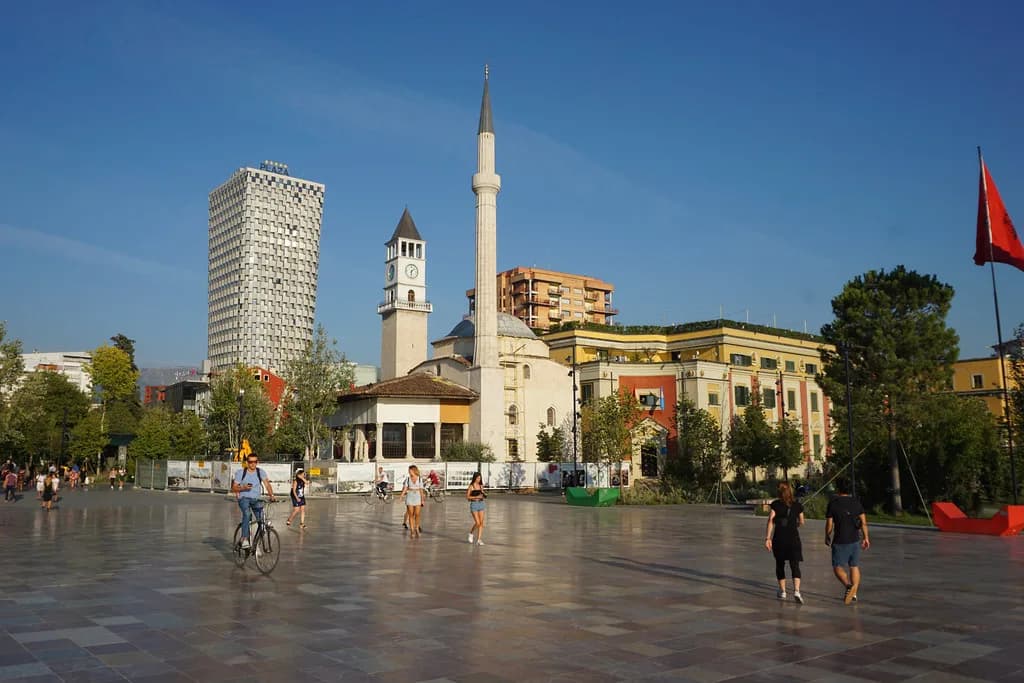
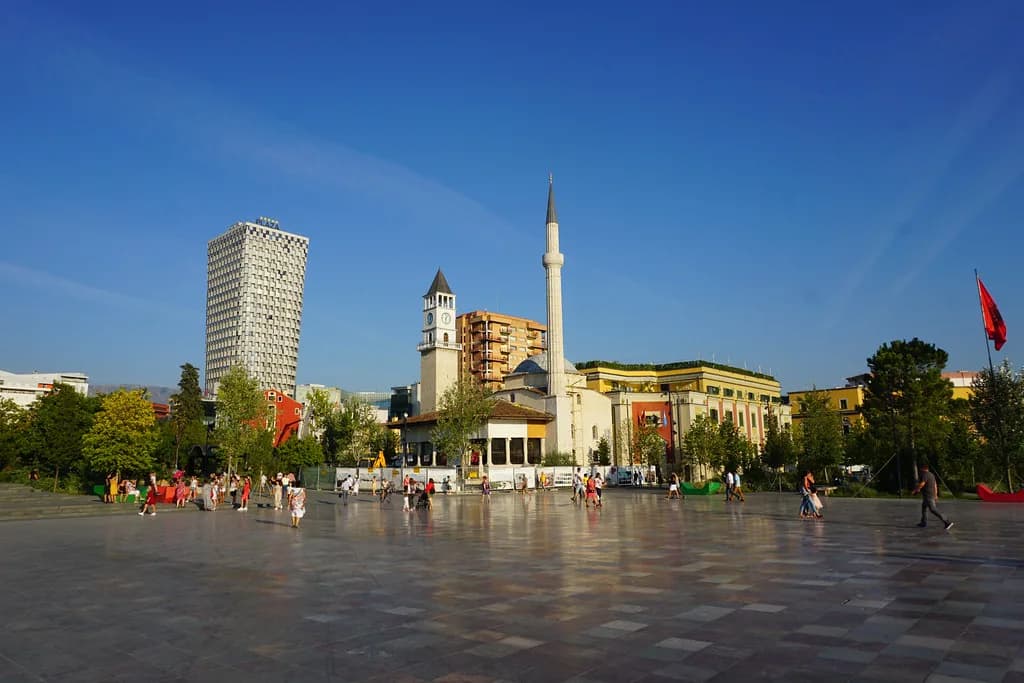
The centre is compact and walkable, and Skanderbeg Square is the natural starting point: a wide open space ringed by the Et'hem Bey Mosque, the clock tower and the National History Museum. The square's scale makes it feel exposed in a downpour, so time it for a dry morning.
From there, the pyramid and the Blloku district are a manageable walk, and the Pazari i Ri market area gives you a reason to loop east. The city is described by its own tourism board as a place of mixed architecture, from Ottoman-era structures to Italian-era villas, which is exactly what makes a slow walk rewarding.
Blloku, the Pyramid and an evening outside
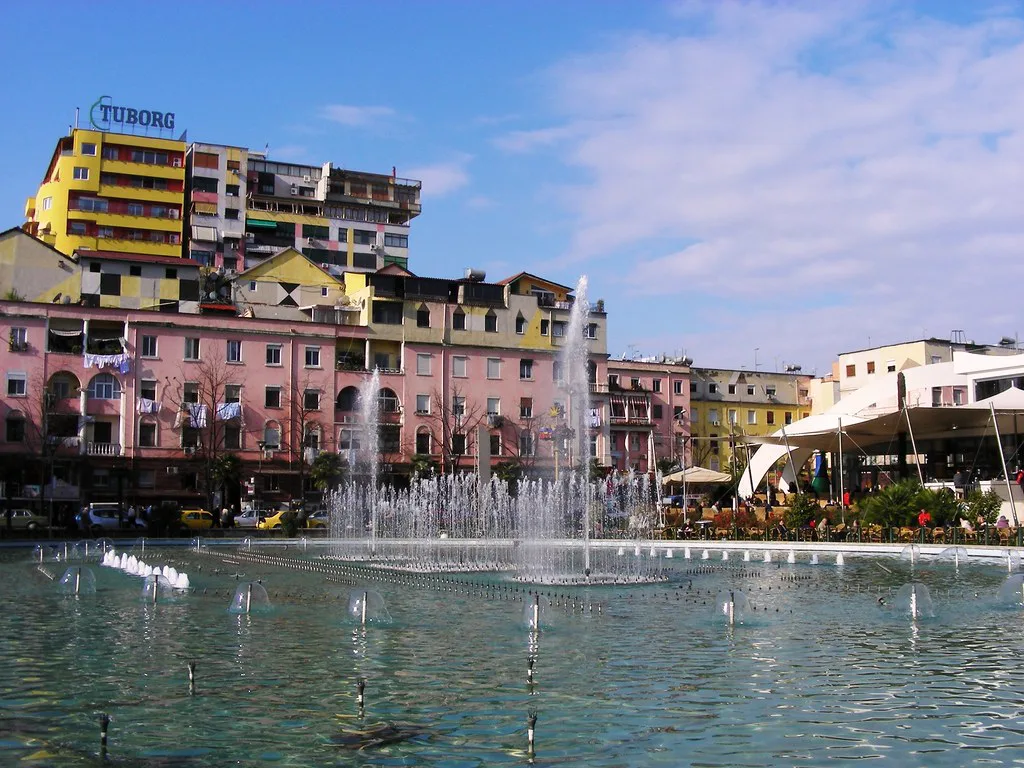
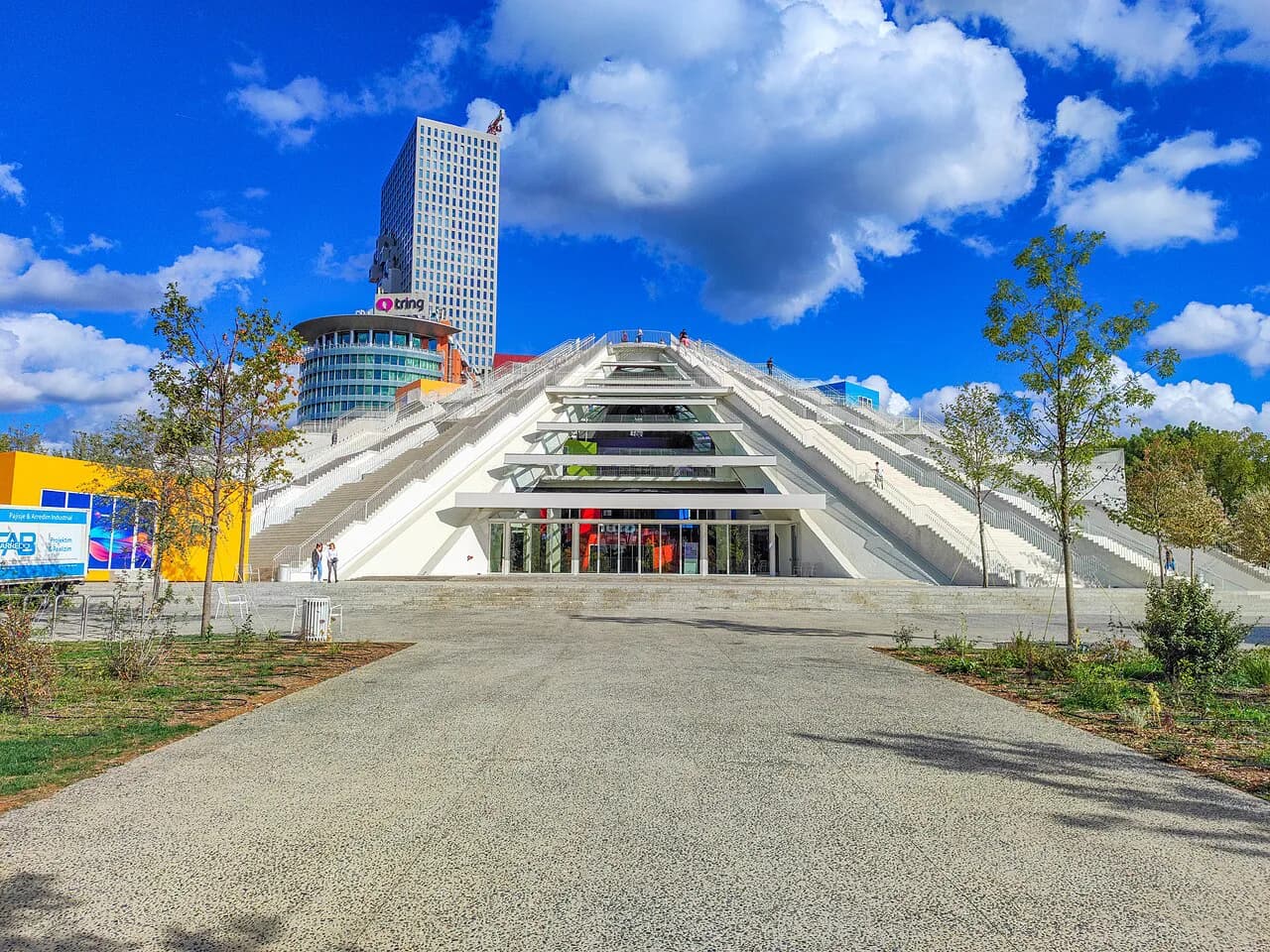
Blloku is where Tirana feels most contemporary, and the Pyramid of Tirana has become the city's signature piece of recent architecture. Both fit naturally into a late-afternoon circuit, and both are outdoor-first, so a dry evening is worth using well.
May evenings are mild, which is the real argument for the month: you can eat outside without the crush of high summer, and the city's café and restaurant culture is one of its strongest cards. The trade-off is unpredictability — keep a covered alternative in mind rather than committing to a specific terrace.
Museums for a rainy May day
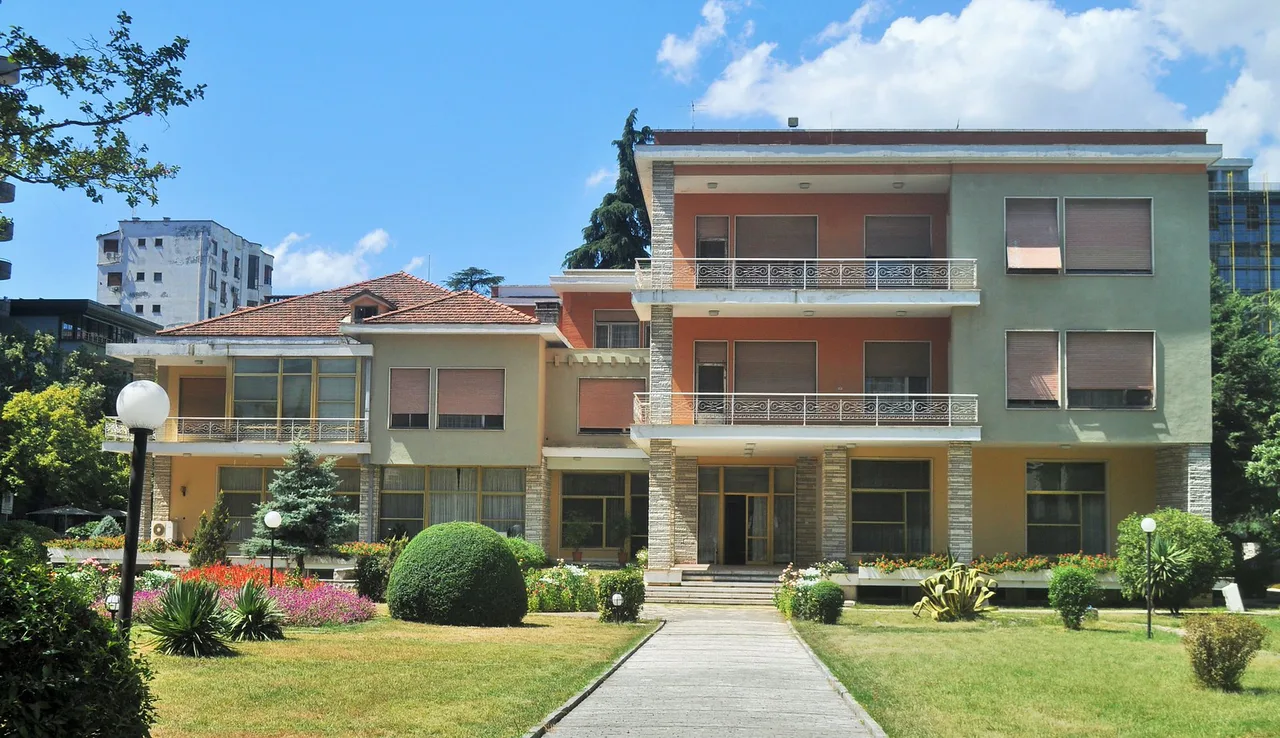
The House of Leaves Museum is the standout indoor stop, an unusual and affecting museum in a city with a complicated twentieth-century story. The National History Museum on Skanderbeg Square covers the long arc from antiquity to the modern period, and the two together fill a wet afternoon without overlap.
Farther out, the Tirana Mosaic marks the site of a settlement dating to the first century, and the Pëllumbas Cave and Erzen Canyon sit within reach for a half-day that mixes archaeology with landscape. Both are more exposed than a city museum, so match them to a reliably dry day.
Dajti Mountain and the cable car on a clear day
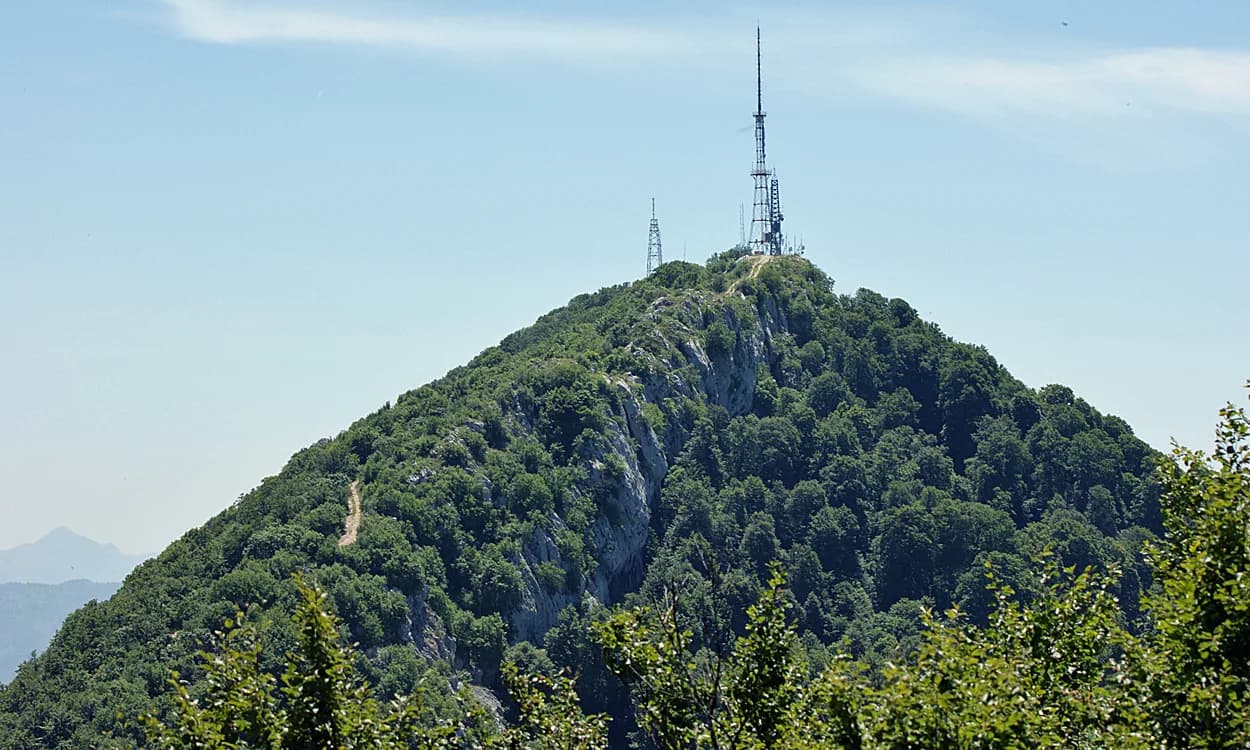
The Dajti cable car climbs to the mountain above the city, and the tourism board puts the ride at about fifteen minutes. The appeal is the view back over Tirana, which means a clear day is the whole point — in low cloud you pay for a ride and see grey.
In May, use the mountain as your flexible option rather than a fixed booking: take it on the first genuinely clear morning of your stay, and swap in a museum or a day trip if the cloud is sitting low. Dajti Adventure Park and the national park around it add walking options once you are up there.
Day trips worth an extra day
Berat, a UNESCO-listed town, is roughly a two-hour drive from Tirana and makes the strongest full-day trip from the capital. Kruja is closer and pairs well with a half-day, and Durrës on the coast is the easiest escape when you want sea air without a long transfer. If you are considering extending the trip beyond Albania's borders, our Montenegro verdict covers a neighbouring country that pairs naturally with this corner of the Balkans.
For something less built-up, the Pëllumbas Cave and Erzen Canyon route takes you into the hills southeast of the city. Each of these costs you a day in Tirana itself, so decide early whether you are treating the capital as a base or as the destination.
How many days you need in Tirana in May
Two full days cover the centre, the pyramid and Blloku at an unhurried pace, with room for one museum block. Three days let you add Dajti on a clear morning and still keep a buffer for rain, which in May is the difference between a relaxed trip and a rushed one.
If you want Berat or Kruja as well, add a day for each rather than trying to fold them into a two-day stay. A common plan is a recommended one to three days in the city itself, with day trips layered on top — a sensible shape given how much of May's value comes from not being rushed.
Typical costs and what May pricing looks like
Tirana is an affordable European capital by Western European standards, and the tourism board markets the city partly on that basis. Albania uses the lek, not the euro, so budget in lek and expect card acceptance to be wide in the centre but patchier in smaller places.
May pricing sits below the July and August peak, though the difference is less dramatic than in coastal Albania. Specific fares, entry fees and cable car tickets change, so take them from the airline, venue or the Dajti Express cable car when you book rather than from a guide written months earlier.
Getting there and getting around
Tirana is served by its international airport west of the city, with the centre reachable by road in a short transfer. Within the city, the centre is walkable and the bus network fills the gaps; for Dajti and the outlying sights, a taxi or an organised tour saves time.
For day trips, road is the practical mode: Berat at around two hours and Kruja much closer are both straightforward drives, and buses run to the main towns. Confirm departure points and times with the bus company on the day, since seasonal timetables shift.
Drawbacks stated plainly
The rain is the headline drawback, and it is frequent enough in May to change your plans more than once on a short trip. There is also the ordinary friction of a fast-changing city: pavements and central streets are periodically dug up, traffic in the basin can be slow, and construction is a normal part of the landscape.
Event weekends bring their own crowding, and the city's calendar runs busy from spring into autumn, so a marathon or festival can tighten accommodation and fill the square. Check the events listing for your dates if a quiet city is what you are after.
Tirana in May versus April, June and September
April is cooler and wetter, with fewer visitors and lower prices; May improves the temperatures but keeps the rain. June brings more reliable sunshine and the start of the summer programme, at the cost of higher prices and more people. September is the closest rival to May, with warm seas, settled weather and a calmer city.
If you want warm evenings and can tolerate showers, May is the best-value pick of the four. If dry weather matters more than money, June or September wins; if you want the city at its quietest, April does.
Who will love Tirana in May and who should go elsewhere
May rewards city-break travelers who like walking, café culture and museums, and who treat a shower as a reason to change plans rather than a disaster. It also suits anyone combining the capital with Berat or Kruja before the summer heat sets in.
If your trip hinges on mountain views, beach time or guaranteed sunshine, book June or September instead. And if you are still weighing up whether the capital deserves your days at all, the honest verdict on Tirana is the place to start before you commit to a month.
Plan Your Visit
May is the month to take Tirana at walking pace: warm afternoons, mild evenings, a city not yet at full summer volume, and enough rain to make you plan properly. Give it two or three days, keep one indoor option ready each day, and take Dajti on the first clear morning.
Book with the month's character in mind rather than a perfect forecast, and the capital will deliver more than a rushed July weekend would.
Explore more Tirana trip-decision guides
Frequently Asked Questions
Is May a good time to visit Tirana?
Yes. May brings warm days and mild evenings, and the city is quieter than in July or August. The catch is frequent rain, so plan outdoor sights for the morning and keep a museum in reserve for the afternoon.
What is the weather like in Tirana in May?
Typical May conditions in Albania are warm with mild evenings and plenty of rain. Around half the days reach 25°C (77°F) or higher, and roughly one day in ten climbs above 29°C (84°F). Treat these as typical figures, not a forecast for your dates.
Does it rain a lot in Tirana in May?
Rain is frequent enough in May that it should shape your itinerary rather than surprise you. Build each day around a dry-morning outdoor block and an indoor alternative, and a wet afternoon costs you one museum instead of a whole day.
How many days do you need in Tirana in May?
Two full days cover the centre, the pyramid and Blloku comfortably, and three days let you add the Dajti cable car on a clear morning with a buffer for rain. Add a day for each day trip, such as Berat or Kruja.
Is Tirana expensive in May?
Tirana is affordable by Western European standards, and May prices sit below the July and August peak. Albania uses the lek, not the euro, so budget in lek and confirm current fares and entry fees with the operator or venue.
What should I do in Tirana on a rainy May day?
The House of Leaves Museum and the National History Museum cover very different ground and fill a wet afternoon well. The Tirana Mosaic and Pëllumbas Cave are better saved for a reliably dry day, since both are exposed.
Is Dajti Mountain worth it in May?
It is worth it on a clear day, when the cable car ride of about fifteen minutes pays off with views back over the city. In low cloud you see grey, so treat Dajti as your flexible option and go on the first clear morning of your stay.
Should I visit Tirana in May or June?
May is quieter and cheaper with a real risk of showers; June brings more reliable sunshine and a fuller event programme at higher prices. Pick May if you want value and flexibility, and June if dry weather matters more.
Sources
Trip-decision notes
Optional updates when we publish or revise a destination verdict.
You might also like
Continue reading
More guides you'll find useful