How to Get to Rovinj, Croatia: Airports, Buses and Ferries
Pula is the closest airport, Trieste and Venice are the Italian backups, and no train reaches Rovinj. Here is how the buses, boats and drives actually work.
On this page
The practical answer is that you fly into Pula if you can and drive or bus the last stretch, because Rovinj has no airport and no rail station of its own. Pula sits roughly 45 minutes south by road, and the Italian airports at Trieste and Venice work as backups for travelers coming from that side of the Adriatic. Once you reach the town, everything ends on foot: the old town peninsula is closed to cars and built on steep, smooth stone.
How you arrive shapes how much of Rovinj you enjoy. A fly-in weekend works best through Pula with a pre-booked transfer, while a road-tripper gains the most from Istria's compact road network, since almost everywhere on the peninsula is within about 90 minutes of town. Budget travelers can string together buses, but should expect at least one change.
The short answer: the routes that actually work
Rank the options by total door-to-door time rather than by map distance. Pula Airport plus a road transfer is the shortest chain; Trieste adds a border crossing and a longer drive; Venice adds a boat or a long drive around the head of the Adriatic; Zagreb and Rijeka work for travelers already in Croatia. Flights, fares and airline choices change constantly, so book those through the airline or an agent and treat this as a routing decision, not a timetable.
One planning note matters more than any other: Rovinj's historic center is almost entirely paved and closed to car traffic, which is relaxing once you are there but awkward with luggage. Plan to stop at the edge of the peninsula and walk the final stretch, and pack accordingly. Wheeled bags handle the flat waterfront but struggle on stairs and polished cobblestones.
The nearest airports, ranked by usefulness
Pula is the closest airport to Rovinj and the natural first choice for a short break, at roughly 45 minutes by road. The trade-off is seasonality: Pula's flight list swells in summer and thins outside it, so a May or October trip may push you toward Trieste, Venice or Zagreb instead. Check the airport's own site for which routes operate in your month before you commit to dates.
Trieste in Italy is the second most useful, reached by car across the Slovenian border, and it pairs well with a route that also takes in Piran and the Slovenian coast. Venice Marco Polo is the long-haul option, best for travelers who want a night in Venice on either end rather than a same-day connection. Zagreb and Rijeka airports serve the interior and the Kvarner coast and suit anyone combining Rovinj with Zagreb, Plitvice or the northern Adriatic.
Pula Airport: closest option, with the seasonal caveat
From Pula the road north to Rovinj takes about 45 minutes in normal traffic, which makes a taxi or pre-arranged transfer realistic even after a late landing. Buses also run between the two towns, and a one-way ticket has been reported at roughly 47 kuna per person in the kuna era, so treat local bus fares as modest but changeable. Croatia adopted the euro on 1 January 2023, so expect prices quoted in euros now and pay in euros rather than converting old kuna figures.
Use Pula as more than a transit point if your schedule allows. The Arena, one of the best-preserved Roman amphitheaters outside Rome, sits in the city center, and travelers who hire a car can continue south to Cape Kamenjak on the same day. A one-day car pass to Kamenjak has been listed at 80 kuna, again a kuna-era figure worth rechecking at the entrance in euros.
Trieste and Venice: the Italian approach
Driving from Trieste brings you down the Istrian coast through Slovenian territory, with Piran as an obvious stop. The direct drive from Piran to Rovinj measures about 49.7 miles, or 80 kilometers, and takes a little over an hour in normal traffic, which tells you how compact this corner of the Adriatic is. Allow extra time at the border in summer and on weekends.
Venice is the romantic-looking option and the slowest for a short trip. A seasonal boat link across the Adriatic has long existed between the two ports, running in the warmer months, but it functions as a crossing for people staying a night or more rather than a commuter hop. If your goal is two days in Rovinj, the drive or a Trieste flight will almost always beat the sea route on total time.
Zagreb and Rijeka: long-haul options via the interior
Travelers flying into Zagreb should think of Rovinj as a separate stage of the trip, not a quick add-on. Zagreb works best when paired with Plitvice Lakes, which is about a two-hour drive from Rovinj, so a loop through the interior and then down to Istria makes sense. Rijeka and the Kvarner Gulf suit anyone arriving from the north or combining Rovinj with islands such as Krk or Cres.
However you enter Croatia, entry rules are a government matter rather than a travel-blog one. Check the official Croatian government pages for current requirements for your nationality before booking, and do it once rather than piecing together forum answers.
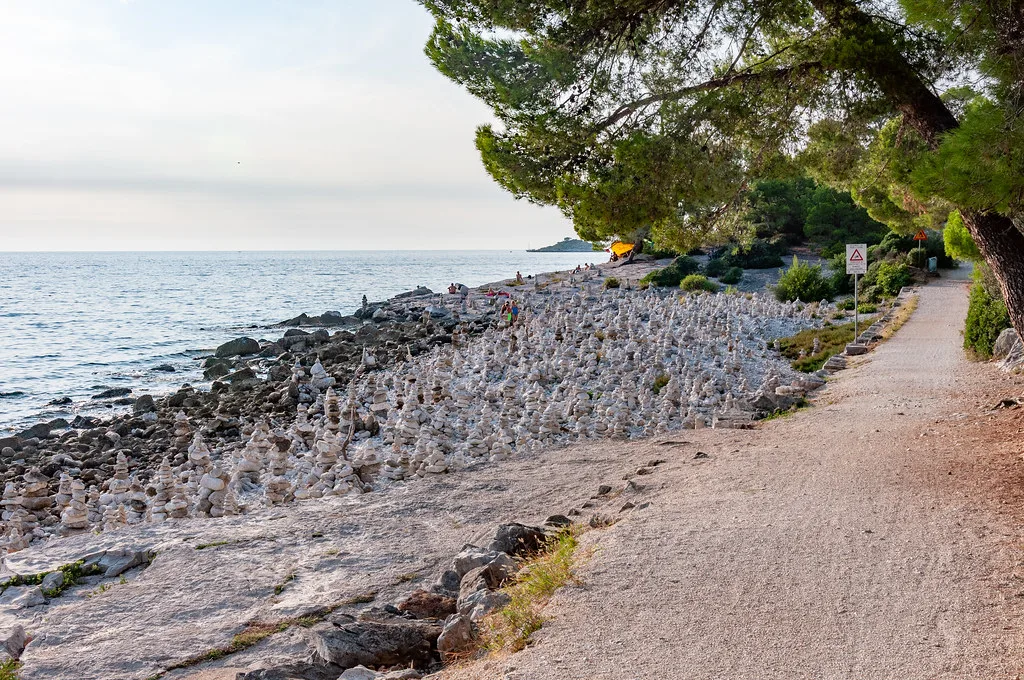
Buses into Rovinj from Pula, Poreč, Zagreb and beyond
Buses are the workhorse of Istrian travel and the most sensible budget option. Services connect Rovinj with Pula, Poreč and the larger Croatian cities, and the ride from Pula is short enough to make a same-day arrival realistic. Schedules shift by season, so buy at the station or through the bus company's own site rather than relying on an old blog post.
From Poreč the drive is only around 40 to 45 minutes, but the coast road has to go around the Lim Fjord, a sunken channel that cuts into the peninsula. That detour is the reason a straight-line look at the map underestimates the trip north. If you are weighing which Istrian base suits you, our guide to how to get to Poreč covers the other end of that link.
Driving to Rovinj: roads, the Lim Fjord detour and parking
Driving is the most flexible way to see Istria, and the roads are well marked and in good condition. Distances are short: Pula about 45 minutes, Poreč about 40 to 45, and the hill towns of Motovun and Grožnjan roughly an hour each. Because Rovinj sits on the west coast, it makes an excellent base for day trips without changing hotels.
The catch is parking and the final approach. You cannot drive into the old town, so you park at the edge and walk in, which is fine with a day bag and less fun with a suitcase on cobblestones. A car also lets you reach Cape Kamenjak at the southern tip of Istria, about an hour away, or the Lim Fjord viewpoints on the road toward Poreč.
Ferries and boats: Venice crossings and island shuttles
Two very different kinds of boat serve Rovinj, and mixing them up wastes time. The Venice crossing is a long international link that runs in the warmer months, while the island shuttles are short hops inside the Rovinj archipelago. Treat the Venice boat as transport between countries and the island boats as a half-day outing.
Katarina Island is the easiest escape, reached by a five-minute boat from the harbor, with boats departing hourly. Red Island, also called St. Andrew's Island, sits about fifteen minutes out and has been quoted at 5 euros for the taxi boat, so it is a cheap way to spend an afternoon on the water.
Arriving by train: why the rail line misses Rovinj
No railway reaches Rovinj. The nearest useful railheads are Rijeka and Pula, and from either you finish the journey by bus or car, so the train is a feeder rather than a direct route. For a traveler coming from Zagreb or Ljubljana, rail plus a bus can work well; for a short break, flying to Pula and taking a road transfer is simpler.
If you want the train experience combined with Istria, build it around Rijeka or Pula and allow half a day for the connection. Croatian Railways (HŽ) publishes its timetables online and at stations, and the bus operator running the connection will have its own schedule posted, so the seasonal services that thin out outside summer are worth checking on the day.
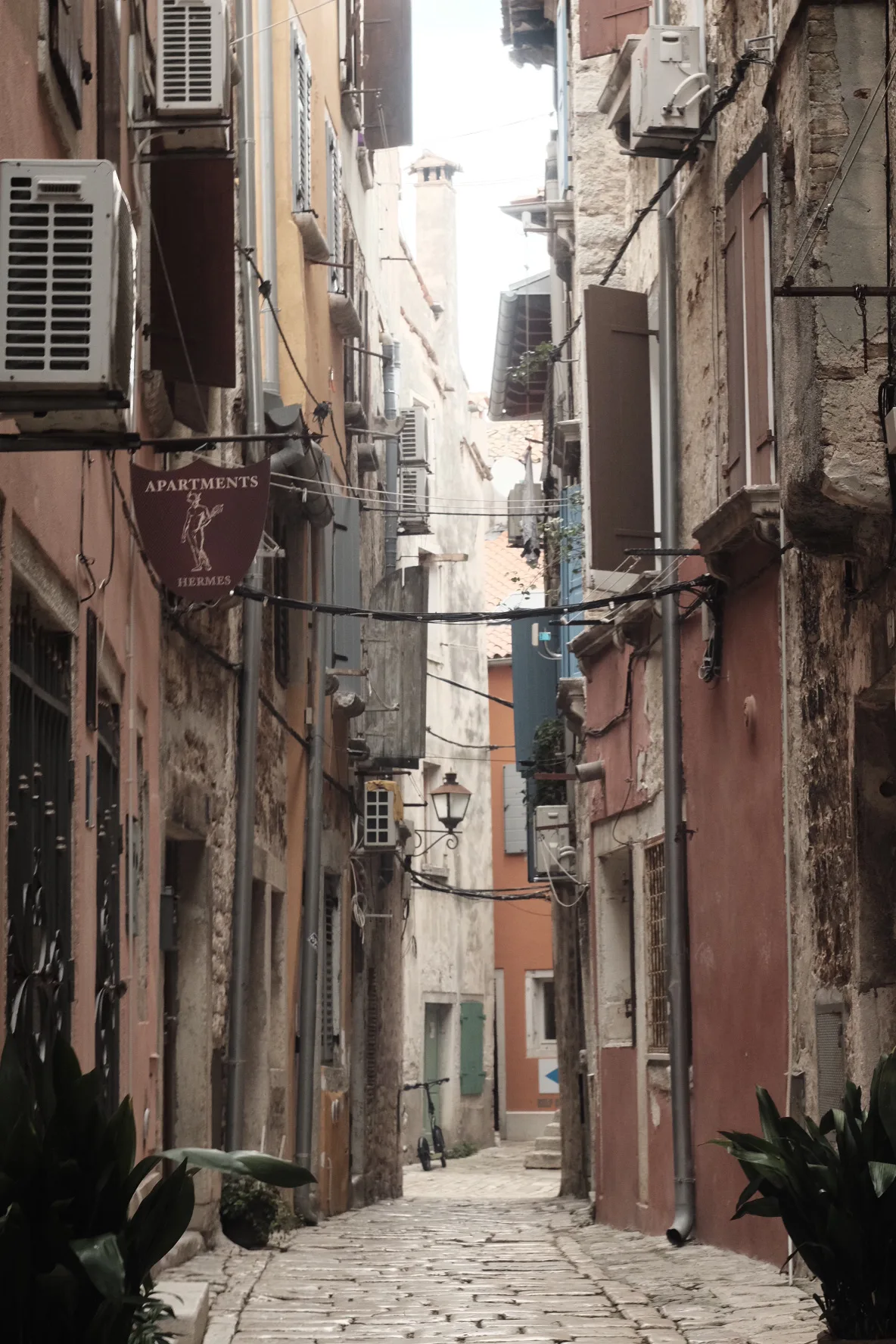
Getting from the bus station into the old town on foot
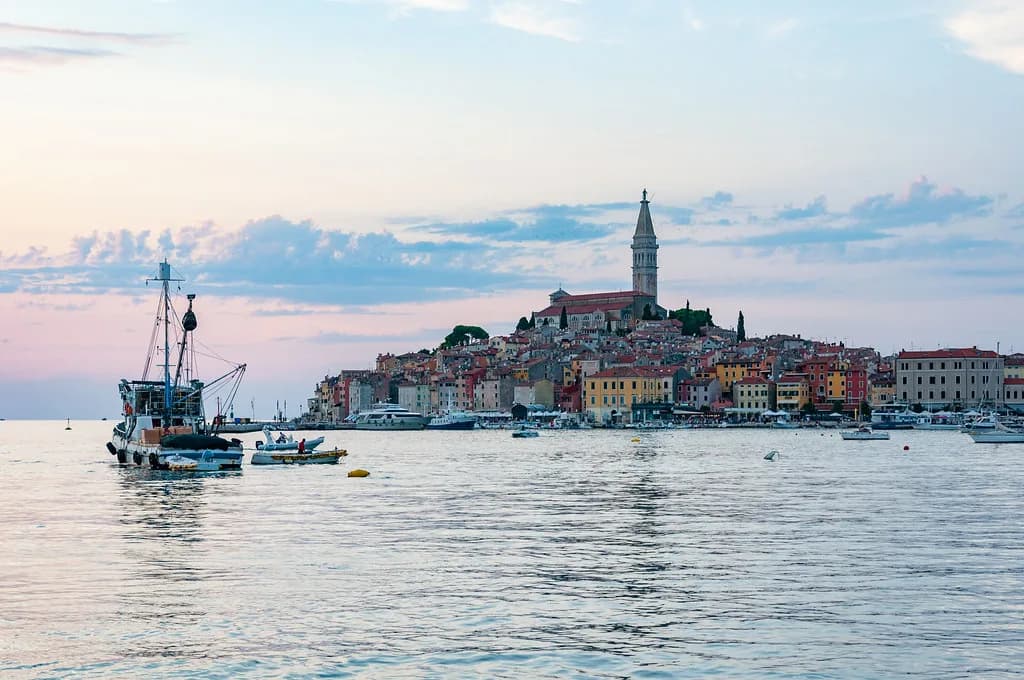
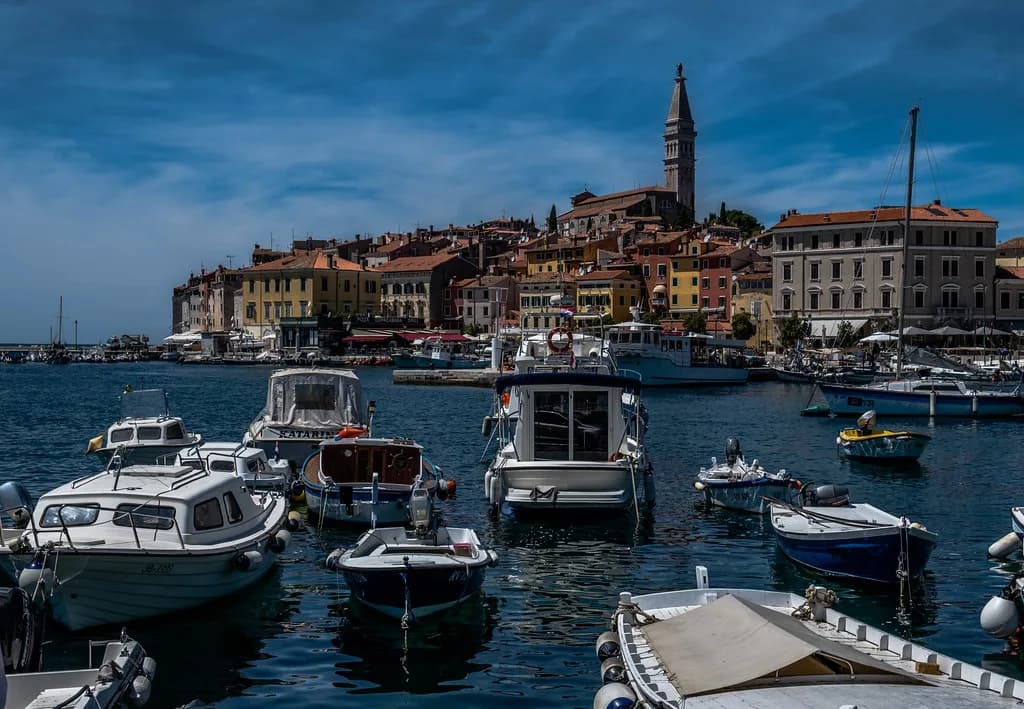
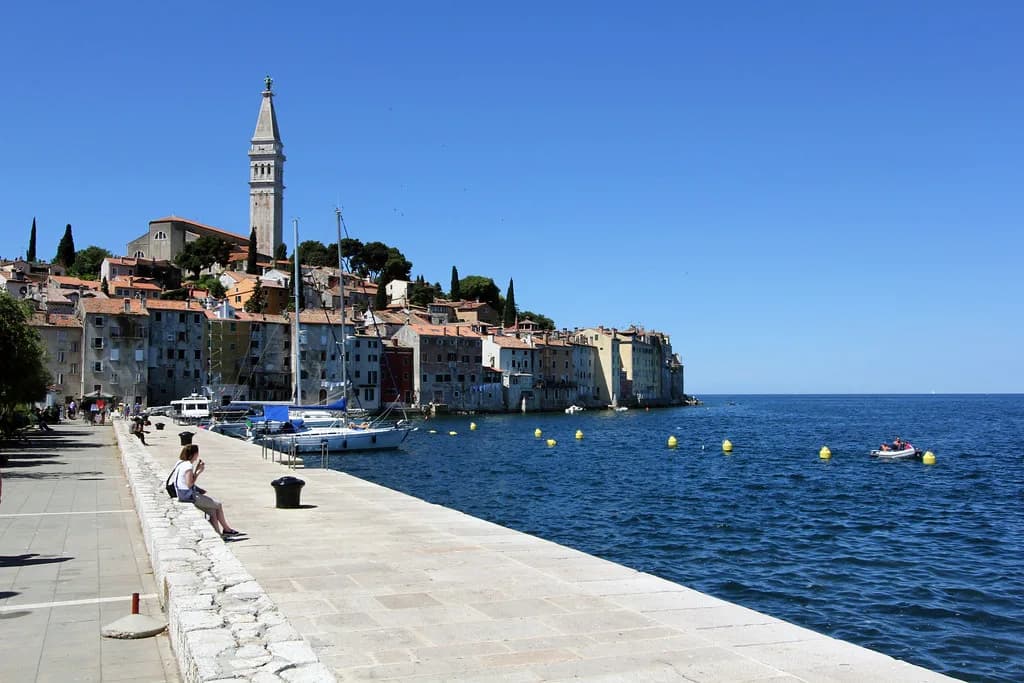
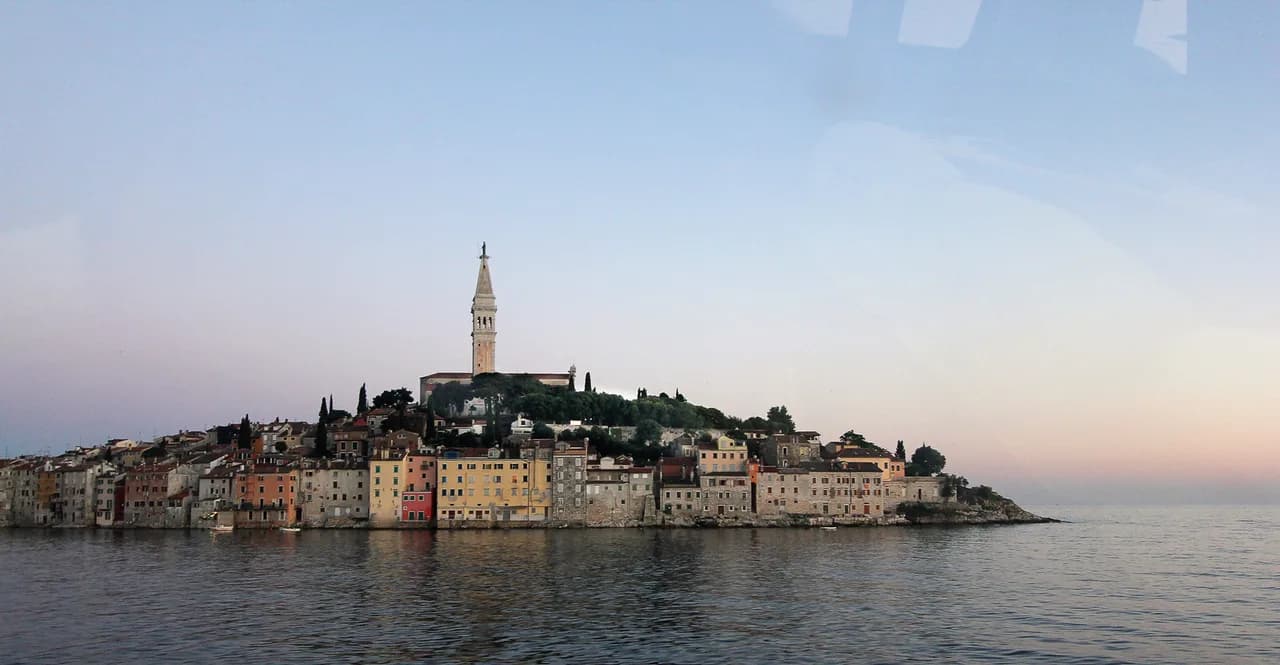
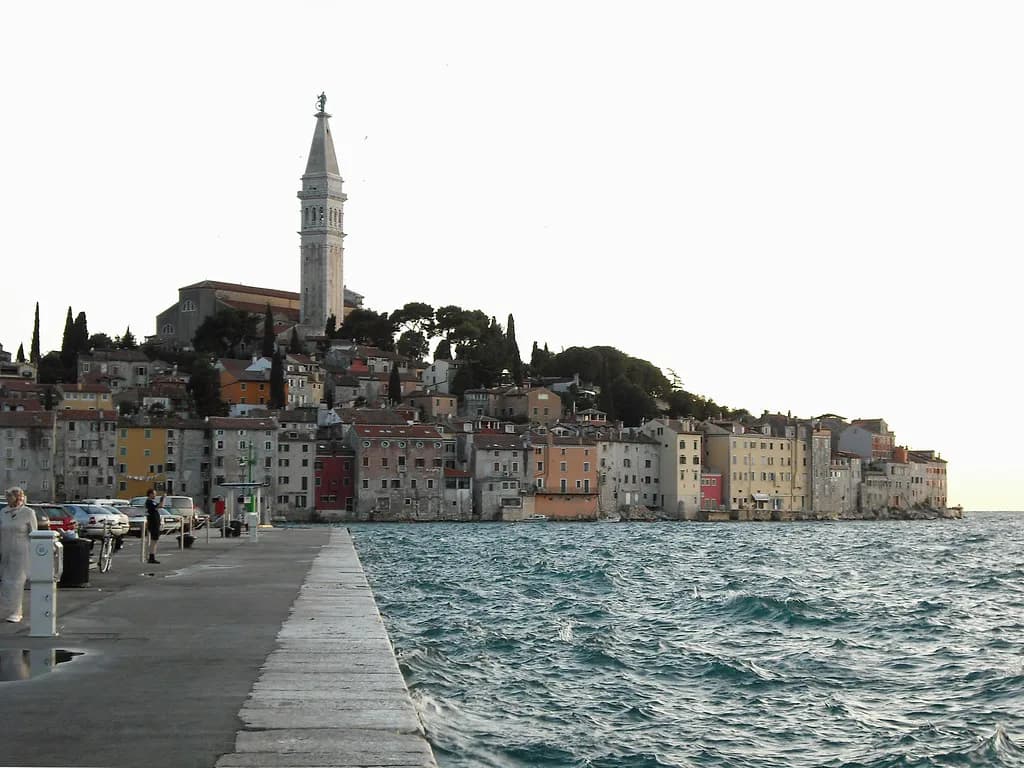
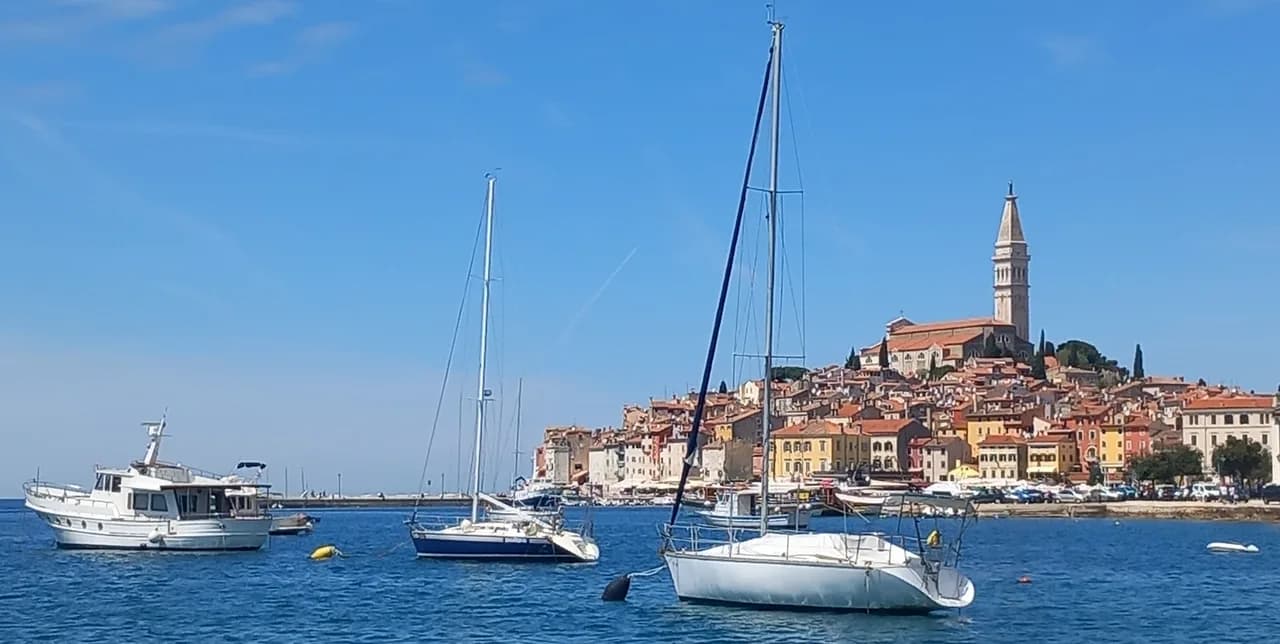
The bus station sits on the mainland side of Rovinj, a short walk from the causeway that leads onto the old town peninsula. From there the streets narrow, climb and eventually funnel up toward the Church of St. Euphemia and its bell tower, which is the town's landmark and its highest point. Almost every alley leading upward ends at the church square.
Wear proper shoes. The old town's stones are polished smooth and become slippery in rain, and the climb to the church involves stairs and steep lanes that are hard work with luggage or for anyone with mobility difficulties. The waterfront edges are the flattest and most accessible part of town.
How long the trip takes from each starting point
Rough road times give you a planning baseline: Pula about 45 minutes, Poreč 40 to 45 minutes, Motovun and Grožnjan roughly an hour, Kamenjak about an hour, and Piran a little over an hour. Add time for the Lim Fjord detour when coming from the north and for summer traffic on the coast road. None of these are long drives, which is why a car makes Rovinj feel central rather than remote.
Air travel adds the airport transfer on top. Pula is the quickest add-on at under an hour by road, while Venice and Zagreb effectively cost you half a day each way once you include the drive. For a two-night stay, that math should push you toward Pula or Trieste rather than Venice.
Choosing your route by traveler type
For a fly-in weekend, fly to Pula and pre-book a transfer or hire a car for the 45-minute run north. For a road-tripper, land anywhere in the region and use Rovinj as a base for Istria's hill towns, Cape Kamenjak and the Lim Fjord. For a budget traveler, take a bus from Pula or Poreč and accept the walk in from the station.
Whichever route you pick, decide early whether Rovinj deserves more than a day. It rewards at least two nights, and three to five if it is your main Istrian stop and you want day trips. If you are still weighing the destination itself, start with whether Rovinj is worth visiting, then pair it with a realistic sense of what a Rovinj trip costs before you book transport.
Plan Your Arrival
The route into Rovinj is simple once you accept the shape of it: fly to Pula if you can, use Trieste or Venice as backups, and finish the journey by road or bus because no train comes here. Build in the walk from the edge of town, wear shoes that grip, and book your transfer or car before you land.
Then give the town the time it deserves. Two nights covers the old town and a swim; three to five lets you add Motovun, Grožnjan, Pula and Kamenjak without rushing. Sort the transport first, and the rest of the trip falls into place.
Explore more Rovinj trip-decision guides
Frequently Asked Questions
What is the closest airport to Rovinj?
Pula is the closest airport, roughly 45 minutes south by road, and it is the most practical arrival point for a short trip. Its flight list is much fuller in summer than in the shoulder months, so check the airport's own site for routes operating in your travel month. Trieste in Italy is the next best option, and Venice and Zagreb work as longer-haul backups.
Can you take a train to Rovinj?
No, no railway reaches Rovinj. The nearest useful railheads are Rijeka and Pula, from which you continue by bus, taxi or hire car, so the train works as a feeder rather than a direct route. Check the current Croatian Railways timetables and bus connections before you rely on a connection.
Is there a ferry from Venice to Rovinj?
A seasonal boat link has run between Venice and Rovinj in the warmer months, but it is a crossing for travelers staying a night or more rather than a quick commuter hop. For a short break, flying to Pula or Trieste and driving is usually faster door to door. Check the current season before you build a trip around it.
How long is the bus from Zagreb to Rovinj?
Zagreb is a long overland haul and works best when you break the trip, for example with a stop at Plitvice Lakes, which is about a two-hour drive from Rovinj. Most travelers flying into Zagreb treat Rovinj as a separate stage rather than a same-day transfer. Check the current schedule for actual journey times.
How do you pronounce Rovinj?
Rovinj is pronounced ro-VEEN, with the stress on the second syllable. The Italian name, Rovigno, is still used locally and on some signs, a legacy of centuries of Venetian rule in Istria.
Is it easy to get from Pula to Rovinj?
Yes. The drive takes about 45 minutes and buses run between the two towns, with one-way tickets reported at around 47 kuna in the pre-euro era. Croatia has used the euro since 1 January 2023, so expect fares in euros. Buy tickets at the station for current prices and times.
Do I need a car in Rovinj?
Not for the town itself, since the old town is car-free and best explored on foot. A car helps if you want Istria's hill towns, Cape Kamenjak or the Lim Fjord viewpoints as day trips, because the drives are short and the roads are good. Without one, base yourself in Rovinj and use buses or boats for outings.
What is the best month to visit Rovinj?
May, June, September and October give you warm weather without the July and August crush, when restaurants need reservations and the waterfront is packed. May and October suit sightseeing more than lying on the beach, since the sea is cooler. Book early either way, because Rovinj stays popular through a long season.
Sources
- Rovinj Travel Guide: Best Sights, Beaches & Tips - Sommertage
- Rovinj Croatia: Travel Guide to Croatia's Prettiest City - Adventurous Kate
- 34 Best Stops Between Piran and Rovinj
- 21 Things to Do in Rovinj: Restaurants, Food, and Fun in Istria Croatia — Travlinmad Slow Travel Blog
- Rovinj to Pula, Croatia: Istria Itinerary + Transport Guide
Trip-decision notes
Optional updates when we publish or revise a destination verdict.
You might also like
Continue reading
More guides you'll find useful