Is Rovinj Expensive? Real Costs for a Rovinj Trip
Rovinj costs more than inland Istria but less than Dubrovnik in peak season. Here is what drives your daily budget and how to trim it.
On this page
Yes, Rovinj is expensive for Croatia, but it is mid-priced for the Adriatic and clearly below Dubrovnik in high summer. Almost everything that makes the town famous — the old-town lanes, the harbour, the swim spots below the walls — is free, so the bill comes from food, drink, parking and how long you stay.
The verdict
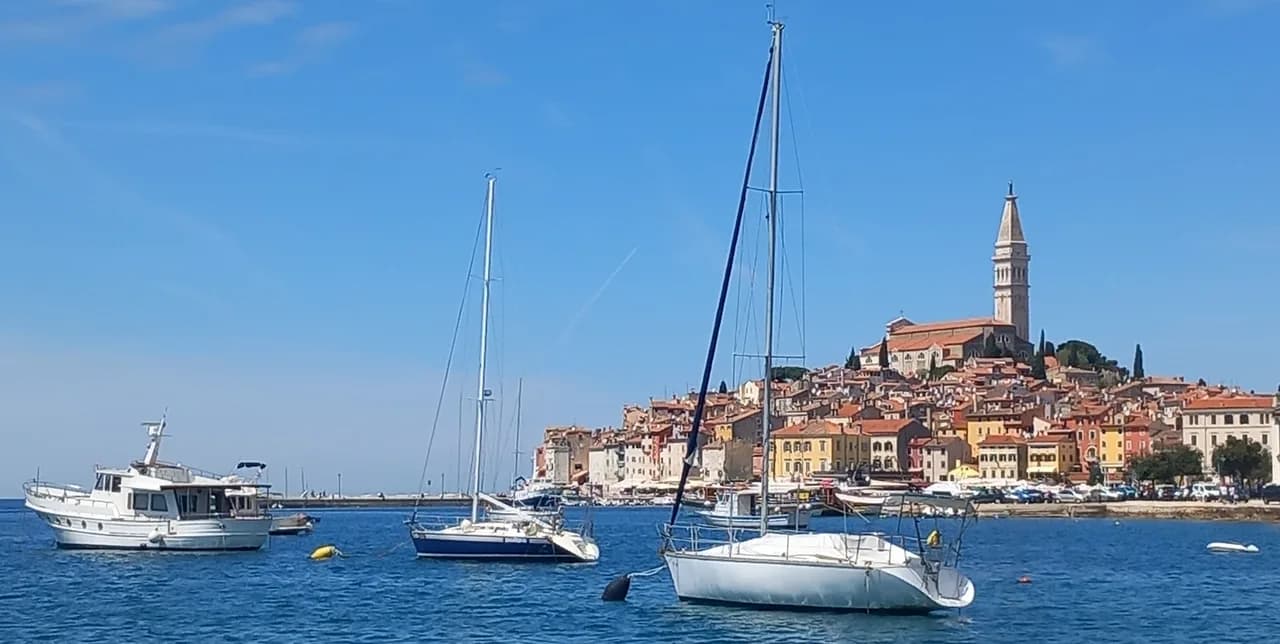
Rovinj sells a compact, photogenic old town on a former island, and it prices like a place with limited space and a short season. Food and drink aimed squarely at visitors sit at the top of the Croatian range, and many travellers find July and August prices heavy. Against the whole Adriatic it lands in the middle rather than the top.
The town is heavily geared to tourists, and the restaurants in the centre are built around that trade. That does not mean bad value, but it does mean you should expect visitor pricing on most old-town menus.
The real budget lever is length of stay rather than which café you choose. A short two-night stop costs little more than a night or two of the same daily spend, while a week of lunches and dinners in the old town adds up fast.
What makes Rovinj pricier than the rest of Istria
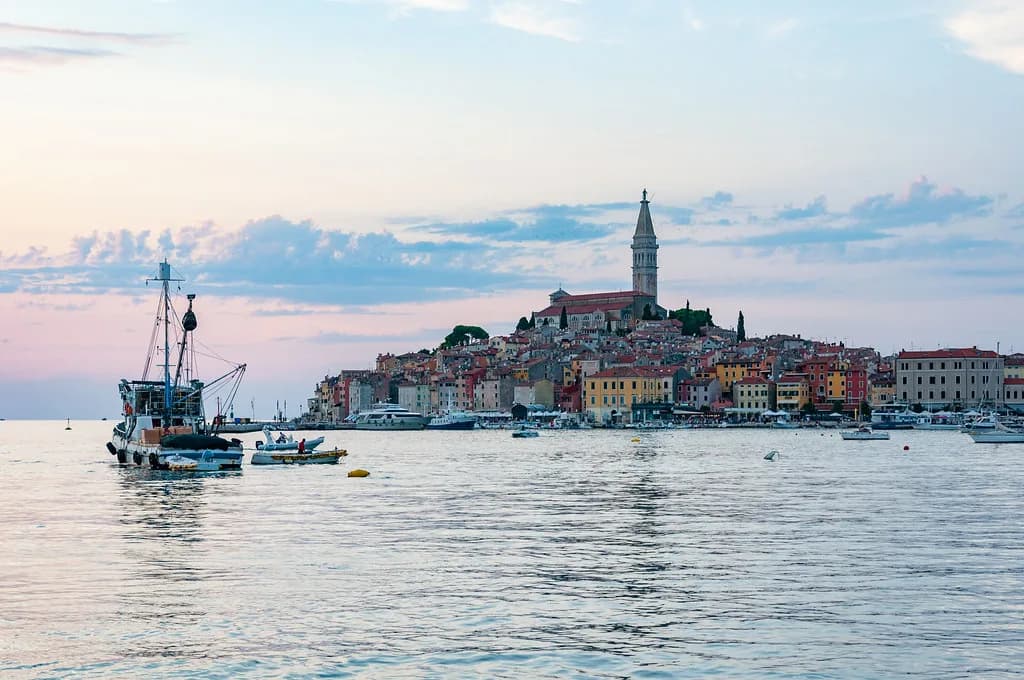
Geography does much of it. The historic centre sits on a headland, almost completely paved and closed to car traffic, which pushes parking outside the walls and shortens the supply of everything else.
The centre also draws the region's most celebrated kitchens. Several of the top restaurants in Istria, including Michelin-listed addresses such as La Puntulina, are here, which sets a high ceiling even if you never book them.
Compare Motovun, Grožnjan or Bale inland and you notice the gap: hill-town lunches come cheaper, though you need a car to reach them.
Typical daily costs in words
A budget day is genuinely possible: a room outside the centre, groceries from the farmer's market on the edge of the old town, a free swim at Monte Beach and a wander through the lanes. Food, drink and parking will still be your three main lines.
Mid-range days mean a sit-down seafood lunch or dinner, an aperitivo on the rocks and a paid viewpoint, with the rest of the day free. The comfort tier is about harbour-front tables, tasting menus and boat trips, where Rovinj matches the rest of coastal Croatia at its peak.
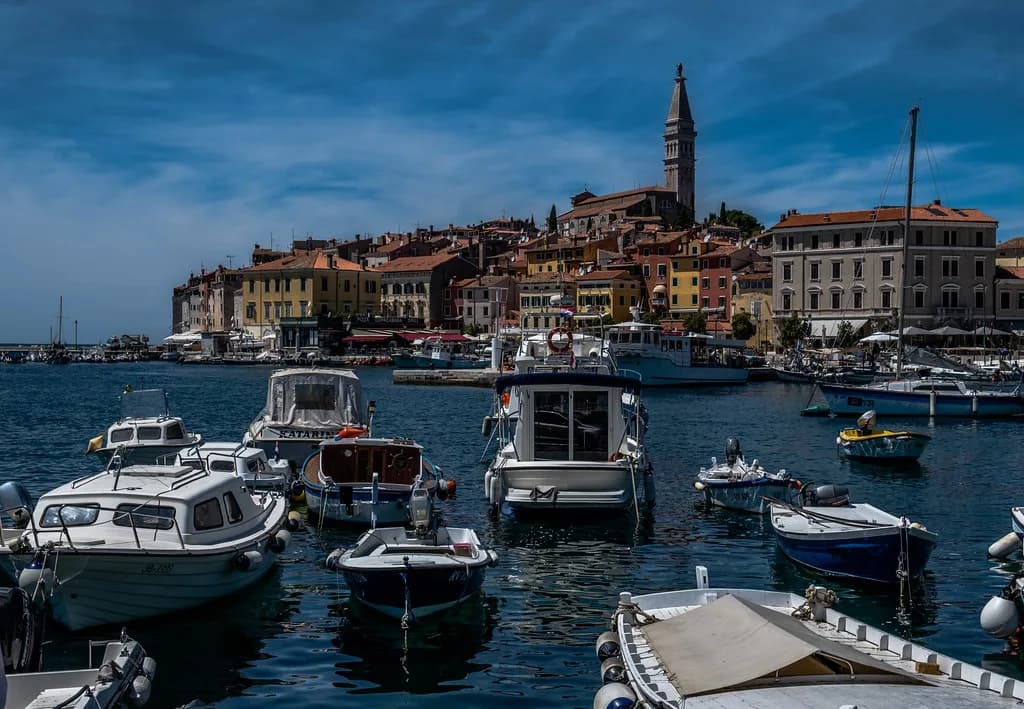
Those boat trips are worth pricing before you commit: several operators run cruises to St. Catherine's Island and the Red Island, and it is one of the few discretionary costs of the day.
What you will actually pay
Two concrete numbers: entry to the Church of St. Euphemia is free, and the 60-metre bell tower costs four euros. The climb is 192 creaking wooden steps, so it is also the best value viewpoint in town by a wide margin.
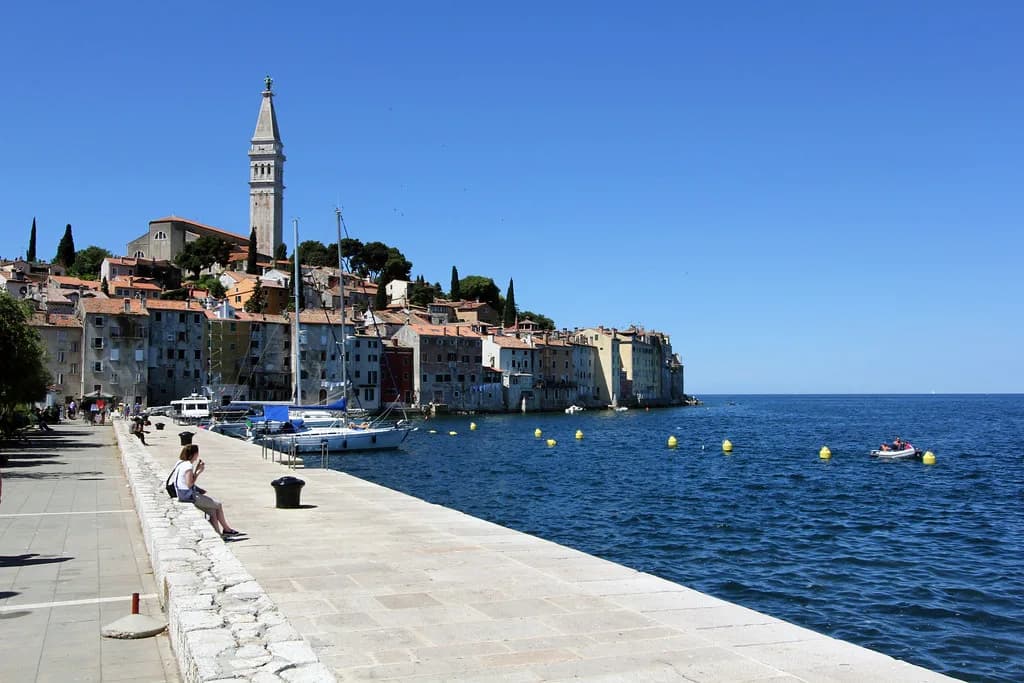
Monte Beach, also called Baluota, is free to enter and sits just under the old town walls. The woodland beaches on Punta Corrente, including Lone Bay and Zlatni Rt, are free too, and you can walk to Lone Bay from the centre in about 20 minutes.
Food, drink, parking and any cruise are where you should do your own arithmetic, since menus and lot rates change with the season. Reserve one dinner a night ahead in summer and you avoid the premium of convenience.
Eating and drinking: why the old-town menu is priced for visitors
You will hear more German and English than Croatian in the centre, and the restaurant scene is explicitly built around tourists. That is not a scandal — it explains why prices sit where they do.
The best-value eating is often a bar rather than a restaurant. A coffee or an affogato at Mediterraneo Bar, on the stones above the water, costs a fraction of a harbour table and gives you the same view.
In July and August, tables at the popular centre restaurants are hard to get without a reservation; a short walk to the yacht marina side of town thins the crowds and often eases the bill.
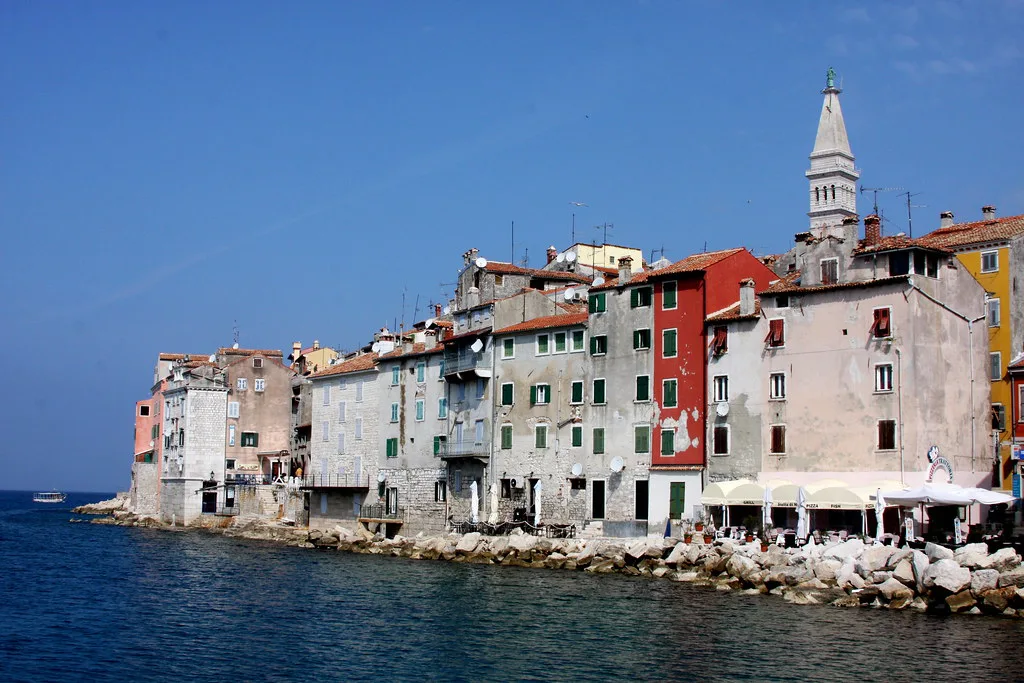
Beaches and the sea: the cheapest part of a Rovinj day
Swimming is the single best saving in Rovinj. Monte Beach is the city beach, central but with limited sunbathing space, while the pebbles at Lone Bay and the rocks at Zlatni Rt have room for a whole afternoon at no charge.
A picnic, a towel and a pair of shoes with grip on wet paving is a nearly costless Rovinj day.
Getting there and getting around
Many visitors arrive by car, which is the easiest way around Istria but adds parking: you cannot drive into the old town, and the closest lots are Velika Valdibora and Mala Valdibora.
Distances are short, and day trips are realistic: Pula is around 45 minutes by road, Motovun around 55, and Piran across the Slovenian border around an hour and a quarter plus a border crossing.
If you base here without a car, budget for the transfer instead of parking; the fares change, so check the bus or shuttle company's own schedule for the date you travel.
When Rovinj is cheapest
June to September brings the biggest crowds and the highest prices, and July and August are the pinch. Outside that window, some restaurants and hotels close between November and April, so you trade savings for a thinner choice of tables.
Shoulder months are the sweet spot: busy enough for everything to be open but cheaper and cooler. May is workable, while a July afternoon can push around 35°C (95°F), which is hard on anyone walking the exposed streets.
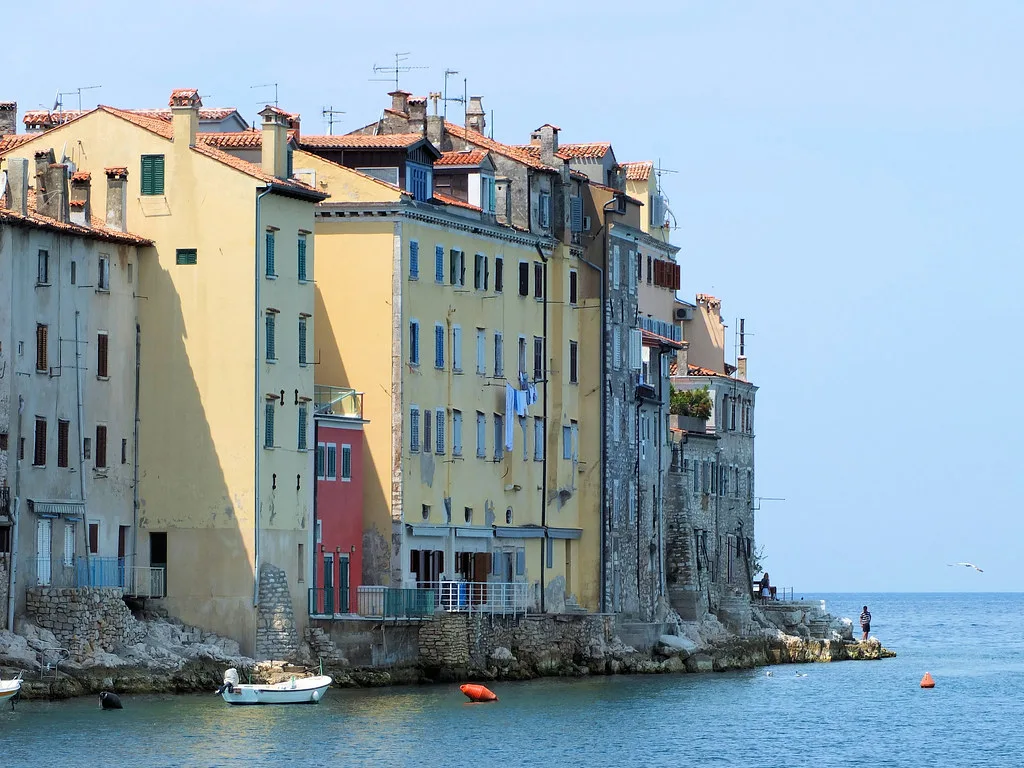
Is Rovinj more expensive than Pula, Poreč or Piran?
Pula is a larger, more practical city with a Roman amphitheatre and cheaper hotel stock, and its coast at Cape Kamenjak is about 15 minutes south. Basing there and day-tripping to Rovinj can save real money, though you lose evening strolls through the lanes.
Piran, across the border in Slovenia, is the closest rival for Venetian charm. It is a compact, elegant town with its own costs, and the cross-border trip makes sense only if you are already touring the region.
For Dalmatian comparison, Zadar is a bigger city with lower surrounding prices than the Istrian coast in August.
Who Rovinj's prices suit, and who should base elsewhere
Couples on a short break, photographers and anyone who values atmosphere over beach time will find Rovinj worth the premium, especially in shoulder season. It suits people happy to pay for a view and a table rather than for activities.
Families wanting a cheap beach fortnight, or travellers on a strict daily budget, do better based in Pula or inland Istria and visiting Rovinj for a day. The town earns its price with pastel lanes and the harbour, not with a long sandy beach.
Money practicalities: euros, cards and cash
Croatia has used the euro since 1 January 2023, so all prices are in euros and there is no kuna conversion to worry about.
Cards are widely accepted in the centre, but small bars, market stalls and rural wineries are where you will want coins and notes. Draw cash in town rather than at the airport, where rates are usually poorer.
Plan Your Visit
Rovinj is not a cheap Croatian town, but it is not the most expensive one either, and most of its appeal is free. Two nights in shoulder season, a bell tower climb, a swim at Monte Beach and one good seafood dinner is a better-value trip than a week of harbour-front lunches in August.
Decide what you want from it before you book: a romantic two-night base, or a day trip from a cheaper Istrian base. That one choice moves the budget more than any restaurant you pick.
Explore more Rovinj trip-decision guides
Frequently Asked Questions
Is Rovinj expensive compared with the rest of Croatia?
It is dear by Croatian standards because the compact old town has limited space and a heavily visitor-focused restaurant scene. Against the wider Adriatic it sits mid-market, and it is below Dubrovnik in high summer.
How much does a day in Rovinj cost?
Food, drink, parking and any cruise vary enormously, so no single figure holds. The good news is that the old town, the harbour and Monte Beach cost nothing, and the bell tower is a modest paid extra.
Is Rovinj expensive in July and August?
Yes, that is when prices peak and restaurant tables in the centre fill without reservations. Expect heat too, with afternoons that can reach around 35°C (95°F), and plan on paying the most for the least choice.
Is Rovinj cheaper than Dubrovnik?
Season by season, yes. Rovinj takes plenty of visitors but does not see the cruise-ship crush of Dubrovnik, and its prices follow that calmer pattern.
Do you need cash in Rovinj?
Only for smaller places. Croatia uses the euro, cards are common in the centre, and you should carry some notes for market stalls, small bars and rural wineries.
Is it cheaper to stay in Pula and visit Rovinj?
Often, yes. Pula is bigger, has more practical and cheaper accommodation and is about 45 minutes away, but you lose the evening atmosphere of Rovinj's lanes.
Are Rovinj beaches free?
Yes. Monte Beach, Lone Bay and Zlatni Rt on Punta Corrente are free to enter, which makes swimming the best-value part of a Rovinj day.
How much does the bell tower cost?
Entry to the Church of St. Euphemia is free and the tower carries a small charge. Opening times vary through the year, so ask at the church on the day you climb.
Sources
Trip-decision notes
Optional updates when we publish or revise a destination verdict.
You might also like
Continue reading
More guides you'll find useful