Is Pula Expensive? Pula, Croatia Trip Cost Guide
Pula is mid-priced for coastal Croatia: cheaper than Dubrovnik in peak season, dearer than inland Istria. Here is where your money goes and when to save.
On this page
Pula is not an expensive destination by Croatian coastal standards, but it is not a cheap one either. Expect prices in line with the rest of the Istrian coast, below what Dubrovnik charges in July and August, and above what you pay inland around the truffle towns. The euro has been Croatia's currency since 1 January 2023, so there is no exchange-rate cushion to play with once you arrive.
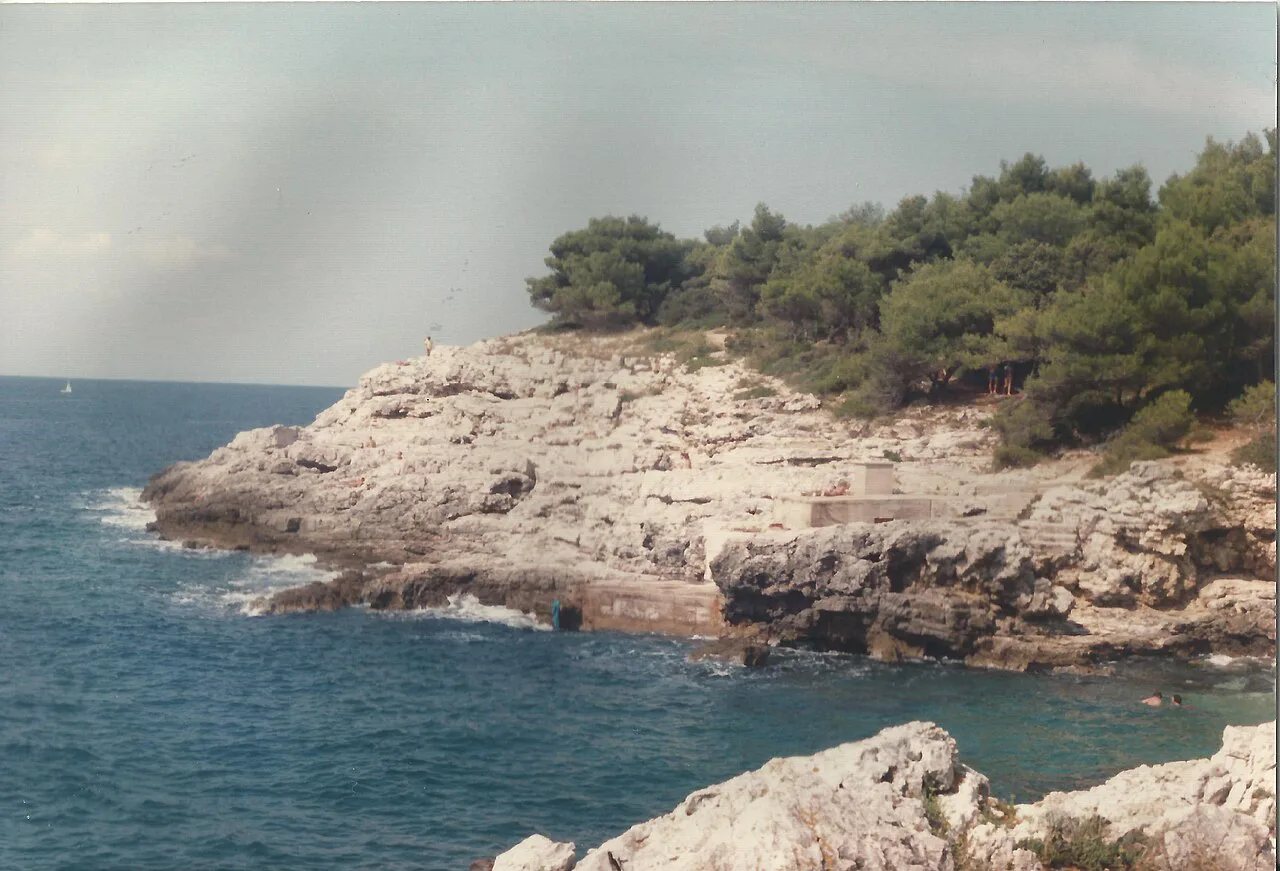
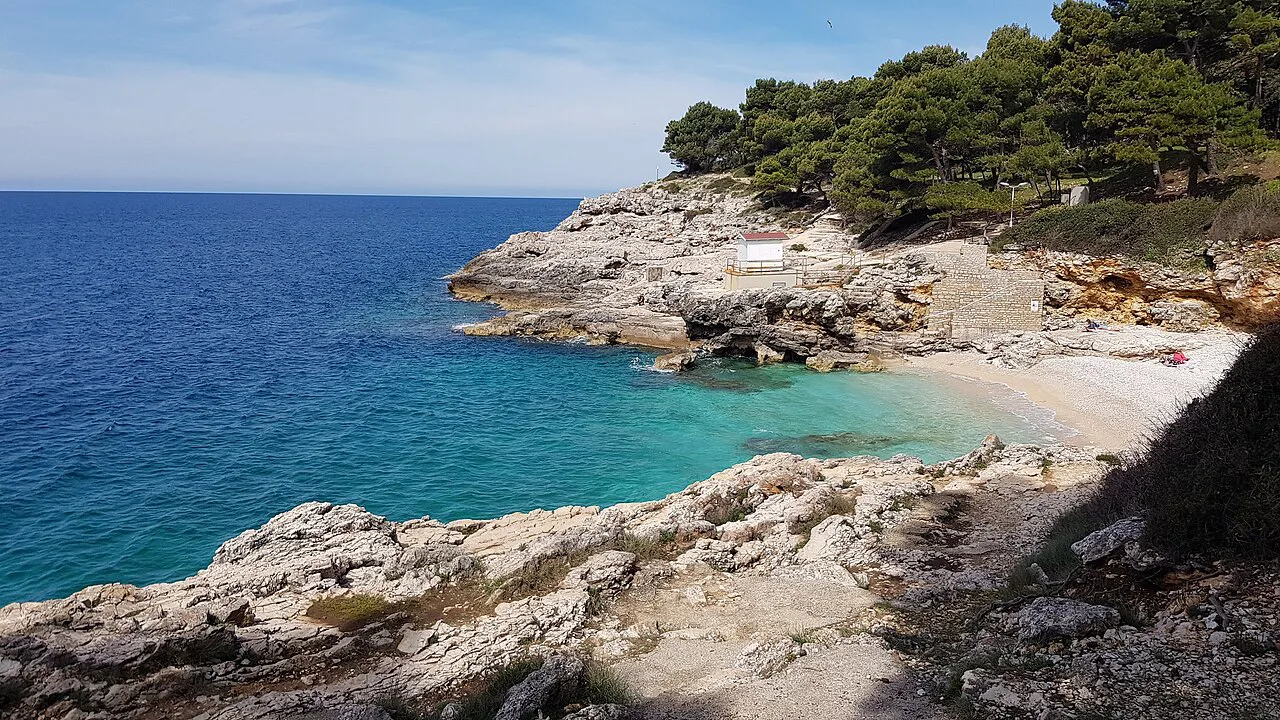
What makes Pula easier on the wallet than the southern Dalmatian coast is the shape of its season and its sightseeing. The Roman sights sit in a compact old town you can walk in an afternoon, the beaches on the Verudela and Stoja peninsulas are free to use, and a large share of the best things to do costs nothing at all. The money goes on accommodation in July and August and on restaurant meals near the Arena.
The verdict
Pula is mid-priced for the Croatian coast. It is cheaper than Split and clearly cheaper than Dubrovnik in peak season, and it is dearer than inland Istria, where truffle-country guesthouses and konobas undercut the coast. For a US traveler, that puts Pula in the moderate bracket: you will notice the bill in August and barely think about it in May or October.
So the honest answer to how expensive Pula is depends on when you go and how you eat, not on which town you picked. Anyone deciding whether the destination justifies the spend should start with whether Pula is worth visiting, because value here comes from Roman architecture, free coastline and day trips rather than from luxury. A three-night stay in a mid-range apartment in June, with one paid sight and mostly konoba meals, is a modest outlay; the same trip in the first week of August is not.
What drives the bill
Three things push costs up in Pula. The first is the short high season: July and August are the busiest and most expensive weeks, when beds fill and every terrace on the waterfront is trading at full capacity. The second is the Arena concert calendar, which packs the town on show nights and lifts demand for the limited rooms near the center.
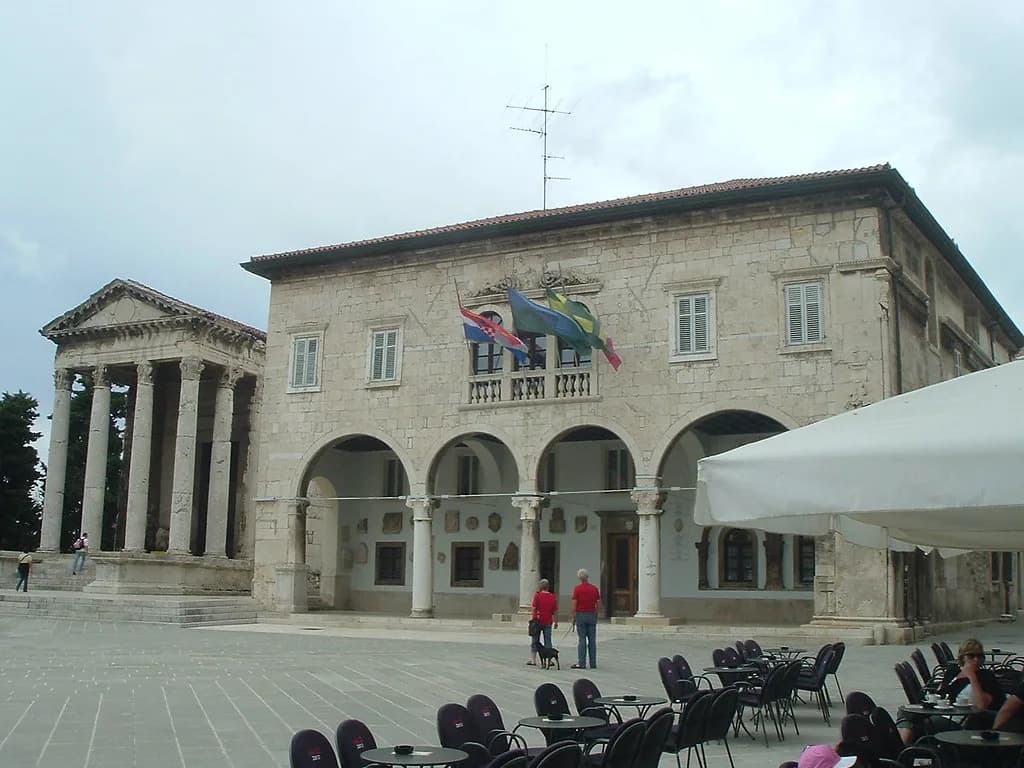
The third is geography. Pula's old town is small, and the lanes around the Arena and the Forum carry the highest rents, so cafes and restaurants there charge more than places a few streets back or out towards the residential edges. The same Istrian malvazija or a plate of fuzi with truffles can cost noticeably more with a view of the Temple of Augustus than at a neighborhood konoba.
Currency matters less than it used to. Croatia adopted the euro in 2023, which removed the kuna conversion and made prices directly comparable with the rest of the eurozone, but it also made the jump from pre-2023 prices obvious to repeat visitors; the town's restaurant and cafe bills have been a recurring complaint among returning guests. Treat local living-cost averages with caution, since a monthly figure of that kind describes residents paying rent and utilities, not visitors paying for a week of meals and beds.
Typical daily budgets in words
A budget traveler who books a room in a private apartment or hostel, eats supermarket breakfasts and konoba lunches, swims at free beaches and pays for one Roman sight a day can keep Pula on the cheap side of the Croatian coast. The bus from the center to the Stoja or Verudela beaches is inexpensive, and the Lungomare seafront walk costs nothing.
A mid-range traveler staying in a decent apartment or small hotel, eating one sit-down dinner a day, taking a boat to Brijuni and renting a car for a day at Cape Kamenjak sits in comfortable middle territory. Add Arena concert tickets, a wine-tasting lunch in central Istria and taxis after dinner and you are in the comfort bracket, which is still a long way below equivalent Dubrovnik spending in August.
Eating and drinking
The cheapest good meal in Pula is a konoba lunch off the main square: Istrian ham and cheese, manestra bean and vegetable stew, fritule for dessert, house wine by the glass. Prices climb as you move towards the waterfront and the Arena, where the same dishes are priced for the view. Seafood sold by weight is the classic budget trap, so ask for the weight before it is cooked.
Truffles and Istrian wine are the two ingredients that inflate a bill fastest. A plate of fuzi with truffles or a bottle from a celebrated producer can cost more than the rest of the meal combined, while a carafe of the local malvazija keeps the total sane. For a broader comparison of what restaurant bills look like across the region, our Rovinj costs guide shows how the neighboring town's prices stack up.
Sights that cost money and sights that do not
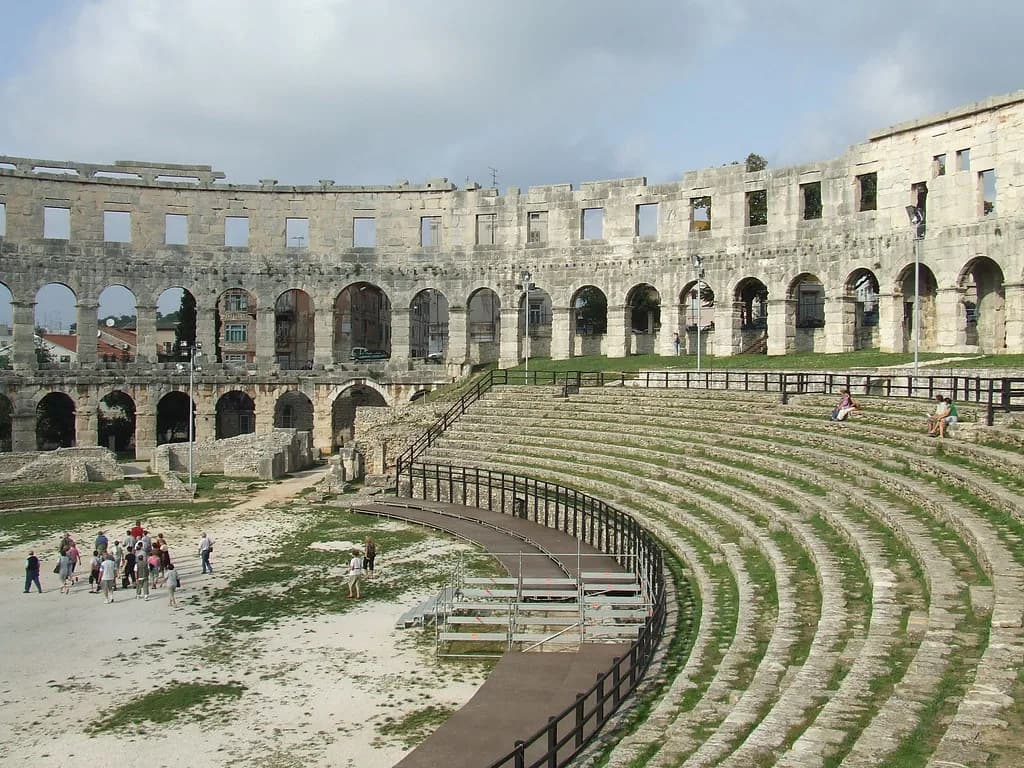
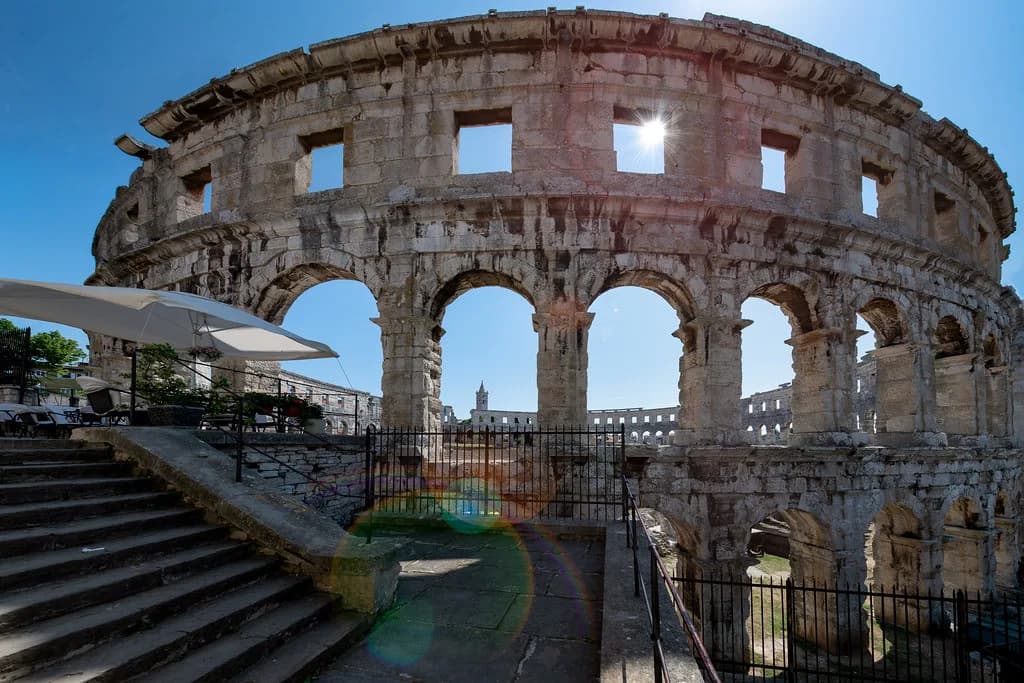
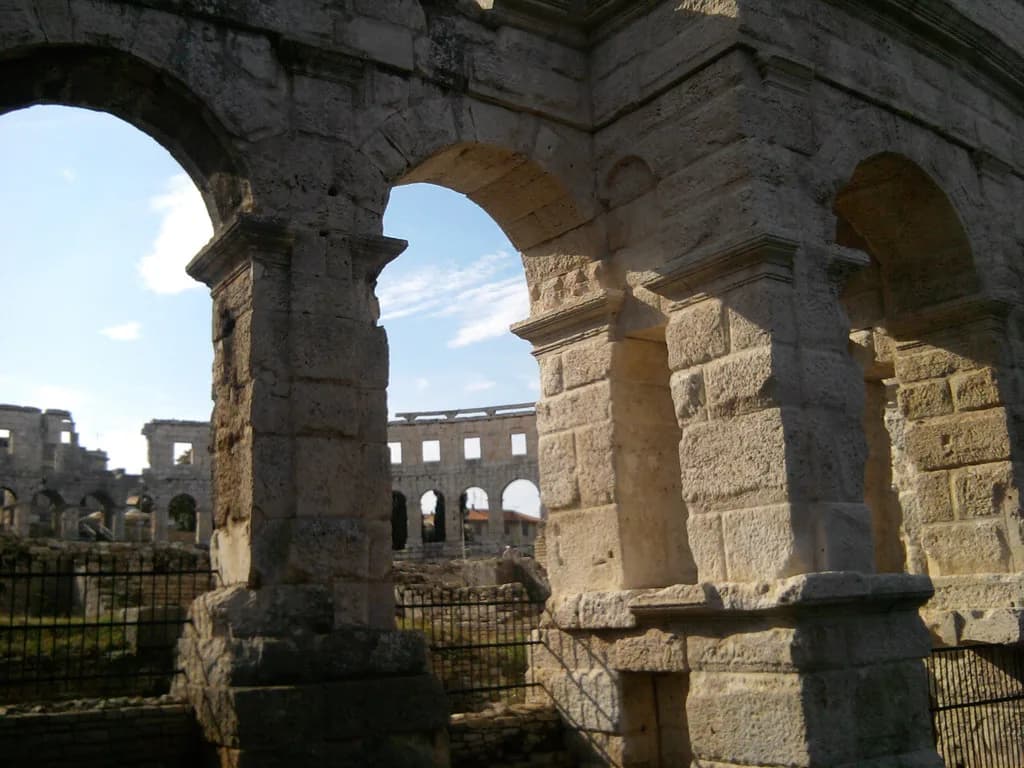
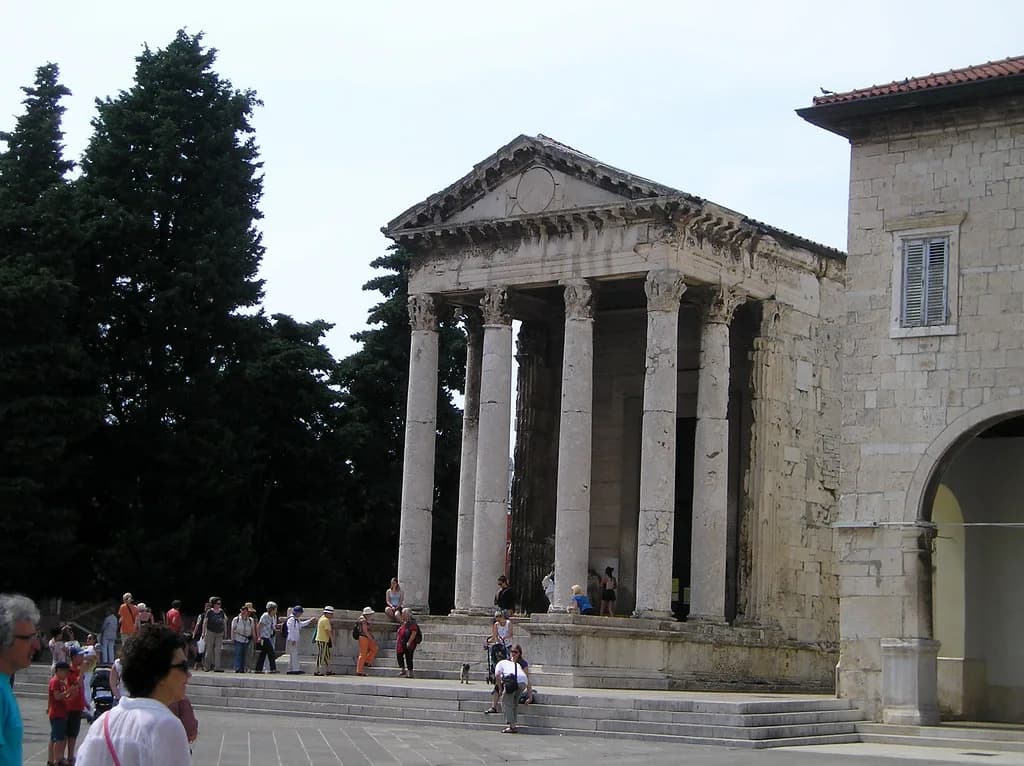
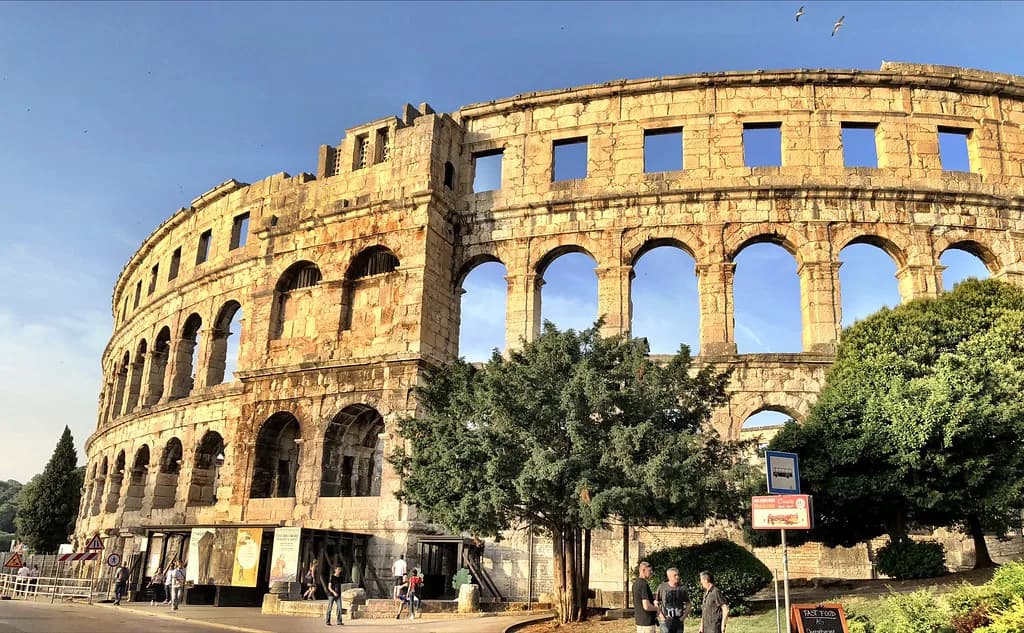
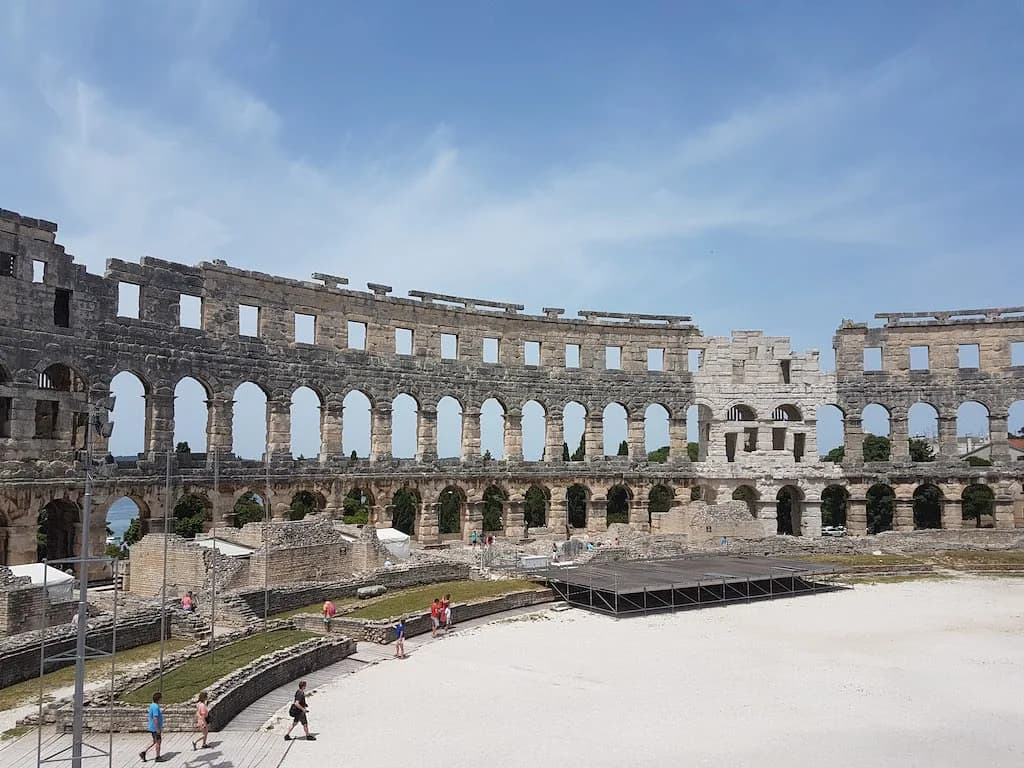
Pula's best value is that its headline monument, the Arena, is visible from the street and free to walk around from outside; you pay only if you want to go inside the amphitheater or attend a concert. The Temple of Augustus on the Forum, the Arch of the Sergii and the old town lanes are similarly free to wander, which keeps a sightseeing day cheap even without a ticket. Check current entry fees at the Arena itself, with Aquarium Pula and with Brijuni National Park before you visit.
Paid attractions cluster in a few places: the Arena interior, Aquarium Pula inside the old Fort Verudela, and the boat and park fees for a Brijuni day trip. Cape Kamenjak charges for vehicle access in season, and the sandy Mali Portic beach on the cape is the one place in the area where children get an easy sea entrance. Budget one paid sight per day and the rest of Pula costs you almost nothing.
Getting there and getting around
Arriving by air, Pula International Airport sits a short drive from the center, and direct seasonal flights from the UK, Germany, the Netherlands and Switzerland make it a cheap gateway in summer when fares are competitive. Arriving by car via the Istrian Y motorway costs fuel and tolls but spreads the cost across a family and buys you day trips to Rovinj, Poreč and inland Istria. Our guide to how to get to Pula compares the airport, motorway and ferry options in detail.
Inside the city you do not need a car. The center is walkable, local buses reach the Verudela and Stoja beaches, and taxis are the expensive fallback after dinner. Ferries from the port link Pula with Venice, Trieste and Zadar in season, a route worth pricing against a flight if you are combining Italy with Istria.
When Pula is cheapest
May, June, September and October are the value months: the weather is still good for swimming and outdoor sights, prices are a little lower and the crowds thinner. Late June and early September are the sweet spots, warm enough for the sea and quiet enough that the Arena side of town is not charging peak rates.
July and August are when beds and meals cost the most, and Pula in July shows what that means for crowds and heat without the discounts. Shoulder months have their own trade-offs: Pula in May and Pula in October are cheaper and cooler, Pula in April suits sightseeing over swimming, and Pula in September keeps the sea warm while the season winds down.
Pula versus Split and Dubrovnik on cost
The same trip costs less in Istria than in Dalmatia. Dubrovnik in August is the most expensive coastal city in Croatia, with accommodation and restaurant bills to match, and Split sits between the two. Pula's advantage is scale: it is a working port and shipbuilding town as well as a tourist destination, so local life keeps prices more grounded than in a town built entirely around visitors.
Further down the coast, Zadar is another mid-priced comparison worth making if you are choosing between Adriatic bases; our Zadar costs guide breaks down where that city's money goes. Between Pula and Rovinj, the trade-off is character versus cost: Rovinj's St. Euphemia Church and tightly packed peninsula are prettier, and correspondingly pricier in summer.
Pula versus inland Istria
Inland Istria is the value side of the peninsula. Truffle-country towns, agriturismo dinners and small family konobas charge less than the coast, and a day trip from Pula into the interior is one of the best ways to cut your average daily spend. The coast charges a premium for the sea view and the short season; the interior charges less and gives you more food for the money.
Money practicalities
Croatia uses the euro, and cards are widely accepted in Pula's hotels, restaurants and shops, so you can travel with very little cash. Keep a small amount of euro coins for beach bars, parking machines and rural konobas, and use bank ATMs rather than standalone machines that charge extra. Tipping is not obligatory but rounding up or leaving around ten percent for good service is the local norm.
Who should pick Pula on a budget
Pula suits budget-conscious travelers who want Roman ruins, free beaches, a walkable old town and cheap day trips without paying Dubrovnik prices. Families with children do well here because the Verudela beaches, the aquarium and Brijuni's easy boat trip replace expensive theme-park days, while backpackers get a compact city that can be seen on foot in a day or two.
Choose elsewhere if you want guaranteed sunshine in a five-star setting: that is Dubrovnik or the luxury resorts of the Dalmatian islands, at a price. If you want a prettier harbor town and do not mind paying for it, Rovinj is the Istrian answer, and if you want mountains and truffle villages you will do better inland.
Plan Your Visit
Pula is moderately priced rather than expensive: the coast's middle ground, with a bill that swings sharply between May and August. Book the shoulder months, eat one street back from the waterfront, treat the Arena as a free exterior and pay for the sights you actually want, and the town costs noticeably less than the Dalmatian headline destinations.
Check the Arena's own site for current entry fees and concert dates, and Brijuni National Park for boat times before you commit. For entry rules, use the official Croatian government page, and then decide how many days to give Pula based on whether you want the town alone or the town plus Istria.
Frequently Asked Questions
Is Pula expensive compared with the rest of Croatia?
No. Pula sits in the middle of the Croatian coastal price ladder, below Dubrovnik and Split in peak season and above inland Istria. Its season is short, so July and August climb fastest while May, June, September and October stay moderate.
Is Pula expensive to eat out?
Konoba meals a street back from the waterfront are reasonably priced for Croatia, while terraces around the Arena and the Forum charge more for the location. Truffle dishes and celebrated Istrian wines inflate bills more than anything else on the menu, so a carafe of local malvazija keeps the total sensible.
Is Pula expensive for tourists in July and August?
Those are the most expensive weeks, when accommodation fills and Arena concert nights lift demand near the center. Shifting to late June or September usually cuts the bill for the same town, with warmer sea than spring and fewer crowds than August.
How many days in Pula is enough to keep costs reasonable?
Two to three nights covers the old town, the Arena, the Forum and a beach afternoon on foot. Add days only for paid excursions such as Brijuni or Cape Kamenjak, since each extra night in peak season is where the budget really moves.
Is Pula cheaper than Split or Dubrovnik?
Yes, for a comparable trip. Dubrovnik is Croatia's most expensive coastal city in summer and Split sits between it and Pula. Pula's working-port character and compact sights make a shorter, cheaper itinerary possible.
Do I need cash in Pula or can I pay by card?
Croatia uses the euro and cards are widely accepted in Pula, so a small amount of cash covers beach bars, parking machines and rural konobas. Use bank ATMs rather than standalone machines, and tip by rounding up or leaving around ten percent for good service.
When is Pula cheapest to visit?
May, June, September and October offer the best balance of good weather, lower prices and thinner crowds. Late June and early September are the sweet spots, with sea warm enough for swimming and rates below the July and August peak.
Sources
Trip-decision notes
Optional updates when we publish or revise a destination verdict.
You might also like
Continue reading
More guides you'll find useful