Pula in June: Weather, Crowds and Whether It's Worth It
Pula in June brings warm seas, long sunny days and a city that is busy but not yet August-crowded. Here is what to expect and who June suits best.
On this page
June is one of the best months to visit Pula, and for most travelers it beats both July and August. The sea has warmed enough for comfortable swimming, daylight stretches past 9pm, and the city's Roman core is busy but still walkable without the peak-season squeeze. The trade-off is that prices climb from May levels and the last week of the month starts to feel like summer proper.
This guide treats June as a decision rather than a forecast: what the typical weather actually means for a beach-and-city trip, which days of the month to target, how many nights Pula deserves, and who should shift to May or September instead. If you are still deciding whether the city merits the trip at all, our Pula verdict lays out the case.
The verdict on Pula in June
Go in June if you want to swim every day and still have a city to walk in the evening. The Adriatic is typically around 22°C (72°F), warm enough for long sessions at Punta Verudela or on the Brijuni shore, while air temperatures sit in the mid-20s Celsius rather than the low 30s that July and August bring.
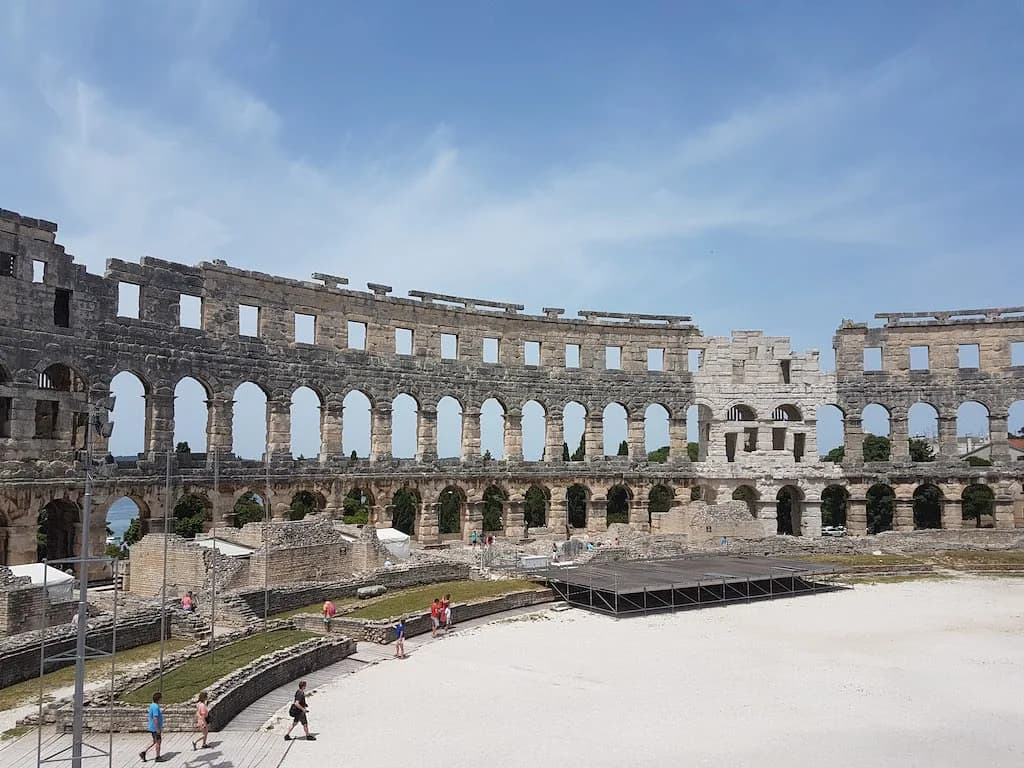
Skip June only if you need guaranteed heat and a full beach season. The first half can still throw a cool, windy day, and the second half brings the season's first genuine crowds, when the Arena and Forum Square fill in the late morning as tour groups arrive.
Travelers who prioritize quiet streets, lower prices and hiking over swimming should look at Pula in May; those who want the warmest sea with the summer rush thinning should weigh September. June sits between them and suits the broadest range of trips.
June weather in Pula
Expect average highs of about 25–27°C (77–81°F) and lows near 18°C (64°F), with the second half of the month consistently warmer than the first. Rainfall averages roughly 60mm for the month, usually arriving as short, sharp thunderstorms rather than all-day rain, and sunshine runs about ten hours a day.
The sea typically reaches around 22°C (72°F) in June, which is swimmable for most people but still bracing on a windy morning; a light rash vest helps children and cold-water swimmers. Day-by-day forecasts on AccuWeather are worth checking in the final week before you travel, since a bora wind can drop air and sea temperatures sharply for a day or two.
Treat all of these as typical conditions, not promises. Build one flexible indoor day into a week-long stay, and use it for the Zerostrasse tunnels or the Archaeological Museum of Istria if rain settles in.
Sea and beaches in June
Punta Verudela, south of the center, is the easiest swim: rocky platforms and concrete bathing areas with clear water, reached by local bus or a 30-minute walk along the coast. It is not a sand beach, so bring water shoes, but the entry is gentle and the facilities open through the season.
Cape Kamenjak, the protected peninsula at the southern tip of Istria, is the best day out for swimming and walking, with cove after cove of clear water and gravel paths between them. It is roughly 20 minutes by car from Pula; go early because parking fills on warm weekends.
For sand, the closest realistic option is Bijeca beach at Medulin, a shallow, family-friendly bay about 15 minutes away. The Brijuni islands are the other standout: boat access from Pula's harbor, archaeological remains, and a shoreline that is quieter than the city beaches.
Crowds and cruise-ship days
Pula in June is busy but not saturated. Weekdays are noticeably calmer than weekends, when Italian and Austrian visitors arrive by car, and the last ten days of the month are the busiest stretch as schools begin to break up across Europe.
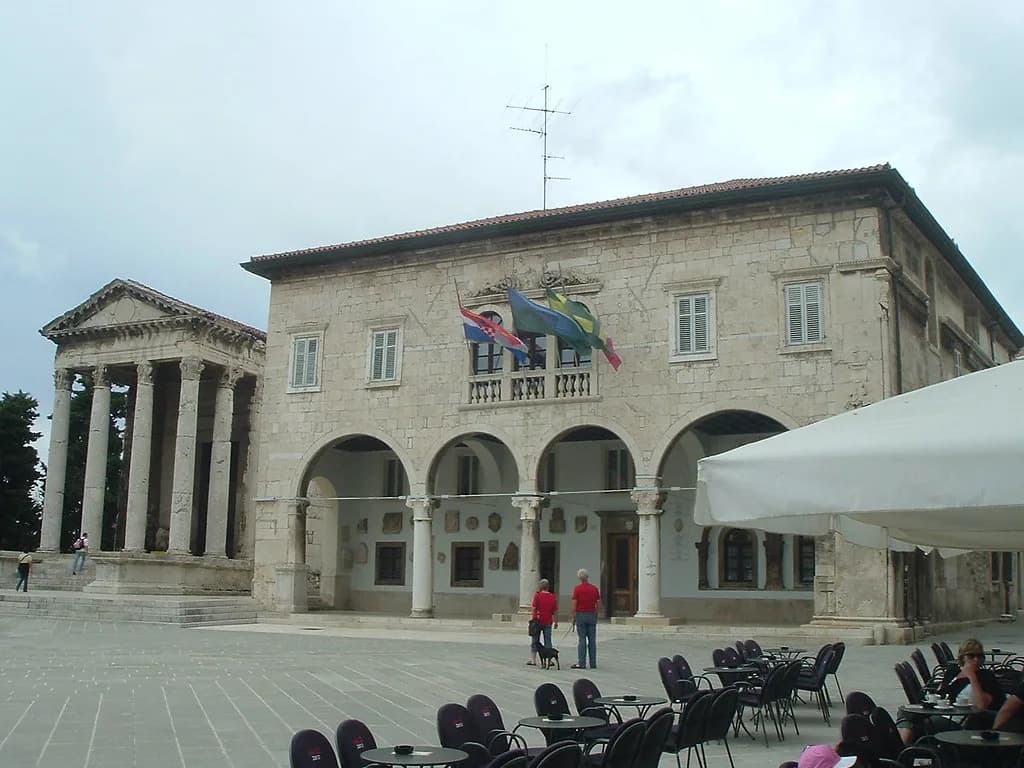
When a cruise ship is in port, the Arena and Forum Square crowd between mid-morning and early afternoon. Plan the Roman core for early morning or after 4pm, and use the middle of the day for the beach or a longer lunch, which is how locals structure the day anyway.
If you plan to combine Pula with a bigger Croatian city, June favors Pula over Split for anyone who wants a relaxed base; Zadar in June is a comparable alternative if you prefer the Dalmatian coast and its sunsets.
What to do in Pula in June
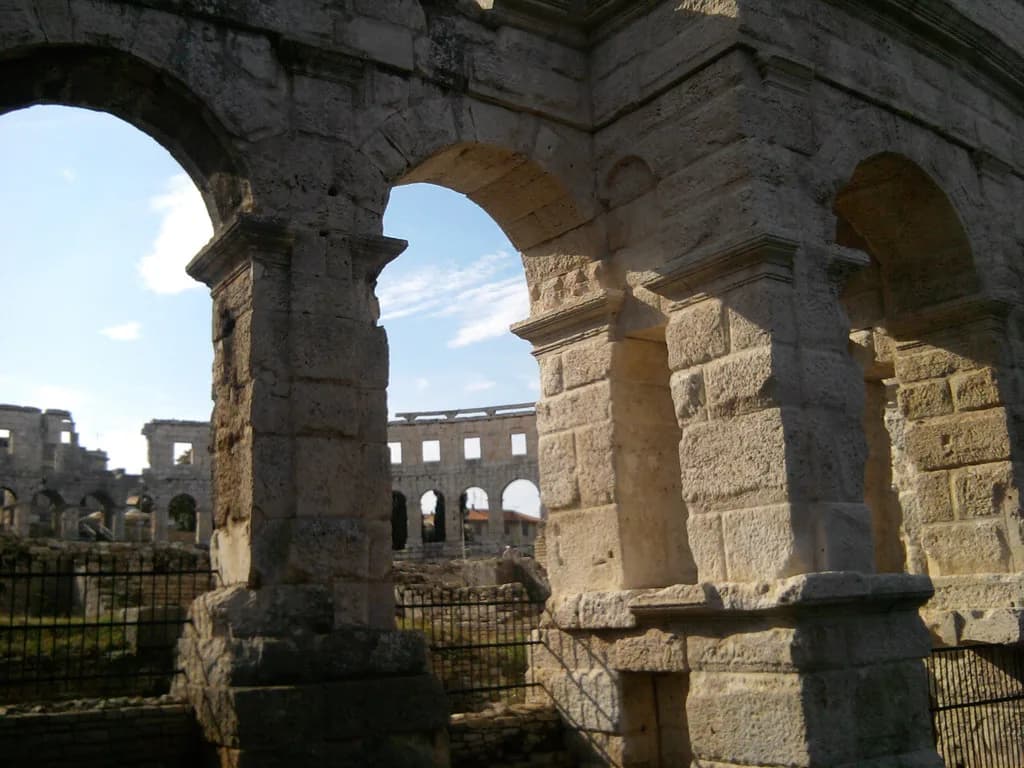
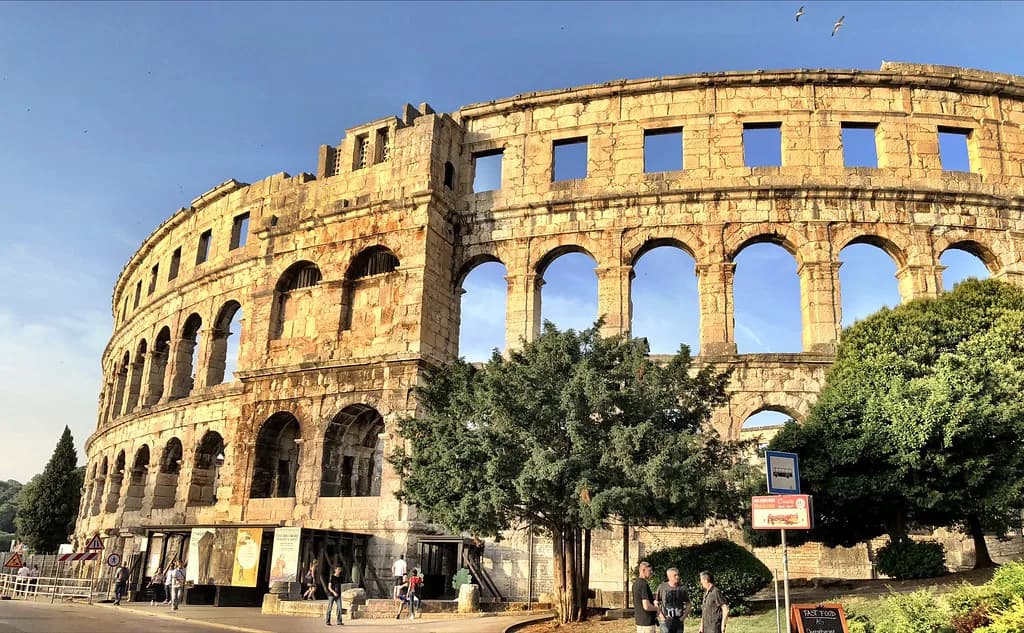
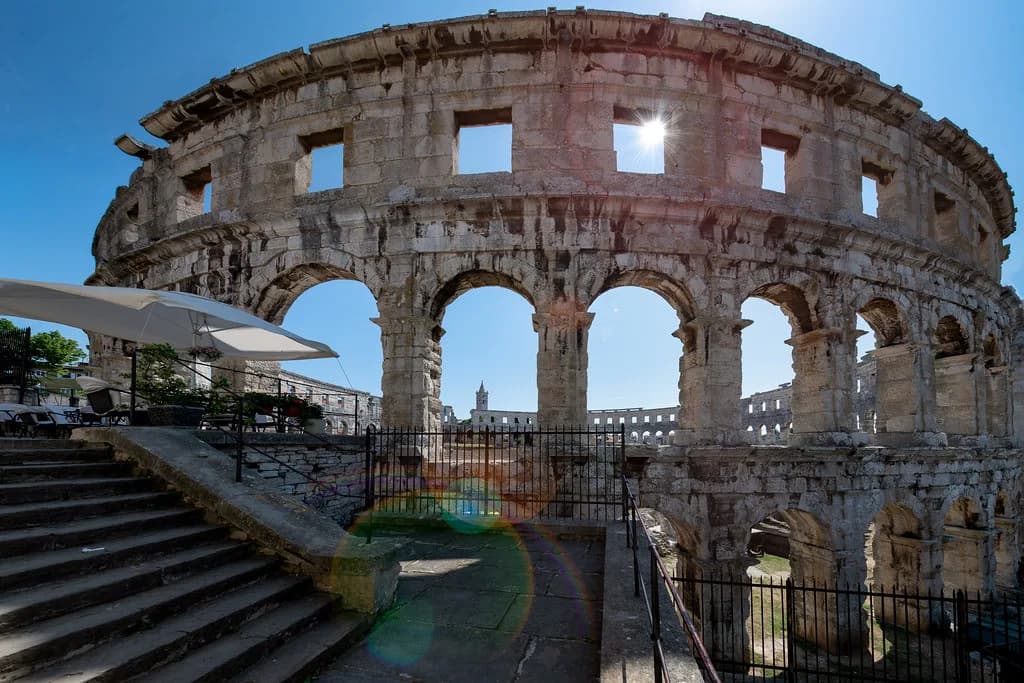
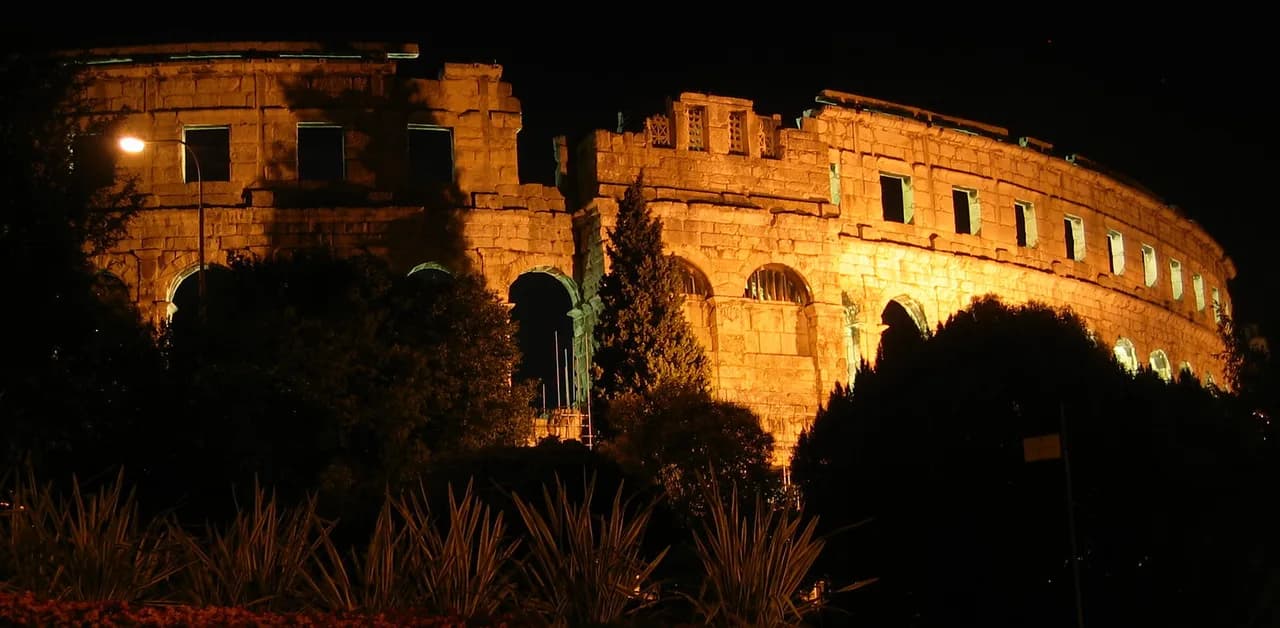
The Pula Arena, one of the best-preserved Roman amphitheaters anywhere, is the reason most people come, and June is when it hosts concerts and film screenings under the arches. Check the Arena's own program for what falls in your week before assuming a fixed summer schedule.
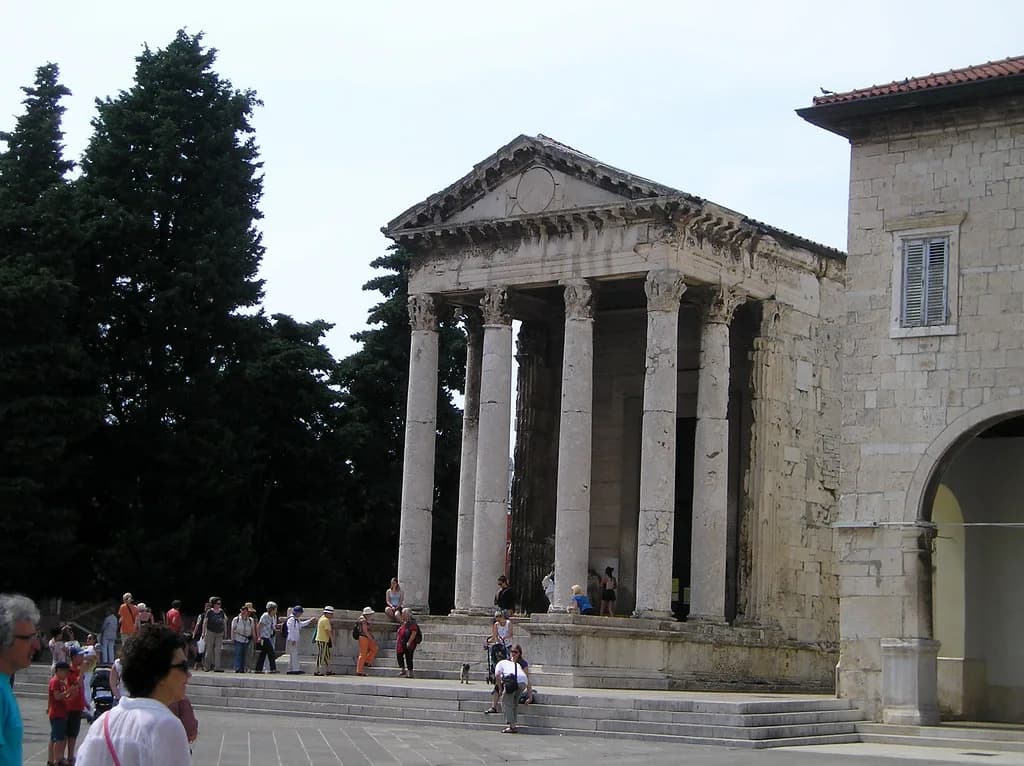
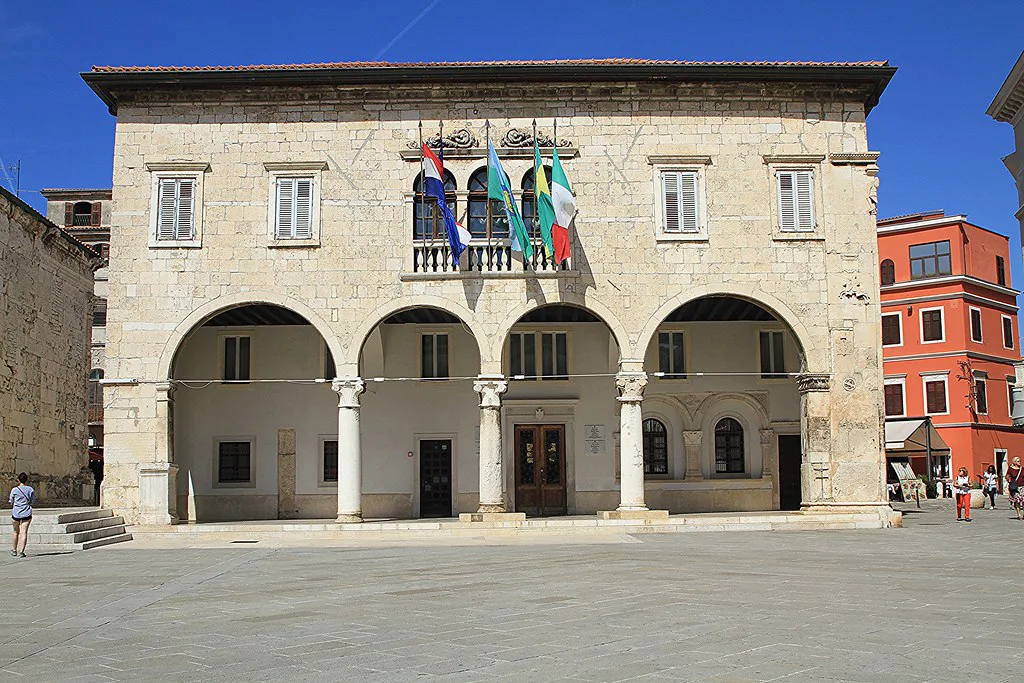
Below the Arena, the Forum Square holds the Temple of Augustus, still standing after two millennia and now used for exhibitions and, occasionally, as a stage. Walk the Roman core early, then climb to the Venetian fortress for the harbor view before the heat builds.
The Zerostrasse tunnels, a network of underground passages built for the Austro-Hungarian military, offer a cool escape in the middle of the day, with displays on the city's 20th-century history. Pair it with the nearby Archaeological Museum of Istria for the Roman and prehistoric context.
The city's Austro-Hungarian layer is just as rewarding: the naval cemetery, the 19th-century buildings around the port, and the market hall where Istrian producers sell truffles, olive oil and malvasia. June is also when the outdoor season is fully running, with terraces open and boats leaving the harbor.
Day trips worth a June day
Rovinj is the obvious second stop, an hour by bus or car up the coast, with a Venetian old town and the hilltop St. Euphemia Church. Going in June means you can walk the coastal path and swim off the rocks before the August day-trippers arrive; if you are choosing between the two towns, our Rovinj vs Pula comparison breaks down the trade-offs.
The Brijuni islands, reached by a short boat trip from Pula's harbor, combine Roman ruins, a safari-style park and pebbly swimming coves, and a June visit gives you the best odds of good water without the peak-season queue at the boat.
Cape Kamenjak deserves a full day: arrive at the southern tip, walk to one of the coves, and swim in water that is often clearer than the city beaches. A car makes this easy; without one, a taxi or organized day trip is the realistic option.
Events and the season opening
June is when Pula's summer cultural calendar starts in earnest, with film screenings in the Arena and open-air concerts around the city. Specific dates shift every year, so check the Pula tourist board's event calendar and the Arena's program for your week instead of relying on a fixed list.
The season opening effect matters more than any single event: terraces, beach bars and water-sports operators are running, but the August crush has not yet arrived. If your trip is flexible, aim for the first three weeks of June to get the best ratio of open facilities to crowd levels.
How many days you need in Pula in June
Two full days covers the Roman core and one beach afternoon comfortably. That means one morning for the Arena, Forum Square and the Temple of Augustus, and one day on the water at Punta Verudela or the Brijuni islands.
Add a third day for Cape Kamenjak and a fourth for Rovinj if you want to compare the two towns or do a coastal walk. With five days, Pula works as a base for the whole of southern Istria, with day trips by car to the hill towns and vineyards inland.
If you are weighing Pula against a longer Dalmatian itinerary, four nights here is enough to see the city properly and still leave time for the coast south of Rijeka. Pula is a compact city, and the Roman sights cluster within a ten-minute walk of each other.
Typical costs in June
June prices sit between spring and peak summer. Croatia has used the euro since 2023, so there is no currency conversion to plan around, and accommodation and restaurant prices are lower than in July and August but higher than in May or October.
Expect the busiest weeks, the last ten days of June, to command the highest nightly rates. For a fuller breakdown of what a trip actually costs, from meals to museum tickets to transport, see our guide to how expensive Pula is.
Book the Arena area and Forum Square restaurants for dinner in the second half of June, when walk-in tables get harder to find. The cheaper, more local option is to eat in the neighborhoods away from the Roman core, where prices drop and portions do not.
Getting there
Pula Airport sits about 6km from the center and handles seasonal European flights; the bus into town is the straightforward option, with taxis as the fallback for late arrivals. From Zagreb, buses run regularly and take around four hours, while the drive from Rijeka is about two hours on the Istrian motorway.
Ferries connect Pula with the Brijuni islands and, in season, with other Adriatic ports; check operator timetables directly, since June schedules differ from July and August. For a full run-down of the options by air, bus and boat, see how to get to Pula.
If you arrive by car, the Istrian interior is easy to reach for a day: hill towns like Motovun and Grožnjan are within an hour and pair well with a June afternoon.
June versus May and September
May is quieter and cheaper, but the sea is still cool for many swimmers and some beach facilities are only just opening. September brings the warmest water of the year and thinner crowds once the school holidays end, though the evenings shorten noticeably.
June wins on daylight and balance. Choose May if you want hiking, cycling and empty streets; choose September if you want the sea at its warmest with fewer people; choose June if you want both a city and a beach at full strength.
For a sense of how the summer escalates, compare Pula in July, when prices peak and the Arena crowds are at their heaviest, or Pula in August if you want the hottest, busiest version of the city.
Who should skip Pula in June
Skip Pula in June if you need a quiet, budget-minded city break: the season is running and prices reflect it. Travelers who want cool weather and empty streets should choose April or October, when the Roman core is calm and the sea is for looking at.
Skip it too if you want a guaranteed beach resort with sand and organized sunbeds; Pula's coast is rocky and the swimming is better described as Adriatic-standard than Caribbean. For that trip, a shallow bay elsewhere in Istria or the Dalmatian islands suits better.
Plan Your June Trip to Pula
June is the month Pula works best for most travelers: warm enough to swim, long enough to walk the city in the evening, and busy without being overwhelmed. Book the second or third week of the month, plan the Roman core for early mornings, and keep one day free for Kamenjak.
If the city itself is still the open question, start with our honest Pula verdict before you commit to dates. Everything else, from ferry times to Arena tickets, is best checked directly with the ferry companies and the Arena's own box office once your week is set.
Explore more Pula trip-decision guides
Frequently Asked Questions
Is June a good month to visit Pula?
Yes, for most travelers June is one of the two best months. The sea is typically warm enough for comfortable swimming, daylight lasts into the evening, and the city is lively without the August crush. The trade-off is rising prices and busier weekends, especially in the last ten days of the month.
What is the weather like in Pula in June?
Typical June conditions are average highs in the mid-20s Celsius and lows around 18°C (64°F), with the second half of the month warmer than the first. Expect around 60mm of rain for the month, often as short thunderstorms, and roughly ten hours of sunshine a day. Treat these as averages, not forecasts.
Can you swim in Pula in June?
Yes. The Adriatic typically reaches around 22°C (72°F) in June, comfortable for most swimmers, though windy mornings can feel bracing. The beaches at Punta Verudela and on Cape Kamenjak are the easiest places to get in the water.
Is Pula busy in June?
Pula is busy but manageable in June. Weekdays are calmer than weekends, and the last ten days of the month are the busiest stretch as school holidays begin. When a cruise ship is in port, the Arena and Forum Square are crowded between mid-morning and early afternoon.
How many days do you need in Pula in June?
Two full days cover the Roman core and one beach afternoon. Three days adds Cape Kamenjak, and four lets you include Rovinj. Five days makes Pula a comfortable base for exploring southern Istria.
Is Pula or Split better in June?
Pula is the better June choice if you want a relaxed city base with easy beach access and day trips around Istria. Split suits travelers who want a bigger city, island ferries and a more Dalmatian setting, but it is busier in June.
Do you need a car in Pula in June?
Not for the city itself, which is compact and walkable, and not for the Brijuni boat or Punta Verudela. A car makes Cape Kamenjak and the Istrian hill towns much easier, and it is worth renting for a day or two if those are on your list.
What should I book ahead for June in Pula?
Book accommodation early for the last ten days of June, when rates peak and availability tightens. Check the Arena's own program for concerts and film screenings, and note that Brijuni boat times in June differ from July and August.
Sources
Trip-decision notes
Optional updates when we publish or revise a destination verdict.
You might also like
Continue reading
More guides you'll find useful