Pula in July: Weather, Crowds and Whether It's Worth It
Pula in July brings hot, dry days, warm Adriatic swimming and Arena events, plus peak prices and busy beaches. Here is how to decide if it suits you.
On this page
July is Pula's busiest, hottest and most expensive month, and that is also exactly when the city works best for swimming and for the Arena's open-air summer season. If you want clear water, long evenings and Roman monuments in the heat haze, July delivers; if you want quiet streets, low prices or a beach to yourself, pick June, September or a different base entirely. The trade-off is straightforward: you pay a premium and share the old town, and in return you get the warmest sea and the fullest calendar.
The verdict
Go to Pula in July only if the water and the evenings are the point. The Adriatic in the northern part of the peninsula is at its most swimmable, the Arena hosts concerts and film screenings under the stars, and the old town stays lively until late. Come instead in June or September if you care more about walking the Forum without a crowd and paying normal rather than peak rates.
The city itself is a working port with a compact Roman core, not a polished resort, and July exaggerates both sides of that. The old town is genuinely atmospheric, but step outside it and you meet brutalist apartment blocks and the naval shipyard, as the Tripbase guide points out. That working-town character also keeps Pula cheaper than Dubrovnik or Split even in high season, especially on food.
If you are still weighing the destination at all rather than just the month, start with the wider question of whether Pula is worth visiting and treat July as a timing decision on top of that. For most travelers who have already chosen Istria, July is a good month for a short, swim-heavy stay of three to four nights rather than a long sightseeing marathon.
July weather in Pula
Expect typical July conditions of hot, mostly dry days and warm nights, with the sea at its most comfortable for long swims. Average July values recorded for Pula put daytime highs around the low 30s Celsius (high 80s Fahrenheit) and nights near 21°C (around 70°F), with the month dominated by sunny days and only a handful of rain days, according to World Weather. Treat these as climate averages, not a forecast, and check a proper forecast in the days before you travel.
The pattern matters more than the numbers: July heat builds through the morning, peaks in mid-afternoon and eases into a long, warm evening. That shape should drive your day, with monuments in the early morning and the beach or a shaded table in the middle of the day. Because the weather service publishes monthly averages rather than guarantees, plan one indoor or shaded half-day in reserve for the occasional unsettled day.
What the heat actually feels like
Midday in the Roman core is hot in a specific way: limestone and paving throw the sun back at you, shade is limited to narrow streets and a few trees, and the Forum has almost none once the sun is high. The morning and evening hours do the real work, which means an early start around the Arena and the Forum and a second outing after the worst heat has passed. Keep the middle of the day for swimming, a long lunch or a shaded café rather than a walking route.
On the water it is far more forgiving. The Adriatic is at its warmest in July, and a breeze off the sea makes the rocky platforms comfortable even when the town feels stifling. The catch is that almost every swimming spot near the center is stone or concrete rather than sand, so plan on sea shoes and shade you bring yourself.
The Roman core in July
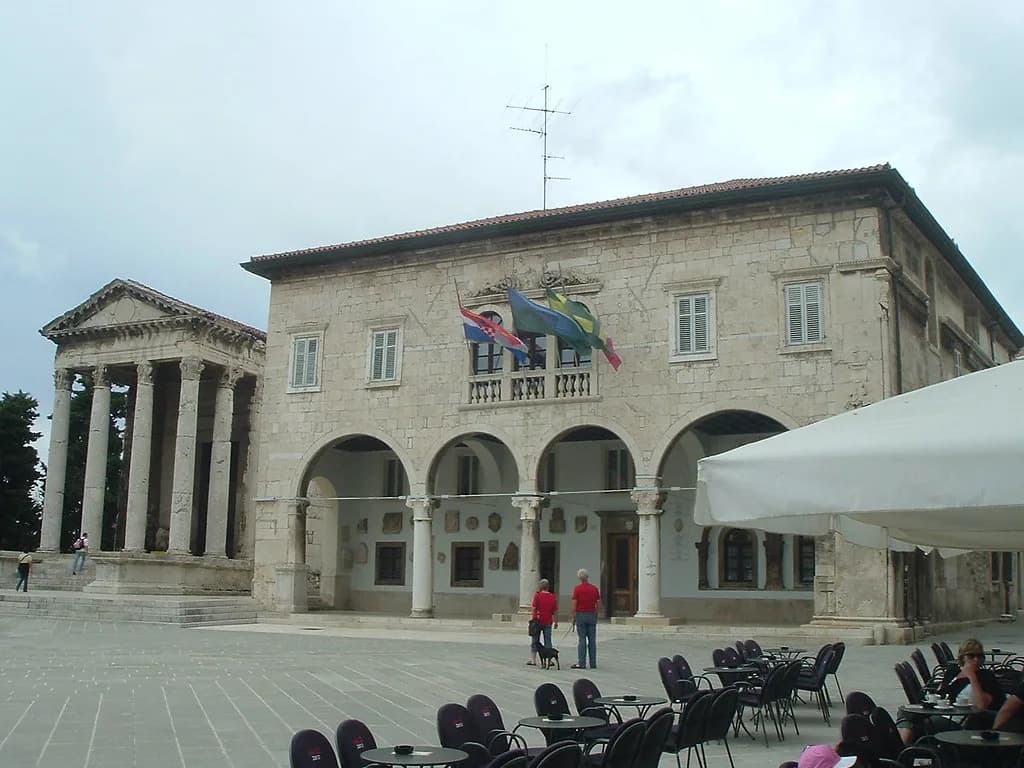
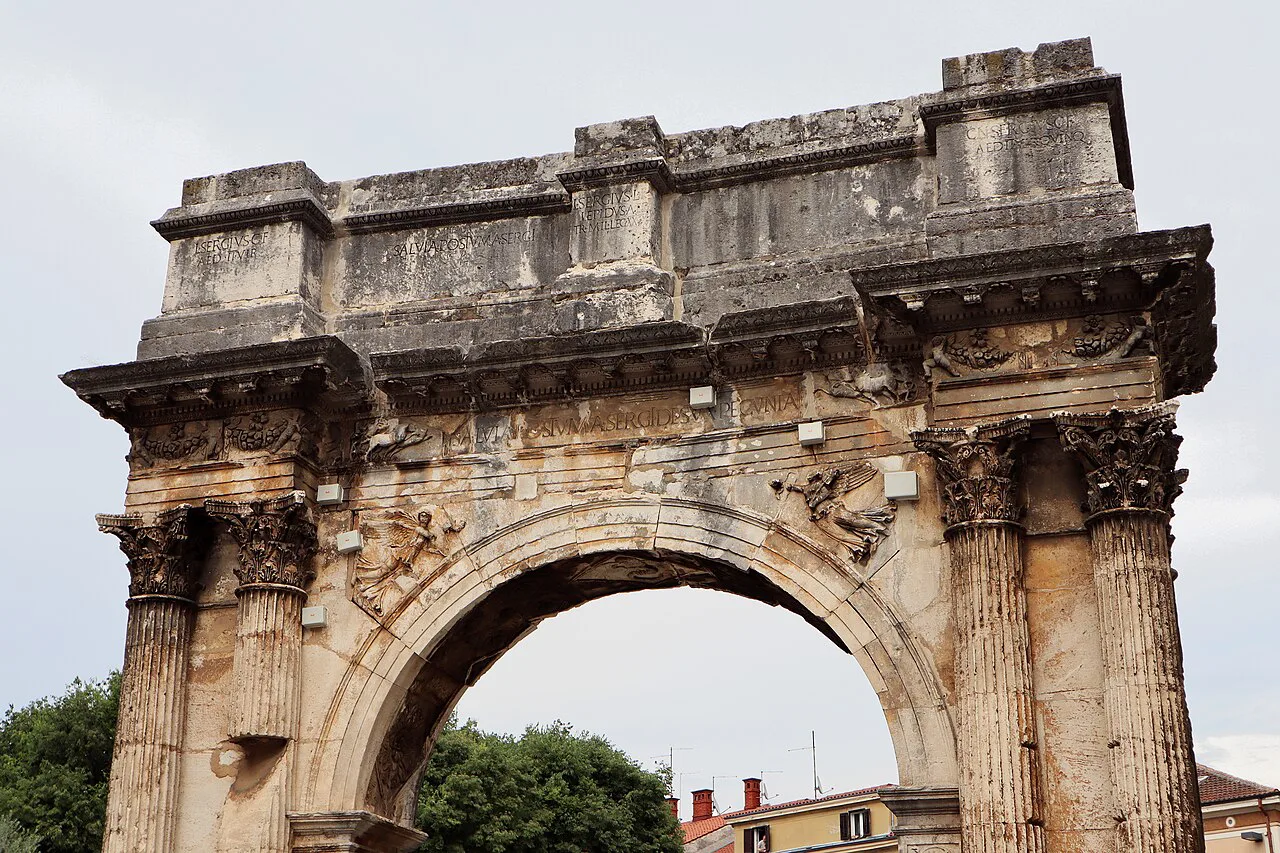
Pula's sights sit within walking distance of each other, which is the saving grace of a July visit: you can cover the core in a couple of short outings instead of a single hot march. The Arena, the Temple of Augustus on the Forum, the Arch of the Sergii, the Twin Gate and the fragmentary Saint Mary Formosa are all close together, and the waterfront and hill viewpoints give you reasons to break the walk up. See the Pula Arena and the Forum early, before the tour groups arrive and the stone heats up.
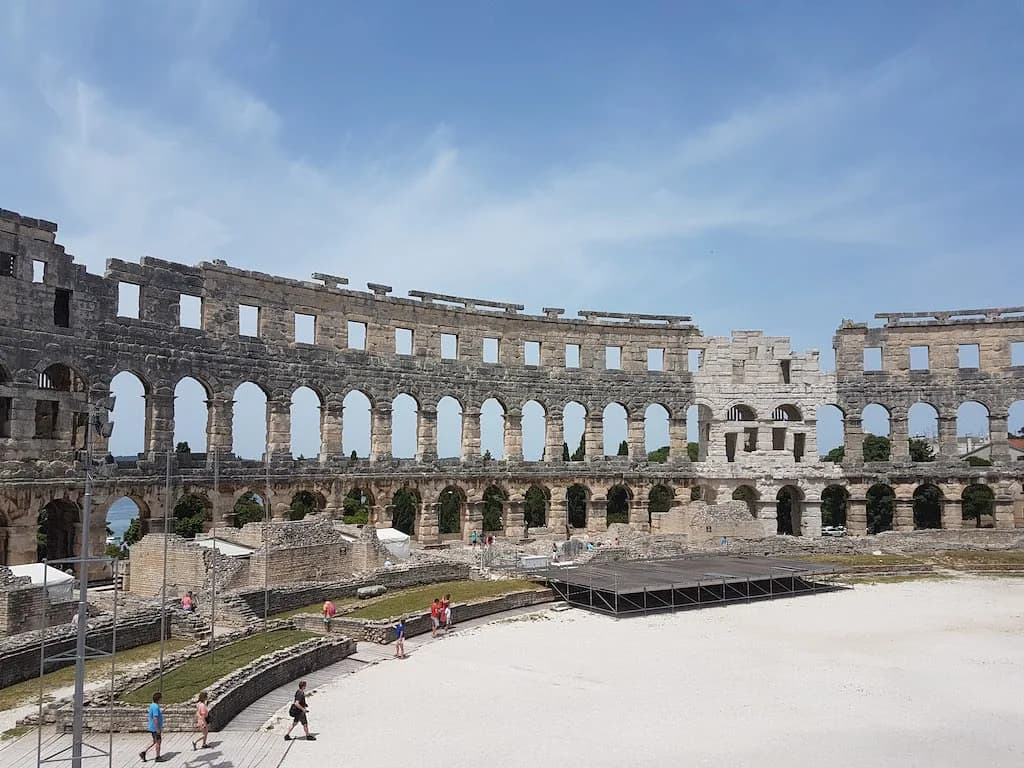
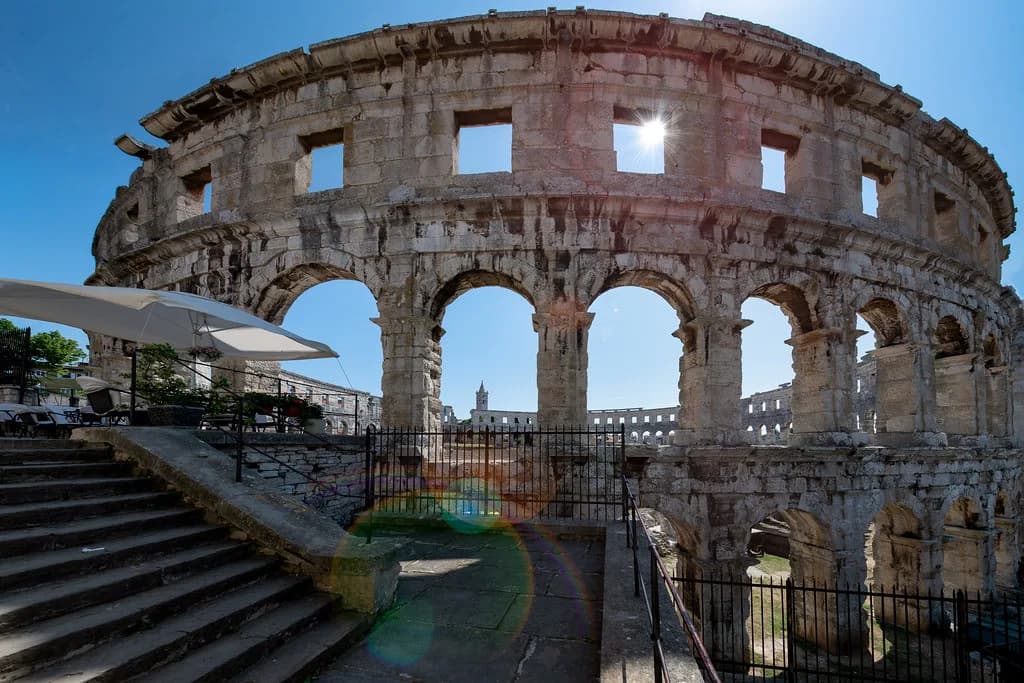
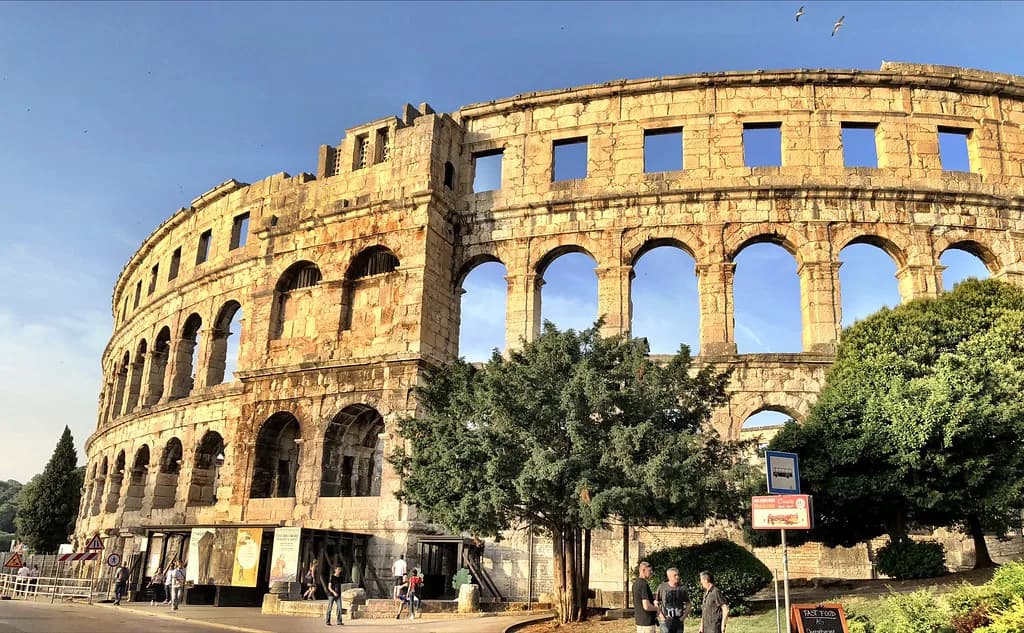
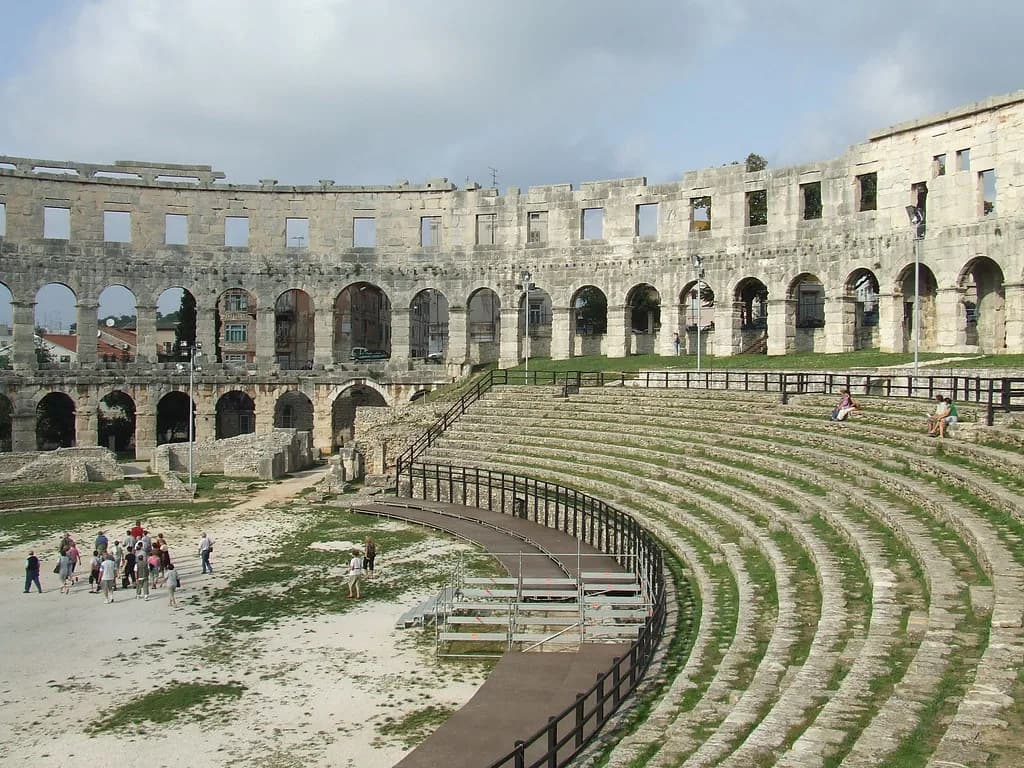
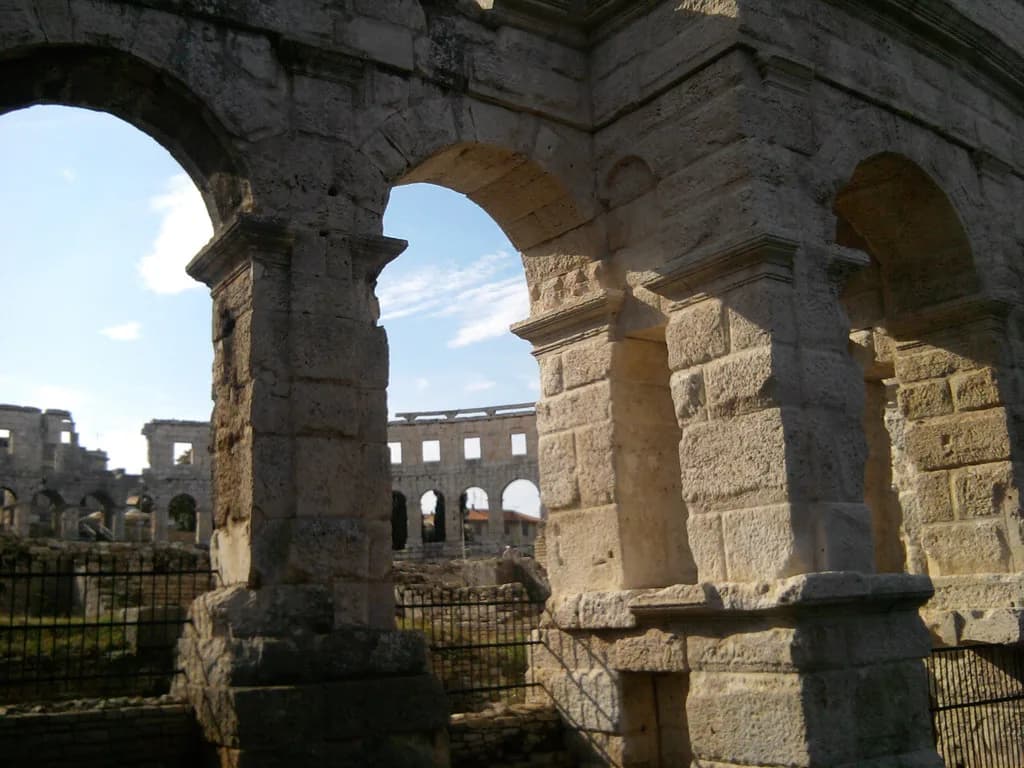
The Arena is the one sight worth paying for. It ranks among the largest surviving Roman amphitheatres and is the only one that keeps all three architectural orders and four side towers, and the ticket includes the archaeological collection in the basement. Expect a fee in the region of ten euros for the amphitheatre itself, which is worth budgeting for.
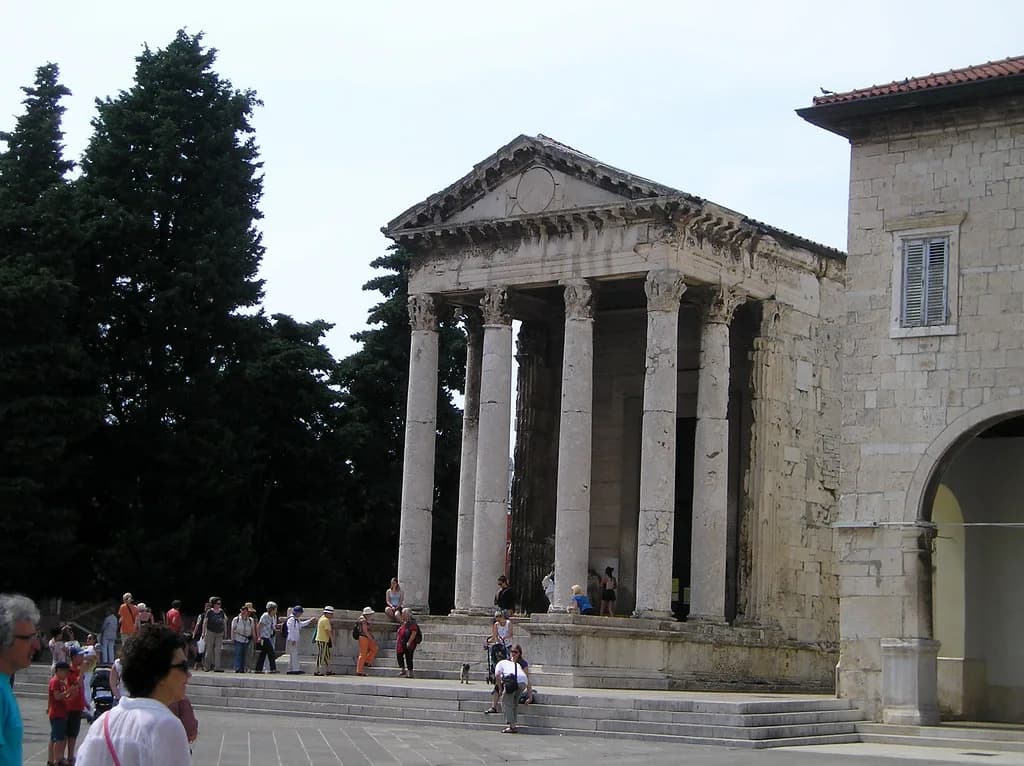
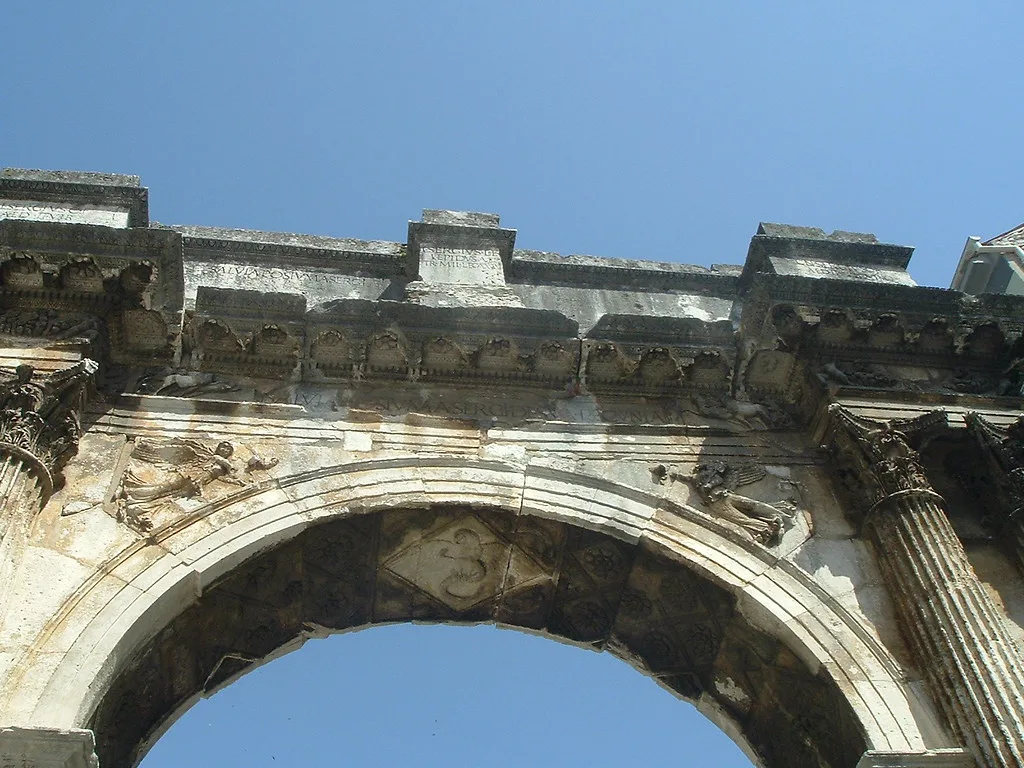
Elsewhere the Roman layer is free to see. The Temple of Augustus on the Forum now holds Roman stonework rather than a cult statue, the Arch of the Sergii stands where a city gate once did, and the Twin Gate is a surviving fragment of the old walls. A small charge applies at the Franciscan monastery cloister, which holds Roman sculpture and a mosaic.
Beaches and swimming
This is not sandy-beach Croatia. Pula's swimming is rocky shoreline and concrete bathing platforms, with the clearest water on the forested Verudela and Stoja peninsulas south of town, where sheltered coves sit under pine shade. Closer in, Valkane is a ten-minute walk from the Arena and convenient rather than beautiful, while Zlatne Stijene on the Lungomare is the most popular in-town option and busy all day in July. Sea shoes are close to essential everywhere.
For something wilder, Rt Kamenjak at the southern tip of the peninsula is the best coast within easy reach of Pula, with dozens of coves and rock ledges to swim from, but you need a car and an early start to beat the parking crush. The Brijuni Islands, reached by a short ferry crossing from Fažana to the north, give you the quietest and cleanest water in the area because the national park status keeps both the coastline and the crowds in check.
Medulin, a short bus ride south, is the practical alternative for a swim day: the beaches are calmer than the town's and there are several buses a day, with the local bus fare in the region of three euros each way. Its main sand beach, Bijeca, is the busiest spot in the area in high season, so aim for the rockier coves instead.
Arena nights and the mood of the old town
In summer the Arena changes character after dark, hosting concerts and open-air screenings, including the city's film festival. These events are a genuine reason to be in Pula in July, and the sight of a Roman amphitheatre full of people at night is the single best thing about a summer visit. Which artists play and on which dates varies year to year, so the Arena and the festival publish the schedule themselves; check it before you fix your dates rather than counting on a particular night being free.
When there is a big event, the old town fills and the Forum terraces get loud, and the mood shifts from dinner-and-a-drink to something closer to a festival. On other nights July is busy but manageable, with the social life centered on the Forum. If you want a quiet evening, plan it for a night when the Arena is dark.
Day trips that work in July
Brijuni National Park is the most rewarding day out, an easy ferry crossing from Fažana and a world away from the town beaches, with protected water and a quieter shore. Go early, because the heat and the boat queues both build through the morning. The park's own ferry and visitor information set the crossing times and any entry arrangements.
Rt Kamenjak and the inland hill towns of Istria are the other obvious escapes, both easier with a car. Driving to Kamenjak means dealing with narrow access roads and full car parks by mid-morning in July, and inland Istria means winding roads and hot afternoons, so keep each day to one destination. Do not try to combine a beach morning at Kamenjak with an inland afternoon in high summer.
Typical costs in July
July is peak season, so accommodation and car rental sit at their highest and should be booked well ahead. Food is where Pula is kind: Istrian cooking, truffle pasta and Adriatic seafood included, costs noticeably less than across the water in Italy or in Dubrovnik, as the Tripbase cost notes describe. Restaurants directly facing the Arena tend to charge a premium for the view, and side-street konobas are better value.
Parking is the cost people forget. Leaving the car in the large Arena car park costs around ten euros for the day, which makes sense for a full day of sightseeing but adds up over a week. Croatia uses the euro, so there is no currency conversion to plan around.
Getting there and around
Pula has its own airport, with seasonal flights from across Europe, and the town is also reachable by bus and by road from the rest of Istria and further afield. How you arrive shapes what you can do: a car opens up Kamenjak, Fažana and inland Istria, while a car-free trip keeps you in the old town and on the town buses. The practical detail on routes and connections is covered in our guide to how to get to Pula.
Within Pula, everything in the Roman core is walkable, and buses cover Medulin, Fažana and the peninsula beaches. In July, driving and parking near the center are slow and frustrating, so park once at the Arena lot and walk. If your trip is mostly about swimming, base yourself on the Verudela or Stoja side and come into town in the evenings.
Drawbacks
Prices peak in July, beaches are crowded, and the Arena area fills with tour groups by mid-morning. The working-port edge outside the old town is real, not a marketing detail, and some visitors find the contrast with the Roman core jarring. And the scene thins quickly: the nightlife is modest and largely over by the end of August, so July is one of the few months when the town is genuinely lively.
Heat is the other honest drawback. July afternoons make long walking tours unpleasant, shade on the beaches is limited, and the stone-and-concrete shoreline is not what everyone pictures when they book a beach holiday. If you want sand and resort infrastructure, this is not the right Croatian coast for you.
Who July in Pula suits
July suits swimmers who are happy on rocky platforms, history-led families who want a compact Roman core and short distances, and food-first travelers who want Istrian cooking without Dubrovnik prices. It also suits anyone who fancies an evening inside a Roman amphitheatre. It does not suit travelers who want quiet streets, sandy beaches, low prices or a lively club scene.
The classic comparison is Pula against Split. Split wins on island-hopping and nightlife; Pula wins on food, water clarity and cost, and July sharpens that choice because Split's ferry crowds and beach pressure are heavier. If July crowds are your main worry, it is worth reading the same trade-off for Zadar in July before you pick a base. If your July trip is really about island-hopping, go to Split; if it is about swimming, eating and Roman ruins at a reasonable price, Pula is the better base.
How many days you need
Three to four nights is the right length for Pula in July: one day in the Roman core, one on the water at Verudela or Stoja, one day trip to Brijuni or Kamenjak, and an evening at the Arena. Adding a fifth day works only if you use it for inland Istria or a slower beach day. Longer stays in peak heat tend to become repetitions of the same routine.
Build the days around the heat rather than against it. Mornings for monuments, middays for swimming or shade, evenings for the Forum and the Arena. That rhythm is what makes a July stay pleasant instead of exhausting.
Plan Your July Trip
July in Pula is a clear trade: the best swimming and the most atmospheric evenings of the year, against peak prices and busy stone beaches. If that trade suits you, book ahead, start early, and keep the middle of each day near the water. If it does not, June and September give you most of the same city with fewer people and lower rates.
For the fuller picture of the destination before you commit to a month, read the wider verdict on Pula and match the timing to what you actually want from the trip.
Frequently Asked Questions
Is it too hot in Pula in July?
Afternoons can feel very hot in the Roman core, where limestone paving and little shade push temperatures higher than the official figure suggests. Mornings and evenings are comfortable, and the coast is cooled by a sea breeze, so the practical answer is to sightsee early and swim at midday rather than to avoid July altogether.
How many days should you spend in Pula in July?
Three to four nights covers the Roman core, a beach day on the Verudela or Stoja peninsulas and one day trip, with an evening at the Arena if something is on. Add a day only if you want inland Istria or a deliberately slow beach day.
Does Pula have a sandy beach?
No, not in the town itself. The swimming is from rocky shoreline and concrete platforms, with sea shoes recommended, and the closest sandy option is Bijeca at Medulin a short bus ride south, which is also the busiest beach in the area in high season.
What is the sea temperature in Pula in July?
The Adriatic reaches its warmest of the year in July and stays comfortable for long swims, with the diving sources describing summer water in the mid-twenties Celsius. These are typical seasonal conditions; the national weather service publishes the figures for the exact dates you are considering.
Is Pula crowded in July?
The old town and the Arena area are busy, especially when a concert or film screening is on, and the popular beaches fill by mid-morning. It is busy rather than overwhelming, and Pula stays calmer than Dubrovnik or Split even at peak.
Is Pula cheaper than Dubrovnik in July?
Yes, food and drink in particular cost noticeably less than in Dubrovnik, and Pula sits below Split on overall trip cost. July still means peak accommodation rates, so book early to keep the total down.
Should you choose Pula or Split in July?
Pick Split for island-hopping and nightlife, and Pula for food, clearer swimming water and lower costs. July makes the difference sharper because Split's ferry crowds and beach pressure are higher.
Do you need a car in Pula in July?
Not for the town, where the Roman core is walkable and buses reach Medulin and Fažana. You do need one for Rt Kamenjak and inland Istria, and in July you should arrive early because the car parks fill.
Sources
Trip-decision notes
Optional updates when we publish or revise a destination verdict.
You might also like
Continue reading
More guides you'll find useful