Pula in September: Weather, Crowds and Whether It's Worth It
September in Pula brings typical highs near 23°C (74°F), thinner crowds and open Roman sights. Here is who should go and what to expect.
On this page
Yes, September is one of the best months to see Pula. Typical September days in Pula run pleasantly warm and often breezy, with average highs around 23°C (74°F) and average lows near 18°C (65°F), a clear step down from August's roughly 28°C (82°F) highs.
This is a month for travelers who want to walk the old town without wilting, eat on the Forum in the evening, and take a day trip to Kamenjak or the Brijuni Islands without a midday crush. If you need guaranteed beach-club heat or a full roster of summer events, you are a few weeks late.
The trade-off is honest: September is shoulder season, not off-season. Expect a few rainy spells, cooler evenings, and some seasonal places winding down by the end of the month. If your priority is hot, barefoot swimming, July or August is the better bet.
The verdict: is September the sweet spot for Pula?
For most travelers, yes. September gives you the version of Pula you came for — the amphitheater, the Forum, the Austro-Hungarian layers, the seafood — without the mid-August oven and the heaviest crowds. It is the month to pick for a first visit if comfort matters more than peak summer buzz.
The one group that should look elsewhere is heat-seekers who want 30°C-plus afternoons and evening swims as the main event. They will find September pleasant rather than hot. Couples and friends planning a long weekend should also weigh a September weekend against the last week of August, when the season is still in full swing.
If you are still deciding whether Pula deserves your time at all, start with the broader question of whether Pula is worth visiting and whether its Roman sights plus the Kamenjak coast are enough to justify the trip.
Who will love Pula in September
First-time visitors to Istria who want one base with real city substance: Pula is not a pretty postcard village like Rovinj, but it has a Roman arena, a working Forum and a proper urban edge. In September you can walk from the Arena to the old town without the midday humidity fighting you.
History-minded travelers will find September ideal for the Roman circuit — the Arena, the Temple of Augustus, the Arch of the Sergii and the Gate of Hercules — plus the underground Zerostrasse tunnels. The Istrian olive oil museum and the 1886 Austro-Hungarian fort housing the aquarium suit a slower day.
Travelers who want a swimming-and-day-trip holiday without renting a car also do well. Kamenjak National Park and the Brijuni Islands are realistic September excursions, and coastal boat trips run while the weather holds. Check the Brijuni boat schedule with the national park's boat service, since shoulder-season departures thin out.
Who should pick a different month or a different base
If your trip is mainly about guaranteed sunbathing and hot evenings, go in July or August, accepting the crowds and higher prices. If you want long, quiet museum days and do not care about swimming, October is cheaper and cooler.
Rovinj, not Pula, is the better base if your priority is a photogenic old town on the water; Pula wins on Roman sights and a lived-in city feel. Split is a much bigger, busier hub with its own Roman core and island ferries, and suits travelers who want more city and more transport choice.
Families with small children should weigh the shoulder-season joy of fewer crowds against the odd rainy day around the middle of the month. Plan at least one indoor backup, such as the aquarium or the olive oil museum.
September weather in Pula: typical highs, lows and what it feels like
One September summary puts daytime highs closer to 25°C (77°F), which is a reminder that these are averages rather than a promise. Treat them as typical conditions, not a forecast: a warm September can feel like late August, and a cool one can push you toward long sleeves in the evening.
The practical upshot is a month of two halves. Early September still leans summer, with warm afternoons and comfortable evenings; the final week starts to feel autumnal, especially once the sun drops and the bura wind picks up. Plan swims and boat trips early in the trip and keep the museums flexible.
Daylight runs from just after 6:40 a.m. around 7:15 p.m. early in the month — roughly 12.5 hours — enough for a full day out and an evening on the Forum.
Rain, wind and daylight: the honest picture
September is not a dry month in Pula, but neither is it a washout. Typical summaries show rain on a minority of days, so a week usually delivers more dry mornings than wet ones.
The wind is the thing locals notice. Pula sits at the southern tip of Istria, and occasional strong winds can close beaches or make boat trips unpleasant for a day or two. If you have booked a Kamenjak or Brijuni excursion, keep the booking flexible and swap it with a city day if the forecast turns blustery.
Build slack into the itinerary rather than packing it tight. Two full days of Roman Pula plus one day trip leaves room for weather to rearrange things without ruining the trip. That is also why a late-September visit rewards anyone who has a museum or two in reserve.
Sea and swimming in September
Swimming is still very much part of a September trip. The Adriatic has had all summer to warm up, and warm air temperatures make the beaches around Pula, Medulin and Kamenjak comfortable well into the month. It is a different experience from August — brisker on cloudy days — but most swimmers will be happy.
The best swimming is not in the city itself. Head to Kamenjak National Park for rugged coves and clear water, or to the Medulin area for gentler beaches and easier access. Cape Kamenjak is the southern tip of the peninsula and a good day trip, though you will want transport to reach it.
Be honest about the difference from high summer. Late September evenings are cool after a swim, and windy days can make the sea choppy. If your holiday is built around all-day beach time, book the first half of the month rather than the last.
Roman Pula at its best: Arena, Forum and the Arch of the Sergii
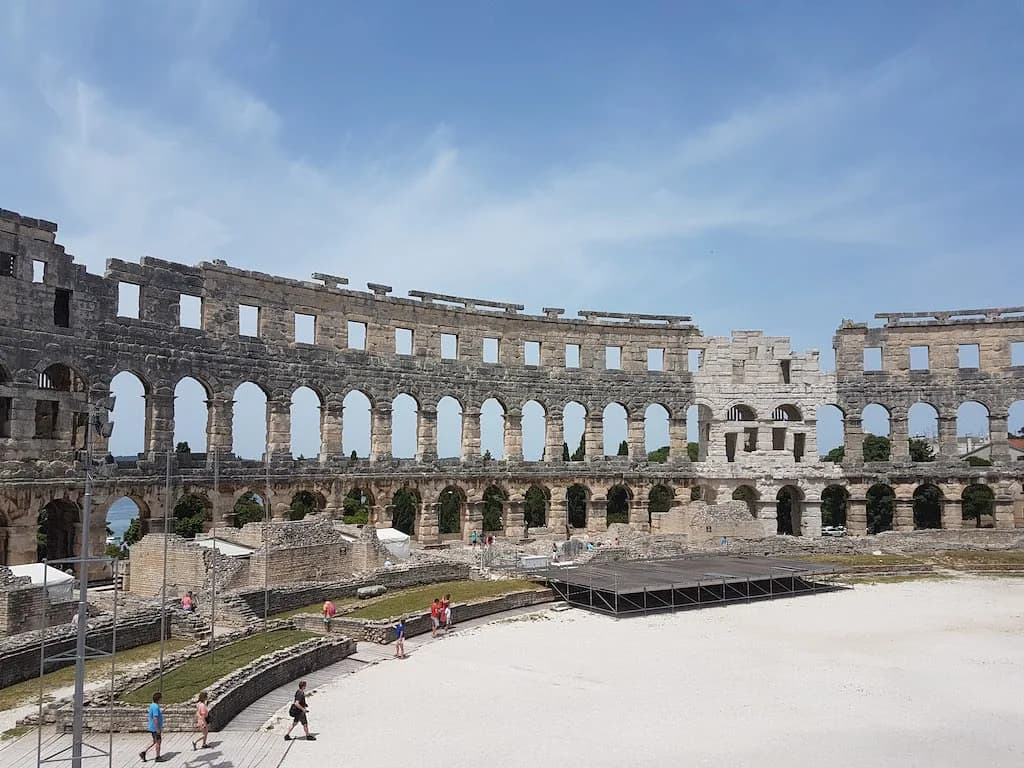
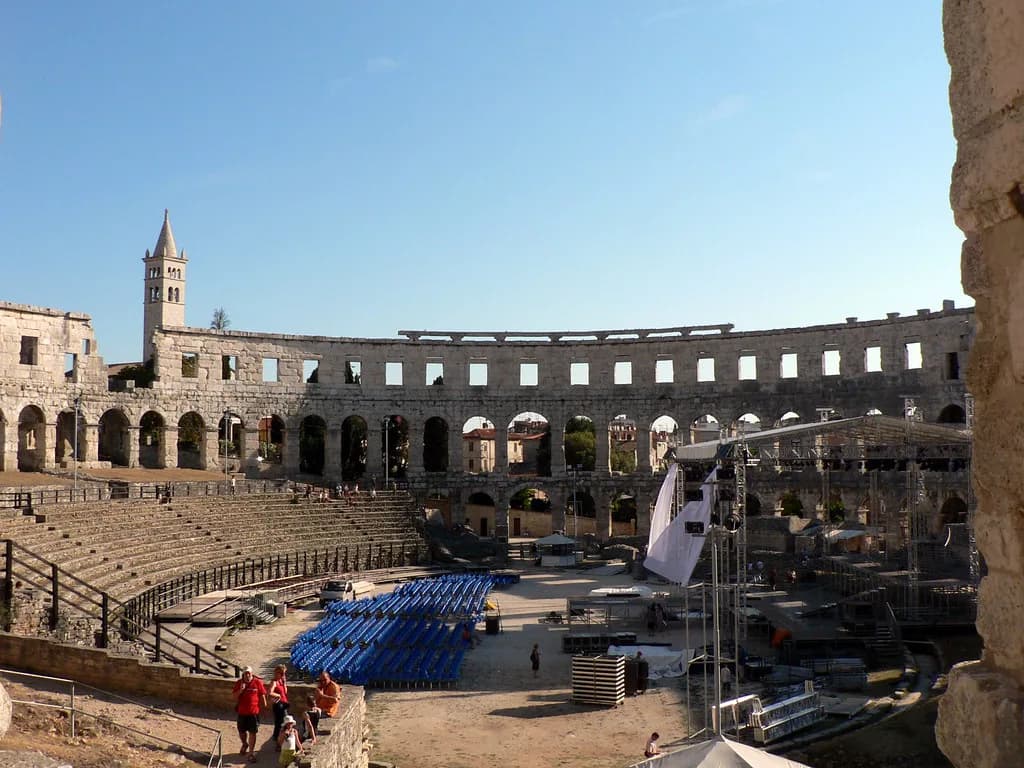
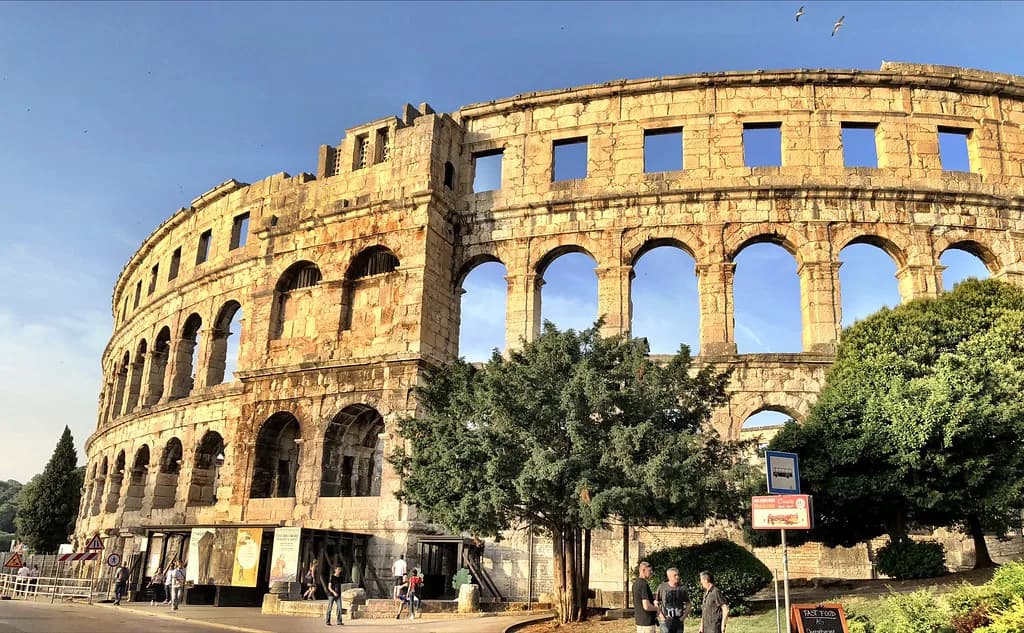
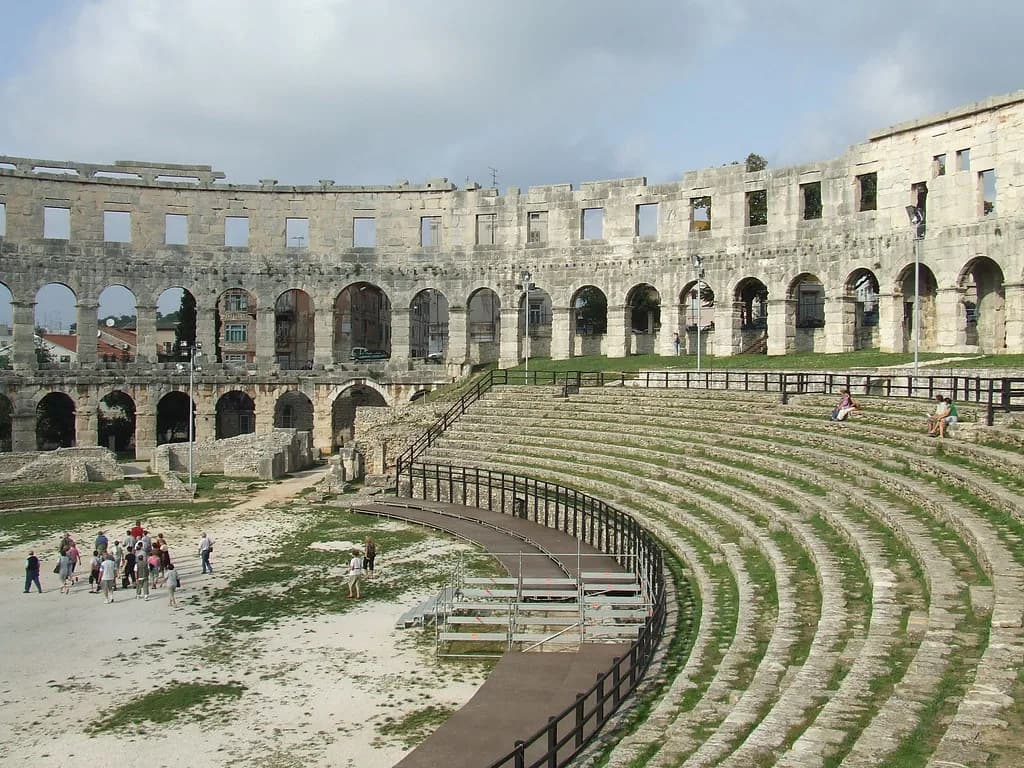
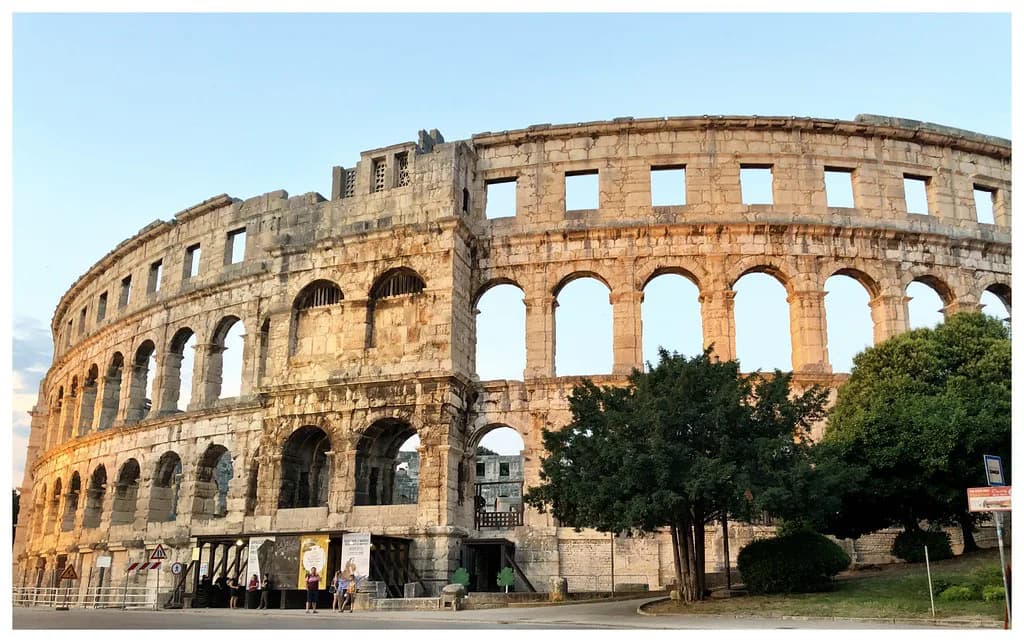
September is the month the Roman city works properly. The Pula Arena, the huge amphitheater with an underground exhibition on ancient olive oil and wine production, is the centerpiece — and in September you can see it without the August queue pressure. Go early or late in the day for the best light and the thinnest crowds.
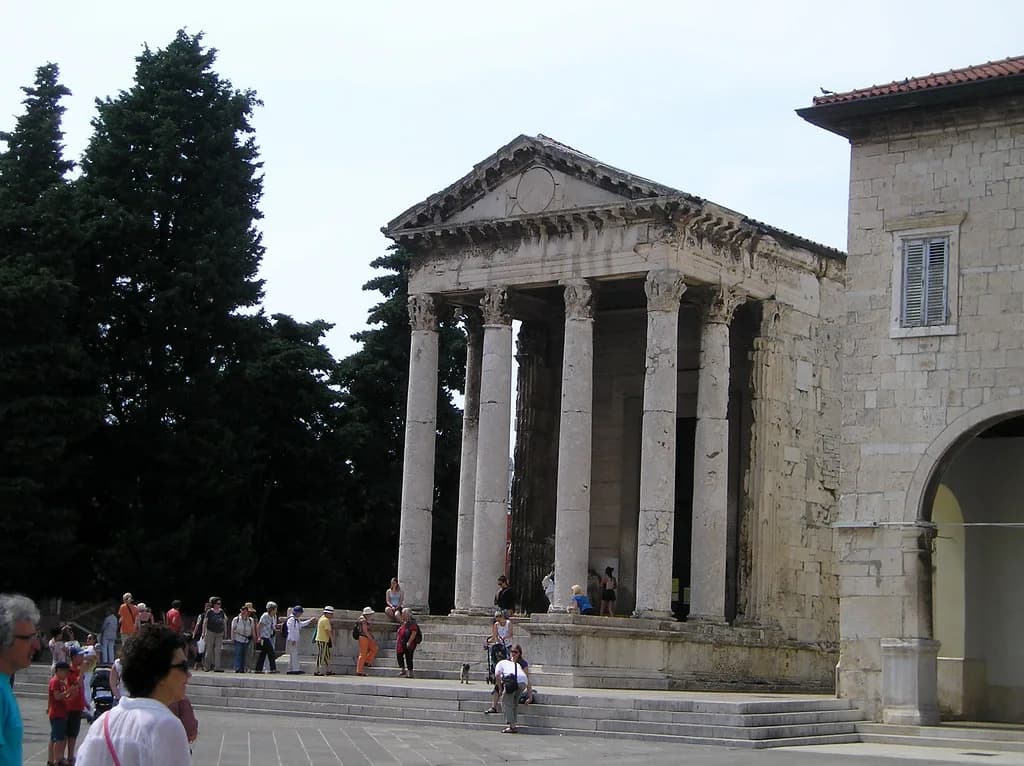
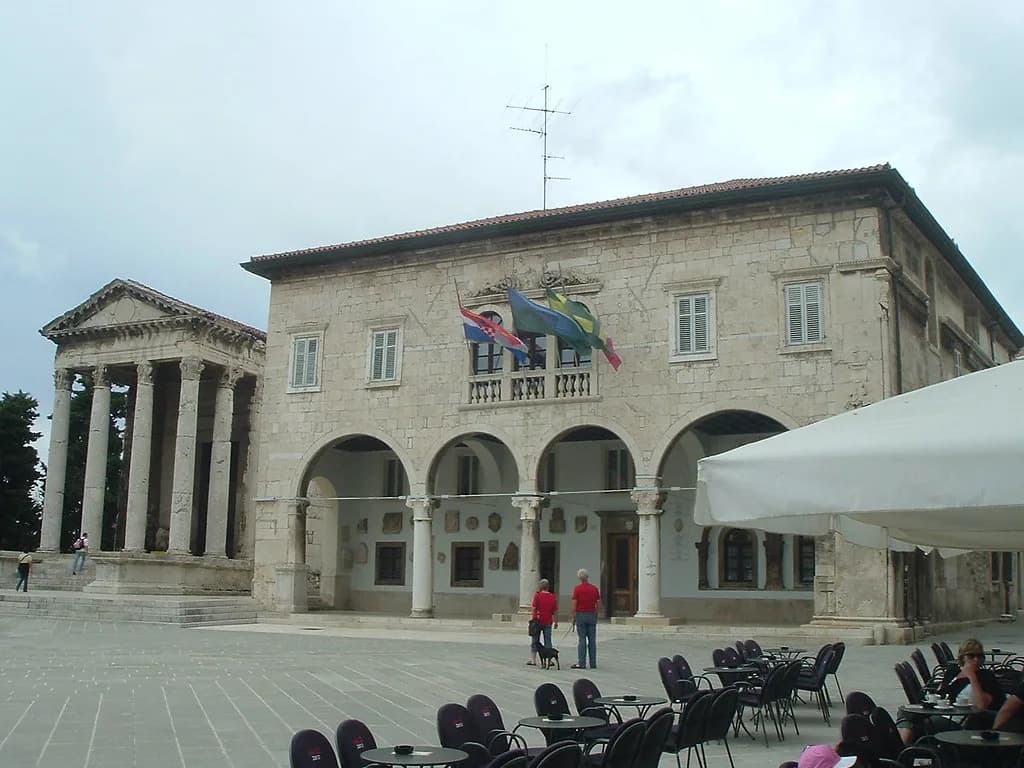
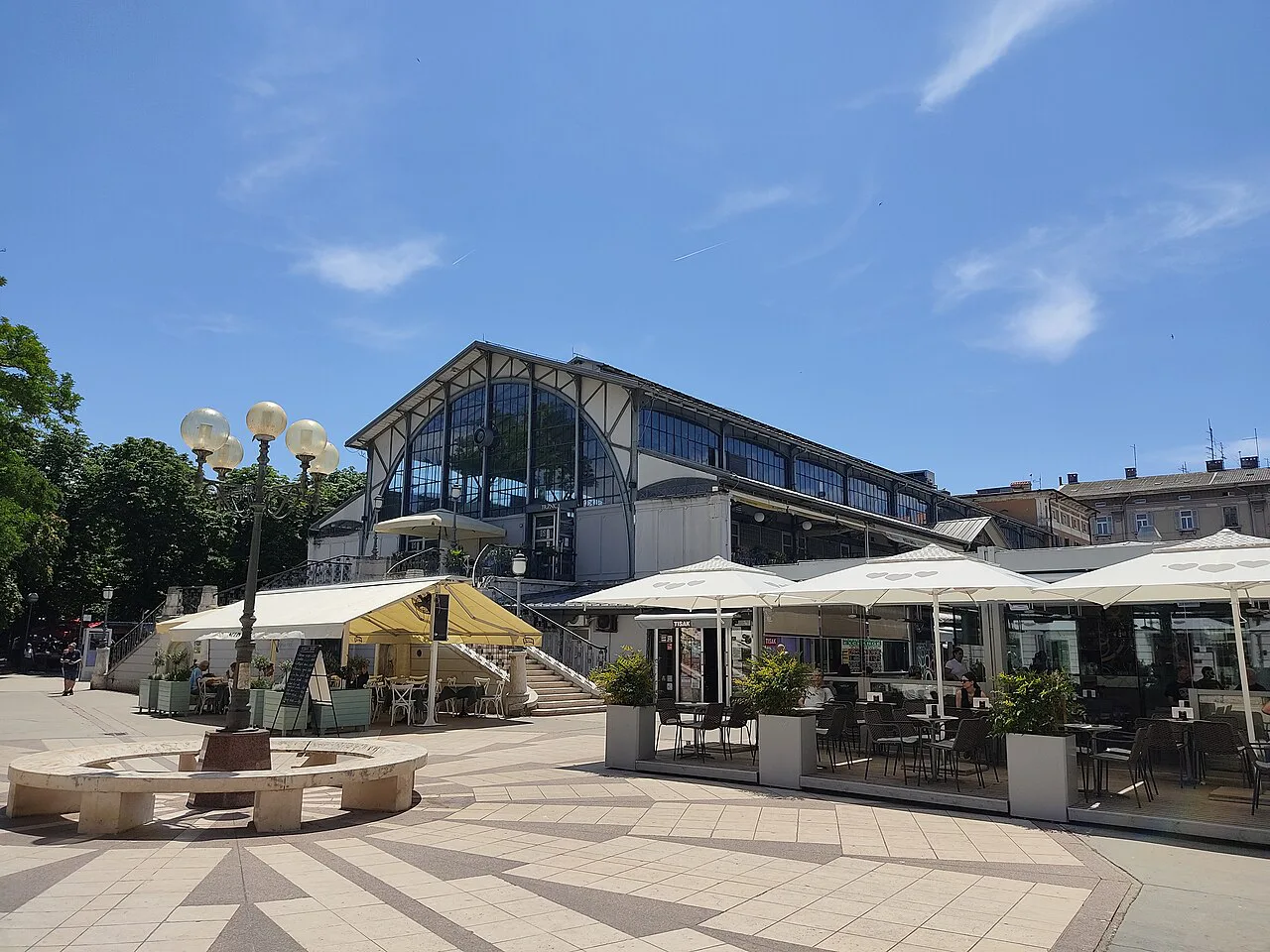
The Forum is the heart of the modern city as well as the Roman one. The Temple of Augustus, dating from the 2nd century BC, sits on the site of the Roman forum and is now part of a public square lined with cafés — a natural place to sit with a coffee and watch the city in the softer September light. Continue to the Arch of the Sergii, the Roman triumphal arch that once formed a city gate, and the Gate of Hercules.
Do not skip the smaller pieces. The floor mosaic known as The Punishment of Dirce and the Cathedral of the Assumption of the Blessed Virgin Mary reward a slow walk through the old town. In September, with fewer people in the lanes, the Roman layer of Pula is easier to read.
Beyond the old town: tunnels, the Citadel and the museums
Zerostrasse, the network of underground tunnels and galleries built as war shelters in the early 1900s, is a genuinely unusual stop and a good warm-afternoon option in September. The Pula Citadel, a Venetian-era fortress with views over the city and bay, is a short climb that pays off with the best overview of the city.
The Aquarium Pula, housed in an 1886 Austro-Hungarian fort on the coast, has Adriatic and Croatian species and works well for families or a rainy hour. The Istrian olive oil museum offers guided tours and tastings, and is a sensible way to understand the region's produce before you eat it.
Leave time for these on a rainy September day. Check the aquarium and museum hours with each venue before you go. The city market is also worth a morning — it runs indoors and outdoors and is livelier earlier in the day.
Day trips that work in September: Kamenjak, Brijuni, Medulin and wine country
Kamenjak National Park is the standout excursion: rugged cliffs, hidden coves, Mediterranean scrub and clear swimming water on the southern tip of Istria. September is arguably its best month, with warm weather and thinner summer crowds. Go early, take water and food, and remember the park is exposed — sun protection matters even when the air is cooler.
The Brijuni Islands, an archipelago with natural landscapes, Roman remains and wildlife, are reachable by boat from the Pula area. Combine a boat tour with time in Brijuni National Park. September is a good time to go, but check the boat operator's shoulder-season schedule and departure point before planning the day around it.
September is harvest time in Istria, which makes a wine tour of the region's vineyards genuinely timely rather than a tourist formality. Inland hill towns such as Motovun and Buzet make a good loop if you have a car or a driver. Medulin, just south of Pula, works as a half-day for beaches and a harbour lunch.
If you prefer a fixed base, staying in Pula and taking day trips is entirely workable. If your dream version of Istria is a small coastal town with a photogenic church, compare Poreč in September — the old-town lanes and harbour are a different, gentler kind of trip.
Crowds and cruise-ship days in September
September thins but does not empty the city. The Arena remains the single biggest draw, and the old-town lanes around the Forum and the Arch of the Sergii stay busy with day visitors. Visiting the Roman sights early in the morning or in the late afternoon is the simplest way to avoid the worst of it.
Cruise arrivals and day-trip buses can concentrate crowds into the middle of the day, particularly around the Arena and the Forum. Check the Pula port's schedule if you want to know which days to avoid, and plan a Kamenjak or Medulin day on a busy cruise day instead.
By mid-to-late September, the city starts to feel more local as summer staff leave and seasonal cafés scale back. That is a quieter, more authentic Pula — but it also means fewer evening options at the very end of the month. Weigh which version you want before you pick a week.
Costs in September: where the season still bites
September pricing sits between the August peak and the autumn lull. It is cheaper than midsummer in most categories, but early September still behaves like high season in the old town, especially on weekends. Late September is looser and more negotiable.
Do not assume every price drops. Attraction and museum fees are set by the venue rather than the season, so check the Arena, aquarium and olive oil museum listings directly for current entry prices. Croatia uses the euro, so there is no currency conversion to worry about — just check your card's foreign-transaction policy.
Boat trips, guided tours and taxis are the items most likely to vary with demand. Book day trips early in September and keep a comparison in mind; by the last week of the month, some operators reduce departure frequency instead of cutting prices. You may find fewer choices rather than better deals.
How many days you need in Pula
Two full days covers the Roman core comfortably: the Arena, the Forum, the Temple of Augustus, the Arch of the Sergii and an evening in the old town. Add a third day for Zerostrasse, the Citadel and the aquarium or the olive oil museum, plus a slower lunch at the market.
Four to five days is the right length if you want Pula as a base for day trips. That buys you Kamenjak, the Brijuni Islands, Medulin and a wine loop inland without rushing. If you only have two nights, stay in the city and save the coast for a return trip.
If Roman ruins are the main draw and you are combining Pula with other Istrian towns, three nights in Pula plus two in Rovinj is a sensible split. Transport links between the two are straightforward by bus or car, and September traffic is lighter than August.
Getting there and getting around without a car
Pula has an airport just outside the city, and it is also reachable by bus and car from the rest of Istria, Rijeka, Zagreb and Trieste. Our guide to how to get to Pula covers the main routes and airport transfers.
Within the city, the old town is walkable and the Arena, Forum and Arch of the Sergii are all close together. Local buses cover the wider city and Medulin, but Kamenjak and the Brijuni boat are the awkward pieces without a car. A rental car for two days opens up the peninsula and the inland hill towns far more cheaply than taxis.
For a car-free trip, base yourself in Pula and use organized tours and local buses for the day trips. Book the Brijuni boat through the operator and check the departure point, since it is not in the city center. If you are staying longer, a car for the middle days is the most flexible compromise.
Drawbacks worth knowing before you book
September in Pula is a shoulder month, and some coastal places close or shorten their hours as the season ends. The end of September is noticeably quieter than the start, which is good for crowds and bad for choice. If you want the full summer feel, go in the first week; if you want calm, go late.
Weather can interrupt plans. Windy days can close beaches or cancel boat trips, and rain can arrive without much warning. Build one flexible day into your itinerary and pick the swimming day on arrival, not in advance.
Pula is a working city rather than a resort, and parts of it are more industrial and less polished than Rovinj. That is part of its character, but it surprises some visitors. The payoff is cheaper eating, real neighbourhoods and the Arena within walking distance of both.
Pula in September versus Split, Rovinj and October
Against Split, Pula is smaller, calmer and more focused on Roman remains and day trips, while Split is a bigger city with island ferries and its own Roman core. If you want a city break with easy island hopping, Split wins; if you want an Istrian base with a swimming coast nearby, Pula is the better fit.
Against Rovinj, Pula trades charm for substance. Rovinj has the prettier old town and the Church of St. Euphemia, but Pula has the Arena and a stronger everyday city feel.
Against October, September is warmer and better for swimming, but busier and pricier. October is quieter and cheaper, with more closures and cooler evenings. Pula in October is the right call for museum-and-food travelers; September is the right call if you want both culture and sea.
Verdict by traveler type
Couples and first-time visitors: go in September, ideally the first half. You get warm days, swimmable sea, open Roman sights and manageable crowds. Book the Arena visit early in the morning and keep one afternoon free for the Forum.
Families with children: September works well, with the aquarium, the Citadel and Medulin's gentler beaches as reliable fallbacks. Skip the last week if you want reliable beach weather. History-focused travelers should go early in the month, when everything is open, and give Pula at least three nights.
Budget travelers and anyone who hates crowds: aim for late September and accept a little rain and some shortened hours. If sun and full schedules matter more than money, pick August and plan around the heat.
Plan Your September Trip to Pula
September is the month that makes Pula easy to recommend. The weather is warm without being punishing, the Roman sights are open, the sea is still swimmable, and the crowds are thinner than in August. It rewards travelers who value comfort and substance over peak-summer heat.
Book the first half of the month if swimming and open venues matter most, and the second half if you want quiet and lower prices. Either way, give Pula two full days for the Roman core and add two more for Kamenjak, Brijuni and a wine day.
Check the Brijuni boat operator and the aquarium and museum hours once before you commit, and keep one day flexible for wind or rain. Then plan around the Arena, the Forum and the coast.
Explore more Pula trip-decision guides
Frequently Asked Questions
What is the weather like in Pula in September?
Typical September days are pleasantly warm and often breezy, with average highs around 23°C (74°F) and average lows near 18°C (65°F), while other summaries put daytime highs nearer 25°C (77°F). Read these as average conditions rather than a forecast, and expect early September to feel more summery than the final week.
Is Pula worth visiting in September?
For most travelers, yes. The August heat and peak crowds ease while the Arena, the Forum and the Temple of Augustus stay open, and the sea off Kamenjak and Medulin remains comfortable for swimming. If guaranteed hot beach weather is your main reason for traveling, July or August suits you better.
How many days in Pula is enough?
Two full days cover the Roman core: the Arena, the Forum, the Temple of Augustus and the Arch of the Sergii, with an evening in the old town. Add a third for Zerostrasse, the Citadel and a museum, and plan four to five days if you want Kamenjak, the Brijuni Islands and Medulin as day trips.
Can you still swim in Pula in September?
Yes, for most of the month. The Adriatic has warmed all summer, so beaches around Pula, Medulin and Kamenjak stay comfortable well into September, though cloudy or windy days feel brisker. Book the first half of the month if all-day swimming is central to your trip.
Is Pula or Split better in September?
Pula is smaller, calmer and stronger on Roman sights and Istrian day trips, which suits a relaxed base with a nearby coast. Split is a bigger city with island ferries and its own Roman core, and suits travelers who want more urban energy and easier island hopping.
Does September feel crowded in Pula?
Less crowded than August, but not empty. The Arena and the lanes around the Forum stay busy with day visitors, especially in the middle of the day, so visit the Roman sights early or late. By the second half of the month the city feels noticeably more local.
Sources
Trip-decision notes
Optional updates when we publish or revise a destination verdict.
You might also like
Continue reading
More guides you'll find useful