Pula in April: Weather, Crowds and Whether It's Worth It
April in Pula means mild spring days, thinner crowds and lower prices than summer, but the sea stays cold and beach time is for the hardy.
On this page
Yes, Pula is worth visiting in April, with one honest caveat: come for the Roman monuments and the day trips, not for swimming. April air is mild, the streets around the Arena and the Forum are far from summer condition, and the whole Istrian peninsula is within easy reach before the seasonal traffic builds.
The trade-off is that Pula is a working port with shipyards, a compact old town and rocky coves a bus ride away, so April's quieter waterfront reads as an advantage rather than a letdown. If you want warm sea and long beach days, aim later in the season.
The verdict on Pula in April
April lands in the spring window the city's travel coverage praises: milder warmth than high summer, comfortable conditions for walking ruins, and a sea still too cold for most swimmers. That combination suits sightseeing and day trips far better than beach holidays.
Think of April as a history-and-landscape month. You can spend a morning inside the Arena, cross the Forum to the Temple of Augustus, and still have daylight for a coastal walk or a hill town, without the queues that define July and August.
Who should wait: travelers whose main goal is swimming at Kamenjak or Banjole, and anyone who wants the full summer café-and-beach rhythm. For them, June or September delivers the same sights with warmer water and more reliable beach weather.
Who April in Pula suits, and who should wait for May or September
April suits city-break travelers, couples and solo visitors who care more about Roman architecture, food and Istrian wine than sunbathing. It also suits anyone driving, because Pula's position at the southern tip of Istria puts Premantura, Rovinj and the hill towns within short hops.
Walkers and cyclists get the best of it: the coast around Verudela and the trails toward Kamenjak are pleasant in spring temperatures, and the old town's lanes are walkable without the summer shuffle.
Families with young children and dedicated beach-goers should hold off until the sea warms, usually by June. If your trip is built around swimming and boat days, May is a better bet and September is better still for water temperature.
Travelers weighing a Dalmatian spring should also consider that Istria's appeal in April is inland and coastal at once, with truffle country and Venetian hill towns nearby, whereas Split's April strength is the city itself and the islands beyond it.
April weather: typical highs, lows, rain and sunshine
Published climate summaries for Pula describe a Mediterranean pattern: summer highs typically around 28-32°C (82-90°F) and spring and early autumn days around 18-24°C (64-75°F), with winters rarely dropping below 5°C (41°F). April sits at the low end of that spring band, so pack layers rather than beachwear.
Treat those figures as typical conditions, not a forecast. For the specific month you travel, check Croatia's national meteorological service for monthly climate normals and a short-range forecast, and plan around those numbers.
Rain is a real April possibility, and it changes the plan rather than ruining it: showers are the reason to keep one indoor option in reserve each day. Sunshine hours are climbing but not yet at summer levels, so an early start pays off for outdoor sights.
Sea temperature and what it means for swimming at Kamenjak and Verudela
The Adriatic in April is cold. The season's own coverage is blunt about it: in the cooler months the sea is too cold for swimming, even when the air on land feels pleasant.
That reshapes beach time. Cape Kamenjak near Premantura and the coves around Verudela and Banjole are superb for coastal walks, cliff views and a picnic, and you will find them far emptier than in summer. Wading is for the hardy; full swims usually wait until later in spring.
If swimming matters, plan your trip for a later month and keep April for the ruins and the interior. This is the single biggest planning decision for a Pula April trip, and it is worth settling early.
Roman Pula without the summer crush: Arena, Forum and the old town
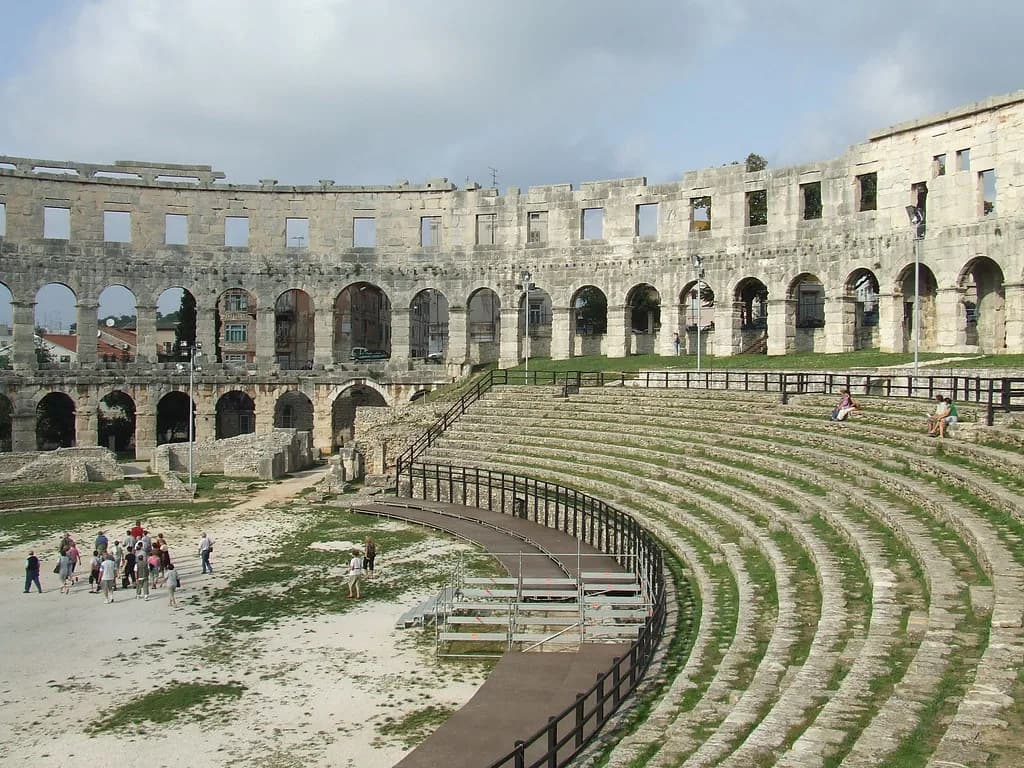
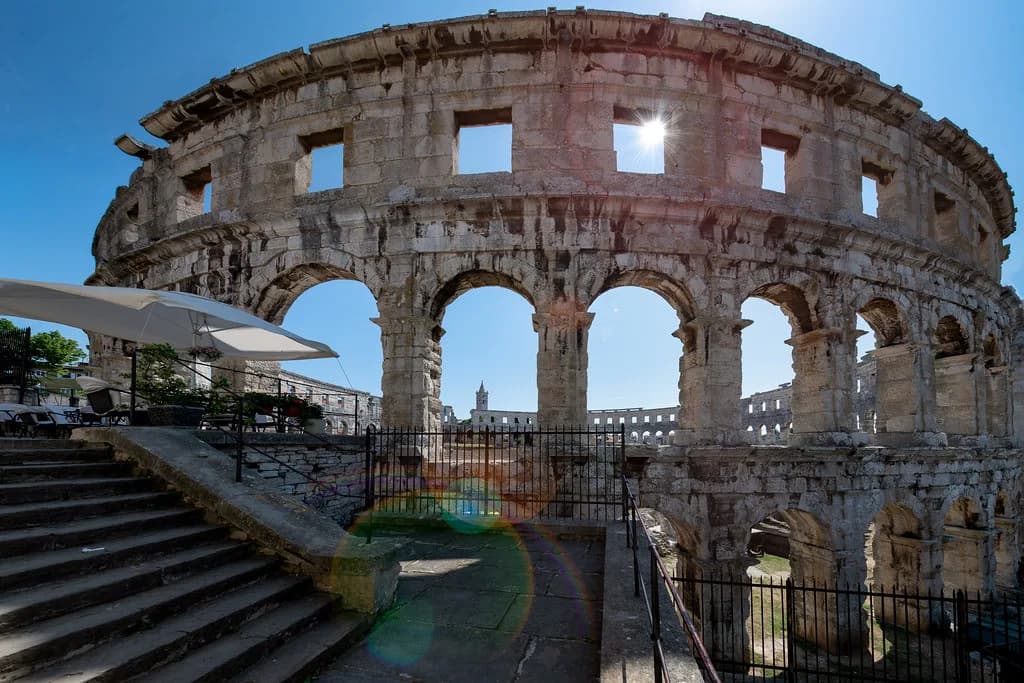
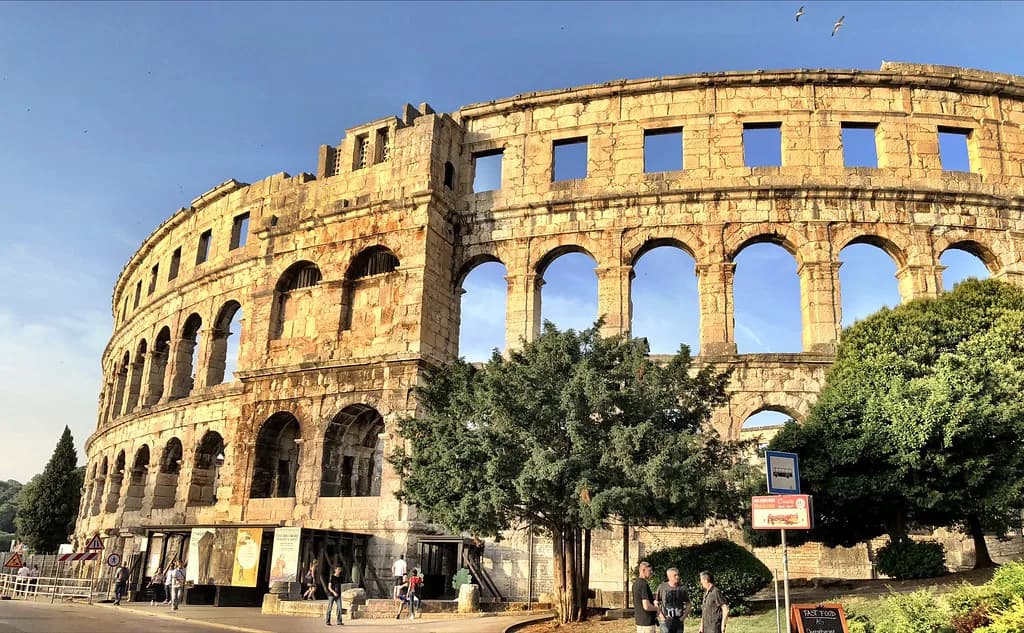
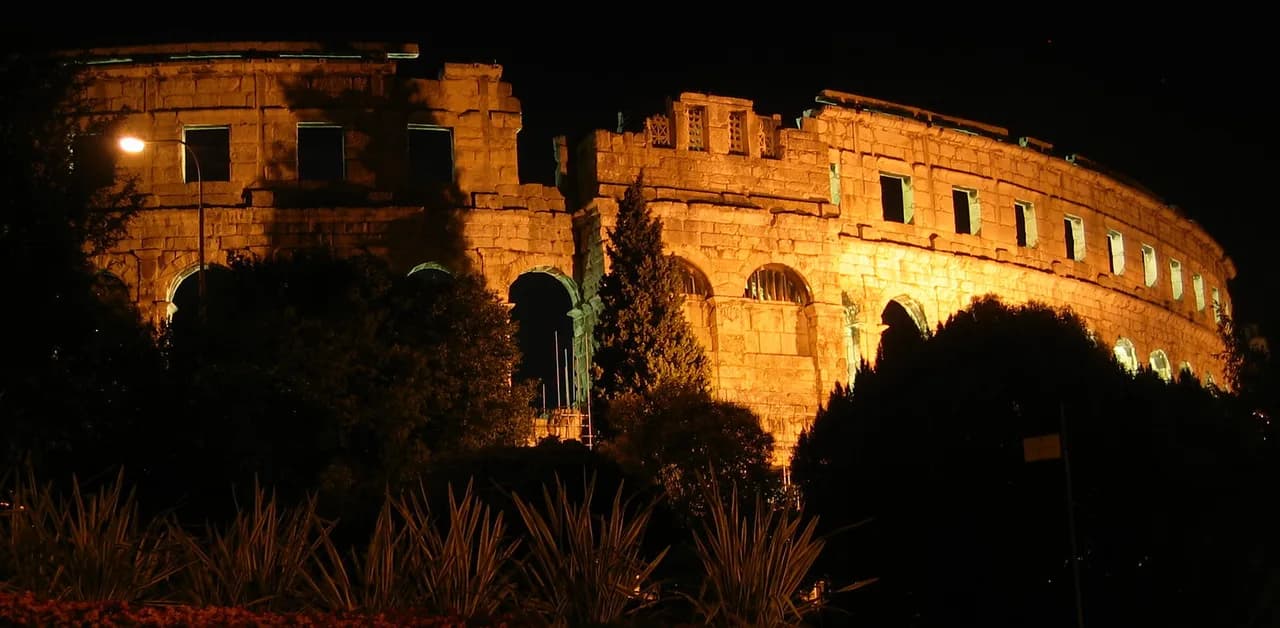
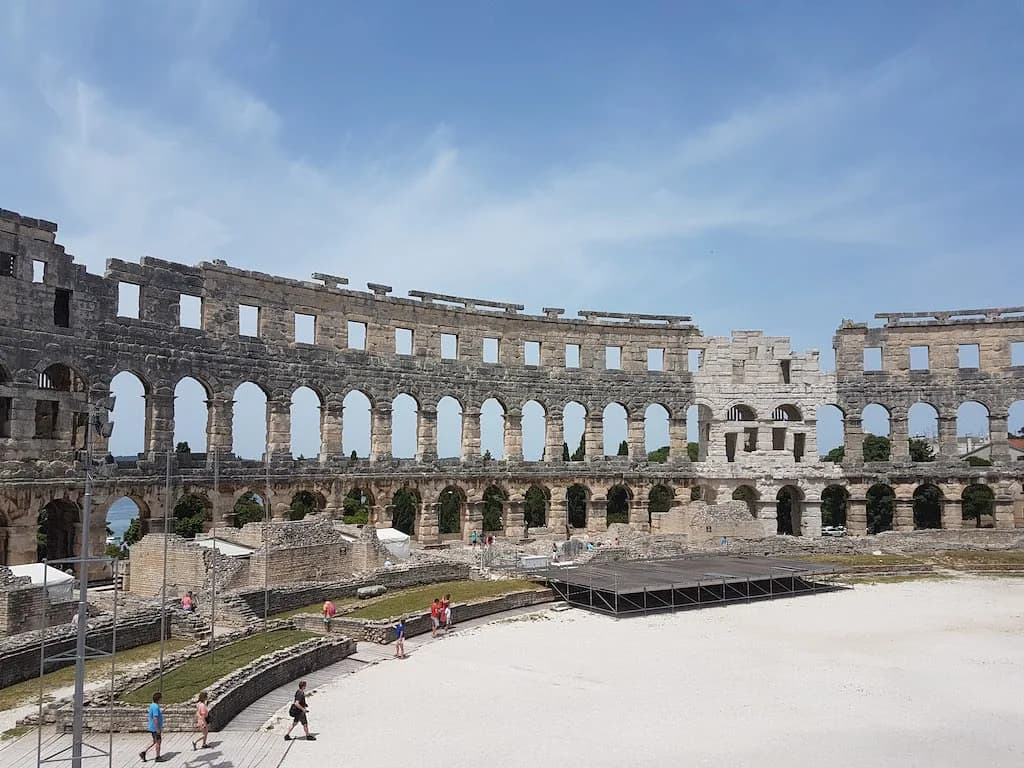
The Pula Arena is the headline: one of the best-preserved Roman amphitheatres anywhere, with an interior you can walk and a schedule of concerts and events in the warmer months. In April you can usually see it at an unhurried pace.
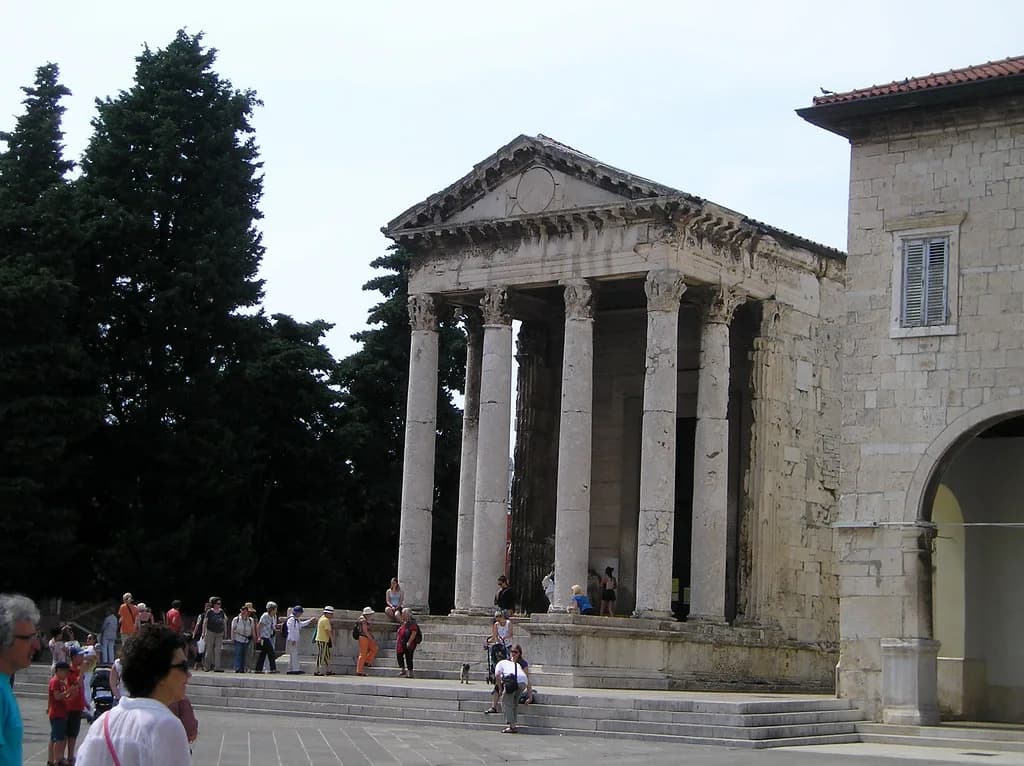
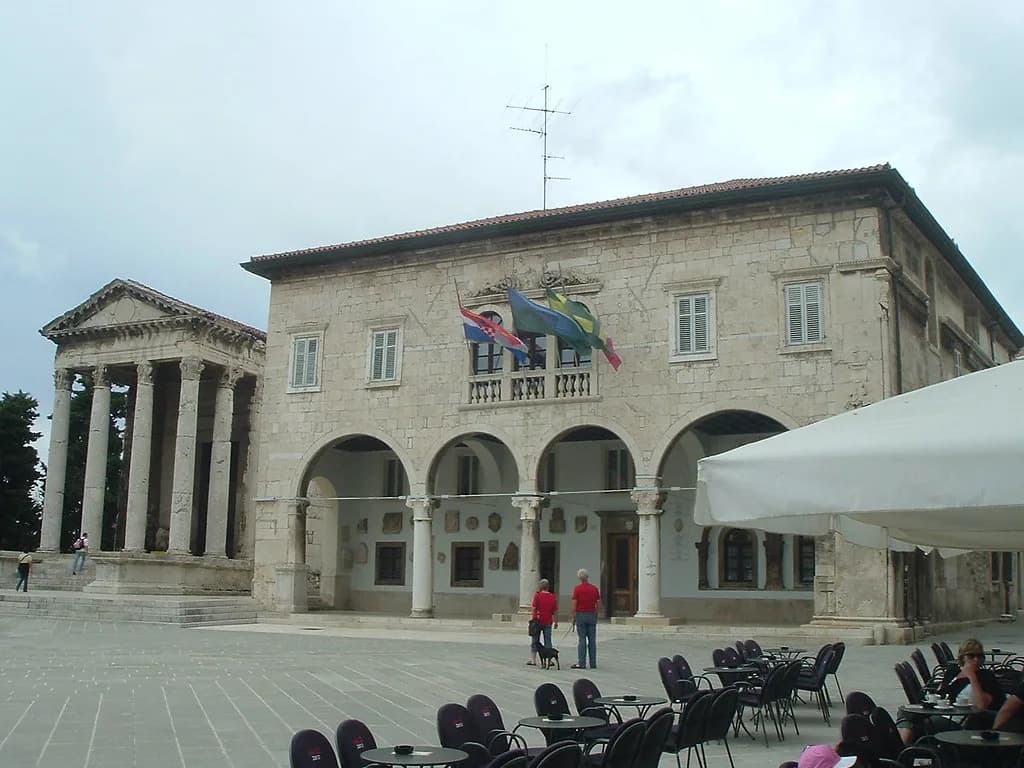
The Forum is the city's social heart and has been since Roman times, surrounded by cafés and municipal buildings. The Temple of Augustus sits on it, compact and atmospheric, and the Arch of the Sergii is a short walk away, small but beautifully carved.
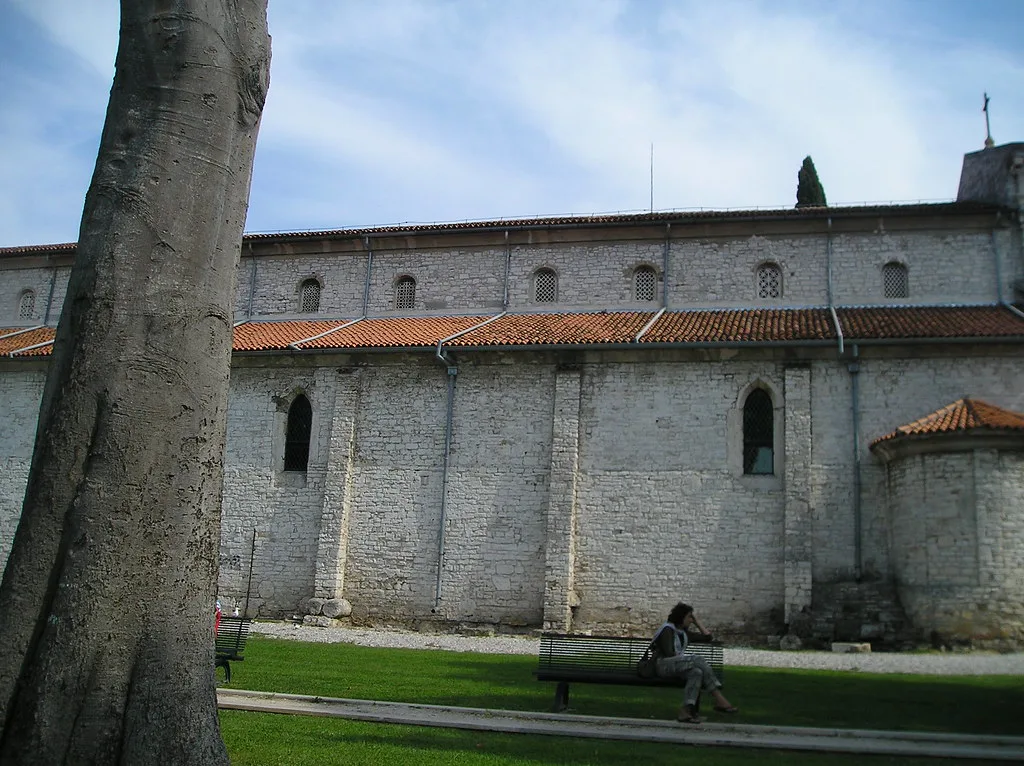
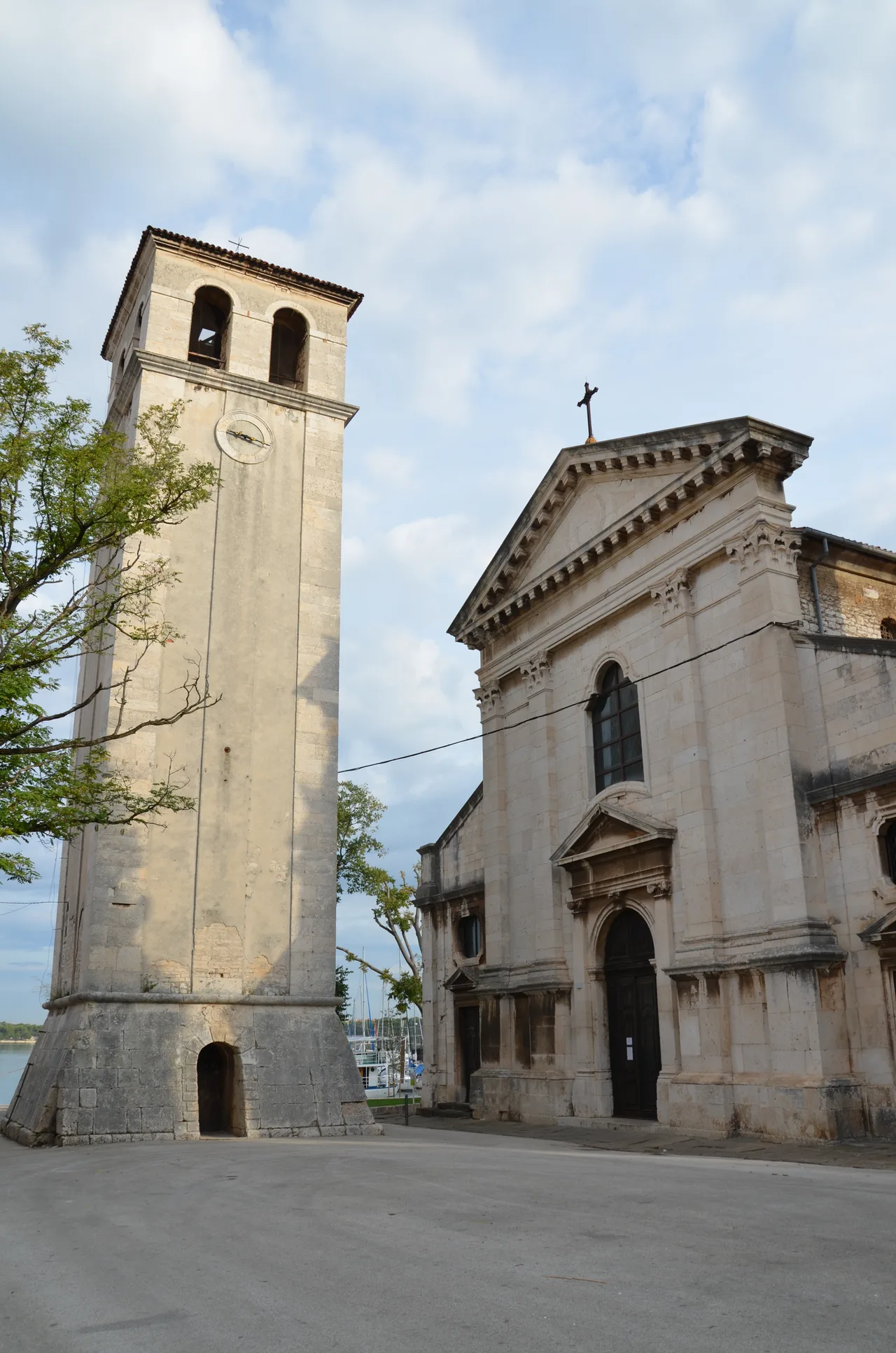
Add Porta Gemina, the surviving double Roman gate tucked into a narrow street, the cathedral with its bell tower panorama, and the old fishermen's quarter of Veli Varoš for bakeries and lanes. All of it is walkable, which makes April's mild temperatures a genuine asset.
Rainy-day and shoulder-season options: Zerostrasse, Kaštel and the aquarium
When April showers arrive, head underground. Zerostrasse is the Austro-Hungarian tunnel network beneath the old town, atmospheric and dry, with guided walks explaining a layer of Pula's history you will not see at street level.
The Kaštel, the Venetian fortress on the hill, combines ramparts, views and museum exhibitions, so it works in mixed weather. The Pula Aquarium at Fort Verudela pairs marine tanks with old coastal fortifications, and it is a sensible backup for families.
Keep an eye on what is actually running rather than assuming everything is open. Some seasonal operations scale up later in spring, so ask the venue about the day's hours before you build a rainy day around one.
How many days you need in April
Two full days covers the Roman core comfortably: Arena, Forum, Temple of Augustus, Arch of the Sergii and Porta Gemina on day one, then Kaštel, Zerostrasse and Veli Varoš on day two. That is the natural length for a city break.
Three or four days lets you use Pula as a base for Istria, which is its real strength. Add a Brijuni boat trip, a day in Rovinj and a loop through the hill towns, and April's lighter traffic makes the driving noticeably easier.
More than four days in April risks running out of indoor options if the weather turns. If you have a week, split it between Pula and Rovinj rather than stretching Pula alone.
Day trips that work in April: Brijuni, Rovinj, Premantura and the hill towns
Pula's geography is the argument for April. It is roughly 20 minutes to Premantura and the gateway to Kamenjak, about 40 minutes to Rovinj, around 60 minutes to Motovun and the northern hill towns, and roughly 90 minutes to Rijeka.
Brijuni National Park is reached by boat from Fažana, and Rovinj rewards a full day with its Venetian lanes and the Church of St. Euphemia. Premantura and Cape Kamenjak are best in April for walking and cliff scenery rather than swimming.
Inland, Motovun and the surrounding hill towns give you truffles, Malvasia wine and views over the Mirna valley. April is early for some seasonal countryside operations, so treat the day as a drive-and-walk rather than an itinerary of guaranteed stops.
Typical costs and what April saves you
Published backpacker cost estimates put a typical day in Pula in the range of roughly 40 to 60 euros, which reflects its grittier, cheaper character compared with Rovinj's postcard romance. April generally sits below high-season levels because demand is lower.
Croatia has used the euro since 1 January 2023, so older kuna figures you find in blogs are historical. For current entry tickets, boat fares and bus prices, check the venue or transport company directly, and use a costs guide to sanity-check your daily budget.
The savings in April come less from headline prices than from availability: more room choice, easier restaurant tables and cheaper car hire before the summer fleet tightens.
Getting there and getting around
All flights to Istria land at Pula, which makes the city a natural arrival point rather than a place people pass through. From the airport it is a short transfer into the center, and the old town itself is compact and walkable.
A car helps for Istria's spread-out sights, but driving inside Pula can be frustrating: one-way streets and construction closures can turn a short hop into a loop. Park once and walk, or rely on local buses for beaches and villages.
Buses fan out across the peninsula and connect the center with Premantura, Fažana and Rovinj, which is workable in April when services are less crowded. Check timetables with the bus company for the day you travel.
Drawbacks to plan around
Cold sea is the main one, followed by unsettled weather. April can deliver bright, T-shirt-afternoon days and then a wet, windy one, so build flexibility into the schedule instead of locking every day to an outdoor plan.
Pula is not a resort. Shipyards sit alongside Roman ruins, the waterfront is a working port, and the best coastline is a bus or drive away in Premantura and Banjole. Travelers expecting palm-lined promenades will be disappointed.
Shoulder-season quiet also means some seasonal places run reduced hours or open later in spring. Confirm with the specific venue rather than assuming, and keep one indoor backup per day.
Pula or Split in spring: a quick comparison
Split in April offers a bigger city, Diocletian's Palace and easy island ferries, but its appeal is more urban and maritime, and the sea is equally cold. Pula offers Roman monuments in a smaller, cheaper, less polished package with Istria on the doorstep.
Choose Pula if you want ruins, truffles, hill towns and a base for road trips. Choose Split if you want a larger city break with island connections. Neither is a beach destination in April.
Plan Your April Trip to Pula
April is a smart month for Pula if your priorities are Roman sights, Istrian food and day trips without summer crowds. Book with the expectation of layers, showers and cold water, and you will get the version of Pula that rewards curiosity.
If warm sea and beach days are non-negotiable, shift your dates later in spring or to early autumn and keep April for the old town and the interior. Either way, check official Croatian government guidance for entry requirements before booking.
Explore more Pula trip-decision guides
Frequently Asked Questions
Is April a good time to visit Pula?
It is a strong month for the Roman sights, the old town and day trips around Istria, because the air is mild and the streets are quiet. It is a weak month for swimming: published coverage notes the sea is too cold for swimming in the cooler months, so treat April as a sightseeing trip rather than a beach holiday.
Is the sea warm enough to swim in Pula in April?
No, not for most travelers. The Adriatic stays cold well into spring, and the published guidance is that swimming is not on the table in the cooler season. Cape Kamenjak near Premantura and the coves around Verudela are still excellent for walking and picnics, just not for long swims.
How many days should you spend in Pula?
Two full days covers the Roman core on foot: the Arena, the Forum, the Temple of Augustus, the Arch of the Sergii and Porta Gemina. Give it three or four days if you want to use Pula as a base for Rovinj, Brijuni and the hill towns, since the drives are short and April traffic is light.
What is there to do in Pula in April?
Focus on the Roman monuments, the Venetian Kaštel, the Zerostrasse tunnels under the old town and the aquarium at Fort Verudela. Rainy spells are the reason to keep one indoor option in reserve, and the Istrian interior with Motovun and its truffles makes an easy day out.
Is Pula or Split better in spring?
Pick Pula for compact Roman monuments, Istrian food and road trips to hill towns and Rovinj. Pick Split for a larger city break with Diocletian's Palace and island ferries. Neither is a swimming destination in April, so choose on the sightseeing and food you want.
Sources
Trip-decision notes
Optional updates when we publish or revise a destination verdict.
You might also like
Continue reading
More guides you'll find useful