Pula in May: Weather, Crowds and Whether It's Worth It
May brings mild air, long sunshine hours and thinner crowds to Pula, but the Adriatic warms slowly, so swimming is a gamble rather than a given.
On this page
Yes, May is one of the best months to visit Pula. The air is mild rather than hot, the sun runs long, and the old town's Roman core is still comfortable to walk without the July crush.
The catch is the Adriatic itself: the water warms more slowly than the land, so swimming is a gamble early in the month rather than a given. If your trip hinges on long beach days, late May is a safer bet than the first week.
Here is how May actually behaves in Pula, who it suits, where it falls short, and how it compares with June and September for your specific kind of trip.
The verdict on Pula in May
May is the sweet spot for a city-and-coast trip to Pula. You get enough warmth to eat outside and walk the harbour, enough daylight to fit in a day trip, and a fraction of the August pressure on the Arena and the Forum.
It is not the month for guaranteed sea swimming or for travelers who want baked-stone heat and a full beach holiday. Those come later, and May asks you to treat the water as optional.
If you are still weighing whether Pula is worth visiting at all, the answer in May leans strongly yes: a Roman-heavy long weekend, a base for Istrian day trips, or a slow shoulder-season week all work well. A sunbathing-first holiday does not.
Who will love Pula in May
Travelers who want the Pula Arena and the Forum without queuing behind tour groups will find May close to ideal. The Roman sights are outdoor, walkable and compact, and mild temperatures make an unstructured morning of them genuinely pleasant.
Day-trippers do well here too. Rovinj, Brijuni and Cape Kamenjak are all reachable in a day, and in May the roads and boat queues are lighter than in high summer.
Couples and slower travelers who value terraces, seafood lunches and an uncrowded harbour over nightlife will get the most from the month. If your priority is a party scene or waterpark-style family days, May is too early and too quiet.
Who should pick another month
Sun-seekers and families planning their days around the sea should look at later months. In May the Adriatic is still catching up with the air temperature, so the water is bracing rather than inviting for many swimmers.
Travelers who want every coastal restaurant, boat trip and beach bar in full swing may find May uneven. Some seasonal places open gradually through the spring rather than all at once.
If you need reliable hot weather or a fixed school-holiday window, Pula in June and later is the better fit. May rewards flexibility, not fixed plans.
May weather in Pula: temperatures, rain and sunshine
Expect mild, breezy days rather than heat. One set of May averages puts temperatures at roughly 15–19°C (58–67°F), which is spring jacket weather in the shade and short sleeves in the sun.
A second set of averages is warmer, at about 14–23°C (57–73°F), with around 50 mm of rain across the month and roughly nine hours of sunshine per day. Treat both as typical conditions, not a promise for your week.
The practical read is that rain is possible but rarely all-day, and the sunshine hours are long enough to plan outdoor mornings and indoor afternoons if a shower rolls in. Pack for layering rather than for a heatwave.
What the sea and beaches are like in May
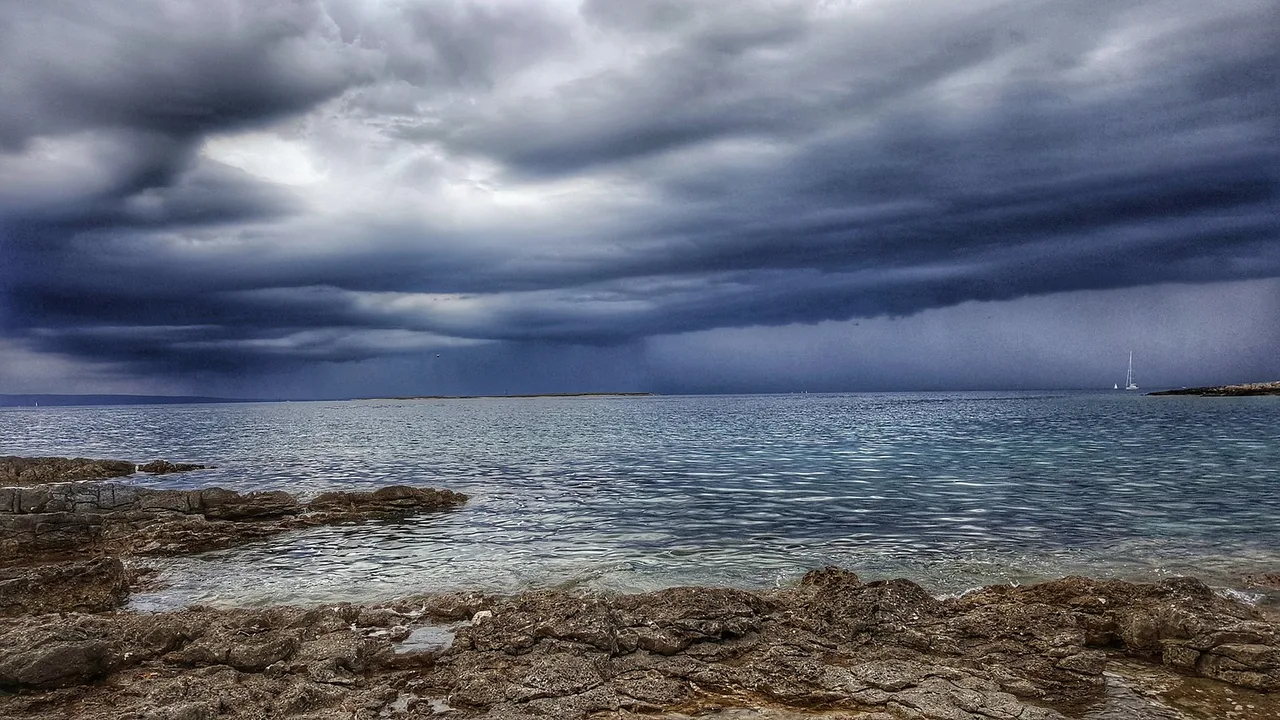
The Adriatic warms more slowly than the land, and no published figure here pins down the May sea temperature. The honest answer is that swimming is possible in late May and uncertain earlier, and the only way to know is to feel it on the day.
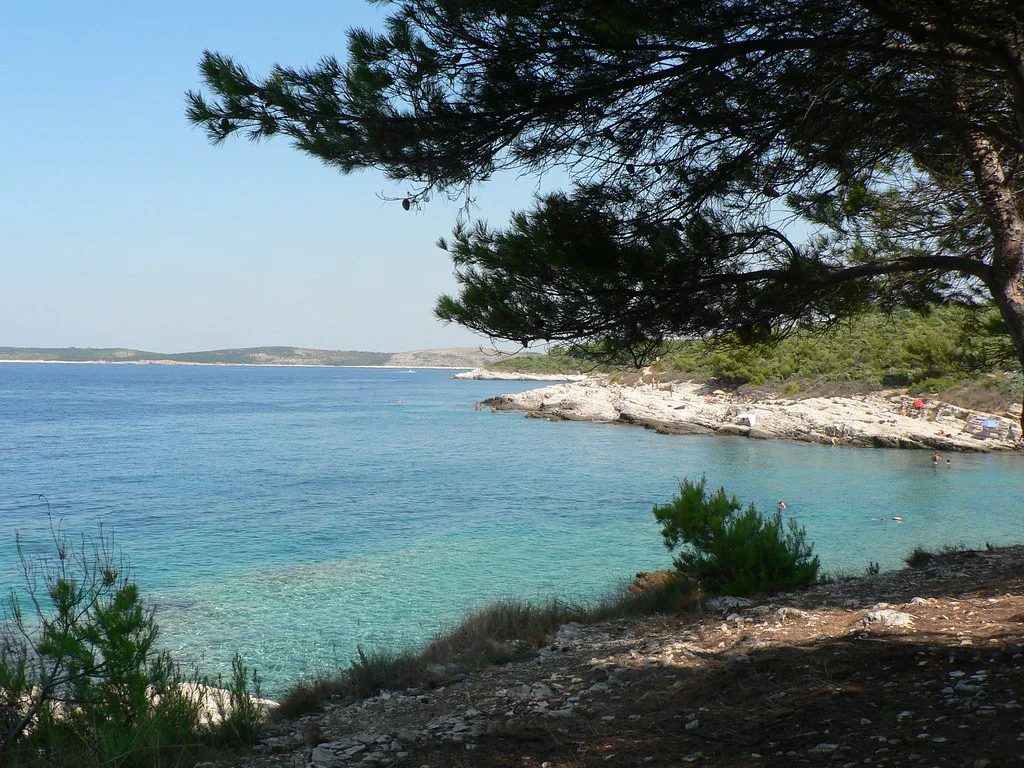
Pula's own beaches are rocky and practical rather than postcard-perfect. The nearby coast at Cape Kamenjak has clearer water and more sheltered coves, which makes it the better bet for a first swim of the year.
Plan beach time as an add-on to sightseeing rather than the main event. A morning at the Arena and an afternoon on the rocks is a realistic May day; a full week of sunbathing is not.
Crowds and cruise-ship days in May
May sits before the high-season surge, so the old town and the Arena are noticeably calmer than in July or August. That said, Pula is a working port, and cruise calls can briefly flood the Forum and the Roman sights when a ship is in.
The fix is timing rather than avoidance. Visit the Arena and the Forum early in the morning, and save the harbour, markets and cafes for the middle of the day when the tour groups move on.
Weekends can bring domestic and cross-border visitors, so a midweek May trip is quieter than a Saturday. If your dates are fixed, front-load the headline sights and leave the wandering for later.
What to see in Pula in May: Arena, Forum, temple, Kastel
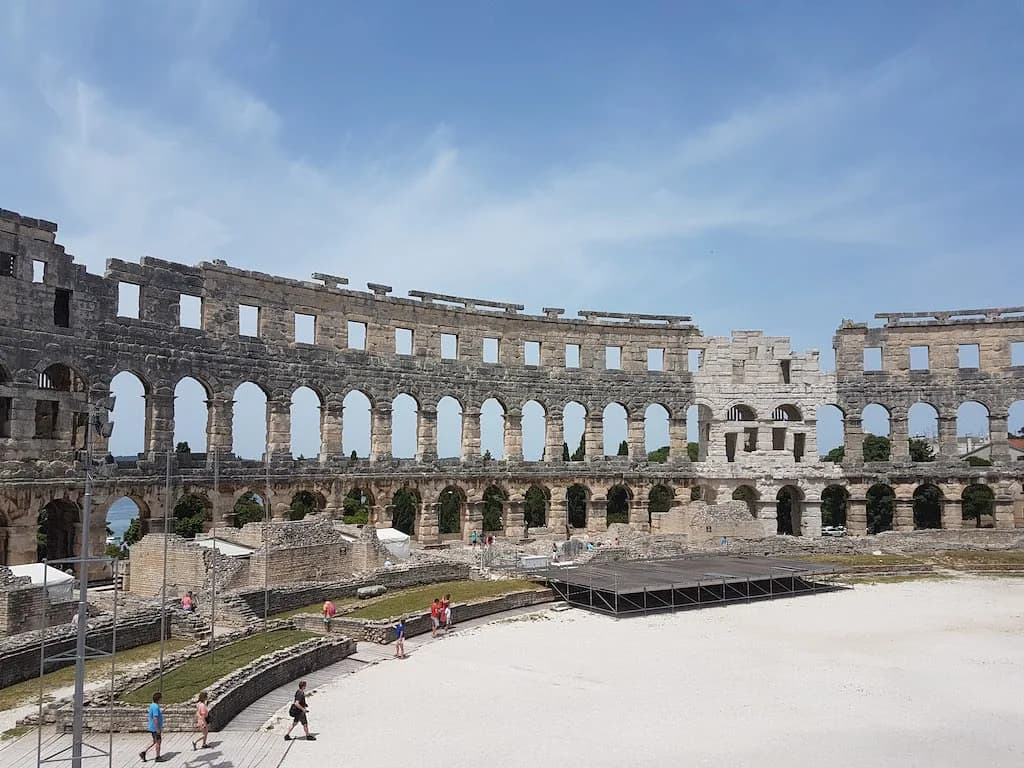
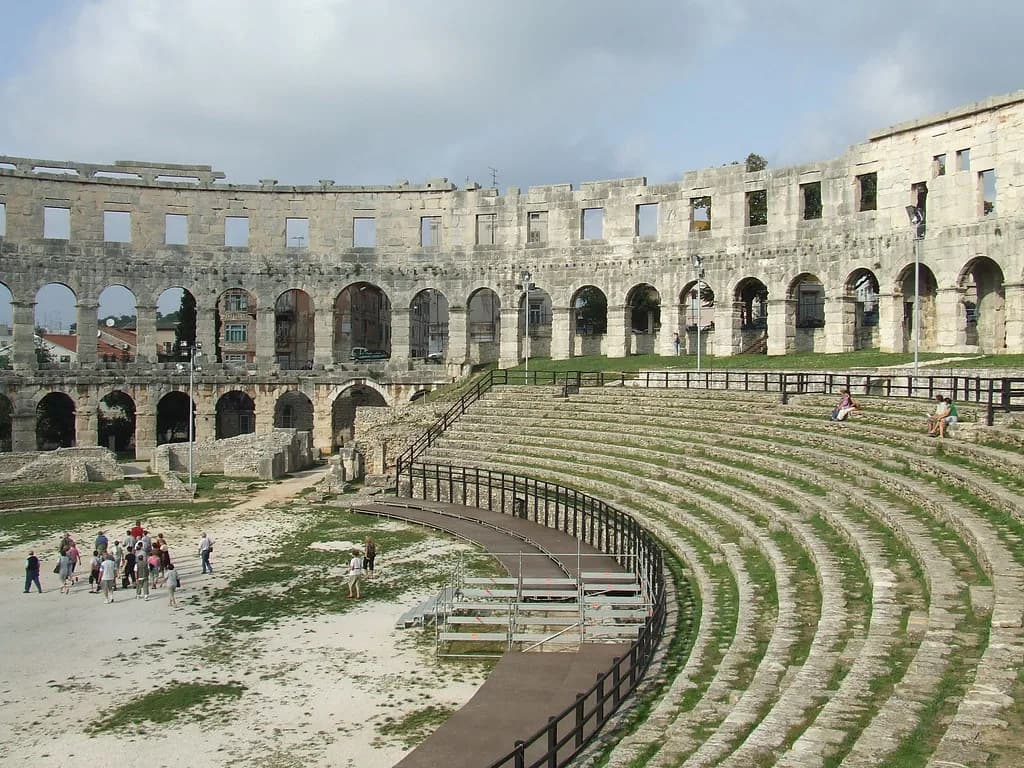
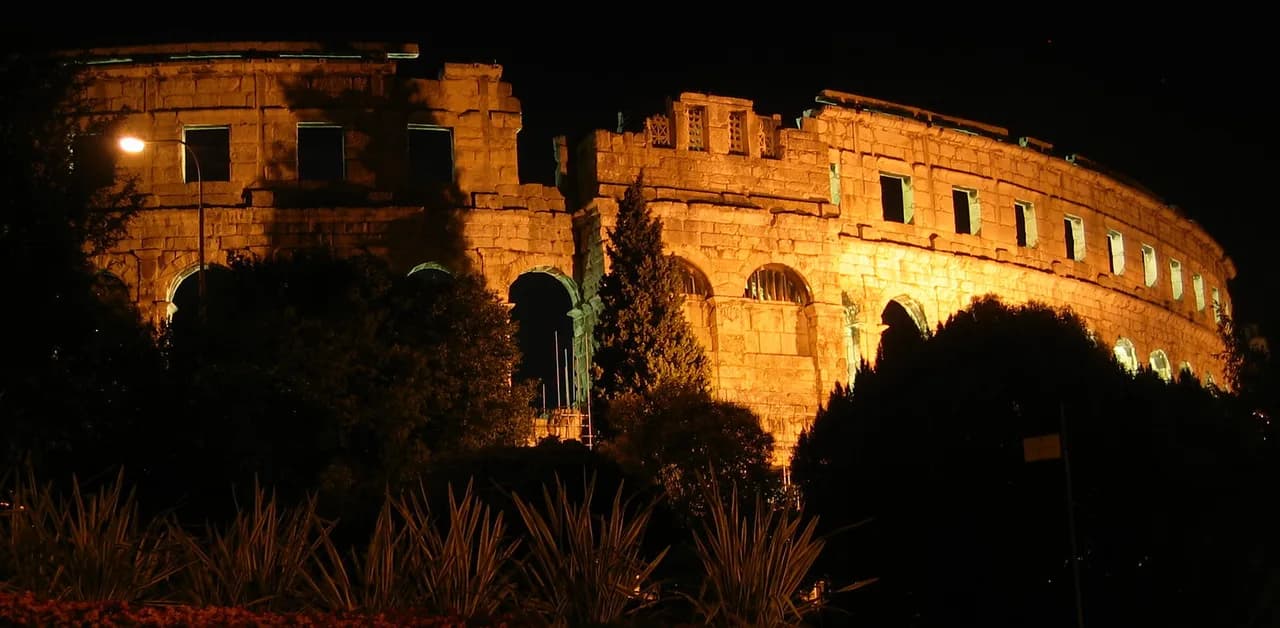
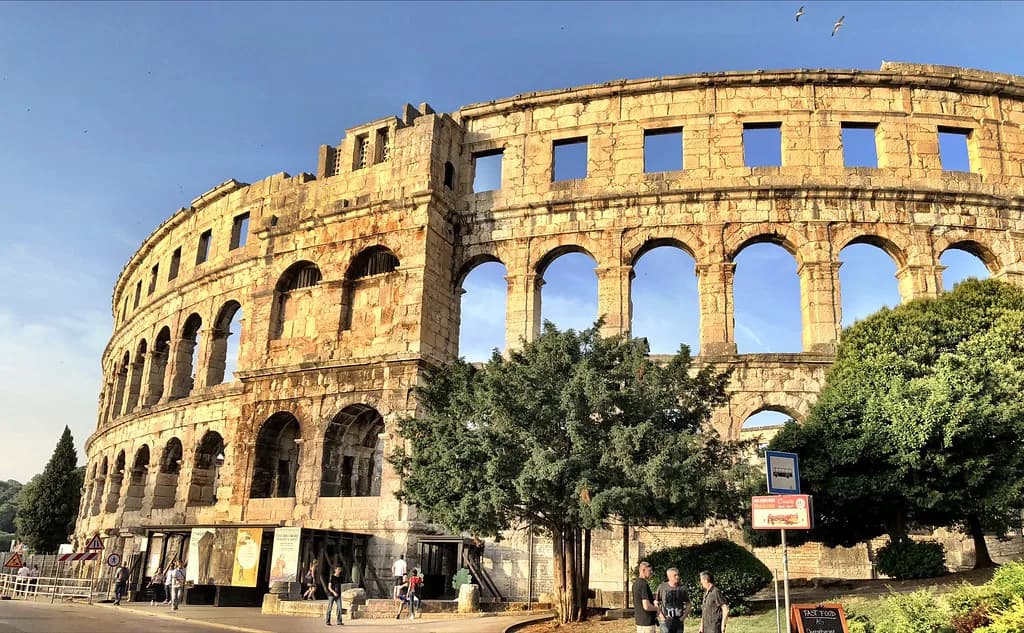
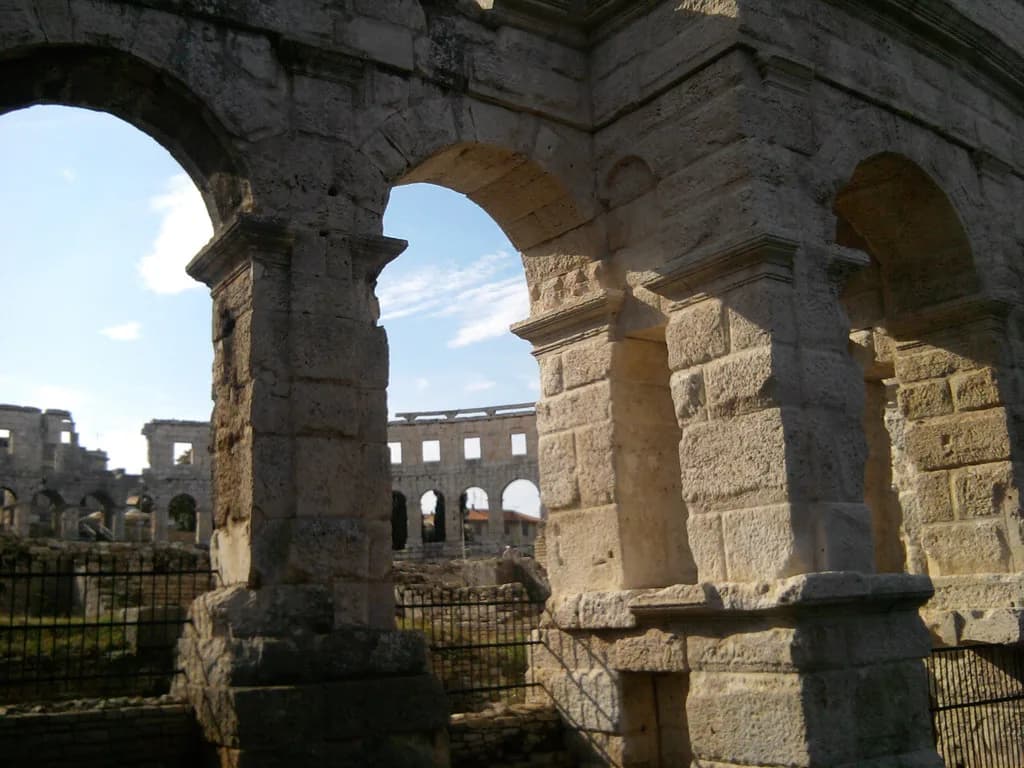
The Pula Arena is the reason many people come: a Roman amphitheater so complete it still hosts events. In May the light is good, the stone is not radiating heat, and you can circle it without the summer crowds pressing in.
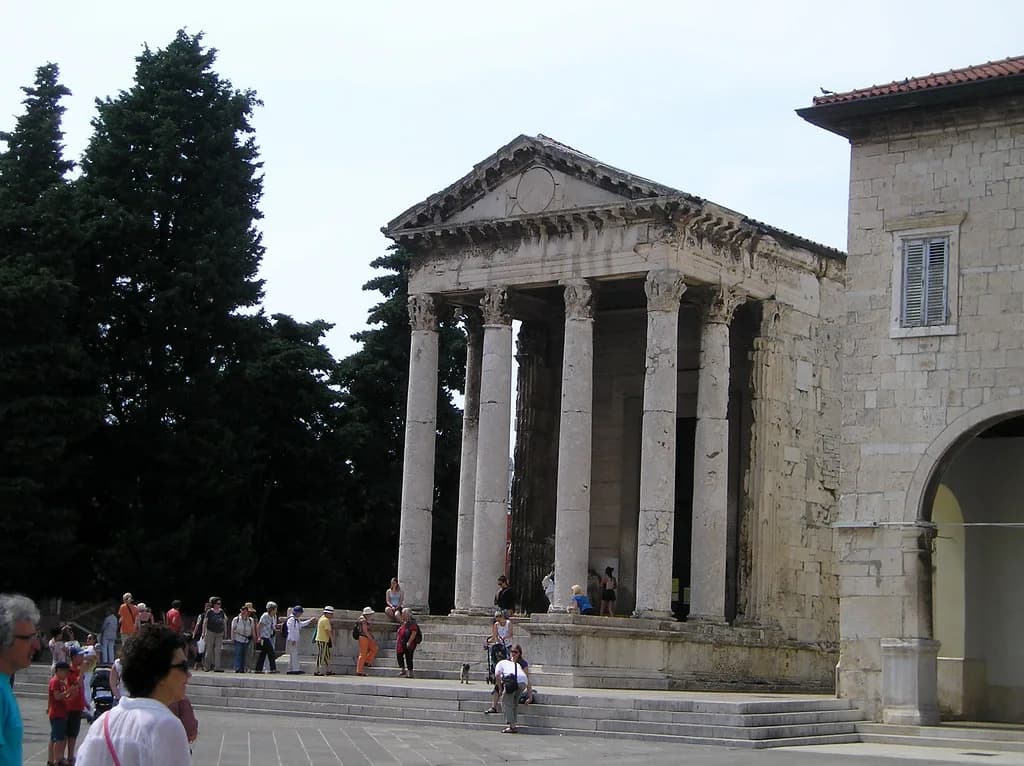
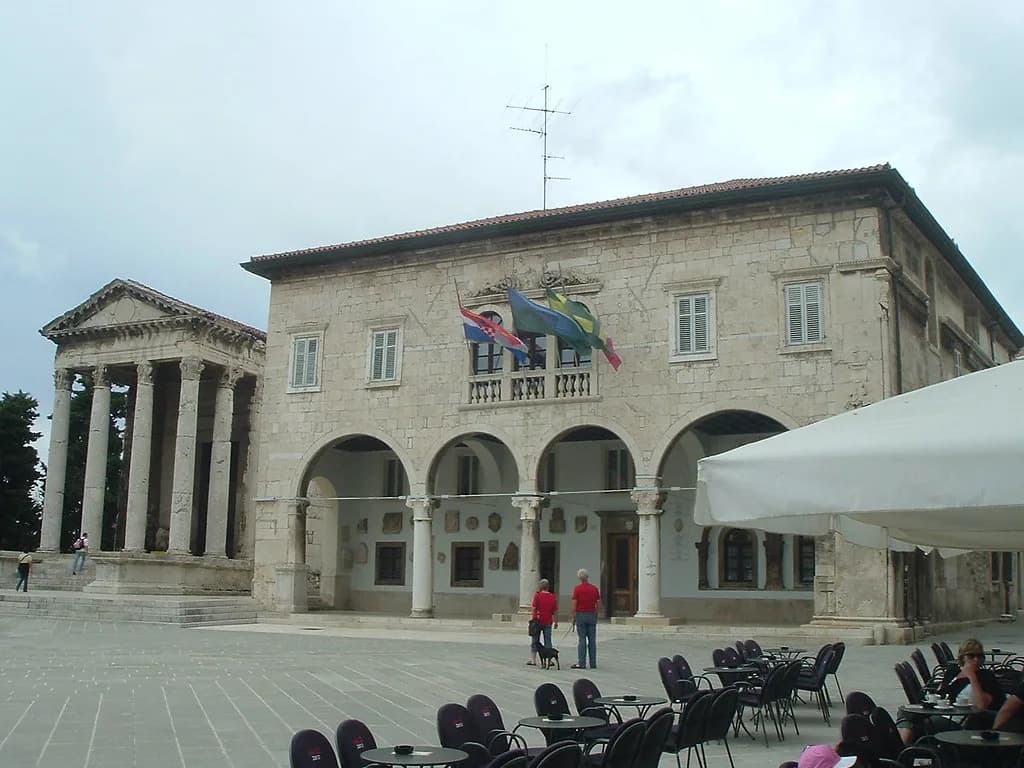
The Forum is the city's civic heart, flanked by the Temple of Augustus, and it works best as a slow loop rather than a checklist stop. The temple's colonnade and the surrounding cafe terraces make a natural mid-morning pause.
Climb to Kastel, the hilltop fortress, for the city and harbour view, then drop into the old streets below for lunch. May's mild air makes the climb and the wandering comfortable in a way that August does not.
Day trips from Pula in May: Rovinj, Brijuni, Cape Kamenjak
Rovinj is the most rewarding day trip: a Venetian-looking tangle of lanes and the hilltop St. Euphemia Church, reachable by road from Pula. In May the town is busy but not overwhelmed, which is the main reason to go now rather than in summer.
Brijuni National Park, the island group just off the coast, is a boat trip from nearby Fažana and suits a half-day of walking and gardens. Check sailing times with the park operator before you commit, as services vary by season.
Cape Kamenjak, the protected headland to the south, is the best outdoor day in May: rugged tracks, coves and clear water without the August heat. Bring sturdy shoes, as the terrain is rough and the sun is stronger than the breeze suggests.
How many days you need in Pula
Two full days cover Pula properly: one for the Arena, Forum, temple and Kastel, and one for the coast or a slow harbour day. Add a third if you want Rovinj or Kamenjak without rushing.
Three to four days makes Pula a genuine base rather than a stop. That is enough for the city, one island trip and one headland day, with time left over for the seafood lunches that are half the point of Istria.
If you are combining Pula with the rest of Istria, treat it as a two-night anchor and move on. May's lighter crowds make short hops between towns easier than in peak season.
What May costs in Pula
May pricing sits between the low season and the summer peak: accommodation and tours are cheaper than in July and August, but not as cheap as in winter. Croatia uses the euro, so there is no currency surprise for most European visitors.
The cost advantage of May is real but modest. You are paying shoulder-season rates for a city that is still fully open, which is a better trade than paying peak rates for the same sights in a hotter, busier month.
For current ticket prices at the Arena and other sights, check the venue's own website, as rates change by season and by event.
Getting there and getting around in May
Pula Airport sits close to the city and handles seasonal European routes, while road access from the rest of Istria and from Italy is straightforward. May is a comfortable month for driving, with lighter traffic than summer.
Within the city, the old town is walkable and the Arena and Forum are close together. For Rovinj, Kamenjak and Fažana, a car or a local bus is the practical option, and May's mild weather makes waiting for transport far less painful.
If you are arriving by sea or by long-distance bus, check current timetables before booking, as shoulder-season schedules are thinner than in summer.
Pula in May vs June and September
June is warmer and more reliable for swimming, with longer evenings and a livelier coast, but crowds and prices climb as schools break up. May trades a little warmth for noticeably thinner streets.
September is the strongest all-round alternative: the sea has had all summer to warm up, the heat eases, and the crowds thin again. If swimming matters more than spring greenery, September beats May.
Choose May for mild sightseeing, lower prices and quiet Roman sights; choose June for warmer water and a fuller scene; choose September for the best balance of sea and comfort.
Plan Your Visit
May suits travelers who want Pula's Roman core and Istrian day trips without summer heat or crowds, and who can accept that the sea may still be cold. Book late May if swimming is part of the plan.
Skip May if your trip depends on hot beach days or a fully switched-on resort scene. In that case, aim for June or September and treat Pula as the base it is best at being.
Explore more Pula trip-decision guides
Frequently Asked Questions
Is May a good time to visit Pula?
Yes. May brings mild temperatures, long sunshine hours and smaller crowds than July or August, which makes it one of the best months for sightseeing in Pula. The trade-off is that the Adriatic warms slowly, so swimming is uncertain, especially early in the month.
What is the weather like in Pula in May?
May is mild and breezy rather than hot. Published averages put daytime temperatures somewhere between roughly 15°C and 23°C (59–73°F), with around 50 mm of rain across the month and about nine hours of sunshine a day. Treat these as typical conditions, not a forecast.
Can you swim in Pula in May?
It depends on the week. The sea lags behind the air temperature, so late May is more reliable than early May. Sheltered coves at Cape Kamenjak tend to feel warmer than the open coast around the city, but there is no guarantee.
How many days do you need in Pula in May?
Two full days cover the Arena, the Forum, the Temple of Augustus and Kastel at an easy pace. Add a third day for Rovinj or Cape Kamenjak, and a fourth if you want Brijuni without rushing.
Is Pula crowded in May?
It is noticeably calmer than in July or August, but Pula is a working port, so cruise calls can briefly fill the Forum and the Roman sights. Visit the Arena early in the morning and save the harbour for midday.
Is Pula or Split better in May?
Pula is quieter, more compact and easier to pair with Istrian day trips, while Split is larger and better placed for island ferries. In May, Pula suits a slower city-and-coast trip, and Split suits travelers who want to hop between islands.
Do I need a car in Pula in May?
Not for the city itself, which is walkable. A car helps for Cape Kamenjak and Rovinj, though local buses run to nearby towns. May's lighter traffic makes driving in Istria more relaxed than in summer.
Sources
Trip-decision notes
Optional updates when we publish or revise a destination verdict.
You might also like
Continue reading
More guides you'll find useful