Money in Romania: Currency, Cards and Cash Explained
Romania uses the leu (RON), not the euro. Here is how cards, ATMs and cash work in Bucharest, Brașov and villages, and how to avoid costly exchange tricks.
On this page
Romania runs on the leu, not the euro, so plan your wallet around lei and treat any euro price you see as a convenience with a cost attached. Cards cover the cities comfortably, but rural guesthouses, markets and small kiosks still expect cash, so a mixed approach is the practical answer.
The currency code is RON and prices are marked with the symbol lei, which is also the plural of the currency's name. Knowing that one detail keeps you from misreading a menu or a market stall, where the gap between a snack and a meal is usually a single digit.
The verdict: plan for lei, lean on cards in cities, carry cash for villages
Bring a card as your main tool and a modest cash reserve as your backup. In Bucharest, Brașov, Sibiu and Cluj-Napoca you will find contactless payments, ATMs and card-friendly businesses almost everywhere, which makes the cities effectively cash-optional for most everyday spending.
Outside those cities the picture changes. Traditional markets, village shops and rural guesthouses lean on cash, and small purchases such as parking, kiosk coffee or a farmers' market haul are where a few lei notes earn their place in your pocket.
If you are still weighing the trip itself, our Romania verdict covers the country's range of destinations from the Carpathian Mountains to the Danube Delta, and money logistics are one of the easier parts to plan. Budget-wise Romania sits well below Western European prices, which you can sense from the cost of a coffee or a train ticket rather than from any single figure.
What currency does Romania use?
Romania's currency is the Romanian leu, written as RON in currency codes and divided into 100 bani. EU membership has not brought the euro: the country has kept its own currency, so euros are not the money you will spend day to day.
The leu is legal tender in Romania only. It is not accepted in neighboring Moldova or Hungary, so spend or convert leftovers before you cross a border rather than carrying lei onward on a multi-country trip. If your itinerary continues into the Balkans, the same cross-border cash question applies, and you can check the local money basics in our guide to is Serbia worth visiting.
The modern leu dates from July 2005, when four zeros were dropped at a rate of 10,000 old lei to one new leu. That history explains why older guidebooks and local memories sometimes quote numbers in the millions; today's prices are quoted in the current leu.
Lei and bani: notes and coins you will actually handle
Banknotes come in 1, 5, 10, 50, 100, 200 and 500 lei, and the 200 and 500 notes are seldom used in ordinary transactions. The workhorses of daily spending are the 10, 50 and 100 lei notes, which cover a meal, a taxi ride or a museum ticket.
Coins are called bani, in denominations of 1, 5, 10 and 50. You will mostly use them for small purchases, rounding up a bill or leaving a little extra at a market stall, so it is worth keeping a handful rather than dumping them in a jar.
The notes are polymer, which means a rain shower in the Carpathians will not ruin your cash. That sturdiness is a small but real advantage if you are hiking or moving between towns with your money in a jacket pocket.
Can you pay with euros in Romania?
No, not as a rule. Some tourist-facing hotels, shops and tour operators may accept euros, but you will usually get a poor exchange rate in return, so treating euros as spendable currency is an expensive habit.
The practical move is to arrive with a card and withdraw lei locally, or exchange cash into lei once you are in the country. If a hotel offers to charge you in euros, ask for the lei price and compare before agreeing, since the convenience is priced in.
Cards in Romania: where contactless works and where it fails
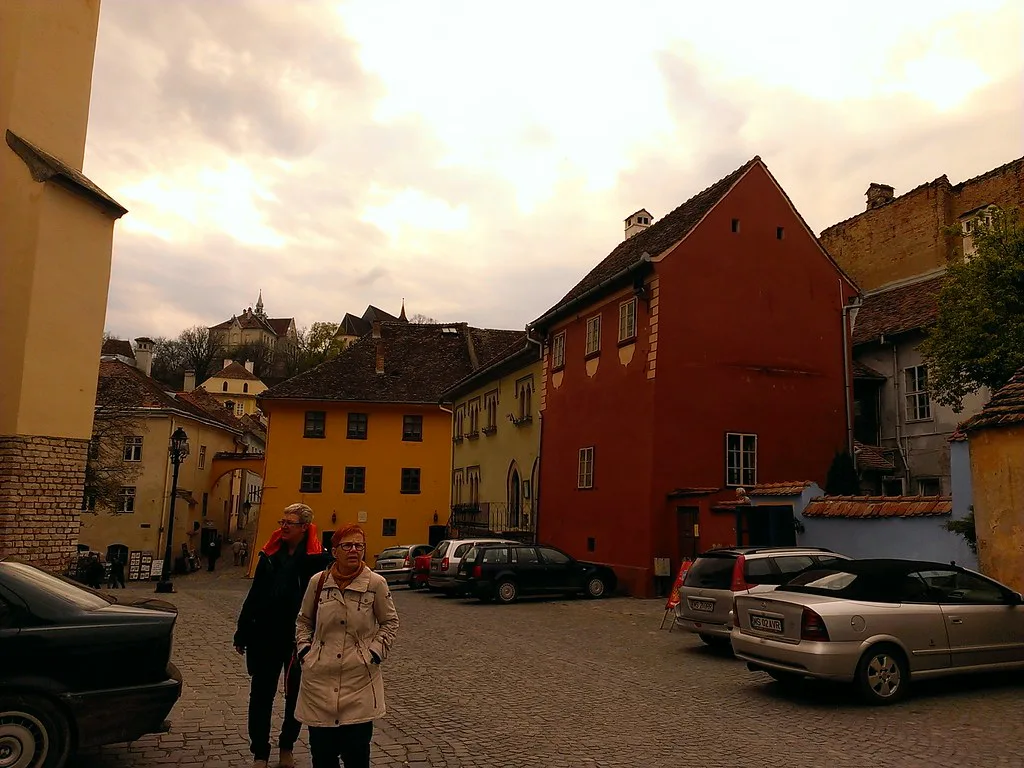
Major credit and debit cards are widely accepted in Romanian cities and larger towns, and contactless terminals are standard in cafes, restaurants and supermarkets. For a trip built around Bucharest, Brașov or Sibiu, you could comfortably go days without touching cash.
The failure points are predictable: rural guesthouses, small village shops, market stalls, parking machines and some independent taxi drivers. Carry enough lei to cover a meal and a short ride so a dead terminal never strands you.
If your card terminal offers to charge you in dollars or euros rather than lei, decline. Choosing lei keeps the conversion in your bank's hands rather than the terminal's, and it is the same logic that applies at an ATM.
ATMs and withdrawing lei without losing money
Twenty-four-hour ATMs are plentiful in Romanian towns and cities, so there is no need to carry large sums from home. Withdraw what you need for the next few days rather than a large lump sum, and use bank-branded machines rather than standalone kiosks in tourist areas.
When the machine asks whether to charge you in your home currency or in lei, pick lei. Accepting conversion into dollars or pounds lets the ATM apply its own rate with a markup, which quietly costs you more than the withdrawal itself.
Your own bank may add a foreign transaction or withdrawal fee, which is a matter for your card terms rather than anything Romania controls. Check that before you fly, and if fees are steep, take a card designed for travel spending instead of your everyday debit card.
Exchanging cash: where the rate is fair and where it is not
Airport and hotel exchange desks tend to mark up their rates or bury fees, so they are the worst value in the country. Exchange in town at a bank or a dedicated currency office, where you can see the posted buy and sell rates side by side.
Before you travel, look up the mid-market rate so you can judge whether an office is offering something reasonable. The mid-market rate is the rate without any provider markup, and knowing roughly where it sits turns a wall of numbers into an obvious good or bad deal.
Getting lei before you leave is possible through currency providers at home, though you will pay for the convenience. For most travelers the cheaper sequence is a travel-friendly card plus a local ATM withdrawal on arrival, with a cash exchange in town as backup.
How much spending money you need, in words not numbers
Romania is one of the cheaper destinations in the EU, and the difference shows most clearly in everyday costs: a coffee, a plate of local food, a bus ticket, a museum entry. Think of it as a country where a mid-range day costs noticeably less than in Germany or France, without pinning your budget to a single quoted figure.
Two costs shift the total more than any other: how you move between regions and where you sleep. Renting a car opens up the countryside and sights like Peleș Castle but adds fuel and parking, while trains and buses keep costs low and tie you to timetables.
In cities and larger towns, contactless cards and ATMs make it easy to spend without thinking. The risk to a budget is not the payment method but the pace: a steady run of restaurant meals and taxis will do more damage than any exchange rate.
Practical money habits that save you on a Romania trip
Show prices in lei on your phone so you can compare a market stall with a shop rather than guessing from memory. When you pay by card, keep the receipt and check the lei amount against your bank's posted charge at the end of the day, since conversions sometimes surprise people.
Tipping is a rounding-up culture rather than a fixed rule. Rounding the bill or adding a small percentage is a reported practice, and leaving the amount in lei cash is the simplest way to keep the whole sum with the staff.
If you are heading to the Danube Delta or other rural areas, draw enough lei in the nearest town before you go. Smaller settlements run on cash, and the nearest working ATM may be further away than your itinerary assumes.
Spending days and money: a regional view
Transylvania's circuit of Brașov, Sibiu and Bran Castle is the most comfortable region for card use, with city centers and tourist sites set up for contactless. It is also where you will find the most tourist-facing euro prices, so compare before accepting.
Bucharest is the easiest place to rely on plastic, with card-friendly cafes, ATMs and supermarkets. If you need to sort out currency, exchange in town rather than at the airport, and avoid hotel desks.
The countryside and the mountains are where cash earns its place, especially in villages and at guesthouses outside the main towns. If your route includes hikes in the Carpathian Mountains, keep a buffer of lei notes so a remote lunch or a parking fee does not become a problem.
Plan Your Visit
Romania is easy on the wallet if you work with lei rather than against it: use a travel-friendly card in cities, withdraw lei from bank ATMs without conversion, and keep a small cash buffer for villages and markets. The country is not expensive by European standards, but the currency question is the one that catches people out.
If you drive, factor fuel, parking and tolls into your budget rather than only the rental rate. Our guide to getting around Romania covers trains, buses and driving, and pairs naturally with the money plan above.
Explore more Romania trip-decision guides
Frequently Asked Questions
What is Romanian money called?
The currency is the Romanian leu, written as RON in currency codes and divided into 100 bani. Notes run from 1 to 500 lei, though the 200 and 500 notes are seldom used, and coins come in 1, 5, 10 and 50 bani.
Can I use euro in Romania?
Broadly no. Romania is in the EU but has kept the leu, and although some hotels and tour operators may accept euros, they generally apply an unfavorable rate. Pay in lei or by card instead.
What currency is best to take to Romania?
Take a travel-friendly card plus a small amount of cash for villages and markets. Withdraw lei from bank ATMs on arrival rather than buying large amounts of cash before you go, and refuse any offer to convert the withdrawal into your home currency.
Is it better to use cards or cash in Romania?
Cards are the simplest option in Bucharest, Brașov, Sibiu and Cluj-Napoca, where contactless terminals are standard. Cash still matters in rural guesthouses, markets and small shops, so carry enough lei to cover a meal and a short taxi ride.
Should I choose RON or my home currency at a Romanian ATM?
Choose RON. Accepting conversion into dollars, pounds or euros lets the machine apply its own rate with a markup, while choosing lei keeps the conversion in your bank's hands.
Do they accept euros in Romania?
Not as a rule. A few tourist-facing businesses may take them, but at a poor rate, and the leu is the only currency that works everywhere. Treat euros as a fallback, not a plan.
Is Romania expensive for travelers?
Romania is among the cheaper EU destinations, with everyday costs for food, transport and museum entries sitting well below Western European levels. The biggest swings in your total come from how you travel between regions and where you sleep.
Sources
Trip-decision notes
Optional updates when we publish or revise a destination verdict.
You might also like
Continue reading
More guides you'll find useful