Is Pula Worth Visiting? Croatia's Roman Port Guide
Yes, Pula is worth visiting if Roman sights and a working Croatian port appeal more than polished resort towns. Here is the honest case for a trip.
On this page
Yes, Pula is worth visiting, but for Roman ruins and a working Croatian city rather than for postcard charm. Anyone expecting another polished Venetian-style coastal town will be disappointed by the graffiti, the port traffic and the ordinary apartment blocks on the approach. Come for the amphitheatre, the forum and the Arch of the Sergii, and Pula earns its place on an Istrian itinerary.
The verdict: who Pula suits and who should pick Rovinj
Pula suits travelers who care more about Roman history and everyday Croatian city life than about a flawless waterfront. Its historic core is dense with sights from the first century, and because the town works as a port it feels lived-in rather than staged. Travelers who want a base for swimming, ferries and sunset promenades should look at Rovinj instead, roughly 50 minutes north by road.
The sensible approach for many itineraries is to base yourself in Rovinj and treat Pula as a day trip, or to split the two if you have the time. Rovinj is the more attractive town to wander in the evening, while Pula holds the headline Roman monuments and the better transport connections. If you are still weighing the pair, our Rovinj verdict lays out what the prettier town offers and what it lacks.
What Pula actually is: a working port with a Roman core
Pula is a functioning shipyard and port city, not a resort, and it is less reliant on tourism than much of the Croatian coast. That has two consequences: prices and rhythms feel local rather than seasonal, and the town's outskirts are unremarkable. The reward is an old town where Roman streets and squares sit among ordinary shops and offices, with the sea and harbor at the edge.
The city center is compact and walkable. Sergijevaca street runs from the forum toward the old Roman gate, and the pedestrian core takes under an hour to cross on foot. Wear shoes that handle polished stone, since the paving in the center gets slick, and expect the coffee-bar culture of an Italian-influenced Istrian town.
The Roman sights that justify the trip
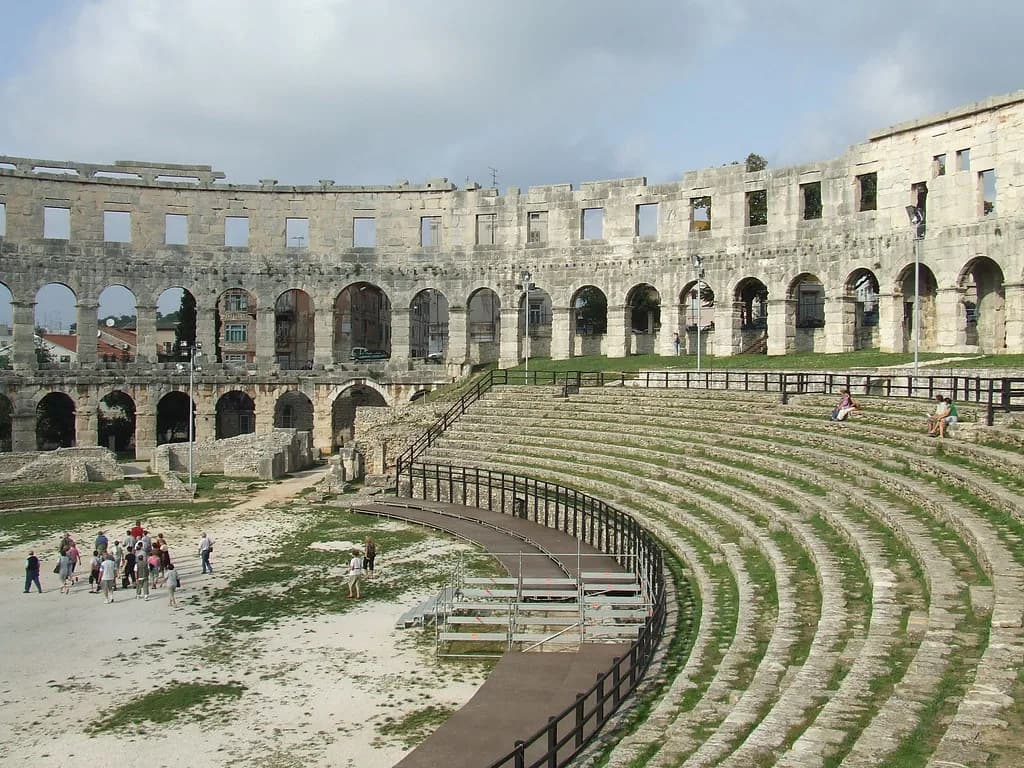
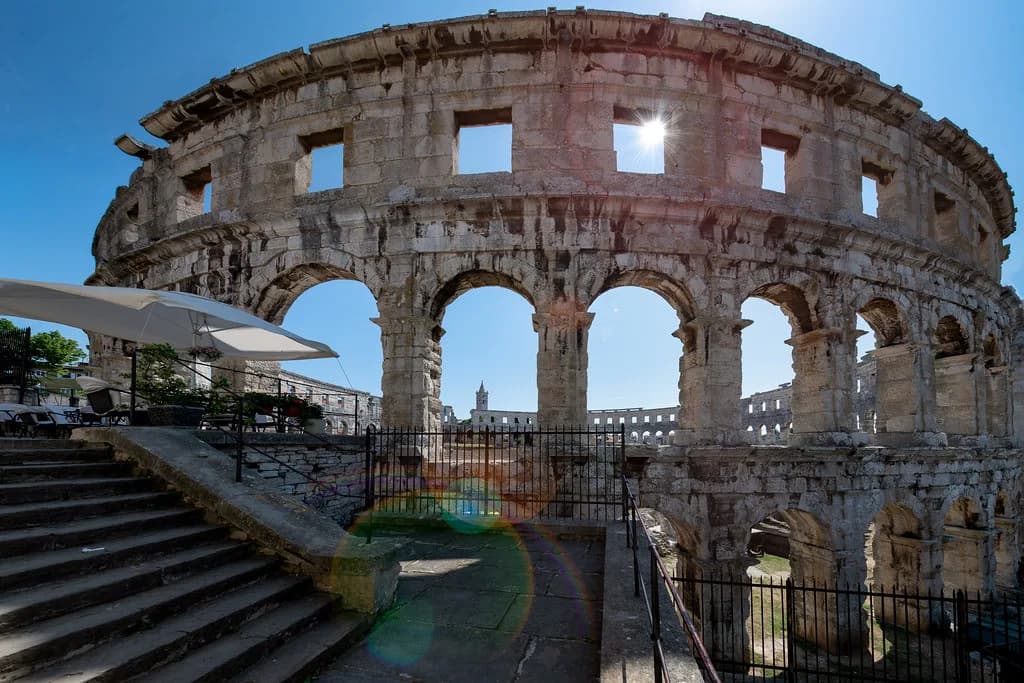
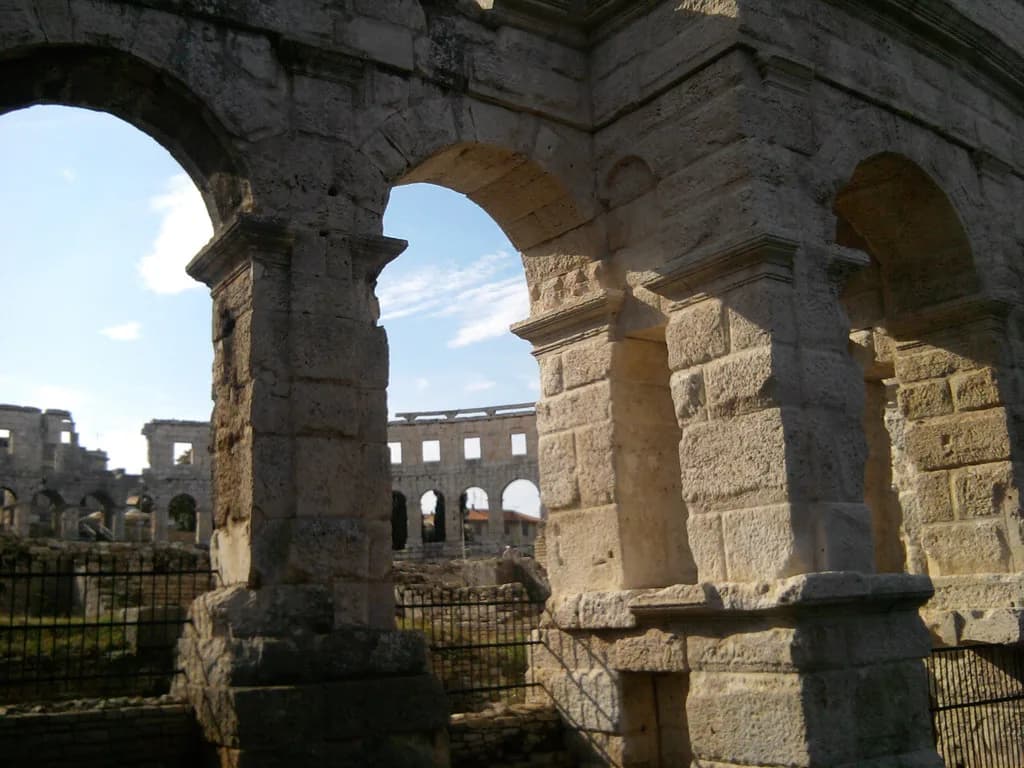
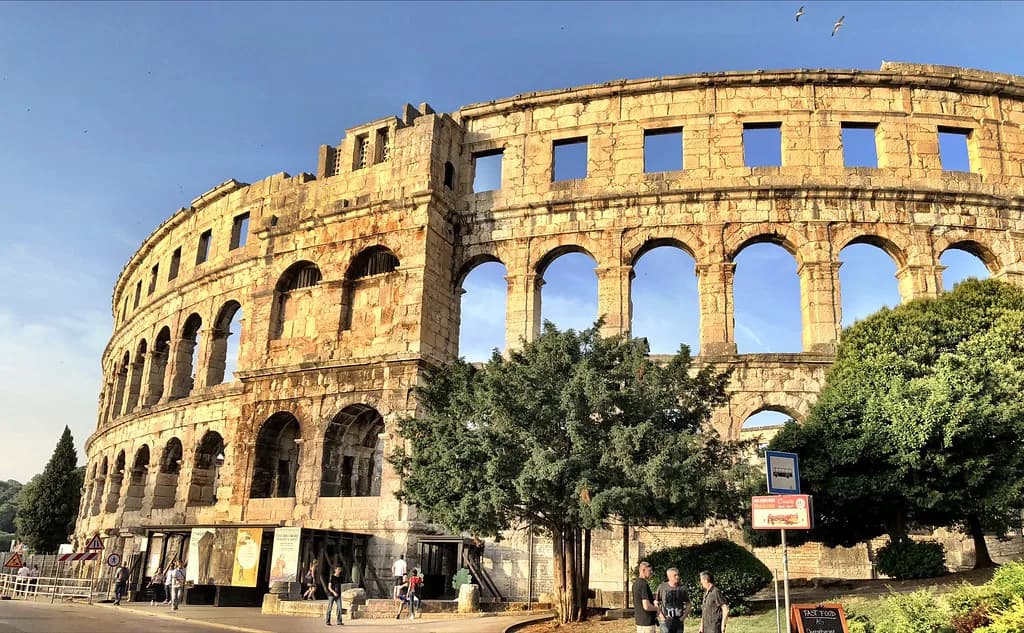
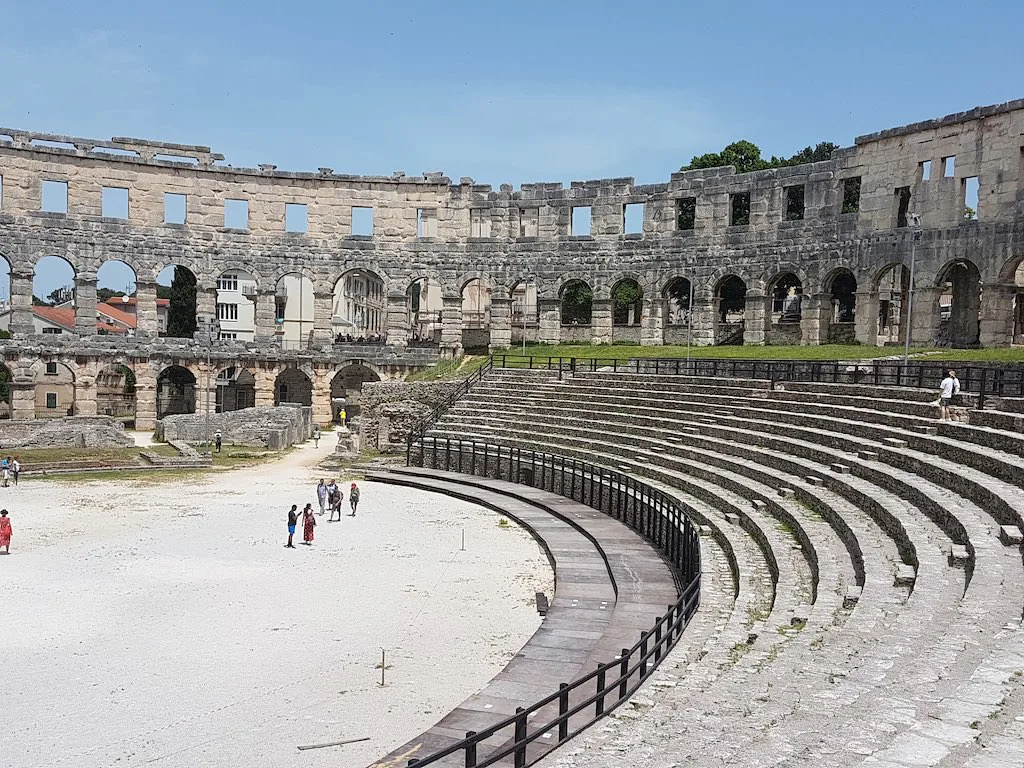
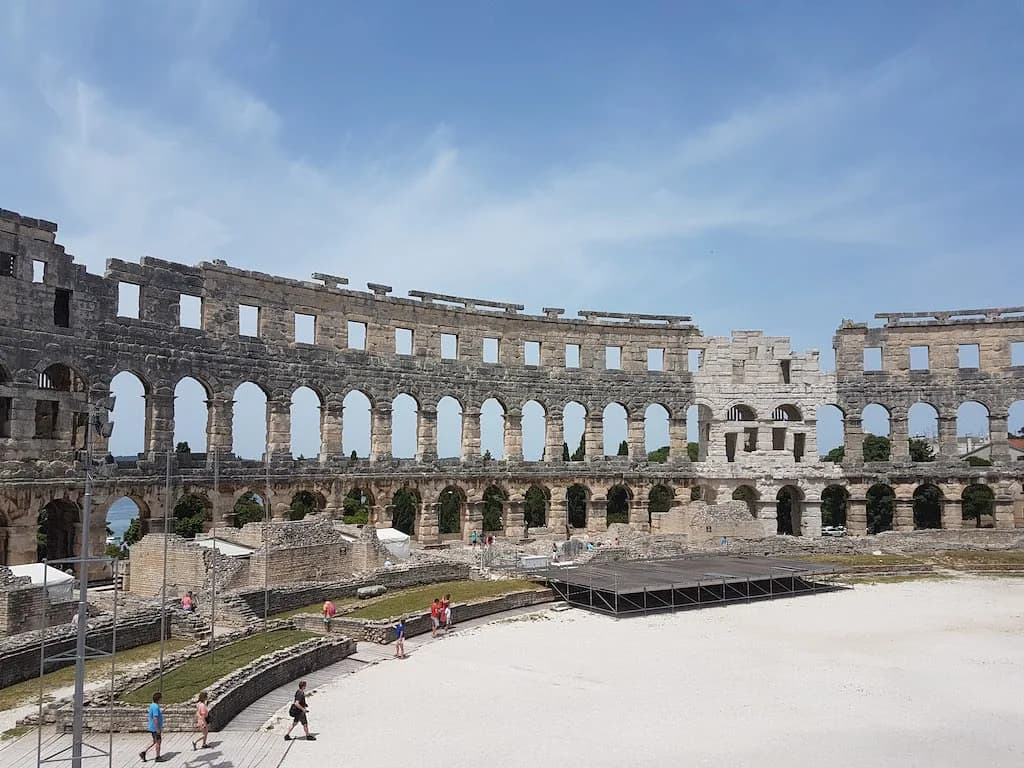
The amphitheatre, known locally as the Arena, is the sixth largest in the world and dates to around 14 AD. It dominates the northeastern edge of the center and is the one sight nobody skips. Entry costs about 10 euros, and in summer it stays open from 08:00 to 22:00, though a large stage and screen are built for concerts, which can block views and add noise for paying visitors.
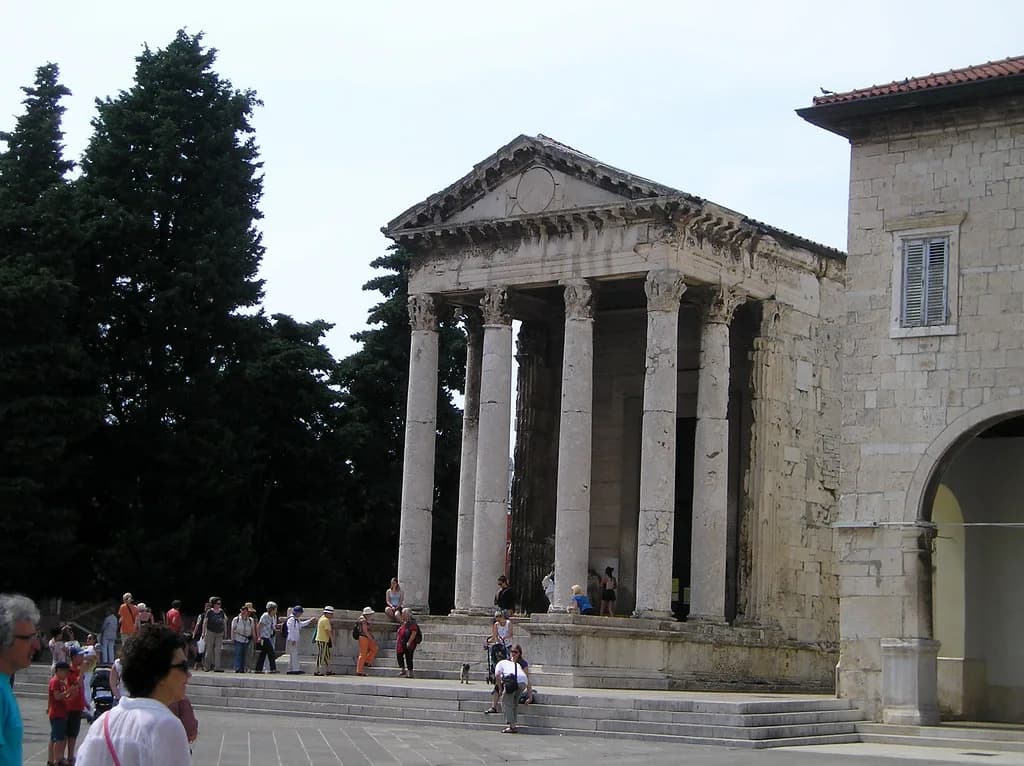
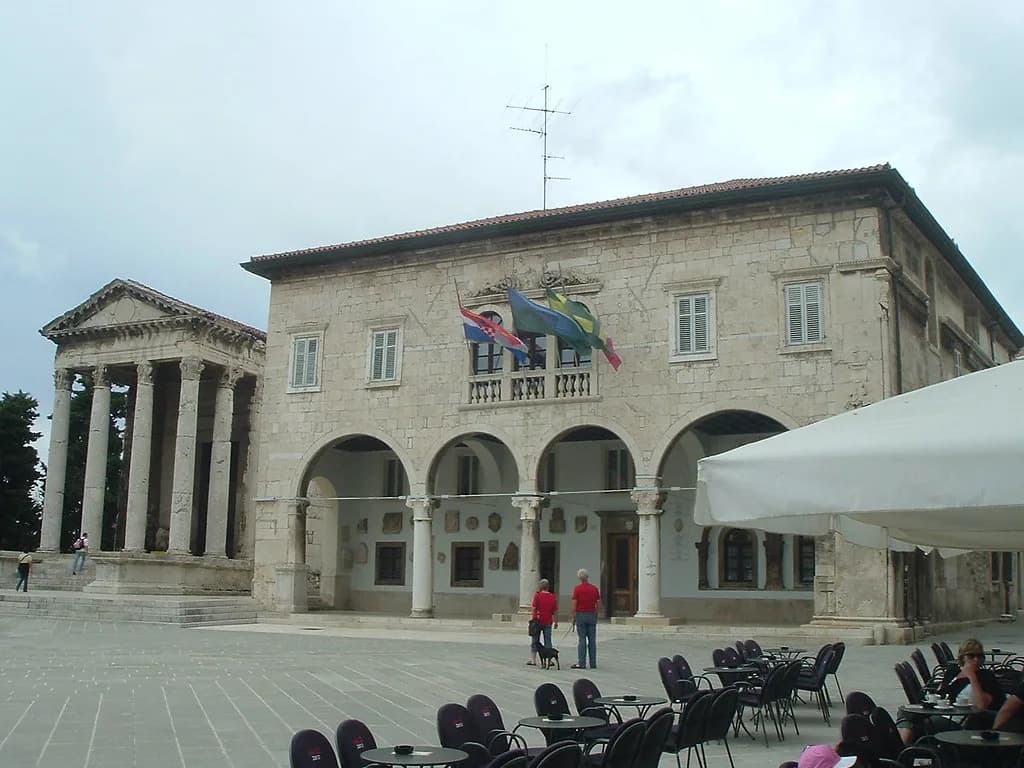
The Arch of the Sergii, erected in 27 BC, stands at the top of Sergijevaca street and forms one of the most photographed corners of the old town. The Temple of Augustus, completed in 14 AD, faces the forum and now houses a small museum display. Both are free to look at from the square, which makes the Roman circuit cheap even before you pay for the Arena.
The old town on foot: the forum, the cathedral and the Venetian castle
The forum is the civic heart of Pula and was already the Roman city's main square two thousand years ago. Behind it, the Cathedral of the Assumption of the Blessed Virgin Mary preserves Roman masonry under a largely 17th-century exterior. From there, lanes climb to the Venetian castle built in the 1600s, whose walls give the best overview of harbor, moat and amphitheatre.
The castle doubles as the city history museum, and one combined ticket covers both. Expect a modest fee rather than a major outlay, and decide whether the museum justifies the stop if your time is short. Walking the path around the outside of the walls is the alternative, and it delivers the views without the interior.
What the amphitheatre costs and how summer event staging affects the visit
Budget about 10 euros for the Arena, and go early if you want clean photographs. One traveler who entered at 09:00 found the site nearly empty until 09:30, which is a useful tip in July and August, when tour groups and cruise passengers arrive later in the morning.
Summer concerts and film events mean scaffolding, lighting rigs and staging inside the amphitheatre. If you are paying to see Roman stone, that is a real trade-off and worth accepting knowingly. The paid entry buys the circuit of the walls and the underground exhibition space, so the experience is still substantial even with a stage in place.
Half a day or two full days? How long Pula needs
Half a day covers the Roman circuit and a walk through the center at a brisk pace. Travelers on a tight Istrian road trip regularly do exactly that, driving over from Rovinj and returning the same afternoon. The rhythm suits anyone who wants the Arena, the forum and the arch without lingering.
Two full days let you slow down. That means the museum in the castle, a proper look at the cathedral and the Zerostrasse tunnels under the hill, plus a morning at a nearby beach or a trip out to the Brijuni islands. Plan the extra day only if you enjoy museums and unhurried wandering more than another afternoon of swimming.
Pula versus Rovinj: authenticity and transport links against prettiness and swimming
Rovinj wins on looks without much argument. Its hilltop old town, the baroque church of St Euphemia and the car-free lanes give it the photogenic quality people picture when they imagine Istria. Pula counters with Roman monuments that have no equivalent in Rovinj, a working city atmosphere and better flight connections.
For beaches and swimming, Rovinj's rocky shoreline and the Zlatni Rt nature reserve beat anything inside Pula itself. The drive between the two towns takes about 50 minutes, which makes a split stay easy. Choose Rovinj for a romantic short break, Pula for history and practical logistics, and consider both if you have three or more days in Istria.
Zlatni Rt and the coast near Rovinj as a beach add-on
Zlatni Rt, the Golden Cape just south of Rovinj, is a wooded nature reserve with rocky swimming spots and a couple of beaches, including Lone Beach. The shoreline is rock and concrete rather than sand, so bring water shoes and expect to claim a spot early in the day. Loungers and umbrellas are rented by nearby restaurants in season.
Parking is the practical constraint. A large lot near Monvi charges by the day or hour, and the closest roadside spaces at the end of the reserve fill up in the morning. Getting there by mid-morning gives you a choice of parking and shade, which matters in high summer.
Getting there and around: driving times, airport access and parking realities
Pula has its own airport with seasonal flights from across Europe, and the town sits at the southern tip of Istria on the main road from Rovinj and Poreč. Driving from Rovinj takes about 50 minutes, and the route is straightforward. If you are arriving by air, public transport or coach, work through how to get to Pula before you book accommodation, since the last stretch from the airport is the fiddly part.
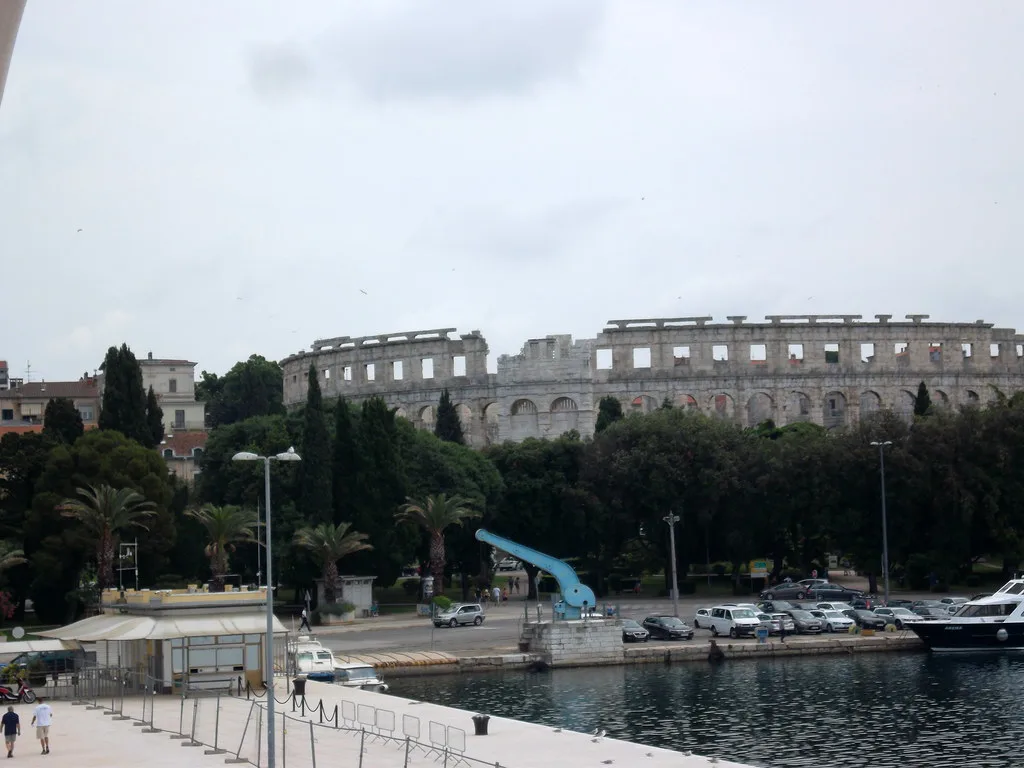
Parking is the biggest friction point for drivers. The large Karolina lot beside the amphitheatre has around 200 spaces and costs about 4 euros per hour, among the highest rates on the Istrian coast, and it still had space at midday in one traveler's account. Toilets there carry a small charge, while the amphitheatre has free ones.
Typical costs and the price level in Pula
Pula is a moderate-value destination by Croatian coastal standards, cheaper than Dubrovnik or Hvar and broadly in line with inland Istria. The main fixed costs are the amphitheatre ticket and parking if you drive, and those two can add up quickly on a short visit. Food and coffee in the center cost noticeably less than in the most touristed resorts.
The biggest money-saver is to visit the free sights first: the forum, the Temple of Augustus, the Arch of the Sergii and the cathedral can all be seen without a ticket. Pay for the Arena and decide on the castle separately rather than buying every entry on offer. For a full breakdown by category, read how much a trip to Pula actually costs.
When to go: crowds, cruise days and summer heat
Late spring and early autumn give the best balance of warm sea, open sights and manageable crowds. May and June bring reliably pleasant days without the crush of high season, while September keeps the water swimmable as the port empties out. If you want the Roman circuit with fewer people, avoid the peak weeks of late July and August.
Summer in Pula is hot, with strong sun on the exposed stone of the Arena and little shade inside the amphitheatre. Cruise ships and coach tours concentrate in the middle hours of the day, so an early or late visit to the main sights makes a real difference. Evening events at the Arena also mean the site can be busier and partly obstructed during festival weeks.
Drawbacks worth knowing before you book
Pula's approach roads and suburbs are unlovely, with shipyard infrastructure and ordinary housing blocks framing the historic center. The town has a working character that some visitors read as scruffy, and its beaches inside the city limits are limited compared with Rovinj's. Travelers who want a resort feel and a swimmable cove within walking distance should look elsewhere.
Parking rates in the center are high for Croatia, and summer event construction can spoil the amphitheatre experience for full-price visitors. The town is also car-dependent for day trips, since the coast and the interior hill towns are spread out. None of this ruins a visit, but none of it should come as a surprise either.
Verdict by traveler type
History-focused travelers, couples who accept a grittier city and anyone flying into Pula should treat it as a definite yes, with two days if time allows. Families with young children and travelers chasing a polished beach holiday should base themselves in Rovinj, and day-trip over for the Arena and the forum. Anyone with only a single spare day in Istria can still see the Roman core in half a day and leave satisfied.
Explore more Pula trip-decision guides
Frequently Asked Questions
Is Pula worth visiting for tourists?
Yes, if Roman monuments and a working port city appeal to you. The amphitheatre, the forum, the Temple of Augustus and the Arch of the Sergii form a compact circuit that most visitors can cover in half a day. Travelers who want a polished resort atmosphere and walkable beaches will find Rovinj a better fit.
How many days do you need in Pula?
Half a day is enough for the Roman sights and a walk through the center. Two full days let you add the castle museum, the underground tunnels, a beach afternoon and a boat trip to the Brijuni islands. Most people on an Istrian road trip treat Pula as a day trip from Rovinj.
Is Pula or Rovinj better to visit?
Rovinj is prettier, with a hilltop old town and better swimming, while Pula has the Roman amphitheatre and stronger transport links. The two are roughly 50 minutes apart by road, so you can base in one and visit the other. Choose Rovinj for atmosphere and Pula for history.
What is there to see in Pula's old town?
The main sights are the amphitheatre, the forum with the Temple of Augustus, the Arch of the Sergii and the cathedral. The Venetian castle on the hill adds a museum and the best view over the harbor. The whole circuit sits within easy walking distance.
Is Pula expensive?
Pula is moderate by Croatian coastal standards, cheaper than Dubrovnik or Hvar. The amphitheatre ticket and central parking are the costs most visitors notice, and the forum sights are free to view. Read the full costs guide before setting a budget.
How long does it take to get from Rovinj to Pula?
Driving from Rovinj to Pula takes about 50 minutes. You can do it as a day trip and return in the evening, though parking in central Pula adds meaningfully to the cost of a short visit. Compare the transport options before you decide where to stay.
Sources
Trip-decision notes
Optional updates when we publish or revise a destination verdict.
You might also like
Continue reading
More guides you'll find useful