Is Poreč Worth Visiting? Honest Guide to Istria's Coast
Yes, Poreč is worth visiting for its UNESCO Euphrasian Basilica, Roman street grid and Istrian food, though summer brings resort crowds to its beaches.
On this page
Yes, Poreč is worth visiting, provided the Euphrasian Basilica is the reason you come. Its 6th-century mosaics and episcopal complex are the strongest single sight on this stretch of the Istrian coast, and the old town around them keeps its Roman street grid. Travelers who want a pretty harbor town with evening atmosphere will find Rovinj a better fit; travelers who want a beach base with genuine history on the doorstep get both here.
The verdict: who Poreč suits and who should go elsewhere
Come to Poreč for the Euphrasian Basilica, a UNESCO World Heritage site whose 6th-century mosaics are the finest Byzantine work in Croatia, and treat the rest of the town as a pleasant adjunct. The old town is small enough to cross in twenty minutes, so the monument and the streets around it carry the cultural weight of the trip.
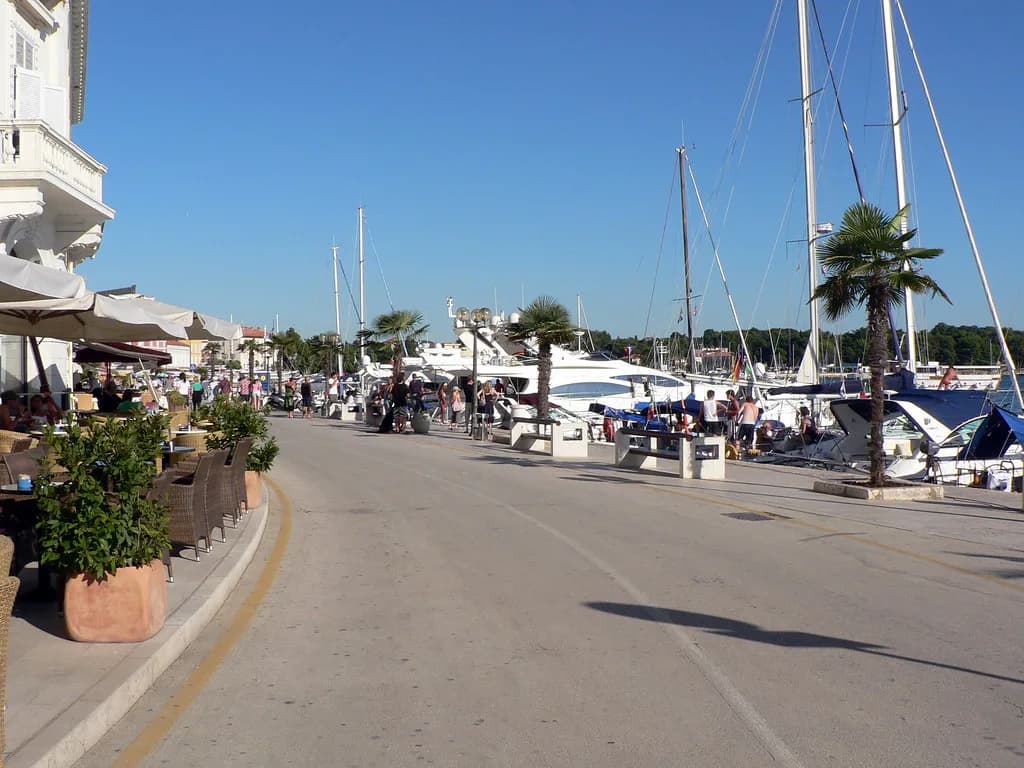
Poreč suits families who want calm, shallow water and a resort zone behind the beach, and history travelers who prefer a compact Roman grid to a museum city. It does not suit anyone picturing a quiet fishing port: the coast north and south of the center is a long strip of resort complexes, and in July and August the waterfront fills up. If a car-free old town with a working harbor is the picture in your head, Rovinj is the closer match.
Treat Poreč as a base, not a one-street stop. Rovinj, Pula, Vrsar and Umag all sit within easy reach, and inland Istria brings hill towns, olive groves and truffle country. The trade-off is that the town itself gives you roughly a full day of sightseeing, with the rest of your time spent on the beach or out on day trips.
What Poreč actually is: a Roman-grid old town inside a resort strip
Poreč has two identities, and understanding both decides whether you enjoy it. The old town is a teardrop-shaped peninsula laid out on a Roman plan, with the main streets still following the ancient grid and later Gothic and Venetian facades layered on top. Just outside it, the Plava Laguna zone runs along the coast as a landscaped resort area of hotels, pools, sports facilities and beaches.
That combination is unusual in Istria: few towns pair a first-rank early Christian monument with a fully developed family resort coast. The cost is character at the edges, where purpose-built tourism replaces the vernacular streetscape you find in Rovinj. Decide in advance which half of Poreč you are there for, because they reward different kinds of days.
The Euphrasian Basilica and Episcopal Complex, the reason to come
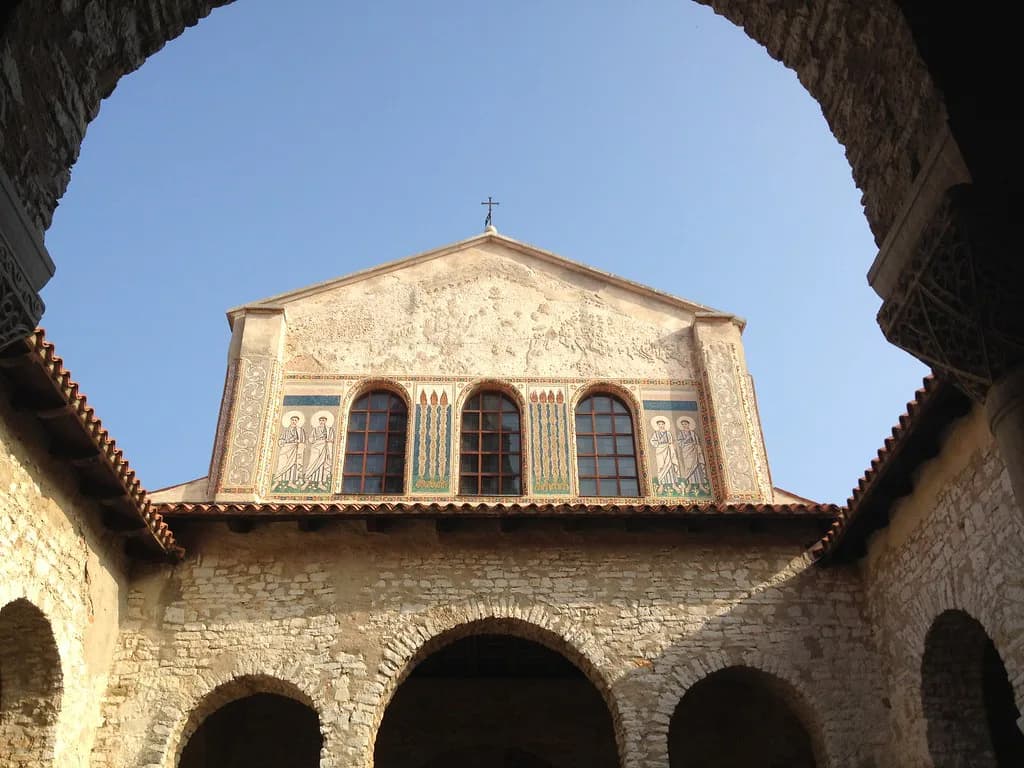
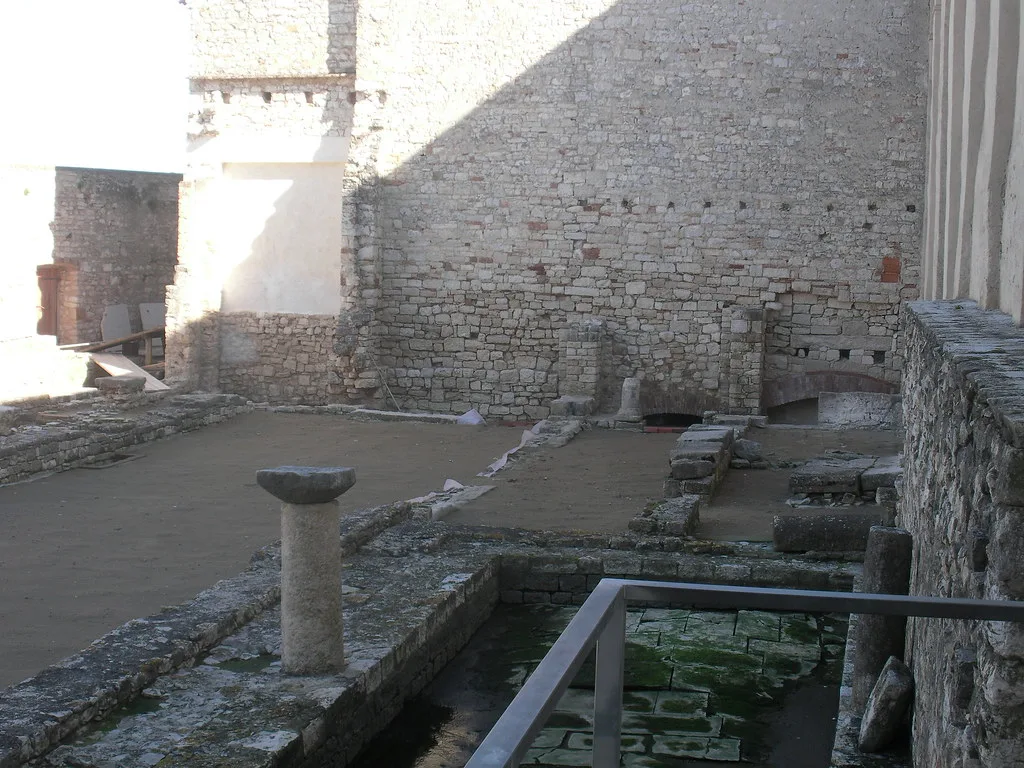
The Euphrasian Basilica is not a single church but a whole episcopal complex, including the basilica, atrium, baptistery and bishop's palace, built largely in the 6th century under Byzantine influence. The mosaics in the apse are the highlight: gold, blue and green tesserae showing Christ, the apostles and saints, preserved with unusual completeness. Give the interior at least half an hour rather than treating it as a photo stop.
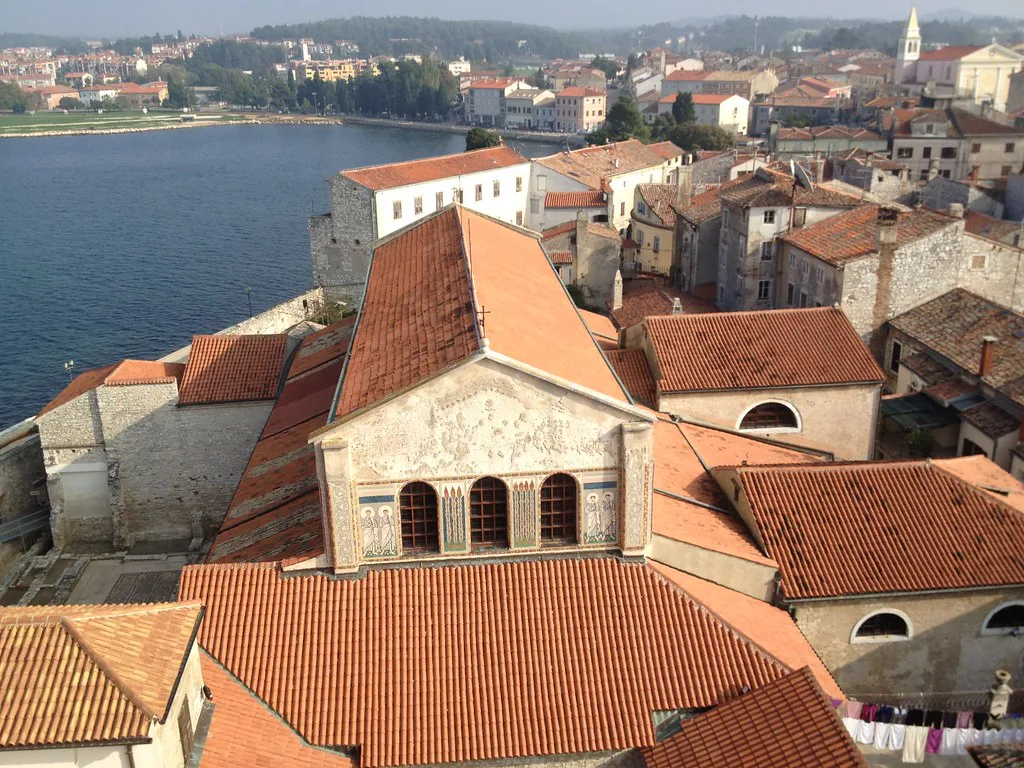
Climb the bell tower next to the basilica for the classic view over terracotta rooftops to the Adriatic. It is the one climb in town worth the effort, and it also makes clear how small the peninsula is compared with the resort coast stretching north. The tower is a working historic structure with narrow stairs, so it rewards those comfortable with confined spaces.
The old town on foot: Decumanus, Gothic and Venetian facades, the bell tower view
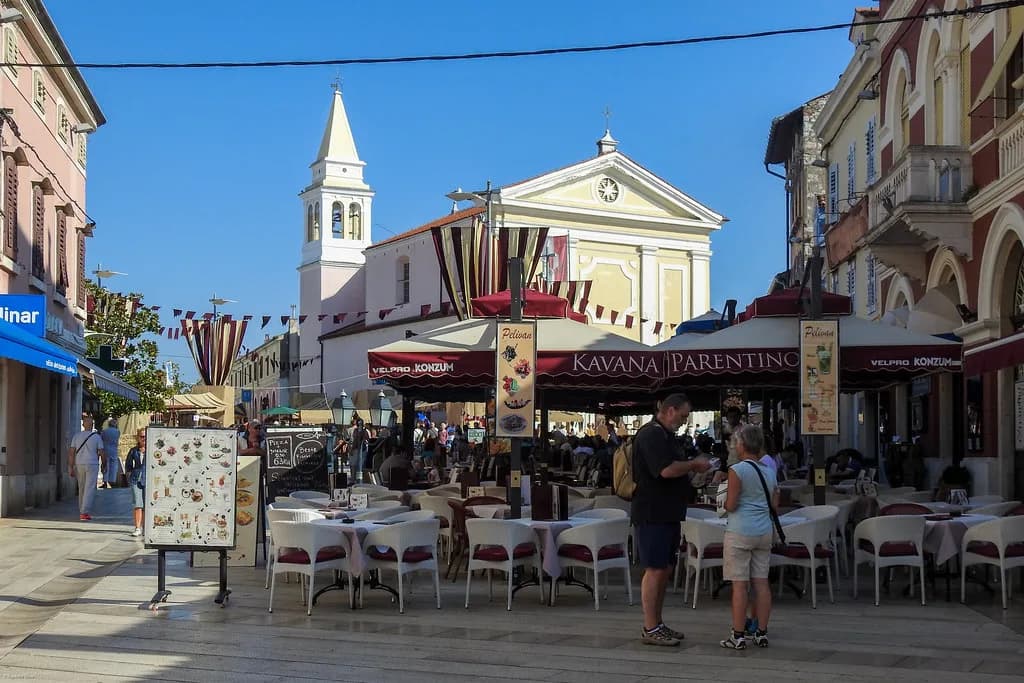
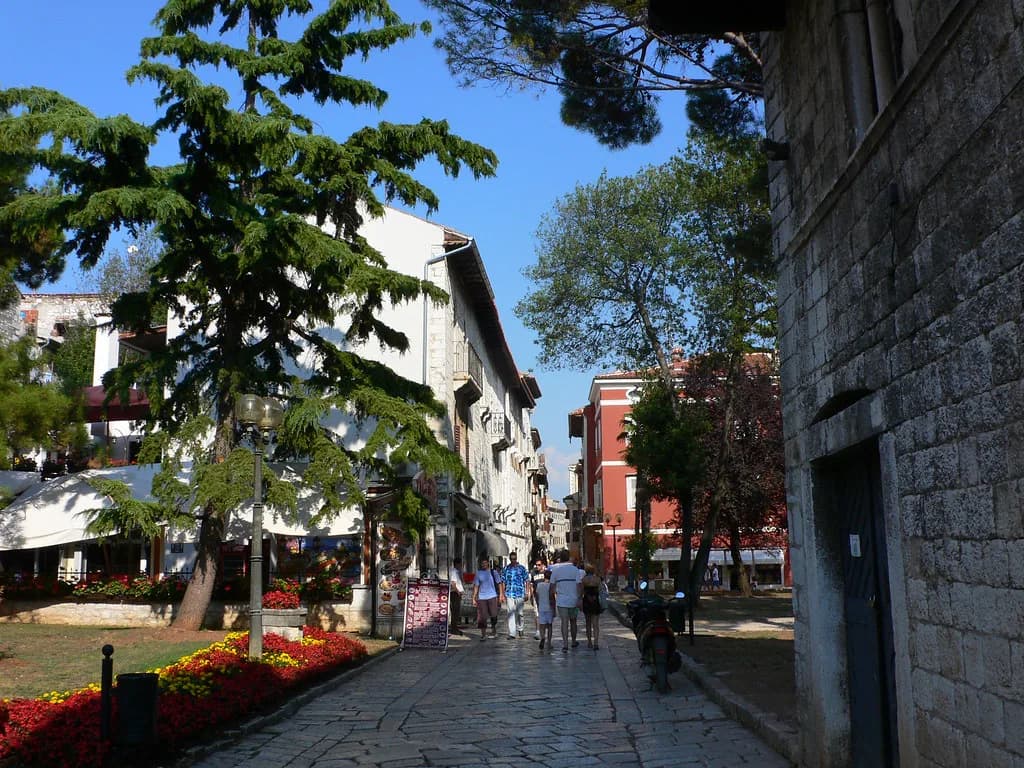
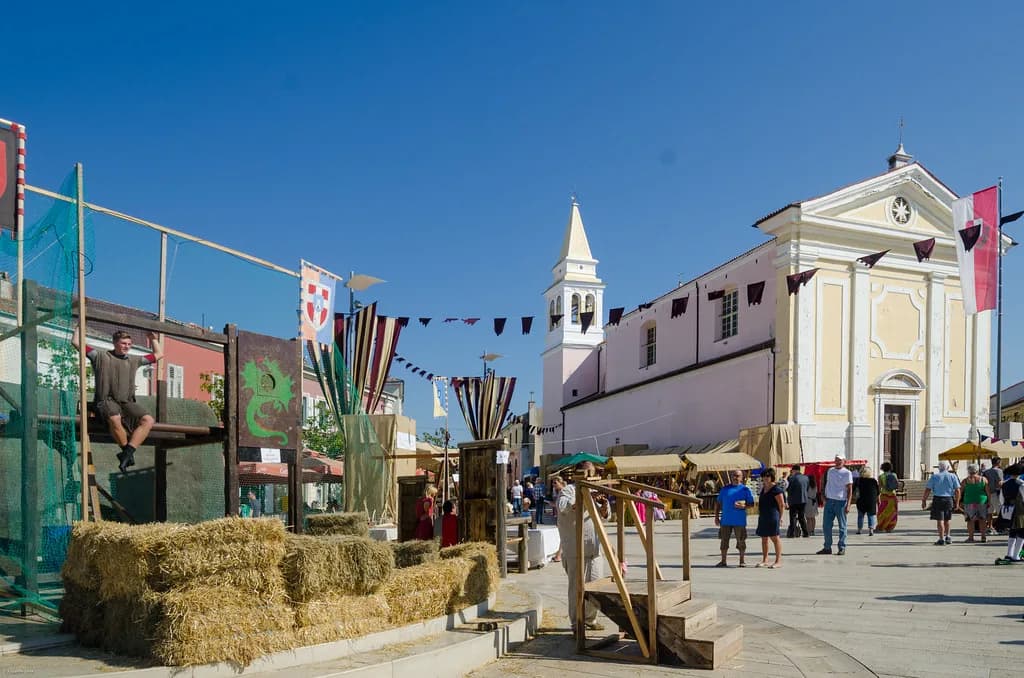
Walk the Decumanus, the Roman main street that still cuts through the peninsula, and look up: the facades alternate between Gothic windows, Venetian balconies and plain stone townhouses. The streets are cobbled and polished by use, so footwear matters more than it sounds, especially after rain. Markets, small shops and family-run konobas fill the ground floors, which keeps the center lived-in rather than museum-like.
Beyond the basilica, the pleasures here are cumulative: a carved stone portal, a fragment of Roman pavement, a cafe table wedged into a lane. That suits slow travelers and frustrates anyone hunting a checklist of big-ticket sights. Budget an unhurried morning for the center and let the afternoon go to the coast.
Beaches and the Plava Laguna coast: what to expect in July and August
Poreč's beaches are mostly rocky or pebble platforms with concrete bathing areas and ladders into clear, shallow water, not sand. That is good news for swimmers and families with small children, since the entry is gentle and visibility is high, but it is uncomfortable for anyone who wants to lie on soft sand. The resort zone provides the usual facilities behind the shoreline.
In July and August the coast is at its busiest, with sunbeds packed tight and the water off the main strips crowded by mid-morning. If swimming is a priority, plan beach time early and keep afternoons for the old town, inland drives or the pool at your accommodation. Outside those weeks the same shoreline feels dramatically calmer.
Istrian food and wine: konobas, fuži, Malvazija, Teran, olive oil and truffles
Istria is deservedly proud of its table, and Poreč is a practical place to eat well without ceremony. Order fuži or pljukanci, the region's hand-rolled pastas, with truffle sauce or a seafood ragout, and drink Malvazija for white and Teran for red. Olive oil here is treated with the seriousness given to wine elsewhere, so ask for the local pour with bread.
The best value sits in konobas, the family-run taverns, rather than on the waterfront where you pay for the view. Lunch is often the better meal: a mid-morning marenda stop with espresso is a local habit worth copying, and it costs far less than a full dinner. Inland Istria, an easy drive away, is where truffles and hill-town wineries anchor a day out.
Drawbacks: summer crowds, resort character, cobbles, and the price of peak season
Poreč's weaknesses are structural, not accidental. The resort strip gives the coast a packaged feel that many travelers dislike, the old town gets dense with day visitors in high summer, and the cobbles are hard on ankles and wheeled luggage. Peak-season accommodation and restaurant prices climb accordingly, so the value case weakens in late July and August.
Cruise and excursion traffic concentrates in the middle of the day, which is the simplest argument for sleeping in town rather than visiting on a coach trip: mornings and evenings belong to people staying overnight. If your dates are fixed to school holidays, accept the crowds and book the basilica and beach time around them.
How many days you need in Poreč
Two nights covers Poreč properly: one afternoon and evening for the old town, one morning for the basilica and bell tower, and a beach afternoon. Three or four nights turns it into a base for Istria, adding Rovinj, Pula or the inland hill towns as day trips. A single day is enough only if the basilica is your sole objective.
Families typically settle in for a week in the resort zone, using the town for evenings and short excursions. History-focused travelers are better off with two nights here and more time in Rovinj or inland. Either way, resist the urge to fill every day with driving: the distances are short but the roads are slow in summer.
When to go: season-by-season conditions for Istria
Late spring and early autumn are the sweet spot, with warm days, swimmable water on either side of the high season and far fewer people on the streets. Poreč in May brings mild weather and a comfortable old town, though some coastal facilities open gradually through the month. May is the month to pick if the basilica matters more to you than sunbathing.
Poreč in September keeps summer's warmth while shedding the August crush, which makes it the best all-round month for swimming plus sightseeing. October is quieter and cheaper again, with cooler water and a town that feels local rather than touristed. Use these as typical patterns rather than guarantees, since Istrian weather swings from year to year.
High summer delivers reliable heat and the fullest choice of boat trips and beach services, at the cost of crowds and peak pricing. For current conditions on the ground, the town's own information points and the Croatian national weather service are the places to look close to departure.
Typical costs and what drives them
Croatia has used the euro since 2023, so there is no currency conversion to worry about, and card payment is standard in the old town. Prices in Poreč track the season more than the venue: the same room or dinner costs materially more in August than in May or October. Waterfront tables and resort-zone restaurants sit at the top of the range, konobas a step below.
For current basilica admission, boat excursion rates and bus fares, check the Euphrasian Basilica ticket desk and the published tariffs of the boat and bus companies rather than relying on a blog figure.
Getting to Poreč and getting around Istria without a car
Poreč has no railway station, so arrivals come by road: long-distance coaches along the coast, organized transfers from the airports at Pula, Trieste, Venice and Zagreb, or your own car. The nearest airport is Pula, a short drive south, which makes a fly-drive trip straightforward. The full range of options is set out in our guide to how to get to Poreč.
Without a car, the old town and beaches are walkable and local buses connect the resort zone, but reaching Rovinj, Pula or inland Istria depends on coach timetables that thin out outside summer. A car buys you the hill towns and wineries; buses and the coastal towns buy you simplicity.
Poreč versus Rovinj and Pula: the trade-offs
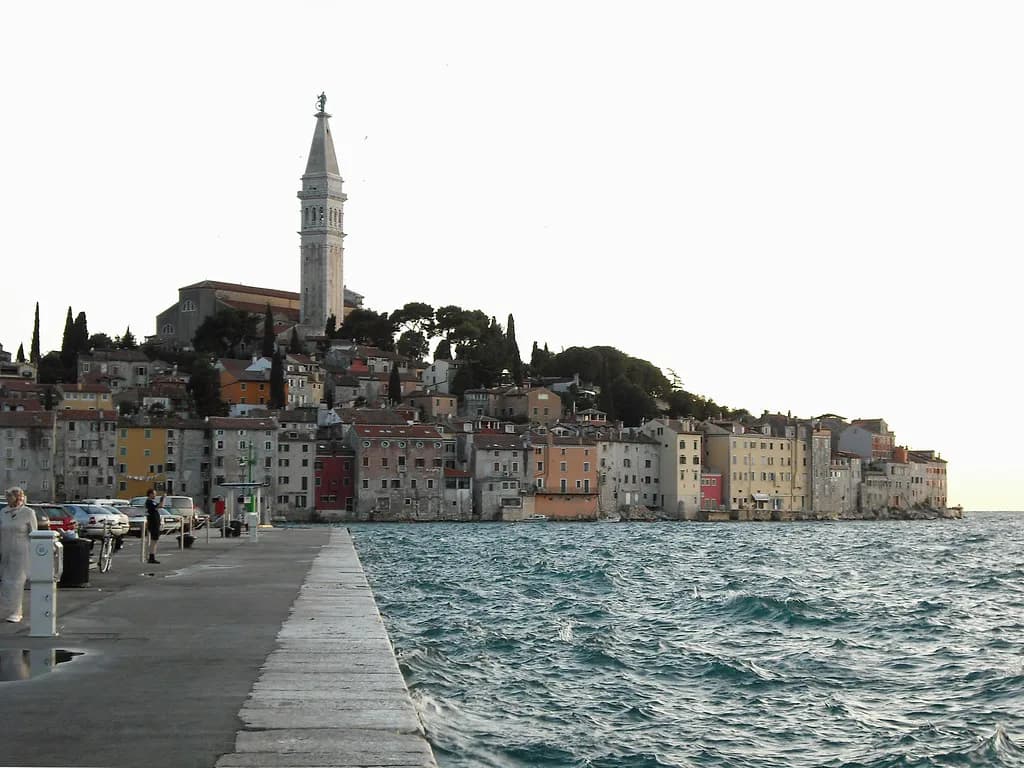
Rovinj is the prettier town, with a dense old peninsula climbing to a church tower and a harbor that still feels lived-in, but it lacks a monument on the scale of the Euphrasian Basilica. Poreč wins on sightseeing substance and on family beaches; Rovinj wins on atmosphere and evening charm. Choose Poreč if the mosaics and shallow water matter, Rovinj if the streets themselves are the point.
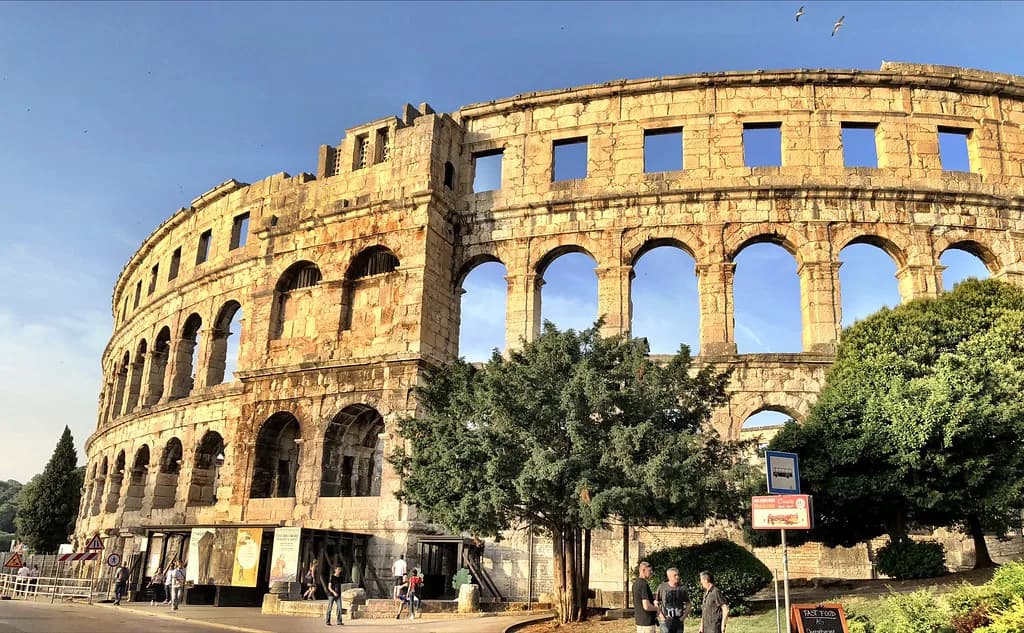
Pula is the bigger, grittier city, with a Roman amphitheater and a working port that give it more urban energy than either. It suits travelers who want city life and major Roman remains rather than a resort coast. Poreč remains the easiest of the three for a beach-plus-history family trip.
Inland Istria, with Motovun and Grožnjan among its hill towns, trades sea views for vineyards, truffles and quiet lanes. It is a day trip from Poreč and a good reason to keep a car for at least part of the stay.
Who will love it, and who should choose Rovinj, Pula or inland Istria
Families with young swimmers, travelers who want one exceptional monument without a big-city stay, and anyone using Istria as a relaxed coastal base will get good value from Poreč. The shallow entry along the resort coast is a genuine advantage for children.
Couples seeking romance, travelers who dislike resort architecture and anyone wanting a car-free old town with harbor character should look at Rovinj. City-minded visitors with an interest in Roman engineering should choose Pula. Those who want vineyards over beaches should head inland.
Plan Your Visit
Poreč is worth visiting for the Euphrasian Basilica and its Roman-grid old town, and it becomes a strong choice if you also want shallow family beaches and easy day trips across Istria. Book for late spring or September, give the center two unhurried days and keep the resort coast for what it does well.
If that mix does not match your trip, the honest answer is to go elsewhere in Istria: Rovinj for atmosphere, Pula for city history, the hill towns for food and wine country. Choose Poreč deliberately rather than by default and it delivers.
Explore more Poreč trip-decision guides
Frequently Asked Questions
Is Poreč worth visiting for a first trip to Croatia?
It is worth it if you want a compact old town anchored by a first-rank monument, the Euphrasian Basilica with its 6th-century mosaics, plus easy family beaches. Travelers who picture a romantic harbor town usually prefer Rovinj.
What is the Euphrasian Basilica famous for?
The basilica is a UNESCO World Heritage site, listed as part of an episcopal complex that includes the atrium, baptistery and bishop's palace. Its apse mosaics from the 6th century are considered among the finest Byzantine works in Croatia.
How many days do you need in Poreč?
Two nights cover the old town, the basilica and the bell tower with a beach afternoon to spare. Three or four nights let you use Poreč as a base for Rovinj, Pula and the inland hill towns.
Is Poreč a good base for exploring Istria?
Yes, it sits within easy reach of Rovinj, Pula, Vrsar, Umag and the inland truffle country. Without a car, day trips depend on coach timetables that are thinner outside summer.
Are the beaches in Poreč good for families?
The resort coast offers shallow, clear water with gentle entry, mostly over pebble, rock or concrete platforms rather than sand. Small children do well; anyone expecting a long sandy beach should adjust expectations.
When is the best time to visit Poreč?
Late spring and September give warm days, swimmable water and far fewer people than August. July and August are hottest and most crowded, with the highest prices of the year.
Is Rovinj or Poreč better?
Poreč has the stronger single monument and better family beaches, while Rovinj has the more atmospheric old town and harbor. Choose according to whether sightseeing substance or streetscape charm matters more.
Sources
Trip-decision notes
Optional updates when we publish or revise a destination verdict.
You might also like
Continue reading
More guides you'll find useful