Is North Macedonia Worth Visiting? An Honest Verdict
North Macedonia is worth visiting for Lake Ohrid, Skopje's oddball architecture and quiet mountain hiking. Go for an uncrowded, low-cost Balkan trip.
On this page
Yes, North Macedonia is worth visiting, provided you want an affordable, low-key Balkan trip rather than a polished resort holiday. Lake Ohrid anchors the country, Skopje delivers one of Europe's strangest capital skylines, and the mountains stay quiet even in high summer. Travelers who need reliable timetables and crisp signage should look elsewhere, because the rough edges are part of the deal.
The country uses the denar, not the euro, so budget accordingly even though prices feel low by Western European standards. Two weeks by bus is enough to cover Skopje, Lake Ohrid and three national parks, as one traveler account describes, but most people settle for a week focused on the capital and the lake.
The verdict: who should go and who should not
Go if you want Lake Ohrid's churches and swimming, Skopje's over-the-top monuments, and mountain hikes without crowds. Skip it if your trip depends on frequent trains, clear trail maps, or the groomed polish of Croatia and Slovenia. The country rewards curiosity and flexibility more than efficiency.
Comfort matters less than attitude here. Travelers who accept that buildings crumble, that streets can be scruffy, and that station taxi drivers may try it on will enjoy the country enormously, as one long-form account puts it. Those who expect every sight to be curated and signposted will spend their days frustrated.
The strongest reason to come is the combination of low costs, genuine quiet and real scenery in a compact space. You can swim in a UNESCO-listed lake in the morning and be above 2,000 m in the afternoon, which few Balkan countries manage so easily. That range, more than any single sight, is the argument for going.
What makes North Macedonia worth the trip
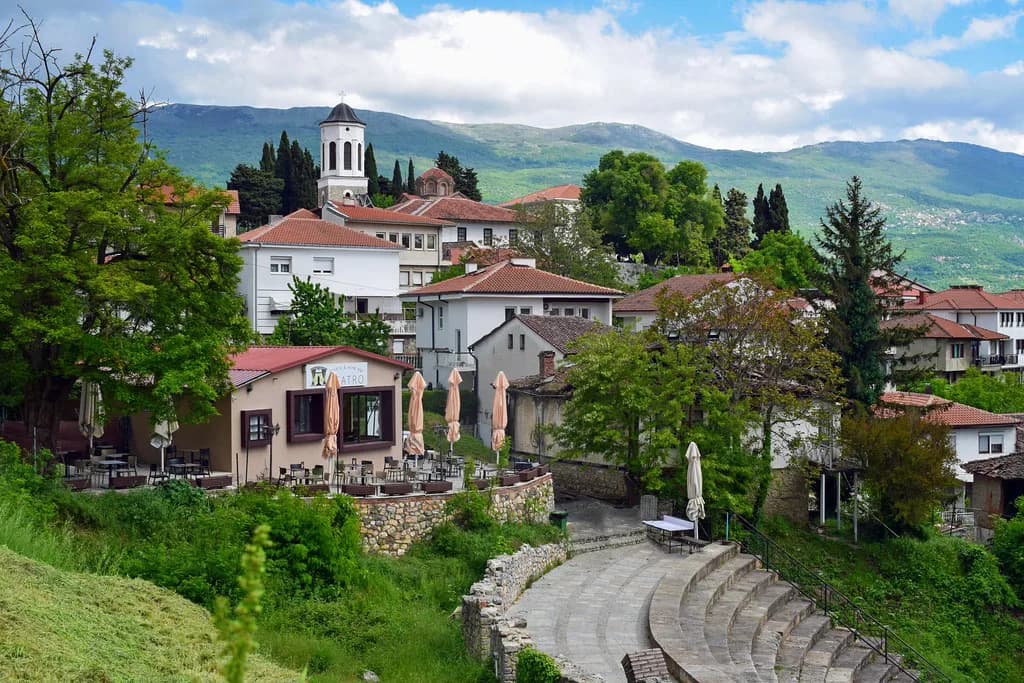
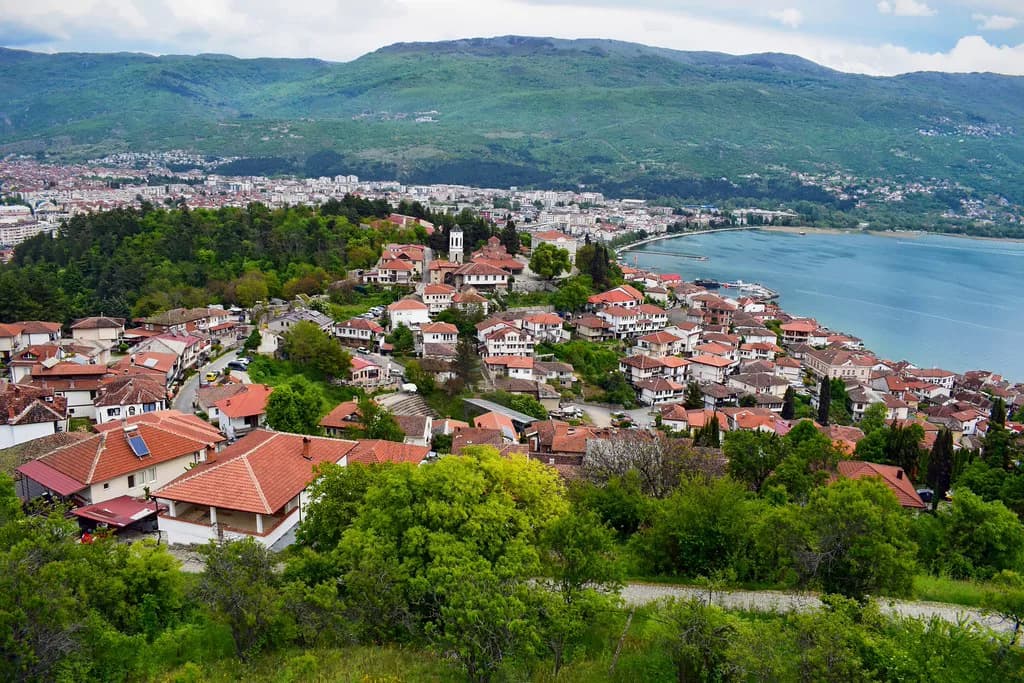
Three things carry the country: Lake Ohrid, the mountain national parks, and the layered history from Roman and early Christian sites through Ottoman bazaars. Ohrid town alone justifies the flight, with its cobbled lanes, cliff-top churches and water clear enough to see the bottom. The rest of the country is quieter and cheaper still.
Travelers consistently report that the country feels far less touristy than Croatia or Albania, with the exception of Lake Ohrid in summer. Skopje draws tour groups that mostly stay in the Old Town, and beyond Tetovo and Mavrovo you can go days without hearing another foreign voice. If you want to be somewhere before the crowds arrive, this is a strong case.
Food is a quiet pleasure: big vegetable-heavy salads, bean stews like tavče gravče, and the melted-cheese specialty topeno sirenye in Bitola. Tap water is drinkable and public fountains are common, which matters on hot hiking days. Locals are helpful in a practical, get-it-done way rather than a performative one.
Lake Ohrid and the town of Ohrid
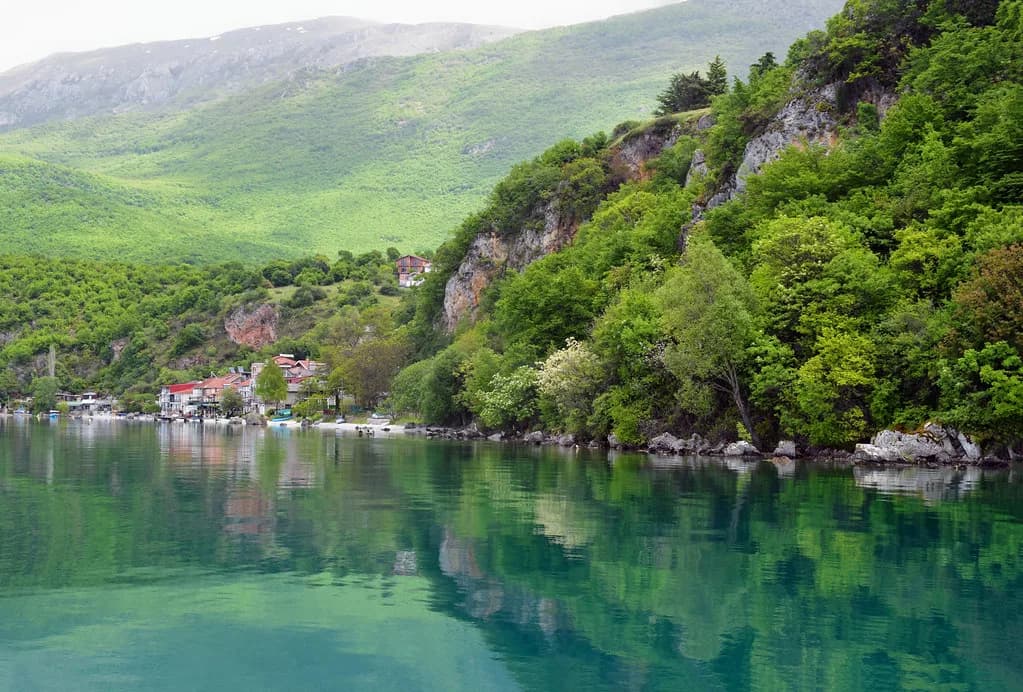
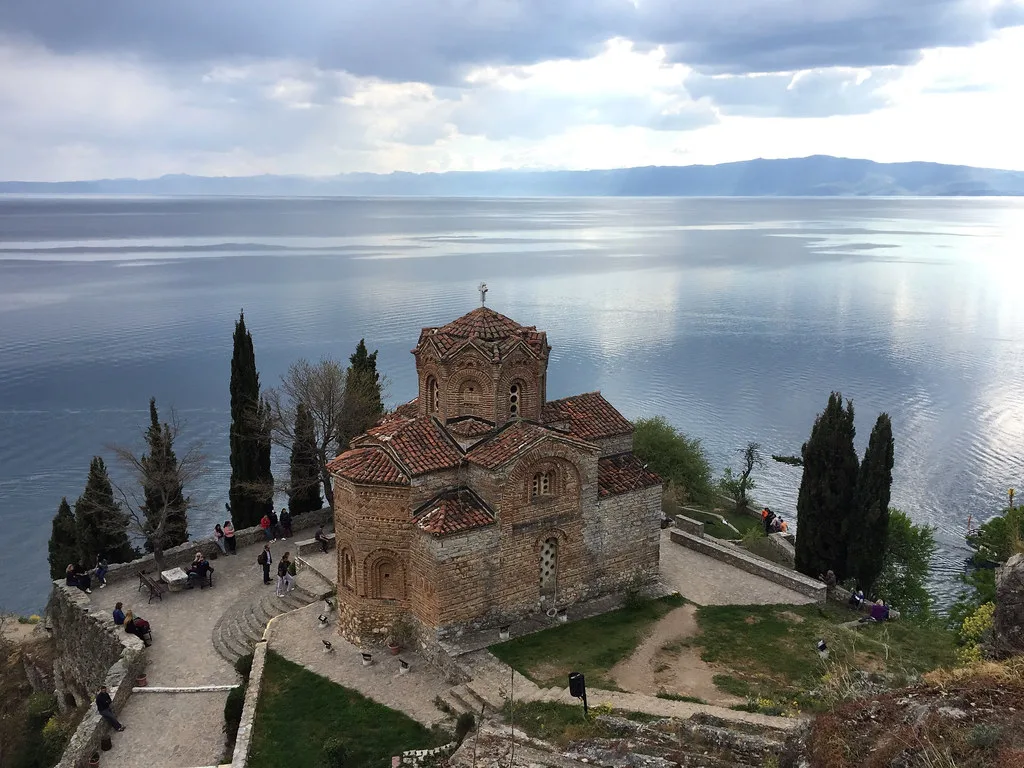
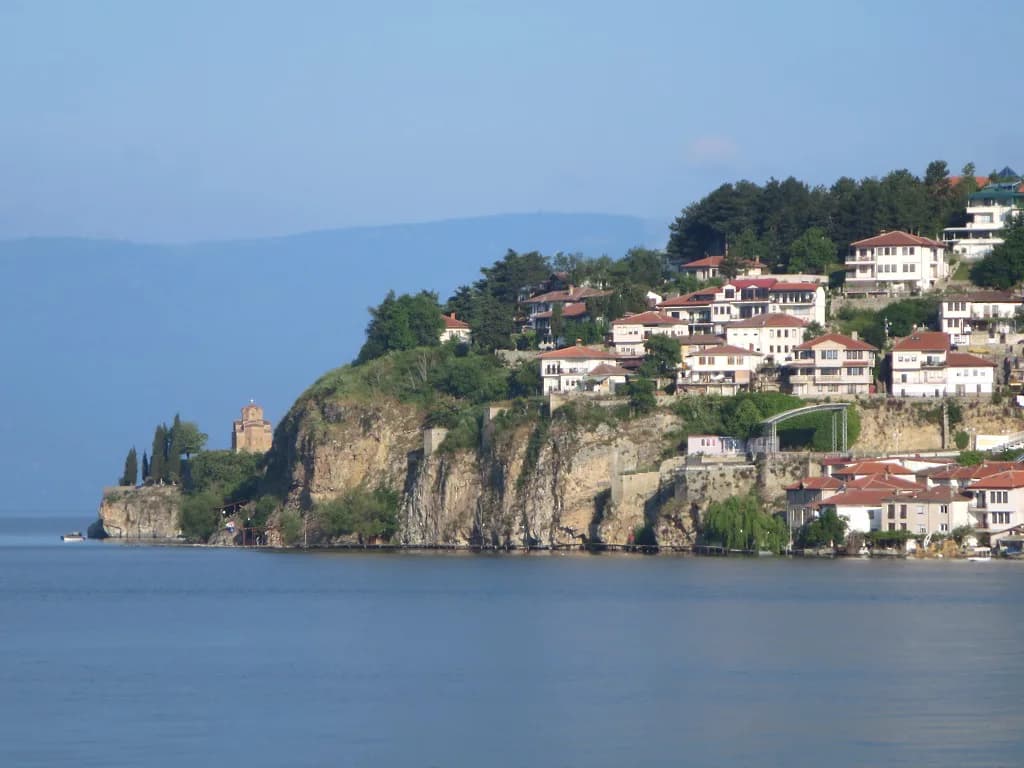
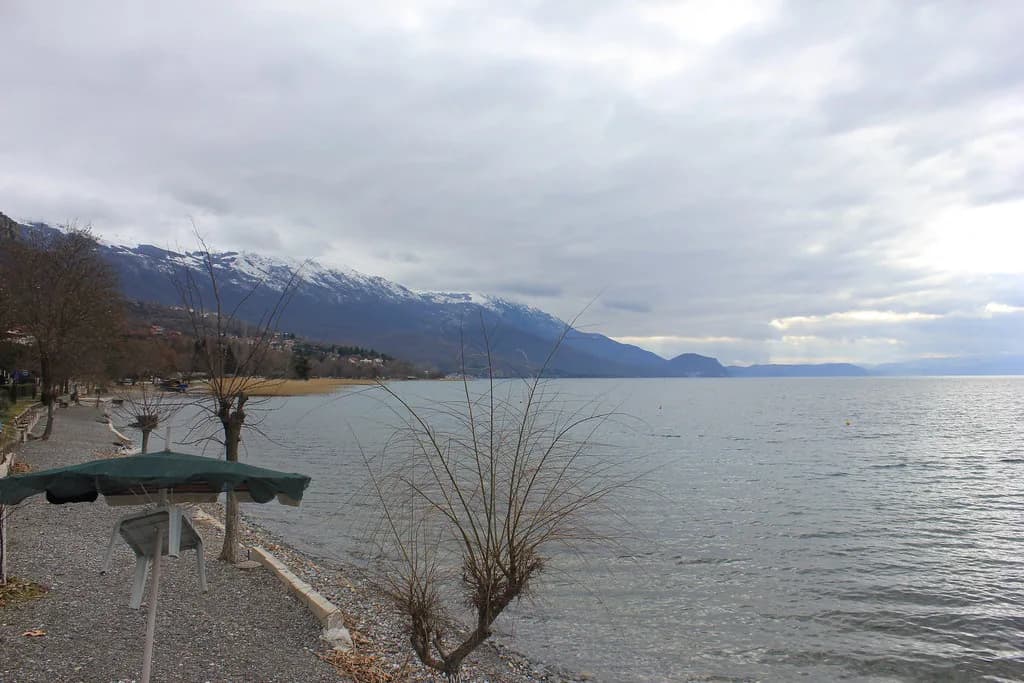
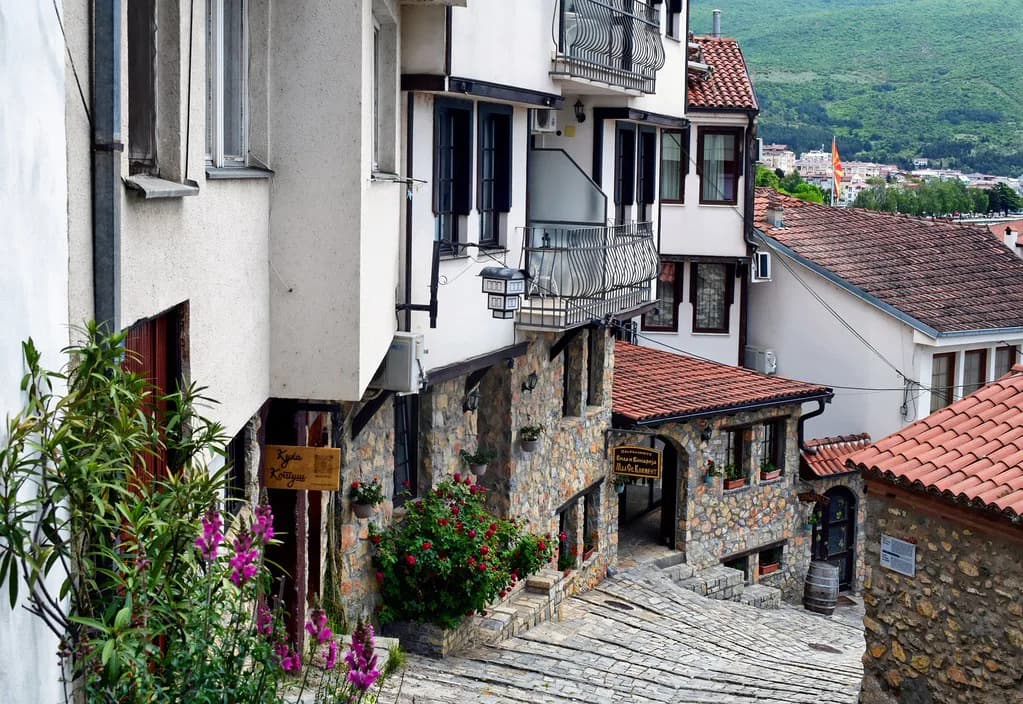
Ohrid is the country's headline act and the one place where summer crowds genuinely gather. The town's cobbled streets climb to the church of St. John at Kaneo, and boat trips out onto the lake are the standard way to see the water change from turquoise to deep blue. The Macedonian shore is the more developed side of the lake.
Allow at least two nights in Ohrid town to see the churches and swim without rushing. Beyond the town, the lake shore hides monasteries, fishing villages and the springs at St. Naum, which are worth half a day. Struga, at the northern end, has a livelier beach-bar scene and a pedestrian center that fills with holidaymakers in July and August.
Book lakefront accommodation well ahead for July and August, because this is the one part of the country where demand outruns supply. Outside high summer, Ohrid is calm and the water is still swimmable into early autumn. Winter quiets down sharply and many lake-facing businesses reduce their hours.
Skopje, the capital that divides opinion
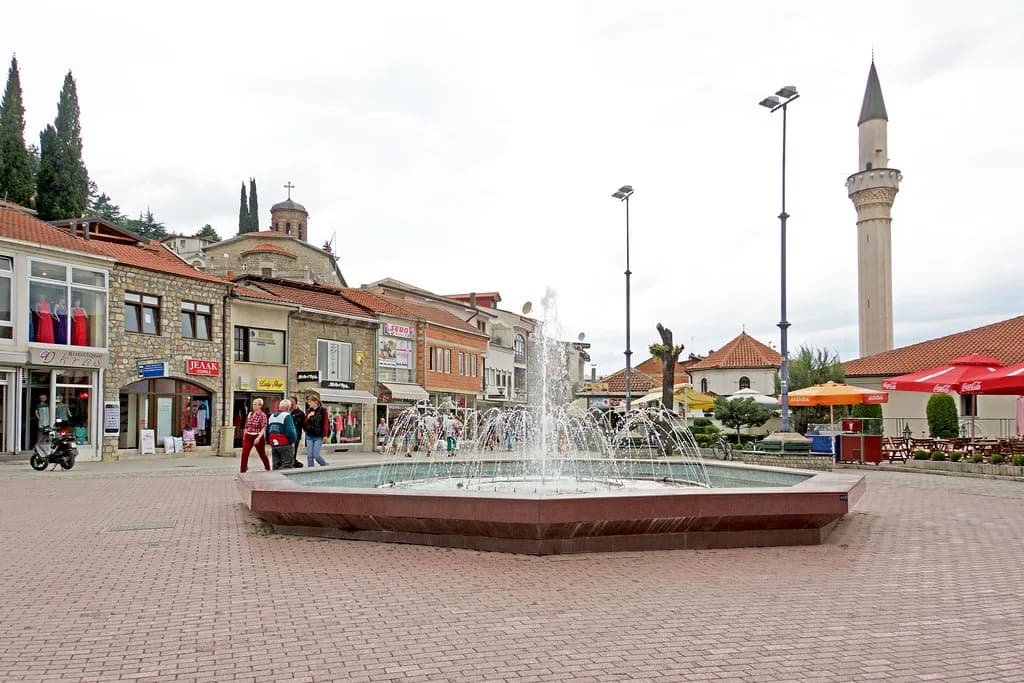
Skopje is small, walkable and genuinely odd. The center has been rebuilt with enormous neoclassical facades, statues and fountains that read as a kind of Balkan Vegas, and it shocks nearly everyone who expected a drab Eastern European capital. The Old Town bazaar, the brutalist architecture and the Museum of Modern Art give the city a second, more interesting layer.
Two days covers Skopje comfortably: one for the center and Old Town, one for Canyon Matka. Whether the capital deserves more depends on your tolerance for kitsch and your interest in brutalist concrete. Travelers who come for the architecture often find it more rewarding than the monuments.
Bitola and the southern lakes
Bitola is the country's most livable city, and its long pedestrian spine, Sirok Sokak, is where everyone walks in the evening. The outdoor bazaar spreads through open streets rather than a covered hall, and the cafe chairs all face the promenade by design. It is a good base for the Roman site of Herakleia and for Pelister National Park.
South of Bitola, Lake Prespa is quieter and prettier than most travelers expect, with a shoreline shared between three countries. It pairs naturally with a southern loop that takes in Herakleia and the villages around Pelister. If Ohrid feels too busy, Prespa is the alternative.
Canyon Matka and the monasteries near Skopje
Canyon Matka sits a short drive from central Skopje and is the easiest half-day escape from the capital. Kayaking into the canyon is the highlight, and the medieval monastery of St. Andrew perches above the water. The site gets busy at weekends with Skopje residents, so go early on a weekday if you want it to yourself.
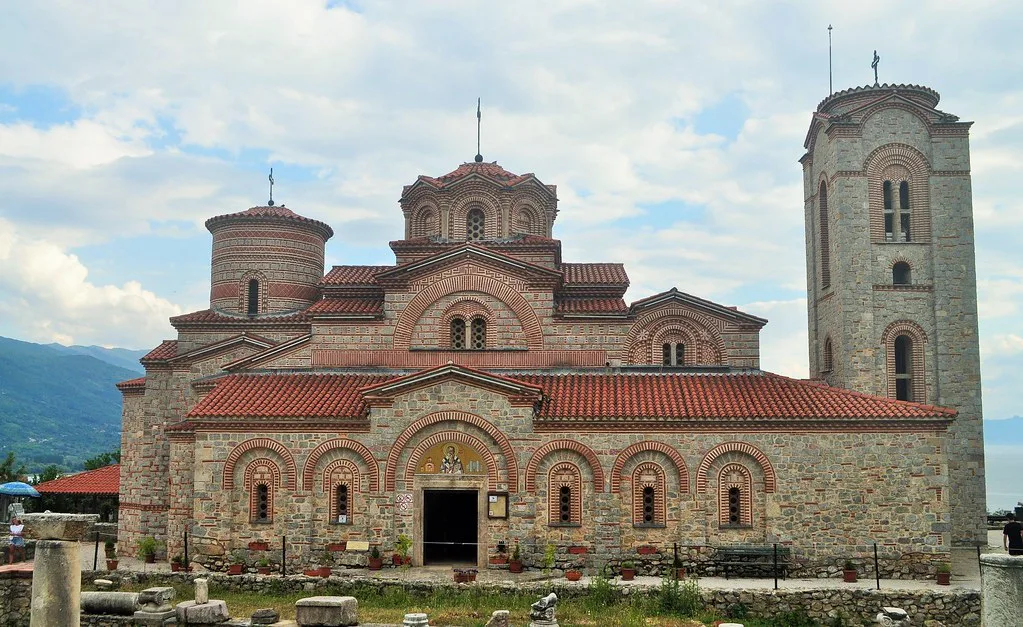
The monastery of Jovan Bigorski, near Mavrovo, is the country's most impressive religious building, with carved wooden iconostasis work and a dramatic mountain setting. It is a reasonable stop on the road between Skopje and Ohrid via the western route. Dress modestly, since these are working monasteries rather than museums.
Mountains: Mavrovo, Pelister and Galičica national parks
North Macedonia has three national parks worth planning around: Mavrovo in the west, Pelister above Bitola, and Galičica between Ohrid and Prespa. Trails exist but are sparsely marked, and the park office's own GPX files can be outdated, so bring recent tracks and paper maps. The tree line starts around 1,500 m, and hikes above 2,000 m are easy to reach in a day.
Summer in the valleys can push toward 40 °C (104 °F), while the peaks deliver hail and sudden storms, so pack a warm layer even in July. Seasonal bans on entering forests during high fire risk are common in the hotter months, and local authorities enforce them. Check access rules before setting out on a long ridge walk.
Mavrovo is also the country's cheap ski destination in winter, though the infrastructure is modest. Pelister offers gentler day hikes from Bitola, and Galičica gives you ridge views over two lakes at once. None of the three has much tourist infrastructure, which is exactly why hikers like them.
Ancient sites: Herakleia and Stobi
Herakleia, near Bitola, is the most famous ancient site in the country, with mosaics and recognizable streets and houses. Travelers who have seen Greek and Roman sites elsewhere often find it underwhelming for its size and presentation. Set expectations accordingly: it is a pleasant hour, not a headline attraction.
Stobi, near Gradsko on the highway, is the better ancient site for many visitors, with bathhouses, palace remains and a large early Christian church with well-preserved mosaics. It is easy by car but awkward by bus, because Gradsko has no proper bus station and local connections are erratic. If you can only see one ancient site, choose Stobi.
Who will love it
Budget travelers, hikers, and anyone who wants a Balkan trip without the Croatian crowds will find a lot to like. Photographers get Skopje's bizarre skyline and Ohrid's churches, while slow travelers get cheap towns where a week passes easily. Vegetarians do better than the country's meat-heavy reputation suggests, with strong salads and bean dishes widely available.
Travelers combining countries will appreciate that buses connect North Macedonia to Albania, Kosovo, Serbia, Bulgaria and Greece, making it a natural link in a longer Balkan route. It works especially well as a bridge between Lake Ohrid in Albania and the mountains of the west.
Solo travelers and couples who do not need nightlife will settle in quickly. Families with young children will find Ohrid easy but the mountains and transport harder. Anyone prioritizing beaches alone should compare it against the Albanian coast first.
Who should choose somewhere else
If you want a week of beach resorts with reliable transfers, Croatia or Greece will serve you better. If you want high alpine hiking with marked trails and mountain huts, Slovenia or Austria are far easier. And if you have only a few days and want maximum polish per hour, North Macedonia's rough edges will cost you more time than they are worth.
Travelers who cannot tolerate unpredictable buses, unmarked paths or scruffy streets should not build a trip around the country's quieter regions. Those who want the lake and the capital only can still have a good week, but should stay close to Ohrid and Skopje rather than ranging across the mountains.
Drawbacks: rough edges, transport and trail marking
The honest drawbacks are infrastructure and information. Online timetables cover long-distance coaches but not minibuses, which often leave on the hour or half hour without being listed anywhere. In smaller towns you should ask at the station the day before, because staff knowledge beats any website.
Trails are the second weak point. Many paths exist because people have walked them, not because anyone maintains them, and signage and colored markings are patchy. Download recent GPX files before you leave home and carry a paper backup. Summer forest closures for fire risk can also derail a planned route with little notice.
The country is not as groomed as Croatia or Slovenia: streets can be scruffy, buildings crumble, and internet coverage varies outside the cities. Taxi drivers at stations may quote inflated fares, so agree the price first. None of this is dangerous, but it is tiring if you are on a tight schedule.
How many days you need
One week is the minimum for a satisfying trip: two nights in Skopje, three around Lake Ohrid, and a night in Bitola. Ten days lets you add Canyon Matka properly, plus one national park and Stobi or Herakleia. Two weeks, as one traveler found, is enough for three national parks and a genuinely unhurried loop.
If you only have four or five days, pick Skopje and Ohrid and skip the mountains. The road between them is scenic enough to count as sightseeing, and the lake deserves the extra night. Trying to add Bitola and a park to a short trip means spending most of it in transit.
Typical costs
North Macedonia is one of the cheapest countries in Europe, and travelers regularly find meals, wine and rooms costing far less than in Croatia or Slovenia. Rather than chase specific figures, plan on Western European prices feeling roughly halved outside peak lake season. Lake Ohrid in July and August is the exception, where accommodation climbs toward regional norms.
The currency is the denar, so budget in denars rather than euros and avoid assuming euro pricing the way you might in Montenegro or Kosovo. Cards work in cities and larger hotels, but cash is simpler in small towns and mountain villages. Withdraw from bank ATMs rather than exchange offices at stations.
Best time to visit
Late spring and early autumn are the sweet spots: warm enough to swim at Ohrid, cool enough to hike, and well before the lake's summer peak. July and August bring heat near 40 °C (104 °F) in the valleys, crowds at Ohrid and fire-risk forest closures in the parks. Winter is quiet and cheap but cold and short on daylight.
If your priority is hiking, aim for June or September, when the mountains are green, the storms are manageable and the trails are empty. If your priority is swimming, late June through early September works, but book lake accommodation early. Skopje is a year-round city and is at its most comfortable in spring and autumn.
Getting there and getting around
Buses, not trains, are the backbone of travel here, and they link the country to Albania, Kosovo, Serbia, Bulgaria and Greece. Long-distance coaches have published timetables, while local minibuses do not, so confirm connections at the station the day before. Renting a car solves most of this if you are comfortable with mountain roads.
Driving gives you the national parks and Stobi on your own schedule, and the highways are good. You will want a car for Mavrovo, Pelister and Galičica, all of which are awkward by public transport. Parking in Skopje and Ohrid is the main irritation.
Plugs are standard European two-pin Type F sockets at 230 V, so US devices need an adapter and UK devices need the same. A local SIM or eSIM solves navigation and translation; coverage in the mountains is patchy, so download offline maps.
Is North Macedonia in the EU?
No. North Macedonia is not a member of the European Union, although it is a candidate country. That matters in practice for currency, since the country uses the denar rather than the euro, and for border formalities when you cross in from Greece or Bulgaria. It does not change the trip much for US or UK passport holders.
Entry rules and passport validity requirements are set by the government, and they do change, so confirm them with the official travel advisory for your country before booking. Do not assume rules that apply elsewhere in the Balkans carry over. Beyond that, the border crossings with Kosovo, Albania and Serbia are straightforward by bus or car.
North Macedonia vs Albania and Croatia: the trade-offs
Croatia wins on polish, coastal scenery and transport, and you pay for it in summer crowds and prices. Albania wins on beaches and a wilder coastline, with a similar price level to North Macedonia but a much busier summer. North Macedonia wins on mountains, ancient sites and the feeling of having a country to yourself.
For beach-focused travelers, Albania's coast or Croatia's islands are the better call. For hikers and culture travelers on a budget, North Macedonia's combination of Lake Ohrid, mountain parks and Roman and early Christian sites is stronger than either. A combined trip works well: Ohrid and the Albanian lakes sit close together.
The verdict by traveler type: budget backpackers and hikers should go; beach-first families should choose Croatia or Greece; culture travelers with a week should go and split it between Skopje and Ohrid; luxury travelers should choose Croatia or the Montenegrin coast instead.
Plan Your Visit
North Macedonia is worth visiting if you want an affordable, quiet Balkan trip with a genuine highlight in Lake Ohrid and mountains you can have largely to yourself. Build in slack for transport, download offline maps, and accept the scruffy edges. The country rewards travelers who plan roughly and stay curious.
Start with Skopje and the lake, add Bitola and one national park if you have ten days, and keep the ancient sites to Stobi unless you are passing through Bitola anyway. Check the best time to visit North Macedonia against your priorities, and match your route to what the buses actually do rather than what you hope they do.
Explore more North Macedonia trip-decision guides
Frequently Asked Questions
Is North Macedonia worth visiting?
Yes, if you want Lake Ohrid, Skopje's unusual architecture and quiet mountain hiking at low cost. It rewards flexible, curious travelers and frustrates anyone who needs polished infrastructure or tight schedules.
Is North Macedonia friendly to Americans?
Travelers consistently report helpful, practical locals, including in small towns where English is less common. The main friction is transport information rather than personal warmth, so ask at bus stations and expect people to go out of their way to help.
What is the best month to visit North Macedonia?
June and September are the strongest months, with swimmable lake water, comfortable hiking temperatures and fewer crowds than July and August. Summer heat in the valleys can approach 40 °C (104 °F), and winter is cold and short on daylight.
Is North Macedonia expensive?
No. It is one of the cheapest countries in Europe for food, wine and accommodation, with Lake Ohrid in July and August the main exception. Budget in denars and use bank ATMs rather than station exchange offices.
How many days do you need in North Macedonia?
One week is the minimum for Skopje, Lake Ohrid and Bitola. Ten days adds a national park and the ancient sites, and two weeks lets you cover three parks and travel by bus without rushing.
Is North Macedonia in the EU?
No. North Macedonia is not an EU member, though it is a candidate country, and it uses the denar rather than the euro. Check entry rules with the official travel advisory for your country before booking.
Is Lake Ohrid worth visiting?
Yes. Ohrid town has cobbled lanes, cliff-top churches and clear water, and it is the country's one genuinely busy place in summer. Give it at least two nights, or use quieter Lake Prespa as an alternative.
Do you need a car in North Macedonia?
Not for Skopje and Ohrid, which work well by bus, but a car makes the national parks, Stobi and smaller towns far easier. Public minibuses run without published timetables, so confirm connections at the station the day before.
Sources
Trip-decision notes
Optional updates when we publish or revise a destination verdict.
You might also like
Continue reading
More guides you'll find useful