Is Skopje Worth Visiting? Skopje Travel Guide
Yes, Skopje is worth visiting for Ottoman bazaars, strange statues, cheap food and access to Lake Ohrid and Matka Canyon. Here is who should go and who should not.
On this page
Yes, Skopje is worth visiting, but for specific reasons: the Ottoman Old Bazaar and Kale Fortress give it a genuinely old core, Mount Vodno and Matka Canyon sit within easy reach, and the city doubles as a base for Lake Ohrid. It is not a conventionally beautiful capital, and the baroque-statue centerpiece is recent, controversial construction rather than heritage.
The city suits travelers on a budget, history and architecture obsessives, and anyone stringing together a Balkan road trip. Travelers who want a postcard-perfect old town, quiet streets and consistent urban design should put their days elsewhere and treat Skopje as a transit stop.
The verdict: who Skopje suits and who should go elsewhere
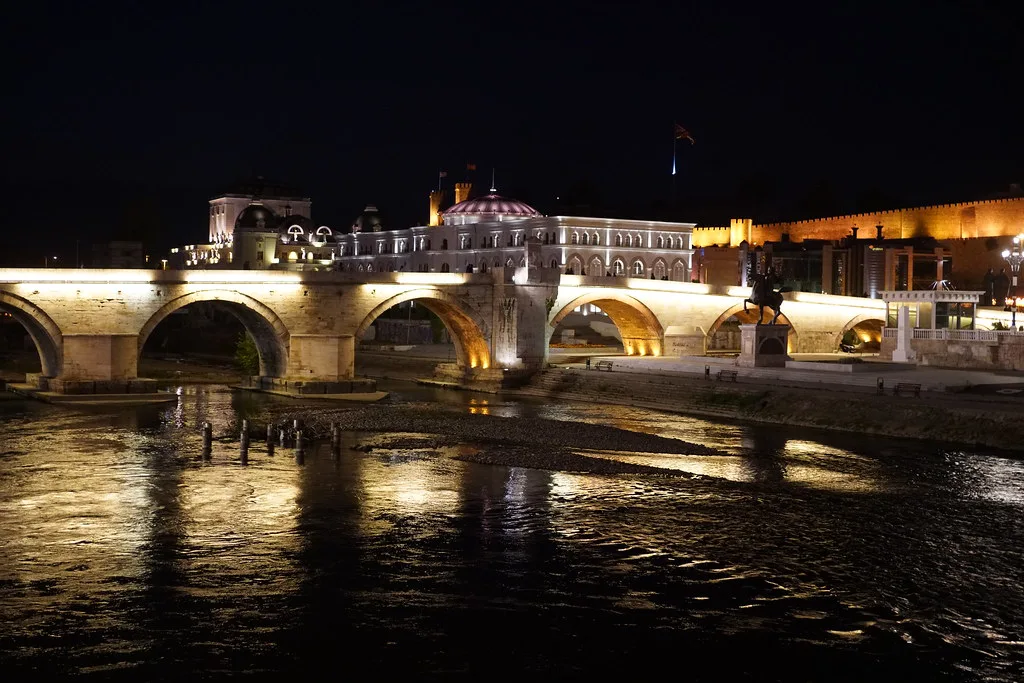
Go to Skopje if you want range in a small area: a 6th-century fortress wall and a 15th-century Ottoman bridge on one side of the Vardar River, and a square of enormous bronze statues on the other. The city packs Byzantine, Ottoman, Yugoslav and post-2010 building into a walkable center, and prices stay low for a capital.
Skip it as a standalone long weekend if you need visual coherence. The neoclassical facades and hundreds of statues dividing opinion were added under the Skopje 2014 project, launched in 2010 and halted in 2017, and critics call the result kitsch. Treat that as the price of admission, not a reason to stay away.
The practical answer is that Skopje works best as one leg of a North Macedonia trip rather than the whole of it. If you are weighing the wider country before committing, our guide to whether North Macedonia is worth visiting sets the country's sights against its transport realities.
What Skopje actually is: an Ottoman bazaar, a fortress and two rival cityscapes
Skopje is one of the oldest continuously inhabited cities in southeast Europe, founded as Scupi under the Romans and shaped since by Byzantine, Ottoman and Yugoslav rulers. A 1963 earthquake destroyed most of the historic building stock, which is why so little of the center looks old today despite the deep history.
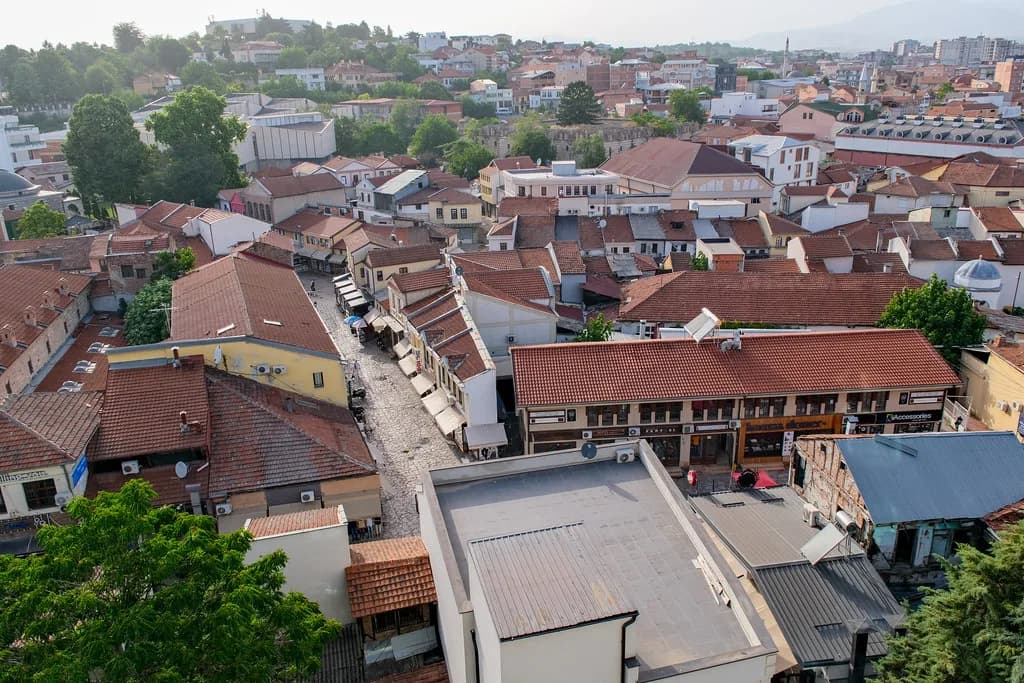
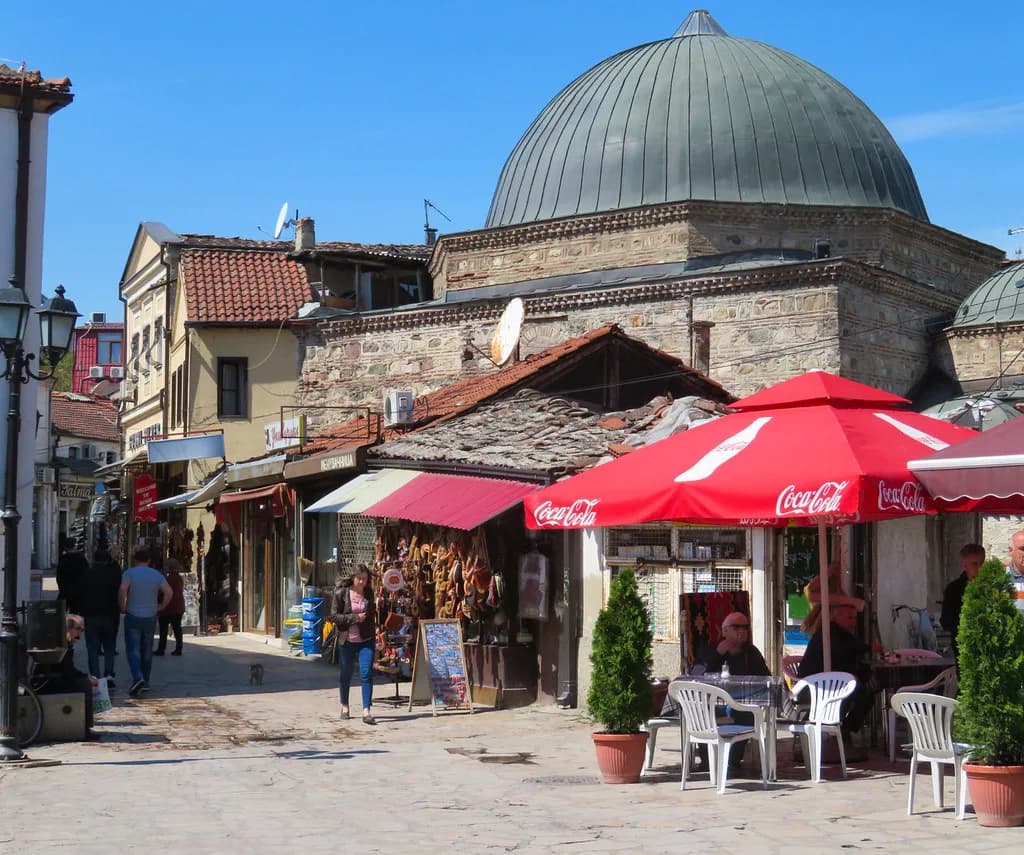
That destruction explains the split personality. North of the Vardar River the Old Bazaar, or Čaršija, has been the city's trading quarter since the 12th century, with mosques, hamams, tombs and churches packed into winding lanes; south of the river is the rebuilt, monument-heavy modern center.
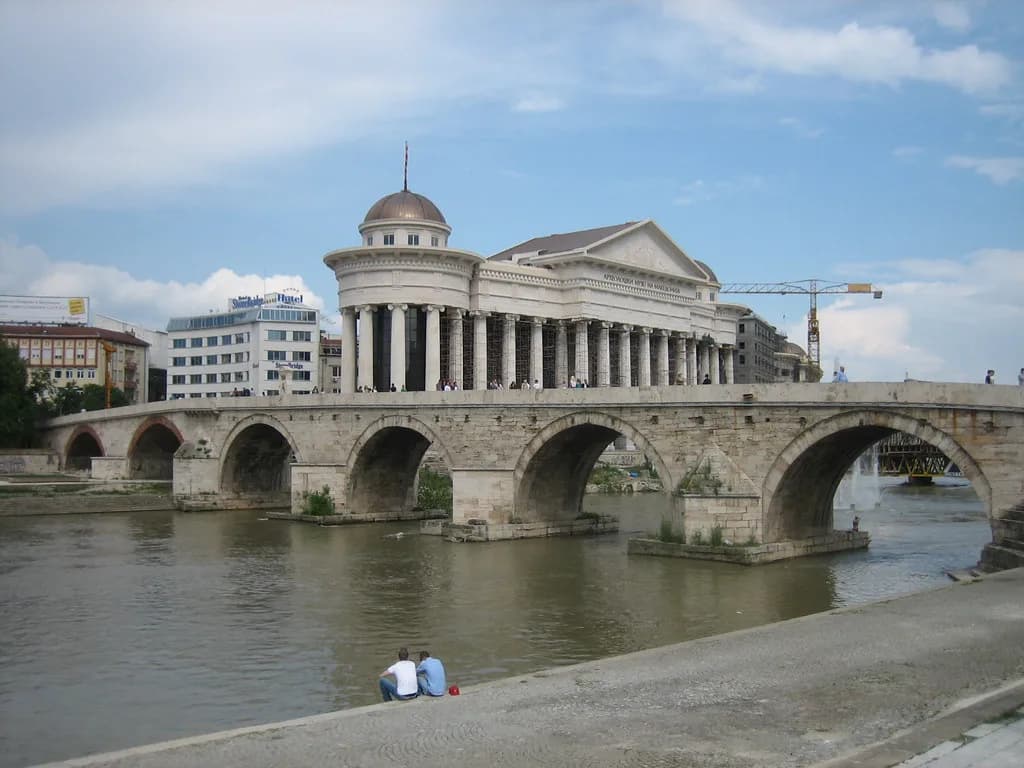
Walk the Stone Bridge between the two and you cross from the genuinely old city into the new one in about two minutes. That compression is Skopje's real appeal: you do not need transport to move between centuries.
The Old Bazaar and Kale Fortress: the historic core worth your morning
Give the Old Bazaar and the fortress a full morning. Start in the bazaar lanes, where the Goldschmiedgasse and the surrounding alleys hold old inns, hamams and mosques under low roofs, and a guide makes the layers legible if you are short on context.
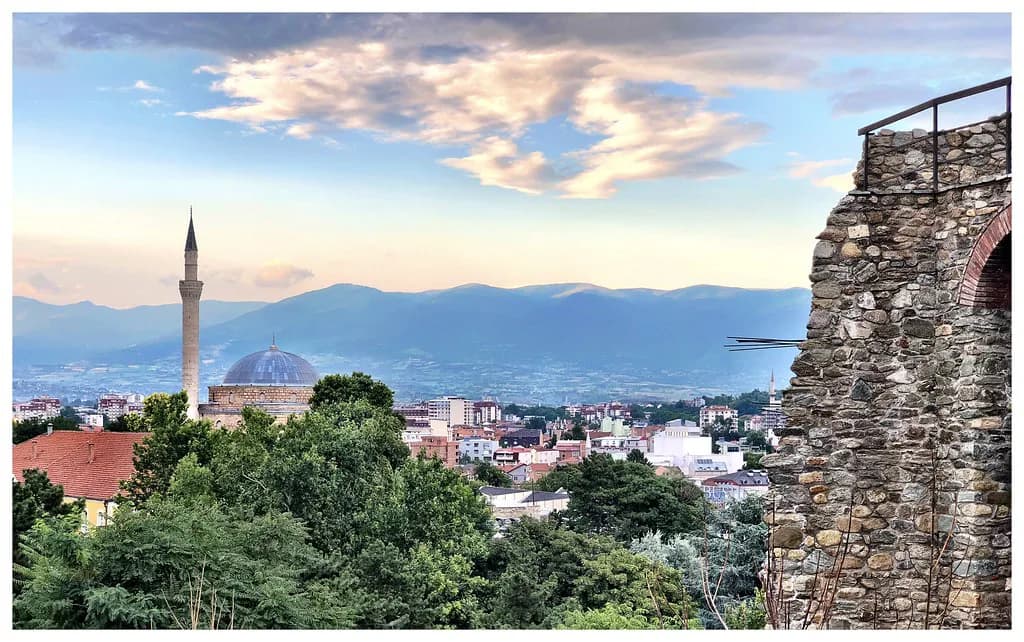
Kale Fortress sits above the bazaar on the same bank, its walls dating from the 6th century, and admission is free. The gate looks battered and unpromising, but the wall walk gives you the whole city and the Vardar laid out below, which makes late afternoon or golden hour the best slot.
Below the fortress, Skenderbeg Square marks the entrance to the bazaar, with its mural on Albanian and regional history. Pair it with the Stone Bridge and you have the historic spine of the city in a single loop.
Macedonia Square, the statues and the Skopje 2014 argument
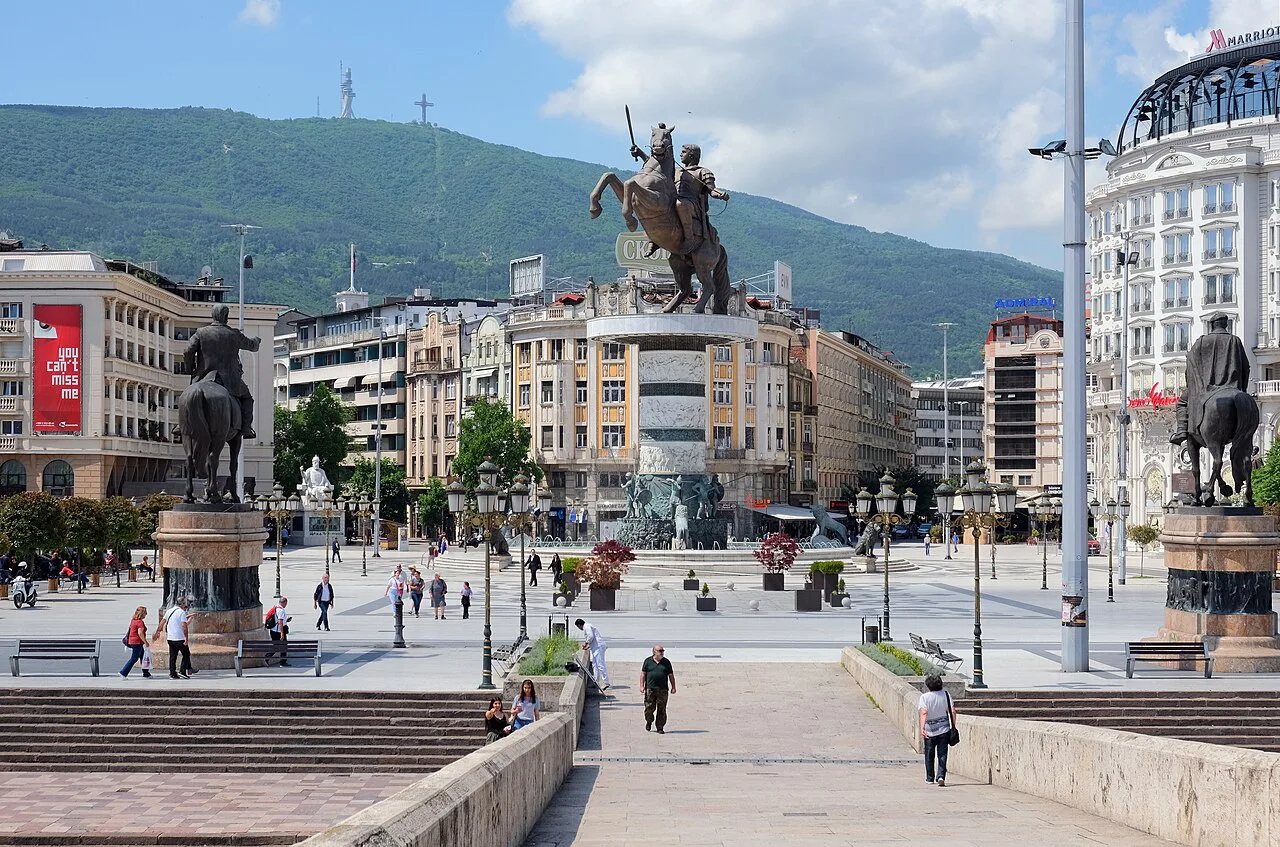
Macedonia Square is the city's showpiece and its most contested space. The vast equestrian monument officially called Warrior on a Horse dominates it, alongside a triumphal arch and a dense crowd of statues; the naming avoids the Alexander the Great dispute with Greece, which is why you should use the official title rather than the popular one.
Some facades and statues are hollow shells clad to look like carved stone and marble, which the city's critics cite as proof the whole project is theater. Whether that reads as cynical or fascinating is the central judgment call of a Skopje visit, and it is worth forming your own opinion on foot.
Two sights sit within a few minutes of the square and cost nothing: the Bridge of Art, densely decorated and far more photogenic than its function suggests, and the Mother Teresa Memorial House, a museum near the center dedicated to the city-born figure. Note that the memorial is not her birthplace, which no longer stands.
The Skopje City Museum is a different kind of monument: the clock on its facade stopped at the moment of the earthquake, and the collection documents the destruction and the rebuilding that followed. It is a somber hour and the best single explanation of why the city looks as it does.
Time your square-and-statues circuit for late afternoon, when locals bring children out and the stone work warms up. On a warm June evening the bridges and the riverbank make a natural place to finish the day, as we set out in our guide to Skopje in June.
Mount Vodno and the Millennium Cross: cable car or the 6 km round-trip hike
Mount Vodno dominates the skyline and gives you the best view of the city, and you can reach the top without hiking: a gondola runs from Middle Vodno to the summit, where the 66-meter Millennium Cross stands. Walking routes also start from Middle Vodno, which is the base station.
The popular trail is roughly 6 km (3.7 miles) round-trip and takes one to two hours at a steady pace, passing houses and monasteries with shade and rest stops along the way. Start your descent before dark; the path is well kept but you do not want to be navigating it in fading light.
Budget half a day for Vodno including the trip out and back, and shift the plan if the weather turns. An October ascent is more comfortable than the summer months, and the views sharpen after the first autumn clearances; our Skopje in October guide covers how the season changes the city.
Debar Maalo and the food: kafanas, tavče gravče and Vranec wine
Debar Maalo is where to eat: a central neighborhood of cafes and traditional kafanas with live musicians, and the closest Skopje gets to a dining district with its own character. Skopski Merak is one of the well-known kafanas there, useful as a starting point rather than a rule.
Order the national dish tavče gravče, baked beans in a clay pot, along with grilled meat, stuffed peppers and moussaka; the cooking pulls in Mediterranean, Middle Eastern and Balkan influences and portions are generous. In the Old Bazaar, the beans are as good a reason as any to sit down between sights.
The local wine to know is Vranec, a deep, full-bodied red from a country with a long vine-growing history and around 270 sunny days a year. Drink it by the glass in a kafana rather than chasing a winery visit unless you have a spare half-day.
Matka Canyon as a half-day trip from the city
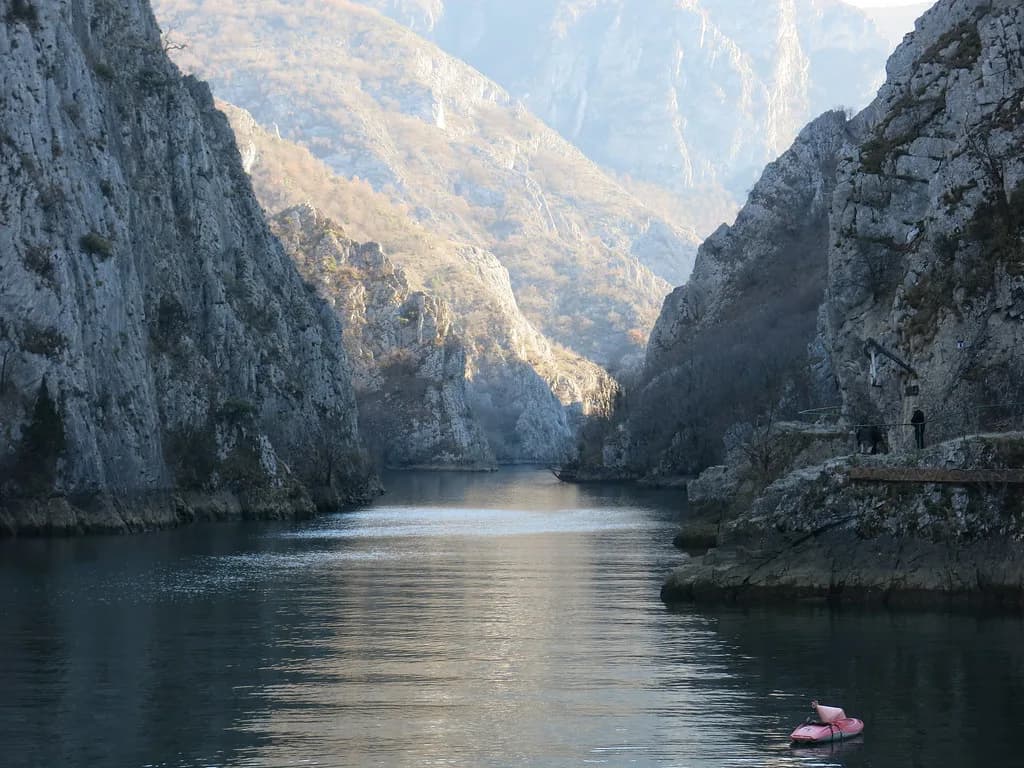
Matka Canyon is about half an hour from Skopje and earns a half-day on its own: a steep-sided reservoir where you can hike the lakeside path, rent a kayak or join a guided paddle to the caves. If you want the cave route, book with a provider authorized to enter them rather than the first operator at the entrance.
You can get there by car or by bus, and guided tours run from the city if you would rather not drive. The canyon pairs naturally with Vodno on a longer stay, and both are the reason three days beats two.
Work out your time split before booking anything, because Skopje itself needs less time than its surroundings. Our guide to how many days in Skopje you need runs the arithmetic for a city-only trip against a city-plus-canyon one.
How many days you need in Skopje
Two days cover Skopje's main sights: the bazaar and fortress, the square and statues, the city museum and an evening in Debar Maalo. Add a third or fourth day for Matka Canyon, the Vodno summit and the nearby wineries, which are what turn a stopover into a trip.
If you only have one full day, drop the museum and take the fortress in the morning and the mountain in the afternoon, then eat in Debar Maalo. Trying to add Matka to a single day leaves you rushing both the canyon and the city.
Weather: what summer heat and winter cold mean for your dates
Summers are warm and dry, with typical highs in the low 30s Celsius, which in a city of stone squares and limited shade means sightseeing early and resting at midday. Winters are cold enough to drop below freezing, with occasional snow, and the continental climate runs to more extremes than Western Europe.
Spring and autumn are the comfortable windows, with mild temperatures and green or golden landscapes depending on the month. If you are planning a spring city break, our guide to Skopje in April explains what the season means for the bazaar and the mountain.
Typical costs: why Skopje feels cheap for a capital
Skopje is regularly described as one of the cheapest capitals in Europe, and that holds across eating out, local transport and the many free sights. The best-known monuments, the bridges along the Vardar River and the streets of statues cost nothing to see, so a day of sightseeing can cost almost nothing beyond food.
Kale Fortress and the Mother Teresa Memorial House are free to enter, which keeps the historic core cheap. For anything with a ticket, such as the Millennium Cross cable car or a guided canyon trip, confirm the current charge with the operator on the day, since prices are set locally and change.
Getting there: flights, and the overland links to Sofia and the region
Skopje International Airport handles the city's flights, and North Macedonia's position between Serbia, Kosovo, Albania, Greece and Bulgaria makes it a natural link in a multi-country route. Direct service from the UK is limited, mostly to London Luton, so most travelers from further afield connect through another European hub.
If you connect, leave a generous buffer rather than the minimum, because a missed onward flight from a low-cost carrier is the most common way a cheap Balkan trip gets expensive. For visa and entry rules, check your own government's official travel page before booking.
Overland, Skopje sits on the routes between Sofia and the Adriatic, and it works well as a stop between Bulgaria and Lake Ohrid. Confirm schedules with the bus or rail operator you plan to use, since Balkan timetables shift by season.
Drawbacks: kitsch fatigue, casino sprawl, smoke and rough pavements
The most common complaint is kitsch fatigue: after the square and the Bridge of Art, the statues start to blur, and travelers who came for an old town find that only the bazaar side delivers. Set expectations accordingly and the city is more interesting than its reputation suggests.
Smoking indoors is still common in North Macedonia, so restaurant air can be thick even where you would not expect it. Casinos are unusually visible in the center, and pavements and roads are uneven enough that you watch your step, particularly at night.
None of these are deal-breakers, but together they explain why Skopje divides visitors. If you want a flawless, uniformly preserved historic center, choose another destination; if you can enjoy a city with rough edges, this one has plenty to offer.
Skopje versus Lake Ohrid: which deserves more of your trip
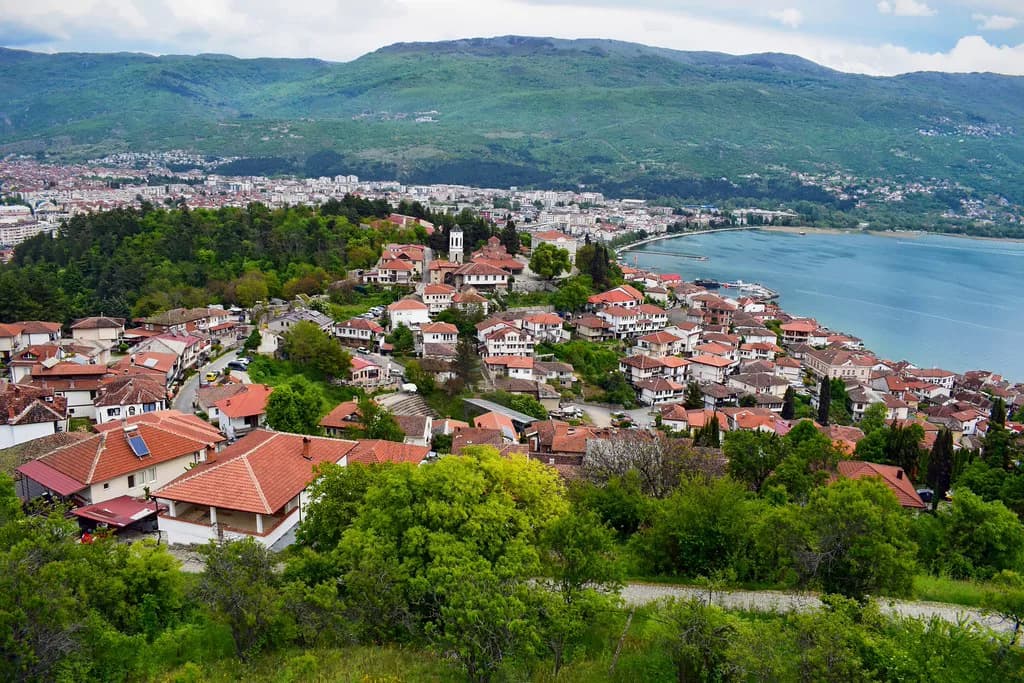
Lake Ohrid is a UNESCO World Heritage site roughly 120 km from Skopje and is the most beautiful place in the country: clear water, old lakeside towns and summer swimming that can reach around 23 °C (73 °F). If you have one week in North Macedonia, Ohrid deserves the larger share.
Skopje wins on city life: restaurants, the bazaar, museums and the mountain, all of which Ohrid cannot match. A sensible split is two nights in Skopje and three at the lake, using the capital for culture and the lake for rest.
Skopje versus Sofia: how to choose between the two capitals
Sofia offers a more conventional European capital experience, with a compact center, a Roman heritage core and easy mountain access on its doorstep. Skopje offers the Ottoman bazaar, the extreme architectural contrast and lower costs, but less polish and a smaller set of headline sights.
Choose Skopje if the bazaar and the statues are the draw and you are heading west toward Ohrid or the Adriatic; choose Sofia if you want an easier entry point to the region and are continuing south or east. Doing both in one trip is straightforward and gives you the comparison for yourself.
Who will love Skopje, and who should skip it
Skopje rewards budget travelers, architecture and history obsessives, photographers chasing strange subject matter, and anyone building a Balkan road trip around Lake Ohrid and Matka Canyon. It also suits travelers who have already seen the polished capitals and want something different at a low price.
Skip Skopje if you want a single, beautiful old town and a slow pace, if cigarette smoke in restaurants is a problem for you, or if you have only three days in the region and would rather spend them at Lake Ohrid. It is also weak as a first introduction to the Balkans for anyone expecting postcard consistency.
Plan Your Visit
Skopje earns a yes, with conditions: come for the Ottoman bazaar, the fortress and the mountain, accept the neoclassical centerpiece as a curiosity, and give the city two days before moving on to Ohrid or Matka. Book flights around the limited direct schedules and keep an overland leg in reserve.
The travelers who enjoy Skopje most are the ones who treat its contradictions as the point rather than a flaw. Go expecting a layered, cheap and occasionally scruffy capital, and you will find the most distinctive city break in the region.
Explore more Skopje trip-decision guides
Frequently Asked Questions
Is Skopje worth visiting?
Yes, for travelers who value an Ottoman bazaar, a Byzantine fortress, a mountain view and low costs over uniformly beautiful streets. The neoclassical centerpiece is recent construction that many visitors find kitschy, so come for the old city and the surrounding nature, not for polish.
How long should I spend in Skopje?
Two days cover the main sights in the center, including the Old Bazaar, Kale Fortress, Macedonia Square and an evening in Debar Maalo. Add a third or fourth day if you want Matka Canyon, the Mount Vodno summit and nearby wineries.
Is Skopje cheap?
Skopje is regularly described as one of the cheapest capitals in Europe, and many of its main sights, including Kale Fortress and the Mother Teresa Memorial House, are free to enter. Food and local transport are inexpensive by Western European standards.
What is there to see in Skopje?
The Old Bazaar and Kale Fortress on the north bank of the Vardar River, the statues and bridges around Macedonia Square on the south bank, the Skopje City Museum and the Mother Teresa Memorial House. Outside the center, Mount Vodno with the Millennium Cross and Matka Canyon are the main draws.
Is Skopje worth visiting in summer?
Summer is hot and dry, with typical highs in the low 30s Celsius, so sightseeing is more comfortable early in the day. The upside is long evenings on the river and reliable weather for the Vodno hike and Matka Canyon.
Should I visit Skopje or Lake Ohrid?
Ideally both. Lake Ohrid is about 120 km away and is the country's most beautiful destination, with swimming and old lakeside towns, while Skopje has the city life, food and history. If you must choose one for a short trip, Lake Ohrid is the stronger single destination.
How do you get to Skopje?
Skopje International Airport serves the city, and direct flights from the UK are limited mostly to London Luton, so many travelers connect through another European hub. Overland buses and trains link Skopje with Sofia and the wider region.
What are the downsides of visiting Skopje?
Kitsch fatigue from the statue-heavy center, cigarette smoke in many restaurants, visible casinos and uneven pavements. Travelers expecting a uniformly preserved old town will be disappointed, because most of the historic fabric was destroyed in the 1963 earthquake.
Sources
Trip-decision notes
Optional updates when we publish or revise a destination verdict.
You might also like
Continue reading
More guides you'll find useful