Best Places to Visit in North Macedonia: Where to Go
The best places to visit in North Macedonia, ranked by what they deliver: Lake Ohrid, Skopje, Matka Canyon, Bitola and the parks worth the detour.
On this page
Lake Ohrid and Ohrid town are the reason most people come, and they justify the trip on their own: a UNESCO-listed lake with clear water, a walled old town of churches, and a summer season that runs long enough to plan around. Skopje is the second stop on nearly every route, though it works better as a one-day base than a destination in itself. If you are still weighing the country against Croatia or Greece, start with whether North Macedonia is worth visiting before you build an itinerary.
The rest of the list is where North Macedonia separates itself from the beach-and-cruise circuit: Matka Canyon a short drive from the capital, Bitola's café street and open-air bazaar, and mountain country around Mavrovo and Pelister that sees a fraction of the lake's traffic. Plan on giving each place a real half-day or more rather than ticking them off.
The verdict: who North Macedonia suits and who should go elsewhere
North Macedonia suits travelers who want a lake town with genuine atmosphere, are comfortable with bus timetables and unpolished infrastructure, and would rather spend three nights in one good place than race through five. It rewards hikers, church-and-monastery visitors, and budget travelers who want a European trip without European prices.
Choose somewhere else if you need beach-resort polish, reliable car-free access to mountains and parks, or a short trip built around coastal swimming. Ohrid delivers the lake, but the country's best mountain and wine country assumes you have wheels. Travelers who want the country at its easiest should look at what the best time to visit North Macedonia does to crowds and lake temperatures.
How to read this list: days needed, transport and cost
Each entry below is tagged with a realistic stay and the transport mode that makes it work. Ohrid and Skopje are reachable by bus and are the two places a car-free traveler can build a whole trip around; Matka is a short taxi or bus ride from central Skopje. Bitola sits on the southern rail and bus corridor, while Mavrovo, Pelister's trailheads and the Tikveš wine country are car territory.
Cost is described in words rather than figures because published prices change and the country's tourism board does not maintain a single rate sheet; the one detailed cost account available is a traveler's older, dollar-denominated experience and should be read as a floor, not a current quote. Compare against our North Macedonia costs guide when you budget.
Money is the denar, not the euro, so budget in denars and expect card acceptance to thin out away from Skopje and Ohrid. Carry cash for small towns, markets and rural buses, and check whether your accommodation quotes in denars or euros before you commit.
Lake Ohrid and Ohrid town: the country's headline act
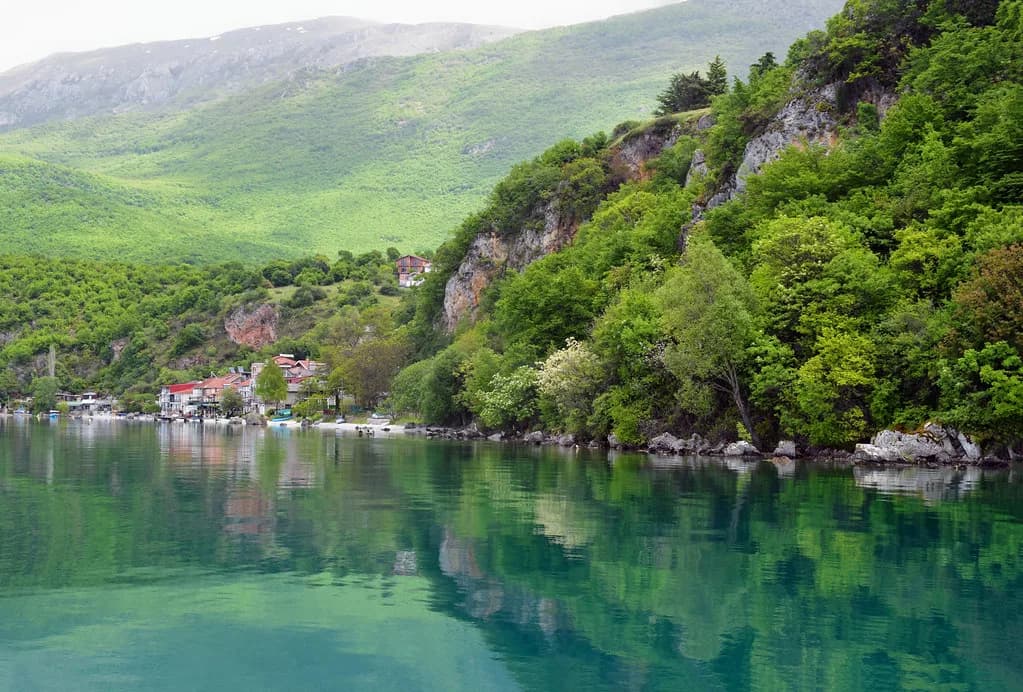
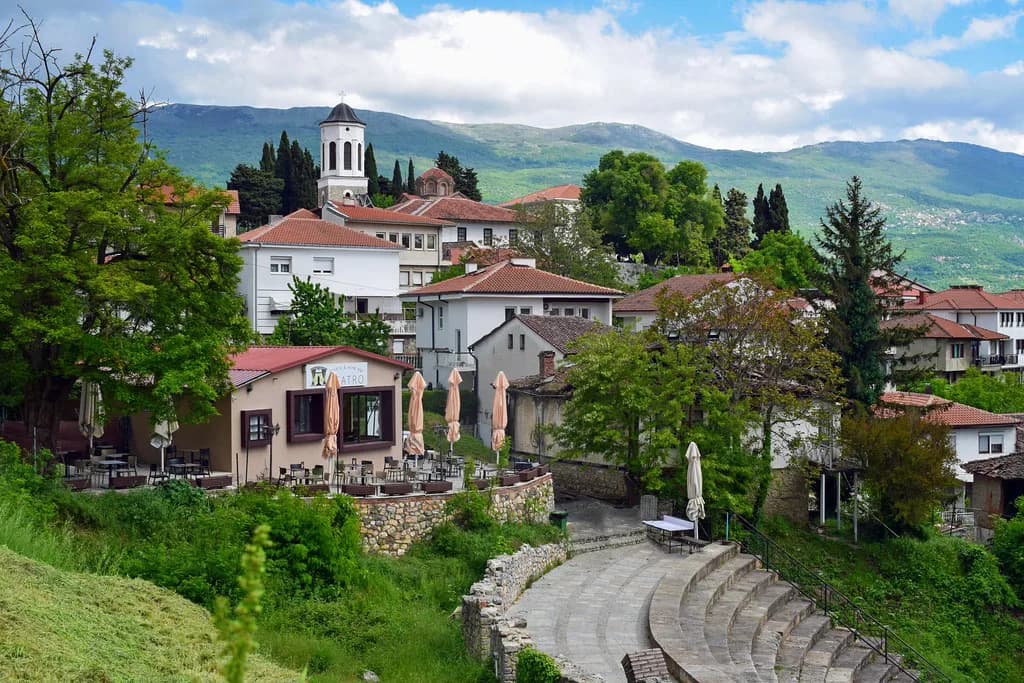
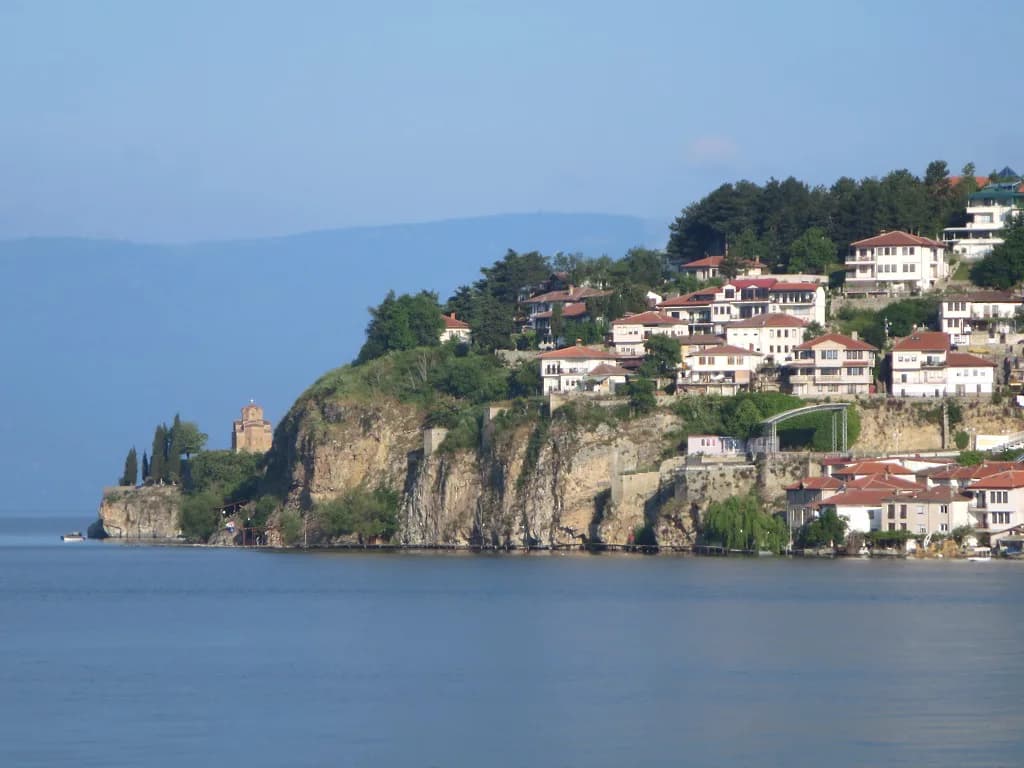
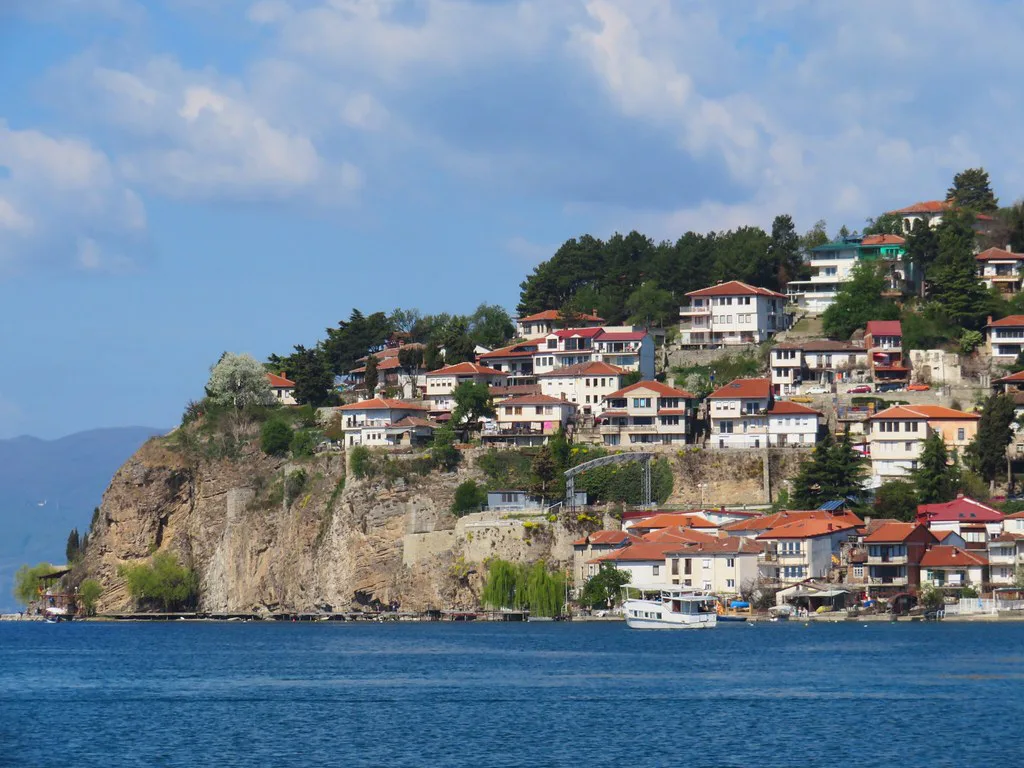
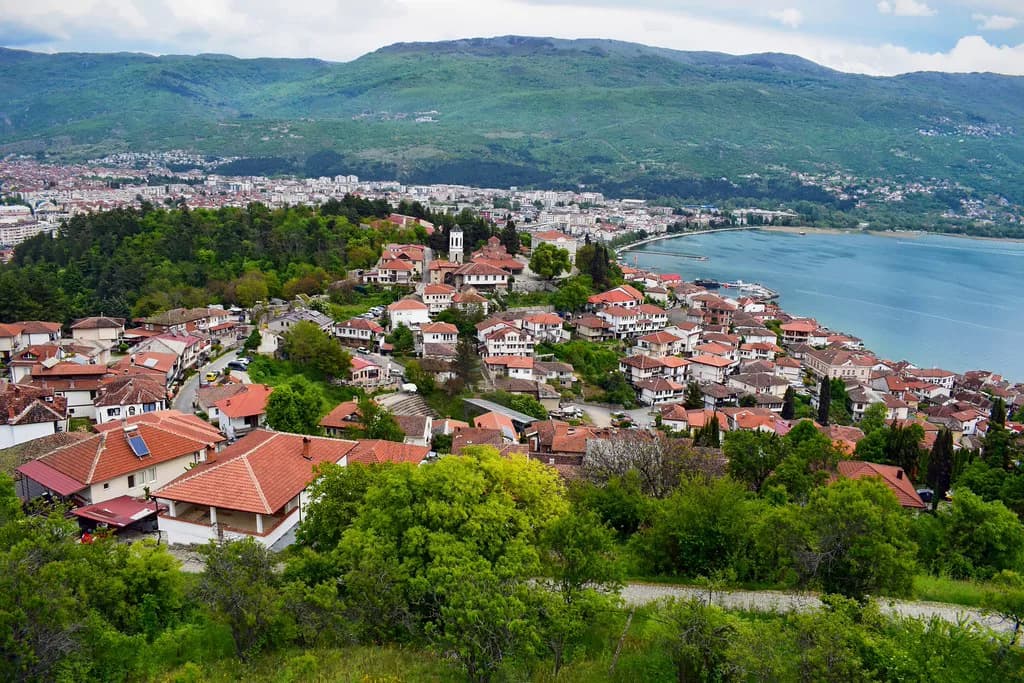
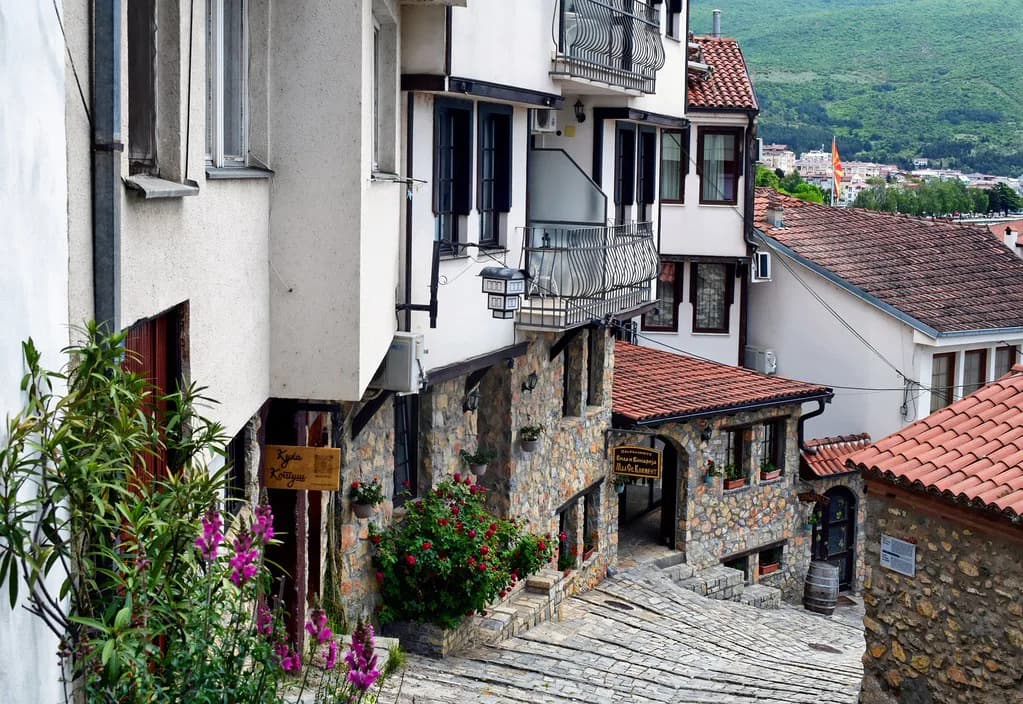
Ohrid is the country's pride and the one place everyone names first: a cobbled old town on a slope above the water, a dense cluster of historic churches, and a lake that shifts from turquoise to deep blue with the wind. The town and lake together hold UNESCO status, and the Macedonian shore is the more developed side, with everything from camping to high-end lakeside hotels.
Give Ohrid three nights minimum. One day covers the old town churches and the waterfront, a second belongs to the water itself, and a third lets you reach the monastery shore and the springs without rushing. This is the stop where the country's reputation is made, so protect the time rather than shaving a night to add a weaker destination.
The trade-off is summer congestion in July and August, when the town's narrow lanes and the main swimming spots fill up, and prices at lakeside accommodation climb accordingly. May, June, September and early October give you swimmable water and a calmer town.
Skopje: the capital's monuments, bazaar and day-trip base
Skopje is the most divisive capital in the Balkans. The center has been rebuilt with oversized neoclassical facades, statues and fountains, a style one long-form traveler memorably described as closer to Las Vegas than to a traditional Eastern European capital. Whether that is fascinating or absurd is the whole question, and either way it is unlike anywhere else in the region.
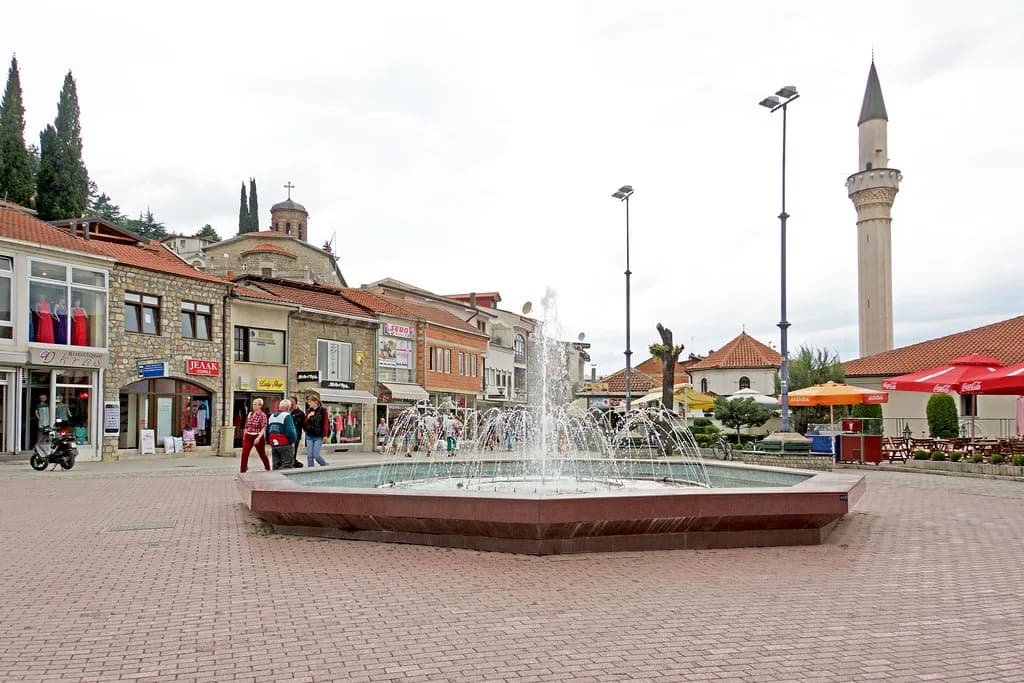
Beyond the monuments, the Ottoman-era bazaar across the river is the city's real texture: food stalls, workshops, cafés and the fortress above it. Popular stops include the Kale Fortress, the Memorial House of Mother Teresa and the Millennium Cross on Mount Vodno, which together make a comfortable full day.
Treat Skopje as a one-full-day city with a half-day add-on, not a multi-night base for the whole country. Its value is logistical as much as cultural: the airport and bus station connect it to the rest of the region, and Matka Canyon is close enough for an afternoon. If you are deciding whether the capital earns its stop at all, read our Skopje verdict before you commit a night to it.
Matka Canyon: the half-day escape from Skopje
Matka Canyon, a short drive west of the capital, packs a lot into a half-day: a steep-sided gorge, a reservoir you can cross by boat, and a monastery on the far shore. Kayaking into the canyon is one of the most rewarding short excursions in the country and pairs naturally with a Skopje morning.
Go early, especially in summer, because the access road and parking area are small and the site absorbs crowds poorly. Boat crossings and any cave visits have their own schedules and tickets, so settle those at the entrance rather than planning around fixed times.
Bitola: Širok Sokak, the open-air bazaar and Pelister
Bitola is the country's most livable second city and a worthwhile overnight rather than a day trip. Širok Sokak, its long pedestrian café street, is the social spine of the town, with chairs angled toward the passing parade, and the open-air bazaar nearby is a working market rather than a tourist set piece.
The city also works as the gateway to Pelister National Park, whose trails and pine forest start just outside town and reward anyone with a car or a willingness to arrange a taxi. Two nights here lets you see the city properly and still get a morning on the mountain.
The Lake Ohrid villages: Struga, the springs and the monastery shore
Struga sits at the lake's northern outlet and feels different from Ohrid: flatter, more resort-like, and cheaper on the whole. It works as a secondary base or a day trip, particularly for travelers who want lake access without the old-town climb and the peak-season crush.
The shoreline between Ohrid and Struga is where the lake's quieter stops sit: the monastery at Saint Naum near the Albanian border, the springs that feed the lake, and fishing villages with a handful of restaurants. These are best done by car or a hired driver, stringing together two or three stops in an afternoon rather than committing to a single destination.
A word of expectation-setting: the lake's Albanian shore is a separate trip with separate logistics, and the monastery and springs on the Macedonian side are enough to fill a day. Do not plan a two-country lake circuit unless you have checked border-crossing arrangements in advance.
Mavrovo National Park: mountains, ski terrain and empty roads
Mavrovo is the country's best-known mountain park and its cheapest ski area, with a lake, a half-submerged church and slopes that stay quiet by Alpine standards. In summer the same roads give you hiking, villages and long views with very little traffic.
This is a car-dependent stop with limited public transport, so it only makes sense if you are driving. Winter access depends on snow conditions and road clearing, and the ski infrastructure is modest, so treat it as a mountain escape first and a ski resort second.
Prilep and the Tikveš wine country
Prilep is an unpretentious working city in the country's tobacco and wine belt, and the surrounding Tikveš region is where North Macedonia's red wines come from. Tastings at the larger cellars are the reason to come, and the landscape of vineyards and low hills is unexpectedly handsome.
Wineries usually require an appointment, so arrange visits ahead rather than arriving at the gate, and plan to have a driver or a taxi if you are tasting seriously. One night in Prilep is enough unless you are building a wine-focused trip.
Heraclea Lyncestis and the Roman layer under Bitola
Heraclea Lyncestis, the Roman and early Byzantine city just outside Bitola, is the country's most substantial archaeological site: mosaic floors, a theater and foundations spread across an open field with the mountains behind. It takes an hour or two and pairs naturally with a Bitola morning or afternoon.
Come with context, either from the on-site signage or a guide, because the site is a set of ruins rather than a reconstructed attraction. Opening hours and entry arrangements vary by season and are best confirmed with the site or a local tourist office the day before.
What to skip or save for a second trip
Lake Prespa is beautiful and quiet, but it duplicates the lake-and-villages appeal of Ohrid without the same concentration of sights, so it belongs on a second or third trip rather than a first. The same goes for long detours to wineries and mountain villages on a short itinerary.
Skip any plan that treats Skopje as a multi-night base for day trips across the country. Distances are short on paper but road quality and mountain routes eat time, and you will spend your holiday in a bus or car.
Weather by season and when each place is at its best
North Macedonia has a continental climate with hot, dry summers and cold winters; the lake moderates Ohrid, while Skopje bakes in July and August. Rather than quoting temperature normals, treat the pattern as the guide: late spring and early autumn are the comfortable windows for cities and hiking, and high summer is for the water.
Lake Ohrid is at its best from June through September, when swimming is the point and the town is fully open. Skopje and Matka are best in spring and autumn, when walking the bazaar or the canyon is pleasant rather than punishing. Mavrovo splits between summer hiking and a short, snow-dependent winter season.
How many days you need for this list
A realistic first trip runs seven to nine days: three nights in Ohrid, one full day and two nights in Skopje with a Matka half-day, and two nights in Bitola with Heraclea and a Pelister morning. That covers the list's core without a car.
Add three or four days and a rental car for Mavrovo, Prilep and the Tikveš cellars. Ten to twelve days total lets you do the whole list at a sane pace; a two-week North Macedonia itinerary gives you room for Prespa and a slower lake stay.
Getting there and getting around without a car
Skopje International Airport is the main gateway, with Ohrid's smaller airport serving seasonal routes. Buses connect Skopje to Ohrid and Bitola and are the practical backbone for car-free travel; regional services also run to Albania, Kosovo, Serbia, Bulgaria and Greece, which makes the country easy to slot into a Balkan circuit.
Within cities, taxis are cheap enough to use freely, but agree on the fare or meter before you get in, particularly at stations where drivers have a reputation for overcharging. For anything outside the main corridors, assume you need a car or a pre-arranged driver.
If you are driving, note that the country uses type C and F plugs at 230 volts and 50 hertz, so chargers and adapters need to match; the plug type details are worth reading before you pack electronics. Mobile coverage is workable in towns and patchy in the mountains, so a North Macedonia eSIM is a sensible backup for maps and bookings.
Typical costs by place and by style of travel
North Macedonia sits at the affordable end of Europe: meals, wine, local transport and simple accommodation all cost noticeably less than in Croatia or Slovenia. The country's most detailed cost account comes from a traveler who found it the cheapest country she had visited in Europe, with multi-course dinners and wine running to a few dollars; that was years ago and in dollars, so use it for relative sense, not as a quote.
Expect Ohrid waterfront accommodation to be the priciest sleep of the trip in July and August, with Skopje cheaper and Bitola cheaper still. Food and drink stay reasonable everywhere, which is why the country rewards a longer stay rather than a rushed one.
The verdict by traveler type
Lake-and-church travelers should go, and go straight to Ohrid for three nights with a Bitola add-on. City-curious hikers get the best version of the country: Skopje's strangeness, Matka's canyon and Pelister's trails in one loop. Budget travelers will find the country generous, with the caveat that the cheapest version assumes buses and patience.
Families do well on the Ohrid shore, where swimming, boat trips and easy walking fill a week. Anyone who wants mountains without a car, or a polished resort experience, should pick a different country and come back when they are ready to drive.
Plan Your Trip Around Ohrid
Build the trip around three nights on Lake Ohrid, add a full day and a Matka half-day in Skopje, then decide whether Bitola or the mountains get the rest of your time. If you have a car, the mountain parks and wine country turn a good trip into a memorable one.
Book nothing around fixed opening hours or transport schedules without checking current times with the company or tourism office, and carry denars for the small places. Entry formalities are set by the government, so use the official page once and otherwise spend your planning time on the lake.
Frequently Asked Questions
What is North Macedonia most known for?
Lake Ohrid and the town of Ohrid, a UNESCO-listed lake and historic town that is the country's headline destination. Skopje's monumental center and Ottoman bazaar, Matka Canyon and Bitola's café street round out the places most travelers name.
Is Lake Ohrid worth visiting?
Yes. It is the country's strongest single destination, with a walled old town, historic churches and clear water, and it deserves three nights rather than a rushed day. The trade-off is a busy July and August and higher lakeside prices in peak season.
How many days do you need in North Macedonia?
Seven to nine days covers Ohrid, Skopje with Matka, and Bitola without a car. Add three or four days and a rental car for Mavrovo, Pelister and the Tikveš wine country, bringing the total to ten to twelve days.
Can I use euros in North Macedonia?
The currency is the denar, not the euro. Cards work in Skopje and Ohrid but acceptance thins out in smaller towns and markets, so carry cash for rural buses, markets and small restaurants.
What are the best day trips from Skopje?
Matka Canyon is the obvious half-day, with a gorge, a reservoir crossed by boat and a monastery on the far shore. The Kale Fortress, the Old Bazaar and the Millennium Cross fill the city itself.
Do you need a car to get around North Macedonia?
Not for the core route: buses link Skopje, Ohrid and Bitola, and Matka is a short taxi ride from the capital. You do need a car for Mavrovo, Pelister's trailheads and the Tikveš wineries, where public transport is limited.
What plug type does North Macedonia use?
Type C and F sockets at 230 volts and 50 hertz, the standard across most of continental Europe. Travelers from the US and UK need an adapter for their plugs.
Sources
Trip-decision notes
Optional updates when we publish or revise a destination verdict.
You might also like
Continue reading
More guides you'll find useful