Budva in May: Weather, Crowds and Whether It's Worth It
Budva in May brings warm beach days before the August crush, cheaper rooms and a calmer Old Town. Here's who May suits and who should wait for summer.
On this page
May is the month Budva stops being a resort and starts being a town again. You get beach weather without the August crush, room rates below their summer peak and an Old Town you can walk through at nine in the morning without queuing behind a tour group. It is not a guarantee of wall-to-wall sunshine, and that trade-off shapes who should book it.
The short verdict: May is the best-value month for a Budva beach trip that mixes swimming, sightseeing and day trips along the Bay of Kotor. Choose it if you can accept a few unsettled days; choose July or early September if the sea and sun must be certain, and expect to pay for that certainty.
The verdict on Budva in May
Budva in May sits in the sweet spot between a shoulder-season town and a working beach resort. Source accounts consistently place April, May, September and October as the balance point of weather, crowds and hotel rates along this coast, with May and September named as the pick of the four. That makes May a confident yes for most travelers who want the Adriatic without August.
Two things decide whether May works for you. First, whether you treat the beach as the whole point or as one option among several; May rewards the second mindset. Second, whether you are willing to build in flexibility for a wet or windy day, because the month's weather is warmer than it is reliable.
Who will love Budva in May, and who should wait
May suits beach-goers who want to swim and sunbathe without the packed rows of loungers that define July and August, and who value a lower room rate over a guaranteed blue sky. It suits couples and older travelers who want the Old Town's churches and alleys at a gentle pace, and hikers and day-trippers happy to spend a cloudy morning in Kotor or up at a viewpoint.
It suits less well travelers whose holiday collapses if it rains, and anyone who wants the beach-bar and club scene at full volume; Budva's nightlife reputation is a summer story, and May evenings are quieter. Families tied to school holidays will usually find late June or early September a better fit than term-time May.
How warm May is: air and sea
May is when the Montenegrin coast turns genuinely warm, with daytime temperatures comfortable for swimming and sunbathing and evenings that still need a layer. The month builds toward summer rather than arriving there, so the second half is noticeably warmer than the first. Check the Montenegrin national weather service's published climate normals for Budva or nearby Tivat for the exact May averages before you commit, and treat any single forecast as a guide rather than a promise.
Sea temperature matters more than air temperature if you plan to swim. The Adriatic warms slowly through spring, so May water is refreshing rather than bath-warm, and the water in the Bay of Kotor is shallower and gentler to walk into than the open Adriatic at Budva. If swimming in warm water is non-negotiable, aim for late May at the earliest or shift your trip to September, when the sea has had a whole summer to heat up.
Rain is the honest caveat. Spring showers on this coast can arrive as a single wet afternoon or as a two-day grey spell, and the risk fades as the month progresses. Build one indoor or inland day into a week's plan so a washout costs you a museum or a cave trip rather than a whole holiday.
Crowds in May and the cruise-ship factor
May crowds are a fraction of August's, but Budva is not empty. Slovenska Beach, the long strip north of the Old Town, can already be busy on a warm weekend, and cruise-ship days transform the walled town at midday when tour groups arrive in waves. The practical move is to see the Old Town early, before roughly ten in the morning, then head for the beach or a day trip as the coaches unload.
Cruise traffic is not random, and Montenegro's coastal ports publish schedules that let you plan around the heaviest days. Kotor, half an hour down the bay, takes the brunt of it; when a large ship is in, its Old Town and fortress steps fill up fast. If your May itinerary includes Kotor, put it on a day without a big ship in port and you will notice the difference immediately.
Beaches worth your time in May
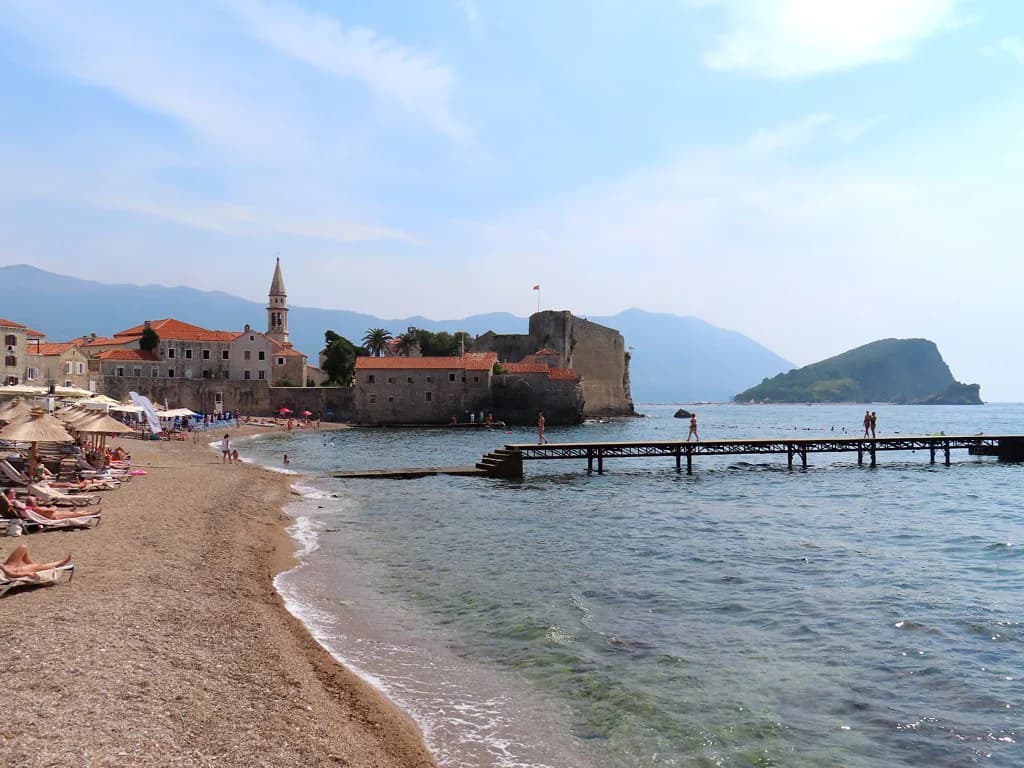
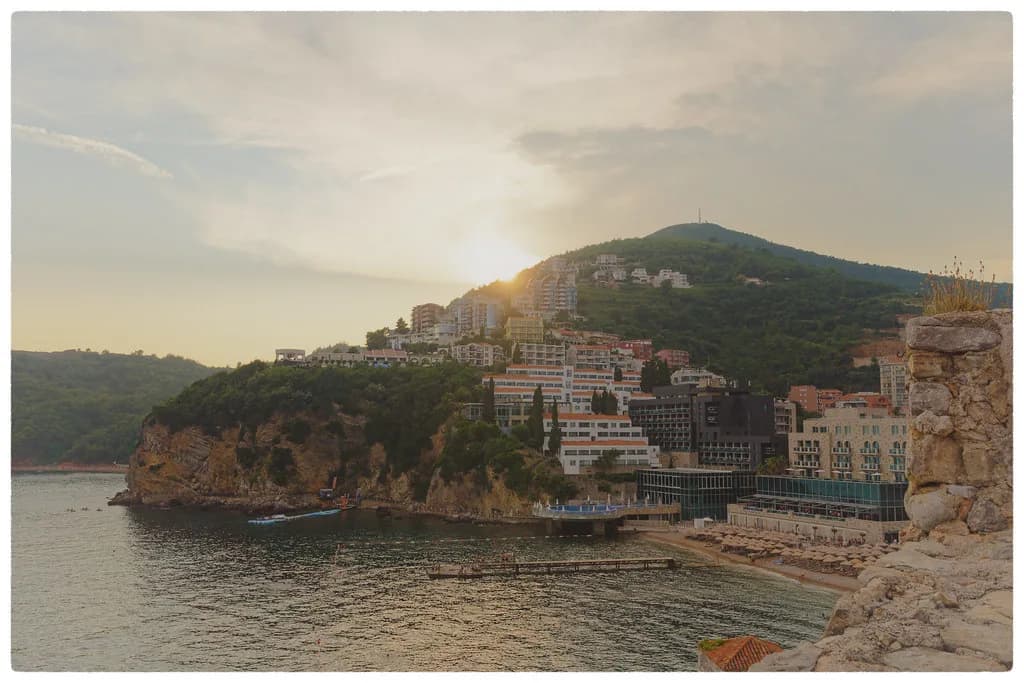
Mogren is Budva's best easy swim: two small coves linked by a short tunnel through the limestone cliffs, reached on foot from the Old Town along a paved path. May is the month to enjoy it, because in high summer the coves are shoulder to shoulder. Bring shoes for the pebbles and arrive before mid-morning for space.
Jaz Beach, a few miles west of town, is the antidote to Slovenska's crowds: wide, open and less cluttered even with umbrellas and sunbeds in place, with quiet rocky corners at its eastern end. Slovenska itself is the most convenient and the most commercial, with public sections alongside private ones; on a busy May day expect the public strip to fill first.
South of town, Galija Beach near Sveti Stefan is a small, quiet cove with a beach bar and loungers on the rocks, one of the nicest half-days on this stretch. Sveti Stefan Beach, on the mainland opposite the famous islet, has a free public section and a private one; the islet itself is a hotel, so the view from the beach and the laybys above is the visit.
Old Town Budva: what to see and when to go
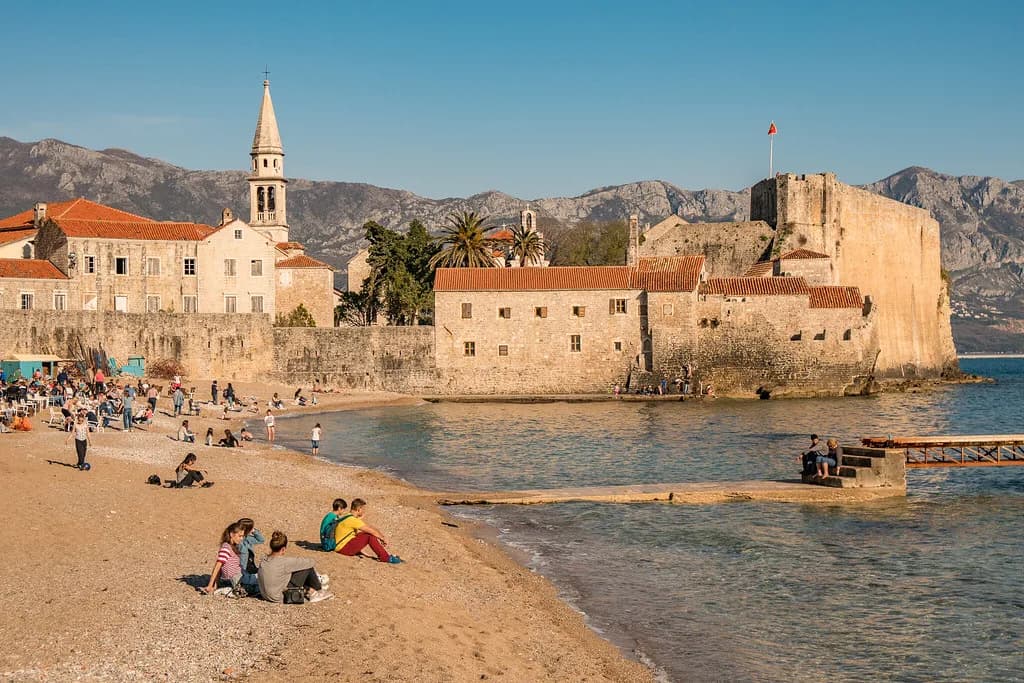
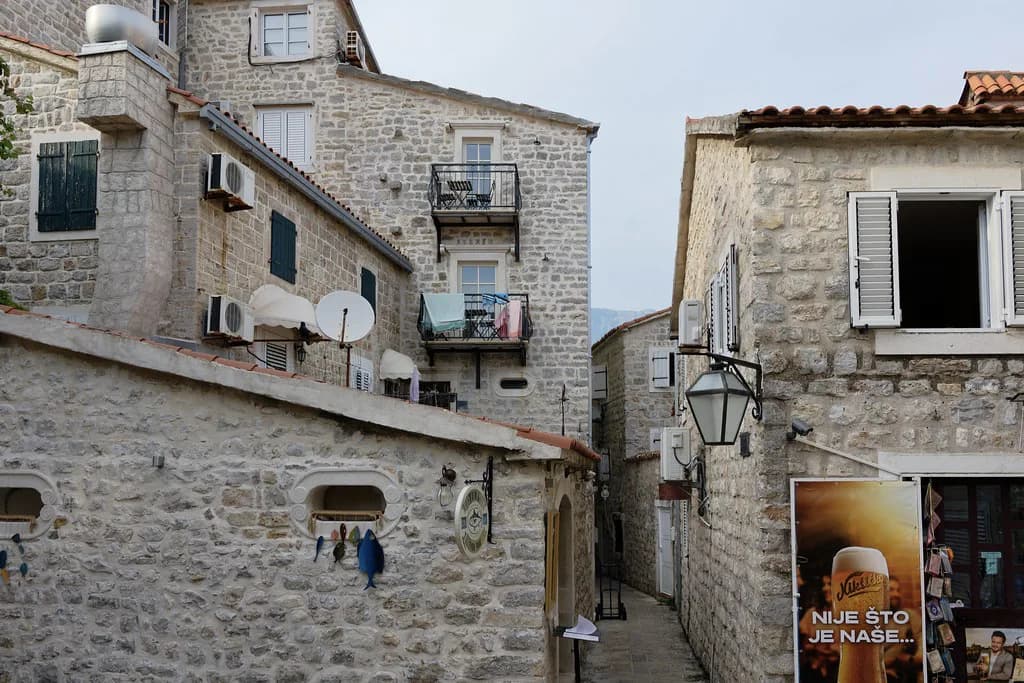
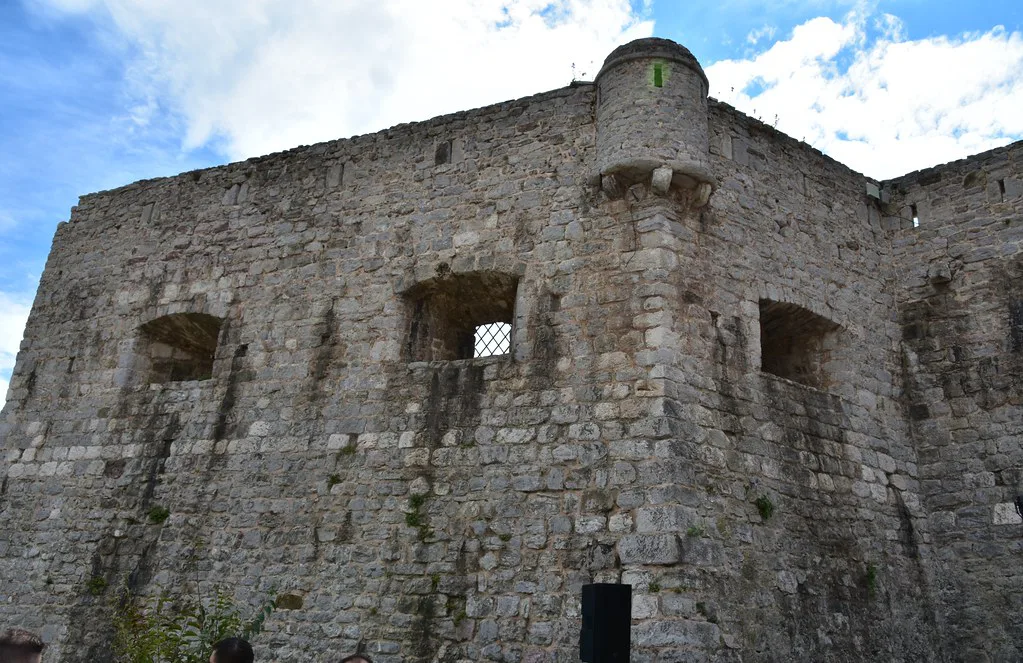
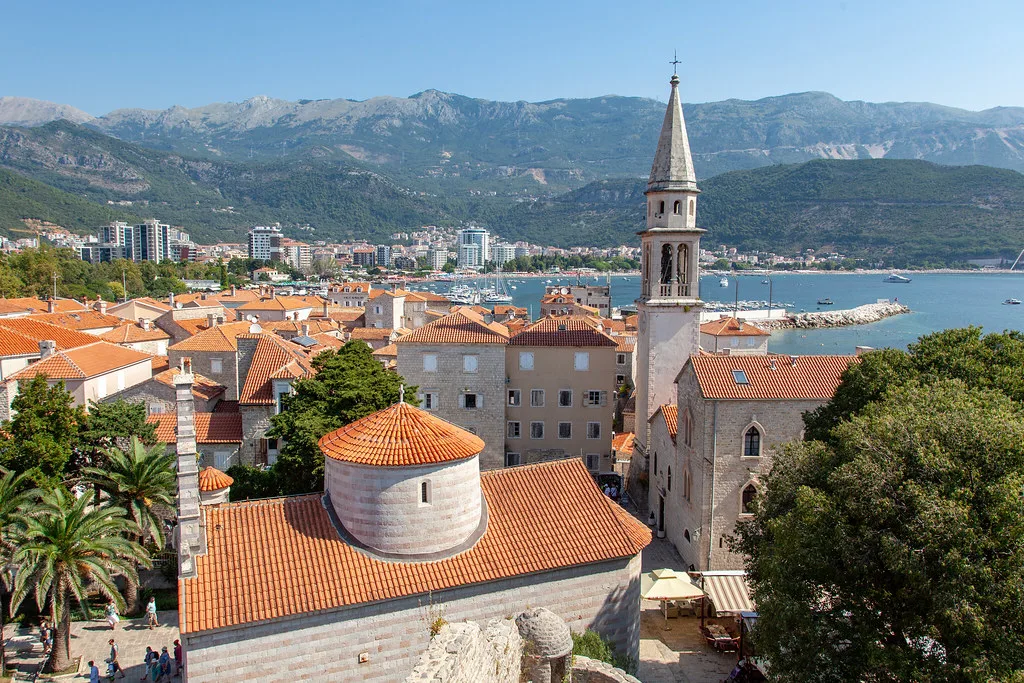
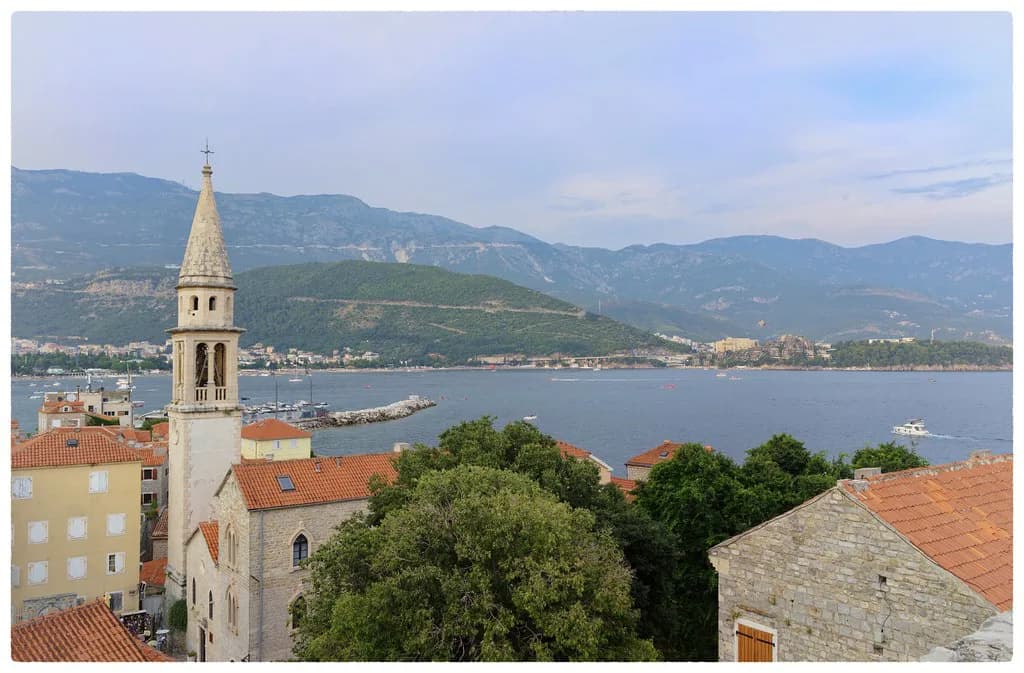
Old Town Budva is a compact walled maze of cobbled lanes, small squares and Venetian-era churches, rebuilt after the 1979 earthquake so convincingly that it reads as original. The Church of the Holy Trinity and St. Ivan's Church are the landmarks to look for, and the lanes reward slow wandering rather than a checklist. Come around nine in the morning and you will have it largely to yourself until the tours arrive.
The walls themselves are the one thing to manage expectations on. Access to the wall walk can be gated and not open early, so treat it as a bonus rather than the reason to come. The beaches sit right outside the gates, which makes a morning of Old Town plus an afternoon swim the most efficient May shape for a day here, and pairs naturally with a wet-weather plan for Budva in April if you are travelling early in spring.
Day trips that work in May
Kotor is the obvious day trip and the best one: a walled Venetian town at the head of the bay, about half an hour from Budva by road, with St. Tryphon's Cathedral, St. Luke's Church and the South Gate as the anchors. In May the climb to the fortress above is pleasant rather than punishing, though the steps are steep and exposed.
Perast, a short drive further up the bay, is a tiny waterfront village of palazzos, clocktowers and churches facing two islets, and boats run out to the larger of the two. It is a half-day, not a day, so pair it with Kotor or with a slow lunch on the water. Buses along this coast are frequent and inexpensive, and Perast sits about 10 miles north of Kotor, which makes it all doable without a car.
Inland, Lipa Cave east of Budva is the rainy-day answer, reached by a good road that allows a circular drive back through Lovcen National Park. On the coast, the Seven Bay Trail, roughly nine kilometers of walking or cycling route from the Old Town toward Sveti Stefan, passes beaches, Milocer Park and several refreshment stops, and takes about ninety minutes each way at an unhurried pace.
How many days you need in May
Two full days covers the essentials: one for the Old Town, Mogren and Slovenska, one for Sveti Stefan and the southern beaches. Add a third for Kotor and Perast, and a fourth if Lipa Cave or a boat trip to the Blue Grotto appeals. If Budva is your base for the whole coast, including Bar and the Lustica Peninsula, a full week is a comfortable allocation.
May changes the calculation only slightly. With longer, warmer days than April and fewer crowds than June, you can fit more into each day, but the rain risk argues for a little slack in the schedule rather than a packed itinerary. Two nights is enough to judge the town; five or six lets you use it as a base without rushing.
Typical costs in May
May is cheaper than peak season across the board: rooms, sunbeds and boat trips all price below their July and August levels, and the difference is largest in the accommodation. Beach clubs and loungers on the main beaches are still operating in May, so you are not trading comfort for the saving, only paying a shoulder-season rate for it. For the full breakdown of what a Budva trip costs, the honest cost guide sets out where the money goes.
Some prices are fixed and worth knowing in advance. FlixBus tickets to Budva start from around £6.04 depending on route and how early you book, and FlixBus notes that Budva's bus station charges a departure fee of €2 on top. Long-distance coaches to Budva connect the town directly with destinations including Dubrovnik, Kotor, Podgorica, Tirana and Mostar.
Getting to Budva: airports, buses and the road from Dubrovnik
Tivat and Podgorica are Montenegro's own airports for this coast, while Dubrovnik in Croatia is a popular alternative for a coastal road trip. The drive from Dubrovnik takes in a border crossing whose queues vary wildly; on a bad day it can add hours, so leave generous time on the return leg if you have a flight to catch. Rentals need to be cleared for crossing into Montenegro, which can carry a small fee.
Between coastal towns the bus is the sensible choice: frequent, cheap and easy to use, with Kotor about half an hour from Budva by road. Taxis cost roughly double and save only a few minutes, so they only make sense for groups splitting the fare or for late arrivals with luggage. FlixBus connects Budva with a long list of cities across Montenegro and its neighbors, including Dubrovnik, Kotor, Podgorica, Tirana, Shkoder, Mostar, Sarajevo and Belgrade.
Getting around Budva and the coast without a car
In May you can do a great deal on foot. The Old Town is pedestrianized and small, the waterfront promenade runs the length of Slovenska Beach, and Mogren is a ten-minute walk from the gates. Buses handle Kotor, Perast and Sveti Stefan, and boats cover the bay when the weather is kind.
A car earns its keep for the more scattered stops: Galija and the Lustica Peninsula coves, Lipa Cave and the Lovcen circuit. Parking in Budva itself is tight and the coastal road gets congested, so the practical compromise is to stay car-free for the town and rent only for the day you head inland or south.
May-specific drawbacks
Rain is the main one, and it falls unevenly across the month, so a late-May week is safer than an early one. Cooler evenings mean the beach day ends earlier than in July, and the sea is still bracing for anyone used to Mediterranean summer temperatures.
Some seasonal places may not be in full swing, particularly early in the month, so a few restaurants and boat operators run reduced hours before the season picks up. Weekends bring domestic and regional visitors even in May, filling the town's car parks and beaches on a sunny Saturday. All of this is manageable with a flexible plan and an early start, but it is the honest trade for the lower prices.
Budva in May versus June and September
June is warmer, drier and livelier, with the sea more inviting, but crowds and rates climb as schools break up in parts of Europe. September is the strongest all-round alternative: the sea has had a full summer to warm, the crowds thin after the peak, and the weather stays settled longer than in spring. May wins on value and quiet; September wins on certainty.
April is cooler and wetter again, cheaper still, and better suited to sightseeing than swimming. So the sequence for a beach-led trip runs April for culture, May for value, June to early September for reliability, and September for the best balance of warmth and calm. Pick the version that matches how much certainty you are willing to pay for.
The May verdict
Book May if you want Budva's beaches and Old Town without August's prices or crowds and can absorb a wet afternoon or two. Skip it if the sea temperature and guaranteed sunshine decide the trip, and choose July or early September instead, paying accordingly.
The strongest May trip is simple: swim at Mogren, walk the Old Town before ten, spend a day on Kotor and Perast by bus, and keep one flexible day for Sveti Stefan, Lipa Cave or a boat out to the Blue Grotto. For the bigger question of whether the town deserves a place in your Montenegro itinerary at all, start with the Budva verdict.
Frequently Asked Questions
What is the weather like in Budva in May?
May is warm and increasingly summery, with comfortable beach days and cooler evenings that still need a layer. The second half of the month is reliably warmer than the first, and rain is possible as passing showers or short grey spells. For exact averages, check the Montenegrin national weather service's published climate normals rather than relying on a single forecast.
Can you swim in Budva in May?
Yes, but the sea is refreshing rather than warm. The Adriatic heats up slowly in spring, so late May is a better bet than early May for comfortable swimming. If water temperature matters more than crowds or price, September is the safer choice.
Is Budva crowded in May?
Much less than in July and August, but not empty. Warm weekends bring regional visitors, Slovenska Beach fills on sunny days, and cruise-ship arrivals can pack the Old Town around midday. Visit the Old Town early in the morning and plan beach time or a day trip for the middle of the day.
Is Budva cheaper in May than in summer?
Yes. Accommodation, sunbeds and boat trips generally cost less than in peak season, with the biggest saving on rooms. Coach fares depend on route and how far ahead you book, and Budva's bus station charges a departure fee on top of the ticket.
How many days do you need in Budva in May?
Two full days cover the Old Town, Mogren and the main beaches. Add a third for Kotor and Perast, and a fourth for Lipa Cave or a boat trip. A week works well if you want Budva as a base for the whole coast.
How do you get to Budva in May?
Fly into Tivat or Podgorica, or use Dubrovnik across the border for a coastal road trip, then travel by bus or car. Buses along the coast are frequent and cheap, and long-distance coaches connect Budva with Dubrovnik, Kotor, Podgorica, Tirana and other cities.
Is Budva or Kotor better in May?
They serve different trips. Budva has the beaches and a compact Old Town; Kotor has the dramatic bay, the fortress climb and the stronger sightseeing core. Many May visitors base in one and day-trip to the other, which is easy given the short bus ride between them.
Sources
Trip-decision notes
Optional updates when we publish or revise a destination verdict.
You might also like
Continue reading
More guides you'll find useful