Is Budva Expensive? Cost Guide to Montenegro's Beach Town
Budva is mid-priced for the Adriatic, not a bargain. See what sunbeds, buses and parking cost, when prices peak, and which traveler types it suits.
On this page
Budva is mid-priced for the Adriatic coast: not a bargain break, and not Dubrovnik money either. Its value swings harder than almost anywhere in Montenegro, because a short, crowded July and August season sets the tone while April, May, September and October soften both room rates and beach prices. What you actually pay depends less on Budva itself than on when you arrive and how much of your day you spend on a paid sunbed.
The costs you can pin down are small and specific: beach furniture, parking, a station departure fee and intercity bus fares. Everything else — meals, drinks, rooms — is better judged as a price level than a number, and it rises steeply in high summer. If you are still weighing the destination at all, our verdict on whether Budva is worth visiting covers the character question before the money one.
The verdict: mid-priced, not cheap
Budva suits travelers who want a beach holiday with a walled Old Town attached and are willing to pay for convenience. It is a poor fit for anyone hunting a bargain Adriatic summer, because the peak season here is short, popular and priced accordingly, and the Riviera behind the Old Town is built up rather than back-to-basics. Couples and culture-first visitors often find Kotor better value for the same coastline.
The honest framing is that Budva is a mid-range beach town with a premium peak. You can keep a day cheap by using public beach sections and walking everywhere, or you can double it with a lido sunbed, a promenade lunch and a taxi. Neither is the 'real' Budva; both are normal.
What drives cost in Budva
Three things push prices up. First, the season is concentrated: June to August brings the heaviest crowds, the hottest weather and the highest room rates, and the beaches fill accordingly. Second, Budva is a package and cruise-adjacent resort, so demand spikes on days when the Old Town absorbs tour groups, which is exactly when you least want to be buying lunch on the promenade.
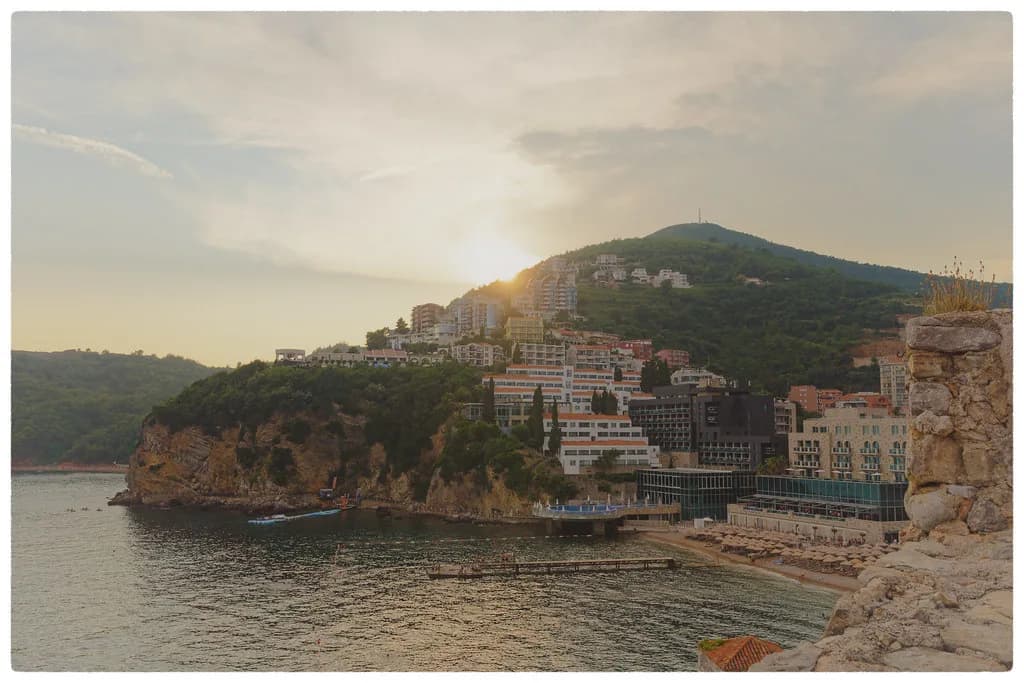
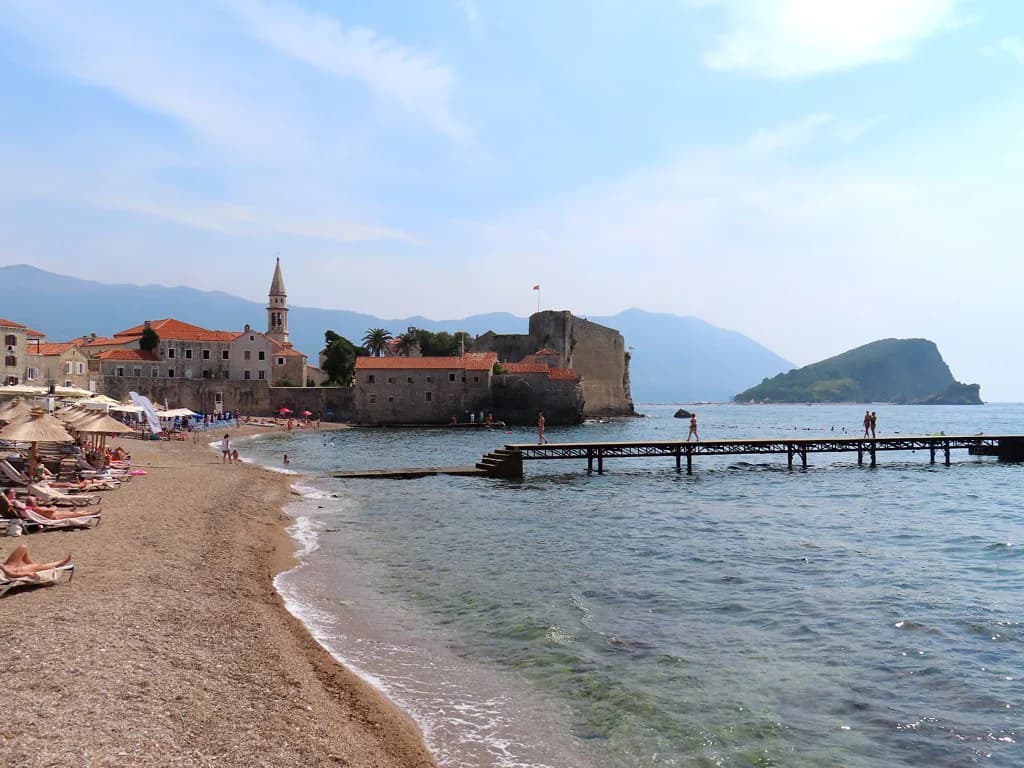
Third, the coast itself is developed. The stretch from the Old Town along Slovenska Beach is lined with cafes, restaurants and shops, which gives you choice but also means seafront positions carry a premium. A useful tactic is to check the port schedule before you commit to an Old Town day and shift your beach or day-trip plans to the busiest hours.
Typical costs in words
Think in three tiers rather than exact figures. A budget day means a public beach section, supermarket or bakery food, walking and a bus; a mid-range day adds a paid sunbed, a konoba lunch and a drink or two; a comfort day means a private lido, a promenade restaurant and taxis or boat trips. The gap between the first and third tiers is large, and accommodation widens it further in July and August.
Montenegro uses the euro, which removes exchange-rate guesswork for eurozone visitors but makes the country feel pricier than dinar or lek neighbors. For a wider regional comparison, it helps to know how Montenegro compares with its neighbors on costs, and to check how expensive Kotor is before you decide which town to base in.
Beaches and sunbeds: public versus paid
Beach furniture is the cost that catches people out, because most of the coast in front of Budva is privately operated. At Slovenska Beach, the long strip north of the Old Town, a pair of sunbeds with an umbrella was quoted at around 12 euros, with public sections available but crowded. Beach toilets nearby charged between 0.50 and 1.00 euro.
Further south, the beach beside Sveti Stefan splits into a free public section and a private one where two sunbeds and an umbrella run to roughly 40 euros for the day. Whether that is worth it depends on how much of your holiday budget is beach time; the view of the islet is free from the shore and better still from above.
Cheaper, quieter options exist if you are willing to move. Jaz Beach, a few miles west, is large enough that its umbrella rows do not feel claustrophobic, and there are quiet coves at its eastern end. Mogren Beach, reached by a short path and tunnel from the Old Town, gives you two small coves without a bus ride. Galija Beach, south of Sveti Stefan, is a small cove with a beach bar and loungers.
For the beach-first traveler the arithmetic is simple: choose a hotel or apartment near a public section, budget one or two paid lido days, and treat the rest as walking and swimming. In May and September the same beaches are far less crowded, and you are less likely to need a paid chair to find space.
Food and drink: konoba versus promenade
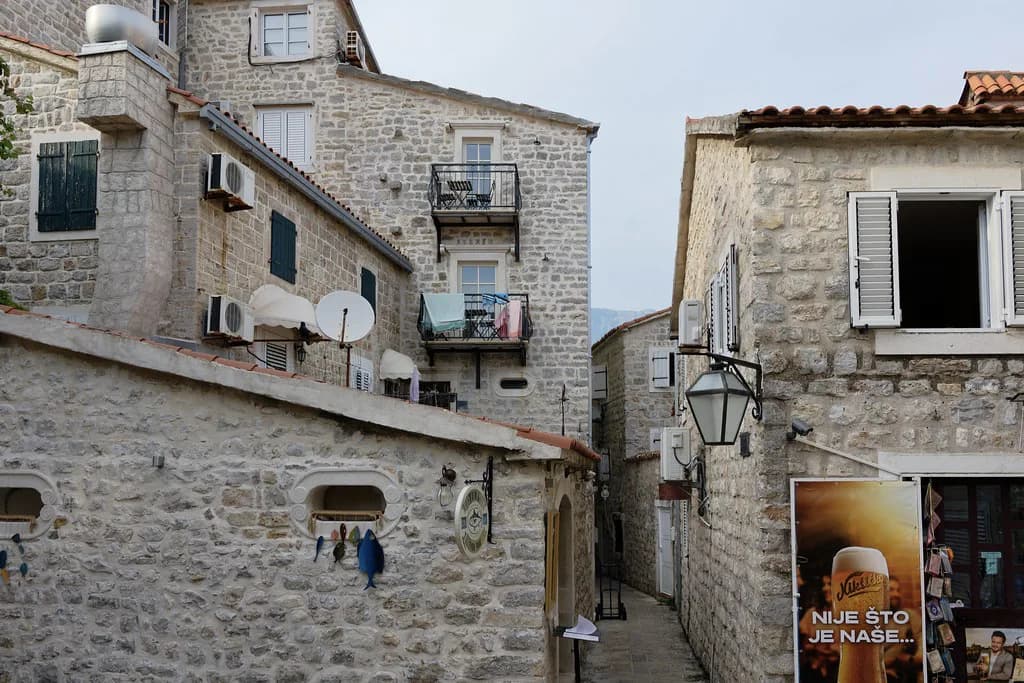
Eating out in Budva ranges from konoba-style seafood and pasta to promenade restaurants with sea views and prices to match. The pattern across Montenegro holds here: the further you are from the water and the Old Town, the more food you get for the same money. Old Town alleys are atmospheric but carry a location premium, especially at dinner.
A practical approach is to take your main meal at lunch, when set menus and daytime trade keep prices lower, and to eat simply in the evening. In April and October, when the season is opening or closing, some places reduce hours and menus, so the cheapest month is not always the best-value one.
Getting around and getting in
Local transport is the least painful part of the budget. Budva and Kotor are connected by road, with the bus the cheapest option at roughly 6 pounds each way and a journey of about 30 minutes; a taxi saves five or ten minutes but costs about double, which only makes sense for groups splitting the fare.
Longer-distance coaches are competitively priced. FlixBus lists fares to and from Budva from 6.04 pounds, with the final price depending on route, date and how early you book, and it serves 42 directly reachable cities including Dubrovnik, Podgorica, Tirana and Shkoder. Note that Budva AS charges a 2 euro station fee on all departures, which is easy to forget when you are counting coins at the platform.
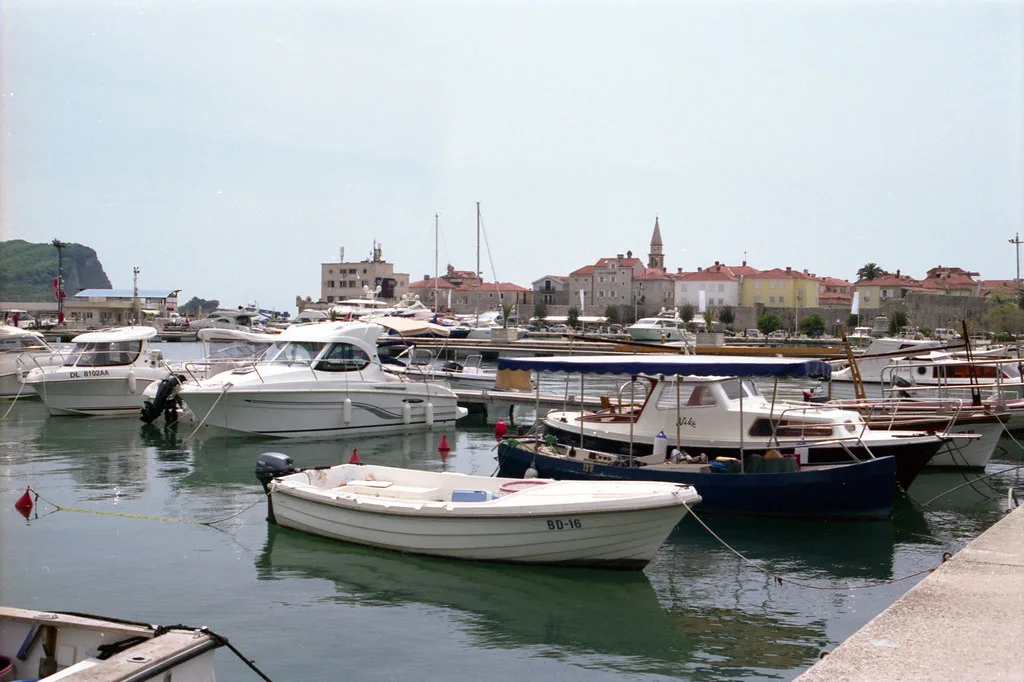
Driving is the other common route, and parking is where the money goes. A lot near Hotel Wow, about a ten-minute walk from the Old Town, charged 1 euro per hour, and it fills early in high season. Traffic on the main coastal road around Budva can be severe, so arriving before mid-morning is as much a budgeting decision as a sanity one.
Most visitors fly into Tivat, Podgorica or Dubrovnik. The Dubrovnik option means a border crossing that can take anywhere from minutes to a couple of hours in peak periods, so build slack into your return if you are catching a flight. Our guide to how to get to Budva sets out the airport and overland options in more detail.
When prices peak and when they soften
July and August are the expensive months. Rooms, sunbeds and seafront tables all reach their ceiling, the beaches are at their most packed, and the heat is at its most intense, so you are paying more for a less comfortable experience. If your dates are fixed by school holidays, budget for it and book early.
The shoulder months are where Budva starts to look like good value. April, May, September and October offer a better balance of weather, crowds and room rates, with May and September generally warm and reliable, while April and October carry a real chance of rain. November to March is cold, wet and quiet, with much of the resort infrastructure scaled back.
If your trip is anchored to a specific month, our notes on Budva in October explain what stays open as the season winds down, and how much of the beach scene remains.
Free and low-cost things that make Budva good value
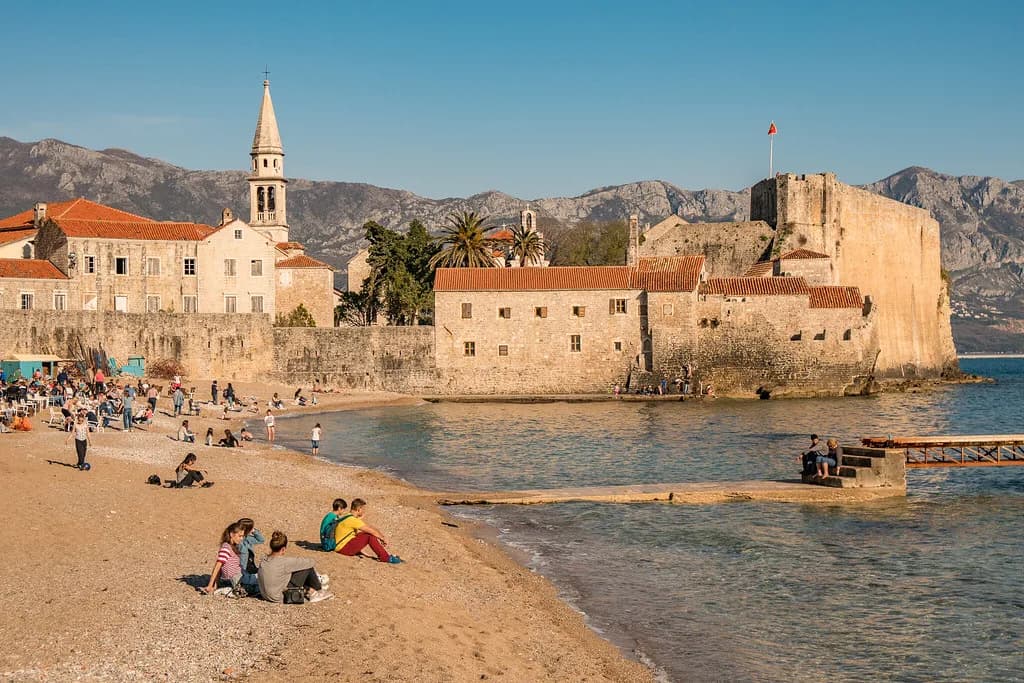
The best-value day in Budva costs almost nothing. Wander the walled Old Town early, before the tour groups arrive around mid-morning, and you get the alleys, churches and Venetian stonework without paying an entrance fee. The beach just outside the Morava Gate has a public section, and there is a toilet nearby.
Walk or cycle the coastal path south toward Sveti Stefan, which passes beaches, Milocer Park and restaurants, and takes around 90 minutes each way at a relaxed pace with stops. A hostel bike cost 3 euros for a full day, making it one of the cheapest ways to see the Riviera. The islet itself is a hotel, so the free experience is the view from the shore and from the road above.
For the best free panorama, drive or hike up to St. Sava Church above the main road, where a circular platform frames Sveti Stefan. Parking and walking cost nothing, and it beats paying for a sunbed at the islet's edge.
Day trips that add cost or save it
Day trips are where a Budva budget can quietly expand or shrink. A boat tour to the Blue Grotto, a kayak trip on the bay or a paragliding flight all add real money to a day. By contrast, a bus to Kotor and a walk around its Old Town costs little beyond the fare, and Perast, a short ride further on, is free to wander.
Lipa Cave, east of Budva, is a paid attraction but pairs well with a circular drive back through Lovcen National Park. If you have a car, the fuel and any cave ticket are the day's main costs; without one, the boat and coach excursions sold in town are the simpler option.
Drawbacks that affect value
Crowds and traffic are the real costs Budva imposes. Slovenska Beach was described as absolutely packed by late morning in late June, and the main coastal road can be gridlocked in summer. Paying peak prices for a beach you can barely walk across is the worst value Budva offers.
Parking is scarce and slow near the Old Town, and the town's rapid build-up means the seafront is busier and less charming than the postcards suggest. Outside July and August, some restaurants and beach bars reduce hours, so a cheaper trip can also mean a thinner choice of places to eat.
Budva versus Kotor and Tivat
Kotor offers a more dramatic setting — the bay, the fortress climb, the walled lanes — and generally a calmer, culture-led stay, but it is also a cruise port, so its Old Town gets intense when ships are in. Budva is the beach-first choice, with more sand, more nightlife and a more resort feel, at the cost of crowds and a built-up coast.
Tivat, with its marina and airport, sits between the two in character and tends to be quieter. For cost, the practical distinction is that Budva's money goes on beach furniture and promenade meals, while Kotor's goes on the same accommodation and food with a smaller beach bill. Neither is dramatically cheaper; the choice is about what you are paying for.
Verdict by traveler type
Beach-first families get the most from Budva if they come in late May, June or September, stay within walking distance of a public beach section and treat paid sunbeds as an occasional treat. Couples and culture-first visitors should look at Kotor instead, where the same money buys a more striking setting. Backpackers can make Budva work by using hostel bike hire, buses and public beaches, but should avoid peak August.
If you are still deciding how to arrive, the journey options and border timings matter as much as the hotel bill, so read up on getting to Budva before you book. Book coaches through FlixBus or buy at the station, and keep small notes for the station departure fee. Get the season right and Budva is fair value for a beach town; get it wrong and you will pay premium prices for a crowded shore.
Frequently Asked Questions
Is Budva expensive compared with Kotor?
They are close, but the money goes to different things. Budva charges for beach furniture, and most of the coast in front of town is privately operated, so a lido day adds up. Kotor has less beach and more sightseeing, so its costs concentrate in accommodation and food. Neither is dramatically cheaper; pick based on whether you want sand or scenery.
How much does a sunbed cost on Budva's beaches?
Beach operators set their own rates, and the price depends on the beach and the month. At Slovenska Beach the sunbed-and-umbrella rate is posted at the lido entrance, while the beach by Sveti Stefan splits into a free public area and a private concession with its own price board. Compare the boards before you sit down.
When is Budva cheapest to visit?
The shoulder months of April, May, September and October offer the best balance, with lower room rates and quieter beaches than July and August. May and September tend to be warm and reliable, while April and October can be wet. November to March is cheapest but cold and quiet, with much of the resort scaled back.
Do I need cash in Budva?
Montenegro uses the euro, and cards are widely accepted, but small cash is useful for beach toilets, parking machines and the Budva AS departure fee. Toilet attendants and station desks post their charges at the entrance, so keep a few coins handy for those small payments.
How much is the bus from Budva to Kotor?
The bus is the cheapest way between the two, at roughly 6 pounds each way and about 30 minutes of travel. A taxi saves only five or ten minutes and costs around double, which is worth it only if you are splitting the fare. Check FlixBus for current fares and timings on the day.
Is Budva a good base for day trips?
Yes, if you have a car. Kotor, Perast, Lovcen National Park and Lipa Cave are all within a short drive, and the coastal path to Sveti Stefan is walkable or cyclable. Without a car, buses cover Kotor and Budva's own beaches well, but the more scattered sights become harder to reach.
How many days do you need in Budva?
Two nights is enough to see the Old Town and a couple of beaches if Budva is a stop on a coastal road trip. If you want it as a base for the Bay of Kotor, Sveti Stefan and the Lustica Peninsula, plan around six full days so day trips do not eat your beach time.
What should I budget for parking in Budva?
Parking rates vary by lot and are posted on the board at each entrance, so read it before you pull in. Lots close to the Old Town fill early in high season and the main coastal road can be slow, so arriving before mid-morning helps. For current tariffs, check the signs at the lot you plan to use.
Sources
Trip-decision notes
Optional updates when we publish or revise a destination verdict.
You might also like
Continue reading
More guides you'll find useful