Tipping in Bosnia and Herzegovina: How Much to Leave
Tipping in Bosnia and Herzegovina is customary, not mandatory. Here is what to leave in restaurants, cafés, taxis and tours, and when rounding up is enough.
On this page
Tip about 10% in a sit-down restaurant when the service was good, round the bill up in cafés, bars and taxis, and treat a tour guide's gratuity as a discretionary thank-you rather than a line item. Nothing about tipping in Bosnia and Herzegovina is compulsory, and nobody will chase you down the street for a few marks. What matters is knowing which settings have a real custom behind them and which do not.
The bigger practical point is currency. Tips go in convertible marks, the local currency, and small notes make the whole exercise easy. If you are still sorting out cash, cards and exchange, our guide to money in Bosnia covers the mechanics before you get to the gratuity question.
The verdict: what to leave, setting by setting
Restaurants are the one place where a percentage is the normal reference point: around 10% of the bill, or simply rounding up to the nearest whole number, is the standard courtesy for good service. Cafés, bars and clubs run on rounding up rather than percentages, which usually means a mark or two on a coffee or a round of drinks. Taxis have no tipping expectation at all, though rounding the fare up is a friendly gesture that is always welcome.
Hotel housekeeping and porters sit at the small-change end: a mark or two per day is the customary recognition, handed over directly rather than added to a bill. Tour guides and drivers fall between the categories — a guide who has carried a full day in Sarajevo or Mostar earns a thanks in the region of a restaurant tip, while a short transfer driver is a rounding-up case. Across all of these, the amount is yours to set and depends on the service you actually received.
What currency you tip in
Bosnia and Herzegovina uses the convertible mark, written KM, and that is what you hand over as a tip. The euro turns up in some tourist-facing places, but acceptance is patchy once you leave the main towns and the exchange rate offered on the spot is usually poor, so paying in marks is the cleaner option. Carry a handful of small notes and coins specifically for tips so you are not breaking a large note every time.
Restaurants: the 10% rule and rounding up
In a full-service restaurant, aim for roughly 10% of the total for good service, or round the bill to the nearest whole mark if the arithmetic is awkward. On a small bill — a soup and a coffee, say — rounding up is more sensible than a strict percentage, and nobody will think less of it. The safest habit is to look at the bill first and decide the number before the card machine or the cash comes out.
Cash makes tipping simpler here. If you pay a restaurant bill by card, the tip may not be easy to add, so keep marks aside and leave them on the table or hand them to your server directly. That also lets you tip on service rather than on a machine's suggested percentage.
Cafés, bars and clubs: round up
Bosnia's café culture runs on long sits over small coffees, and the tip follows the same scale: round the bill up to the nearest whole mark and leave it at that. Applying a restaurant-style 10% to a two-mark coffee is unnecessary and can look like you have misread the setting. For a table of drinks, rounding up generously by a mark or two does the job. Keep the marks loose in your pocket, since adding a tip to a small café bill by card is often not practical.
Hotels: housekeeping and porters
Hotel staff are not usually tipped through the bill. A mark or two per day for housekeeping, left in the room, and a similar small amount for a porter who carries your bag are the customary gestures, and both are appreciated rather than expected. Keep the amounts modest and in cash; a five-mark note for a week's housekeeping is a reasonable way to settle it at the end.
Taxis: no expectation, rounding is a courtesy
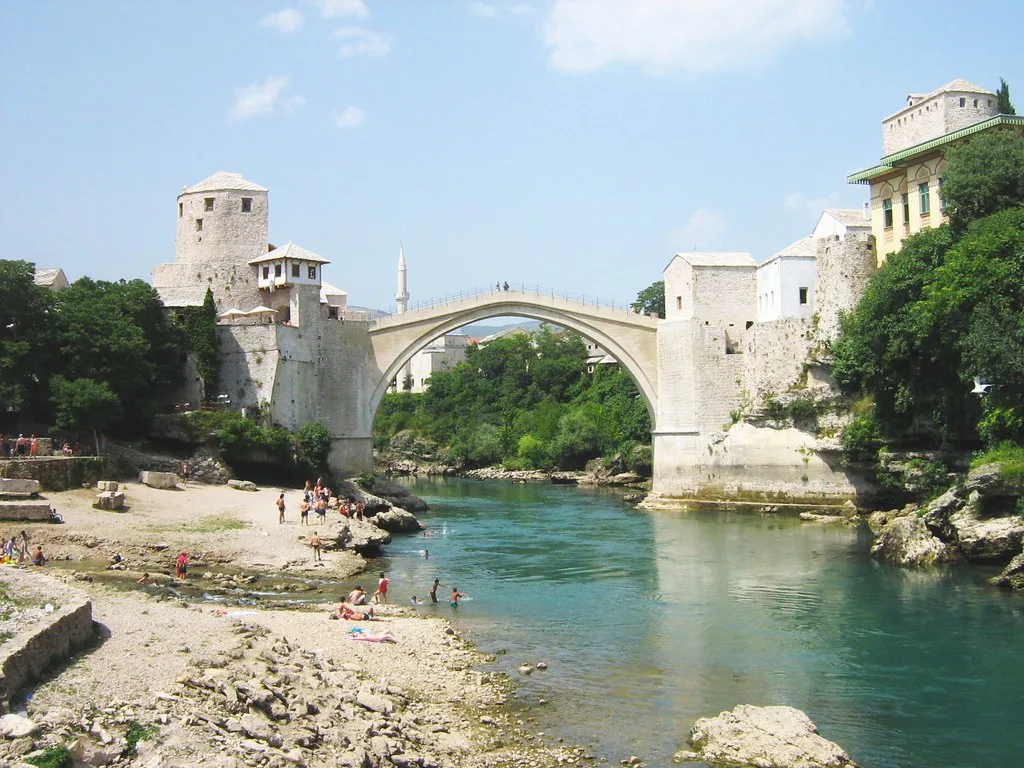
Taxi drivers in Bosnia and Herzegovina do not generally expect a tip. Rounding the metered fare up to the nearest whole mark is a nice touch after a smooth ride, and it saves fumbling for coins at the door. Do not feel obliged to add a percentage on top of the fare, particularly on short city hops or airport runs where the fare is already set.
Tour guides and operators: about 10% for a good day
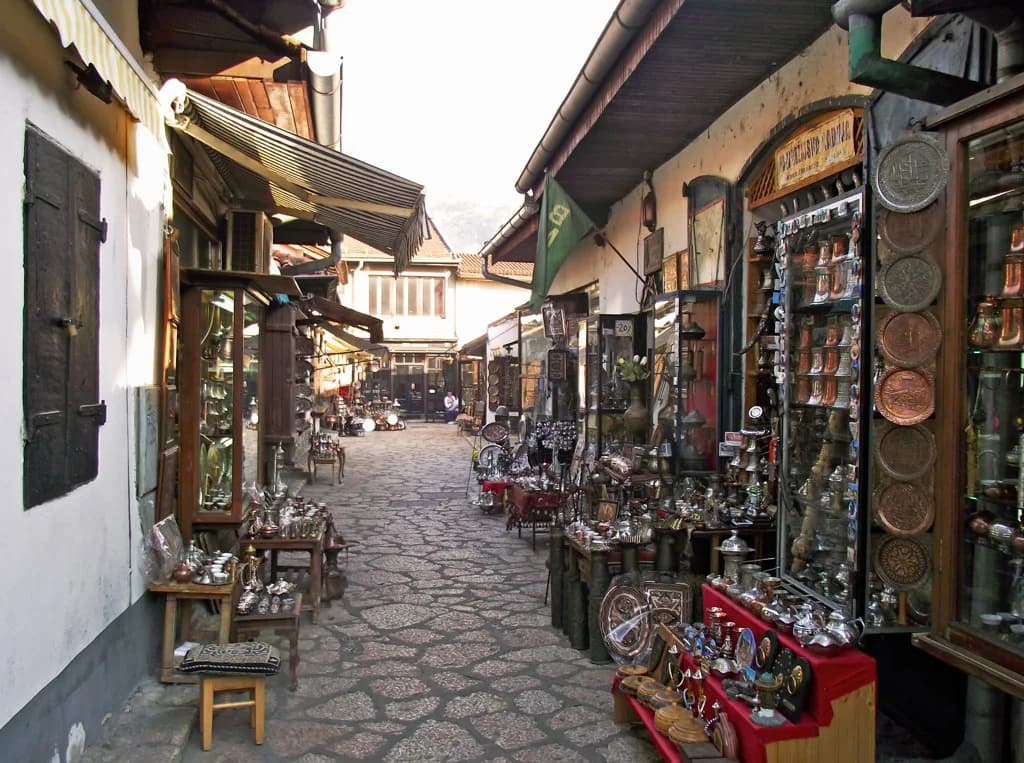
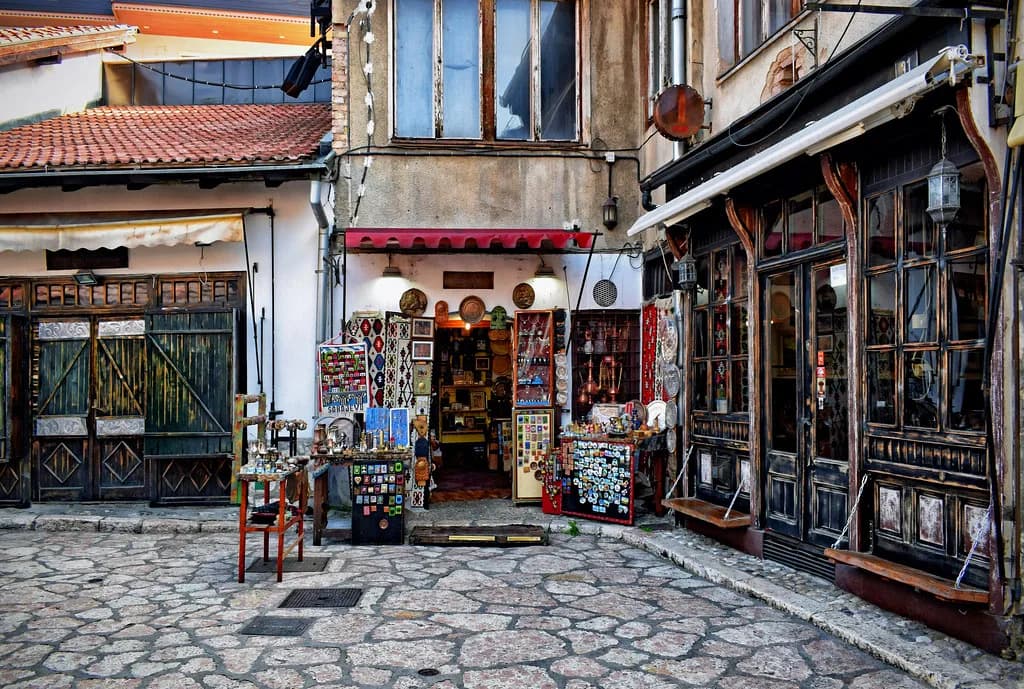
A guide who has spent a full day walking you through Baščaršija in Sarajevo or the old town of Mostar is the closest equivalent to a restaurant server: around 10% of the tour cost is a sound marker if the day was genuinely good. For a short walking tour or a half-day transfer, rounding up or handing over a few marks is plenty. Group tours are the awkward case — tip individually and quietly rather than trying to organise a collective envelope.
When a service charge is already on the bill
Some restaurants and cafés in the larger towns and cities add a service charge, and where that line appears, it replaces the tip — you do not need to stack another 10% on top. The catch is that practice is inconsistent, so a bill with no service line means the tip is still yours to decide. Read the bill before you reach for your wallet, and if the charge is there, pay it and stop.
Sarajevo and Mostar versus smaller towns
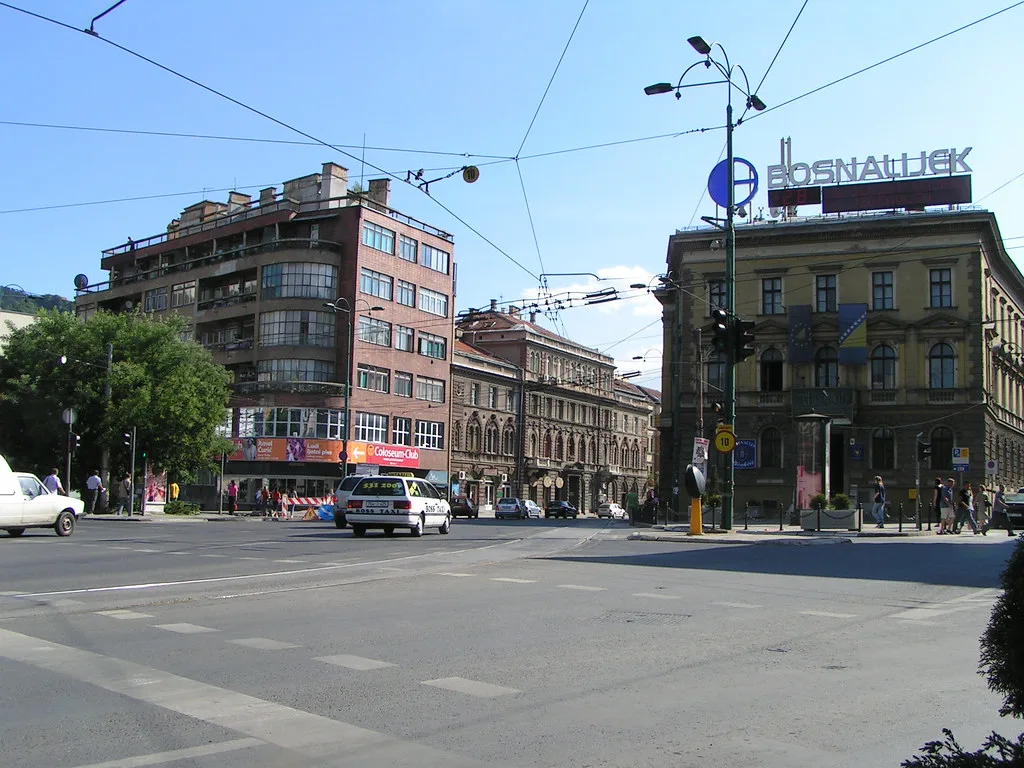
The tourist-heavy circuits around Sarajevo and Mostar see the most service charges on bills and the most fluid expectations, partly because visitors arrive from countries with different habits. In smaller places — Trebinje, Banja Luka, Bihać, Foča — tipping is still normal but lighter and more informal, and rounding up often feels more natural than counting out a percentage. Either way, cash in marks is the reliable medium.
If the trip extends beyond the cities into the mountains and national parks, the same cash habit carries over: small notes for tips, and enough left for the places that take nothing else. Our guide to Bosnia in October covers how the season changes what is open on that circuit, and the tipping customs do not change with the month.
Five tipping mistakes visitors make
The first mistake is tipping on top of a service charge that is already on the bill. The second is trying to leave a tip in euros in a small-town café where the rate will be poor or the note refused. The third is applying a strict 10% to a two-mark coffee; rounding up is the correct scale. The fourth is forgetting housekeeping entirely because the tip never appears on a card slip. The fifth is treating a tip as compulsory and overpaying out of anxiety — it is a thank-you, not a tax.
All five come back to the same two habits: read the bill, and keep small marks in your pocket. Get those right and the rest of the transaction looks after itself, whichever part of the country you are travelling through — and if you are still deciding whether the country earns a place on your route, Is Bosnia and Herzegovina Worth Visiting? The Verdict lays out the case town by town.
Tipping in Bosnia compared with Croatia, Serbia and Montenegro
On a multi-country Balkan route, the norms do not shift dramatically. Croatia, Serbia and Montenegro all treat tipping as customary rather than mandatory, with a restaurant percentage or rounding up doing most of the work, so you are not relearning the etiquette at each border. The meaningful differences are currency and card habits: Croatia uses the euro, Serbia the dinar and Montenegro the euro, while Bosnia and Herzegovina sticks with the convertible mark, which means you will be switching cash as you go. If Serbia is on the itinerary, our Serbia trip guide covers the same question for dinars and Belgrade's restaurants.
Currency friction is the part worth planning around, since every border on the route changes what is in your wallet. Leave about a tenth in restaurants, round up for coffee and taxis, and the habit travels with you across the region.
Tipping Without Overthinking It
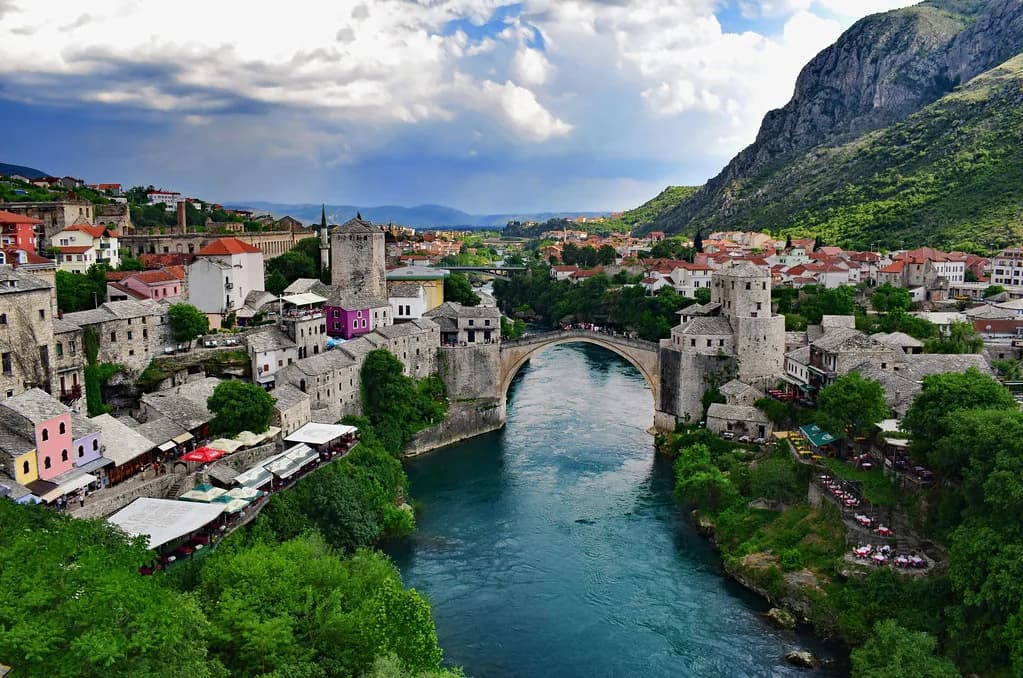
Leave about 10% in restaurants, round up in cafés and taxis, give hotel staff a mark or two a day, and thank a good guide with roughly a tenth of the tour cost. Skip the extra tip when a service charge is already on the bill, and keep small convertible marks on you so you can pay gratuities in cash. That is the whole system, and it leaves you free to spend your attention on Sarajevo's old bazaar and the bridge at Mostar.
Explore more Bosnia and Herzegovina trip-decision guides
Frequently Asked Questions
How much should you tip in Bosnia and Herzegovina?
In a sit-down restaurant, around 10% of the bill or a rounded-up total is the normal courtesy for good service. In cafés, bars and clubs, rounding up to the nearest whole mark is standard, hotel housekeeping and porters get a mark or two per day, and taxi drivers do not expect a tip at all. The amount is always your call and should reflect the service you received.
Is tipping mandatory in Bosnia?
No. Tipping in Bosnia and Herzegovina is customary rather than obligatory, and nobody is required to leave anything. That said, a small gratuity for good service is the norm in restaurants and appreciated in most service settings, and rounding up a café bill costs very little.
Should you tip if a service charge is already included?
No. When a service charge appears on the bill, it stands in place of the tip, and adding another 10% on top is unnecessary. Check the bill before you pay, since the practice varies between establishments and is more common in the larger towns and cities than in small cafés.
Do you tip taxi drivers in Bosnia?
Not as a rule. Taxi drivers in Bosnia and Herzegovina do not generally expect a gratuity, though rounding the fare up to the nearest whole mark is a welcome gesture after a good ride. Adding a percentage on top of a metered fare is not the local habit.
How much do you tip a tour guide in Bosnia?
For a guide who has led a full day, around 10% of the tour cost is a reasonable marker if the experience was good. For a short walking tour or a transfer, a few marks or a rounded-up payment is enough. Hand it to the guide directly rather than trying to organise a group collection.
Can you tip in euros in Bosnia?
Tips belong in convertible marks, the local currency. Euros are accepted in some tourist-facing places but not widely, and the exchange rate offered on the spot tends to be poor, so carry small mark notes for gratuities instead of relying on euro coins.
Is rounding up enough in Bosnian cafés and bars?
Yes. Rounding the bill up to the nearest whole mark is the standard courtesy in cafés, bars and clubs, and it is more appropriate than applying a restaurant-style percentage to a small coffee bill. For a larger round of drinks, add a mark or two when you round up.
Sources
Trip-decision notes
Optional updates when we publish or revise a destination verdict.
You might also like
Continue reading
More guides you'll find useful