Best Places to Visit in Bosnia and Herzegovina: Where to Go
The best places to visit in Bosnia and Herzegovina, from Sarajevo and Mostar to Una, Blagaj and Trebinje, with what each is like and who should skip it.
On this page
The best places to visit in Bosnia and Herzegovina are not a top-ten list you tick off in order. They cluster: Sarajevo and the Herzegovina towns in the south, the Neretva and Drina valleys in the middle, and the Una river country in the northwest, so your route matters as much as your wish list.
This country suits travelers who want Ottoman bridges, Austro-Hungarian streets, mountain rivers and rafting more than beach days, and who accept that buses and mountain roads set the pace. If you want a fly-and-flop coast holiday, Croatia or Montenegro will serve you better. For the broader case, see whether Bosnia is worth visiting before you commit.
The verdict: who this country suits
Bosnia and Herzegovina rewards a slower route. Its strongest stops are inland cities and river valleys rather than resorts, and the highlights — the Old Bridge in Mostar, the spring at Blagaj, the Drina gorge, the Una — are spread across different regions. Pick two or three bases and you get depth; try to cover everything and you spend the trip on buses.
It suits city-break travelers, hikers and rafters, and anyone who likes markets, coffee culture and stone towns without a cruise-ship backdrop. It is weaker for travelers who need a beach holiday, a compact country, or reliable late-night transport between regions. Note that the country uses the convertible mark, so budget in marks rather than euros; our money in Bosnia guide covers cash, cards and costs.
Sarajevo: the capital that carries the whole story
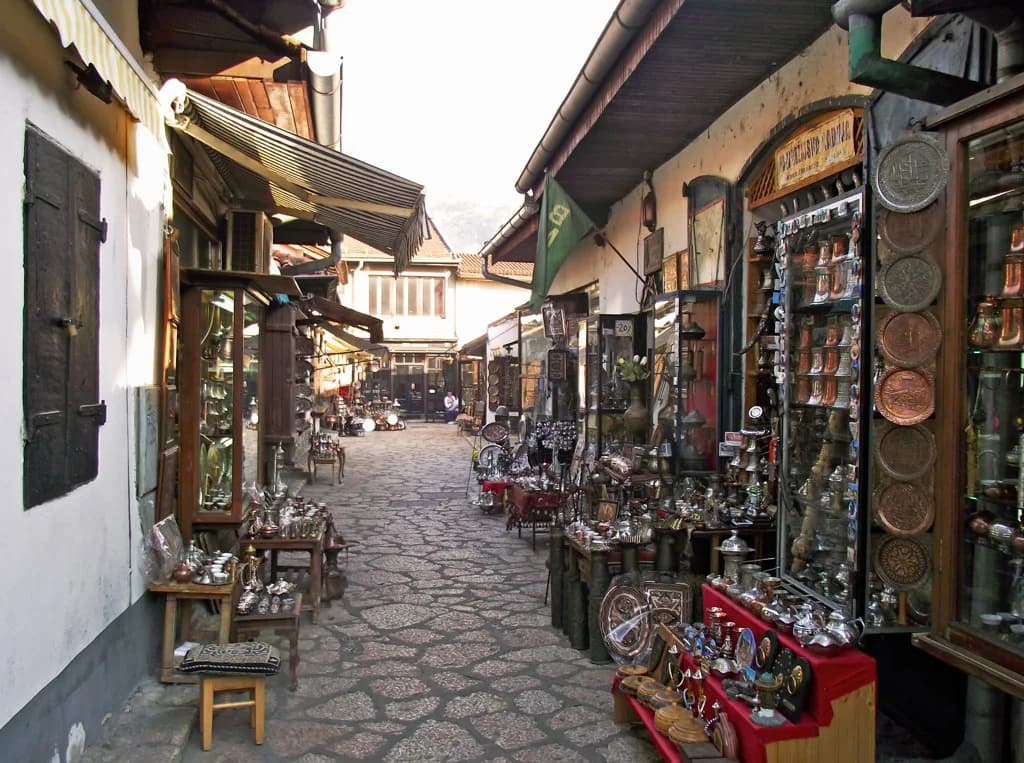
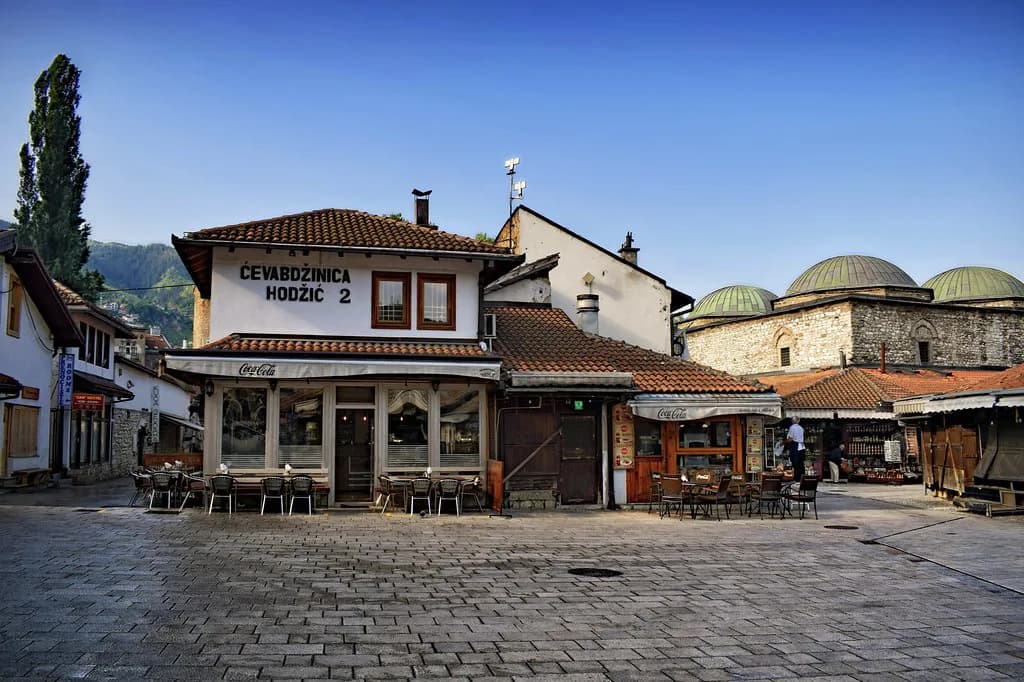
Sarajevo is the one place that justifies the trip on its own. Baščaršija, the old bazaar quarter, is a maze of coppersmiths, cafés and small mosques, and a short walk brings you to the Austro-Hungarian streets and the Latin Bridge where the 1914 assassination happened. The city's wartime history is part of the visit, and the Tunnel of Hope and the hillside cemeteries are the places that make it concrete.
Build in more time than you think for Sarajevo: the center sits in a valley and the hills make walking between neighborhoods slower than the map suggests. Two full days covers the old town, the history and a half-day trip; three lets you add the mountain villages. Our Bosnia itinerary shows how Sarajevo fits with the rest of the country.
The city is also the natural base for day trips to Lukomir, the highland village on Bjelašnica, and to the ski areas around Jahorina, which the national tourism portal lists among its mountain destinations. Those trips depend on road and snow conditions, so treat them as flexible rather than fixed.
Mostar and Blagaj: the bridge and the spring below the cliffs
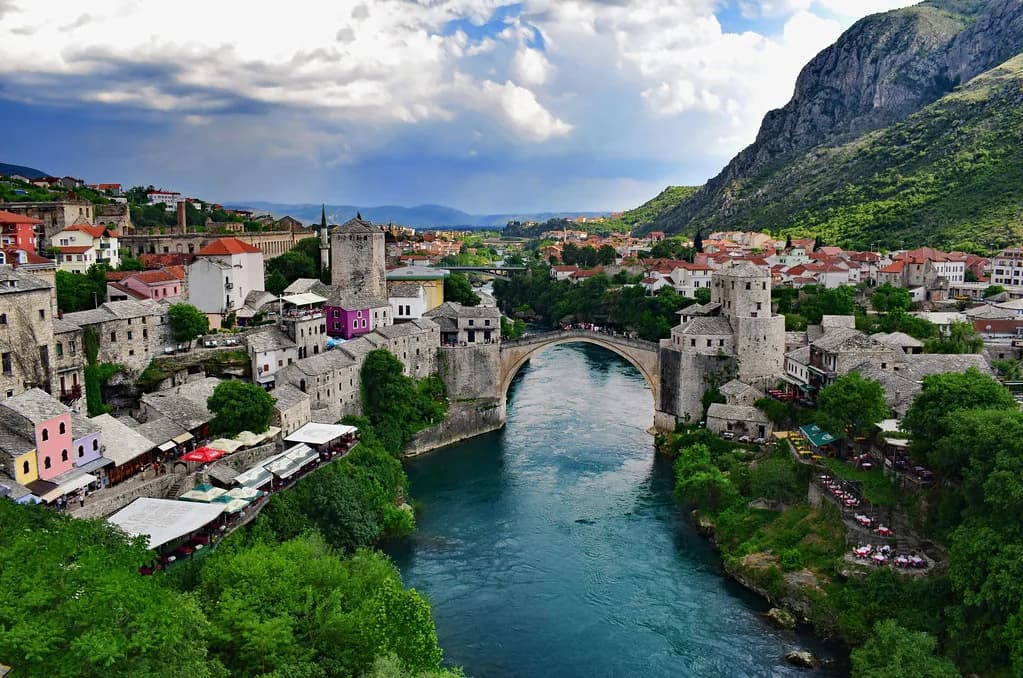
Mostar is the image most travelers carry, and the Old Bridge, a UNESCO-listed Ottoman arch over the Neretva, is genuinely worth the fuss. The old town around it is small, so the day-tripper wave matters: coaches arrive late morning and leave by late afternoon, and the town is far calmer in the evening. Staying overnight is the single best way to see Mostar properly.
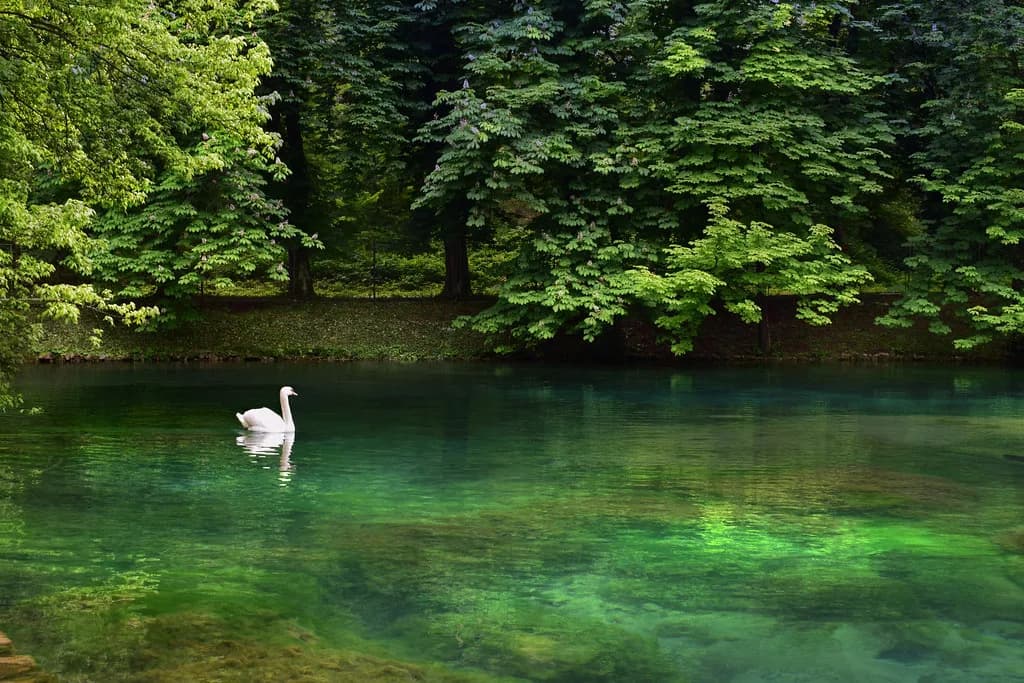
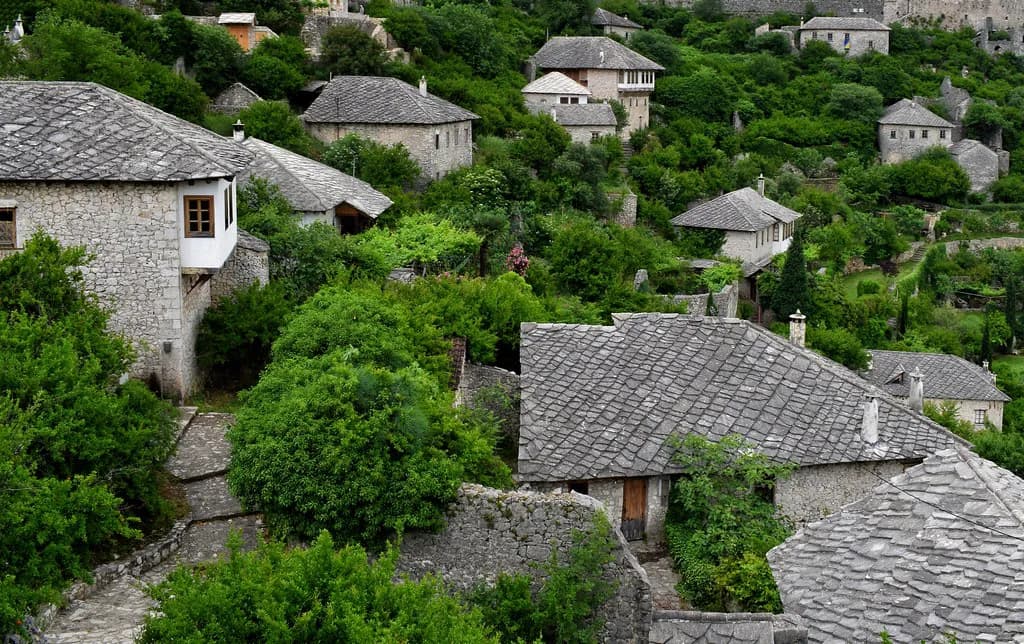
Blagaj, a short drive south, is the other half of the Mostar day. The dervish tekija sits under a cliff at the mouth of the Buna spring, and the setting is the reason to come rather than the building itself. Pairs naturally with Mostar as a half-day add-on, and the tourism portal lists it among the country's hidden gems near Mostar.
Trebinje: stone streets and plane trees in Herzegovina
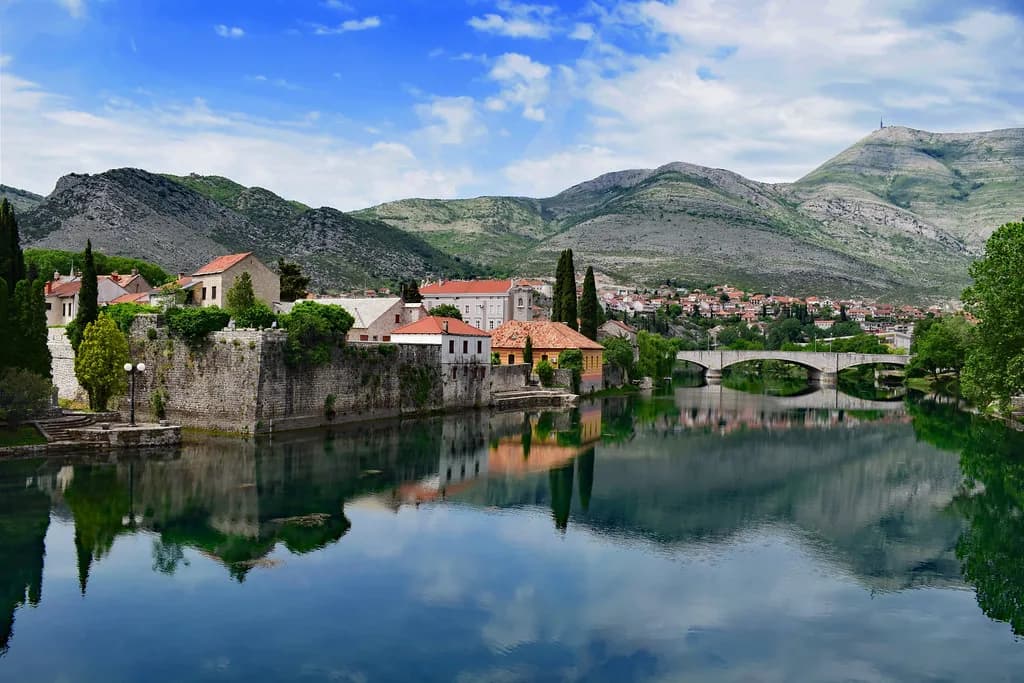
Trebinje is the quiet counterweight to Mostar: a small old town of pale stone, plane trees and cafés, with a river running through it and Herzegovina's wine country around it. It is a place to slow down rather than tick sights, and it works well as a Herzegovinian base for a night or two. Travelers who want less crowd and more café time should put it above another afternoon in Mostar.
The town is also within reach of the coast around Dubrovnik and the wine roads of eastern Herzegovina, but the border crossing adds time to any coastal day trip, so plan it as a stop rather than a quick detour. The tourism portal names Trebinje among its main cities and towns alongside Sarajevo, Mostar and Banja Luka.
Višegrad and Andrićgrad: the Drina bridge town
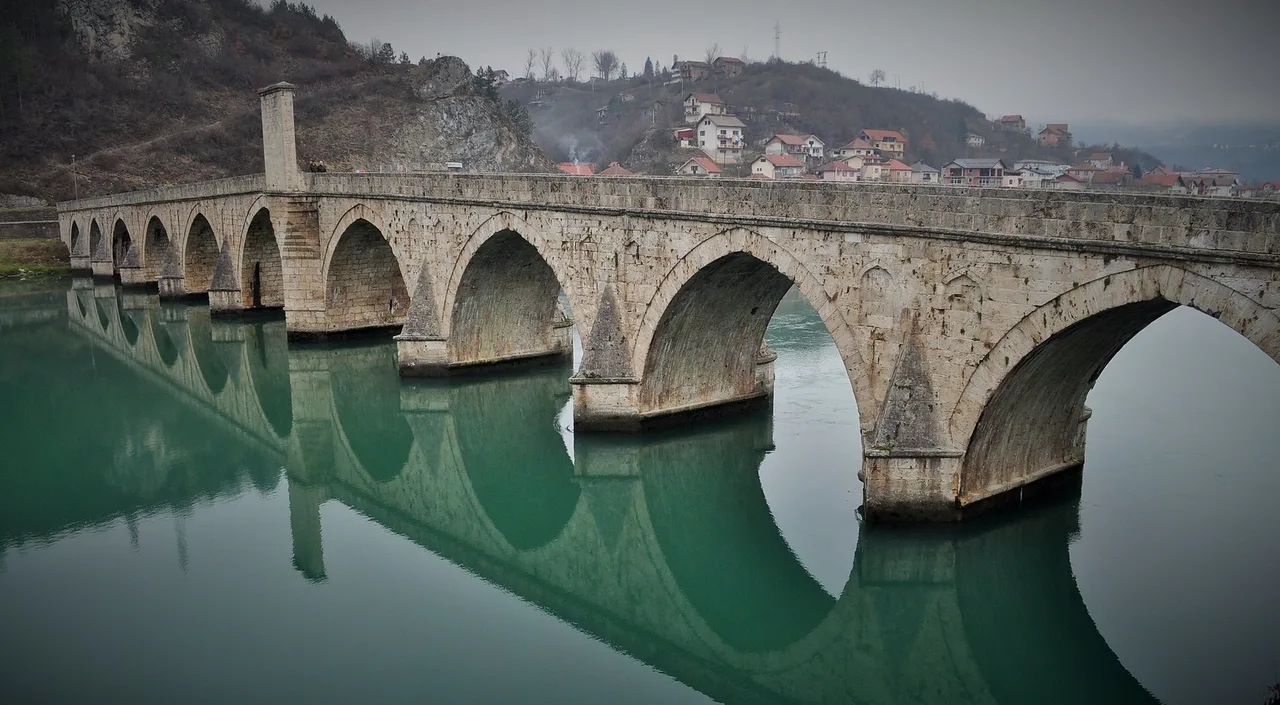
Višegrad is built around the Mehmed Pasha Sokolović Bridge, a UNESCO-listed Ottoman span over the Drina that is one of the country's great pieces of stonework. Next to it, Andrićgrad is a purpose-built stone town named for the novelist Ivo Andrić, and it is the kind of place you either find atmospheric or find artificial. Either way, the bridge is the reason to come.
Višegrad sits in eastern Bosnia and Herzegovina on the Drina, and it pairs with Foča along the same river valley rather than with Sarajevo as a quick out-and-back. The tourism portal lists both the bridge and Andrićgrad among its heritage highlights and premium selections.
Jajce: waterfalls and a royal town in the middle of the country
Jajce is a small town with an outsized setting: a medieval fortress, a walled old town, and a waterfall where the Pliva drops into the Vrbas right at the edge of the center. It is a natural stop between Sarajevo and Banja Luka, and it makes a good overnight for travelers driving the middle of the country.
The town is often paired with the Pliva Lakes and the watermills nearby, which are a short drive out and reward a slow afternoon. The tourism portal names Jajce the royal city of waterfalls in its list of Bosnian cities. For a sense of what the shoulder months feel like, read Bosnia in September.
Bihać and Una National Park: rivers and rafting in the northwest
Bihać is the gateway to Una National Park, where the Una river runs clear and fast through a string of waterfalls and gorges. This is the country's rafting heartland, and the park is the strongest reason to come to the far northwest. It suits active travelers and anyone who wants river scenery without the Herzegovina crowds.
The trade-off is distance: Bihać is a long drive or bus ride from Sarajevo and from Mostar, so it belongs on a loop that includes the northwest rather than a rushed day trip. The tourism portal lists Una National Park and the Una river among its top nature destinations. Summer is the rafting season, and Bosnia in August is the busiest month on the water.
Banja Luka: the Vrbas and a greener, quieter city
Banja Luka is the country's second city and a greener, quieter one, built along the Vrbas river with tree-lined boulevards and a compact center. It is the base for rafting and kayaking on the Vrbas, and it works as a stop between Jajce and the northwest. Travelers who want a city without Sarajevo's hills and crowds will find it easier going.
The city is also close to the Vrbas canyon and to Kozara National Park, which the tourism portal lists among its destinations. It is less of a headline stop than Sarajevo or Mostar, so give it a night rather than a week unless you are here for the river.
Foča and the Drina valley: rafting, mountains and Zelengora
Foča is the base for the upper Drina and for rafting on the Tara, and it is the gateway to the wild Zelengora mountains and their glacial lakes. The tourism portal names Orlovačko Lake on Zelengora and the Sand Pyramids near Foča among the country's hidden gems. This is the place for hikers and rafters who want the remote version of Bosnia and Herzegovina.
Access is the caveat. The mountain roads are slow and the valleys are far from the coast, so Foča works best on a Drina-valley route with Višegrad rather than as a day trip from Sarajevo. Rafting operators run from spring into early autumn, and Bosnia in May is a good month for high water and green valleys.
Konjic: Neretva rafting and a base for the high passes
Konjic sits on the Neretva between Sarajevo and Mostar, and it has become the country's best-known rafting base, with operators running the river above and below town. It is also the practical stop for the high country: Lukomir on Bjelašnica, the Rakitnica canyon and the old railway route all start from around here.
Konjic earns its place as a two-night stop for active travelers, not a photo stop. The tourism portal lists Neretva rafting near Konjic among its eco-tourism picks. For a quieter shoulder-season float, read Bosnia in June.
Neum: the country's short stretch of coast
Neum is Bosnia and Herzegovina's only coastal town, a short strip of waterfront on the Adriatic between Split and Dubrovnik. It is a pleasant place for a night, a swim and a seafood lunch, but it is not a beach-holiday destination in the Croatian sense: the coast is short and the town is small. Treat it as a stop on the way to or from Herzegovina, not the reason for the trip.
The tourism portal lists Neum as the country's sea gateway alongside its inland cities, which is the right way to think about it. If a beach is the point of your holiday, the Croatian and Montenegrin coasts are the better comparison.
Kravice Waterfalls, Vjetrenica Cave and the stećci
Kravice Waterfalls, south of Mostar on the Trebižat river, is the country's most famous swimming-and-picnic waterfall, and it works as a half-day add-on from Mostar or Trebinje. Vjetrenica Cave, near Ravno in eastern Herzegovina, is a UNESCO-listed karst cave and a cooler, quieter stop. The stećci, medieval carved tombstones scattered across the country, are the third UNESCO layer and are best seen where they sit in the landscape rather than as a single sight.
The tourism portal groups Mostar's Old Bridge, the Višegrad bridge, the stećci and Vjetrenica Cave as the country's UNESCO treasures, which is a useful way to plan a heritage route. Kravice is also a summer swimming spot, so it is busiest in July and August. For a wetter, greener visit, see Bosnia in April.
The Janj Primeval Forest near Šipovo, one of the last primeval forests in Europe, is a hike rather than a drive-up sight. Treat it as a day for hikers based in the Jajce or Banja Luka area.
How many days you need and how to link these places
Seven to ten days is the sweet spot for a first trip. A workable route is Sarajevo for two or three nights, then Konjic or Mostar, Blagaj and Trebinje in Herzegovina, then back north via Jajce or Višegrad. Trying to add Bihać and Una to a week means spending most of it in transit.
Distances look short on the map but the roads are slow, especially in the mountains and along the Drina. Two weeks lets you add the northwest loop through Jajce, Banja Luka and Bihać without rushing. If you are weighing months, the best time to visit Bosnia is late spring or early autumn, when the valleys are green and the heat and crowds are lower.
Drawbacks: crowds, peak-season prices and slow roads
Mostar's old town is the country's crowd pinch point, and July and August bring the coach groups and the highest prices along the Herzegovina route. The roads are the second drawback: mountain routes are slow, winter snow can close high passes, and buses between regions run on limited schedules. A car gives you flexibility, but only if you are comfortable on narrow mountain roads — renting a car in Bosnia covers the practical side.
Budget-wise, Bosnia and Herzegovina is one of the cheaper countries in the region, though prices rise in the Herzegovina summer. For daily figures, see is Bosnia cheap. Shoulder months bring rain and the odd closed mountain road, but they also bring the country at its best.
Getting there and getting around
Sarajevo has the country's main airport and the widest choice of flights, with Mostar and Banja Luka as smaller alternatives. Buses connect the main towns, and the rail line between Sarajevo and Mostar is one of the scenic rides in the region, though services are limited. A car is the most practical way to reach Una, the Drina valley and the mountain villages.
Mobile data is easy to arrange: a local SIM or a Bosnia eSIM will cover navigation and bookings, which matters on slow mountain roads. For the rest of the practical setup, see Bosnia plug type before you pack adapters.
Who should pick a different destination
Travelers who want a beach holiday, a compact country with fast trains, or guaranteed sunshine should look at Croatia or Montenegro instead. Bosnia and Herzegovina is inland, mountainous and slower, and its coast is one short town. If you want rafting, Ottoman towns and mountain scenery, it beats both on value and atmosphere. For the wider comparison, read Is Bosnia and Herzegovina Worth Visiting? The Verdict. If you are extending the trip down the Adriatic, apply the same test when deciding whether is Zadar worth visiting on the Croatian side of the border.
Pick Three Places, Not Twelve
The strongest first trip is Sarajevo, Mostar with Blagaj, and one of Trebinje or Konjic, with Kravice or Vjetrenica as a half-day add-on. That gives you the country's history, its most famous bridge and its river country without spending the week on buses.
Add Una and Bihać or the Drina valley when you have two weeks, and treat Neum as a stop rather than a destination. If you are still deciding whether to come at all, the honest answer is that Bosnia and Herzegovina rewards travelers who want mountains, rivers and stone towns more than beaches.
Explore more Bosnia and Herzegovina trip-decision guides
Frequently Asked Questions
What is the best place to visit in Bosnia and Herzegovina?
Sarajevo is the strongest single stop, with the old bazaar, the 1914 assassination site and the wartime history all in one walkable center. Mostar and its Old Bridge are the most famous sight, and they work best with an overnight stay. If you have time for only one base, choose Sarajevo.
Is Mostar or Sarajevo better?
They do different jobs. Sarajevo is a city break with history, food and day trips; Mostar is a small old town built around one UNESCO bridge. Mostar is overrun by day-trippers in summer, so stay the night if you want it calm. Sarajevo rewards two or three nights.
How many days do you need in Bosnia and Herzegovina?
Seven to ten days covers Sarajevo, Herzegovina and one river region comfortably. A week is enough for Sarajevo, Mostar, Blagaj and Trebinje or Konjic. Two weeks lets you add Una National Park and the Drina valley without rushing.
Do you need a car to visit Bosnia and Herzegovina?
A car makes the mountain regions, Una National Park and the Drina valley much easier to reach, and it gives you flexibility on slow roads. Buses connect the main towns, and the Sarajevo to Mostar rail line is scenic. If you skip a car, base yourself in Sarajevo and Mostar and use tours for the rest.
What currency is used in Bosnia and Herzegovina?
The country uses the convertible mark, not the euro. Cards are widely accepted in cities, but carry cash for small towns, mountain huts and rural guesthouses. Check the current exchange rate before you travel.
Is Neum worth visiting?
Neum is the country's only coastal town, and it is a pleasant stop for a swim and a seafood lunch on the way to or from Herzegovina. It is small and not a beach-holiday destination. If a beach is the point of your trip, the Croatian or Montenegrin coast is the better choice.
Sources
Trip-decision notes
Optional updates when we publish or revise a destination verdict.
You might also like
Continue reading
More guides you'll find useful