Best Cities in Bosnia and Herzegovina: Where to Go
Sarajevo, Mostar, Jajce and Trebinje lead our picks of the best cities in Bosnia and Herzegovina, with honest notes on size, crowds and what each one suits.
On this page
The best cities in Bosnia and Herzegovina come down to three: Sarajevo for depth and atmosphere, Mostar for the drama of the Neretva gorge, and Jajce for a compact medieval town with a waterfall running through its middle. Everything else on this list is either a smaller Herzegovina stop you fold into a Mostar loop or a Bosnian heartland town that rewards a car.
The country splits roughly into Bosnia in the north and centre and Herzegovina in the south, and that divide matters more than distance when you plan. Herzegovina is drier, shorter on cities and easy to cover from Mostar; Bosnia proper is greener, hillier and better explored on a loop out of Sarajevo. If you are still weighing the trip at all, it helps to start with the wider question of whether Bosnia is worth visiting before committing days to individual towns.
Cash behaves differently here than in Croatia or Montenegro: the country uses the convertible mark, not the euro, and smaller towns are still largely cash economies. Read up on money in Bosnia before you go so a card machine that is not there does not catch you out.
The verdict: the shortlist at a glance
Pick Sarajevo and Mostar as the two anchors, add Jajce if you are heading north, and treat Trebinje as the relaxed Herzegovina base if Mostar's day-trip crowds wear on you. Blagaj and Počitelj are half-day stops rather than cities in any practical sense; Višegrad and Bihać are worth a night only if you are already pointed that way. If you are comparing this trip with nearby options, our Serbia verdict weighs a similar decision on the other side of the Drina.
The single scenic train ride between Sarajevo and Mostar, described as a roughly two-hour journey through memorable mountain scenery, is the spine of a car-free version of this trip. Rely on it for the capital-to-Herzegovina leg and you skip the winding road without missing the best of the views.
Where you go next depends on how much time you have. Most first trips work as four to seven days: two or three in Sarajevo, two in Mostar, and a day for the Neretva Valley stops between and around them.
Sarajevo: the capital that earns a few days
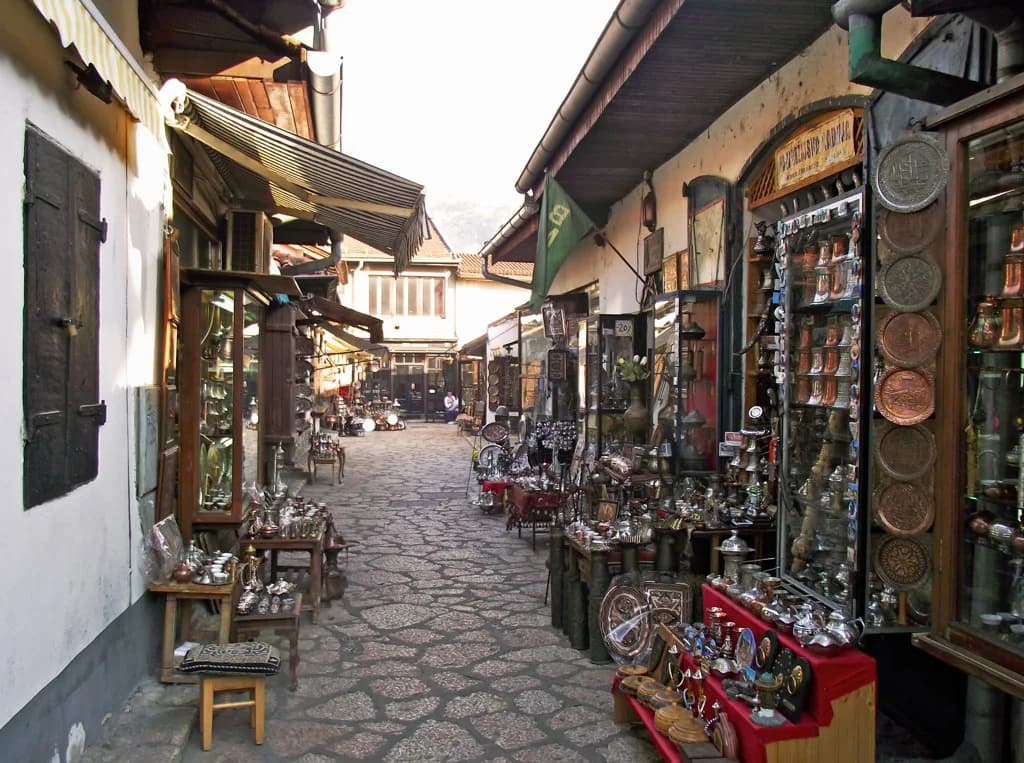
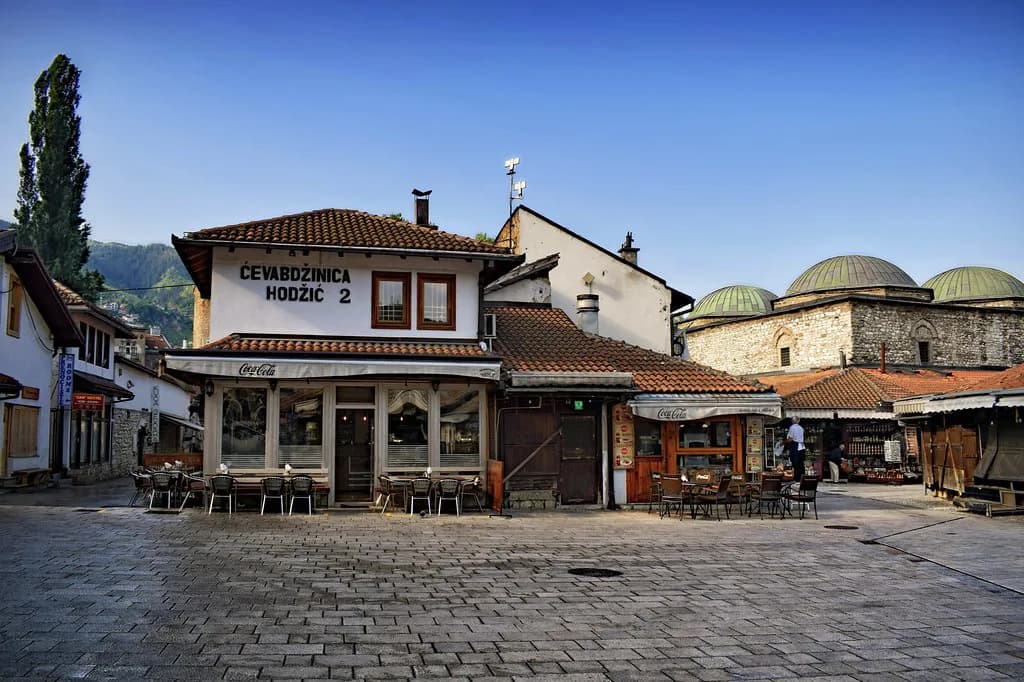
Sarajevo is the reason to give Bosnia real time rather than a rushed stopover. The old bazaar quarter of Baščaršija is where the city's Ottoman character is densest, with narrow streets of coppersmiths and coffee served the Bosnian way from a small copper pot; within minutes you can walk from a mosque to a Catholic cathedral to an Orthodox church to a synagogue.
Beyond the old town, the city wears its turbulent twentieth century openly: the spot where the First World War was set in motion, the 1984 Winter Olympics legacy, and the long siege of the 1990s are all part of the fabric. The cable car up Mount Trebević, one of the Olympic ski venues, gives the panorama back across the valley.
The drawbacks are real. Sarajevo sits in a narrow valley, so streets climb steeply and a day of walking is more tiring than the map suggests, and winter air quality has a poor reputation locally. Give it three nights rather than one if you can, and you will see the city rather than just the old bazaar.
Mostar: the bridge, and the town beyond it
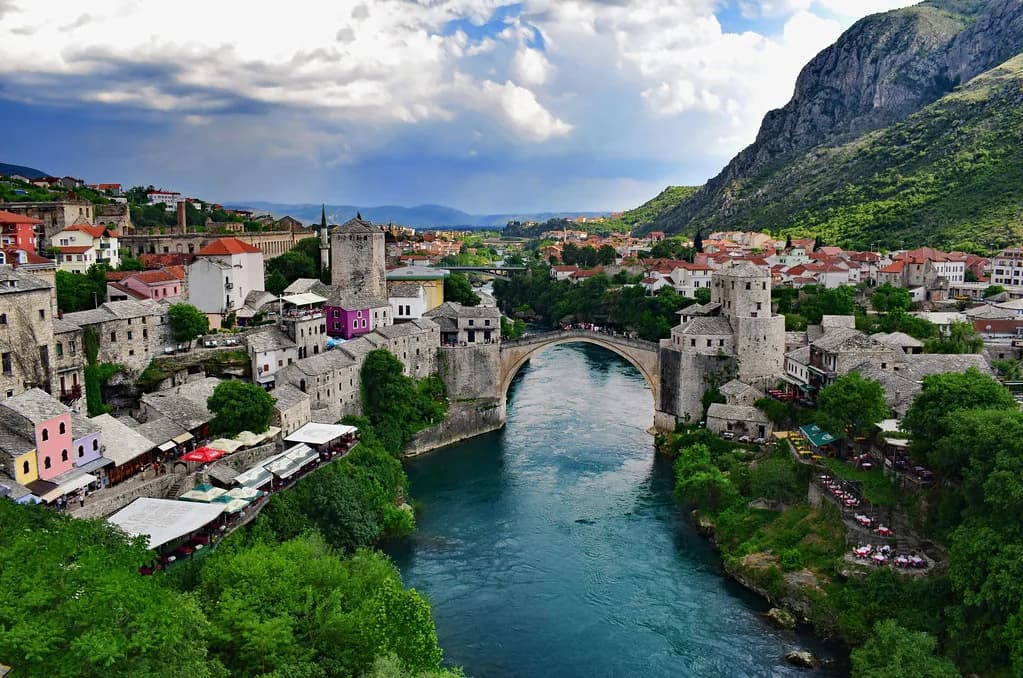
Mostar's Old Bridge, a single limestone arch over the Neretva, is the image everyone arrives for, and it is a reconstruction of a sixteenth-century structure destroyed in 1993; the rebuilt bridge and its surroundings joined the UNESCO World Heritage List in 2005. The best view is from the minaret of Koskin-Mehmed Pasha's Mosque, a climb that is tight and steep but worth the effort.
The honest problem is the day-trip crush. Mostar absorbs tour groups bussed in from the Croatian coast, so the old town is packed in the middle of the day and quietens sharply by evening. Staying overnight, or at least arriving late and leaving late, changes the town completely.
There is more here than the bridge: the Sniper's Tower and the park with its Bruce Lee statue sit outside the postcard frame, and the surrounding streets show a city still repairing itself rather than a stage set. If your days are tight, our best places to visit in Bosnia puts Mostar alongside the country's other strong stops.
Blagaj and Počitelj: small places near Mostar that justify a stop
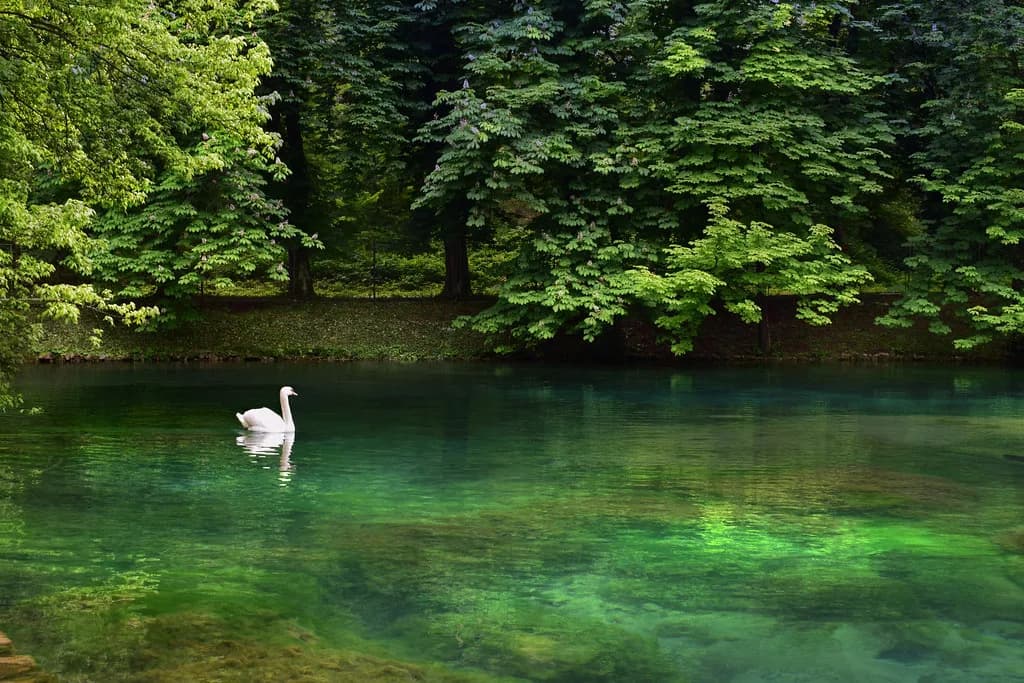
Blagaj, a short drive south of Mostar, pairs the Buna River spring, which bursts straight out of a cliff face, with a Dervish monastery built in 1520 right beside it. It is a photogenic, compact sight, and you can go inside the house to see Ottoman-era rooms rather than only photographing the exterior.
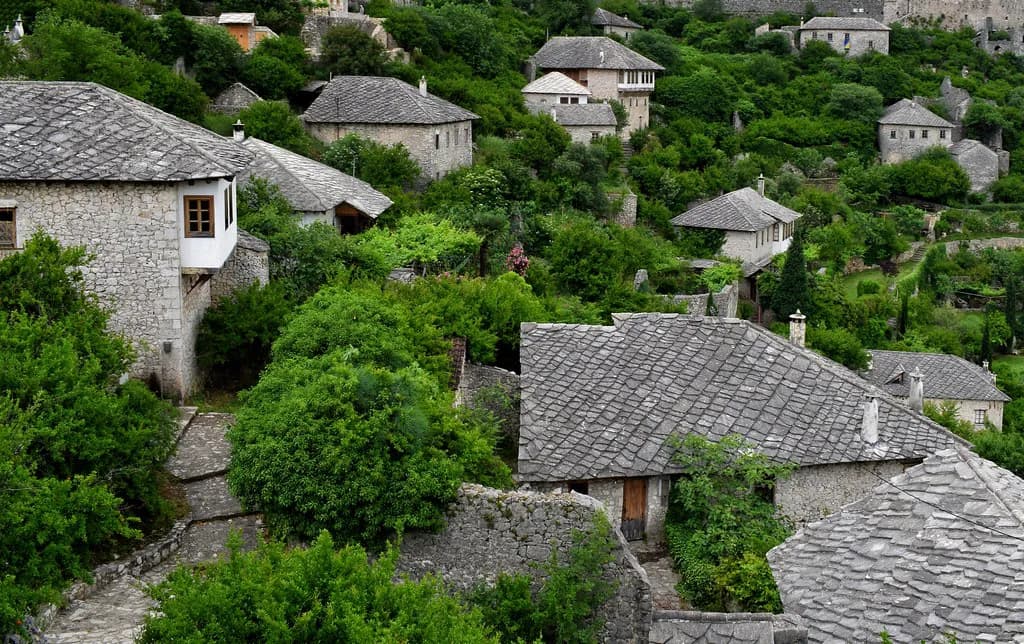
Počitelj is the opposite experience: a fortified town glued to a hillside above the Neretva, easy to miss from the road, with medieval and Ottoman buildings, a mosque and fortress ruins that give you the view back over the rooftops. It prospered between the sixteenth and eighteenth centuries, and on a quiet morning you may have most of it to yourself.
Treat both as stops of two to three hours on a Mostar-based loop rather than places to sleep. That same loop reaches Kravica Waterfall, which is busy in summer but has bars and restaurants on site and can absorb a whole hot afternoon.
Jajce: waterfall and medieval capital
Jajce packs an unusual amount into a small town: a twenty-one-metre waterfall where the Pliva meets the Vrbas, a fortress, catacombs and a stretch of medieval history when it served as capital of the Kingdom of Bosnia. The waterfall runs through the centre, and each August it hosts a jumping competition.
It is on UNESCO's tentative list but draws a fraction of Mostar's visitors, which is exactly why it works. One full day covers the town; two lets you add Pliva Lake just outside it and slow down.
The trade-off is transport. Jajce sits on the road northwest of Sarajevo toward Banja Luka, and doing it by public transport eats time; this is a place where a car pays for itself. If you plan to drive, read up on renting a car in Bosnia before you reserve a vehicle.
Travnik: Ottoman streets and two clock towers
Travnik, about ninety kilometres northwest of Sarajevo, was the seat of the Ottoman governors of Bosnia, and their tombs and buildings still shape the old quarter stacked up the hill below a restored fortress. It is the only town in the country with two clock towers, and its Many Coloured Mosque is one of the most distinctive in Bosnia.
It is a day rather than a destination: fortress views, Ottoman streets, a memorial museum to Ivo Andrić, and a reputation for good ćevapi in the centre. Pair it with Jajce on a two-day heartland run rather than making it your base.
Trebinje: the slow, leafy Herzegovina town
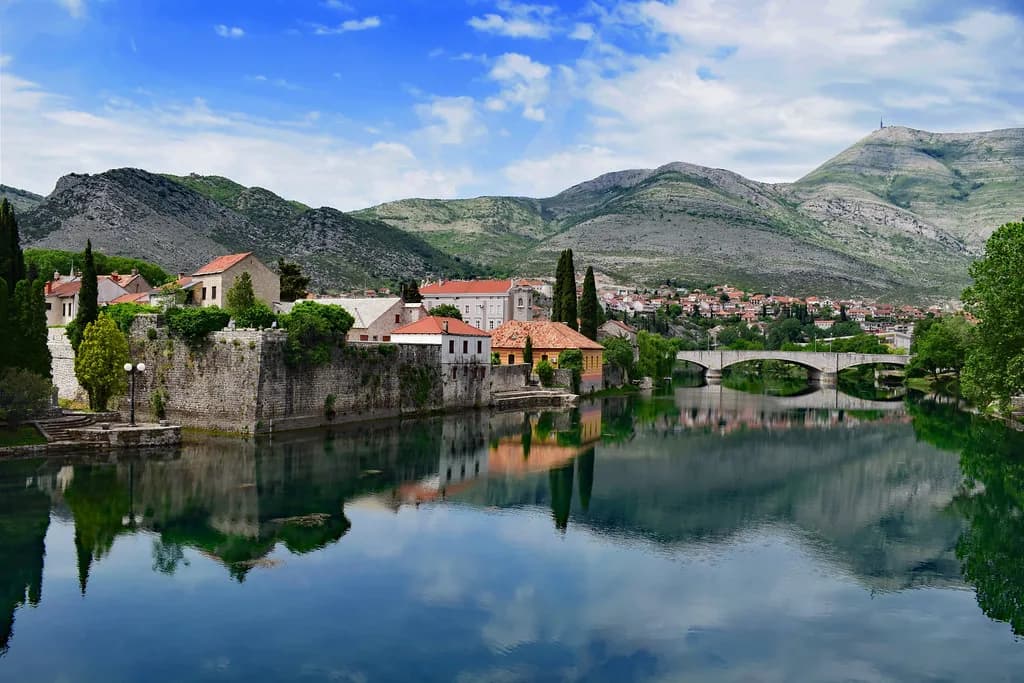
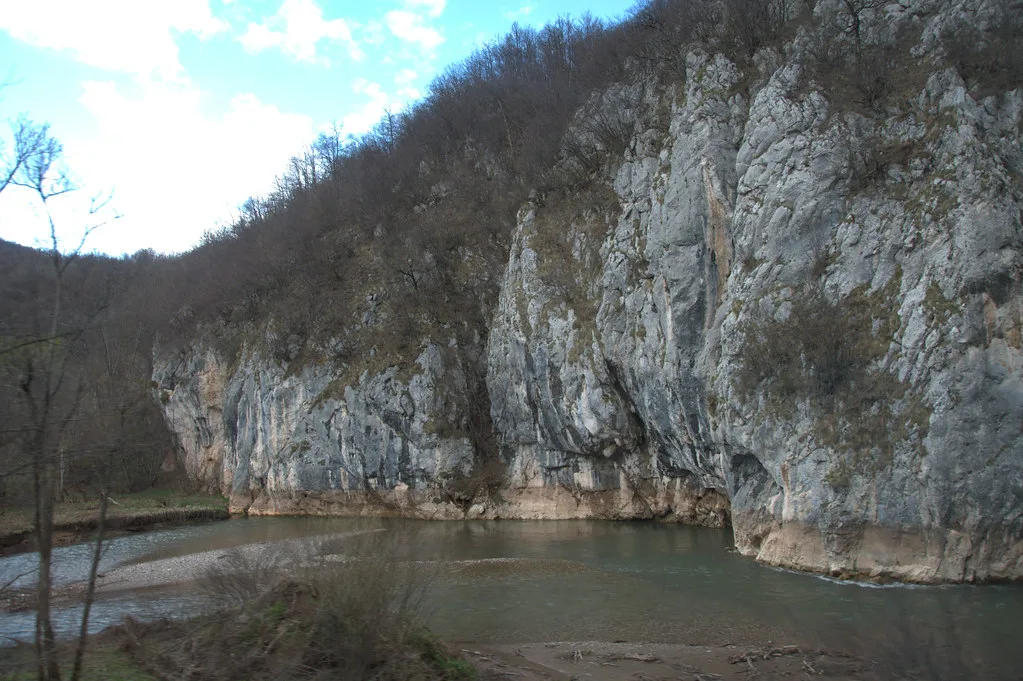
Trebinje, near the borders with Croatia and Montenegro, is the calmest town on this list. Its old town has Ottoman architecture, its squares are shaded by plane trees and lined with cafés, and the Arslanagić bridge, moved here in 1972, gives the place its own quiet landmark.
For the best view, walk up to the Nova Gračanica monastery on the hill above town for a panorama across the roofs. The town suits travellers who want Herzegovina without Mostar's midday crowds, and it makes a sensible base for the far south.
Višegrad: the bridge on the Drina
Višegrad exists on most itineraries for one structure: the eleven-arched Mehmed Paša Sokolović Bridge over the Drina, a UNESCO-listed Ottoman span made famous by Ivo Andrić's Nobel-winning novel. Even if you come only for the bridge, it justifies the detour east toward the Serbian border.
Andrićgrad, the purpose-built stone town next to it, is odd and a little artificial but still worth an hour, and the Drina valley scenery on the way is some of the best mountain landscape in central Bosnia.
Bihać and Una National Park: the northwest base
Bihać works as the base for Una National Park, the country's youngest national park, established in 2008 and known for clear rivers, waterfalls and karst scenery. Within the park, Štrbački Buk is the tallest waterfall you can reach, and Martin Brod sits at the confluence of the Una and Unac.
The town itself has the Fethija Mosque, originally a thirteenth-century Catholic church, the Captain's Tower and the ruin of St Anthony's Church, enough for a morning before you head for the water. Bihać is also the country's main rafting centre, which is the real argument for coming this far northwest.
If your dates are flexible, timing matters more here than in the cities: spring and early autumn suit walking and the waterfalls, while summer is for swimming and rafting. Our guide to Bosnia in May and the wider question of the best time to visit Bosnia both help you place the northwest in your itinerary.
Banja Luka: the second city, and who it suits
Banja Luka, around seventy kilometres north of Jajce, is Bosnia's second city and its most Austro-Hungarian in feel, with wide boulevards and a rebuilt Ferhadija mosque as its star cultural sight. It has the amenities of a real city and far fewer foreign visitors than Sarajevo.
It suits travellers who have already seen the highlights and want an unhurried Bosnian city, or those passing through on the road toward Croatia. It is a weak choice for a first short trip, where Sarajevo and Mostar give more per day.
Konjic and the towns most itineraries skip
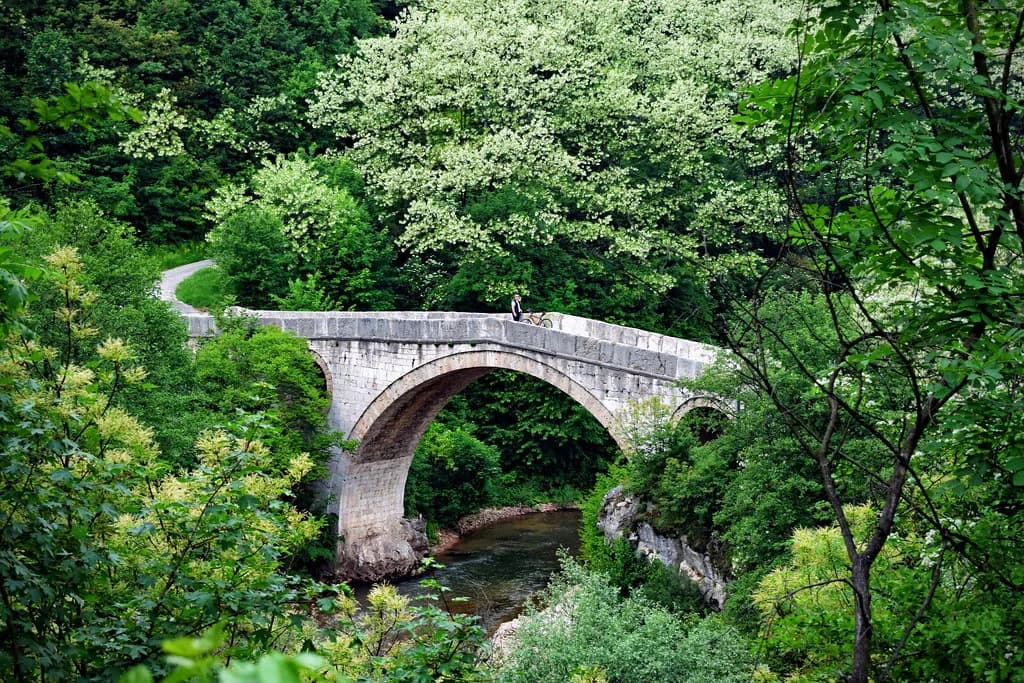
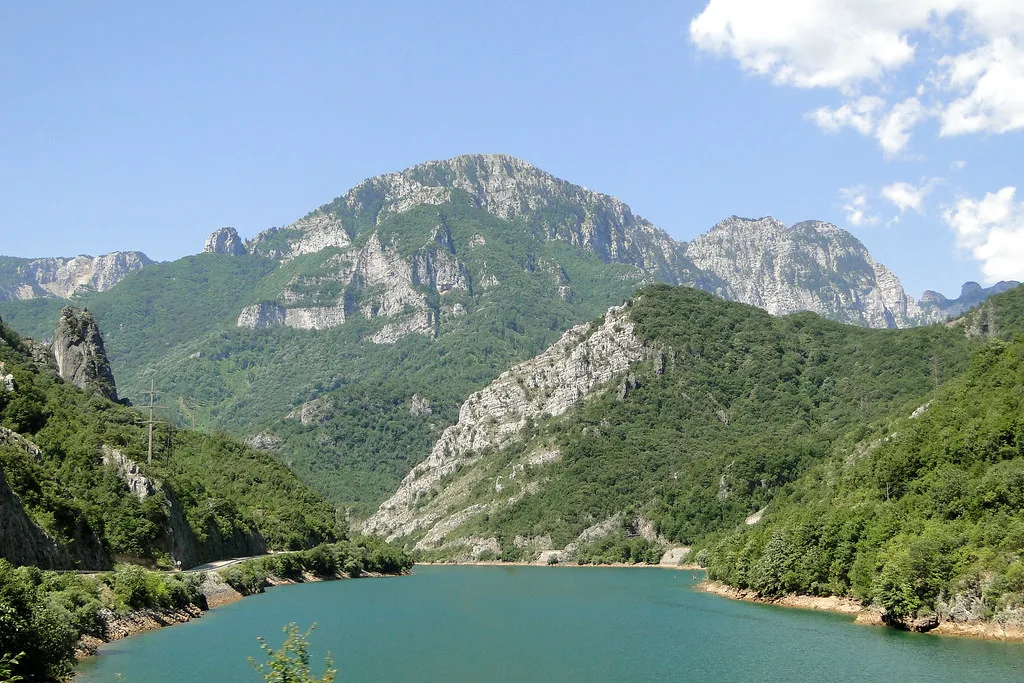
Konjic, between Sarajevo and Mostar, is an old stone town on the Neretva with an Ottoman bridge and a growing reputation for rafting and outdoor activity. It is a natural lunch stop on the drive south, and it deserves more than a photo from the bus window.
Tuzla and Zenica are working industrial cities with little of the postcard appeal of the south, and neither earns a place on a first trip. Tuzla's old town and salt-lake parks are pleasant enough if you are passing through, but they are not why most people come to Bosnia.
Srebrenica belongs on a different kind of itinerary: the Srebrenica-Potočari Memorial and Cemetery outside town is a place to pay respects and learn, not a sightseeing stop to tick off.
Who should choose which city
First-time visitors with four to seven days should take Sarajevo and Mostar and add Blagaj, Počitelj and Kravica as a Herzegovina loop. Travellers with a car and a week or more should add the heartland run of Travnik, Jajce and Banja Luka, or swing northwest to Bihać and Una National Park for rafting and waterfalls.
If you want calm over spectacle, base yourself in Trebinje and use it for the far south. If you are chasing scenery rather than cities, Sutjeska National Park and the Drina valley reward the drive more than any town on this list.
How the cities compare: size, setting and pace
Sarajevo is the only true metropolis, and it feels it: trams, traffic, hills and a dense old core. Mostar is a mid-sized city with a small, intense historic centre; Banja Luka is a spacious modern city without the tourist bustle; Jajce, Travnik and Trebinje are towns you can walk end to end in an hour.
Pace follows geography. Herzegovina towns are compact, sunny and easy to string together from one base, while Bosnian heartland towns are spread out along river valleys and reward slower driving. Blagaj, Počitelj and Konjic are afternoons, not destinations.
Getting between the cities
The Sarajevo–Mostar rail line is the standout: a scenic route through mountain scenery in roughly two hours, useful even when you have a car. Buses link the main towns, but services to Jajce, Travnik, Višegrad and Bihać are slower and thinner, so build slack into any day you move between them.
A car gives you the Herzegovina loop and the northern towns on your own schedule, but mountain roads are slow and winter conditions can close higher passes. Tolls, fuel and cross-border rules are worth understanding before you commit; fares and timetables change, so check current prices and departure times with the bus or rail carrier when you book.
Plan Your Trip
The best cities in Bosnia and Herzegovina are not a long list. Start with Sarajevo and Mostar, add Jajce for the medieval-and-waterfall combination, and use Trebinje when you want Herzegovina without the crowds. Skip the flat ranked-list mentality and match each town to the time you actually have.
Two practical notes will save you friction: carry convertible marks for smaller towns, and treat the Sarajevo–Mostar train as your car-free backbone. From there, the rest of the country opens up by road.
Explore more Bosnia and Herzegovina trip-decision guides
Frequently Asked Questions
What is the most beautiful city in Bosnia and Herzegovina?
Mostar is the most photographed for its single limestone arch over the Neretva, but Sarajevo has the richer everyday fabric: a bazaar of coppersmiths, Ottoman mosques a few steps from a Catholic cathedral, and mountain viewpoints above the valley. Jajce runs them close for compact drama, with a waterfall and a fortress inside a small medieval town. Beauty here is a matter of whether you prefer one perfect image or a city you can walk for days.
Which part of Bosnia and Herzegovina is best to visit?
Start with the Sarajevo–Mostar axis, which pairs the capital's depth with Herzegovina's landscapes. Herzegovina, the southern fifth of the country, is compact and easy to loop from Mostar, taking in Blagaj, Počitelj and Kravica Waterfall. Bosnia proper, to the north and centre, is greener and hillier, with Travnik, Jajce and Banja Luka rewarding a car and a few extra days.
Is Sarajevo or Mostar better to visit?
Sarajevo is the stronger choice for a first stop: more to see, better transport links and enough atmosphere to fill three nights. Mostar is smaller and more spectacular per square metre, but it absorbs tour groups around the Old Bridge during the middle of the day, so overnighting changes the experience. Ideal is both, with Sarajevo as the base and Mostar as the Herzegovina anchor.
How many days do you need to see the main cities in Bosnia and Herzegovina?
Four to seven days covers the core: two or three in Sarajevo, two in Mostar, and a day for the Neretva Valley stops around them. Add two or three more days if you want the heartland run of Travnik and Jajce, or a night in Bihać for Una National Park. Anything under four days means choosing one region rather than both.
Do you need a car to visit the cities in Bosnia and Herzegovina?
Not for the Sarajevo–Mostar spine, which works on a scenic train ride of roughly two hours plus buses. A car becomes valuable for the northern and northwestern towns, where services are slower and thinner. If you plan to drive, mountain roads are slow and winter conditions can affect higher passes, so build slack into the schedule.
Is Mostar doable as a day trip from Sarajevo?
Yes, and the train makes it easy, but a day trip shows you the bridge at its busiest. Mostar's old town fills with tour groups in the middle of the day and quietens sharply by evening, so an overnight stay gives you a different town. If you only have a day, arrive early and leave late to catch the calmer hours.
Sources
Trip-decision notes
Optional updates when we publish or revise a destination verdict.
You might also like
Continue reading
More guides you'll find useful