Bosnia in August: Heat, Crowds and Whether It's Worth It
August is Bosnia's hottest, busiest month. See typical Sarajevo and Mostar temperatures, where to escape the heat, crowd trade-offs and a clear verdict.
On this page
Bosnia in August works best for travelers who want warm, dry days for hiking, rafting and swimming in rivers, and who can build the day around heat and crowds rather than fight them. It is the wrong month if you want Mostar's Old Bridge to yourself at noon or if you hate arriving at a trailhead already sweating. The sections below sort the lowland furnace towns from the cool highlands so you can decide quickly.
The verdict
Choose August if your trip leans on altitude and water: the Dinaric slopes above Sarajevo are snow-free and dry, rivers run warm enough to swim, and city evenings sit around 22°C (72°F) for lingering on café terraces. Avoid August if your plan is mainly Mostar's Old Bridge, Sarajevo's old bazaar and stone-street sightseeing in the middle of the day.
If your decision is really about whether the country earns a trip at all, start with our verdict on whether Bosnia is worth visiting. The short version for August: yes for an active, highland-and-river trip; no if your image of Bosnia is a leisurely week of Ottoman old towns photographed in soft light.
Travelers who can move their dates will generally find the best time to visit Bosnia in May, June or early September, when hiking is idyllic and the heat has faded. Those who keep August need to trade the lowland midday hours for early starts and altitude, and plan around the prime-season price bump.
How hot August gets in Sarajevo, Mostar and the mountains
Sarajevo typically tops out at 27–30°C (81–86°F) in August, while the country as a whole averages roughly 28°C (82°F) by day and 14°C (57°F) at night, and Mostar and similar lowland towns regularly reach 35–38°C (95–100°F). Treat those as climate normals rather than a forecast: they describe a typical August, not the week you will be there.
Altitude is the lever. Above roughly 1,200 m (about 3,900 ft) temperatures tend to stay in the 18–24°C range, which makes Lukomir, Prokoško Lake and the Tjentište paths genuinely pleasant when Mostar is baking. The trade-off is that you must drive or hike up to get the relief, and exposed stretches above the treeline offer no shade.
Nights are another story. Mountains drop to around 15–18°C while valleys hold 20–23°C, so a jacket earns its place even on a hot trip; Sarajevo, ringed by mountains, can swing through several seasons in a single day.
Rain, humidity and afternoon storms
August is one of Bosnia's drier months, with rainfall around the 64–75 mm mark depending on the station, so expect a handful of rainy days rather than a bone-dry month. Plan around the brief afternoon thunderstorm, most common in the mountains, which can arrive suddenly around mid-afternoon and usually passes within half an hour.
Humidity is what visitors underestimate. Readings climb toward 70%, and Sarajevo's stone old town holds the heat into the evening, so late morning to sunset is the least comfortable stretch of the day. Front-load the walking, then use the siesta hours for a museum, a café or a shaded courtyard.
How busy Sarajevo's Baščaršija and Mostar's Stari Most get in August
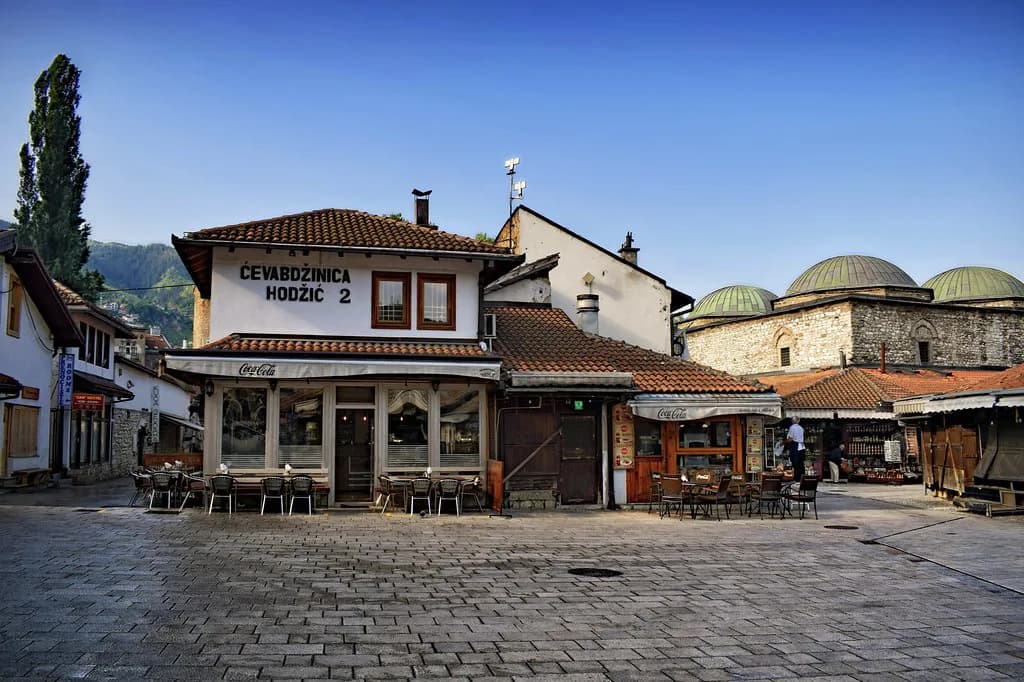
August is Sarajevo's peak visitor month, and Baščaršija's market lanes go shoulder to shoulder between roughly 11am and 4pm, with waits of 15–20 minutes at popular burek and ćevapi spots. Go at opening time if you want photographs, and accept that the city functions normally rather than feeling overwhelmed.
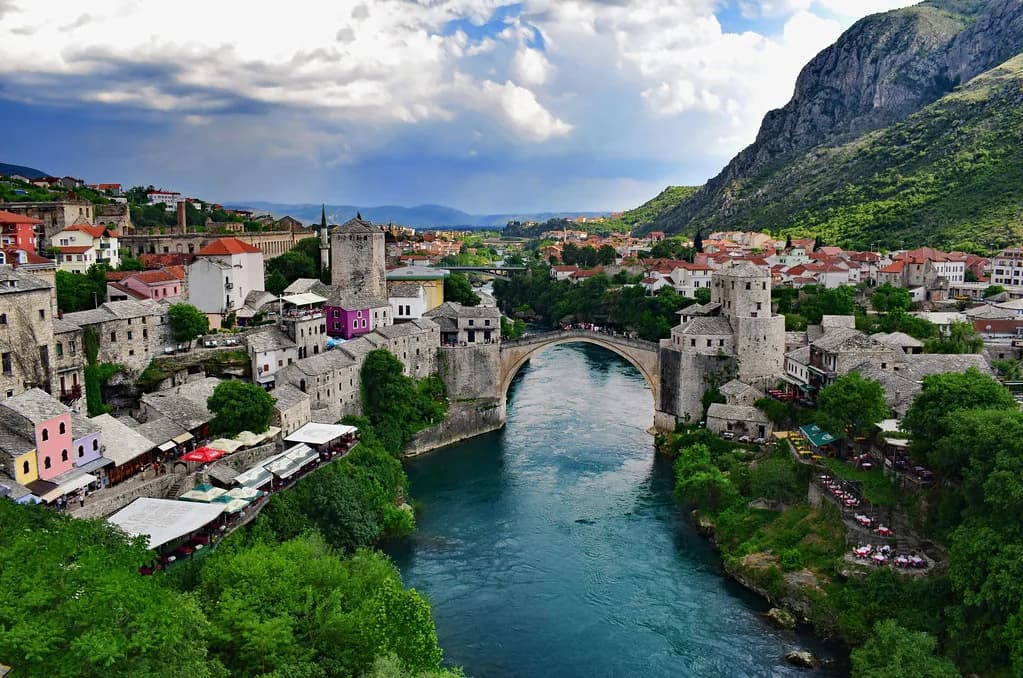
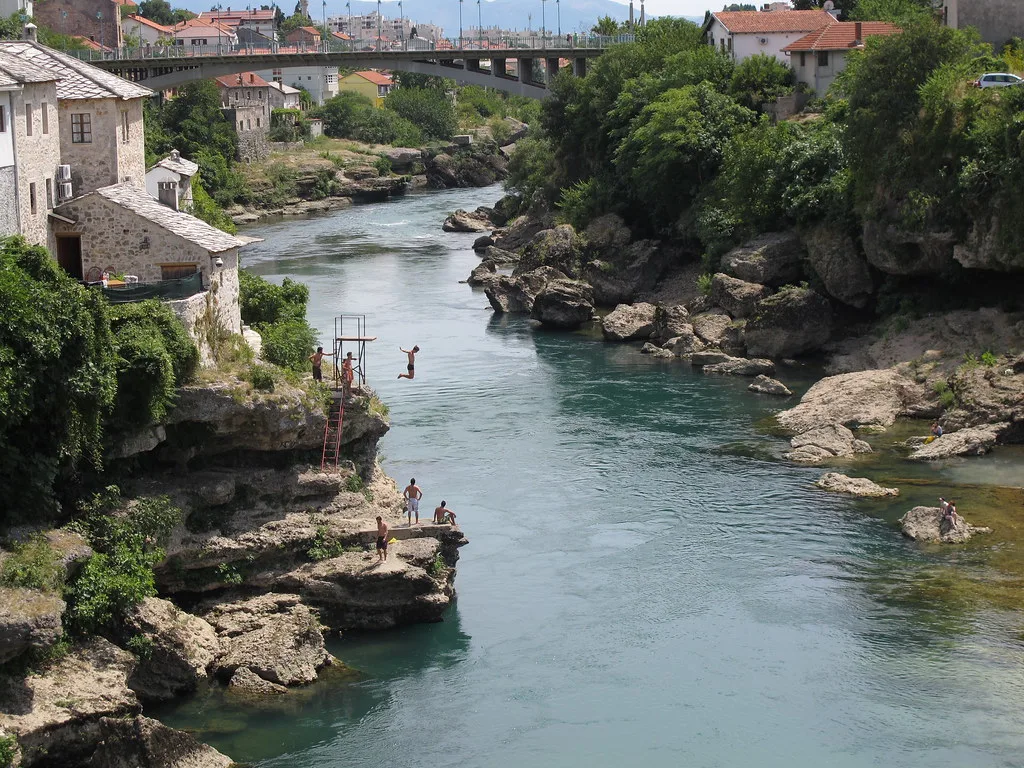
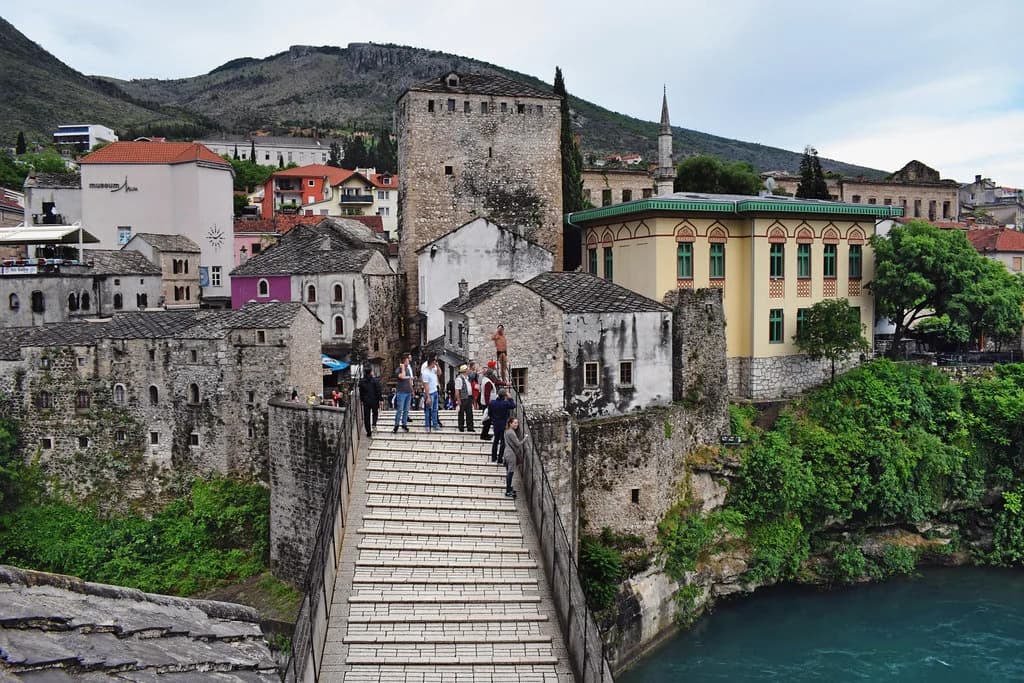
Mostar is the tighter squeeze. By 11am the Old Bridge area is crowded enough that a clean photograph can mean waiting for a gap, and the white limestone throws the midday heat back at you. Visit before 10am or after 6pm, when the stone has cooled and the day trippers have moved on.
The bridge divers are a recurring summer spectacle rather than a fixed calendar event. Divers traditionally collect tips before jumping from Stari Most, and the ritual is worth watching from the banks rather than from the middle of the crush.
Where the heat is bearable: highland villages, rivers and springs
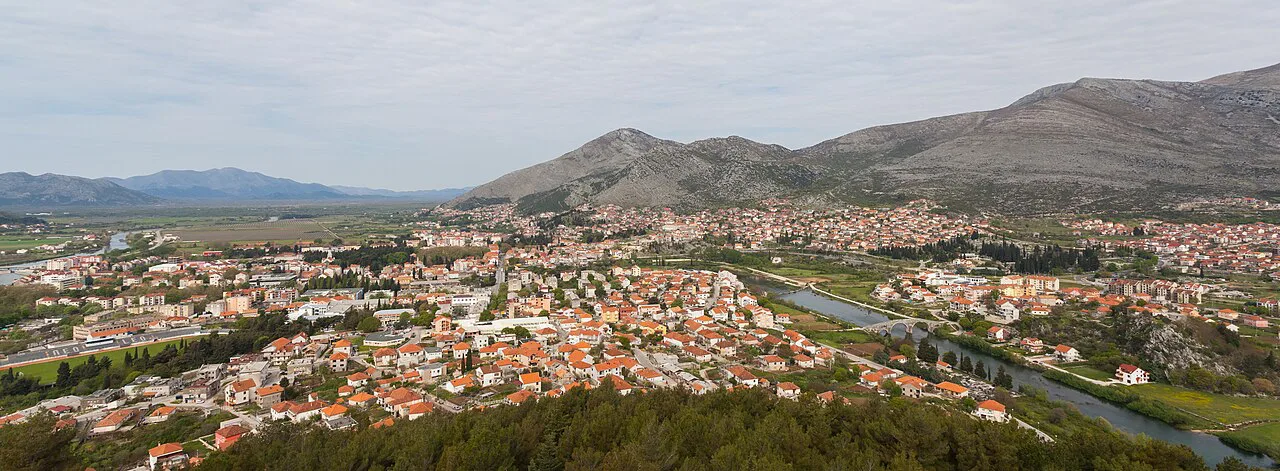
Lukomir, Bosnia's highest village, and the trails around it are the clearest escape: dry, snow-free and noticeably cooler, though the approach crosses loose scree high enough to reward proper shoes. Bjelašnica and the Sarajevo hills give the same relief with a shorter transfer, and Prokoško Lake offers highland water and pasture in one stop.
At lower altitude the strategy shifts to water. The Buna spring at Blagaj stays around 10°C (50°F) year-round, so the air rolling off it cools the cliff-side dervish house even when the valley is at 30°C (86°F), and early morning light on the pool is the best of the day. Vrelo Bosne near Ilidža is the Sarajevo equivalent, a shaded 3 km path under plane trees where locals wade in the spring-fed streams; tram 3 from Baščaršija takes about 30 minutes to Ilidža.
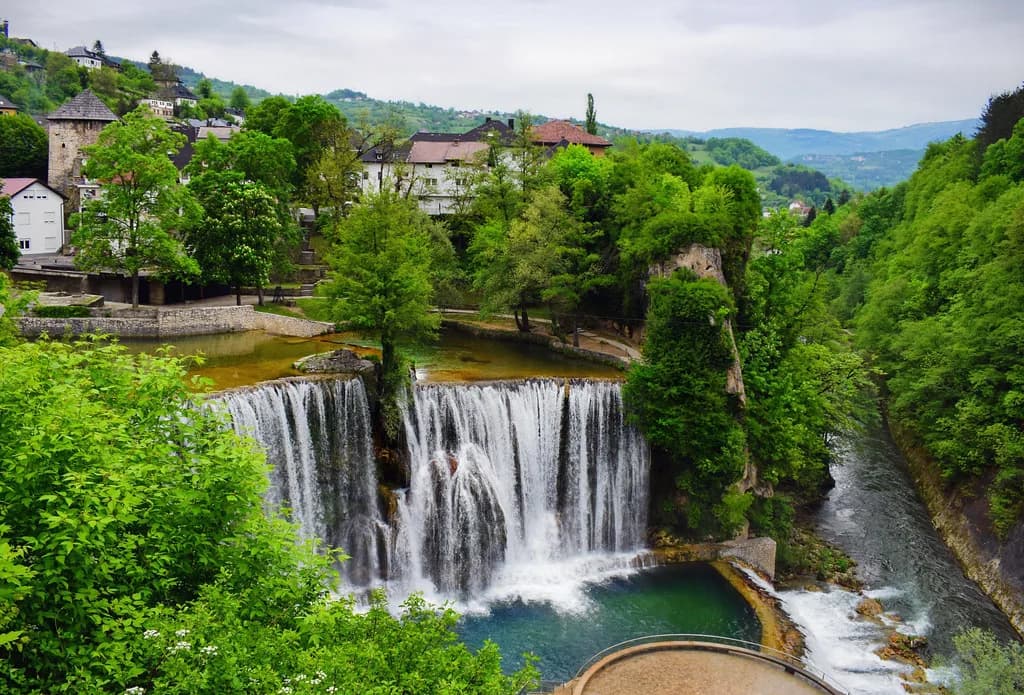
Jajce, with its waterfall and the nearby lakes, is a natural August pairing of water and shade, and calm water here suits a swim or a rented boat rather than a hike. Bihać and the Una give you the same combination on a bigger scale.
Rafting the Neretva and Una in low summer water
August is the most popular rafting month on the Neretva and Una, and the water is warm enough to swim between rapids. Levels are lower than in spring, so rapids feel gentler, which suits beginners and families but disappoints anyone chasing big whitewater; the Neretva between Konjic and Mostar still runs fast through a deep limestone canyon, with calm sections for first-timers and Class III water elsewhere.
Book two to three days ahead with an operator that carries safety kayakers, and take the morning slot: trips tend to start around 9am when the water is cool and the canyon is shaded, while the afternoon run means paddling in full sun. Agencies filling weekend places first are the ones based near Bihać for the Una and near Foča for the upper Neretva.
If your August is river-led, keep Sutjeska National Park and Trnovačko Lake on the shortlist for a later, quieter season.
Sarajevo's War Tunnel and the underground cool
The War Tunnel museum in Sarajevo is a genuinely useful heat strategy as well as a sobering history stop: the tunnel stays at a constant 18°C (64°F), and August's dry ground means you can walk the original passage without mud. The house on Tuneli street preserves the entrance as it was during the siege.
Arrive early to stay ahead of coach groups, and choose a licensed guide who includes the siege documentary if you want context rather than a walk-through. Bring your own light; power in the tunnel is unreliable and phone torches barely reach the far end. Tito's bunker near Konjic does the same job for Cold War history, holding about 21°C (70°F) underground, and pairs well with the town's Ottoman bridge before the day-trippers arrive.
Day-trip limits: why the Dubrovnik run eats a day
Dubrovnik looks close on the map and is a poor August day trip from Sarajevo. The border crossing alone can add around three hours round trip in peak traffic, turning the outing into a 14-hour day with very little coastline time at the far end. If you are weighing a coastal extension anyway, our guide on whether Zadar is worth visiting makes a more honest comparison for that decision.
Spend those hours inside the country instead. Konjic's stone bridge and Tito's bunker, the Blagaj tekija and the Neretva canyon all sit within a comfortable single day from Sarajevo or Mostar, and none of them needs a passport check. Kravica Waterfalls make a similar half-day from Mostar.
Neum and the coast-adjacent crowds
Neum is Bosnia's only stretch of coast, and in August it fills with regional holidaymakers rather than long-haul tourists. The water is warm and the setting is relaxed, but expect busy beaches and higher accommodation rates at the peak, so book ahead if a sea day is part of the plan.
Typical costs in August and what peak season does to prices
August is the most expensive month for accommodation in the popular spots, and coastal-adjacent Neum and the busy mountain towns fill with regional visitors, pushing rates to their yearly high. Entry tickets, transport fares and tour prices are set by each museum, park or rafting agency, so confirm those directly before you budget. Outside beds and tours, Bosnia remains one of the better-value countries in the region for food and coffee, and prices are in the convertible mark (KM).
How many days you need in August
Three to four days covers Sarajevo at a heat-tolerant pace: one early morning in Baščaršija, the War Tunnel, Vrelo Bosne and an evening on the terraces. Add two days for Mostar with Blagaj and Konjic, and a further day or two if you want rafting on the Neretva or Una or a highland hike.
Because the useful sightseeing window runs from early morning to about 11am and again after 6pm, August days deliver fewer usable hours than the same itinerary in June. Budget roughly a day more than you would in shoulder season rather than cramming lowland sights into the midday sun.
Getting there and getting around in peak season
Sarajevo is the main air gateway, with Mostar reachable by road or rail from the capital, and the country's roads are slow where they climb into the Dinaric Alps. In August, book intercity travel and any rental car early, and expect mountain routes to take longer than the distance suggests.
Wildfire risk can close sections of Una National Park and other trail areas at short notice. Rangers post updates at trailheads, so ask at the park entrance or a local tourist office before committing to a long hike.
August against May, June and September
May, June and early September are the strongest months for hiking, with less heat and far more comfortable conditions on the trails, which is why they sit at the top of the best time to visit Bosnia. August wins only if you want reliable swimming water, warm rafting and long, dry evenings, and can structure your days around the heat.
July is hotter and similarly busy, while September keeps much of the warmth with lighter crowds and easier walking, and October brings autumn color and emptier trails. If your dates are flexible at all, shifting from August to the second week of September rarely costs you anything in weather and usually improves the experience.
Who should choose a different month
Pick another month if your priority is unhurried photography in Mostar, cool city walking in Sarajevo, or comfortable lowland sightseeing with children. August also punishes anyone who wants to see everything on foot at midday, and the brief afternoon storms are a nuisance above the treeline.
Keep August if you are an active traveler who will trade a sweltering old town for a cool ridge, a raft and a swim, and who prefers early starts to crowds. Our neighbor guides to Bosnia in July and Bosnia in September show how much the temperature and the crowds shift on either side.
Plan Your August Trip
Build August around altitude and water, keep the lowland towns for early mornings and evenings, and you get Bosnia at its warmest and most alive. Chase midday crowds in Mostar and Sarajevo instead, and the month becomes a test of patience. Decide which trip you are taking before you book, and the rest of the plan falls into place.
Explore more Bosnia and Herzegovina trip-decision guides
Frequently Asked Questions
Is August a good time to visit Bosnia and Herzegovina?
Yes if you want warm, dry weather for hiking, rafting and river swimming, and you are willing to start early and spend the middle of the day at altitude or in the shade. It is a poor fit for travelers who want to walk Mostar's Old Bridge and Sarajevo's bazaar comfortably at midday, since those are the hottest and busiest hours of the month.
How hot is Mostar in August?
Mostar and other lowland towns regularly reach the mid-to-high thirties Celsius, roughly 35–38°C (95–100°F), while Sarajevo typically stays nearer 27–30°C (81–86°F). The Old Bridge area is hottest in the middle of the day, when stone walls radiate heat, so early morning and evening are the sensible visiting windows.
Can you hike in Bosnia in August?
Yes, and altitude is what makes it work. Above roughly 1,200 m temperatures tend to sit in the 18–24°C range, so trails around Lukomir, Prokoško Lake and the Tjentište area are dry and pleasant. Start early, because afternoon thunderstorms are common in the Dinaric Alps and the ground above the treeline offers no shelter.
Is August a good month for rafting in Bosnia?
It is the most popular rafting month on the Neretva and Una, with warm water and gentler rapids as levels drop from the spring peak. That suits beginners and families better than experts chasing big whitewater. Book a few days ahead with an operator that carries safety kayakers, and prefer the morning departure over paddling in the afternoon sun.
Sources
Trip-decision notes
Optional updates when we publish or revise a destination verdict.
You might also like
Continue reading
More guides you'll find useful