Bosnia in July: Heat, Crowds and Where to Go
July in Bosnia and Herzegovina brings hot, mostly dry days inland and on the coast. Here's where to go, what to expect and who should pick another month.
On this page
July is worth it in Bosnia and Herzegovina if you build the trip around early mornings, altitude and water, and skip the idea of a lazy coastal week. Herzegovina is genuinely hot, Sarajevo and the hills are noticeably milder, and the mountains above 2,000 m stay cool enough for hiking. If you wilt above 30 °C (86 °F), June and September give you the same landscapes with far less punishment.
The trade-off is simple: July delivers the country's driest, sunniest stretch and its fullest calendars, but also its peak crowds at the headline sights and its highest accommodation rates. Plan around the heat rather than against it, and the month works well for rafters, hikers and city people who like long evenings.
The verdict: who July suits and who should go in June or September
July suits travelers who want guaranteed dry weather, rafting on the Neretva, high-mountain hiking and long daylight, and who are happy to sightsee before 11am and after 5pm. It also suits anyone combining Bosnia with the Dalmatian coast, since Neum gives you a short Adriatic stop without a detour into Croatia.
It does not suit heat-averse travelers, families with small children tied to midday outings, or anyone picturing a beach holiday. Mostar's July average high reaches 34 °C (93 °F) and its average low only drops to 20 °C (68 °F), so nights bring little relief. If that sounds punishing, aim for the shoulder months instead; the best time to visit Bosnia sets out the alternatives month by month.
The country rewards a mixed itinerary more than most: you can bake in Herzegovina in the morning and sleep cool in Sarajevo or on Bjelašnica the same night. That flexibility is the strongest argument for July. If you are still deciding whether the country justifies the trip at all, start with is Bosnia worth visiting before you fix dates.
How hot July gets, region by region
Mostar and the Herzegovina plain are the furnace. July averages run from a 20 °C (68 °F) low to a 34 °C (93 °F) high, and summer peaks above 40 °C (104 °F) are possible, with the all-time record at 43 °C (109 °F). Plan outdoor sightseeing for the first few hours of daylight and treat early afternoon as indoor time, as the July normals for Mostar show.
Sarajevo sits about 500 m up and behaves differently, averaging 14 °C (57 °F) at night and 28 °C (82 °F) by day, with summer peaks nearer 36 to 37 °C (97 to 99 °F). Evenings cool off enough for a jacket, which makes the capital a sensible July base. Banja Luka in the north runs a similar pattern, averaging 16 °C (61 °F) to 30 °C (86 °F).
Altitude is the real escape. On Bjelašnica at 2,000 m, July averages only 9 °C (48 °F) at night and 14 °C (57 °F) by day, so a light fleece belongs in the daypack even in midsummer. The figures come from climate normals rather than forecasts, so treat them as typical conditions and expect hot spells to push higher.
Neum, the country's only coastal town, averages 22 °C (72 °F) to 32 °C (90 °F) in July with the Adriatic at about 25 °C (77 °F). That is warm enough for comfortable swimming and slightly softer than Mostar, though the town still gets hot afternoons. All regional July normals are collected in the climate tables for Bosnia and Herzegovina.
Rain, sunshine and thunderstorms in July
July is one of the drier months across most of the country, but not a dry month. Mostar records about 55 mm across roughly five rain days, Sarajevo about 75 mm, and Neum around 25 mm, making the coast the safest bet for uninterrupted sun as the monthly rainfall tables show.
The rain that does arrive inland often comes as afternoon thunderstorms rather than all-day drizzle, especially in the hills and the north. Build sightseeing into the morning, keep the afternoon flexible, and you rarely lose a full day. In Sarajevo, sunshine averages about eight hours a day in July, and Mostar gets around eleven.
Travelers report that Mostar can get hot enough for pavement to soften on extreme days, which is a practical argument for timing the old town early. Treat that as a reason to plan around midday rather than as a forecast for your dates.
Mostar and Herzegovina in July: brutal heat, quiet mornings
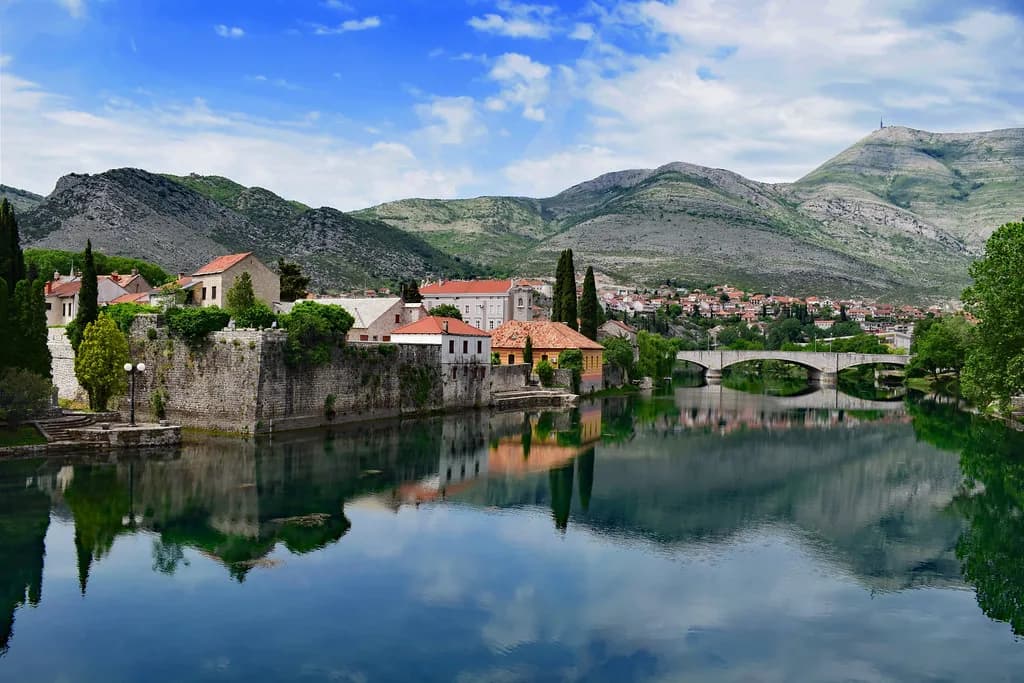
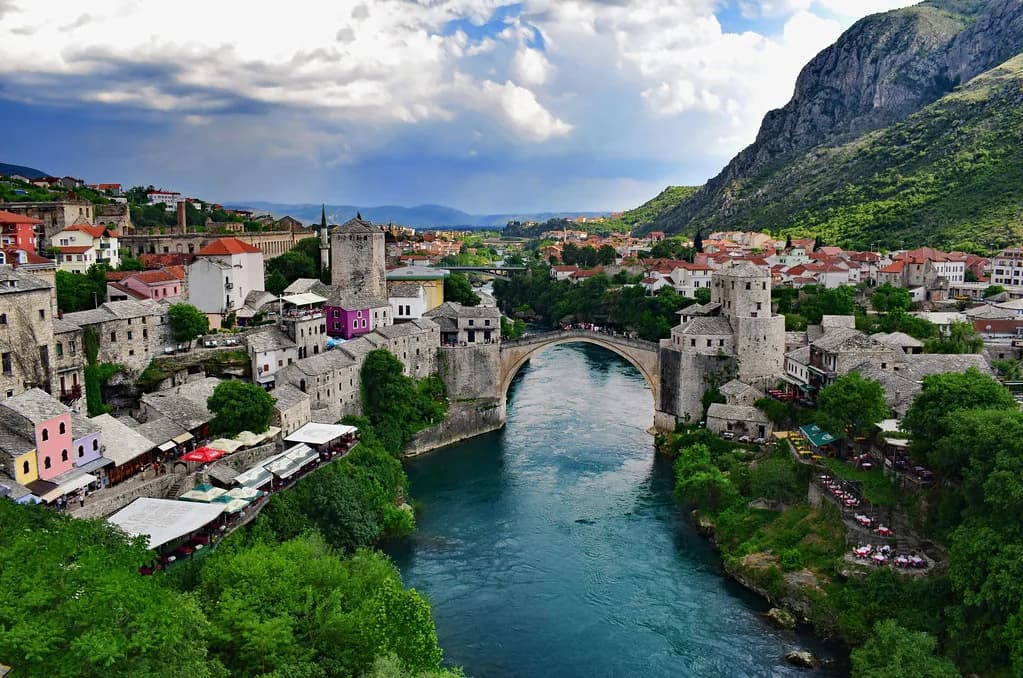
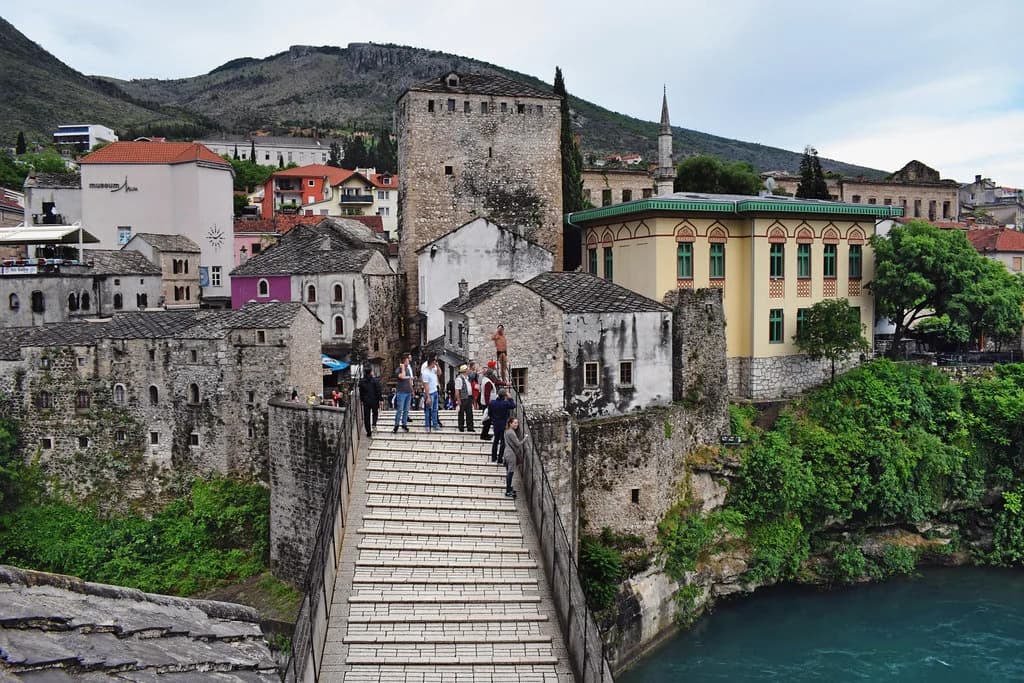
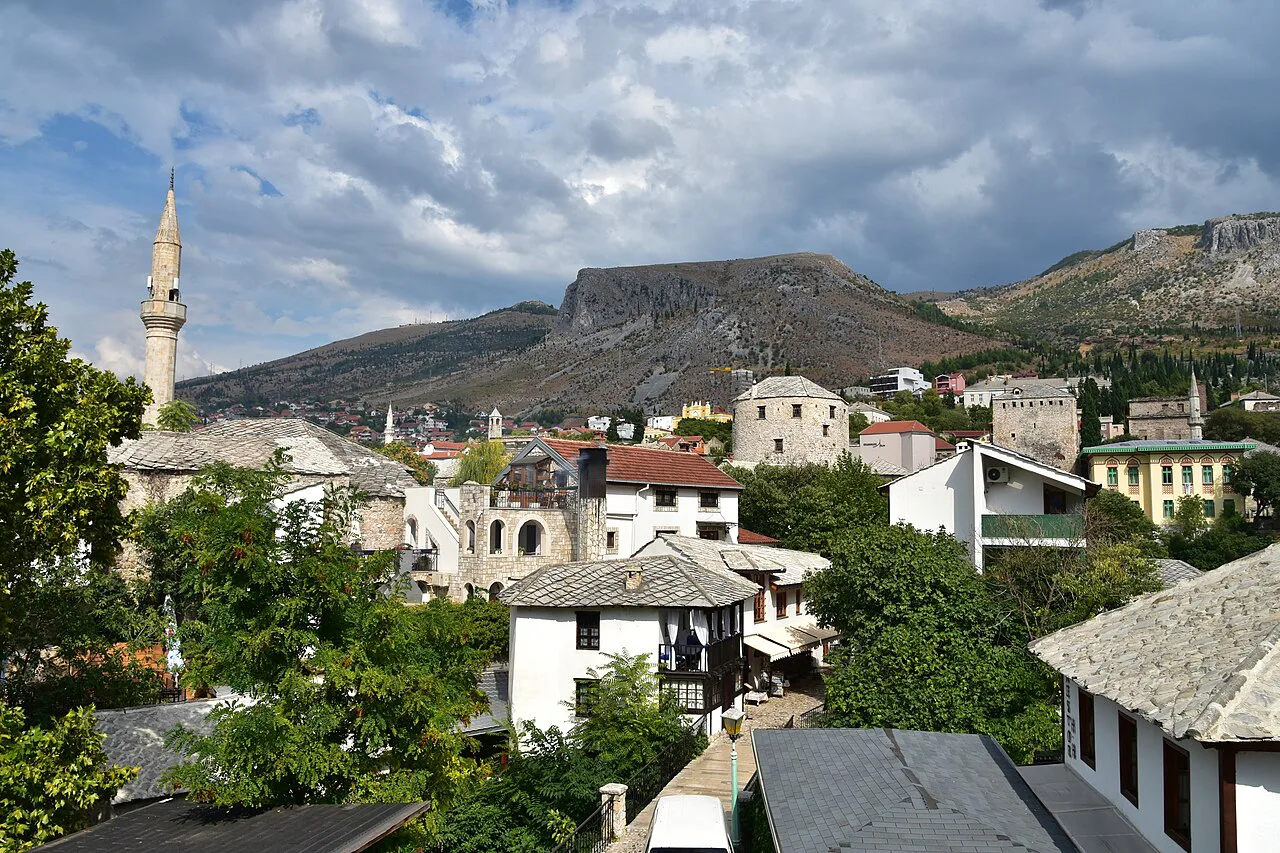
Mostar is the postcard image of the country and in July it is also the busiest, hottest stop on most itineraries. The Old Bridge in Mostar draws day-trippers in waves, so cross it before 9am or after 6pm and use the middle of the day for the shaded bazaar streets, coffee and cake, or a long lunch in the newer part of town where visitors thin out.
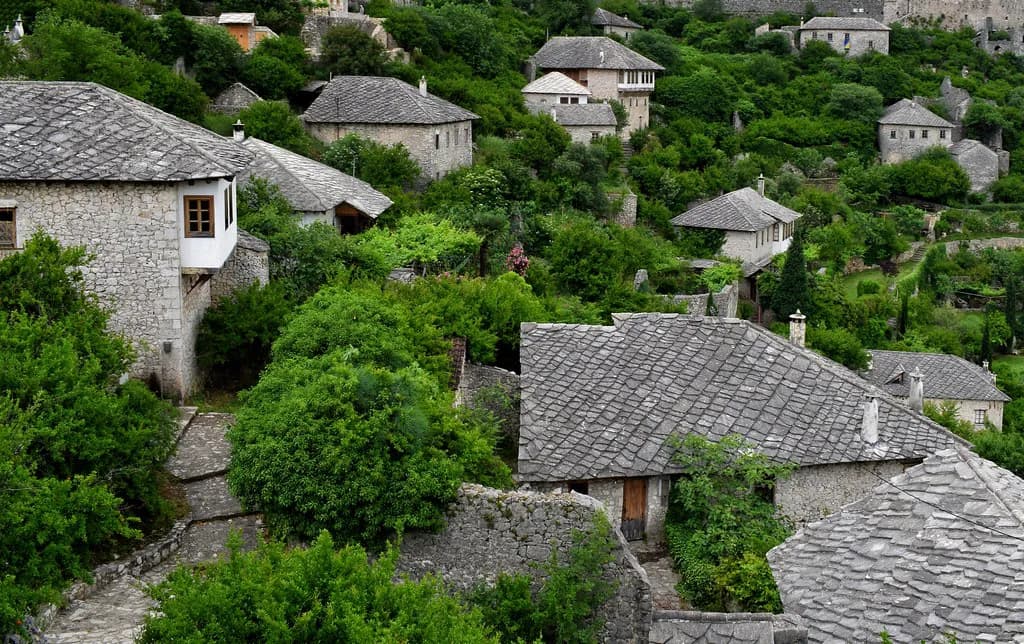
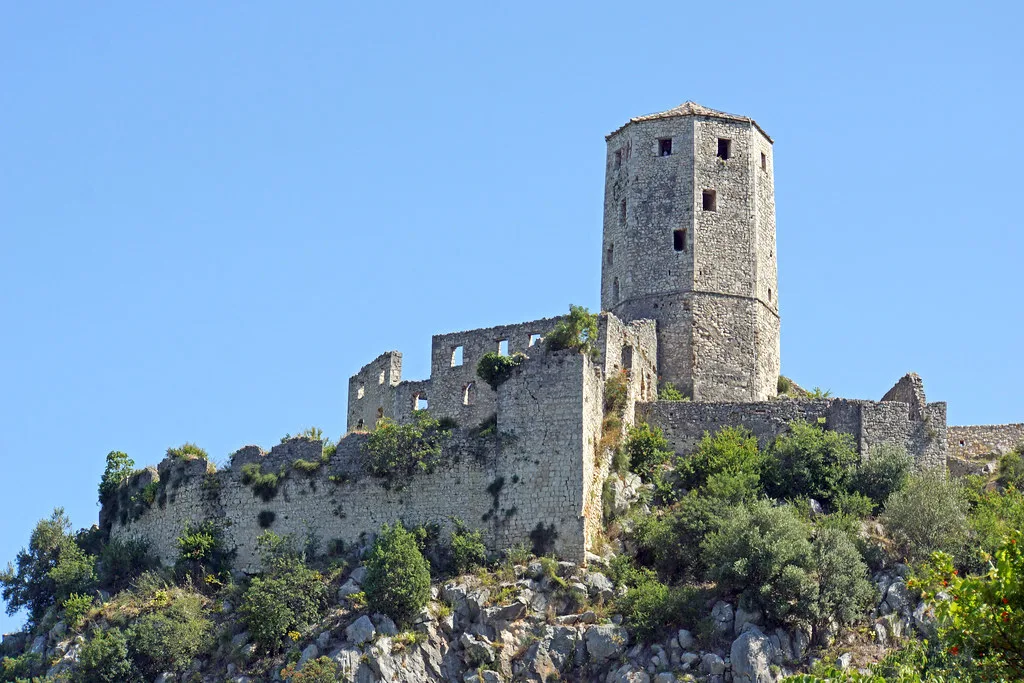
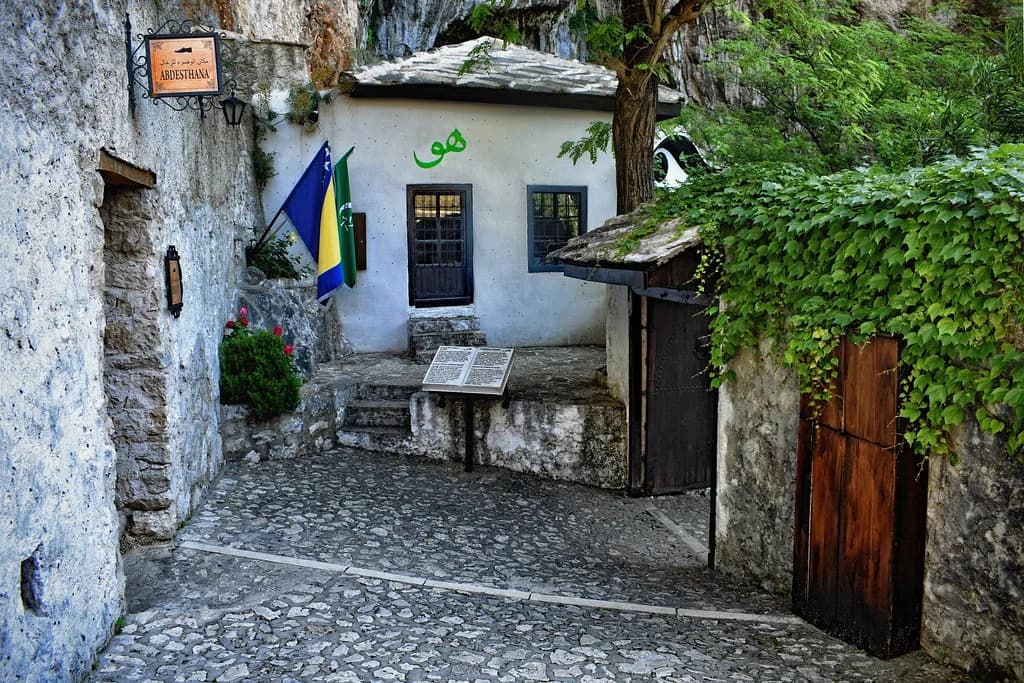
Blagaj, a short drive from Mostar, pairs a cliff-built monastery with a spring and a small waterfall, and it gets crowded by late morning. Počitelj, the Ottoman village climbing a hillside above the Neretva, rewards an early climb to the fortress for views across the valley. Both are half-day trips, not full days, which suits a July schedule.
Kravica Waterfalls is the region's big summer draw and fills up on sunny afternoons, so arrive at opening time if you want photographs without a crowd in them. Swimming beneath the falls is the reward for the early start. Outside these set pieces, Herzegovina in July is a slow, hot landscape of vineyards and stone villages best explored by car, which is why renting a car in Bosnia makes sense for this region.
Sarajevo and the hills in July: the cooler option
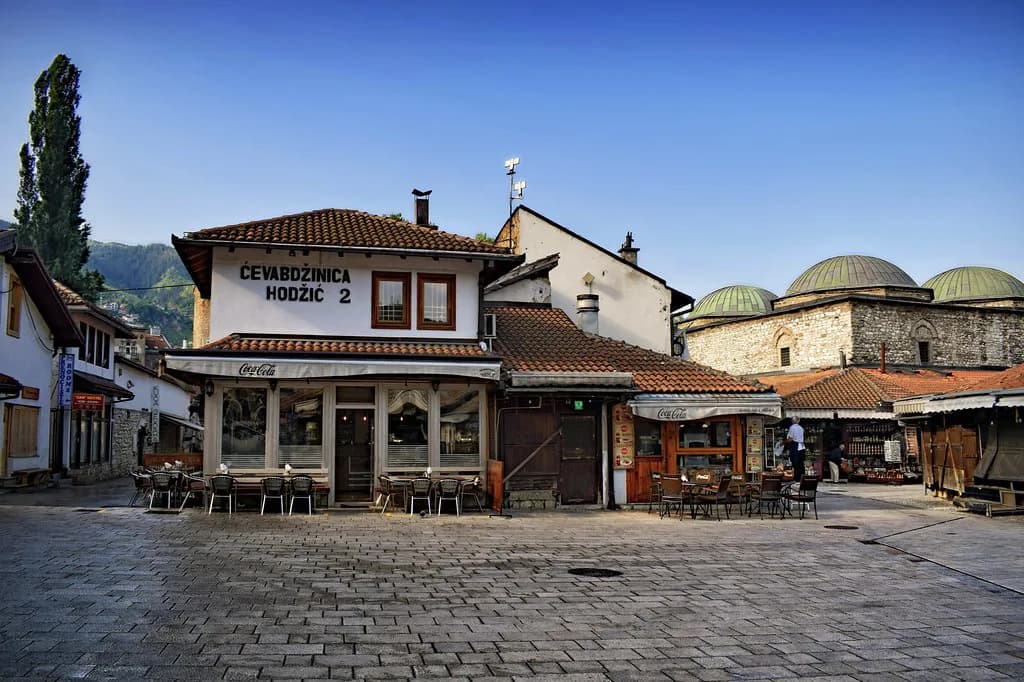
Sarajevo is the most comfortable city in the country in July and the most rewarding for anyone interested in 20th-century history. The old bazaar quarter mixes Ottoman and Austro-Hungarian architecture, and the city's museums and memorials covering the siege of the 1990s are heavy but essential. The Latin Bridge marks the spot of the 1914 assassination that helped ignite the First World War.
The Tunnel of Hope, the wartime supply tunnel under the airport, is a short trip from the center and pairs well with a morning in town. Because Sarajevo sits on a plateau with cool evenings, it works as a base for several nights rather than a single stop.
From the city you can be in mountain villages within an hour. Lukomir, the country's highest and oldest continually inhabited mountain village, offers stone houses and traditional herding life, and the surrounding trails are at their most walkable in July. A Bosnia itinerary built around three nights in Sarajevo and day trips into the hills handles the heat far better than a Mostar-heavy plan.
Neum and the 7 km of coast in July
Bosnia and Herzegovina's coastline is a single 7 km (4 mile) strip around Neum, wedged between Croatian territory, and it is not a resort destination to build a week around. The sea reaches about 25 °C (77 °F) in July and the town averages 22 °C (72 °F) to 32 °C (90 °F), which is pleasant for a day or two of swimming.
Treat Neum as a convenient coastal pause on the drive between Mostar and the Croatian border rather than as a beach holiday. It makes a sensible overnight stop and a place to swim, but travelers expecting island coves and long promenades should look at the Croatian coast instead. Money in Bosnia is straightforward here, with the convertible mark used everywhere and cards widely accepted in tourist areas.
The border geography matters for planning: the strip splits Croatian territory, so a drive along the coast crosses in and out of the country. Rather than guessing at queues, check the current situation with your rental company or the border authority before you commit to a tight schedule.
Mountain and rafting country: Bjelašnica, Konjic and the Neretva
The Neretva river runs cold and clear, and in July the rafting season is in full swing. Operators around Konjic run half-day trips through rapids past wooden houses and riverside barbecue stops, which makes a natural midday alternative to sightseeing in the heat. Konjic itself is a small, relaxed town with the river through its center and a lake nearby for kayaking.
Bjelašnica, south of Sarajevo, has hiking and cool air in July when the ski slopes are green and quiet, with average highs of just 14 °C (57 °F) at 2,000 m. Higher still, Maglić is the country's highest peak at 2,386 m, and the Dinaric Alps offer multi-day routes for fit walkers. Bring real layers: mountain weather changes fast even in midsummer.
Vjetrenica, the country's largest cave, stays cool and breezy regardless of the surface temperature, with about 2 km of its 7 km system open to visitors. It pairs well with the Zavala area and the old Austro-Hungarian railway line, now repurposed as the Ciro cycle route. Adventure here is a July strength rather than a compromise.
How many days you need in July
Give Bosnia and Herzegovina five to seven days in July if you want both Herzegovina and Sarajevo without spending the trip in a car. A workable split is two nights in Mostar for Blagaj, Počitelj and Kravica, one night near Konjic for rafting, and two or three in Sarajevo with a mountain day.
Three to four days is enough for a focused trip: Mostar and Sarajevo by road, with an early Kravica visit on the way. Anything shorter turns into a day-trip dash and leaves you exposed to the worst midday heat with no base to retreat to.
Add a night if you want Neum for swimming, and add two if you plan to hike in the high mountains. July's long daylight lets you do more per day, but the heat argues for fewer stops with longer stays rather than more stops with quick looks.
Crowds and timing: Kravica, Blagaj, Počitelj and Stari Most
July is peak season for the country's headline sights, and the pattern is consistent: tour buses arrive mid-morning and leave by late afternoon. Stari Most, Blagaj and Počitelj are all busiest roughly between 10am and 4pm, so the early and late windows are yours.
Kravica Waterfalls in July can be packed on a sunny weekend afternoon, so aim for the first hour of the day. Mostar's old town becomes far more pleasant after the day-trippers leave, when the cobbled streets and lanterns are at their best. If crowds would ruin the trip, consider Bosnia in June or Bosnia in September, when the same sights are calmer and the heat is gentler.
Typical costs in July
July is the most expensive month for accommodation in Mostar and along the coast, and the least negotiable. Prices for rooms in the old town and for Neum in high summer sit at their annual peak, while Sarajevo and the smaller towns stay comparatively reasonable.
Food and drink remain good value by Western European standards, particularly outside the most tourist-heavy streets of Mostar, where the newer town offers better prices for the same quality. The country's own wine and coffee are inexpensive pleasures. For daily budgeting, the money in Bosnia guide explains the convertible mark, card acceptance and cash habits.
Rafting, cave entry and similar activities carry published operator rates, which vary by company and group size. Rather than relying on a figure from last season, ask your chosen operator for the current price when you book, and confirm whether transport from Konjic is included.
Getting around and getting there in July
A car is the most efficient way to cover Herzegovina, the Neretva valley and the mountain villages in July, when you want to move between stops early and rest during the heat. Roads are generally good, though mountain routes are slow and winding, so allow more time than the distance suggests.
Buses connect Sarajevo, Mostar and Konjic, and they are a reasonable option if you are sticking to the main towns. Schedules change with the season, so check current departure times when you arrive rather than relying on a plan made months earlier. For a border crossing or an airport transfer, leave a buffer in July, when traffic is at its heaviest.
Arriving from Croatia by road is the common approach, and Neum sits on that coastal route. If you are driving your own or a rental car, carry the vehicle documents and check the current requirements with your rental company. For connectivity, a Bosnia eSIM set up before you travel saves hunting for a local SIM in the July heat.
Who should choose another month
Heat-sensitive travelers, older visitors and families with toddlers should pick June or September, when daytime highs in Mostar drop into the high twenties and the crowds thin. Photographers will find better light and emptier streets in September, and hikers get firmer, cooler conditions on long routes.
Beach-seekers should look elsewhere entirely in July: the 7 km at Neum cannot carry a week, and Croatia's islands are a short drive away. Anyone wanting to combine cities, mountains and coast in one relaxed trip will find July workable but crowded, and should book the Mostar nights early. Above all, decide based on whether you can structure your days around the heat, because in Herzegovina that is the deciding factor. If you are weighing a different Adriatic base for the same heat-and-crowds question, our Zadar verdict covers how that city handles peak summer.
Plan Your Visit
July in Bosnia and Herzegovina is a strong month if you treat it as a mountain-and-river trip with city mornings, and a poor one if you plan long midday walking tours in Mostar. Base yourself in Sarajevo for comfort, use Konjic and the Neretva for adrenaline, and keep Herzegovina for dawn and dusk. If you want the same landscapes without the heat, shift to June or September.
Explore more Bosnia and Herzegovina trip-decision guides
Frequently Asked Questions
Is Bosnia hot in July?
Yes, especially in Herzegovina. Mostar averages a low of 20 °C (68 °F) and a high of 34 °C (93 °F) in July, with peaks above 40 °C (104 °F) possible. Sarajevo is milder at about 14 °C (57 °F) to 28 °C (82 °F), and the high mountains stay much cooler.
How hot is Mostar in July compared with Sarajevo?
Mostar runs roughly 6 °C (around 11 °F) hotter by day, averaging 34 °C (93 °F) against Sarajevo's 28 °C (82 °F), and its nights stay warm at around 20 °C (68 °F). Sarajevo sits about 500 m higher and cools off after dark, which makes it the easier July base.
Does it rain in Bosnia in July?
July is one of the drier months, but not dry. Mostar records about 55 mm of rain, Sarajevo about 75 mm, and Neum around 25 mm. Inland, rain often arrives as afternoon thunderstorms, so morning sightseeing is the safer bet.
Is July a good time to visit Bosnia and Herzegovina?
It is a good time for rafting, mountain hiking and city breaks built around early starts. It is a poor time for heat-sensitive travelers or anyone wanting a beach holiday, since the coast is a single 7 km strip at Neum. June and September offer the same scenery with gentler temperatures.
How many days do you need in Bosnia in July?
Five to seven days lets you cover Mostar and Herzegovina, rafting near Konjic and Sarajevo without rushing. Three to four days works for a focused Mostar-and-Sarajevo trip with one early waterfall visit. Add time if you want Neum or high-mountain hiking.
Is Bosnia expensive in July?
July is the peak month, so accommodation in Mostar and at Neum is at its most expensive, and booking early matters. Sarajevo and smaller towns stay comparatively reasonable, and food and drink remain good value by Western European standards.
Sources
Trip-decision notes
Optional updates when we publish or revise a destination verdict.
You might also like
Continue reading
More guides you'll find useful