Bosnia in April: Weather, Crowds and Whether It's Worth It
April is one of the best months to visit Bosnia and Herzegovina, with mild weather, thin crowds and lower prices. Here is who it suits and what to expect.
On this page
April is the best month of the year for most first trips to Bosnia and Herzegovina, and the reason is trade-offs rather than perfection. You get comfortable daytime temperatures, thin crowds in Sarajevo and Mostar, and waterfalls and rivers running full from snowmelt, while accepting changeable rain and uncertain high-mountain conditions.
This is a country of three April weather stories rather than one: continental Sarajevo and its surrounding mountains, Mediterranean-flavored Herzegovina, and the northern lowlands around Banja Luka. Plan your route around the region whose spring arrives when you do, and April rewards you with lower prices and space to move. For context on the destination overall, see whether Bosnia is worth visiting before you fix dates.
The verdict on Bosnia in April
Go in April if your list is cities, Ottoman-era old towns, waterfalls and river sports. Skip it if your plan depends on dry trails high in the mountains or long guaranteed sunshine on the Adriatic, because spring in Bosnia is real spring: warm afternoons alternate with wet, cold spells and the high country stays unpredictable.
Spring temperatures across the country sit broadly between 10 and 20 °C (50 to 68 °F), and the season can slide unpredictably from winter to summer-like days. Treat that range as typical conditions, not a forecast, and build one indoor option into each day so a wet morning does not derail the trip.
The practical payoff is that April is not peak season. Popular spots like Mostar's old town fill up in summer, and summer accommodation prices hit their highest point, so spring buys you breathing room at the landmarks and a softer bill.
Who April suits and who should wait
April suits city travelers, couples and photographers who want Baščaršija and Stari Most without elbows in the frame, and anyone combining culture with whitewater on the Neretva or Una. It also suits budget-minded travelers, since the country's price level is moderate compared with Croatia and the shoulder month keeps costs down, though exact figures depend on your booking and you should convert money with our money in Bosnia explainer.
Wait for late May or June if you are mainly hiking in Sutjeska or the high ranges, or if you need warm, settled weather for a family beach week at Neum. September is the other strong alternative for warm days and fewer people, and it often beats April for anyone who prioritizes dry weather over spring water.
If your dates are fixed in April, design the trip around low and middle elevations, where spring arrives first. That means Sarajevo, Mostar, Jajce, Travnik and the Una valley rather than the peaks, with mountain days kept flexible enough to swap according to the weather.
What April weather feels like in Sarajevo, Mostar and the mountains
Sarajevo and the surrounding mountains have a continental climate: cold, sometimes snowy winters and warm summers, with big day-to-night swings, so layers matter even in April. Herzegovina, centered on Mostar, has a Mediterranean pattern with mild, wet winters and hot, dry summers, and it warms earlier than the capital. The north around Banja Luka is continental too, with warm summers and cold winters.
Rain is the main risk in April, with spring varying sharply from year to year and some seasons delivering plenty of wet days. Herzegovina around Mostar and Trebinje tends to be drier and warmer than Sarajevo, while the mountains near Jahorina and Bjelašnica stay notably colder and can still hold late snow.
Sarajevo in April: Baščaršija, the old town and the hills
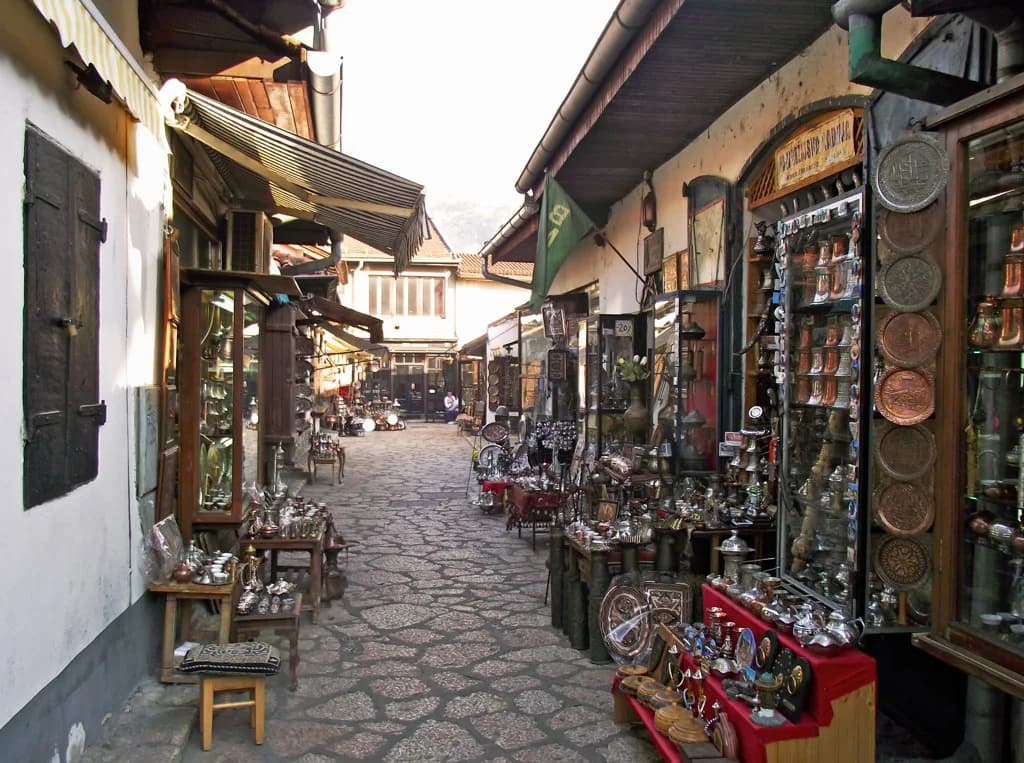
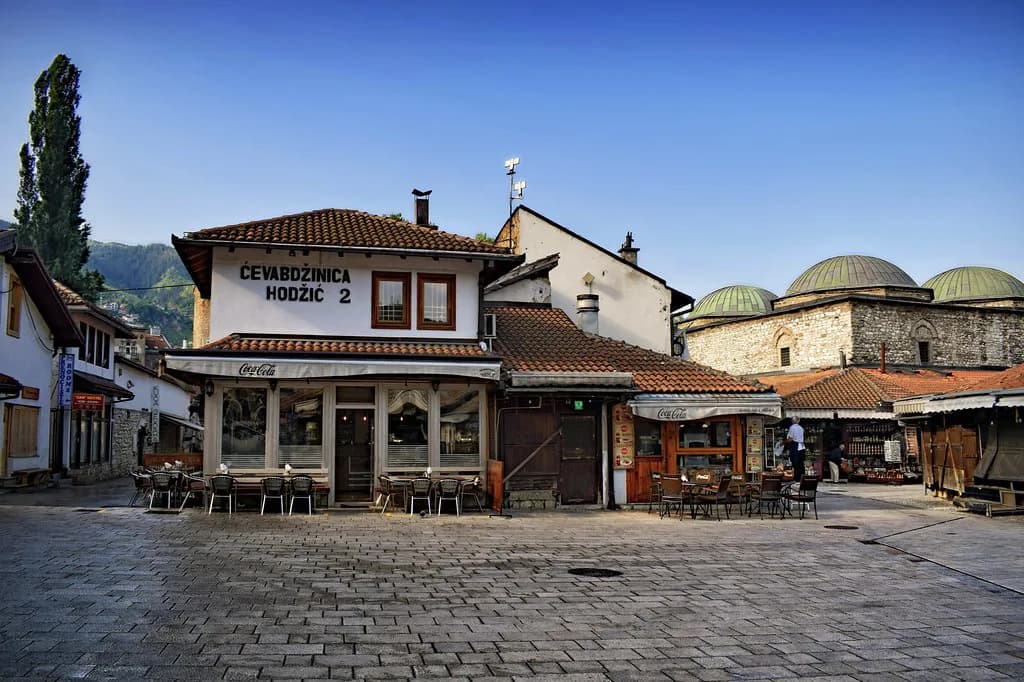
Sarajevo is at its most usable in April, when the old bazaar of Baščaršija is walkable without summer crowds and museum days fill rainy afternoons. The historic core mixes Ottoman lanes, Austro-Hungarian facades and a compact scale, so you can cover a lot on foot between showers.
Spring is the season when the city comes back to life outdoors, with locals returning to the sun after winter and the hiking trails of the surrounding hills starting to open. Use the mild mornings for the hills and keep afternoons for coffee and the old town, which is also the pattern travelers planning longer April trips tend to settle into.
Mostar and Herzegovina: the Old Bridge before the summer crush
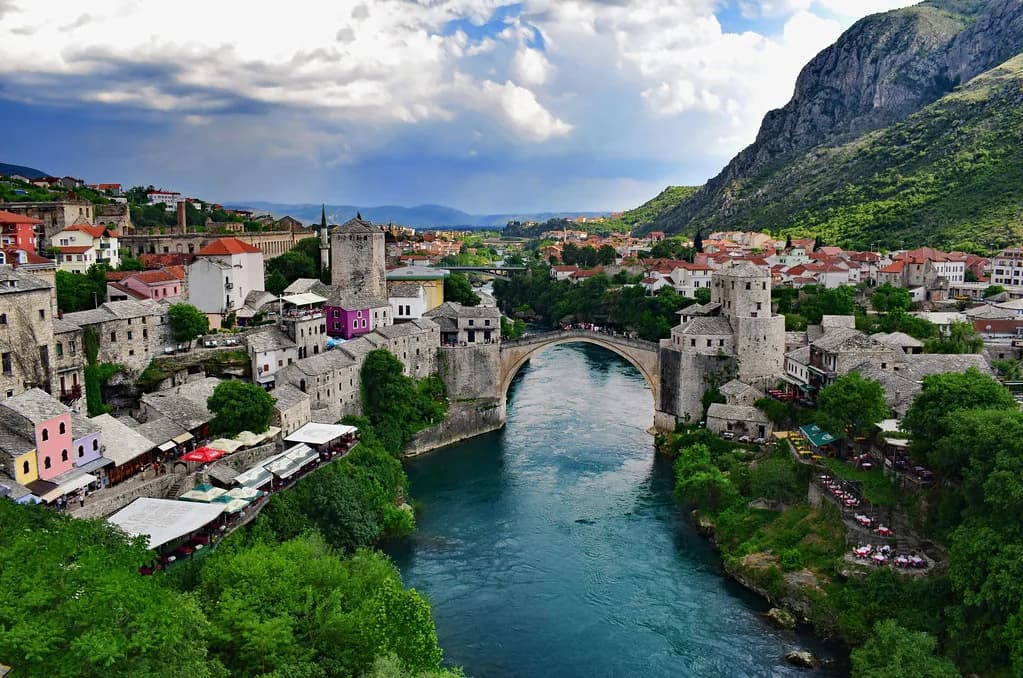
Mostar in April means the Old Bridge in Mostar with room to linger, the bazaar without the summer wall of tour groups and the Neretva running full and cold below. The famous bridge divers are a summer spectacle, so expect the town to be quieter and the Stari Most viewpoint shot to be far easier to get. For the wider picture of what to prioritize, see the best places to visit in Bosnia. If your trip extends south to the Bay of Kotor, weigh the same shoulder-season trade-offs and decide whether Kotor is worth visiting in spring.
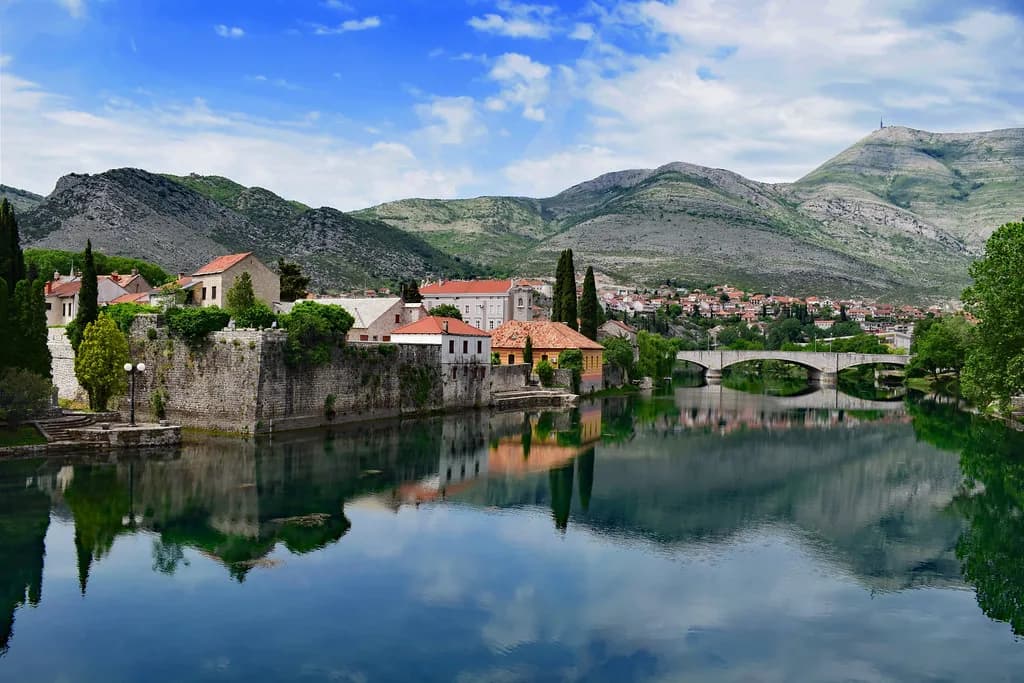
Herzegovina's milder, Mediterranean climate makes April a comfortable window for Trebinje, wine country and the monasteries and caves around it. Late spring harvest is still ahead, but the valleys are green and the driving is easy, which suits a slow loop through the south rather than a quick in-and-out.
Jajce, Travnik and the Una: waterfalls and Ottoman towns at spring flow
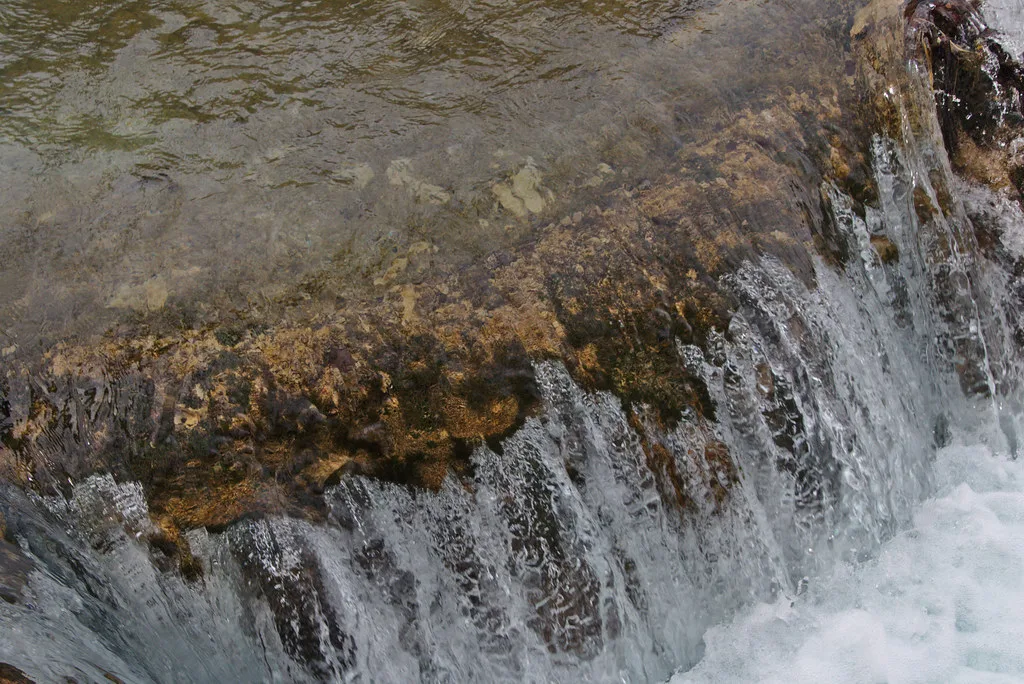
Jajce is the standout April stop for water: the waterfall slices straight through the town center, and snowmelt and rain make it dramatic. The old watermills at Mlinčići and the surrounding hills round out a half day, and spring foliage frames the whole scene.
Travnik's Ottoman-era bazaar, fortress and the Plava Voda spring come alive in spring, with flowers and a pleasant climate that make walking the old town easy. Further northwest, Una National Park is best in spring when the river runs through canyons and waterfalls at full volume and early-season rafting is still on the table.
Ski country in April: Jahorina and Bjelašnica in the shoulder season
Jahorina and Bjelašnica sit within easy reach of Sarajevo and hosted events during the 1984 Winter Olympics. In April they are between seasons: the winter ski window generally runs December to March and depends on snow, so do not build an April trip around lift-served skiing. Check Jahorina's own snow and lift reports once your dates are firm.
What April does offer up there is quiet mountain scenery, cold mornings and mud on lower trails, with the odd late snowfall possible. Treat the mountains as a scenic add-on, not the main event, and keep the car flexible if the weather turns.
Rafting and river days: when the snowmelt and rain make it work
April is prime shoulder-season water. Snowmelt plus spring rain fill the rivers, and the Neretva and Una both work well for rafting before summer heat thins the flow and raises the temperature. Some summer days get too hot for hard hiking, while the rivers stay cold and fast in April.
Book rafting through an operator that runs trips in April and gives you the water level and gear upfront, since conditions change with rainfall. Cold water means wetsuits matter more than in July, and river days pair naturally with a night in Konjic or Bihać rather than a long drive back to Sarajevo.
Hiking around Sarajevo before the summer heat
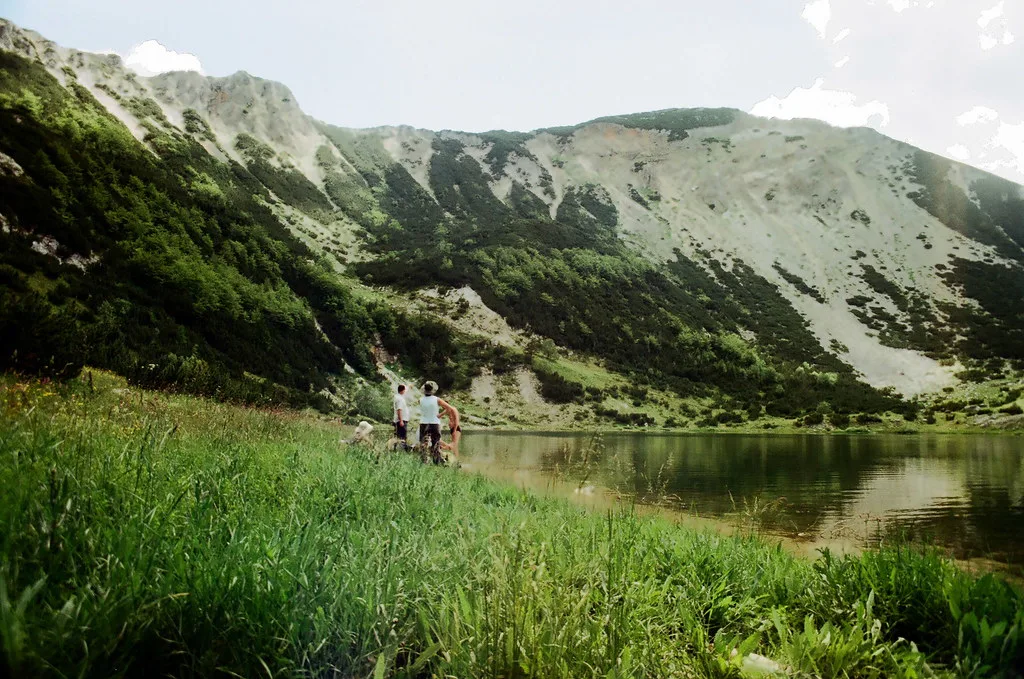
The hills around Sarajevo give you some of the best hiking in the Balkans right outside the city, and April lets you walk them before the summer heat arrives. Expect mud and mixed conditions on higher paths, and choose lower trails when the forecast is unsettled.
For a longer mountain day, wait until late spring or plan for conditions to dictate the route. A car helps here, and our guide to renting a car in Bosnia covers what mountain roads ask of you in practice.
What April costs compared with July and August
Accommodation prices peak in summer, so April usually costs noticeably less for the same rooms in Sarajevo and Mostar. Restaurant and transport prices stay moderate by Western European standards, and the currency is the convertible mark, so budget in marks rather than euros.
Rafting, guided hikes and entry tickets vary by operator and site, so get quotes in writing before you commit and pay in marks. Car hire in April is usually cheaper than in high season but book ahead if you need an automatic or a one-way drop.
How many days you need in April
Give Bosnia and Herzegovina about a week if you want to hop between several places or fit in outdoor activities, and a long weekend if Sarajevo alone is the goal. Mountainous terrain and the lack of major highways mean short distances take longer than the map suggests.
A realistic April week pairs two nights in Sarajevo with Mostar, a Herzegovina loop and one river or waterfall day, keeping driving under control. Travelers planning eight to ten days in April often spread the route wider, which works if you accept slower roads and unpredictable weather.
Getting around by car, bus and the Sarajevo–Mostar train
A car is the most efficient way to cover ground in Bosnia, especially for Jajce, Travnik, Una National Park and Herzegovina's wine country. Buses connect the main towns and are comfortable, but they are not the fastest option when your itinerary is packed. The Sarajevo–Mostar train is the exception worth planning around, widely described as one of the world's most beautiful rail rides, with possible delays traded for canyon views.
Mountain roads are slower than their mileage suggests, and April weather can make high routes trickier, so build slack into any driving day. If you would rather not drive, a tour company with private transfers solves the logistics, and our Bosnia in May guide shows how the same routes behave a month later.
Drawbacks: rain, mud, closed mountain roads and smoking rooms
Rain is the headline drawback: April is wet in spells and spring varies a lot year to year, so a washed-out day is a real possibility. Mud and uncertain conditions hit higher trails hardest, and late snow can still affect mountain roads, so treat the peaks as optional rather than fixed.
Smoking is the other thing people underestimate. Many restaurants and most bars still allow smoking indoors, which matters more on cold, wet April evenings when terraces are unusable, so pick your eating spots with that in mind.
April dates to plan around
April has no national holiday that shuts the country down, but Ramadan moves through the calendar each year, and in areas with a large Muslim population like Sarajevo the daily rhythm shifts around fasting and iftar. The Sarajevo Film Festival is a mid-August event, not an April one, so April trips are about the country's spring rather than festival season.
Srebrenica Genocide Memorial Day on July 11 is a national day of mourning, well outside April, but it is worth knowing as you read about the country's calendar. For a month-by-month view beyond April, our best time to visit Bosnia guide sets spring against the rest of the year.
How April compares with May and September
May is warmer and usually more settled, which helps hikers and anyone wanting reliable outdoor days, but it edges toward the summer crowds. September gives warm, dry weather and far fewer people than July and August, making it the strongest alternative to April for most travelers.
April wins on water and emptiness: fuller rivers, quieter old towns and lower accommodation prices. May wins on trail reliability and warmth, while September wins on settled weather and comfort, so pick April for spring water and space, May for hikes, and September for a late-summer feel.
Plan Your Visit
April is a strong, specific choice for Bosnia and Herzegovina if your trip is about cities, Ottoman old towns, waterfalls and rafting, with a tolerance for wet days. Build the route around Sarajevo, Mostar, Jajce, Travnik and the Una, keep mountain plans flexible, and let spring water be the reason you came.
If dry trails and guaranteed warmth matter more, aim for late May or September instead. Either way, check current conditions when you book, from Jahorina's lift status to your rafting company's April schedule.
Explore more Bosnia and Herzegovina trip-decision guides
Frequently Asked Questions
Is April a good time to visit Bosnia and Herzegovina?
Yes, for most first trips. April brings mild temperatures, thin crowds in Sarajevo and Mostar, and rivers running full from snowmelt, which suits city breaks, waterfall chasing and rafting. It is weaker for high-mountain hiking, where conditions stay unreliable, and rain is a real risk.
What is the weather like in Bosnia in April?
Expect typical spring conditions of roughly 10 to 20 °C (50 to 68 °F) across much of the country, with big day-to-night swings. Herzegovina around Mostar is generally milder and drier than Sarajevo, while the mountains near Jahorina and Bjelašnica stay colder and can hold late snow. Treat these as climate norms, not a forecast.
Is Bosnia crowded in April?
No. April sits outside peak season, so Sarajevo's Baščaršija and Mostar's old town are far calmer than in July and August. Accommodation prices are typically lower too, which makes April one of the better-value months.
Can you hike and raft in Bosnia in April?
Rafting is a strong April choice, since snowmelt and rain keep the Neretva and Una high and fast. Hiking is more mixed: lower trails around Sarajevo work well, but higher routes can be muddy or affected by late snow, so keep plans flexible and ask operators about current conditions.
Is Bosnia expensive to visit in April?
Bosnia and Herzegovina is moderate by Western European standards, and April usually costs less than July and August for the same rooms. Food, transport and activities sit at a comfortable mid-range, and you pay in the convertible mark. Get quotes from operators and convert with our money in Bosnia guide.
How many days do you need in Bosnia in April?
A week covers several places or a mix of culture and outdoor days, while a long weekend is enough for Sarajevo alone. Mountain roads and the absence of major highways mean distances take longer than they look, so do not overpack the itinerary.
April or May: which is better for Bosnia?
May is warmer and usually more settled, which favors hikers and anyone wanting dependable outdoor days, though crowds build toward summer. April is quieter with fuller rivers and lower prices. Choose April for water and space, May for trails and warmth.
Sources
Trip-decision notes
Optional updates when we publish or revise a destination verdict.
You might also like
Continue reading
More guides you'll find useful