Bosnia in October: Weather, Crowds and Whether It's Worth It
October is one of the best months to visit Bosnia, with mild days, golden forests and the Herzegovina wine harvest. Here is what to expect and who it suits.
On this page
Yes, October is a good time to visit Bosnia and Herzegovina. Days are still mild, Herzegovina stays warm enough for long walks, the wine harvest runs through the month and the summer crowds have gone. The trade-offs are real, though: rain arrives, daylight shrinks to an early sunset and high mountain roads can see their first snow late in the month.
This is a month that rewards a flexible route rather than a checklist. You can pair warm Mostar with golden beech forest in Sutjeska, or bank on Herzegovina when the mountains look wet. Whether Bosnia is worth visiting at all is a separate question, answered in our Bosnia verdict; the case here is about timing inside October.
The verdict: October is Bosnia's quiet sweet spot, and September runs it close
For most travelers with flexible dates, October is arguably the single best month in Bosnia. Warm but not hot weather, gold and copper forests, harvest activity in Herzegovina and a fraction of summer's visitors line up at the same time. If your dates are fixed and you want guaranteed swimming heat, summer is the better fit.
October also works as a shoulder between two other good options. If you need a warm-weather sightseeing trip and want the most daylight, look at Bosnia in September; if you want colour and hiking with almost nobody around, accept more rain and shorter days. The best time to visit Bosnia page lays out all four seasons if you are still choosing.
Who will love October in Bosnia and who should pick another month
Hikers, wine drinkers and city sightseers get the most from October. Trails are quieter after mid-September, the Herzegovina harvest is on around Mostar and Trebinje, and Sarajevo's cafe terraces and museums are pleasant without summer heat. Photographers also get softer, lower light on stone bridges and canyon walls.
Choose July or August instead if swimming, rafting at high water or the longest possible days are central to your trip. Choose May or June if you want spring green and reliable dry trails. October suits people who can move a day or two around the weather and do not mind finishing sightseeing before dark.
Weather in October: Sarajevo, Mostar and Herzegovina, and the mountains
Sarajevo in October typically sees highs of 12-18°C (about 54-64°F), with cool mornings and shorter days as the month goes on. Herzegovina is noticeably warmer: Mostar and the Neretva valley usually sit around 20-26°C (about 68-79°F), which is excellent walking weather. Those regional figures come from Bosnia Spirit's autumn guide, and Sarajevo's October trend is tracked on WeatherSpark.
The high country behaves like a different season. Above 1,500 m, nights can drop to 2-5°C, and early snow is possible on high peaks from late October. If your trip depends on a specific mountain, plan it early in the month and keep a low-altitude alternative ready.
Autumn colours: Sutjeska, Perućica and Zelengora
Sutjeska National Park is the headline act. The ancient beech forest of Perućica, one of Europe's last stands of primeval woodland, turns gold and copper in October, and the steep canyon walls amplify the colour. Mid-October is the sweet spot, and pairing it with the Zelengora mountain lakes makes a strong two-day nature break.
The catch is access. Sutjeska, Zelengora and the Lukomir plateau are not practical on public transport, so you need a car or a guided tour. If you are weighing whether to drive, read renting a car in Bosnia before committing to mountain roads in a season of sudden showers.
The Herzegovina wine harvest around Mostar and Trebinje
Harvest runs from September into October in Herzegovina, and October visitors can catch activity at the wineries. The local grapes to look for are Žilavka, a dry mineral white grown around Mostar, Blatina, a full-bodied red from the Neretva valley, and Vranac, a robust red also associated with Montenegro. Trebinje, in the hills south of Mostar, is the heart of the wine culture. If you are still comparing bases for this stretch of the Balkans, the same autumn reasoning applies when weighing is Kotor worth visiting across the border.
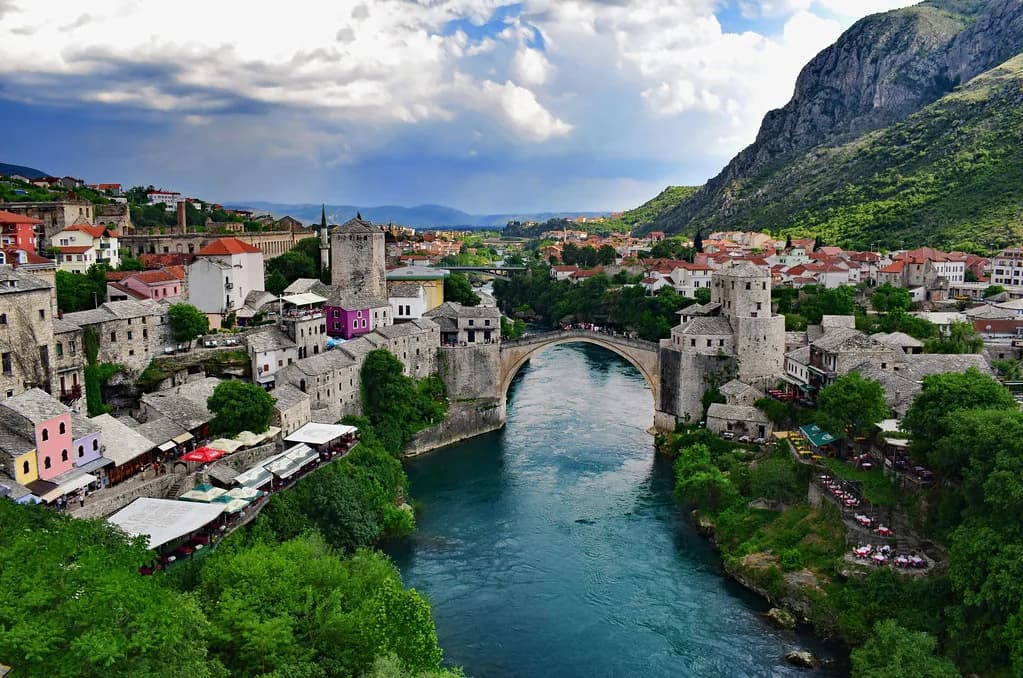
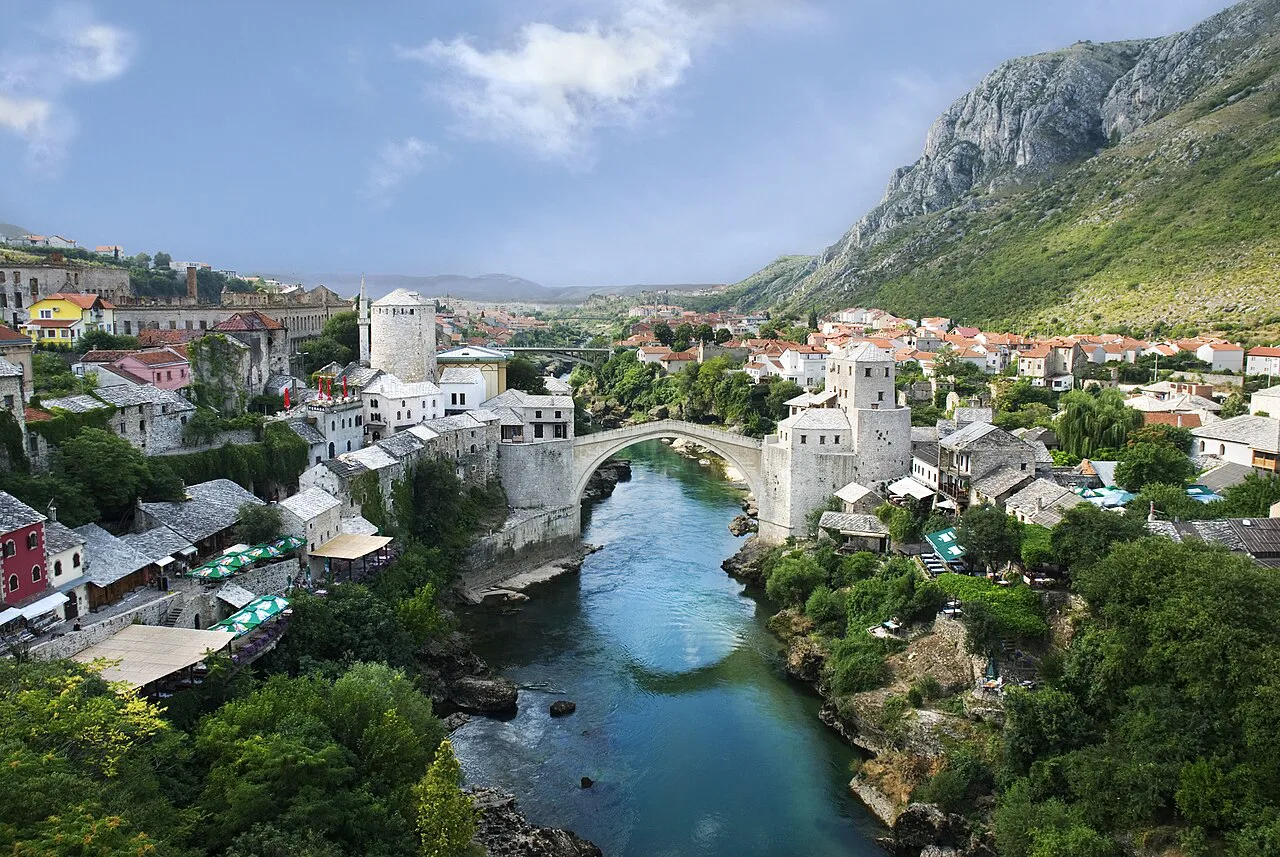
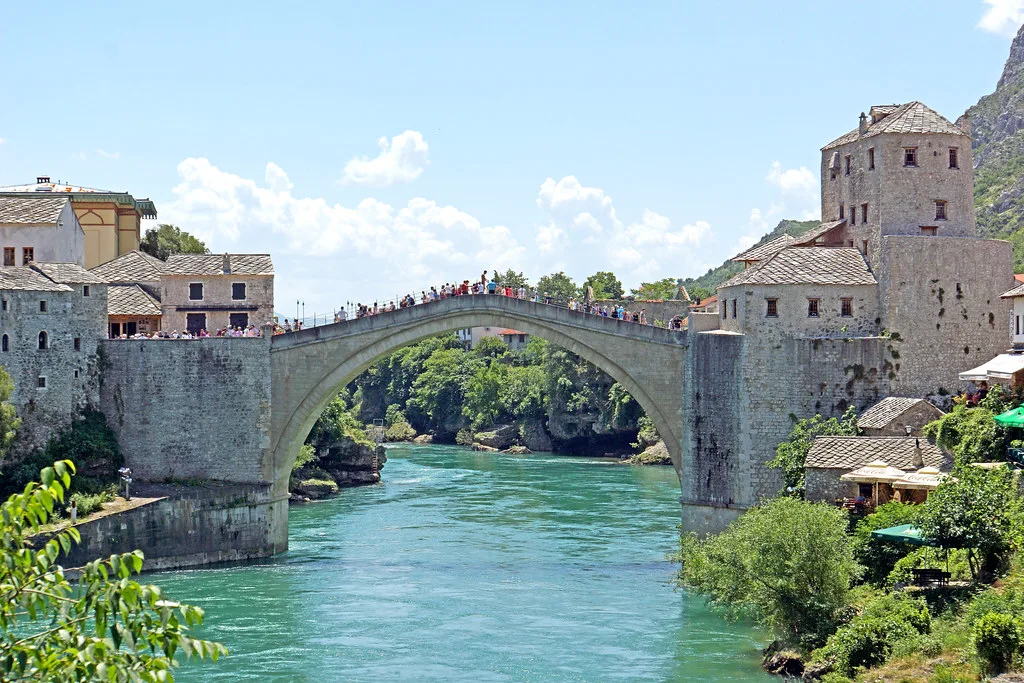
Wine tasting is one of the few October expenses worth planning around. Prices are quoted in the convertible mark (BAM), so sort out cash and cards before you head into the vineyards; money in Bosnia covers the practical side. Mostar itself is quieter in October, so the Old Bridge in Mostar is easier to photograph without the summer crush.
Rafting and hiking as the season winds down
Autumn is the second hiking season after spring. Trails are quieter after mid-September, visibility is often better than in hazy summer, and beech and oak woodland puts on colour. The Via Dinarica's Bosnia sections are at their most manageable in September, and Maglić, the country's highest peak at 2,386 m, is usually accessible until late October.
Rafting continues through October but on calmer, lower water. The Neretva from Konjic is warmer than in spring, at roughly 16-18°C, and easier for mixed-ability groups and families. Book ahead for October weekends, when locals make the most of the season's end, and confirm that your chosen operator is still running late in the month.
Sarajevo and Mostar in October: crowds, light and pace
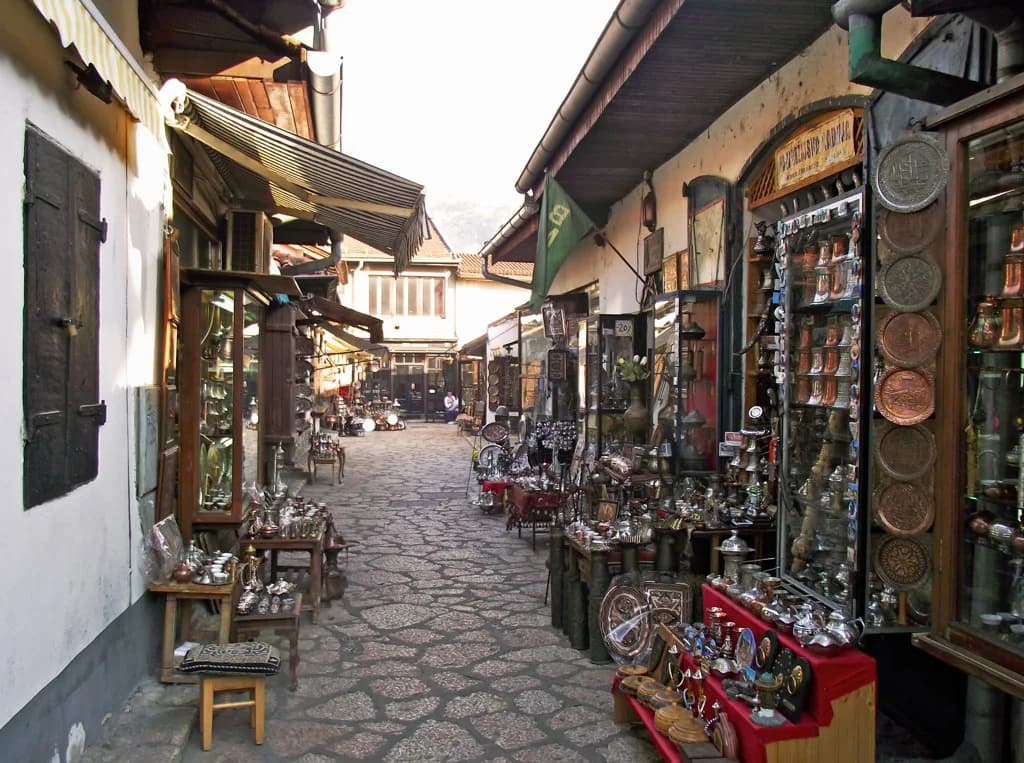
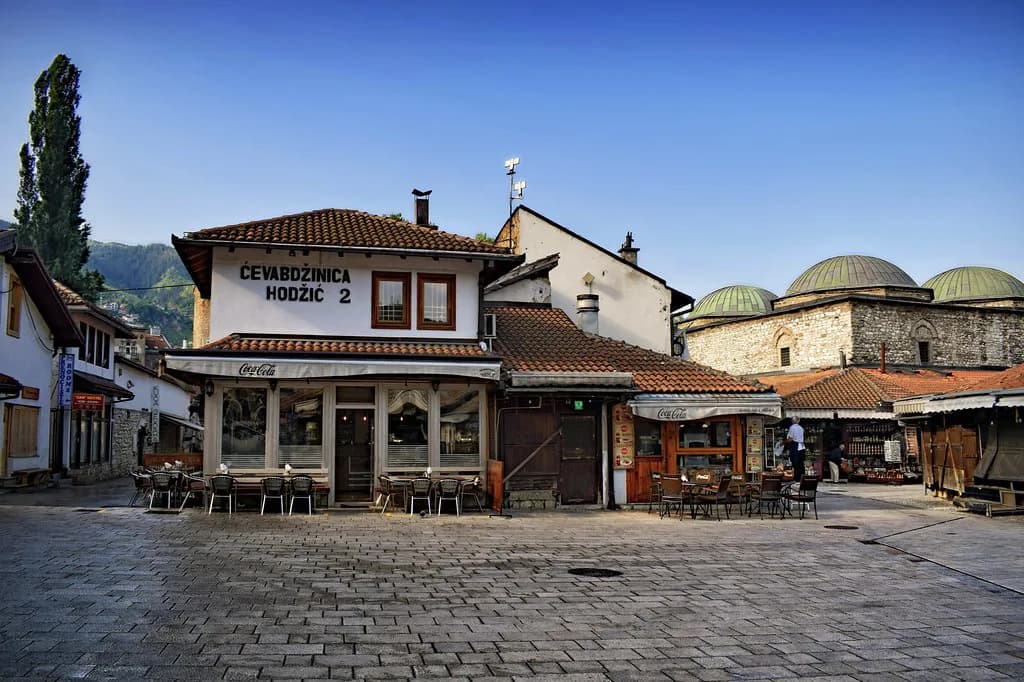
Sarajevo in October is a walking city again. The lanes of Baščaršija are more pleasant without summer heat, the trees along the Miljacka turn amber, and indoor sights such as the city's museums and the Tunnel of Hope reward a rainy afternoon. On a bright day, the parkland and springs at Vrelo Bosne are lovely under turning leaves.
Mostar changes character too. The bridge divers have largely gone, restaurant tables are easier to find and the late-afternoon light on Stari Most is warm and golden. If you want the full picture of what else the country offers in this season, start with the best places to visit in Bosnia.
How many days you need in October
Seven to ten days gives October its due without racing the sunset. A sensible shape is two or three nights in Sarajevo, two or three in Mostar or Trebinje, and a night or two in the mountains when the forecast is clear. That allows a flexible day in the middle to swap a wet mountain outing for Herzegovina.
A shorter trip of four or five days works if you stick to one region: Sarajevo plus Konjic, or Mostar plus the wine hills. Resist packing in too many stops. With darkness arriving around 5:30-6 PM, afternoon drives back from mountain roads should finish well before dusk.
Typical costs and where October is cheaper
October is a cheaper month than July or August almost everywhere. Rooms and restaurant tables are easier to find, and Mostar prices drop noticeably once the summer peak passes. The exception is the first two weekends of October, when Bosnian and regional visitors travel and Sarajevo or Mostar accommodation is worth booking slightly ahead.
The country is generally moderate value rather than dirt cheap, so budget in the convertible mark and expect city-center prices in Baščaršija and around Stari Most. The price level also shifts with how much you move: a car opens up cheaper rural stays, while guided day trips cost more per day.
Getting there and getting around on shorter days
Autumn is a comfortable season for logistics. Roads are busiest mainly at weekends, and the lack of summer queues makes border-adjacent routes easier. Still, allow more margin than you would in summer: start earlier, finish sooner, and avoid driving unfamiliar mountain roads after dark, especially from mid-October when early snow is possible above 1,200 m.
Without a car, lean on the bus and train links between Sarajevo and Mostar and accept that the most dramatic autumn scenery, such as Sutjeska and Lukomir, needs a guided tour. City parks and riverbanks in Sarajevo are accessible by tram, so urban sightseeing is easy on foot and public transport.
Drawbacks: rain, early sunset, mountain roads, first two weekends
Rain is the main risk. October showers arrive quickly, and a wet day can wipe out a mountain plan. Build in at least one flexible day and treat Herzegovina as the fallback when the high country looks grey.
The second drawback is daylight. Sunset arrives around 5:30-6 PM by October, which shortens afternoon excursions and argues against long drives back from the hills. Third, the first two weekends of October are the busiest of the shoulder season for domestic and regional visitors, so book those specific dates if they matter.
Finally, access limits matter more than in summer. Some mountain hiking operators wind down after the first snowfall, so confirm late-October and November dates directly with the hiking company before you book. Entry rules are a separate matter; check the official government page for current visa and entry requirements.
Where October sits against September, November, May and summer
September is warmer and brighter, especially in Herzegovina, but busier. October trades a few degrees and some daylight for colour, harvest and quiet. November is cooler and wetter, with mountain and rafting activities winding down, so it suits city sightseeing rather than the outdoors. May and June are October's spring counterpart, with green landscapes and reliable rafting water, but without the harvest or the foliage.
Summer wins on swimming and long evenings, but loses on crowds, heat and prices, particularly in Mostar and at Kravica Waterfalls. For a first trip focused on cities and wine, October is the best balance; for a hiking trip, late September to mid-October is the window to target.
Verdict by traveller type
Hikers: go in late September to mid-October for stable trails, clear air and colour, and accept that high routes close in as snow arrives. Wine drinkers: October is the month to base in Mostar or Trebinje during harvest. City sightseers: Sarajevo and Mostar are at their most comfortable, with fewer crowds and softer light.
Families with mixed ages: the calmer Neretva rafting and warm Herzegovina afternoons work well, but shorter days mean less outdoor time. Travelers who need guaranteed sun and swimming should choose summer instead, or head for the coast. Anyone still undecided about the country itself should read is Bosnia worth visiting before fixing dates.
Plan Your Visit
October is Bosnia's quiet sweet spot. Aim for mid-to-late September through mid-October if you can, keep a flexible day for rain, and plan mountain excursions early in the month. Book the first two weekends of October ahead, and leave the high roads for daylight.
Choose October for hiking, wine and city sightseeing at their most comfortable. Choose summer instead if swimming and long evenings matter most. Either way, the month rewards a route that follows the weather rather than a fixed list of sights.
Explore more Bosnia and Herzegovina trip-decision guides
Frequently Asked Questions
Is October a good time to visit Bosnia?
Yes. October combines mild days, autumn colour in the beech forests, the Herzegovina wine harvest and far fewer visitors than summer. Rain and early sunsets are the trade-offs, so a flexible day helps.
What is the weather like in Bosnia in October?
Sarajevo typically sees highs of 12-18°C (about 54-64°F), while Mostar and Herzegovina are warmer at around 20-26°C (about 68-79°F). Above 1,500 m, nights can fall to 2-5°C, and early snow is possible on high peaks late in the month.
Is October the best month to visit Bosnia?
For many travelers it is, especially those focused on hiking, wine and cities. September is warmer and brighter, May and June are greener, and summer wins on swimming and long evenings. If your dates are flexible, mid-October is the strongest balance.
Can you see autumn colours in Bosnia without a car?
Sarajevo's parks and riverbanks are accessible by tram, but the most dramatic colour in Sutjeska, Zelengora and Lukomir needs a car or a guided tour. Public transport will not get you to the high country in time to enjoy the light.
Is Bosnia cheaper in October?
Generally yes, because rooms and restaurant tables are easier to find and Mostar prices drop after the summer peak. The first two weekends of October are the exception, when regional visitors travel and it pays to book accommodation slightly ahead.
How many days do you need in Bosnia in October?
Seven to ten days gives you Sarajevo, Mostar or Trebinje, and a mountain day or two without racing the sunset. A shorter four- or five-day trip works if you stick to one region such as Sarajevo and Konjic, or Mostar and the wine hills.
Is Mostar still warm in October?
Yes. Herzegovina typically stays around 20-26°C (about 68-79°F) in October, which is comfortable walking weather. Evenings cool down and rain is more likely than in summer, so a light layer helps after dark.
Should I visit Bosnia in September or October?
September is warmer and brighter with longer days, while October brings colour, harvest and quieter streets. For hiking and wine, October is the stronger choice; for guaranteed warmth and the most daylight, September wins.
Sources
Trip-decision notes
Optional updates when we publish or revise a destination verdict.
You might also like
Continue reading
More guides you'll find useful