Bosnia in September: Weather, Crowds and Where to Go
Bosnia in September means warm days in Herzegovina, cooler mountain evenings and thinner crowds than August. Here is where to go, what it costs and who should wait.
On this page
September is a strong month for Bosnia and Herzegovina, and for most travelers it is a better bet than July or August. The country has very little coast to soften summer heat, so the drop in temperature matters more here than on the Adriatic, and the season's visitors thin out as Croatian day-trippers head home. What you gain in comfort you trade for shorter evenings and cool nights in the mountains.
The catch is that September is not one climate. Herzegovina around Mostar and Trebinje keeps a Mediterranean rhythm with hot, dry afternoons, Sarajevo and the Jahorina and Bjelašnica mountains turn continental and fresh, and the northern Vrbas corridor around Jajce and Banja Luka sits somewhere in between. Pick your route by region rather than by a single national temperature.
This is also a month when Bosnia rewards a slower itinerary. Mountain roads are slow, there are no major highways linking the headline sights, and daylight is already shrinking, so three stops a day rarely works. Build in one or two bases and accept that the map distances lie.
Is Bosnia worth visiting in September? The verdict
Yes, for culture-and-landscape travelers who want Mostar, Sarajevo and the waterfalls without August heat. September gives you warm Herzegovina afternoons for swimming at Kravica, comfortable walking in Sarajevo's Baščaršija and the old Ottoman quarters, and space at smaller sites like Počitelj and Blagaj that get swallowed by tour buses in high summer.
Choose another month if you want guaranteed beach weather or a full rafting season. Bosnia's sliver of coast at Neum is modest, and late-season water levels on the Neretva and Una depend on rainfall, so rafting companies can wind down as the month progresses. If a specific river trip is the reason for your trip, contact the rafting outfitter directly before you book flights.
If you are still weighing whether the country justifies a trip at all, the honest answer is that it does, but for history and scenery rather than sunbathing. Mostar's rebuilt Old Bridge and Sarajevo's valley setting carry the trip; beach time is a bonus, not the point. If the same question is on your mind for the neighbors, our Serbia verdict applies the identical test to that country.
Who September suits and who should choose another month
September suits hikers, photographers, history-focused travelers and anyone driving a rental car through the interior. It also suits budget travelers who want lower accommodation rates than peak summer without the cold of November. Travelers tied to school holidays will find the first days of the month still busy in Mostar, then a sharp drop.
It suits families less well than July, mainly because mountain evenings cool quickly and swimming holes lose their warmth. Travelers who need long, reliable sunshine should look at the height of summer or the Herzegovina-only version of this trip. Anyone chasing ski season or Christmas-market atmosphere is in the wrong month entirely.
Travelers who want the autumn sweet spot at its most reliable should read the wider seasonal picture before fixing dates. The best time to visit Bosnia frames September as the opening of that window, with October often the calmer half.
September weather across Bosnia's regions
Treat September temperatures as typical conditions, not a forecast. Published climate normals for Sarajevo and Mostar are the figures worth checking before you commit, and they show a genuine split: Herzegovina stays warm into the twenties Celsius while Sarajevo and the mountains drop faster, especially after dark. Expect valley fog in the mornings and crisp evenings in the highlands.
Herzegovina, meaning Mostar, Blagaj, Počitelj, Međugorje and Trebinje, has mild, wet winters and hot, dry summers, and September is the tail of that dry stretch. Days remain warm enough for short sleeves and river swimming, though the water at Kravica is noticeably colder than in July. Rain becomes likelier late in the month, often as short heavy showers rather than all-day drizzle.
The northern regions around Banja Luka and Prijedor and the central Vrbas valley are continental, with warm summers and colder winters. September there is pleasant by day and cool at night, which makes it good walking weather for Jajce's in-town waterfall and the Pliva lakes and watermills just outside town.
The mountains around Sarajevo, including Jahorina and Bjelašnica, can swing widely between day and night, so layers matter more than any single number. Sutjeska National Park in the southeast, home to the Perućica primeval forest and Mount Maglić, is high and exposed, and September there feels closer to early autumn than late summer.
Sarajevo and the mountains in September
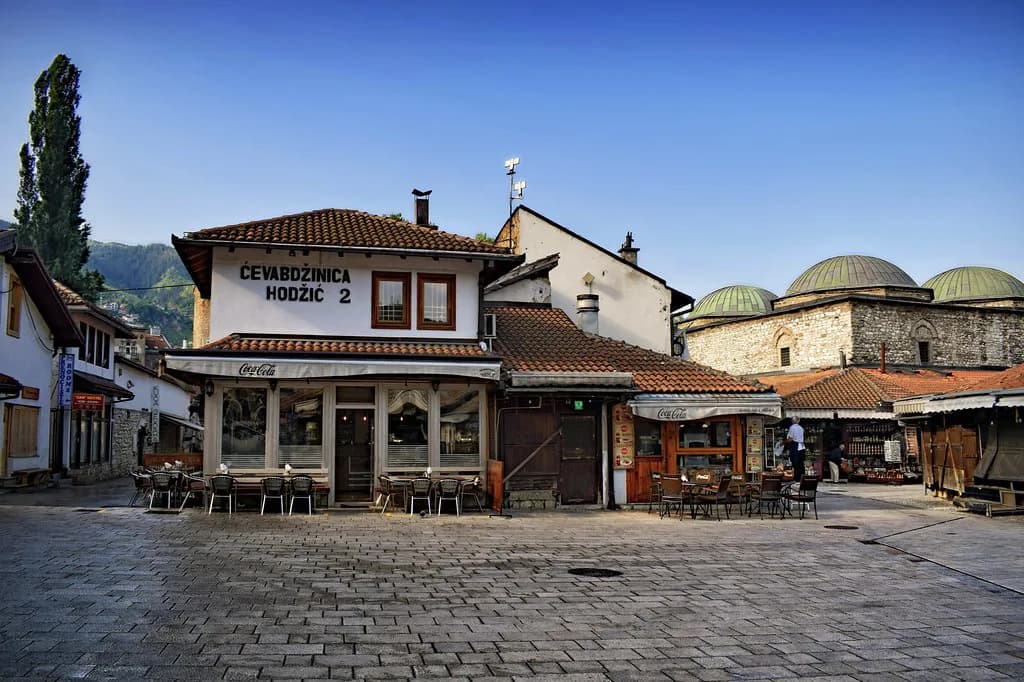
Sarajevo is at its most walkable in September. Start in Baščaršija, the old bazaar, where the Sebilj fountain anchors a square of copper workshops and cafés, then walk a few minutes to the Gazi Husrev-beg Mosque, the Sahat-kula clock tower and the Neo-Gothic Sacred Heart Cathedral. The compact centre lets you cross Ottoman, Austro-Hungarian and modern layers on foot in an afternoon.
Give history at least a full day. The Latin Bridge marks the 1914 assassination that triggered World War I, and the Tunnel of Hope museum tells the story of the siege of the 1990s through the 800-meter tunnel that linked the city to the outside world. Both are compact visits that pair well with a walk along the Miljacka.
For views, ride the cable car up Mount Trebević or climb to the Yellow Fortress for the sunset over the valley. In the mountains, Jahorina and Bjelašnica shift from ski season to hiking, and the cooler September air makes the trails more comfortable than in August. Note that high trails have shorter usable daylight now, so start early.
Ilidža, reached by tram from the city, makes an easy half-day: a tree-lined avenue, a spa park and the spring of the river Bosna. The 1984 Winter Olympics left their traces around the city, including the bobsled track on Trebević, which is a popular walk.
Mostar and Herzegovina in September
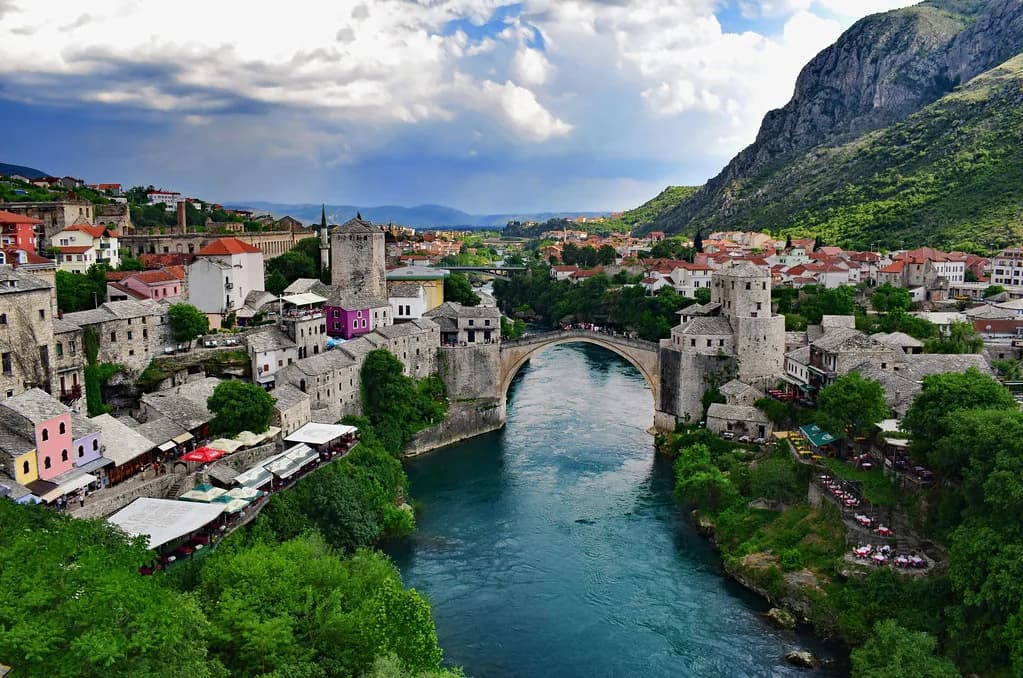
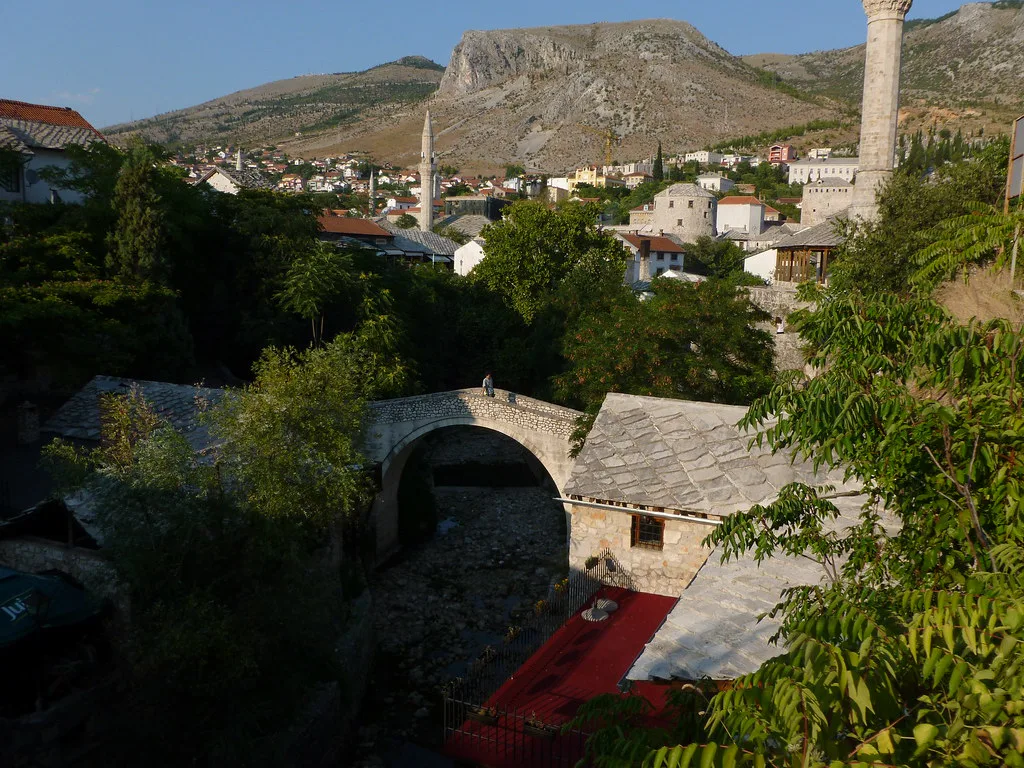
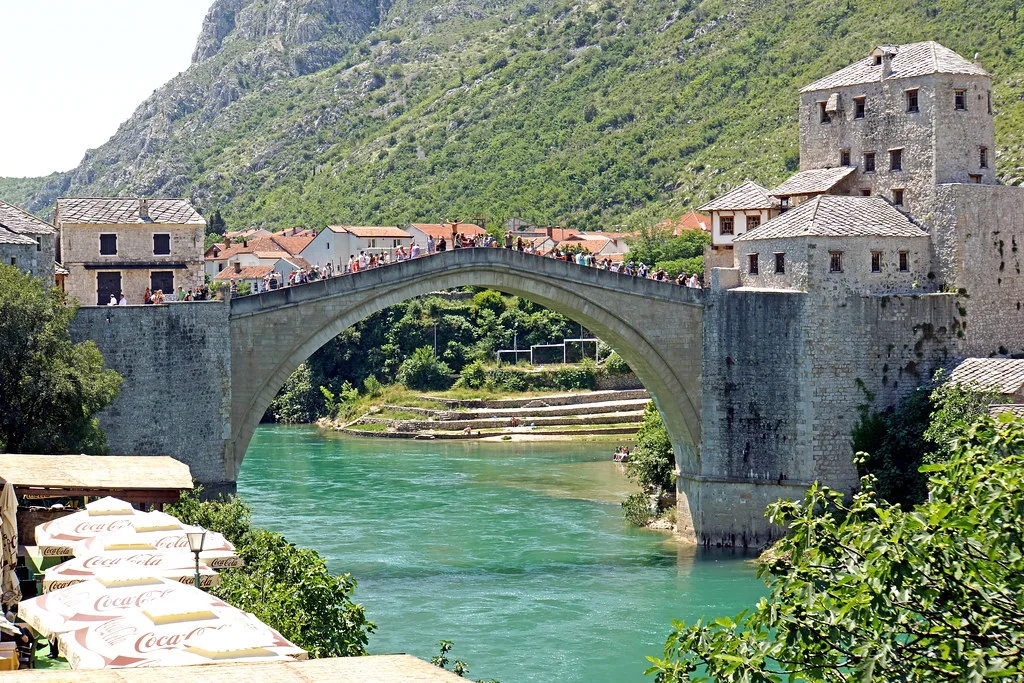
Mostar is the country's most photographed sight and still its busiest. The Stari Most, a 16th-century Ottoman arch rebuilt after its 1993 destruction and now UNESCO-listed, is best seen early morning, when the day-trippers from Dubrovnik and Split have not yet arrived. Climb the minaret of the Koski Mehmed Pasha Mosque for the classic view of the bridge and the Neretva.
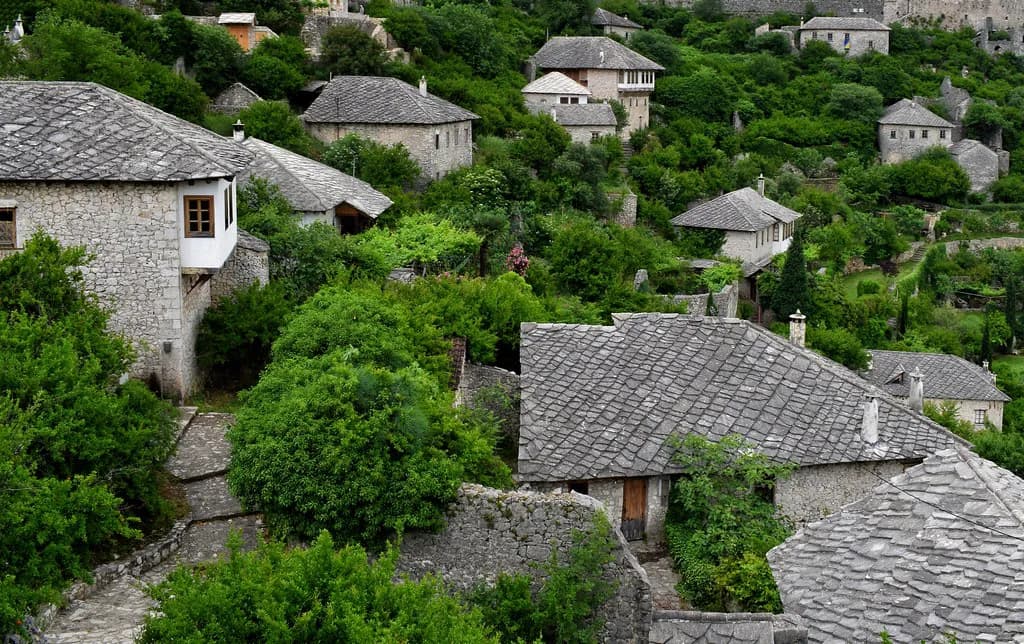
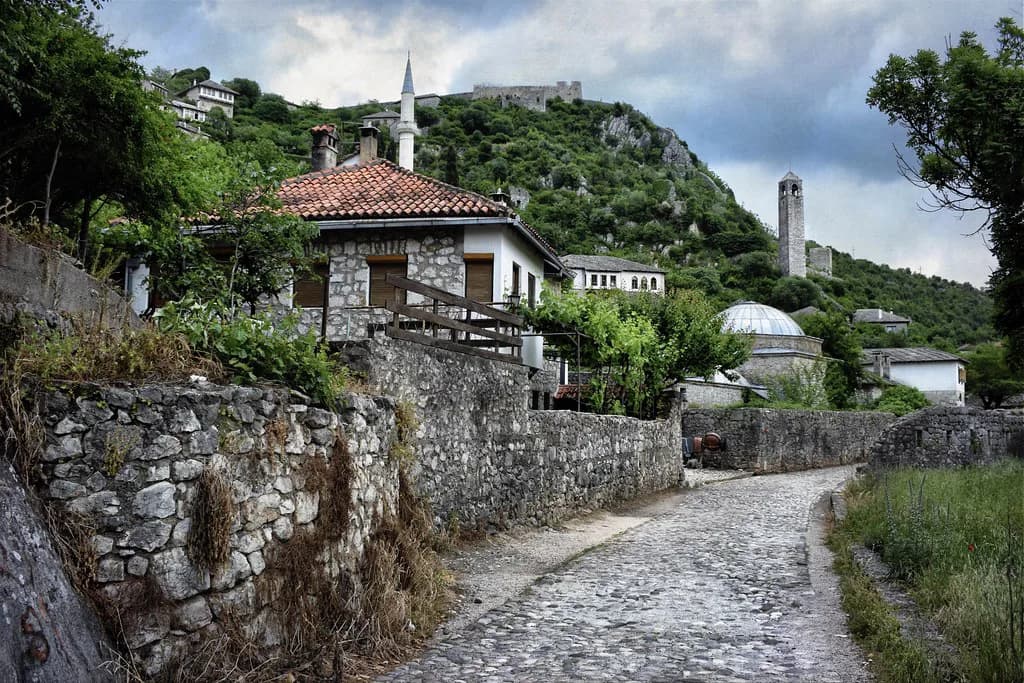
Use Mostar as a base for a cluster of short hops. Blagaj, minutes away, puts the 16th-century Dervish House against a cliff where the Buna River bursts from a cave. Počitelj, a fortified hillside village of stone houses and a restored lookout tower, is steep and hot even in September, so go early or late.
Kravica Waterfalls, near Ljubuški, tumble about 25 meters over a wide green pool with picnic areas, trails and swimming spots. It remains a favorite summer escape, but by September the water is brisk and the crowds lighter. Admission is charged and swimming is allowed, so budget for the entry fee and check the rate posted at the entrance gate on the day.
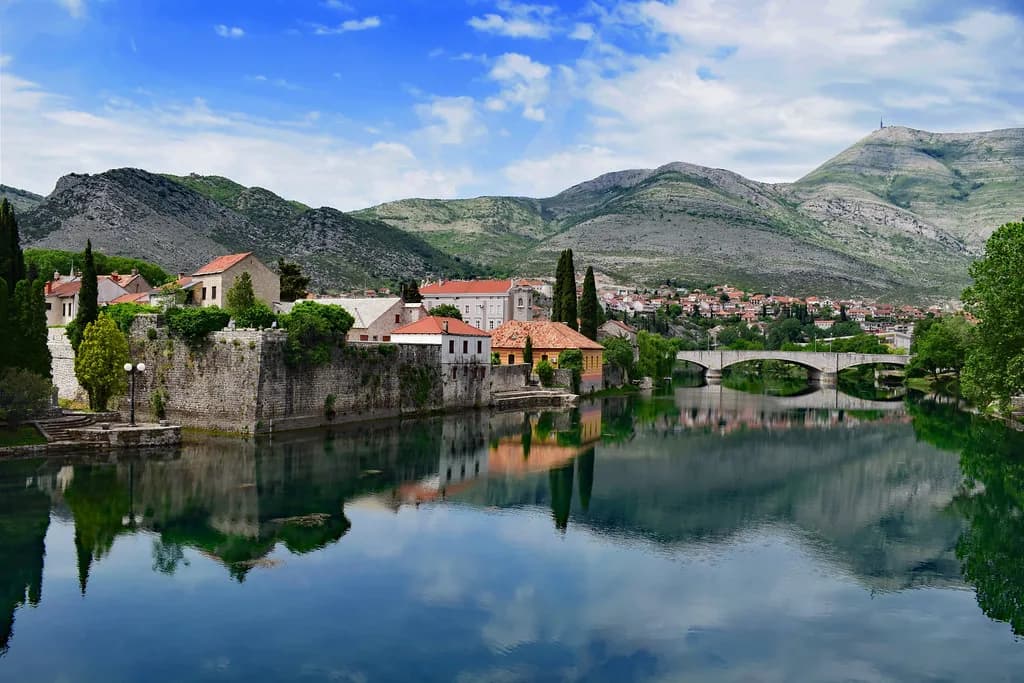
Trebinje, near the Croatian border, is Herzegovina at its most relaxed: a walled old town, plane-tree squares and vineyards that come into harvest in early autumn. The Hercegovačka Gračanica monastery sits on the hill above town and gives the best panorama. Wine tasting here is a genuinely seasonal September pleasure.
Waterfalls, rivers and rafting late in the season
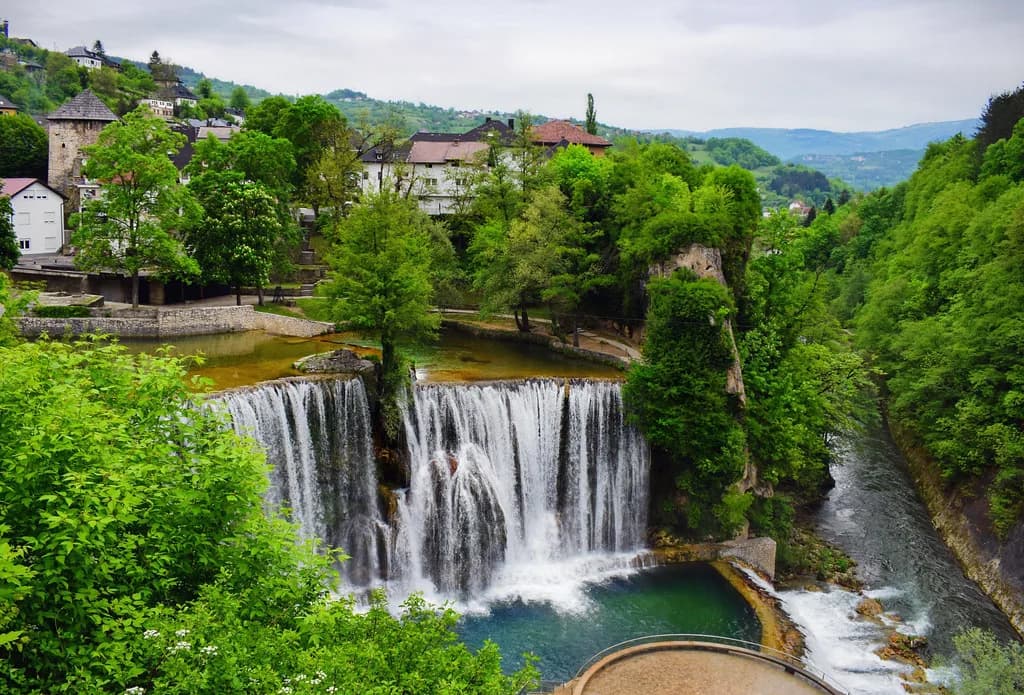
Jajce packs a 20-meter waterfall right into the town centre, one of the few urban waterfalls in Europe, plus the medieval fortress and the Pliva lakes and watermills just outside. In September the surrounding woods begin to turn, which is part of why the town works better now than in the height of summer.
Una National Park around Bihać is the country's youngest national park and its most rewarding river landscape, with the Štrbački Buk falls and the confluence at Martin Brod. Rafting and kayaking run here, but late-season water levels vary, so ask operators directly about conditions and whether trips are still running during your dates.
Sutjeska National Park in the southeast is the oldest in the country and protects Perućica, one of Europe's last primeval forests, with Mount Maglić the highest peak in Bosnia and Herzegovina. September is prime hiking weather here, but the park is remote and trails are long, so plan a full day and carry water.
If you are weighing the end of the season against the start of autumn, the October picture helps. Bosnia in October brings cooler days and thinner crowds, and it suits travelers who value calm over swimming.
How busy it gets after the summer peak
Mostar is where Bosnia's crowding concentrates, because so much of its traffic comes from day trips out of Croatia rather than from overnight guests. September thins that stream noticeably, yet the Old Bridge area still fills in the middle of the day. Staying overnight in Mostar, rather than arriving and leaving on the same bus, is the single best way to see it quietly.
Elsewhere the drop is sharper. Sarajevo remains a working city rather than a tourist stage, Počitelj can feel nearly empty in the early morning, and Una and Sutjeska are quiet outside rafting weekends.
The main September crowd event is not crowds at all but the Sarajevo Film Festival, which usually lands in mid-August and is over before the month turns. If your dates overlap the start of September, check the festival calendar before assuming the city is calm.
What it costs in September
September sits just outside peak summer, so accommodation and tours generally cost less than in July and August while the weather is still good. Bosnia and Herzegovina uses the convertible mark, usually written BAM, and many prices are quoted in marks even where euros are accepted. Budget roughly by category rather than by fixed numbers, since rates move with demand.
Some transport and entry costs are published and useful for planning. A bus from Sarajevo to Mostar takes about 2.5 hours and costs around 11 BAM, while Sarajevo to Trebinje is a long haul of nearly ten hours for about 40 BAM. Local city tickets run around 2 BAM, and Kravica's admission and day-trip prices are quoted locally, so check current rates at the gate.
Self-drivers should budget for fuel, mountain-road time and any cross-border insurance paperwork. Renting a car is the most efficient way to link Jajce, Una and Sutjeska in one September trip, since buses between smaller towns are slow and infrequent.
How many days you need
Give Bosnia and Herzegovina a week if you want Sarajevo, Mostar and one natural area. A long weekend covers Sarajevo alone; Mostar plus Blagaj, Počitelj and Kravica needs two to three nights based in Mostar. Adding Jajce and Una pushes you toward eight to ten days, largely because of driving time.
September's shorter days matter here. Plan no more than two significant stops per day, allow for winding roads, and keep a buffer for the border crossings if you are coming from Croatia. The train between Sarajevo and Mostar is famously scenic, but slow and limited in frequency, so treat it as an experience rather than a transport solution.
If you are choosing between months for a longer circuit, the August version of this trip is hotter and busier, and better for swimming than hiking. Bosnia in August suits river lovers; September suits walkers.
Getting there and getting around
Most travelers fly into Sarajevo or arrive overland from Croatia, and buses are the backbone of intercity travel. The network is extensive and comfortable enough, with Sarajevo to Mostar the most-used link, but journeys between secondary towns can eat a day. Booking a day ahead helps in busy periods.
Driving gives you the freedom to combine Jajce, Una and Sutjeska, but Bosnia and Herzegovina's terrain means short map distances take longer than expected, and September's earlier dusk cuts into driving hours. Fill up in towns, avoid planning mountain transfers after dark, and keep your insurance documents in the car for border checks.
Mobile data is straightforward if you plan ahead. Bosnia and Herzegovina is outside the EU, so roaming charges can bite; a local SIM or an eSIM set up before departure avoids the problem. A Bosnia eSIM guide covers the practical options.
September vs October: which to pick
September wins on warmth, swimming and daylight. Herzegovina stays comfortably warm, Kravica and the Neretva are still plausible for a dip, and the vineyards around Trebinje are in harvest. It is the better month if your itinerary leans on water and long evenings outdoors.
October wins on calm and color. Crowds fall further, the light softens, and the central forests and Una valley turn. The trade-off is cooler, wetter weather and water too cold for most swimmers. Travelers focused on cities, museums and hiking should prefer it.
A split trip works well: start in Herzegovina in early September for the warmth, then move north to Jajce and Una as the month cools. If your dates are fixed late in the month, plan for rain and shorter days and you will not be disappointed.
Drawbacks worth planning around
The main drawbacks are mountain roads that make short hops slow, colder water than in July, and weather that turns wetter as the month wears on. Herzegovina can still produce genuinely hot days early in the month, and Počitelj's stairs are punishing in the sun even in September.
Rafting and river trips thin out late in the season, and some rural services wind down outside the main summer window. Bosnia and Herzegovina is also not a place for off-trail wandering in remote countryside; stick to marked routes and follow official guidance on residual wartime hazards rather than relying on forum color.
Mostar's day-tripper pattern is the other thing to plan around. Arrive before mid-morning or stay overnight, and avoid scheduling a tight bus connection on a day you want to see the bridge properly. If you have a short trip and low tolerance for heat or crowds, September is still the right month; choose your times of day rather than your month.
Plan Your September Trip
September is the month to choose if you want Bosnia and Herzegovina's cities, waterfalls and mountains at a comfortable temperature without August's peak crowds. Herzegovina stays warm for swimming and vineyards, Sarajevo becomes genuinely walkable, and the northern valleys turn toward autumn.
Build a route that respects the terrain: a Sarajevo base with a mountain day, two or three nights in Mostar for Blagaj, Počitelj and Kravica, then Jajce or Una if you have the time. Decide on a car versus buses early, since that single choice shapes how much of the country fits into your days.
If your priority is warmth and water, book early September; if it is hiking and quiet, drift toward the end of the month or October. Either way, you are choosing one of the best windows the country offers. Use the wider seasonal guide to lock dates, then plan stops around daylight rather than the map.
Explore more Bosnia and Herzegovina trip-decision guides
Frequently Asked Questions
Is September a good time to visit Bosnia?
Yes. September pairs warm, dry days in Herzegovina with cooler, comfortable weather in Sarajevo and the mountains, and visitors thin out after the August peak. It is a strong month for sightseeing, hiking and swimming at waterfalls, though mountain evenings cool quickly and rain becomes likelier late in the month.
What is the weather like in Bosnia and Herzegovina in September?
The country splits into distinct zones rather than one climate. Herzegovina around Mostar and Trebinje stays warm and mostly dry, Sarajevo and the surrounding mountains are cooler and fresher with crisp evenings, and the northern valleys around Banja Luka and Jajce are pleasant by day and cool at night. Check published climate normals for the specific city you are visiting.
Is Sarajevo warm in September?
Sarajevo is mild and comfortable rather than hot, which makes the old bazaar and the hillsides easier to walk than in high summer. Evenings and mountain excursions feel distinctly cooler, so layers are worthwhile. Baseline normals for the city are the best guide before you lock in dates.
Is Bosnia crowded in September?
Mostar remains the busiest spot because so many visitors arrive on day trips from the Croatian coast, and its Old Bridge area fills around midday. Staying overnight there solves most of it. Elsewhere, Sarajevo, Počitelj, Blagaj and the national parks are noticeably calmer in September than in July or August.
How many days do you need in Bosnia in September?
Allow a week for Sarajevo, Mostar and one natural area, or two to three nights in Mostar if Herzegovina is your focus. Add Jajce and Una National Park and plan on eight to ten days, mainly because mountain roads are slow and September daylight is shorter.
Is Bosnia in September cheaper than summer?
Generally yes. Accommodation, tours and activities tend to cost less than in peak summer while the weather remains good. Bosnia and Herzegovina uses the convertible mark; check current rates and entry fees locally.
Should I visit Bosnia in September or October?
Pick September for warmth, swimming and vineyards in harvest; pick October for quieter cities, autumn color and cooler hiking weather. September keeps Herzegovina hot and dry, while October brings more rain and water too cold for most swimmers.
Can you still swim at Kravica Waterfalls in September?
Swimming is generally still possible early in the month, though the water is colder than in summer and the pools get quieter as the season ends. Conditions shift through the month, so ask locally or at the gate about current access before planning your day around a swim.
Sources
Trip-decision notes
Optional updates when we publish or revise a destination verdict.
You might also like
Continue reading
More guides you'll find useful