Hungary in May: Weather, Crowds and Whether It's Worth It
May is Hungary's rainiest month but also one of its mildest, with warm days, thinner summer crowds and Budapest's festival season underway. Here's the trade-off.
On this page
May is worth it for Hungary if you want warm, walkable days and near-full tourist infrastructure without the July and August crush, and you accept rain as the main cost. Average daytime highs sit around 22–23°C (72–73°F) in Budapest, and the outdoor spa pools that make the city distinctive come back into service for the season.
The catch is simple and unavoidable: May is one of the wettest months of the year, so plan indoor escapes alongside the outdoor highlights and treat any given day as flexible. If you want the highest odds of dry, settled weather, June and September trade a little of May's quiet for better conditions; whether Hungary is worth visiting at all depends on how much you value Budapest's spa-and-city mix against its grey winters.
This guide separates Budapest conditions from the rest of the country, times the Gellért outdoor pool and Gödöllő's spring gardens to May, and ends with a verdict by traveler type rather than a general 'May is lovely'. Ferries, market stalls and rural sights increasingly operate by May, though you should still treat the shoulder weeks at either end of the month as slower than midsummer.
The verdict: May is the best-value warm month in Hungary
May is the first month in which Hungary reliably feels like a warm-weather trip rather than a gamble. Daytime temperatures climb into the low twenties Celsius, terraces fill, and the sights that close or shorten over winter are running on full tourist-season hours. What you give up is dryness: this is a rainy month, and a short trip can lose a whole afternoon to showers.
The trade-off favors travelers who build slack into their plans. Two or three days in Budapest with one indoor backup per day absorbs rain without ruining the trip; a tightly scheduled multi-city loop through Hungary does not. If your dates are fixed and your patience for wet walking days is low, June or September are the better calls for the same warm-weather window. If you are weighing a broader sweep of the region, our Romania verdict applies the same shoulder-month logic to another destination.
On value, May sits clearly below the summer peak. Summer is high season in Hungary, with the largest crowds and the highest accommodation rates, whereas the spring and fall shoulder months bring milder weather, lighter crowds and easier bookings. May sits at the front edge of that sweet spot, before the school holidays push prices up.
Who May suits and who should pick June or September instead
May suits city travelers, spa-goers, walkers and anyone who wants Budapest's museums, baths and café culture without queueing for everything. It also suits families looking at the Children's Day events in City Park, and travelers combining Budapest with countryside stops such as Lake Balaton before the domestic summer rush.
Choose June or September instead if dry weather matters more to you than crowds, or if you are planning long days of hiking and wine-country touring where rain spoils the point. Choose July or August only if you want guaranteed heat and festival volume, and you are willing to pay peak rates. Travelers with a low tolerance for wet days should simply pick a different month, not a different packing strategy.
Weather in May: average highs and lows, rainfall and sunshine in Budapest
Budapest in May averages roughly 22–23°C (72–73°F) at the warmest part of the day and about 11°C (52°F) at night, with an overall daily average near 16°C (61°F). Expect rain on around 14 days and roughly 70mm across the month, alongside long days with about 12 hours of sunshine. Treat all of these as typical May conditions, not a forecast for your dates.
Elsewhere the pattern holds: the bookmundi overview puts Hungary's May highs near 22°C (72°F) and lows near 12°C (54°F), with Gödöllő seeing about 39mm of rain over the month and Budapest closer to 15 wet days. That divergence matters for planning — the capital is wetter in frequency, while day-trip destinations just outside it can be drier overall.
The continental climate means cold snaps are possible even in May, most often toward the start of the month. Build your days around the warmest hours and keep the evening layer within reach, because cool nights are normal even when the afternoon felt like summer.
Rain in May: how 14 wet days change how you plan a day
Fourteen rain days does not mean fourteen ruined days. May rain in Hungary often arrives as showers that pass, and the higher temperatures dry streets and clothes quickly. The practical response is to front-load outdoor plans in the morning, when conditions tend to be steadier, and keep a genuinely good indoor option for each afternoon.
Budapest is unusually well suited to this because its best indoor stops sit close to its best outdoor ones. The basilica, the covered market halls, the thermal baths and the museums of Pest let you swap a wet hour for a dry one without crossing the city. The broader point about spring and fall is that the shoulder months reward travelers who are flexible rather than those chasing a perfect forecast.
Keep plans loose enough to shift a day trip if the radar looks bad, and treat a rainy afternoon in a spa or a café as part of the trip rather than a loss. That mindset is the difference between May working well and May feeling like a washout.
May in Budapest: outdoor spa pools reopen, and Pest is walkable again
Budapest's spa culture is the strongest argument for May. The Gellért Spa is open year-round, but its landmark outdoor pool operates from May to September, so May lets you swim outdoors before the summer crowds arrive. That timing is the single best reason to put Budapest at the top of a May itinerary.
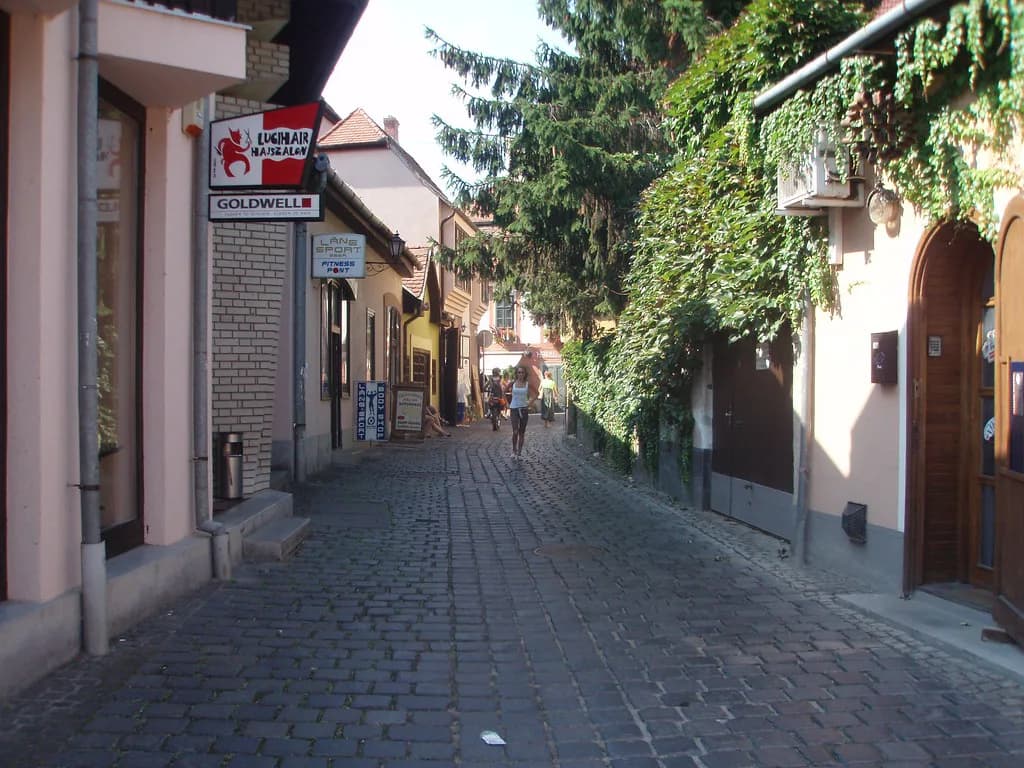
Pest, the newer and more tourist-focused bank, is comfortably walkable in May, and the crowds are noticeably thinner than in midsummer. A walking route linking St. Stephen's Basilica with the House of Hungarian Art Nouveau gives you two ready-made rain shelters without straying far from the river. Keep the currency in mind as you go: Hungary uses the forint, so card and cash handling deserves a quick look at our guide to money in Hungary before you arrive.
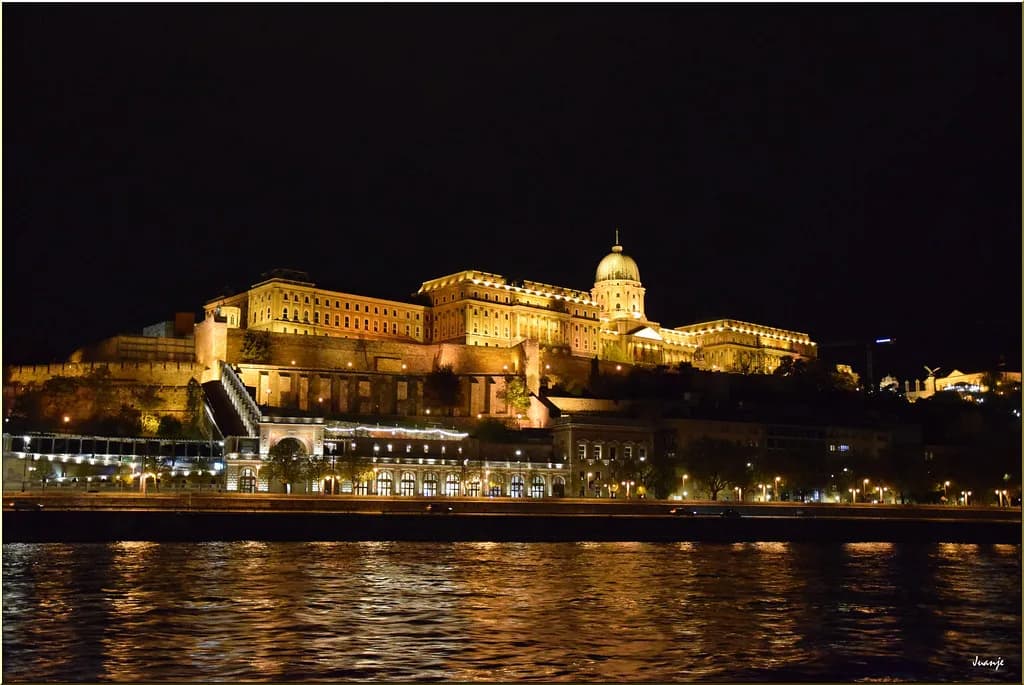
Buda rewards the same month for different reasons. The castle district and the hills above the river are at their most pleasant before summer heat sets in, and the views across to Pest are clearest on the bright days between showers. If you are weighing a repeat trip in cooler months, our Hungary in October guide shows how the same sights read with autumn light and fewer people.
Festivals in May: Budapest Beer Week, Gourmet Food Festival and Children's Day
May is a festival month, and that cuts both ways. Budapest Beer Week brings breweries, bars and event spaces across the city into tastings and meet-the-brewer sessions, while the Gourmet Food Festival fills Millenáris Park with chefs from Hungary and beyond. Both draw visitors and push up demand on their weekends.
The Children's Day Festival in Városliget (City Park) has run since 1980 on the last Sunday of May, with theater, sport, food and performances. Families should treat that date as a planning constraint: it makes City Park busy but also makes it worth a full afternoon. Organizers publish the current year's programme, so confirm specific dates and venues there rather than relying on last year's schedule.
The festival calendar is the main reason May prices are not uniformly low. If your dates overlap a big weekend, book early and expect the central districts to fill; if they fall between events, you get the quiet version of May.
Day trips from Budapest: Gödöllő's Royal Palace gardens at their spring peak
Gödöllő, a short bus ride from Budapest — the source gives roughly 26 minutes — is the standout May day trip. The Royal Palace of Gödöllő and its gardens are at their spring best as flowers come into bloom, and the gardens rank among Europe's finest, once favored by Queen Elizabeth. Go in May for the peak display before summer crowds.
The trip works because it is cheap in time and easy to slot into a wet-weather week: a half-day out of the city, an indoor palace to fall back on, and gardens that reward a dry spell. Treat the travel time as typical rather than a timetable, and check departures locally on the day.
Within Budapest, Városliget and Millenáris Park cover the park-and-festival side of a May day, while the basilica and the House of Hungarian Art Nouveau cover the rainy half. That cluster is enough for a well-balanced two-day city stay without any further planning.
Beyond Budapest: Lake Balaton and the countryside before summer crowds
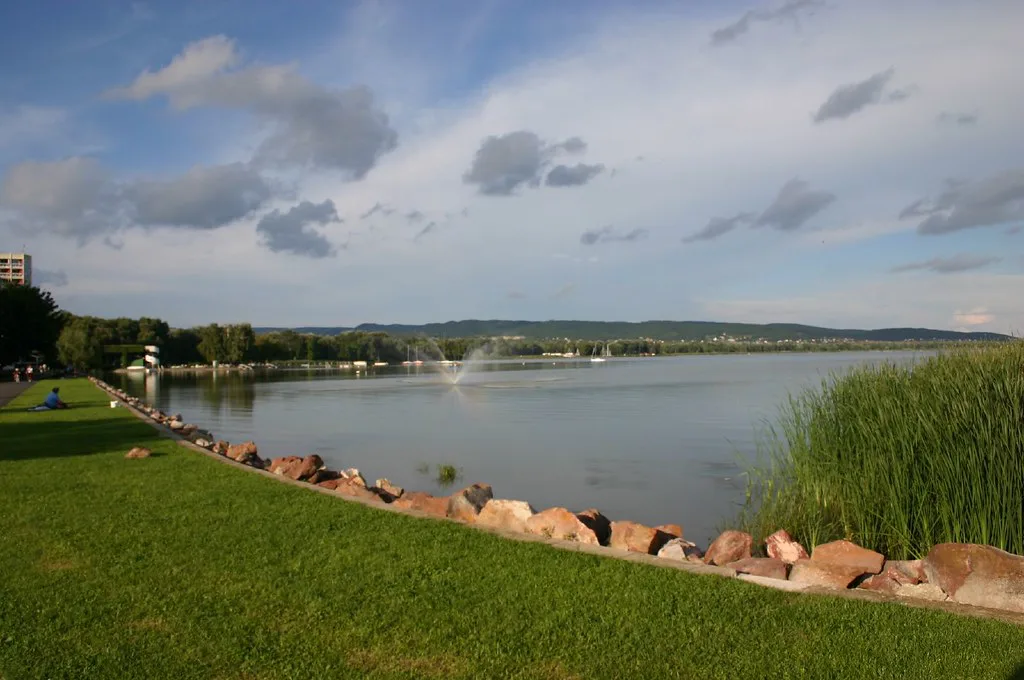
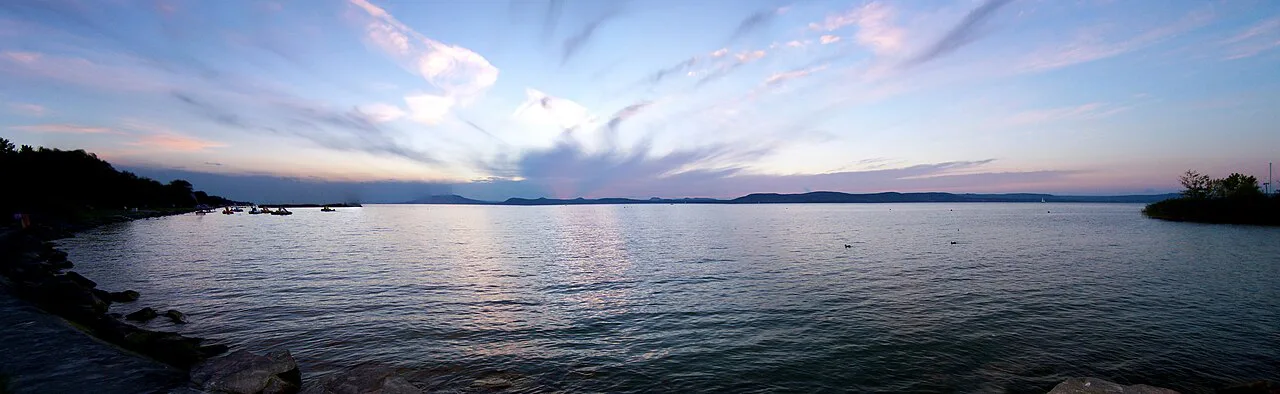
Lake Balaton is Hungary's summer playground, and May reaches it before the domestic holiday rush. Water temperatures will still be cool for most swimmers, but the shoreline walks, the wine country around the north shore and the quieter towns are at their most relaxed. If swimming is the point of your Balaton visit, wait for June or later.
The countryside's May advantage is that tourism infrastructure is running while crowds are still moderate. The source describes May as the point at which the tourism season is well and truly open, after the pre-Easter period when not all vendors operate. Expect rural sights and services to be functioning, but keep expectations modest for anything aimed squarely at high summer.
If you plan to drive between rural stops, sort the paperwork before you fly: our guide to renting a car in Hungary covers what to expect at Liszt Ferenc International Airport and on the road.
Crowds and prices: why May undercuts June through August
May undercuts the summer months on both crowds and room rates, without the closed attractions of winter. Summer in Hungary is high season, with the biggest crowds and highest prices, while spring and fall bring milder weather and fewer tourists. May captures most of the upside of that equation while still delivering warm days.
The exception is festival weekends, when central Budapest demand spikes and short-stay rates climb toward summer levels. Check whether your dates collide with Beer Week, the Gourmet Food Festival or Children's Day before you assume May is always the cheaper option. Outside those windows, expect meaningfully better value than July or August.
Currency matters to that budget: Hungary uses the forint, and exchange rates move, so treat any figure you see quoted online as indicative rather than fixed. An ATM withdrawal and a card with no foreign transaction fee usually beat airport exchange counters.
How many days you need in Hungary in May
Give Budapest three full days to absorb the rain risk and still see the baths, both banks and a museum or two. That allows one wet afternoon to be absorbed without cutting anything. Add a fourth day for a Gödöllő half-day trip, which fits neatly into a city-based stay.
A week lets you add Lake Balaton or a wine region, but keep the countryside portion flexible. Rain is likelier to disrupt rural plans than city ones, and a shorter stay in Budapest with a day trip often beats a packed national loop in a wet month.
Getting there and getting around in May
Budapest is the natural base: it has the country's main airport, the densest rail connections and the widest choice of day trips. From the city, buses and trains reach Gödöllő and Lake Balaton, and May's full tourist-season operation means more services run than in the winter months.
Within Budapest, walking plus the tram and metro network covers nearly everything a short trip needs. For rural Hungary, a car opens up the countryside but adds parking and toll considerations; the Hungary plug type guide is worth a glance if you plan to charge devices on the road.
Drawbacks: rain gear, cool evenings and the odd cold snap
The honest case against May is water. Roughly 70mm over about 14 days in Budapest means you will almost certainly walk in rain at some point, and outdoor plans need a backup. Cold snaps can strike, especially early in the month, so a warm layer is not optional.
Evenings are cool, falling to around 11°C (52°F) in Budapest, so terrace dinners need a jacket. Lake Balaton's water will still be cold for most swimmers, and festival weekends bring exactly the crowds you came to avoid. None of these is a dealbreaker, but each one should shape the itinerary before you book.
Verdict by traveler type
City and spa travelers: go in May. The outdoor pools are open, Pest is walkable, crowds are thin and the rain is manageable with a flexible plan. Families: May works well, especially around Children's Day in City Park, provided you keep a wet-day indoor option ready.
Hikers and wine-country travelers: choose June or September. Rain is more disruptive outside the city, and drier weather matters more than a few degrees of warmth. Swimmers and beach-focused Lake Balaton visitors: wait for later in the summer, when the water warms up.
Budget travelers and anyone who dislikes queues: May delivers the best balance of open attractions, lower prices and tolerable crowds before the summer peak. If you can only travel in the height of summer, plan around the heat and crowds rather than against them.
Plan Your Visit
May is the best-value warm month in Hungary for city travelers and spa-goers, provided you accept rain as the price of thinner crowds. Book Budapest as your base, keep three full days plus a Gödöllő half-day, and hold one indoor option per afternoon.
If dry weather is non-negotiable, shift to June or September; if swimming at Lake Balaton is the goal, wait for high summer. Either way, check festival weekends before locking dates, since they change both the atmosphere and the price of a short stay.
Explore more Hungary trip-decision guides
Frequently Asked Questions
How hot is Hungary in May?
In Budapest, typical May days reach around 22–23°C (72–73°F), with nights near 11°C (52°F) and a daily average around 16°C (61°F). Countrywide, highs sit near 22°C (72°F) and lows near 12°C (54°F). These are averages, not forecasts, so check the weather shortly before you travel.
Does it rain a lot in Hungary in May?
Yes. May is one of the wettest months, with roughly 14 rain days and about 70mm in Budapest across the month, and around 15 wet days cited for the capital in another overview. Rain often arrives as passing showers, and warm temperatures dry things quickly, but build indoor backup into each day.
Is May a good time to visit Hungary?
It is one of the best shoulder-season months. Days are warm and walkable, tourist infrastructure is fully open, and crowds are lighter than in July and August, with room rates below the summer peak. The cost is rain and occasional cold snaps, so flexible plans matter.
What is Budapest like in May?
The city is lively but not yet packed. The Gellért Spa's outdoor pool operates from May to September, Pest is comfortably walkable, and the festival calendar brings Beer Week, the Gourmet Food Festival at Millenáris Park and Children's Day in City Park. Rainy afternoons are easily absorbed in baths and museums.
What is there to do in Hungary in May?
Budapest's baths and Pest walking routes are the core, with Gödöllő's Royal Palace gardens at their spring peak a short bus ride away. Beyond the capital, Lake Balaton and the countryside are quieter than in summer, though the lake water is still cool for swimming.
Is May cheaper than summer in Budapest?
Generally yes. Outside festival weekends, May room rates and crowds sit below the July and August peak, while attractions operate on full tourist-season hours. Festival weekends can push central prices toward summer levels, so check the calendar before booking.
May or September for Hungary?
May brings the longest days, spring gardens and the outdoor spa season opening, but also the year's most frequent rain. September offers drier, still-warm conditions and harvest-season wine touring. Choose May for gardens and parks, September for hiking and wine country.
Do I need cash in Hungary in May?
Hungary uses the forint, not the euro, so plan on local currency for markets, small vendors and rural stops. Cards are widely accepted in Budapest, but carrying some cash for countryside trips is practical. Exchange rates change, so withdraw locally and avoid airport counters.
Sources
Trip-decision notes
Optional updates when we publish or revise a destination verdict.
You might also like
Continue reading
More guides you'll find useful