Renting a Car in Hungary: Worth It and What It Costs
A car in Hungary pays off for Balaton, Tokaj and the Great Plain, but is a burden in Budapest. Here is when to hire, what it costs and what to avoid.
On this page
Renting a car in Hungary is worth it when the countryside is the point of the trip and a waste of money when it is not. A car unlocks Lake Balaton's northern shore, the Balaton Uplands, the Tokaj and Eger wine hills and the scattered towns of the Great Plain; it makes Budapest slower, costlier and more stressful than the metro, trams and trains that already run there. Decide by itinerary shape first, then by budget.
The good news is that rental pricing in Hungary is transparent enough to plan around. Established Budapest companies such as Rentauto publish starting day and month rates by category, which lets you compare a two-day Lake Balaton hire against a week-long countryside loop and a full month of long-term use before booking anything.
The verdict
Choose a car if you want to sleep in a village near Lake Balaton, taste through the Tokaj or Eger wine regions, or push across the Great Plain to places like Szeged and Kecskemét. Skip it if Budapest is 70 percent of your trip, because parking, one-way streets and the city's transit make a rental a liability. If you are still weighing the destination itself, start with whether Hungary is worth visiting before you book a vehicle.
A useful rule: hire for the days you leave the capital, not for the whole trip. Pick the car up on the morning you head to Balaton or Eger and return it when you come back. You avoid city parking charges, keep the rental period short and still get the countryside flexibility that trains and buses cannot fully match.
Who should rent and who should take the train
Rent if you are two or more travelers sharing costs, if you are chasing wine villages and rural guesthouses, or if your itinerary includes several small towns that sit off the main rail lines. Splitting a compact car between two people usually beats buying separate intercity tickets, and it gives you the freedom to stop at a lookout above Balatonfüred or a village cellar in Tokaj country.
Take the train or bus if your trip is Budapest plus one or two big cities. Hungary's intercity rail network links Budapest with Lake Balaton, Szeged, Pécs, Eger and Győr, and a car adds parking decisions you do not need in a city. For the capital itself, transit beats driving outright; for a Balaton-only weekend from Budapest, a train to Balatonfüred or Siófok is simpler than a rental.
One more consideration is the plug situation: a plug-in hybrid or electric rental makes sense only if your accommodation can charge it overnight, and you will need the right adapters for your own devices regardless of what you drive. The Hungary plug type page covers sockets and the Type C plug before you pack chargers.
What a rental actually costs: day rates, categories and the monthly math
Budapest-based United Rent a Car publishes starting rates in euros that show how category affects price. Its economy and small cars start around 19 euros a day and 369 euros a month, compact cars around 26 euros a day, automatic, station wagon and crossover categories around 29 euros a day, and full-size luxury or 4x4 vehicles around 39 euros a day. A seven- to nine-seat minivan starts around 27 euros a day. Treat all of these as starting points, not quotes for your dates. The monthly rates change the calculation for longer stays. A compact at 499 euros a month, or an automatic at 599 euros a month, can undercut a string of short hires if you plan three weeks or more on the road. The trade-off is commitment: you lock in a category and a return date, and the long-term price is only useful if you genuinely drive most days rather than parking the car for a week in Budapest.
Large international brands run desks at Budapest Liszt Ferenc Airport and in the city, with free-cancellation and pay-at-pickup options that make price comparison easy. Compare quotes from at least two companies for the same dates and the same gearbox, because the headline day rate often hides the difference between an inclusive package and a bare one.
Picking up in Budapest: airport terminals versus the Lurdy Ház office
United Rent a Car runs a 24-hour desk at Liszt Ferenc International Airport and a downtown office at the Lurdy Ház shopping center on Könyves Kálmán körút, and both are reachable by public transport. Airport pickup suits travelers arriving by plane and heading straight for Balaton or the Great Plain; the downtown office suits anyone already staying in Budapest who wants to collect the car on the morning they leave and avoid airport transfers.
Rentauto's published policy is free delivery in Budapest and at the airport terminals for rentals longer than three days, plus one-way airport drop-off from around 19 euros. If your rental is shorter than that window, ask for the delivery terms in writing. Free delivery is worth a lot if you are staying far from the office, and worth little if you are two metro stops away.
Budget Hungary keeps a dedicated Budapest Airport rental page, which is useful for checking terminal pickup logistics before you commit to a flight arrival time. A late-night arrival is the case where an airport desk with round-the-clock staffing genuinely earns its keep.
The Budapest question: why a car is a burden in the capital
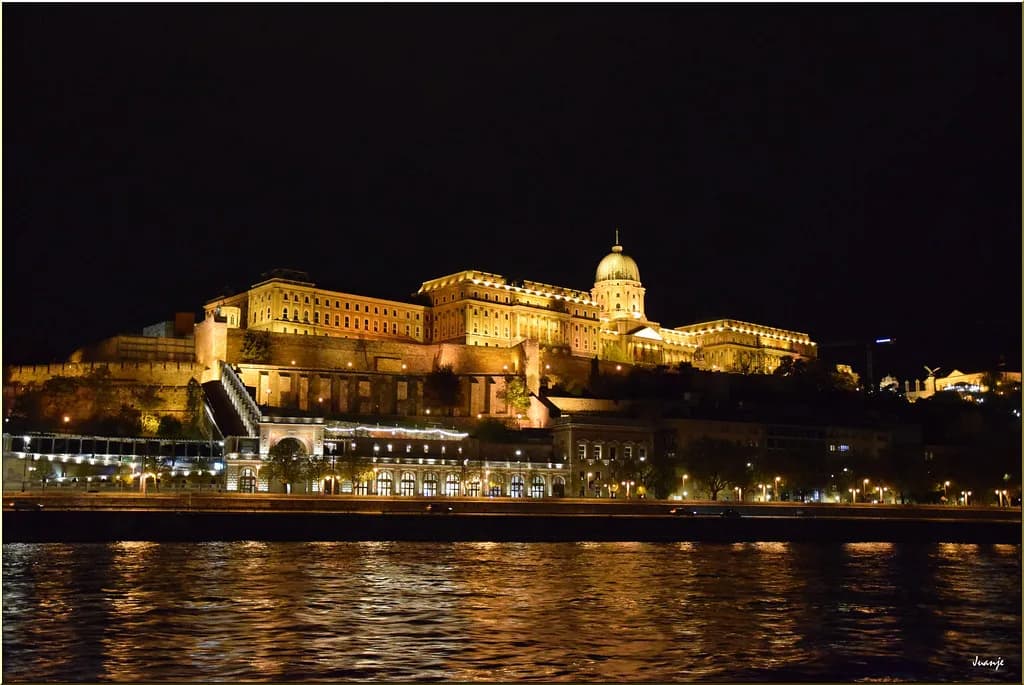
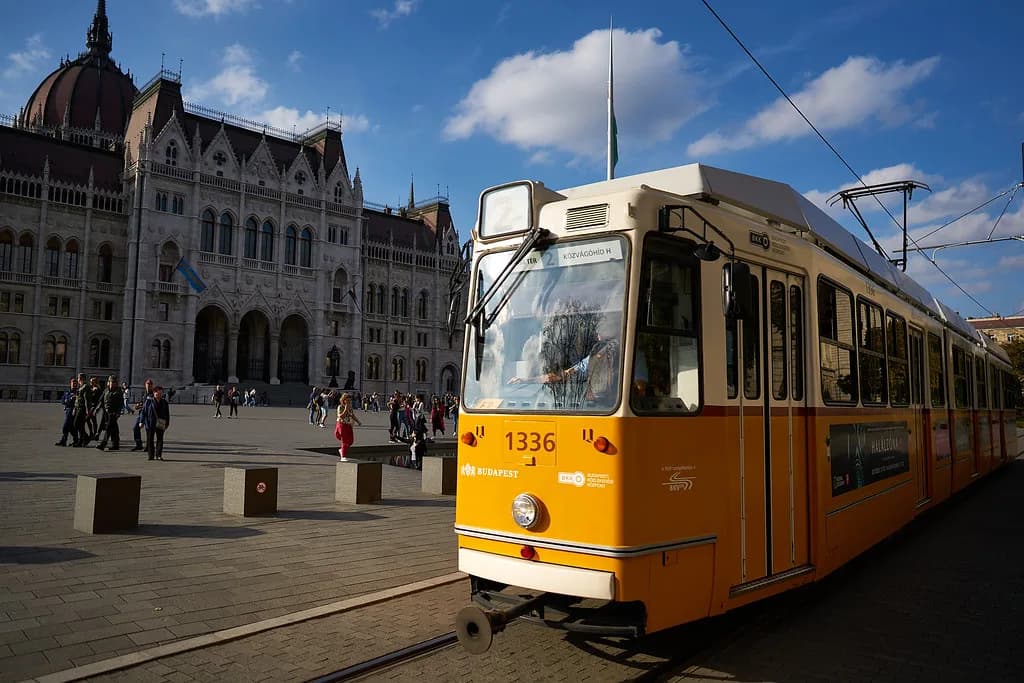
Budapest is a city for trams, the metro and walking, not for a rental car. Parking in the inner districts is scarce and paid, the one-way grid around the castle and the palace district is confusing, and the river crossings during rush hour are slow. If you are in the capital for three or four days, keep the car out of the equation and rent it only for the onward leg.
The same logic applies to day trips. Gödöllő, Szentendre, Esztergom and the Danube Bend are all easy by suburban rail or bus, which removes the parking problem at the far end. If you want a candid ranking of what is actually worth your days in the country, start with the best places to visit in Hungary and build the driving loop around the winners.
Where a car earns its keep: Balaton, the wine regions and the Great Plain
Lake Balaton is the clearest case for a rental. The northern shore's towns, the Balaton Uplands behind them and the viewpoints toward the volcanic hills are awkward by bus and slow by train, and a car lets you link Badacsony, Szigliget and Tihany in a single day. In high summer the roads around the lake slow down, so plan shorter hops and accept that July and August driving is about patience, not speed.
The Tokaj wine region in the northeast and the Eger wine hills both reward a car. Tokaj's cellar villages sit among small hills with limited public transport, and Eger's surrounding vineyards and the Bükk foothills are far easier when you can drive between them and stop where you like. Designate a driver for tasting days; Hungarian police take drink driving seriously and the limits are stricter than in the US.
The Great Plain is car country. Kecskemét's art nouveau center, Szeged's riverside and the scattered farmsteads and thermal towns between them are spread across flat distances that public transport covers slowly. This is also the part of Hungary where fuel and toll costs matter most, so check how your rental handles motorway use. Hungarian motorway driving needs a vignette, which the operator sells at its office.
Automatic, hybrid, electric and minivan options
Automatic cars cost more than manuals in Hungary, and the gap is real: United Rent a Car lists automatic, station wagon and crossover categories from around 29 euros a day while compacts start lower. If you cannot drive a manual, budget for the automatic premium rather than hoping for a free upgrade. Family groups should price the seven- to nine-seat minivan, which starts around 27 euros a day. Hybrid and electric rentals are also listed from around 29 euros a day, and they make sense on longer countryside loops only if your accommodation can charge overnight. Elsewhere, a plain petrol compact is the simpler, cheaper choice. An automatic is worth the premium if you will be driving mountain roads in the Balaton Uplands or the Bükk, where clutch work on steep lanes becomes tedious.
Driver requirements: age, licence and extra drivers
You need a full driving licence held for a reasonable period and a passport or ID; drivers under 25 usually face a young-driver surcharge set by the rental company, and it is worth asking Budget Hungary if that applies to you. Hungary accepts standard EU-format licences, and a US or UK licence is normally fine, but an international driving permit can smooth things if your licence is not in Latin script.
Registering a second driver is often free when requested at booking: United Rent a Car lists free registration of second and third drivers among its inclusive services. Do it in advance rather than at the desk, because adding a driver on the day can mean an extra fee or a wait.
Insurance, mileage limits and what 'all inclusive' really covers
United Rent a Car advertises all-inclusive rates with compulsory insurance, collision damage waiver and theft protection, unlimited kilometres within Hungary, and 24-hour roadside assistance. That is a good package on paper, but read the exclusion list: damage to tyres, glass, the underbody and the interior is commonly excluded or subject to an excess, and the inclusive rate is only as good as the small print.
Unlimited mileage is usually unlimited inside Hungary only. Rentauto's terms describe unlimited kilometres as applying across Hungary, with reduced rates and separate arrangements for trips abroad. If your plan includes Vienna, Bratislava or the Croatian coast, sort the border permission and the mileage terms before you sign, not at the border.
Vignettes, tolls and fuel on the road
Hungary's motorways use an electronic vignette rather than toll booths, and you buy it for a set period before joining the motorway. Rental companies sell the current e-sticker at their desks, which saves a separate purchase, but check what period it covers and whether it is included in your rate or charged on top. Secondary roads need no vignette, which is one reason a slower rural route can suit a short countryside loop.
Fuel and parking are the two costs that surprise people. Hungarian filling stations are standard European self-service, and city parking in Budapest and around Balaton in August is where budgets quietly expand. Pay in Hungarian forint rather than accepting a card terminal's own conversion rate, and keep the fuel receipt if you are on a full-to-full policy.
Crossing borders with a Hungarian rental
Taking a Hungarian rental abroad is possible but needs arranging in advance: Rentauto lists border-crossing permission as an inclusive service and one-way returns beyond Hungary's borders by prior arrangement. Neighbouring destinations such as Bratislava, Vienna or northern Croatia are realistic day trips if the paperwork is in order, but some companies restrict certain countries entirely, so name your route when you book.
The trade-off is cost and complexity. A cross-border one-way hire usually carries a higher drop-off charge than a domestic return, and Rentauto's published one-way airport rate is a cheap domestic airport transfer example rather than a cross-border price. Get the cross-border figure in writing before you commit to the itinerary.
Automatic versus manual and winter driving
Most Hungarian rental fleets are manual, so if you need an automatic, book the automatic category explicitly and early. United Rent a Car lists automatic, hybrid and electric models at mid-range daily rates, and winter tyres and winter preparation among its inclusive services. That matters if your trip falls in the colder months, when rural roads in the Balaton Uplands and the northern hills can be icy and daylight is short.
Spring and autumn are the sweet spot for a driving trip: mild weather, fewer crowds around Balaton and open museums in Eger and Tokaj. If you are planning around a specific month, the Hungary in May and Hungary in September guides cover what is open and what the roads and towns feel like in each.
Typical scenarios: two days at Balaton, a week in the countryside, a month of hire
For two days at Lake Balaton from Budapest, take the train and rent a car locally only if you need to reach the northern shore's smaller villages. If you rent in Budapest instead, choose the smallest category that fits your luggage and return it to the same office; a compact at a modest daily rate keeps the math simple.
A week in the countryside changes the calculus. Rent a compact or station wagon for the whole loop, skip the capital entirely or bookend it with train days, and use the free delivery policy if your hire runs longer than three days. Budget roughly a week's rate against seven intercity tickets and the hours you would lose waiting for buses.
A month of long-term hire makes sense for slow travel, remote work or visiting family across several regions. The published monthly starting rates, which are noticeably lower than short-term daily pricing, are the anchor to negotiate from. Autumn is a good month for this: cooler, quieter and still fully open in the wine towns.
Renting versus trains and buses on the same routes
On the Budapest to Balaton, Szeged or Győr corridors, trains are fast and cheap enough that a car only wins if you are carrying gear or stopping along the way. On routes to Tokaj, the Balaton Uplands villages or the scattered Great Plain towns, the car wins clearly: fewer changes, no timetable dependency and the ability to stop at a roadside csárda for lunch.
The honest comparison is door-to-door time. A car from Budapest to Eger is straightforward driving, while the train also works well; a car from Eger to Tokaj is much faster than the connections by rail. Match the rental days to the legs where the car genuinely wins and let the train handle the easy corridors.
Plan Your Trip
Rent a car in Hungary for the countryside, not for Budapest. Book the smallest category that fits your group, choose automatic only if you need it, confirm the mileage and border terms in writing, and line the rental days up with the legs that actually need a car. That combination gives you Balaton, Tokaj, Eger and the Great Plain without paying for parking in a city that never needed a vehicle.
If the destination decision is still open, weigh Hungary against your other options before you book the flight or the car. If you are comparing similar-value Central European countries, it is worth asking is the Czech Republic worth visiting for the same kind of road trip. Once you know the trip is happening, the rental is a simple tool: pick the dates, pick the category, and drive out of the capital.
Explore more Hungary trip-decision guides
Frequently Asked Questions
Is it a good idea to rent a car in Budapest?
No, for the days you spend in the capital. Budapest's trams, metro and buses cover the city well, parking is scarce and paid, and the one-way streets around the castle district are frustrating. Rent the car on the morning you leave for Balaton, Eger or the Great Plain, and return it when you come back.
Can I rent a car in Hungary if I am under 25?
Usually yes, but expect a young-driver surcharge set by the rental company rather than a fixed national rate. Ask the company for the exact age threshold and surcharge before booking, since it can push a cheap day rate up considerably. Some categories, particularly larger and luxury vehicles, may have higher minimum ages.
How much does it cost to rent a car in Hungary?
Day rates vary by category and season. One Budapest operator publishes starting rates in euros for economy, compact, automatic, minivan and larger categories, with much lower per-day equivalents for monthly hires. Those are starting points, not quotes for your dates, so compare like-for-like quotes from at least two companies for the same gearbox and pickup point.
Can I rent a car in Hungary and drive to other countries?
Often yes, but it must be arranged in advance. The rental company needs to grant border-crossing permission, and one-way returns beyond Hungary are handled by prior arrangement. Some companies restrict specific countries, so state your full route when you book and get the permission and any extra fee confirmed in writing.
Do I need an international driving permit to rent a car in Hungary?
A standard EU-format licence is accepted, and US and UK licences are normally fine. An international driving permit is useful if your licence is not in Latin script or if the rental company asks for one. Carry your passport or ID alongside the licence, as the desk will check identity as well as driving entitlement.
Is unlimited mileage really unlimited in Hungary?
Read the terms carefully. Hungarian rentals commonly advertise unlimited kilometres within Hungary, with separate reduced rates and arrangements for trips abroad. If you plan to cross into Slovakia, Austria or Croatia, ask how mileage is counted outside Hungary before you sign, because the definition of unlimited can change at the border.
Sources
Trip-decision notes
Optional updates when we publish or revise a destination verdict.
You might also like
Continue reading
More guides you'll find useful