Is the Czech Republic Worth Visiting? A Country Verdict
Yes, the Czech Republic is worth visiting, but Prague is only part of it. See who it suits, what lies beyond the capital, and the honest drawbacks.
On this page
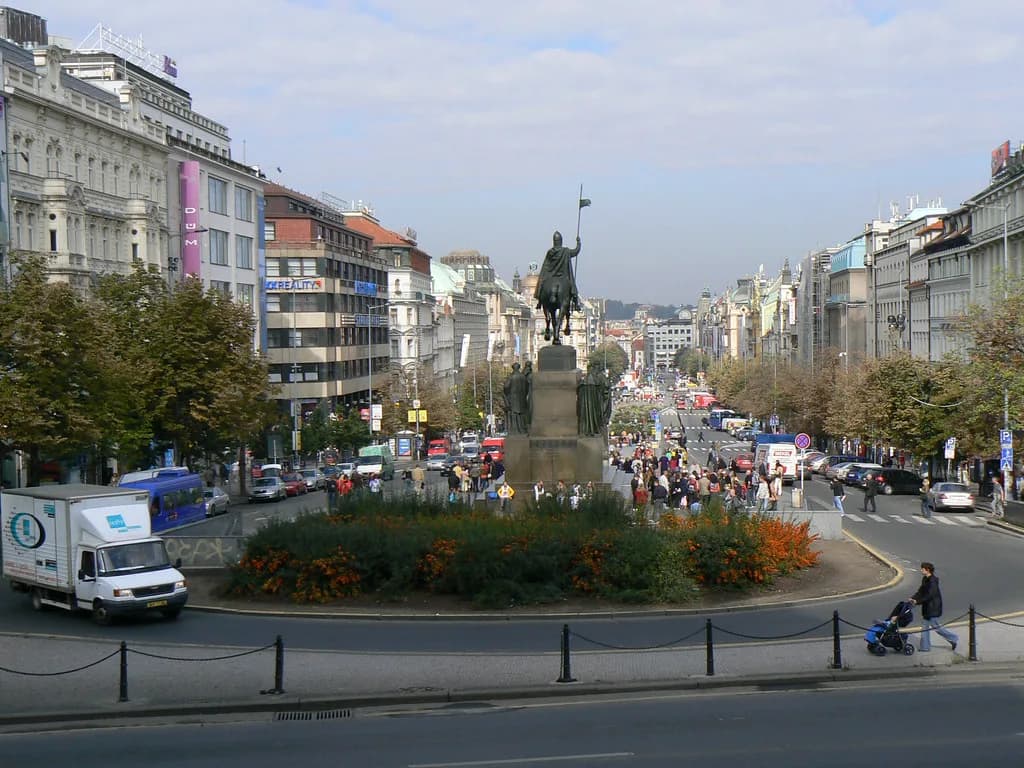
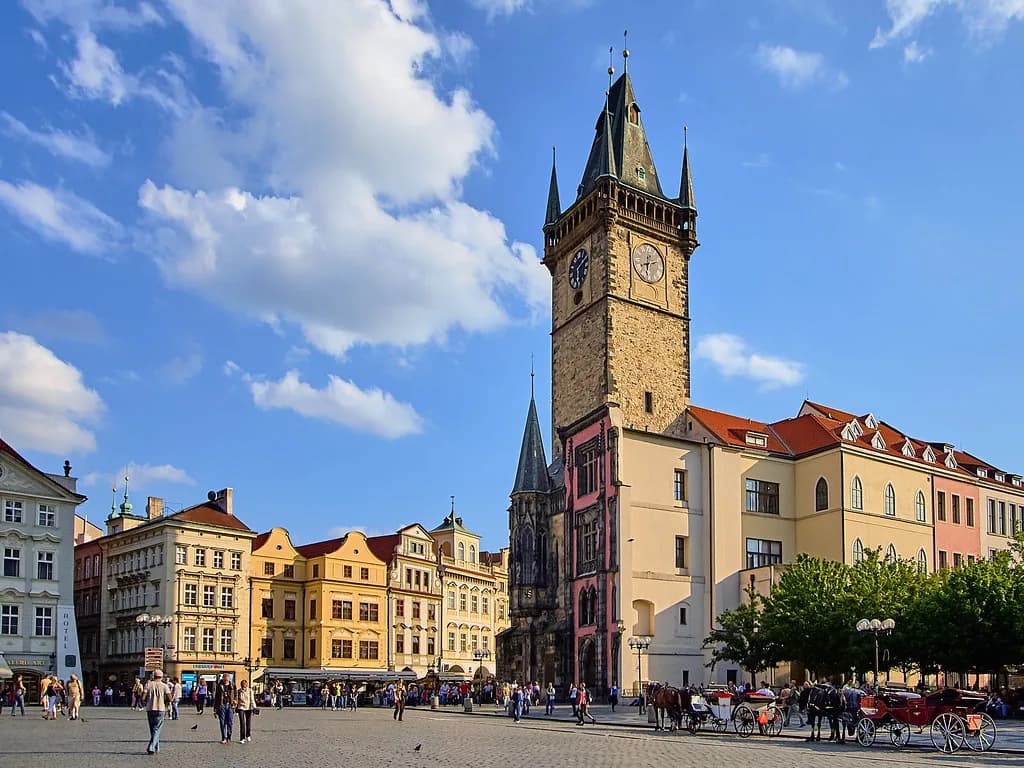
Yes — the Czech Republic is worth visiting, and the case gets stronger the further you move from Prague. The capital delivers Charles Bridge, Old Town Square, Prague Castle and St Vitus Cathedral within a walkable core, but the same compactness that makes Prague easy also makes the rest of the country reachable: sandstone rock country, mountain ridges and a whole second historic half in Moravia.
The honest condition is this: a trip that never leaves Prague answers a different question than a trip through the country. Decide up front whether you are booking a single-city break or a two- or three-region loop, because that choice, more than budget or season, determines whether the Czech Republic repays the flight. The same single-city-or-loop question shapes the answer when you ask is Slovenia worth visiting, another compact Central European destination with one headline capital and a varied hinterland.
The verdict
Treat Prague as a base or a chapter, not the entire book, and the Czech Republic is one of Central Europe's best-value trips. The capital is well connected by air and rail and easy to walk, which makes it a low-friction arrival point before you push outward.
The country rewards movement precisely because it is small and landlocked between Austria, Germany, Slovakia and Poland, with regions that link easily by road or public transport. That geography is the argument for adding a second base rather than day-tripping everything from Prague.
Our verdict by traveler type: yes for walkers, beer drinkers, hikers and budget-conscious city breakers; no if you want a coastline or a single-city trip with no onward movement. If you are still weighing the shape of the trip, our Czech Republic travel tips cover the practical layer, from money to moving between regions.
Who will love it
Old-town walkers get an unusually dense set of intact historic centers, and Prague's core alone strings together Charles Bridge, the Astronomical Clock, the castle and St Vitus Cathedral on foot. Add Kutná Hora, about 70 km east of Prague, and you have a second silver-mining town that once rivaled the capital in importance.
Beer drinkers are well served: microbreweries are scattered across the country and tastings sell out in peak season, so book ahead rather than turn up. Hikers and scramblers get sandstone towers, gorge walks and mountain ridges within a few hours of the capital.
Budget-conscious city breakers find good value here relative to Western Europe, with cheaper accommodation once you step off the most central streets and public transport that makes staying slightly out worthwhile. Our guide to whether the Czech Republic is expensive breaks the costs down by category rather than guessing at a daily figure.
Who should choose somewhere else
Skip the Czech Republic if your idea of a holiday is a beach and a warm sea. The country is landlocked, so the water you get is river, gorge and reservoir rather than coast, and the closest seaside requires leaving the country entirely.
Skip it, too, if you want a single city and no onward movement. Prague can fill a few days, but the city is at its best as a launch point for Kutná Hora, Karlštejn Castle or the rock country, and travelers unwilling to move will see a narrower version of the country.
Travelers who need reliable step-free access across every sight should plan carefully, since castle interiors, rock staircases and old-town lanes are the defining experiences. Prague's core is manageable on foot, but the appeal of the country lies partly in terrain that resists wheels.
Prague: the postcard core
Prague Castle and St Vitus Cathedral form the headline sight, with the cathedral rising above the Lesser Town inside the castle precincts. The view from the castle side is the classic first impression, and it is worth timing your visit for the light rather than arriving at midday with the crowds.
Old Town Square holds the Astronomical Clock and is the busiest pocket of the city, so treat it as a sight to see rather than a place to linger over lunch. Walk the square early, then move outward for food.
Petřín Lookout Tower and Hanavský Pavilon are two of the best viewpoints over the city, and both reward the climb with a skyline view that no street-level walk can match. Petřín also gives you a wooded breather inside the city.
Charles Bridge is the set piece, and it is genuinely best before the tour groups arrive. Cross it once at dawn for the statues and the river, then use other bridges for ordinary getting around.
Prague beyond the postcard
The fix for Old Town crowding is neighborhood time. Vinohrady, Žižkov, Letná and Holešovice hold the coffee shops, cafes and restaurants where locals actually eat, and they are a short tram ride from the center.
Vyšehrad is an old fort close to the main city that delivers river views and quiet paths without the castle crowds, and autumn turns the grounds into color. Strahov Monastery sits near the castle and adds a library-and-cloister stop to a castle day.
Restaurants directly on the Old Town square are the overpriced pocket; walk ten minutes in any direction and quality rises while the bill falls. Our Czech Republic travel tips cover the day-to-day details that make a Prague base work, including how to handle the local currency.
Day trips from Prague
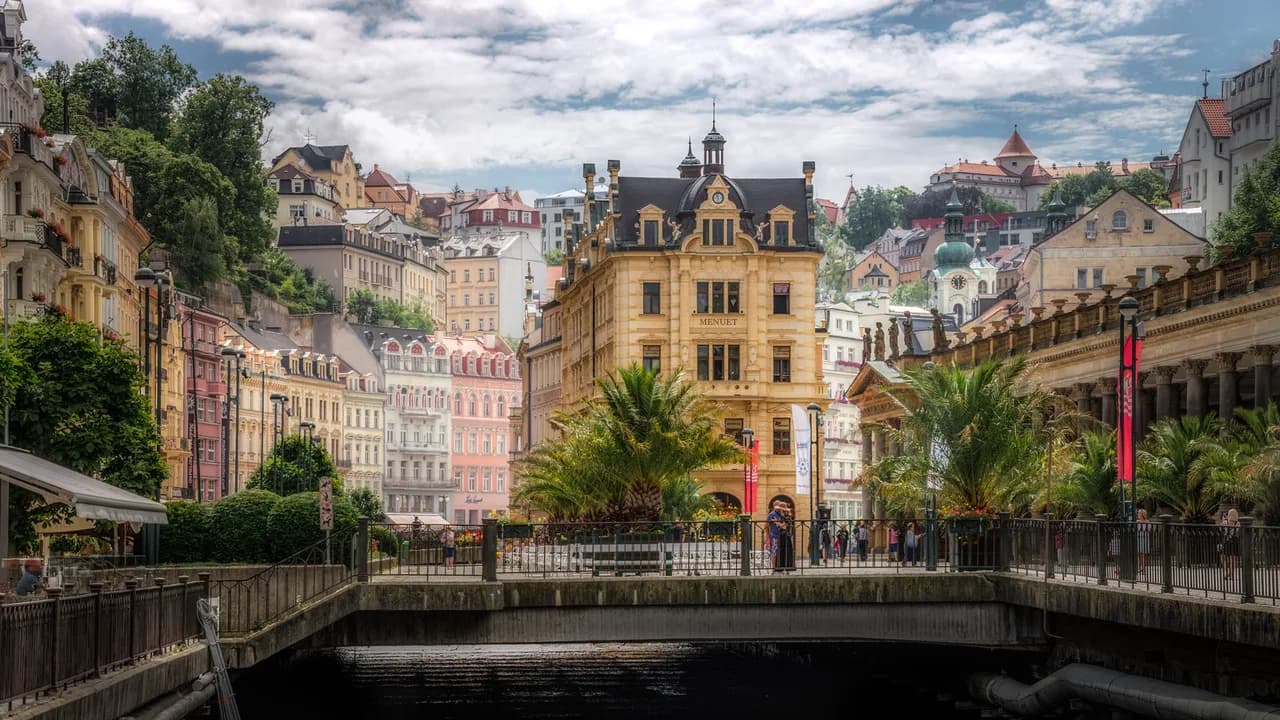
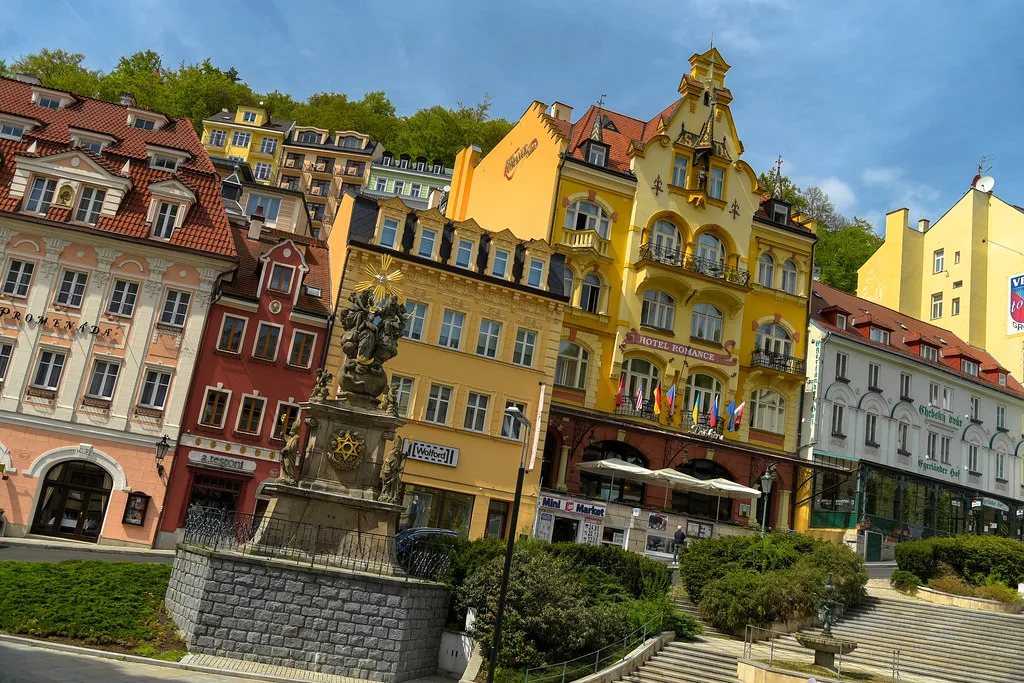
Kutná Hora is the easiest big-hitter day trip, a small Central Bohemian town that once competed with Prague for importance and still carries the architecture to prove it. Karlštejn Castle and Karlovy Vary round out a classic trio, the first for a hilltop castle and the second for its spa colonnade.
Prague also sits close enough to the German border to make Dresden a feasible longer outing, and Vienna is reachable but stretches the day. The trade-off is simple: nearer trips leave you an evening in Prague; farther ones consume the whole day.
If you would rather compare bases than day-trip from one city, our ranking of the best cities in Czech Republic weighs Prague against Brno, Olomouc and the smaller historic towns.
Bohemian Paradise: sandstone country
Bohemian Paradise, or Český ráj, is a protected landscape area about 90 km northeast of Prague and the country's first nature reserve, known for pine forests and bizarre sandstone formations. The Hruboskalsko towers are the signature sight, and the marked trails around them are the reason to come.
Vranov rock castle involves a steep climb through narrow passages and staircases to a view over the Jizera River, and the effort is the point. Valdštejn and Hrubá Skála link into the same trail network, so you can chain castles and viewpoints into one walking day.
Autumn is the quiet-season advantage here: the same trails that fill in summer thin out, and the sandstone looks better against fall color. Carry cash for roadside food stalls, which are the practical lunch on a hiking day.
Bohemian Switzerland and the northern rocks
Bohemian Switzerland National Park is canyon country, with steep ravines, deep forest and the Pravčická Brána, the largest sandstone arch in Europe. The arch is the photograph everyone wants, and the walk to it is the anchor of a day in the park.
The Kamenice gorges are the other essential: a small boat carries you along the water between rock walls, and the trip is short but memorable. The Tisá rocks, made famous by their Narnia connection, suit travelers who want scrambling without a full-day commitment.
This area is best done with your own wheels or a local guide, since trailheads sit outside the villages. If you plan to drive, our guide to renting a car in Czech Republic covers the practical side of picking one up from Prague Airport.
The mountains: Krkonoše and Ještěd
Krkonoše National Park holds Sněžka, the country's highest mountain at 1,602 meters, and Špindlerův Mlýn is the main resort town for reaching it. The range is a winter sports destination, but the cable cars, ridge trails and mountain lodges keep it busy in summer and fall too.
Liberec has the feel of a smaller, hipper Prague, with a handsome old town square and the Ještěd mountain rising directly above it. A cable car climbs to the Ještěd Tower, a combined television tower, restaurant and hotel that gives the best view of the region.
Moravia: the half most visitors skip
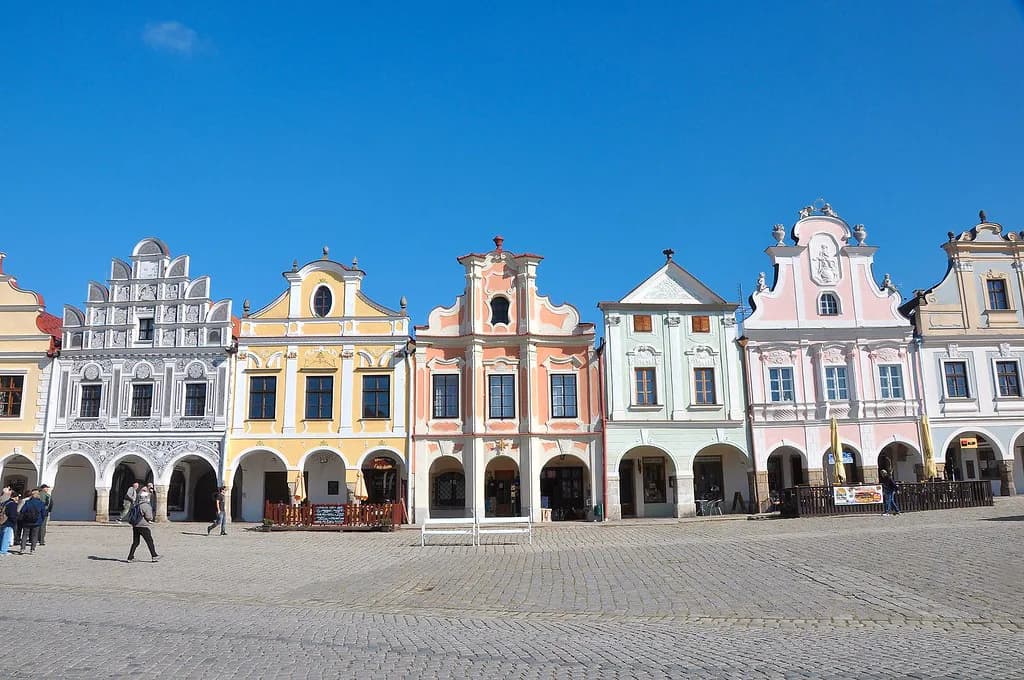
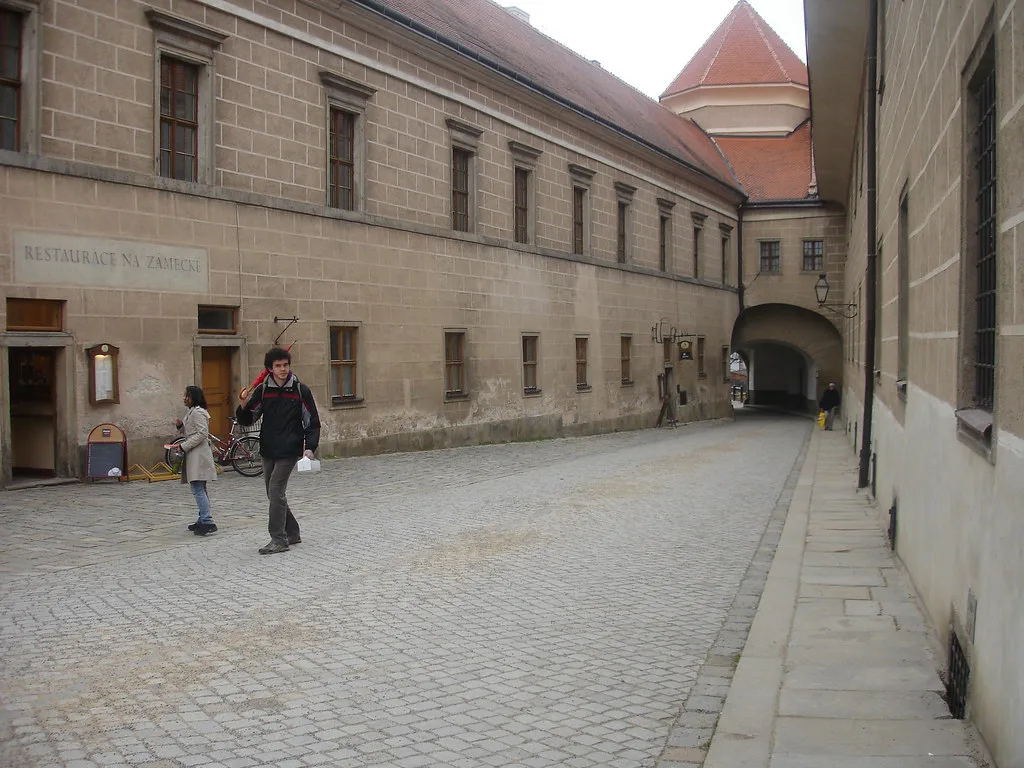
Moravia is where the country changes character: Brno and Olomouc give you two lived-in university cities with historic cores, while Mikulov and Telč supply the small-town architecture that fills postcards. Mikulov's chateau sits on a hill above well-preserved old streets, and Lednice-Valtice adds a designed landscape of chateaux and parkland.
Podyjí National Park, along the Austrian border between Znojmo and Vranov nad Dyjí, is the wild card: a protected river valley that most foreign visitors never reach. South Moravia also rewards spring travel, when the vineyards and country roads are at their best.
If you have a week and want to avoid retracing steps, fly into Prague, work south through Bohemia and finish in Moravia, or reverse it. Our list of the best places to visit in Czech Republic is the shortcut to deciding which towns earn a night.
Drawbacks
Crowds are the first cost of Prague's popularity, concentrated on the Charles Bridge, the Old Town square and the castle approach. The practical fix is timing, not avoidance: early mornings at the headline sights, neighborhoods in the afternoon.
The second is the tourist menu. Restaurants in the Old Town square are overpriced relative to the rest of the city, and the gap is large enough to change your daily food budget.
The third is seasonality away from the cities: mountain resorts orbit the snow season, rock-country trails are at their best in dry, mild weather, and castle interiors operate on their own visiting rhythms. Build flexibility into any itinerary that leans on rural sights.
Weather by month
Summers are warm and the cities fill, with long evenings that suit Prague and Brno but also peak prices and peak queues. Spring and fall are the walking seasons: mild enough for sandstone trails and mountain paths, and the color in Bohemian Paradise and Vyšehrad is the reward.
Winters are cold and gray in the lowlands, with the mountain resorts drawing the snow-seekers instead. If your trip depends on trail conditions or a cable car running, our guide to the best time to visit Czech Republic walks through the seasons rather than pinning a forecast.
How many days you need
Give Prague three full days, including one evening on the river and one morning at the castle before the crowds. A city-only trip of four or five days works, but it is the version of the Czech Republic that skips the country.
Prague plus one region needs about a week: three days in the capital, a day trip to Kutná Hora or Karlštejn, and two or three days in Bohemian Paradise or Bohemian Switzerland. Two nights in the mountains, as many travelers spend in Špindlerův Mlýn, fits the same frame.
A full country loop, Prague to Bohemia to Moravia and back, wants ten days to two weeks to avoid a trip that is mostly transit. Choose the loop only if you are comfortable changing bases every two or three nights.
Typical costs
The Czech Republic sits below Western Europe on most travel costs, with Prague the expensive pocket and everywhere else cheaper. The local currency is the koruna, and you will get better value paying in it rather than converting at a poor rate; our guide to money in Czech Republic covers cash, cards and exchange.
Public transport in Prague is cheap and extensive, covering trams, buses, metro lines and night routes, which means you do not need a rental car inside the city. That is a real saving when you compare a city break against a driving trip.
Restaurant bills vary sharply by location, with the Old Town square the overpriced outlier and neighborhood dining the better value. Tipping is customary but not identical to US practice, so our guide to tipping in Czech Republic is worth a look before you hand over a card.
Getting there and around
Fly into Prague and the country opens up by rail and bus, with a dense network linking the capital to regional towns. Travelers who want the rock country and the mountains at their own pace should weigh a car, especially for trailheads that sit away from stations.
Rail is the comfortable option for city-to-city legs, while buses reach smaller towns that trains skip. Driving brings flexibility but also parking, vignettes and old-town traffic restrictions to plan around.
Practical notes
The Czech Republic uses the koruna, Czech is the national language and English is common in tourist-facing businesses. Check your electronics before you go, since the Czech Republic plug type is the European two-round-pin style, with the Type E socket appearing alongside it.
For entry rules, the official US government country page is the place to start rather than a blog. Locals drink Pilsner Urquell by name, so ordering a beer here is a cultural exercise as much as a refreshment.
Plan Your Visit
The Czech Republic is worth visiting if you are willing to move. Prague earns its reputation, but the country's real argument is the variety packed into a short distance: rock towers, mountain ridges, castle towns and a Moravian half that most itineraries miss.
Pick your shape first (city-only, city plus one region, or a full loop), then set your season around the walking you want. If you are still deciding between destinations in the region, the best places to visit in Czech Republic is the fastest way to compare them.
Explore more Czech Republic trip-decision guides
- Czech Republic Plug Type
- Czech Republic Travel Tips
- Best Places to Visit in the Czech Republic
- Best Time to Visit the Czech Republic
- Getting Around the Czech Republic
- Is the Czech Republic Expensive? What a Trip Actually Costs
- Money in the Czech Republic
- Renting a Car in Czech Republic
- The Best Cities in the Czech Republic, Ranked by What You Want From a Trip
- Tipping in the Czech Republic
- Brno vs Prague
- Czech Republic in April
- Czech Republic Itinerary
- Czech Republic SIM Card
- Do They Speak English in the Czech Republic? What Travelers Should Expect
Frequently Asked Questions
Is the Czech Republic worth visiting?
Yes, on one condition: treat Prague as a base or a chapter rather than the whole trip. The capital is walkable, well connected and delivers the classic sights, but the country's strongest cards are outside it — sandstone towers in Bohemian Paradise, the Pravčická Brána arch in Bohemian Switzerland, the Krkonoše mountains and the Moravian cities of Brno and Olomouc. A Prague-only trip is still a fine city break, but it answers a narrower question than whether the country as a whole repays the flight.
Is Prague worth visiting on its own?
It is, for a short break. Three full days covers Charles Bridge and Old Town Square, Prague Castle and St Vitus Cathedral, Petřín and Vyšehrad, with time in Vinohrady, Žižkov, Letná or Holešovice for food. Beyond that, the city starts repeating itself, and the honest move is to add a day trip such as Kutná Hora or Karlštejn Castle rather than stretching a single-city itinerary.
What is there to see in the Czech Republic besides Prague?
Plenty, and it is the reason to leave. Kutná Hora and Karlštejn Castle are the easy day trips; Bohemian Paradise and Bohemian Switzerland deliver sandstone rock country and gorge walks; Krkonoše National Park holds Sněžka, the country's highest mountain, with Špindlerův Mlýn as the usual base. In Moravia, Brno, Olomouc, Mikulov, Telč, Lednice-Valtice and Podyjí National Park make a genuinely different second half of the country.
How many days do you need in the Czech Republic?
Three full days for Prague alone, and about a week for Prague plus one region such as Bohemian Paradise, Bohemian Switzerland or the mountains. A full country loop that takes in Moravia wants ten days to two weeks, because changing bases every few nights is the constraint rather than distance. Pick the shape first, then book.
Is the Czech Republic expensive for US travelers?
It sits below Western Europe on most costs, with Prague the expensive pocket and the rest of the country cheaper. The currency is the koruna, and paying in it rather than converting gets you better value. Public transport in Prague is cheap and extensive enough that you do not need a rental car in the city, which is a real saving on a short trip.
Do you need a car to travel around the Czech Republic?
No for a Prague-and-day-trips itinerary, where rail and bus cover the classic routes. A car helps for Bohemian Switzerland trailheads, rural Moravia and the mountain resorts, at the cost of parking, vignettes and old-town driving restrictions. Decide by whether your list leans on cities or on trailheads and small villages.
What is the best time of year to visit the Czech Republic?
Spring and fall are the best walking seasons, with mild conditions for sandstone trails and mountain paths and thinner crowds than summer. Summer brings long evenings and the fullest cities, along with peak prices and queues. Winter concentrates activity in the mountain resorts, while the lowland cities turn cold and gray.
How much does a meal cost in the Czech Republic?
There is no single answer, because location drives the bill more than anything else. Restaurants directly on Prague's Old Town square are the overpriced pocket, and prices fall as you move into neighborhoods such as Vinohrady, Žižkov or Letná or out to regional towns. Tipping is customary, so factor that into the total.
Sources
Trip-decision notes
Optional updates when we publish or revise a destination verdict.
You might also like

Continue reading
More guides you'll find useful