Do They Speak English in Czech Republic? Travel Guide
About a third of Czechs speak English, with far higher rates among younger people and in Prague. Here's where English works and where a few Czech phrases help.
On this page
Yes, English will carry you through a standard Czech trip, but it is not universal. Czech is the official language of the country, and English proficiency is concentrated among younger people, city residents and anyone whose job touches tourism.
Plan on English for hotels, museum ticket desks, Prague and Brno restaurants aimed at visitors, and main rail stations. Plan on some friction in small towns, at rural bus stops, in older-run shops and at local counters where the person behind the glass may be more comfortable in German or Russian than English.
This guide splits the answer by situation rather than treating the country as one bloc, so you can judge your own itinerary: a Prague-and-Brno week needs almost no Czech, while a driving loop through small towns rewards a few words and a translation app.
The verdict
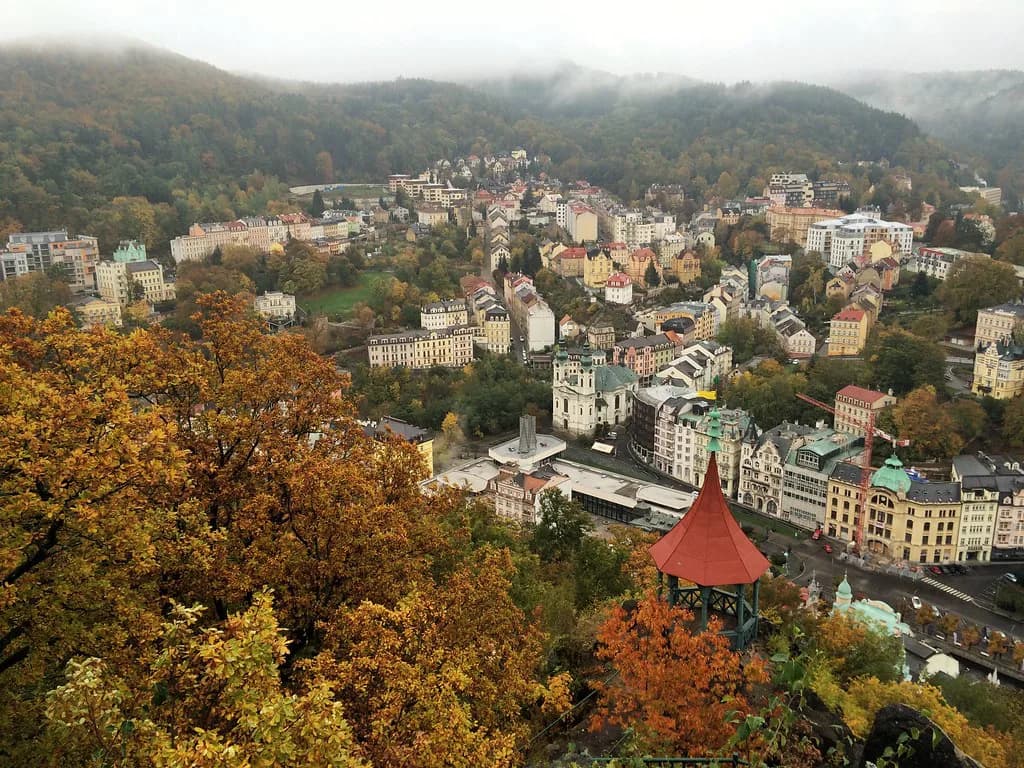
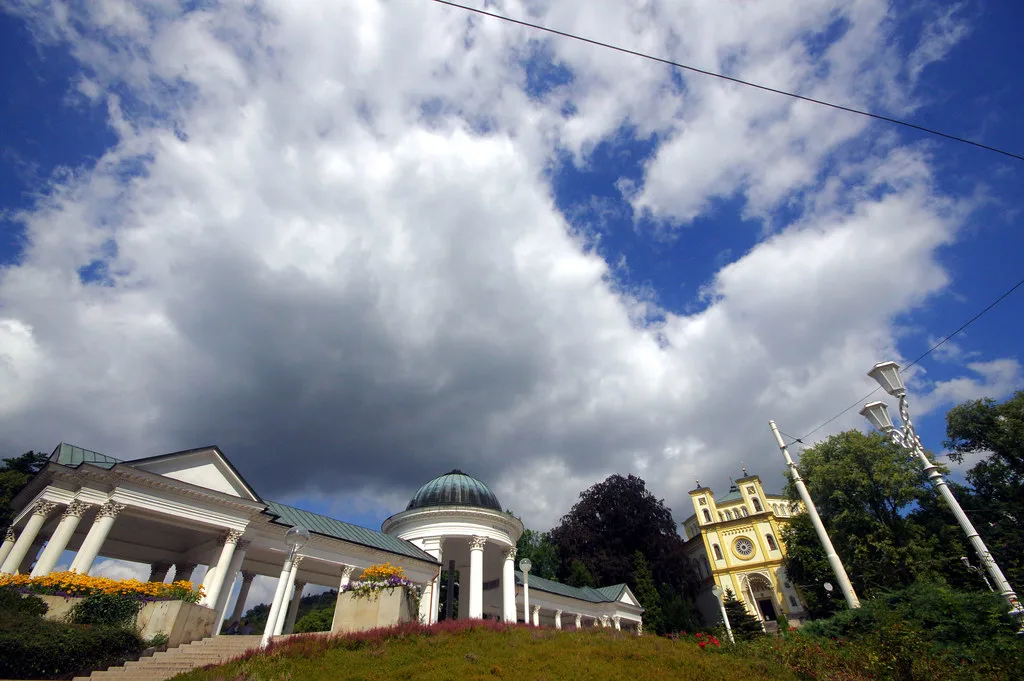
English gets you through a Czech trip comfortably if your route follows the main tourist circuits: Prague, Brno, Český Krumlov, Karlovy Vary and the castle and spa towns. Younger Czechs in these places generally switch to English without drama, and visitor-facing businesses assume it.
The picture narrows as soon as you step off that circuit. In village pubs, small-town supermarkets and regional station counters, expect Czech to be the default and English to be a negotiation involving gestures, a phone screen or a younger employee. That is not a reason to skip the country; it is a reason to prepare in proportion to how far you stray.
How widely English is actually spoken
European Commission survey data published in 2024 puts English speakers at 32.1% of the Czech population, of whom 1.8% are native speakers and 30.3% speak it as a foreign language with good or very good competence. Czech itself is spoken by 95.0%, Slovak by 12.8% and German by 12.0%.
Read that as roughly one in three people, not a guarantee for any given interaction. A private Education First survey reported in 2022 placed the Czech Republic in the lower echelon of European countries for English proficiency, dropping from 19th to 27th globally, and noted that 45% of the population could communicate at some level of English while about one in ten had minimal skills.
The two datasets differ in method and sample, so treat the range as indicative rather than exact. What both support is a simple planning conclusion: English is common enough to rely on in visitor contexts and unreliable enough that you should not assume it everywhere.
Age matters more than anything
The generational gap is the single most useful number for predicting your own experience. Among 15–34 year olds, 53.6% speak English; among people aged 55 and over, the figure falls to 11.8%.
In practice, the barista, hostel receptionist and museum guide you meet will usually be under 35, which is why the tourist experience feels more English-friendly than a 32% national figure suggests. The person behind a rural shop counter, a regional ticket window or a family-run pension desk may be in the older cohort, where English is genuinely uncommon.
German matters here more than many visitors expect: 12.0% of the population speaks it, and in border regions and older generations it can be the second language offered before English. Russian is reported at 6.5%, a legacy of the communist era, but it is not a fallback you should assume.
Where English works easily
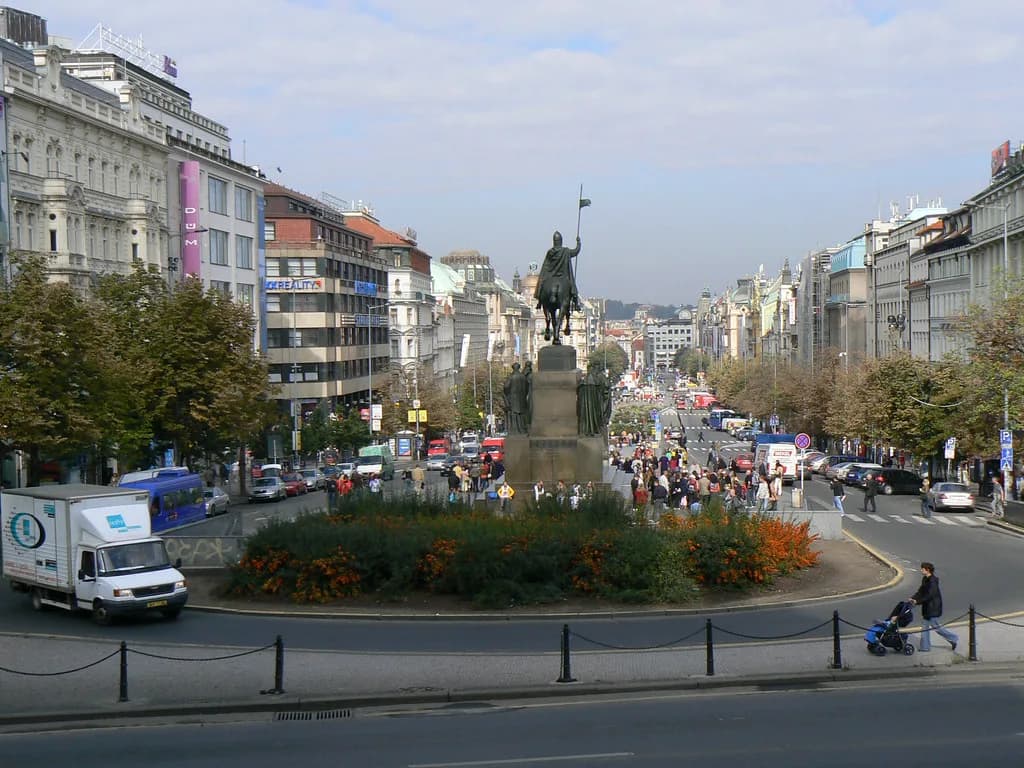
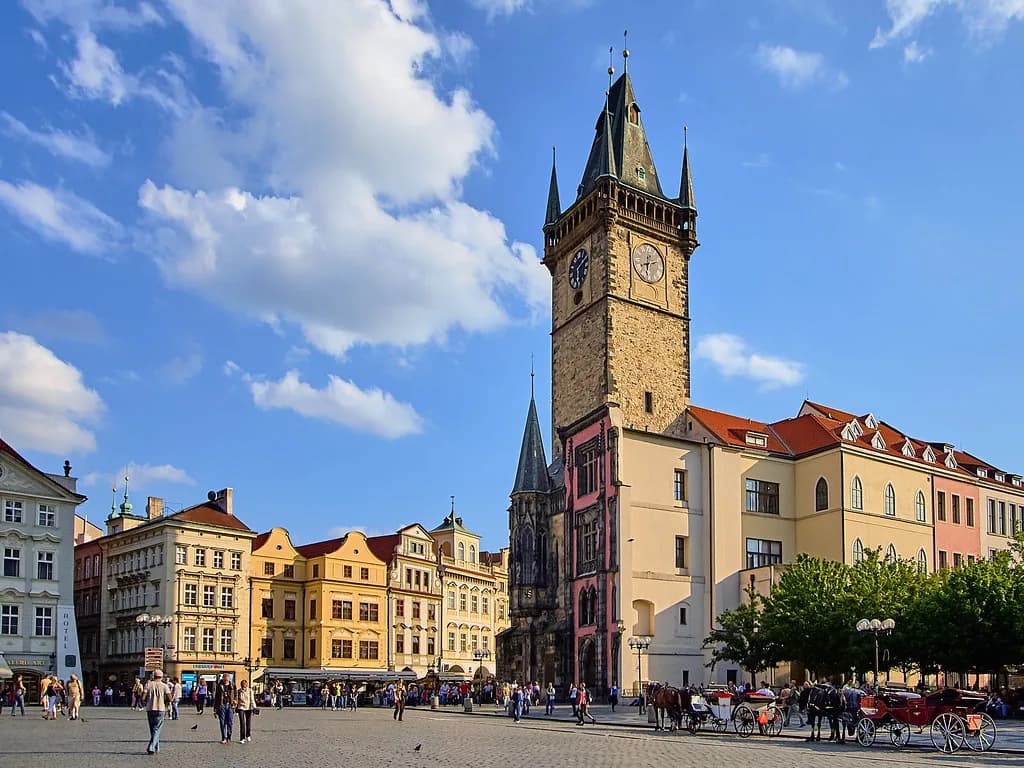
Prague is the obvious case: hotels, the main museums, airport and station information desks, and restaurants in the center all operate in English as a matter of routine. Brno, the country's second city and a large student town, behaves similarly.
The heavily visited set pieces are engineered for international visitors, and ticket staff at Prague Castle, the castle at Český Krumlov or the Sedlec Ossuary near Kutná Hora will typically manage the transaction in English.
Guided tours, wine-tasting rooms, spa hotels and anything bookable online in English will be fine. If your trip is a city break plus one or two well-known towns, language is not a trip-shaping issue.
Where you will want some Czech
Small towns and countryside are where the numbers bite. A village pub with a handwritten menu, a regional bus driver selling a ticket on board, a pharmacy counter, a local butcher or a ticket window at a minor station are all places where Czech is the working language and patience is the bridge.
Station counters deserve special mention: buying a ticket from a person rather than a machine or app means a short, specific exchange, and having the destination written down, with the time and platform noted, saves confusion. Writing place names on paper or a phone screen works better than pronouncing them, because Czech spelling is phonetic and consistent even when the sounds are unfamiliar.
Pharmacies and medical situations are the other place a translation app earns its keep. Have a Czech-language phrase or a photo of what you need ready rather than relying on the assumption that English will be understood at the counter.
How much friction you meet depends on your route, and a driving loop through smaller towns is exactly where an afternoon of phrase practice pays off. Weigh that against the rest of your plans in our guide to getting around Czech Republic.
Czech, German and Russian: what Czechs actually learn
German is the most popular second foreign language in Czech schools, according to Czech Statistical Office data cited in reporting on language skills. That helps explain why an older Czech may offer German before English, particularly near the Austrian and German borders.
Russian, reported as spoken by 6.5% of the population, was compulsory in schools during the communist period and is still understood by many older Czechs, though it is not always a welcome default. Slovak, at 12.8%, is mutually intelligible with Czech and comes free to anyone who learned the other.
The practical takeaway: if English fails, German is the more useful fallback in border areas, and a translation app is more reliable than any assumption about Russian. School-age Czechs now learn English first, which is why the age split is widening in English's favor.
Is Czech hard? A quick reality check
Czech is a West Slavic language, formerly called Bohemian, and its reputation for difficulty is earned but overstated for travelers. The alphabet has 32 letters, consonants are mostly pronounced as in English, and the complications come from accented letters such as š, č, ř and ž.
Vowels with accents are simply held longer, and the rolled r is the one sound most visitors never master. The grammar, with its cases and word endings, is the genuinely hard part, but you do not need it to order a beer, buy a ticket or ask where the platform is.
Pronunciation is the traveler's friend here: Czech is spelled consistently, so reading a place name aloud from a map usually gets you close enough to be understood. That makes written Czech more useful than spoken Czech for a short trip.
A handful of Czech words that earn their keep
Greetings and courtesies do more work than vocabulary. Dobrý den is the standard hello and the safe opener in shops and restaurants; děkuji means thank you; prosím covers please and also serves as the reply when someone thanks you; na shledanou is goodbye.
For logistics, learn the numbers you will hear at a till and the word for the bill, plus a phrase for 'I don't understand' and 'Do you speak English?'. Asking in Czech, even badly, tends to change the tone of the exchange before you switch.
Ordering and paying are where these words show up most, and the etiquette around rounding up and stating a tip is worth knowing before you sit down. Our guide to tipping in Czech Republic covers the conventions.
Money handling and card acceptance vary by venue, and knowing whether to reach for cash or a card in a small shop is part of the same language-of-everyday-life puzzle; see money in Czech Republic for the practical detail.
Czech vs Slovak: why the two are so close
Czech and Slovak were the two halves of Czechoslovakia until the peaceful split in 1993, and the languages remain close enough that Czechs and Slovaks routinely understand each other. Expect similarities in vocabulary and structure, with differences in pronunciation and grammar.
For a visitor this is mostly trivia, but it explains two things you may notice: Slovak is the second most common foreign language in the country at 12.8%, and Slovaks working in Czech hotels, bars and shops will usually understand Czech perfectly and often English too.
It also means a phrasebook for one language partly serves the other, though Czech is the safer choice for a Czech trip.
How many days you need and where language friction shows up
Language is rarely the constraint that decides trip length; geography is. Prague alone absorbs three or four days, and adding Brno, Český Krumlov or a South Moravia wine route pushes a comfortable trip to a week or more.
Friction clusters in the transitions: buying a regional bus ticket, finding a platform at a mid-sized station, checking into a small pension, ordering from a menu with no translation. Build ten extra minutes into those moments, keep a translation app offline-ready, and the language issue shrinks to a minor tax on your time.
If your trip is timed around a season, the same logic applies to weather and crowds, which shape the experience more than language does; see the best time to visit Czech Republic.
The verdict for different travelers
First-time city-break travelers who stay in Prague and Brno can travel on English alone and should not spend a week on Czech beforehand. Couples and families on a rail itinerary between major towns will find museum staff, hotel desks and station information offices comfortable in English.
Drivers and slow travelers through villages, wine cellars and small-town pensions should learn the courtesies and keep a translation app handy, because that is where the 11.8% figure for over-55s becomes relevant. Independent travelers who want to chat with locals beyond the transaction will get far more out of a few dozen words of Czech than out of any app.
None of this should decide whether the country is worth the trip. Language is a small logistical layer over a destination that rewards time and curiosity; our Czech Republic travel tips cover the rest of the practical groundwork. For the bigger decision, our country-level assessment answers whether the Czech Republic is worth visiting on its own terms. If you are comparing Central European options, the same question is worth asking of the neighbours: is Slovenia worth visiting sets out that verdict in similar detail.
Plan Around the Language, Not Against It
Treat English as your default inside the tourist circuit and as a bonus outside it. The 32.1% national figure and the 53.6% versus 11.8% age split explain exactly why a Prague weekend feels easy and a village errand does not.
Pack the four courtesies, write down the place names you need, and keep a translation app available offline. That is enough preparation for most trips, and it frees you to focus on the itinerary and the money questions that shape a Czech holiday more directly.
Explore more Czech Republic trip-decision guides
Frequently Asked Questions
Do a lot of Czechs speak English?
About a third of the population speaks English at a good or very good level, according to European Commission survey data published in 2024. The rate is much higher among people aged 15 to 34 and much lower among those aged 55 and over, which is why the tourist experience often feels more English-friendly than the national figure suggests.
Is English enough in Prague?
In Prague, English covers hotels, museums, airport and station information, guided tours and most restaurants in the center. You will still meet Czech-only situations in smaller shops or with older staff, so a few phrases and a translation app remain useful even on a short city break.
How do I say hi in Czech?
The standard greeting is dobrý den, which works in shops, restaurants and most formal situations at any time of day. Ahoj is the informal version used between friends and younger people. Děkuji means thank you and prosím covers please.
Are Czech and Slovak similar?
Yes. The two languages were the two halves of Czechoslovakia until the peaceful split in 1993 and remain mutually intelligible in most everyday situations. Slovak is the second most common foreign language spoken in the Czech Republic, which means a Czech phrasebook partly serves you in Slovakia and vice versa.
How many countries speak the Czech language?
Czech is the official language of the Czech Republic and is spoken by roughly 95% of the population there. It is also used by Czech-speaking communities abroad, but it is not an official language of any other country.
Do older Czechs speak German or Russian?
German is the most popular second foreign language in Czech schools and is spoken by about 12% of the population, making it the more useful fallback in border regions. Russian, spoken by about 6.5%, was compulsory during the communist period and is still understood by many older Czechs, though it is not always a welcome default.
Will I need Czech outside Prague and Brno?
In smaller towns, village pubs, regional stations and family-run pensions, Czech is often the working language and English may not be understood. Writing place names down, learning the basic courtesies and keeping a translation app offline-ready covers most of the friction.
Is Czech hard to learn for a short trip?
The full grammar is genuinely demanding, with cases and complex word endings, but you do not need it for a visit. Pronunciation is consistent and letters are mostly read as written, so a handful of phrases and the ability to read place names aloud covers the traveler's needs.
Sources
- Beginner’s guide to the Czech Language - Live & Study - Czech Universities
- Czech command of foreign languages among the worst in Europe - Prague, Czech Republic
- language knowledge / eu - Explore language knowledge in Europe Languages Spoken in czech republic · Statistics & Percentages · language knowledge /eu
Trip-decision notes
Optional updates when we publish or revise a destination verdict.
You might also like

Continue reading
More guides you'll find useful