Czech Republic Travel Tips: Decide Your Transport and Money
Practical Czech Republic travel tips: koruna cash, English in Prague versus smaller towns, airport buses, train logic, crowds and how to split your days.
On this page
The Czech Republic suits travelers who want a compact country of medieval towns, serious beer culture and good trains, and who are happy to pay in a local currency rather than the euro. It is a weaker fit for anyone who wants beach time, a one-city trip with no onward moves, or a destination where English carries every conversation. Decide up front whether Prague is your base or your starting point, because that single choice shapes your days and your budget.
Prague is the magnet, but the country is small enough that Karlštejn Castle, Plzeň and České Budějovice sit within easy reach, and Brno and Olomouc give you second and third cities with far thinner crowds. Trains between Czech towns are better than many visitors expect, and the rail network is the reason a two-stop trip works here. Treat Prague as one-third of the trip rather than the whole of it.
Czechia or Czech Republic, and Why It Is Central Europe
Both names are official: Czechia is the short form used more casually, the Czech Republic the formal one, as VisitCzechia sets out. Locals increasingly use Czechia in everyday English, and you will see it in tourism branding, so it does not signal a different country. If someone in a bar says Czech, they mean the adjective, not the place. Check current prices or dates before you travel.
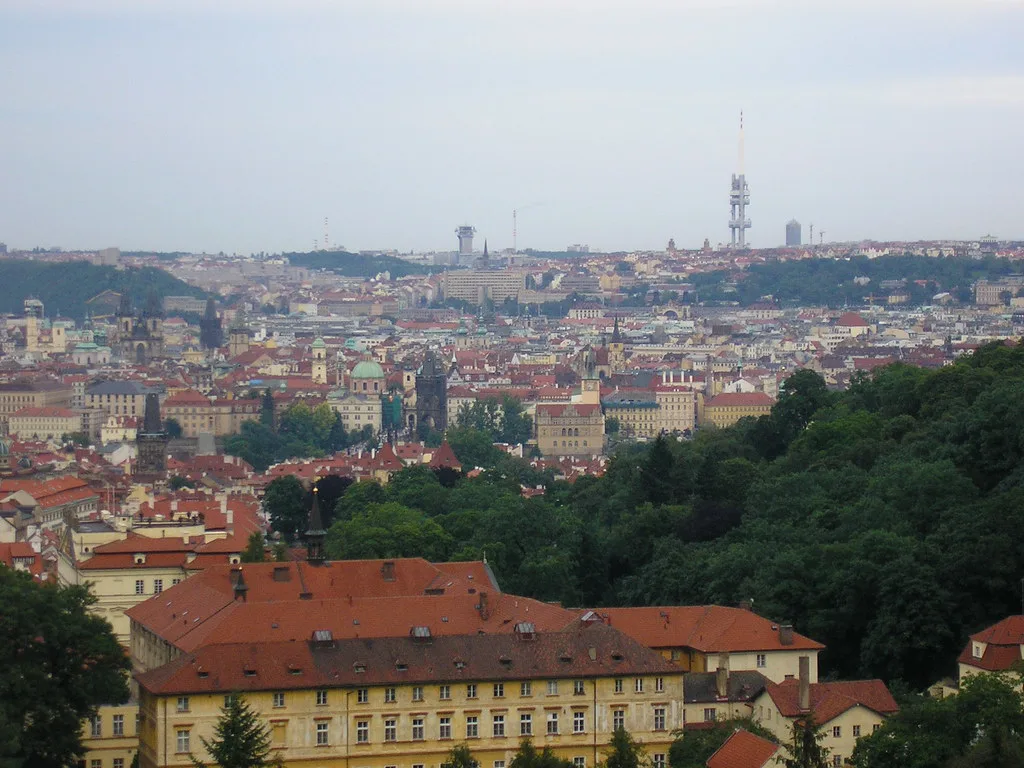
The country sits in Central Europe, not Eastern Europe, and Czechs are quick to correct the label. Prague lies west of Vienna, and Plzeň lies west of Dresden, a point of geography that matters because the capital was the seat of the Holy Roman Empire under Charles IV. That imperial history explains the density of what you see: Charles Bridge and Charles University both date from his reign, which Czechs treat as a golden age.
Money: the Koruna, Cards, and Bad Exchange Rates
The Czech Republic is an EU member that kept its own currency, the Czech crown or koruna, written CZK. VisitCzechia's travel information page illustrates the conversion at roughly 25 CZK to the euro and about 20.5 CZK to the dollar, and those are indications to calibrate your mental math, not live rates. Check your card issuer's rate on the day rather than fixing on any published figure.
Card payment is common across shops, restaurants, hotels, attractions and parking machines, so you can run most of a trip without cash. Keep a small amount of koruna for the odd cash-only counter, but do not convert a large sum at a street kiosk with an attractive board outside a tourist sight. Rates that look generous are the classic first-timer mistake, and paying in euros or dollars at a Prague restaurant usually costs you more than a card transaction.
Several tourist-facing places in major sights accept euro cash, but the rate applied is generally unfavorable, which makes the koruna your working currency either way. Most locals pay by debit card, and contactless and mobile wallet payments are standard in cities. Before you leave home, check whether your bank charges foreign transaction fees, because that small percentage adds up over a week of small purchases.
Language: How Far English Gets You
Czech is a hard language with seven grammatical cases and a letter, ř, that defeats most visitors, so learning a handful of phrases is a gesture rather than a strategy. Děkuji for thank you and ahoj for hello go a long way in goodwill, and Czechs tend to appreciate the attempt even when the pronunciation lands badly. A translation app covers menus and signage.
In Prague, almost everyone working in tourism speaks some English, and English-language information panels are common at major attractions. Outside Prague it gets patchier: younger people often manage English, German is more common near the borders, and fluency thins as you move away from tourist areas. In Brno or Olomouc you will still be fine in hotels and restaurants, but a small-town shop or rural bus stop may need pointing and patience.
One courtesy matters more than vocabulary: Czech has a formal and informal form of you, and visitors should default to the formal vy with strangers. Mixing it up as a foreigner is usually laughed off rather than taken badly. Expect less small talk than in the US, especially from service staff, which reads as reserve rather than rudeness.
Tipping and Pub Etiquette
Tipping is customary in Czech restaurants, bars and cafes, with VisitCzechia putting the norm at up to 10 percent. There is no single enforced rule, so round up or leave roughly a tenth for table service and keep it simple. Tell the server the total you want to pay rather than leaving coins on the table, which is the usual local habit.
On the beer question, Czechs drink more beer per capita than anyone else, and Pilsner Urquell, Budvar from České Budějovice and Staropramen are the names you will meet everywhere. A law now requires pubs to offer at least one non-alcoholic drink cheaper than beer, which ended the old reality of beer costing less than water. If you want free tap water in a restaurant, ask for it specifically, because tap water is drinkable across the country.
Getting Around: Trains, Buses and the Prague Airport Gap
The metro does not go all the way to the airport, so plan the last leg of your arrival. VisitCzechia lists public transport bus lines 100, 191 and 59 between Václav Havel Airport Prague and the city, alongside taxi and shared-ride providers such as Uber and Bolt. Prebooking a transfer can beat walk-up taxi pricing at the terminal, and it removes the decision from a jet-lagged arrival.
Validate your ticket before you ride. Prague's public transport runs on validation rather than turnstiles, and an unvalidated ticket counts as unpaid even if you bought it. This is the single most common way careful travelers end up with a fine.
Trains in Czechia are stronger than their reputation, and the network links Prague with Plzeň, Brno, Olomouc and Ostrava, with onward connections to České Budějovice and the south. For smaller places, buses fill the gaps, and a car is only worth the hassle if you plan to chase castles and hop country outside the rail corridors. Speed limits on Czech roads run 50 in towns, 90 outside and 130 on motorways, with zero tolerance for alcohol.
How Many Days You Need, and Why Prague Alone Is Not the Country
Give Prague three full days if you want the Old Town, Prague Castle and a museum without sprinting, and build in one day trip so you see something outside the capital. Add two nights in Plzeň or České Budějovice, or a night in Brno or Olomouc, and a week in the country starts to feel unhurried. A ten-day version lets you go south into South Moravia for wine country and a different pace entirely.
Prague's Old Town is genuinely beautiful and also only a slice of the country. A sensible split gives the capital half your time and the regions the other half, which also evens out the cost picture because Prague is the most expensive place you will sleep. Anyone telling you Prague is the whole trip is describing a different, shorter holiday.
Beyond Prague: Karlštejn, Plzeň, České Budějovice, Brno and the Žatec Hops Country
Karlštejn Castle is one of the country's most photographed medieval sites and an easy day trip from Prague, which is exactly why it fills up on weekends and holidays. Go early or late in the afternoon and you get the courtyards without the coach groups. Book castle interiors ahead if you want to see more than the exterior.
Plzeň is where the world's first golden lager was brewed in 1842, and the Pilsner Urquell brewery tour is the reason most beer-minded travelers come. České Budějovice, home of Budweiser Budvar, is a slower, handsome square town worth a night. The Žatec region, northwest of Prague, grows some of the world's finest hops and rewards anyone interested in how Czech beer actually happens.
Brno and Olomouc are the two cities that most often get skipped, and both give you a working Czech city rather than a tourist set piece. Brno's Špilberk Castle and Cathedral of St. Peter and Paul anchor a compact center. If you are choosing between the capital and the second city, the trade-off is straightforward: Prague has the monuments and the crowds, Brno has the everyday life and the lower prices.
Prague Crowds and How to Sidestep Them
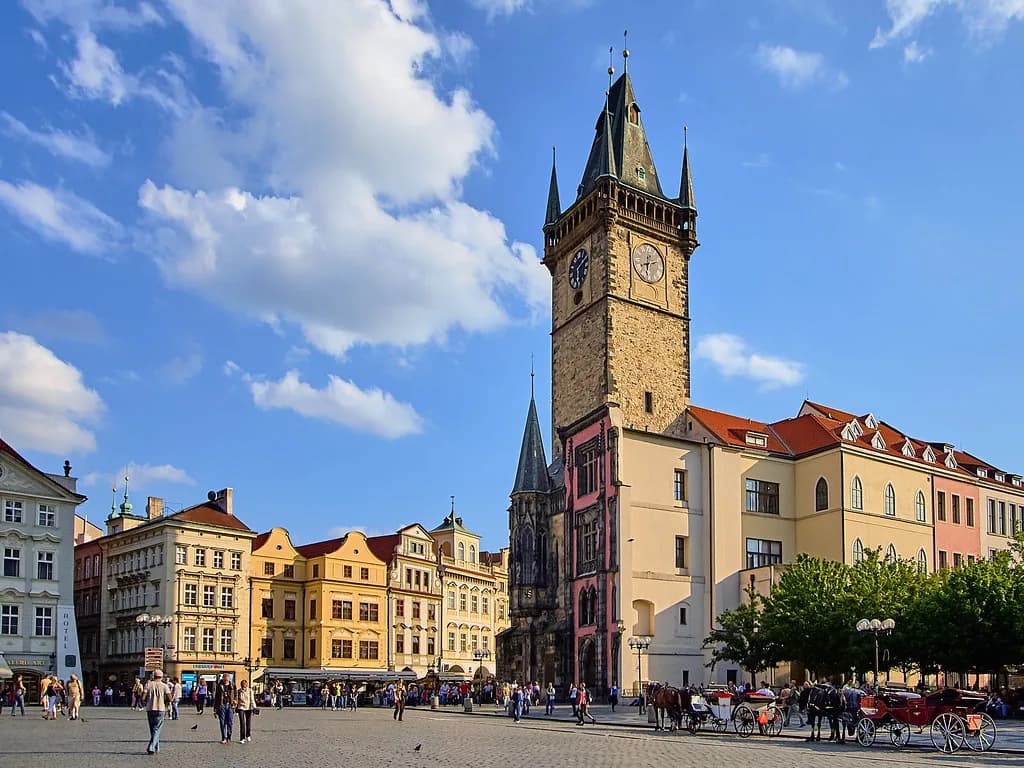
The Charles Bridge corridor and Old Town Square absorb the bulk of the visitors, and midday in high season is the worst window. Walk the bridge before breakfast or after dinner, and use the parallel streets on either side of the river when you just need to move. Prague's crowds cluster in a handful of blocks, so a five-minute shift kills most of the problem.
Timing matters as much as route choice. Shoulder months bring fewer tour groups and comfortable walking weather, and early morning at Prague Castle beats any afternoon slot for the courtyards and the cathedral queue. If your dates are fixed to July or August, plan sightseeing early and leave the middle of the day for museums or a tram ride out of the center.
Typical Costs in Words, Not Invented Numbers
Treat the Czech Republic as mid-priced for a Western European trip: cheaper than Germany or Austria for food, beer and museum tickets, and clearly pricier in Prague's central blocks than anywhere else in the country. Beer and hearty pub food are the value plays, while anything on Old Town Square carries a tourist markup. For a fuller breakdown of daily budgets, the cost verdict walks through where the money goes.
Two cost signals are worth watching. Pub culture is shifting as prices rise and the old cheap neighborhood pubs disappear, so the bargain dinner is less automatic than it once was. And phone data is relatively expensive by European standards, which argues for sorting connectivity before you land rather than buying at the airport on impulse.
Eating and Drinking: Beer, Tap Water and Hearty Food
Czech food is heavy and honest: pork, dumplings, cabbage, roast meats and soups built for cold weather. That suits a walking day in spring or autumn and feels like a lot in a July heatwave, when you should lean toward lighter plates and cold soups. Beer is the national drink, and a tank-poured draft from a major brewery is never a bad call.
Tap water is drinkable throughout the country, so carry a bottle and refill rather than buying plastic. In restaurants, specify tap water if you want it free, because the default is a paid bottled drink. A traditional pub is still the cheapest way to eat well in most Czech towns.
Weather by Season
Czechia has a continental pattern: warm summers with occasional thunderstorms, crisp and colorful autumns, cold winters with snow in the mountains, and springs that swing between mild and raw. Summer days in Prague typically sit in the low-to-mid twenties Celsius, roughly the seventies Fahrenheit, while winter days hover around freezing. Treat these as typical conditions and check a forecast for your dates.
Late spring and early autumn give the best ratio of daylight to crowd, with walkable temperatures and long evenings. July and August are warmest but busiest, and winter is quiet, dark early and cold, which suits museum-heavy city trips rather than castle-hopping. South Moravia runs a few degrees warmer than Prague and is at its best for wine country in early autumn.
Common First-Timer Mistakes
The recurring errors are practical. Travelers assume the euro applies, change money at a tourist-strip kiosk, skip ticket validation on Prague's trams and metro, and book only three nights in Prague with nothing outside the capital. Each is easy to fix before you fly.
Two smaller ones matter too. VisitCzechia describes Czech sockets as the European standard at 230V, and the Czech Republic plug type is the round two-pin fitting used across the continent, so US travelers need an adapter rather than a converter for dual-voltage devices. And do not expect American-style small talk from servers or shop staff, who are brisk and efficient rather than unfriendly.
Verdict by Traveler Type
First-time Europe travelers who want architecture, beer and easy trains should go, with Prague as a three-day base followed by Plzeň or Brno. Beer and history enthusiasts should build the Pilsner Urquell brewery and Karlštejn into the plan without hesitation. Couples and food-focused travelers will find the value in autumn and spring, when the cities are calmer and the tables easier to get.
Skip it, or shorten it, if you want beaches, if you refuse to deal with a non-euro currency, or if you only have two nights and would spend them entirely in Prague's crowded core. Families with very small children will find the cobbles and stair-heavy sights tiring but the trains easy. Anyone wanting a single-city European break should compare Prague against Vienna or Budapest before committing, since the trade-off is monuments and crowds versus space and calm, and if you are weighing other Central European options, it is worth asking is Hungary worth visiting for a candid comparison.
Plan Your Visit
Plan around the koruna, the language gradient and the rail map. Carry a card, keep a little cash, learn three Czech words, validate every ticket and put at least one non-Prague town on the schedule. That combination turns a crowded capital weekend into a country trip.
For entry rules, use your own government's official travel page rather than forum posts, and confirm any specific opening hours or tour times with the venue directly. The rest you can decide now: how many days, which towns, and whether Prague is your base or your first stop.
Explore more Czech Republic trip-decision guides
Frequently Asked Questions
Do they use the euro in the Czech Republic?
No. The Czech Republic is an EU member but uses the Czech crown, the koruna, written CZK. Cards are widely accepted, and some tourist-facing places take euro cash at an unfavorable rate, so withdraw or spend in koruna and let your bank handle the conversion.
Is English widely spoken in the Czech Republic?
In Prague, yes, especially among anyone working in tourism, and major attractions usually have English information panels. Outside the capital it varies: younger people often speak English, German is common near the borders, and smaller towns and rural services may need a translation app and patience.
How many days do you need in the Czech Republic?
Three full days cover Prague's core with one day trip. A week lets you add Plzeň or České Budějovice plus Brno or Olomouc, and ten days opens up South Moravia and a slower regional loop. Prague alone is a short break, not a country trip.
How do you get from Prague airport to the city center?
The metro does not reach Václav Havel Airport Prague. Public transport buses, listed by CzechTourism as lines 100, 191 and 59, connect the airport with the city, and taxis or shared-ride apps are the alternative. Prebooking a transfer usually simplifies a late arrival.
Do you tip in Czech restaurants?
Yes. CzechTourism puts the customary tip at up to 10 percent for table service. Round up or leave about a tenth, and tell the server the total you want to pay rather than leaving coins on the table, which is the usual local habit.
Should you stay only in Prague?
Only if you have two or three nights and want a city break. Prague holds the headline monuments but also the crowds and the highest prices. Splitting your time with Plzeň, Brno or Olomouc gives you a calmer, cheaper and more representative view of the country.
What plug type does the Czech Republic use?
Czech sockets are the European standard at 230V, so US devices need a plug adapter rather than a voltage converter for dual-voltage electronics. Check your charger's input range before you travel and pack one adapter per device you rely on.
Is the Czech Republic expensive for US travelers?
It sits in the middle: cheaper than Germany or Austria for food, beer and museum tickets, and noticeably costlier in Prague's central tourist blocks than elsewhere in the country. Beer and pub food are the value plays, while anything on Old Town Square carries a markup.
Sources
Trip-decision notes
Optional updates when we publish or revise a destination verdict.
You might also like

Continue reading
More guides you'll find useful