Renting a Car in Czech Republic: Worth It vs Trains?
A car in Czechia pays off for Bohemian Paradise, South Bohemia and Moravia's wine country, but Prague and the main rail corridors are easier without one.
On this page
Renting a car in the Czech Republic is worth it when your trip is built around the countryside and smaller towns, and a liability when it is built around Prague and the main rail corridors. The country's rail and bus network handles the classic circuit well, so a car earns its cost only where service thins out. Decide by itinerary shape first, then by budget.
This guide splits the decision the way it actually plays out: a Prague-Kutná Hora-Český Krumlov loop against a Prague-Brno-Vienna rail line, airport pickup against downtown pickup, and a one-week rental against a multi-week one. For the wider country picture, our Czech Republic verdict sets out what the destination offers before you commit to wheels. If you are weighing a similar rent-or-rail call on a neighboring trip, our Slovenia verdict runs the same comparison.
The verdict: who should rent and who should not
Rent if your list includes Bohemian Paradise, Bohemian Switzerland, the small villages of South Bohemia, or the wine roads of Moravia, where a car turns a thin schedule into a workable day. Skip the car if you are doing Prague, Kutná Hora, Český Krumlov and Brno, all of which sit on rail or bus routes that run often enough to make parking a nuisance rather than a saving.
The honest trade-off is cost against time. A car gives you flexibility and rural reach but adds parking, fuel and motorway charges on top of the rental rate, while trains drop you in the center of every Czech city without a parking search. Travelers with three or four days in Prague and one or two day trips should not rent at all.
What a car unlocks
The clearest case is Bohemian Paradise, the sandstone-rock landscape northeast of Prague around Turnov, where trailheads and guesthouses sit away from the rail line. Bohemian Switzerland, the national park on the German border around Hřensko and Děčín, is similar: the big sights are reachable but the connecting roads and small trailheads reward a car.
In South Bohemia, a car lets you string together Český Krumlov, the smaller towns around it and the ponds and forests between them in a single day rather than returning to a rail hub each evening. Moravia's wine country around Mikulov and the Palava hills is the third strong case, since the cellar villages and vineyard roads are spread out and built for driving, not timetables.
April is a good month to use that flexibility, with fewer visitors on the wine roads and rock trails than in high summer. Our guide to the Czech Republic in April covers what the weather typically does and which sights open for the season.
If you are still choosing which towns to build the route around, the best places to visit in Czech Republic ranks the candidates by what each one gives you. A car makes the smaller entries on that list practical, which is where the rental starts to pay for itself.
Where a car is a liability
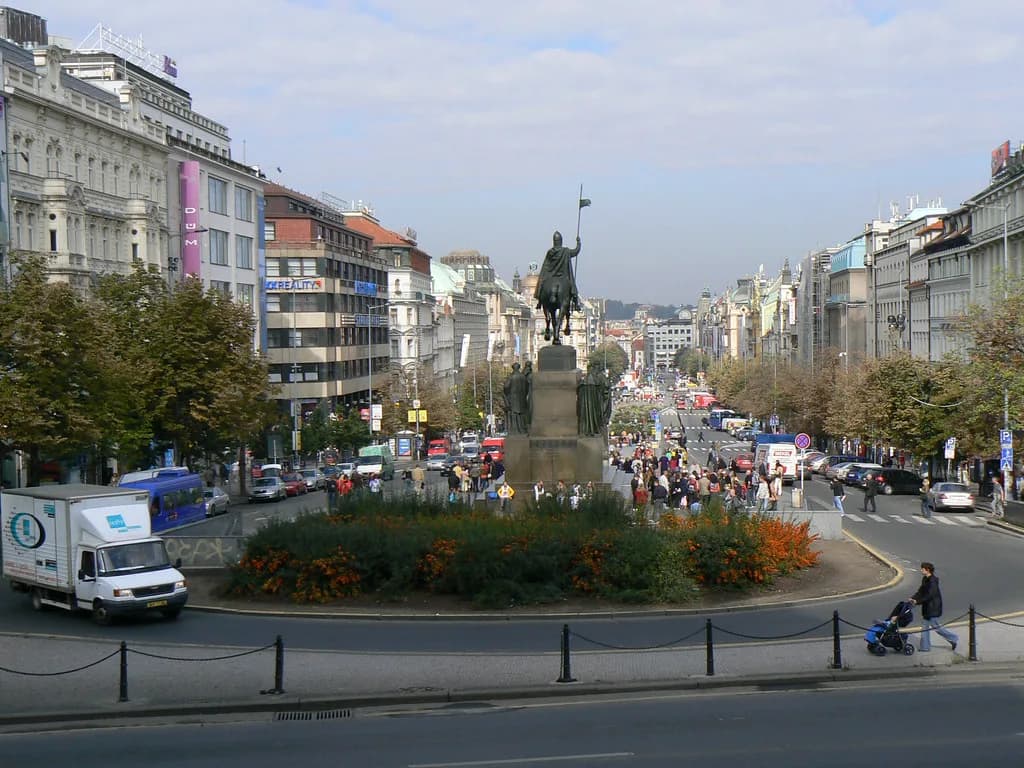
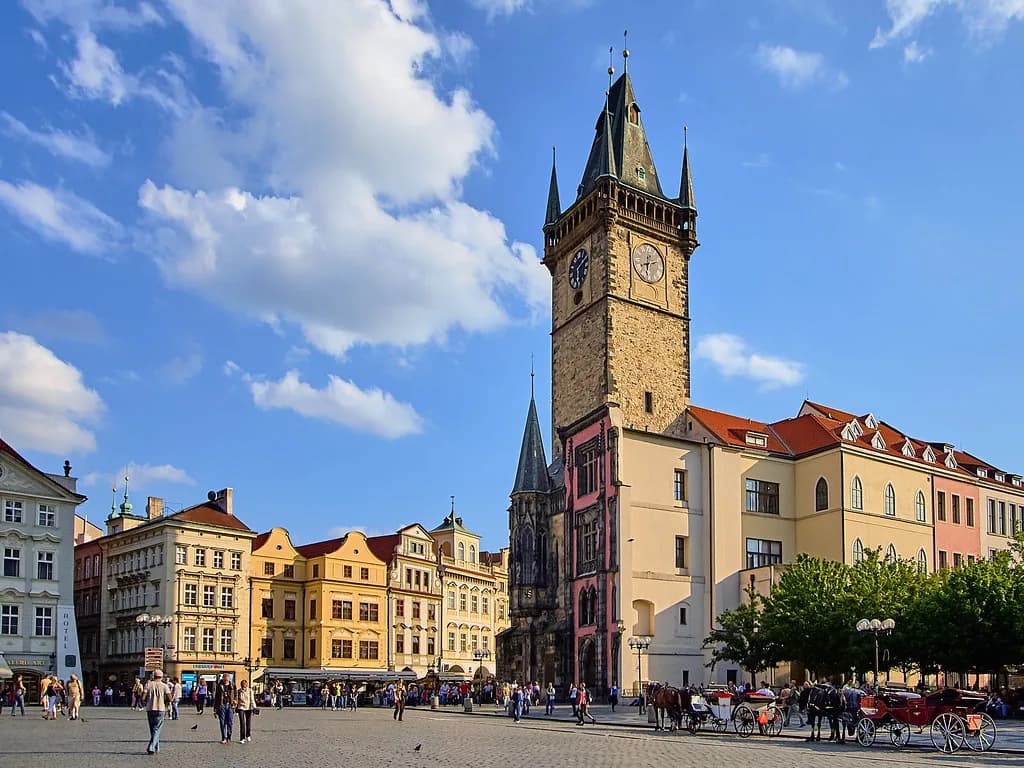
Prague is the obvious case. The historic center is largely pedestrian, parking is scarce and often charged by the hour or day, and a rental car sitting outside the city while you walk is money spent on nothing. Use trams and the metro inside the city and pick up a car only on the day you leave.
The main rail corridors are the second case. Prague to Brno, Prague to Pilsen, and onward to Vienna are fast, frequent train runs where driving adds fatigue and parking cost without saving time. If your trip follows those lines, a car is a cost with no upside; the getting around Czech Republic guide maps the alternatives route by route.
Rental requirements: licence, ID and credit card rules
At the counter, expect to show your driving licence, an identification document such as a passport or national ID card, and a major credit card in the main driver's name. Europcar states that an International Driving Licence is also required when your licence is written in a language or script the rental country cannot read, and that it is only valid alongside your normal licence.
The credit-card rule bites harder than most renters expect. Europcar does not accept cash, debit cards, prepaid cards or a third party's card for the deposit and payment, so a traveler who relies on a debit card needs to sort this out before booking. Points to settle at pickup: whether a vignette is included, the fuel policy, and any cross-border permission.
For questions about licence validity and entry rules for your nationality, the Czech government's official pages are the place to start, and they answer it once rather than through forum guesswork. For the rest of the trip's practical detail, from sockets to payments, see our Czech Republic travel tips.
Automatic versus manual
Most rental fleets in Czechia are manual, and automatics are a smaller, more expensive slice of the inventory at every major company. If you only drive automatic, book that specific car class early rather than assuming you can upgrade at the desk, especially for summer and holiday weekends when the fleet is tight.
The other booking detail worth locking in is size. A compact car handles Czech town streets and garage ramps far better than an SUV, and if you are crossing into Germany or Austria, confirm the car is permitted to leave the country before you pay.
On the road you will also want the right adapter for your devices, and the Czech Republic plug type guide explains what to bring for Type E sockets.
One-way rentals and cross-border trips
One-way rentals inside Czechia are common between Prague and Brno or Prague and Český Krumlov, but they usually carry a drop-off fee that varies by company and distance. Compare the total with a round trip plus a train back before you commit, because the fee can outweigh the convenience on short routes.
Cross-border trips need explicit permission. Tell the rental company at booking if you plan to drive into Germany, Austria, Slovakia or Poland, and get the confirmation in writing, since not every vehicle or rate allows it. The major operators list country-specific terms on their Czech pages, including SIXT and Hertz, and those terms govern what happens at the border.
Tolls and the motorway vignette
Czech motorways use a vignette system for cars, and rental vehicles normally carry one, but do not assume it. Ask at pickup whether the vignette is valid for your rental period and whether any tolled sections on your route need separate payment, so you are not caught by a fine weeks after you return home.
The same pickup conversation should cover winter tyres if you are traveling in the colder months and any local driving restrictions. The rental agreement is the document that matters, so read it before you drive off rather than after.
Fuel and the full-tank option
Fuel policy is a real budget line. Europcar describes three models: return the car with the same fuel level as at pickup and pay nothing extra, return it lower and pay for the missing fuel plus a refuelling charge, or prepay a full tank at pickup and return it empty with no refund for unused fuel.
The full-tank option suits renters who will drive a lot and would rather not hunt for a station near the return point. The same-level option suits shorter rentals where you can refuel on the way back. Either way, keep the fuel receipt, since proof of purchase may be requested.
Driving realities
Czech roads are generally good, with fast motorways between the big cities and narrower, winding roads in the border mountains and wine country. Winter brings snow and ice in the highlands and occasional ice on lowland roads, so plan for slower progress and check conditions before mountain drives; this is typical seasonal weather, not a forecast.
City traffic is the other reality. Prague's ring road and approaches jam at rush hour, and historic centers often restrict cars, so park at the edge and walk or take transit in. Outside the cities, driving is relaxed and the main hazard is impatient passing on two-lane roads.
For a sense of when the roads and sights are busiest, our best time to visit Czech Republic guide sets out the seasonal pattern. Summer weekends on the Bohemian Switzerland trails and South Bohemia roads are the ones to plan around.
Costs: weekly versus multi-week rentals
Rental rates in Czechia are moderate by Western European standards, with weekly rates usually better value per day than short rentals and monthly rates better again for long stays. Add fuel, parking in cities, any drop-off fee and the deposit hold on your card, which can be substantial even though it is refunded.
To judge whether the car fits your overall budget, our guide to whether the Czech Republic is expensive puts transport, food and accommodation in context. Money in Czech Republic covers how to pay and how the koruna works day to day, which matters at fuel stations and parking meters.
Prague Airport versus downtown pickup
Airport pickup is the simpler choice if you land and head straight for the countryside, since you skip a trip into the city with luggage and avoid central parking. Downtown pickup suits travelers who spend the first days in Prague and collect the car when they leave, but confirm the branch's hours and whether it is open on your pickup day.
Consider the route, too. Picking up at Prague Airport and driving to Český Krumlov avoids the city entirely, while a downtown pickup means navigating Prague's traffic on the way out. If your trip starts in Prague, a few days on foot and transit first is usually the calmer option.
Car versus bus and train on real routes
Prague to Kutná Hora is an easy train run, so a car adds nothing. Prague to Český Krumlov is served by bus and train but a car makes the surrounding South Bohemian villages part of the same day. Prague to Mikulov in Moravia is where the car wins clearly, since the wine roads around it are not built for timetables.
Add up your actual days before deciding. Two or three rural days rarely justify a week's rental, while a ten-day loop through Bohemian Paradise, South Bohemia and Moravia usually does. Travelers who want to see the country beyond the cities should read is Czech Republic worth visiting before choosing the route.
Practical pitfalls
The damage deposit is held on your credit card and released after return, so a small credit limit can block a booking. Walk around the car with the agent at pickup and photograph existing damage, and return it on time: late returns can trigger an extra day's charge at the local rate.
Cleaning fees are real. Europcar charges special cleaning costs if a car comes back needing more than a normal tidy, so keep muddy hiking boots off the seats and avoid eating in the car. If you extend the rental, contact the pickup branch, since extensions depend on availability and are charged at the local daily rate.
Verdict by traveler type
City-focused travelers doing Prague, Kutná Hora, Brno and Český Krumlov should skip the car and use trains and buses. Travelers with a week or more who want Bohemian Paradise, Bohemian Switzerland, rural South Bohemia or Moravia's wine villages should rent, pick up outside Prague, and book an automatic early if they need one.
Families and small groups often find the car pays off on luggage and flexibility alone, while solo travelers on a short trip usually do better on transit. Either way, settle the licence, credit card, vignette and fuel policy at the counter before you drive away.
Explore more Czech Republic trip-decision guides
Frequently Asked Questions
Is renting a car in Czech Republic worth it?
It is worth it when your itinerary goes rural: Bohemian Paradise, Bohemian Switzerland, the villages of South Bohemia or Moravia's wine roads. It is not worth it for a Prague-centered trip or the Prague-Brno-Vienna rail line, where trains and buses are faster and parking is a burden.
Can Americans drive in the Czech Republic?
Yes, with a valid US licence, and rental companies may also require an International Driving Licence when your licence is not readable in the local language. Bring your passport and a major credit card in the main driver's name, since debit and prepaid cards are not accepted for the deposit. Confirm entry rules on the official Czech government pages.
How much does it cost to rent a car in the Czech Republic?
Rates vary by season, car class and how far ahead you book, so the company's own quote is the only reliable figure. Budget beyond the rental rate for fuel, city parking, a possible one-way fee and the refundable deposit hold on your credit card.
Is it difficult to drive in the Czech Republic?
Outside the cities, driving is straightforward on good roads, with narrower winding routes in the border mountains. The challenges are Prague traffic and parking, historic-center car restrictions, and winter snow and ice in the highlands, which slow mountain drives.
What are the requirements for foreigners to drive in the Czech Republic?
You need a valid licence from your country of residence, an ID document such as a passport, and a major credit card in the main driver's name for the deposit. An International Driving Licence may be required if your licence is in a different language or script. Check official government guidance for entry and licence questions.
Is it better to rent a car or take trains in Czechia?
Take trains for Prague, Kutná Hora, Brno, Pilsen and the main corridors, which are fast and frequent. Rent a car for rural regions where service thins out, and pick it up outside Prague so you are not paying for parking while you explore the city on foot.
Sources
Trip-decision notes
Optional updates when we publish or revise a destination verdict.
You might also like

Continue reading
More guides you'll find useful