Czech Republic Itinerary: How Many Days to Plan
Plan a Czech Republic itinerary by trip length: 7, 10, 12 or 14 days, with Prague, Bohemian Paradise, Český Krumlov, Moravia and when to rent a car.
On this page
Ten to twelve days is the honest answer for a Czech Republic itinerary that covers both Prague and the countryside. One week works if you accept a tight loop of Prague, Český Krumlov and Moravia by car, while four or five days should stay in the capital and take a single day trip. The country looks compact on a map, but the places worth the detour sit off the fast rail lines.
This plan builds the trip around three anchors — Prague, the castle-and-rock country of Bohemia, and the south with Český Krumlov and Moravia — and then scales the route up or down. It also settles the car question early, because that decision shapes the whole itinerary. Read our verdict on whether the Czech Republic is worth visiting if you are still deciding whether to commit the time at all.
The verdict: build the trip around three anchors, not a checklist
Treat the Czech Republic as three regions rather than a list of sights. Prague and its immediate surroundings form the first anchor, the castle and sandstone country of Bohemia the second, and the south — Český Krumlov, Hluboká and the Moravian wine villages — the third. A route that touches all three feels complete; one that hops between UNESCO towns without a geographic logic spends its days in transit. If you are comparing this three-region approach with neighbouring options, our verdict on whether Slovenia is worth visiting covers a similarly compact country.
The trade-off is depth against coverage. Prague alone can absorb three days without repetition, and Český Krumlov rewards an overnight stay far more than a coach stop. Build in at least one night in the south and one in the countryside, and you get the early mornings and late evenings when the popular squares are quiet. This is why a two-week outline keeps a Prague base and pushes Český Krumlov to a stop on the way in or out rather than a rushed day trip.
How many days you need in the Czech Republic
Five to seven days: Prague plus one region. Spend two full days in Prague, then choose either South Bohemia with Český Krumlov and Hluboká Castle, or Moravia with Brno and the vineyards. Trying to do both in a week means spending your sightseeing time on the road.
Ten days: Prague, Bohemian Paradise, Bohemian Switzerland, Karlovy Vary and Český Krumlov, with a brief Moravian stop. Twelve days: the same loop with a night in Brno and a proper wine afternoon in Moravia. Fourteen days: add a second night in the Moravian wine country or an extra hiking day in the northern rock parks rather than a new city.
The arithmetic is less about how much you can see than how many times you want to unpack. Each move costs half a day in packing, driving and settling in, so a route with four bases over ten days feels calmer than one with eight. If your dates are fixed, match the route to the nights you have booked rather than the other way around.
Prague: two full days, three nights
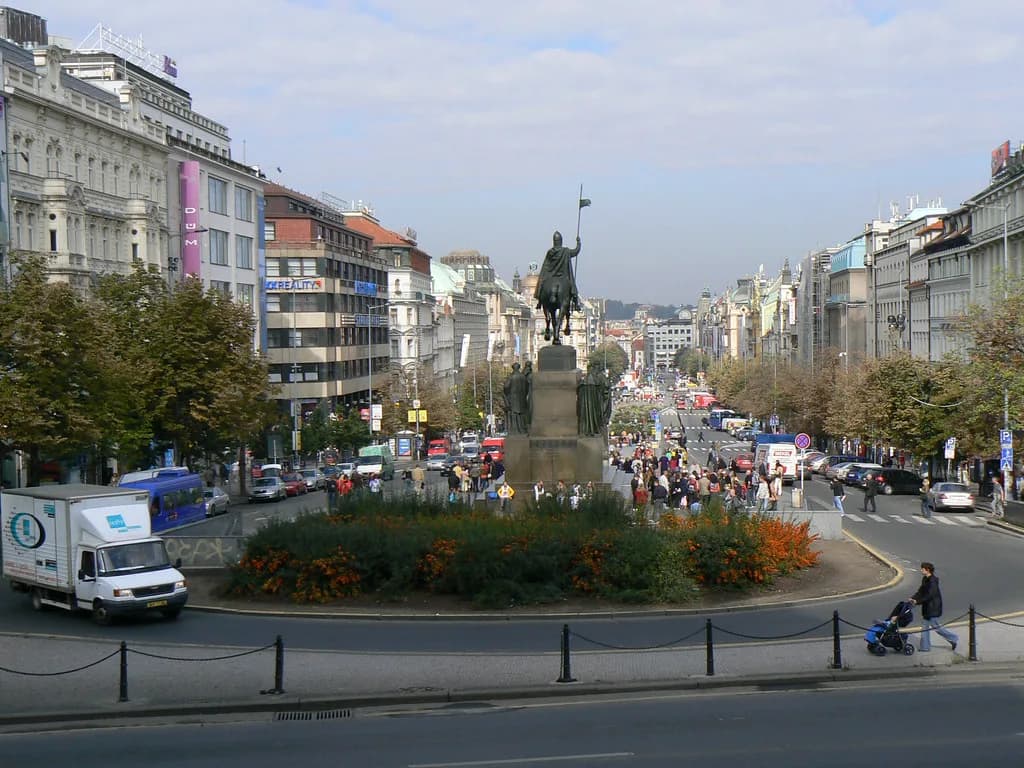
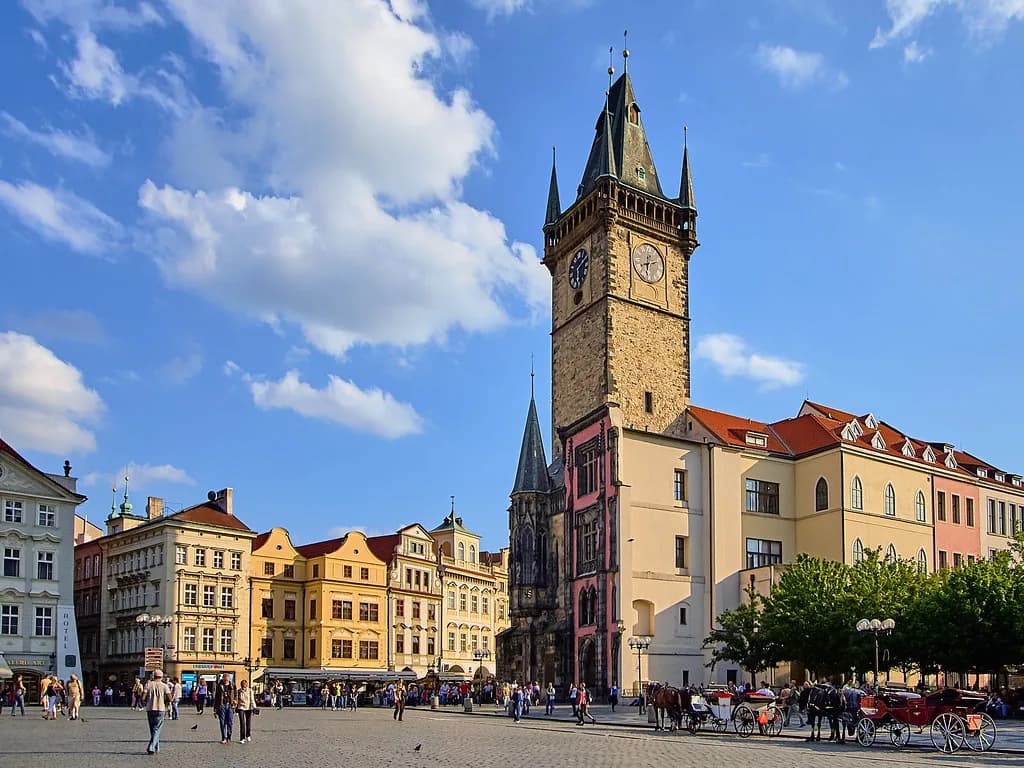
Give Prague two full days and don't rent a car for them. Day one is the Old Town, the Astronomical Clock, Charles Bridge and the view from the Old Town Bridge Tower, with a walk up to Letná or through Vinohrady if you want a quieter afternoon. Day two belongs to Prague Castle, St. Vitus Cathedral and Malá Strana, which is calmer than the Old Town and easy to wander. Arrive at the castle early — the courtyards and the lane below fill up as the morning goes on.
Eat and drink a street or two off Old Town Square, where both the crowds and the prices drop within a few minutes' walk. Czech beer is a genuine part of the trip rather than a footnote, and the Pilsner Urquell tradition is worth seeking out in a proper pub rather than a tourist taproom. Our Czech Republic travel tips cover the practical side — tickets, trams, ordering — without turning the day into admin.
On day three, pick up the rental car late in the afternoon or the next morning rather than on arrival. Central Prague parking is regulated and stressful, and airport pickup is a smoother handover; our guide to renting a car in Czech Republic explains what to bring and how the pickup works at Prague Airport. Alternatively, take a half-day tour to Karlštejn Castle and keep the evening in the city.
The 7-day route: Prague, South Bohemia and Moravia
A one-week route with a car runs Prague for three nights, then Hluboká Castle and Český Krumlov for two nights, then Moravia and Brno on the way back. Total driving is manageable — roughly eight to nine hours spread across four days on a comparable route, with no single stretch long enough to wipe out a morning. That pace leaves room for a castle stop and a long lunch without arriving after dark.
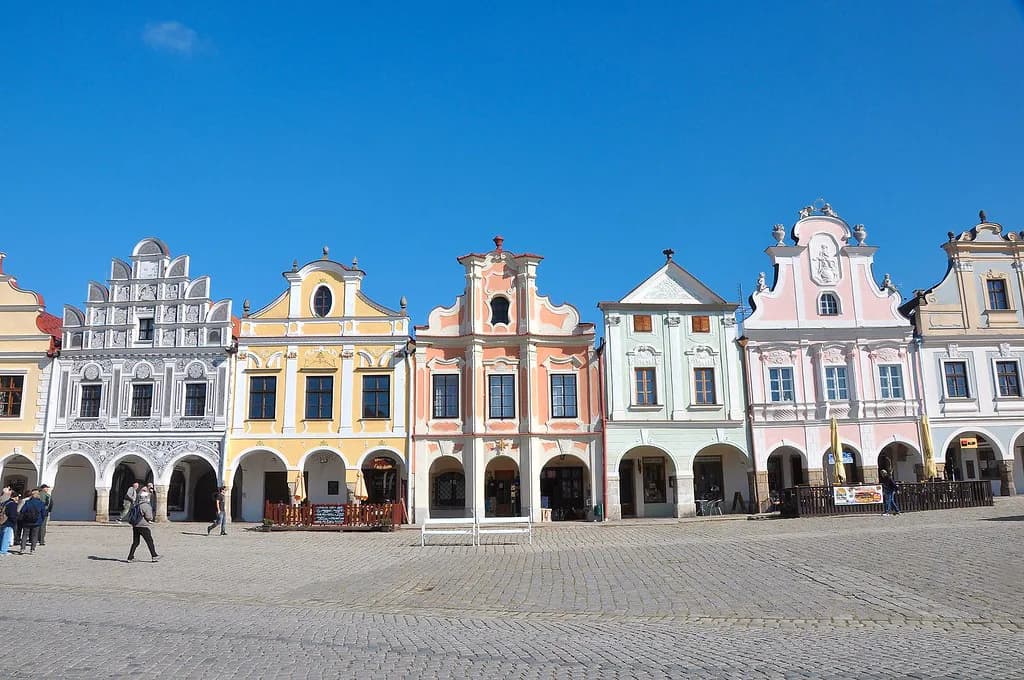
Český Krumlov is the hinge of the week. The old town is car-free, so park in one of the designated lots outside the centre and walk in, and carry luggage that handles cobblestones. Day-trippers fill the main square and the castle viewpoint through the middle of the day, so plan those spots for early morning or after five, and use the lunch hours for the river path or the castle gardens. Staying a night is what makes the town feel like a place rather than a backdrop.
North of Český Krumlov, the Červená Lhota castle on its pond island is a twenty-minute photo stop rather than a half-day visit. In Moravia, the Lednice–Valtice Cultural Landscape is the headline for a landscape day, and Brno deserves a night for its food and its relaxed squares. Our Brno vs Prague comparison is the honest read on how the two cities differ.
The 10-day route: add Bohemian Paradise and Bohemian Switzerland
Ten days lets you add the northern rock country between Prague and the spa towns. Bohemian Paradise is the Prachov Rocks and the sandstone towers around Hrubá Skála, best walked early — the popular green route is short and the parking fills by mid-morning. This is real hiking rather than a viewpoint stop, so give it a full day and a dry pair of shoes.
Bohemian Switzerland, on the Saxon border, is the Pravčická Gate and the gorges of the Kamenice. The gate is the icon, but the gorge boat trip is the more atmospheric experience for many visitors. Access status changes with weather and maintenance, so ask at the park's information centre or check the official park site before you build the day around it. Neither park is realistically reached by train with luggage, which is why this route assumes a car.
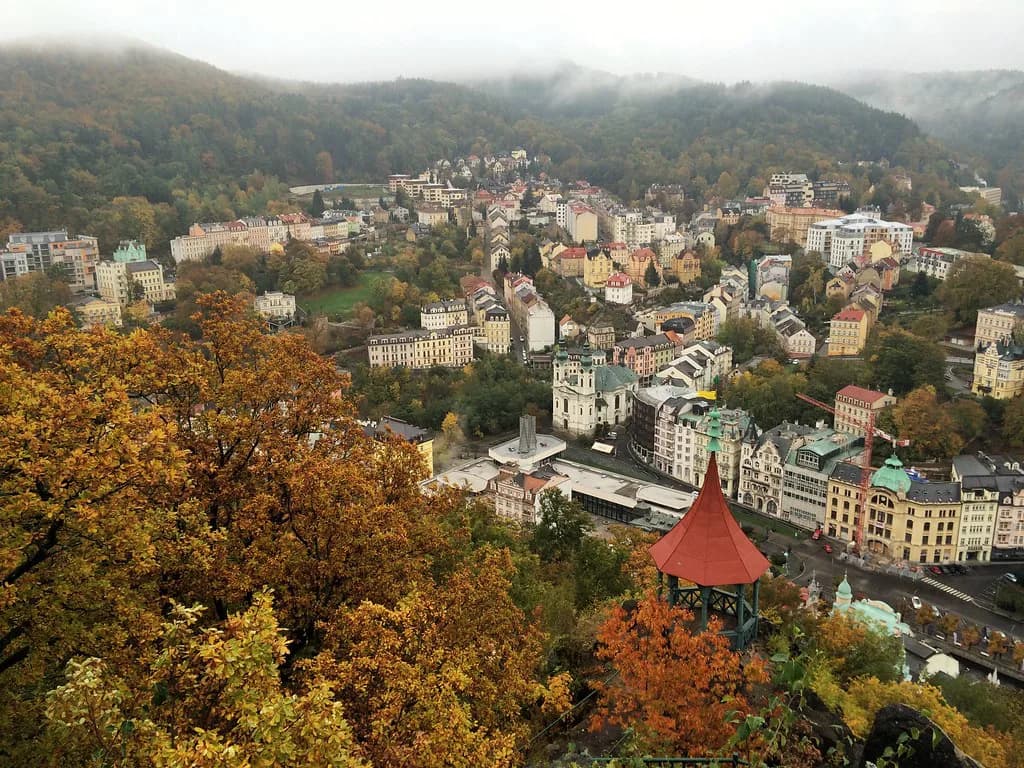
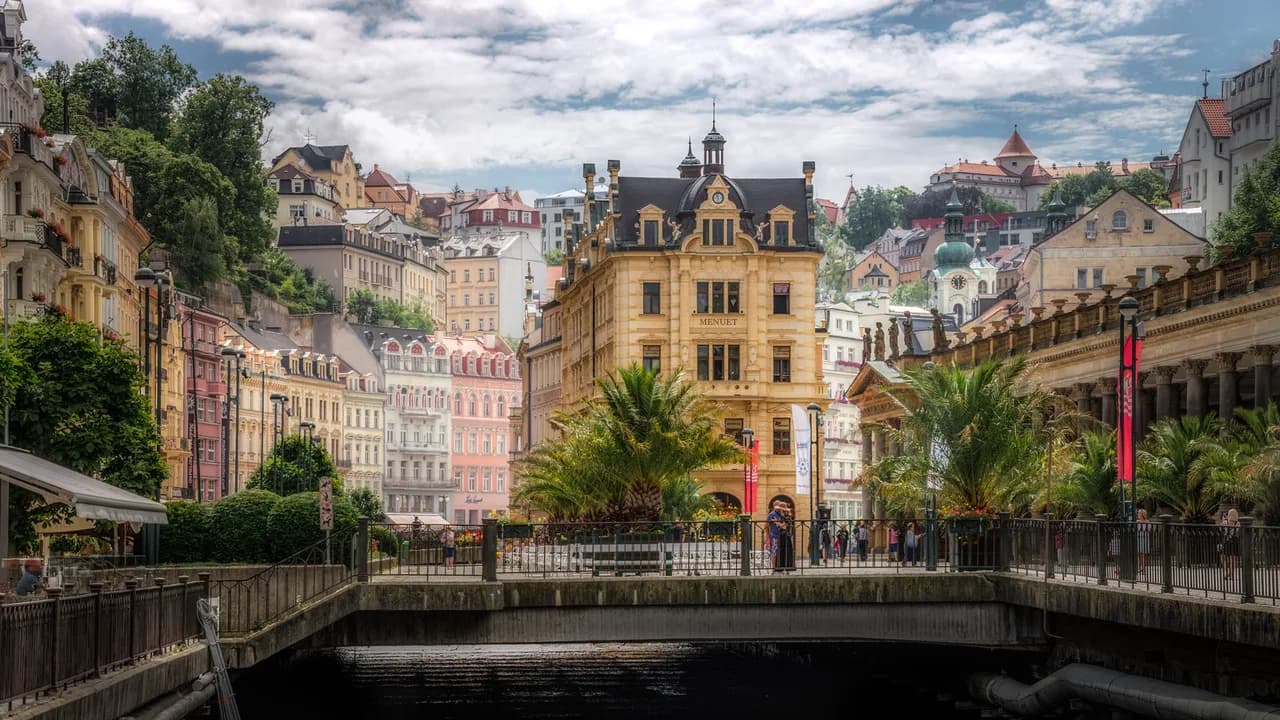
Slot Karlovy Vary in as a stop rather than a base: an afternoon for the colonnades and a taste of the hot spring water is enough, and its row of grand hotels doesn't need two nights. Loket, a small castle town a short hop away, is the first thing to cut if the trip shortens. Keep the overnight in Český Krumlov regardless — it is the part of the route most people remember.
The 12-day route: the full loop through the west and south
Twelve days is the version that covers the whole country without sprinting: Prague for three nights, Bohemian Paradise for two, Bohemian Switzerland for one, Karlovy Vary and Loket as a stop, Český Krumlov for two, a Moravian wine afternoon, and Brno for one or two nights. It is a road trip with short hops rather than a single long haul, which is what makes the pace work.
The western detour to Velká Amerika, a flooded quarry with a dramatic rim, and Karlštejn Castle adds a morning to the drive out of Prague. Both are worth it if you are heading toward Bohemian Paradise anyway, and both work as a day trip from Prague if you would rather not drive. From Bohemian Paradise, Hrubá Skála and the ruined Valdštejn castle are an easy half-day of rock-top walking.
In Moravia, the winery terraces around Mikulov and Šakvice are where the trip slows down. The Lahofer and Sonberk estates are the well-known names, and late afternoon is the light you want on the vineyards. If you have a fourteenth day, spend it here — in April, South Moravia is also the almond and vineyard blossom window, which is a different trip entirely.
Two weeks: slow down in Moravia and add hiking
With fourteen days, resist the urge to add another city. Add a second night in Mikulov so the wine tasting isn't squeezed between drives, or a second night in Bohemian Paradise so a rain day doesn't wreck the plan. An extra day in the Adršpach-Teplice Rocks in northern Bohemia is the other obvious extension for hikers and works as a stop between Bohemian Switzerland and Moravia.
Two weeks also makes a public-transport version viable: Prague, Karlovy Vary, Český Krumlov and Brno are connected by bus and train, and the cities themselves need no car. The cost is time and flexibility — the rock parks and the wine roads are the parts that fall away. If you want to see the country's best places beyond the obvious, accept the car and the slower days.
Where to cut when you have less time
Cut in this order: Loket, then Karlovy Vary, then a night in Brno, then Bohemian Switzerland if the weather is against you. Each one is pleasant rather than essential. Never cut the Český Krumlov overnight — the town is the point, and a day trip shows you only the crowded version. Velká Amerika and Karlštejn are the easiest to drop if you are short of time and heading south.
A five-day version is Prague plus one day trip to Karlštejn or Kutná Hora, and nothing else. A four-day version should not leave Prague at all. The mistake to avoid is squeezing Český Krumlov and Moravia into three days apart; you will spend more time in the car than in the towns.
Car or public transport: the trade-off
The Czech bus and rail network handles Prague, Brno, Karlovy Vary and Český Krumlov well, so a city-focused trip needs no car at all. Once you want the sandstone parks, the out-of-town castles and the Moravian wine cellars in one day, a car becomes significantly more practical. The usual compromise is public transport for Prague and a rental collected on the day you leave the capital.
Distances are modest and the roads are generally well maintained, and driving outside Prague is straightforward. Parking is the harder part: historic centres are pedestrianised, so you leave the car outside and walk in. Pick the vehicle up at Prague Airport or a city office and return it at the airport on your last day; that keeps the capital's first days car-free.
Best time to visit by month
May, June and September are the sweet spot for a driving route: long days, temperatures usually comfortable for walking, and fewer coach groups at Český Krumlov than in July and August. July and August bring the warmest weather and the heaviest crowds at the headline towns, along with the summer festival calendar in Prague. Early October holds up well for Moravia, where the harvest is in full swing.
Plan with the Czech Hydrometeorological Institute's published climate normals rather than a forecast: Prague averages roughly 1°C (34°F) in January and about 19°C (66°F) in July, and the mountain parks run cooler and wetter at any time of year. Spring and autumn weather swings hard, so a rain layer matters more than a warm one. Winter is quiet and atmospheric in Prague but closes many rural sights outside the cities.
Rough costs and where the money goes
The Czech Republic uses the koruna, not the euro, so set your budget and card assumptions in koruna. Accommodation is the biggest variable, followed by car rental in summer, and the difference between a city-centre hotel and one a short tram ride away is meaningful. Our guide to how expensive the Czech Republic is breaks the budget down by category.
Cards are widely accepted in cities but small wineries, rural car parks and some castle ticket desks still prefer cash. Carry a modest amount of koruna for those and for tips, which are expected in restaurants. Our money in Czech Republic guide covers ATMs and the pitfalls of exchanging cash on the street.
Getting there and getting around
Prague's Václav Havel Airport is the natural arrival point for almost every route here, with the widest choice of flights and rental desks. From the airport, take public transport or a taxi into the centre rather than driving; pick the car up later. A Czech Republic SIM card or an eSIM set up at the airport saves payment friction in the first hours.
Between the main cities, buses and trains run frequently and reasonably priced tickets are easy to buy; for the parks, you need wheels or a tour. A common pattern is to combine the two: use trains or buses for Prague and Brno, and take organized day trips from Prague for Karlštejn or the rock formations if you would rather not drive. That keeps a car-free trip possible without missing the landscape entirely.
Common planning mistakes
The three mistakes that sink Czech itineraries are renting a car on arrival in Prague, treating Český Krumlov as a day trip, and trying to add Moravia to a five-day plan. A fourth is planning the northern rock parks without a car and then discovering the nearest station is nowhere near the trailhead. A fifth is forgetting that April and October evenings are cold enough for a proper jacket, even if midday is mild.
A smaller point worth knowing: the country runs on Type E sockets at 230 volts. A European adapter is cheap and the airport sells them, but bringing one costs nothing. Our Czech Republic plug type note is the quick reference if you are packing in a hurry.
Who each route suits
The seven-day route suits first-time visitors who want one city and one countryside block, and who don't mind driving on the right in a small car. The ten-day route suits travelers who want a strong mix of Prague, a couple of interesting towns and a real hike. The twelve-day and two-week routes suit the traveler who wants the whole country, accepts a lot of packing and unpacking, and values vineyards and rock formations as much as old towns.
Choose Prague and a single day trip if you have four days or fewer. Choose Bohemia and South Bohemia by train if you don't want to drive. Skip Bohemian Switzerland if the season is wet. And if you are still weighing Brno against Prague, our comparison of the best cities in Czech Republic will settle the city question quickly.
Plan the trip around the nights you have
The best Czech Republic itinerary is the one that matches your nights to a route, not your route to a wish list. Twelve days gives you the full loop; ten days buys the north and the south; seven days buys Prague plus one region. Whichever you choose, keep Prague car-free, overnight in Český Krumlov, and put the Moravian wine afternoon where you have room to enjoy it.
For official entry requirements, check your own government's travel advice page before booking. Everything else is decided by how many days you can spare and whether you want a car — and the country rewards both kinds of traveler.
Explore more Czech Republic trip-decision guides
Frequently Asked Questions
How many days do you need to see the Czech Republic?
Ten to twelve days is the realistic window for a route that covers Prague, the Bohemian rock country and the south around Český Krumlov and Moravia without sprinting. Seven days works if you accept a tighter loop of Prague plus one region by car, and four or five days should stay in the capital with a single day trip. The main constraint is not distance but how often you want to repack.
Is 7 days enough for the Czech Republic?
Yes, if you narrow the scope. A good week pairs three nights in Prague with two nights around Český Krumlov and Hluboká Castle, then a Moravian stop and a night in Brno on the way back. The driving spreads across four days with no punishing stretches, so you still get a castle stop and a long lunch. Trying to add the northern rock parks as well is where a week starts to break.
Do you need a car to tour the Czech Republic?
Not for the cities. Prague, Brno, Karlovy Vary and Český Krumlov are connected by bus and train, and the historic centres are walkable. A car becomes practical once you want Bohemian Paradise, Bohemian Switzerland or the Moravian wine roads, which are hard to reach with luggage on public transport. The usual compromise is to explore Prague car-free and collect a rental on the day you leave the capital.
Which month is the best time to visit the Czech Republic?
May, June and September give the best balance for a driving route, with long days, comfortable walking temperatures and thinner coach crowds at Český Krumlov than in high summer. July and August are warmest but busiest at the headline towns. Early October works well for Moravia during the harvest, while winter is atmospheric in Prague but shuts many rural sights outside the cities.
Is the Czech Republic worth visiting beyond Prague?
Yes, and that is where the strongest parts of a trip usually sit. Český Krumlov, the sandstone parks of northern Bohemia and the Moravian wine villages reward the extra days far more than another afternoon in the capital. Prague deserves two full days, but a week spent only there misses the castles, landscapes and vineyards that make the country distinctive.
Sources
Trip-decision notes
Optional updates when we publish or revise a destination verdict.
You might also like

Continue reading
More guides you'll find useful