Is Kosovo Worth Visiting? An Honest Verdict for Travelers
Kosovo suits curious, budget-minded travelers who want raw history and mountain hiking. Beaches and polished sights are not the point. Here is who should go.
On this page
Yes, Kosovo is worth visiting if your idea of a good trip involves recent history you can walk through, mountains that see few foreign hikers and prices that leave room in the budget. It is not worth it if you want a coastline, a dense checklist of grand monuments or fast, frequent transport between big sights.
The country is small enough to combine a capital city, an Ottoman-era old town and a high alpine valley in a single week. What it lacks in polish it makes up for in atmosphere: cappuccino culture in Pristina, the stone lanes of Prizren, and the Rugova valley above Peja.
The verdict
Kosovo rewards curious travelers who are happy to trade convenience for originality. The country's pull is a mix of Ottoman mosques, Yugoslav-era concrete, war memorials and wild mountain country, all of it far less visited than neighboring Croatia or Montenegro.
It suits budget travelers in particular. Meals, coffee and city-to-city buses cost little by Western European standards, and the euro is the currency, so there is no exchange arithmetic to do. If you want a cheap introduction to the Balkans that is not a beach resort, Kosovo is a strong choice.
It frustrates travelers who want a beach and a tick-list. Kosovo has no coastline, its headline sights are modest in scale, and its appeal is more about being somewhere than about standing in front of something.
Who will love it
History-minded travelers get the most out of Kosovo. The 1998–99 war and the 2008 declaration of independence are recent enough that memorials, museums and everyday conversation carry real weight, and walking tours in Pristina and Prizren are a good way to get oriented.
Hikers should look north and west. The Rugova valley near Peja gives access to trails in the Accursed Mountains, and the long-distance Peaks of the Balkans and High Scardus routes pass through the country. Gjeravica, at 2,656 m, is the highest peak entirely within Kosovo, and its lake makes a memorable goal for a full-day walk.
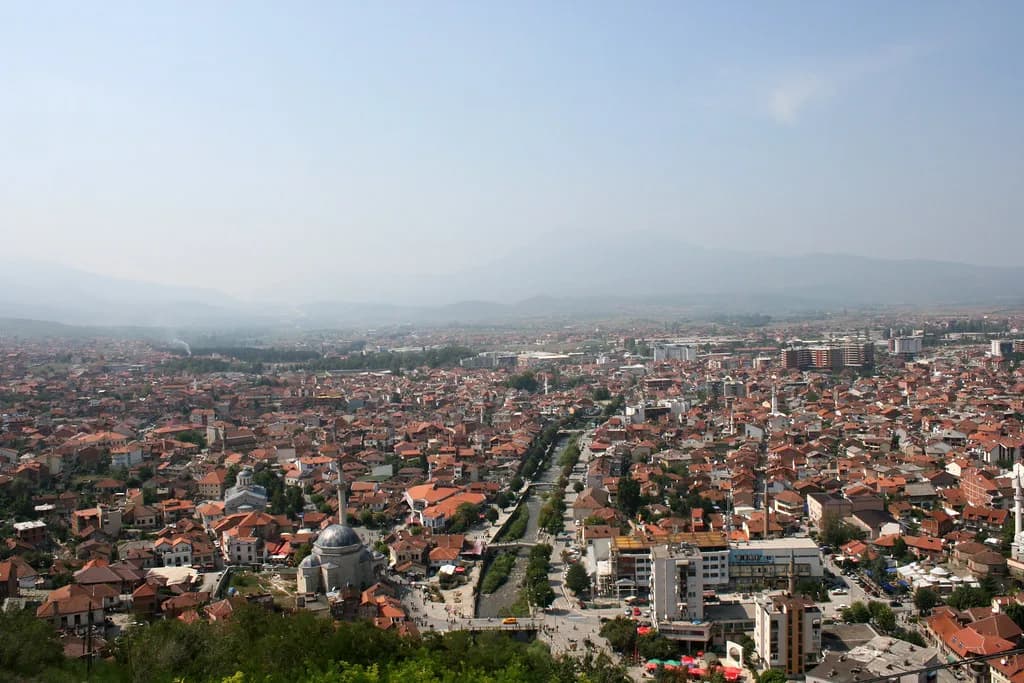
Slow city-goers will like Pristina more than they expect. The café culture is excellent, the pedestrian Bulevardi Nënë Tereza fills up every evening, and the city is compact enough to cross on foot.
Budget travelers round out the group. Coffee in Pristina starts at around €1, and the train from Pristina to Peja costs about €3, which makes the country one of the cheapest in the region for day-to-day spending.
Who should choose somewhere else
Beach-seekers should head to Albania or Montenegro instead. Kosovo is landlocked, and its water is in mountain lakes, not coastal resorts, so anyone planning a swim-and-sun trip will be disappointed.
Travelers who want many blockbuster sights connected by fast transport should look elsewhere in the Balkans. Buses are slow by Western European standards, and a journey that looks short on a map can eat half a day.
Anyone needing constant mobile connectivity in the mountains should plan for gaps. Roaming can be expensive because Kosovo is outside the EU, and signal thins out once you leave the cities; a Kosovo eSIM set up before arrival solves the first problem, not the second.
Pristina: brutalism and café culture
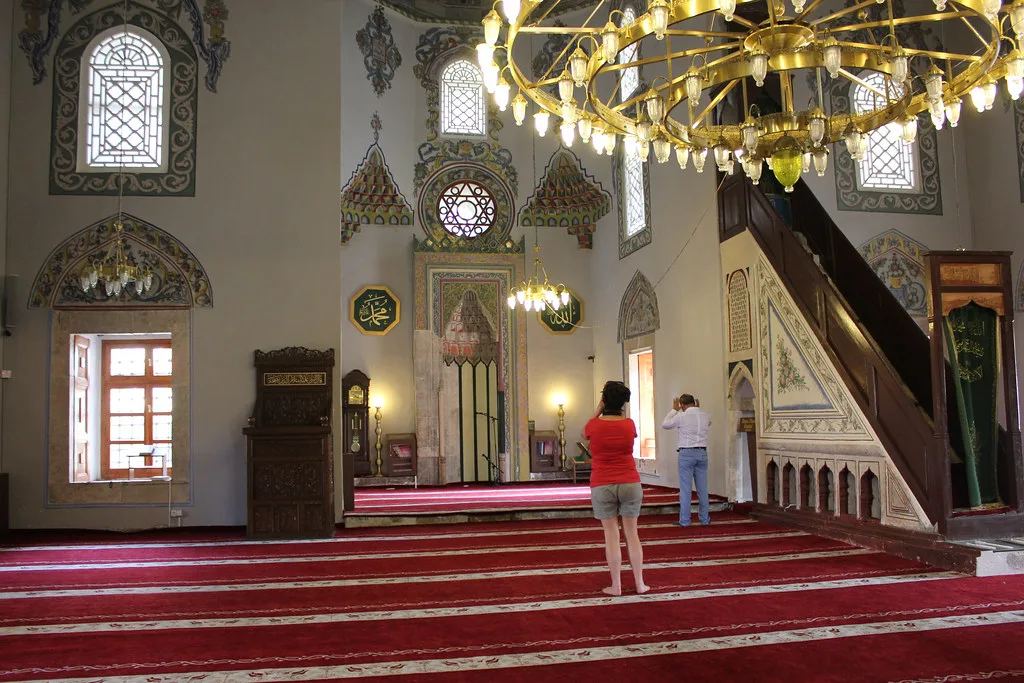
Pristina is not a city of grand monuments, and that is the point. Its landmarks are the Newborn Monument, unveiled when Kosovo declared independence, the strange mesh-wrapped National Library of Kosovo, and the brutalist Palace of Youth and Sports. The Imperial Mosque, with its courtyard and hammam ruins, recalls the Ottoman centuries.
The Cathedral of Saint Mother Teresa has a bell tower you can ride up for a city view, and the Gërmia regional park just outside town is a green escape for a morning walk. The Heroinat Memorial, which honors women affected by the war, is one of the city's most affecting stops.
Leave time for the cafes. Locals spend hours over a single cup, and the pedestrian boulevard is where the city's energy is most visible, especially in the early evening.
Prizren and Gjakova: the old towns
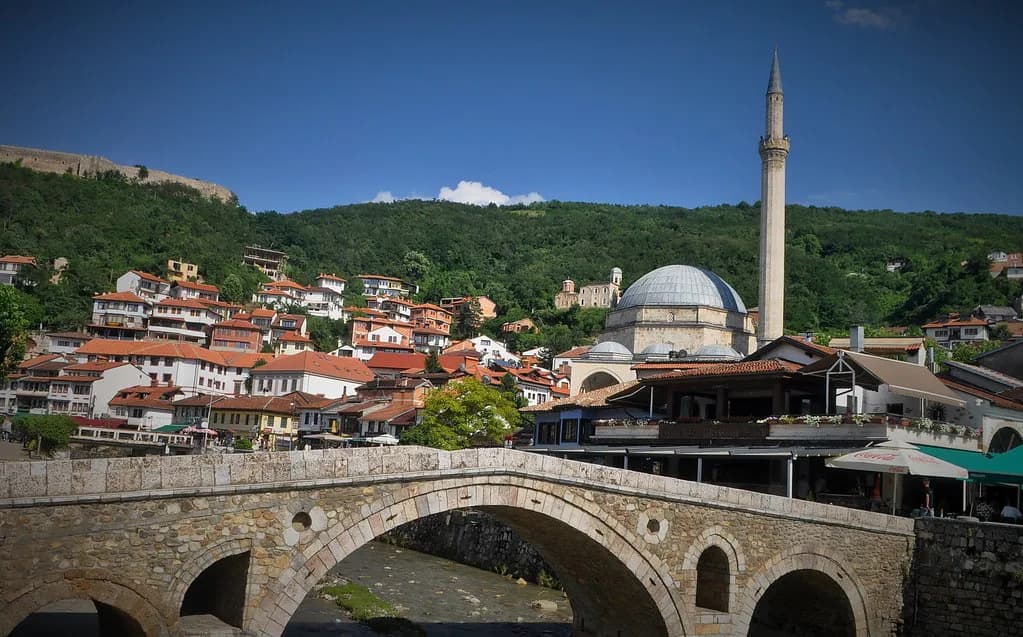
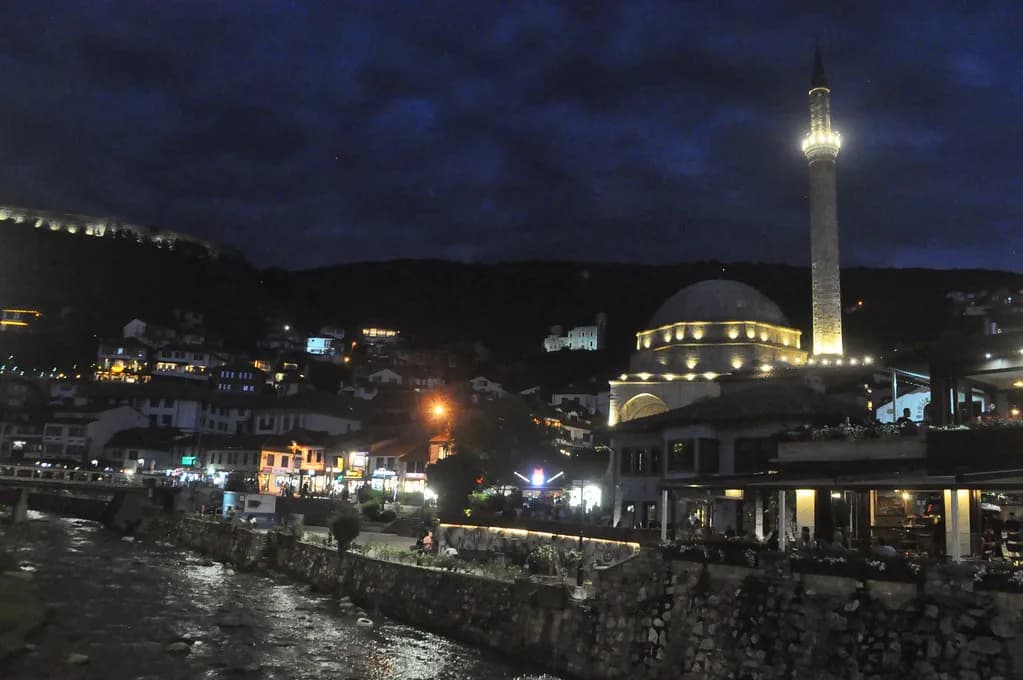
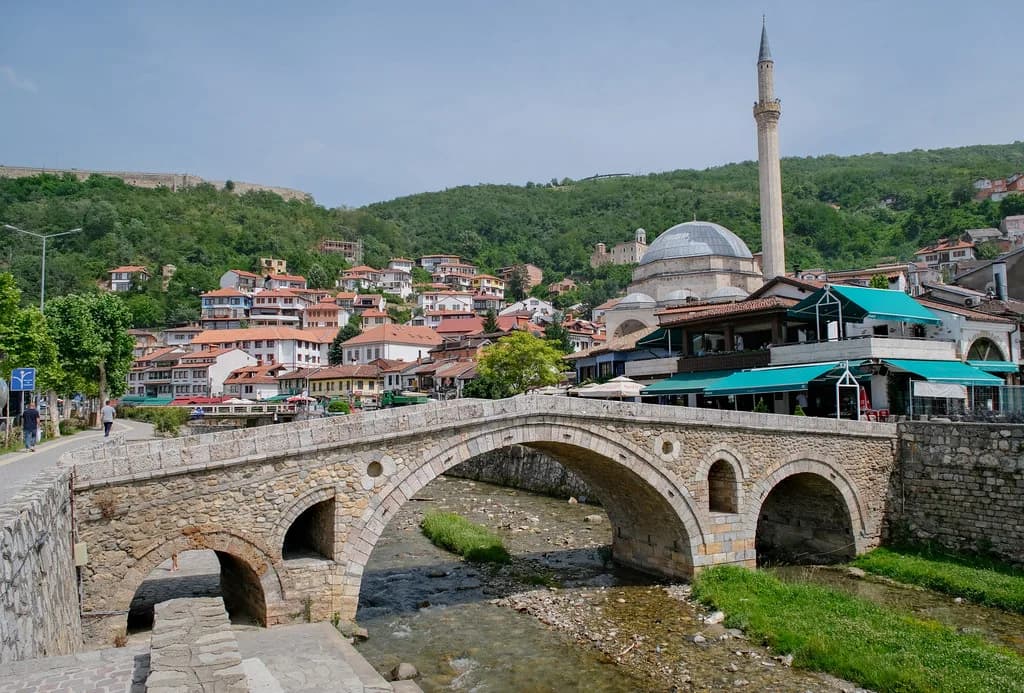
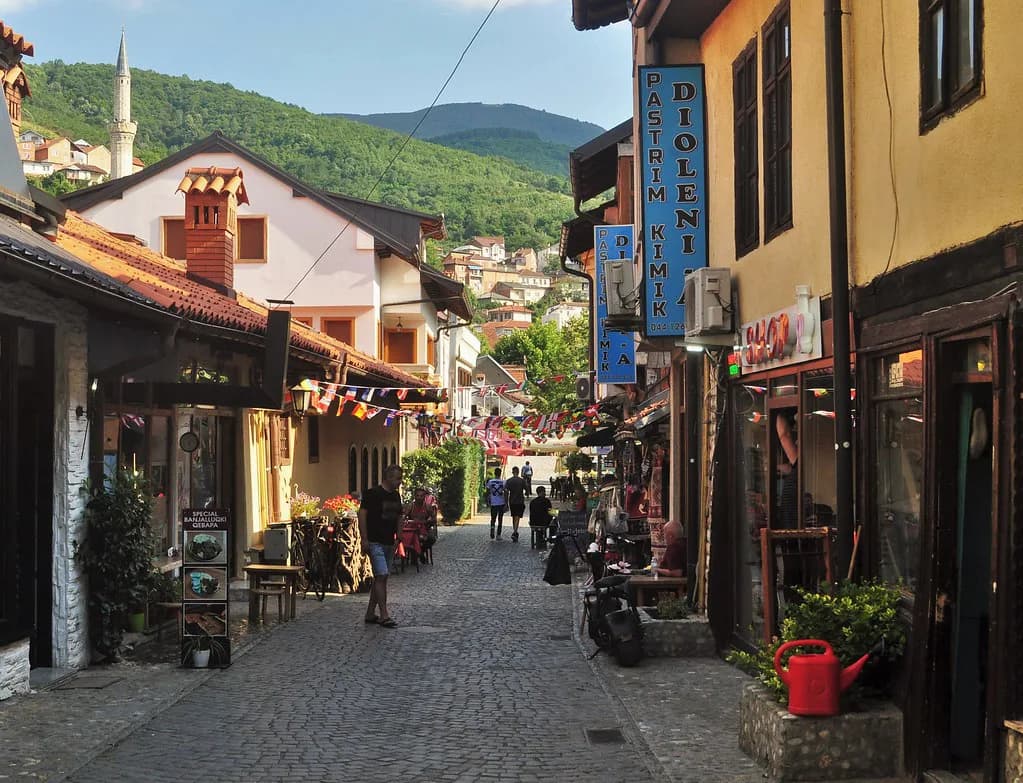
Prizren is Kosovo's cultural capital, with an intact old town of stone streets, mosques and churches beneath a hilltop fortress. It is the single most rewarding short stop in the country for travelers who want atmosphere without a big-city feel.
Gjakova's old bazaar is worth an afternoon on the way between Prizren and Peja. It has been restored as a pedestrian quarter full of low cafes, and it is quieter than Prizren's center.
Prizren is usually reached from Pristina by bus in about two hours, with fares reported at around €4. That makes it an easy overnight or even a long day trip, though staying the night is the better use of the journey.
Peja, Rugova and the mountains
The train from Pristina to Peja is the country's last working rail line and costs only a few euros; it is slow, scenic and one of the most enjoyable budget experiences in Kosovo. Once in Peja, the mountains are close.
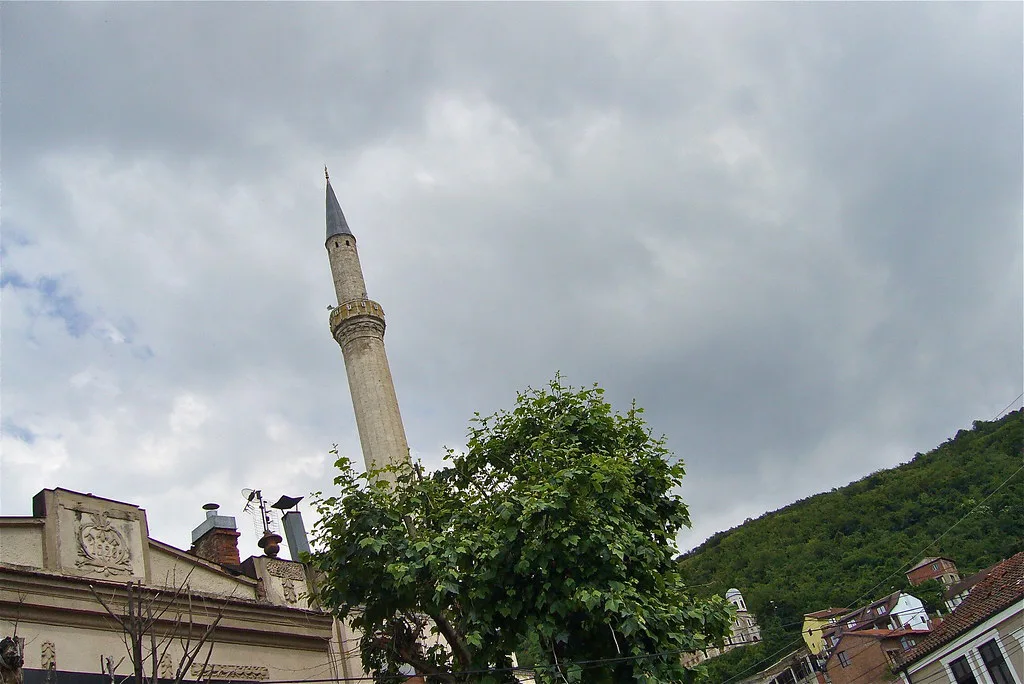
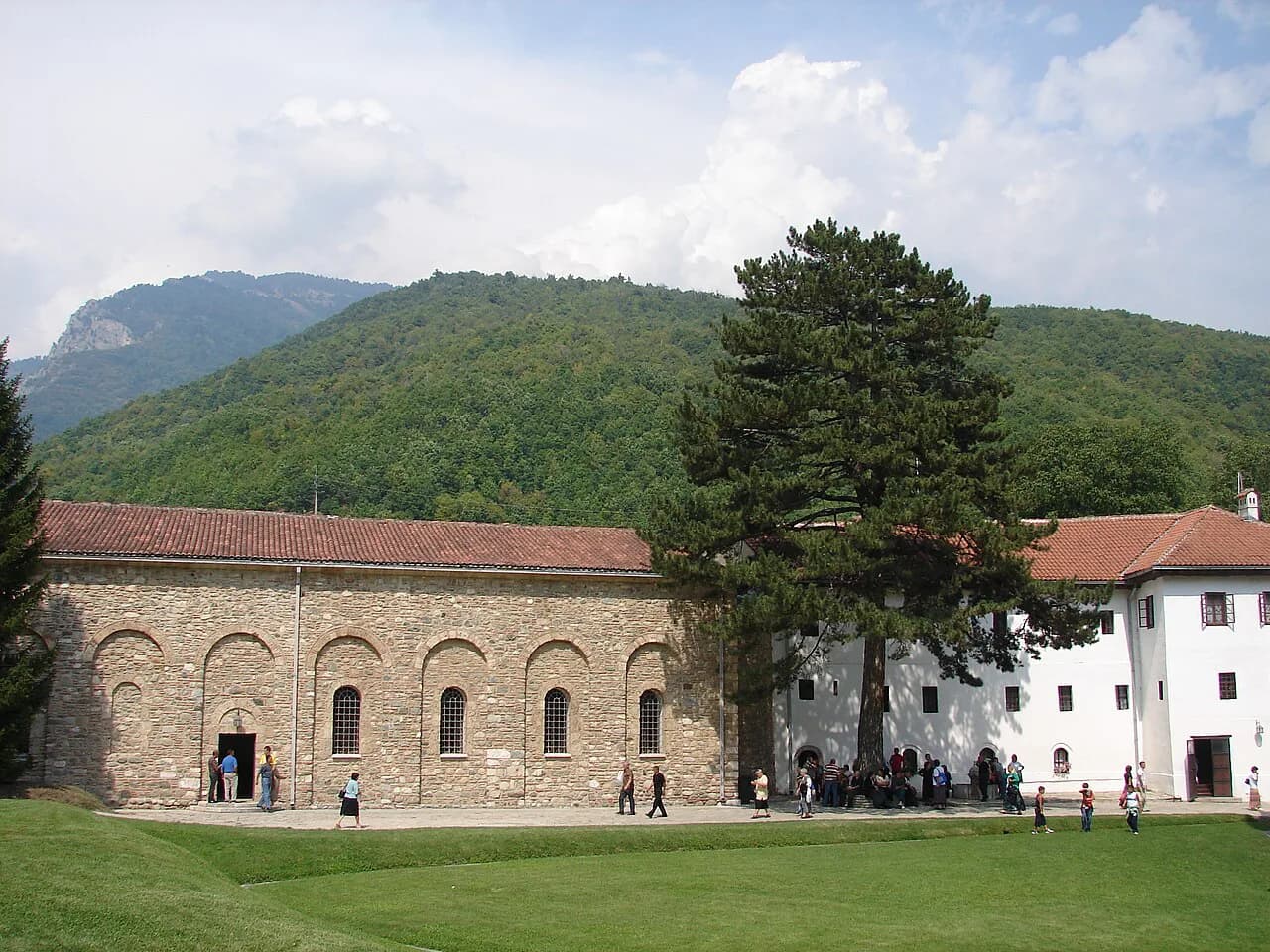
The Patriarchate of Peć, a Serbian Orthodox monastery complex, sits at the mouth of the Rugova valley and can be reached on foot from town. The valley itself offers caves, canyons and marked trails that climb toward the Peaks of the Balkans route.
For a serious day out, Gjeravica and its lake sit high in the Accursed Mountains, with wildflower meadows and blueberries along the approach. If you cross into Montenegro or Albania on sections of the via Dinarica or the Peaks of the Balkans, you may need permits for the countries where you overnight, and a local guide can arrange them.
History you can see
Kosovo's layers are unusually visible. The Imperial Mosque in Pristina dates to the 1460s, the National Library opened in the 1980s, and the Newborn Monument changes its paint job every year around independence day on 17 February.
War memorials are part of any honest visit. The Heroinat Memorial in Pristina, the statues of American presidents who backed the intervention, and the many plaques and graves around the country mark a conflict within living memory. Walking tours are the easiest way to understand the sequence of events.
Drawbacks
Transport is the main practical complaint. Buses take a long time for the distances involved, delays happen without much explanation, and the train network is a single line. Budget more travel time than the mileage suggests.
Mobile data can be unreliable outside the cities, and roaming costs can be steep because Kosovo is not in the EU. The country also has no coast, so any beach time means a separate trip to Albania or Montenegro.
The sights are understated. You will not find a single world-famous building here, and the reward comes from wandering, talking to people and taking the slower option rather than from ticking off highlights.
Getting there
Pristina International Airport has low-cost connections, and travelers often fly into Skopje in North Macedonia instead and take a bus to Pristina in around two hours for a few euros. That approach can save money on flights and adds a second city with little extra effort.
Overland buses also run from Podgorica in Montenegro and from Belgrade in Serbia. The Belgrade route is the one to think about carefully: if you enter Kosovo from any country other than Serbia and then try to continue into Serbia, you may be treated as having entered Serbia illegally, so many travelers loop back through Montenegro or North Macedonia instead. If you're weighing that northern leg, read up on whether Serbia is worth visiting before committing to the route.
Sort entry paperwork on your government's official travel page before booking. Airlines and bus operators list their own schedules, and those change with the season.
How many days you need
Three days covers Pristina and Prizren at a comfortable pace, with time for cafes and one walking tour. Add Gjakova on the way between them if you want a third town.
A week lets you add Peja and the mountains. Two nights in Peja gives you a full hiking day plus the Patriarchate, and the train ride makes the transfer part of the trip.
Ten days to two weeks lets you take on sections of the Peaks of the Balkans or High Scardus routes. Those itineraries require planning around permits and mountain accommodation, so they reward a slower schedule.
Typical costs
Kosovo uses the euro and is one of the cheapest countries in the Balkans for daily spending. Coffee in Pristina starts around €1, a meal with wine has been reported at about €11, and the train to Peja costs roughly €3, so a budget traveler can get by on very little. City buses and intercity coaches are similarly modest: Prizren has been reported at around €4 from the capital and Skopje at around €5 from Pristina. Hostel and hotel rates vary widely, so check booking sites directly rather than relying on older reports.
Weather by month
Kosovo has a continental climate, with hot summers in the lowlands and cold winters. Mountain areas are considerably cooler year-round, and snow can linger on high ground well into spring.
For hiking, late spring through early autumn is the practical window; for city visiting, spring and autumn give comfortable temperatures. Check the best time to visit Kosovo before fixing dates, and treat any forecast as provisional once you are in the mountains.
Verdict by traveler type
The hiker should go: the Rugova valley, Gjeravica and the long-distance routes make Kosovo a genuine mountain destination. The history buff should go for the memorials, the Ottoman and Yugoslav layers and the walking tours.
The beach-seeker should choose Albania or Montenegro. The city-breaker should go, but keep it to Pristina and Prizren and treat infrastructure as part of the experience rather than an obstacle.
Travelling in Kosovo with a dog
Kosovo is a mountainous country with plenty of hiking, and the sources describe trails around Peja and the wider Peaks of the Balkans Trail, which runs through the mountains of Kosovo, Albania and Montenegro. The Hajla ridge, walked near the border between Kosovo and Montenegro, reaches 2,403m and passes wildflower meadows and rocky outcrops where the author saw edelweiss growing at around 2,400m. If you are bringing a dog, plan walks for the cooler parts of the day and carry water, since the routes are high and exposed rather than coastal; Kosovo has no beaches.
Getting around with a dog is easiest by road. One traveller note describes transport as slow in the country and the railway as reduced to the single Pristina to Peja route, so the train is not a practical way to move a dog between towns. Cars and short taxi hops are the more flexible option, and prices are modest: a train ticket from Pristina to Peja costs €3, while a budget meal with wine comes to around €11. Carry cash for small payments, since the same account notes that the train, taxi and a hostel in Peja were paid for without contactless.
In the cities, plan on plenty of time outdoors, which suits a dog. Pristina's main pedestrian street, Bulevardi Nënë Tereza, is busy day and night with people taking a stroll, a local habit called xhiro, so leads should stay short there. Many of the country's sights are outdoor: in Pristina the Imperial Mosque dates from 1461 and sits beside a courtyard and the ruins of a hamman, with an Ottoman-era clock tower nearby, while the mountains and the old towns of Prizren and Gjakova are explored on foot. Hikes like the Hajla ridge climb high, so time walks for early mornings and cooler hours.
Plan Your Visit
Kosovo is worth visiting for travelers who value history, mountains and low costs over polish and convenience. Give it three days for the cities, a week for the cities plus Peja, and more if you want to walk the long-distance trails.
Go with realistic expectations about slow buses and quiet sights, and you will find one of the most rewarding corners of the Balkans.
Explore more Kosovo trip-decision guides
Frequently Asked Questions
Is Kosovo worth visiting?
Yes for travelers who want recent history, mountain hiking and low prices. No for anyone who wants beaches, a dense list of famous sights or fast transport between cities.
Is Kosovo expensive?
No. Kosovo uses the euro and is one of the cheapest countries in the region for coffee, meals and buses, with coffee starting around a euro in Pristina.
How many days do you need in Kosovo?
Three days covers Pristina and Prizren. A week adds Peja and a day in the mountains, and two weeks allows a section of a long-distance trail.
Does Kosovo have a coastline?
No. Kosovo is landlocked, and its swimming is in mountain lakes such as Lake Gjeravica rather than on beaches.
Is Pristina worth visiting on its own?
Yes, for a short break. Its café culture, brutalist buildings and Newborn Monument fill a day or two, and Prizren is a two-hour bus ride away.
Do you need a car to get around Kosovo?
Not for the cities. Buses and the Pristina–Peja train cover the main stops, though a car helps for remote mountain trailheads.
When is the best time to visit Kosovo?
Late spring through early autumn for hiking, and spring or autumn for cities, when temperatures are milder than the summer lowland heat.
Sources
Trip-decision notes
Optional updates when we publish or revise a destination verdict.
You might also like
Continue reading
More guides you'll find useful