Best Places to Visit in Montenegro: Coast, Bay and Mountains
The best places to visit in Montenegro, from Kotor and the bay to Durmitor, Skadar Lake and Budva, with honest trade-offs for each stop.
On this page
The best places to visit in Montenegro split into three zones: the Bay of Kotor, the Budva coast, and the mountains and lakes of the interior. A trip that stays only on the coast sees pretty towns and crowded beaches; a trip that stays only inland misses the water entirely. The strongest itineraries link both, because driving distances are short and the scenery changes completely within an hour or two.
Montenegro is small — roughly the size of Northern Ireland — but it packs in five national parks, from the Tara Canyon in Durmitor to Lake Skadar on the Albanian border. That density is the country's advantage: you can stand on a medieval wall in the morning and be at a mountain mausoleum above the clouds by afternoon. It also means the country rewards planning, not just wandering.
The verdict
Go to Montenegro if you want big scenery, short drives and a mix of salt water and limestone peaks, and plan to split your time between the Bay of Kotor and the northern mountains. Skip it, or shorten it, if you want a single resort week with dependable beach weather and a polished beachfront strip; the coast is beautiful but the beaches are small and pebbly, and Budva's waterfront is backed by high-rise blocks.
The country suits couples, hikers, road-trippers and travelers who are happy to drive winding roads for a view. It suits families with older children who can handle stairs and boat trips. It is a weaker fit for anyone who wants a car-free beach holiday, because the best mountain and lake sights are poorly served without wheels.
How to read the map
Montenegro's coastline runs roughly 300 km from Herceg Novi at the Croatian border down to Ulcinj near Albania, with the Bay of Kotor cutting deep inland like a fjord. Behind the coast, the country rises fast: Lovćen sits directly above Kotor, Lake Skadar spreads across the southern border, and Durmitor and Biogradska Gora lie in the north. Five national parks protect the highlights, and each is a realistic drive from the coast.
The key distances are modest. Kotor to Durmitor National Park takes about 2.5 hours by car, Dubrovnik in Croatia to Kotor takes 2 to 2.5 hours, and Podgorica Airport to Lake Skadar is about 30 minutes. That means a one-week trip can cover the bay, the Budva coast and one mountain base without rushing.
Kotor and the Bay of Kotor
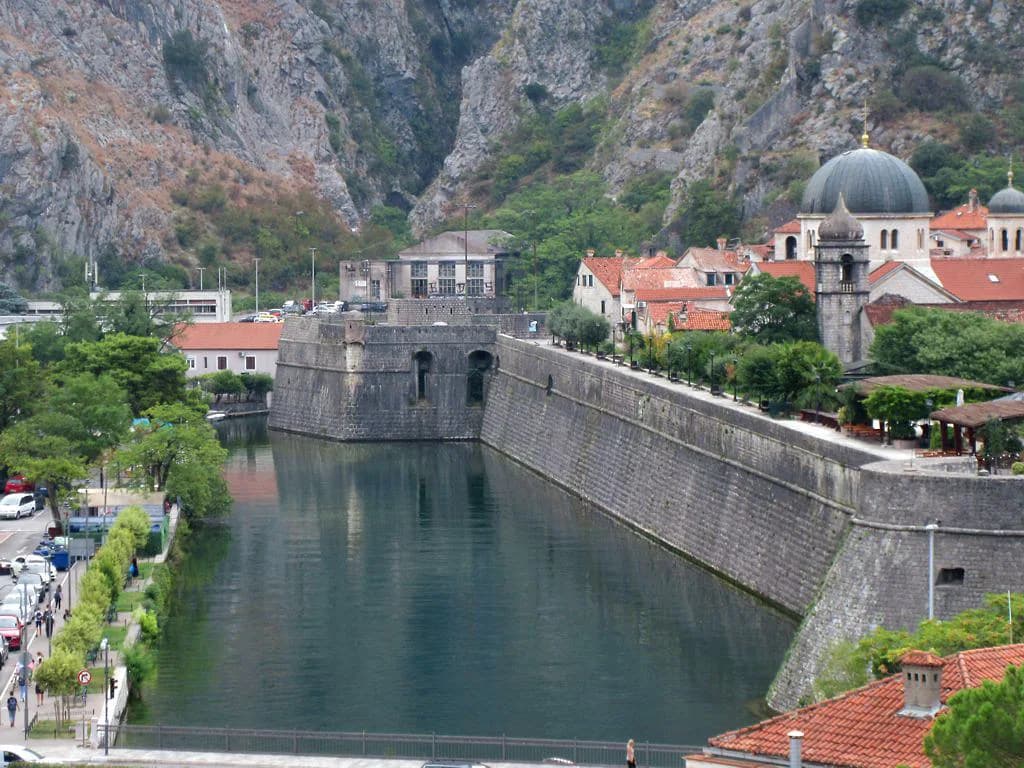
Kotor is the anchor of any Montenegro trip: a medieval walled town at the head of a mountain-ringed bay, with a UNESCO-listed old town of cobbled lanes, squares, churches and palaces. Give the old town a couple of hours on foot, then climb the fortress walls above it for the view back over the rooftops and the water. Go early in the morning if you want the ramparts without a crowd.
The climb to Kotor Fortress, also called San Giovanni, follows a steep stone path past the Church of Our Lady of Remedy. The main route costs around €8, paid at the booth on the path, and takes roughly an hour up for a steady walker. The heat is the real constraint: in high summer, start at dawn or climb in the late afternoon.
Cruise ships change Kotor's character. On days when liners dock, the old town and the fortress path fill up through the middle of the day, and the town can feel like a corridor between the gangway and the gift shops. Check the port schedule before you pick your day, and use the busy hours for a boat trip or a drive up the serpentine instead.
Overnight stays are the reward here: once the day-trippers leave, the bay empties out and the waterfront becomes a place to eat slowly. The town is compact enough to explore without a car, which makes it a sensible base for the first nights of a trip.
Perast and Our Lady of the Rocks
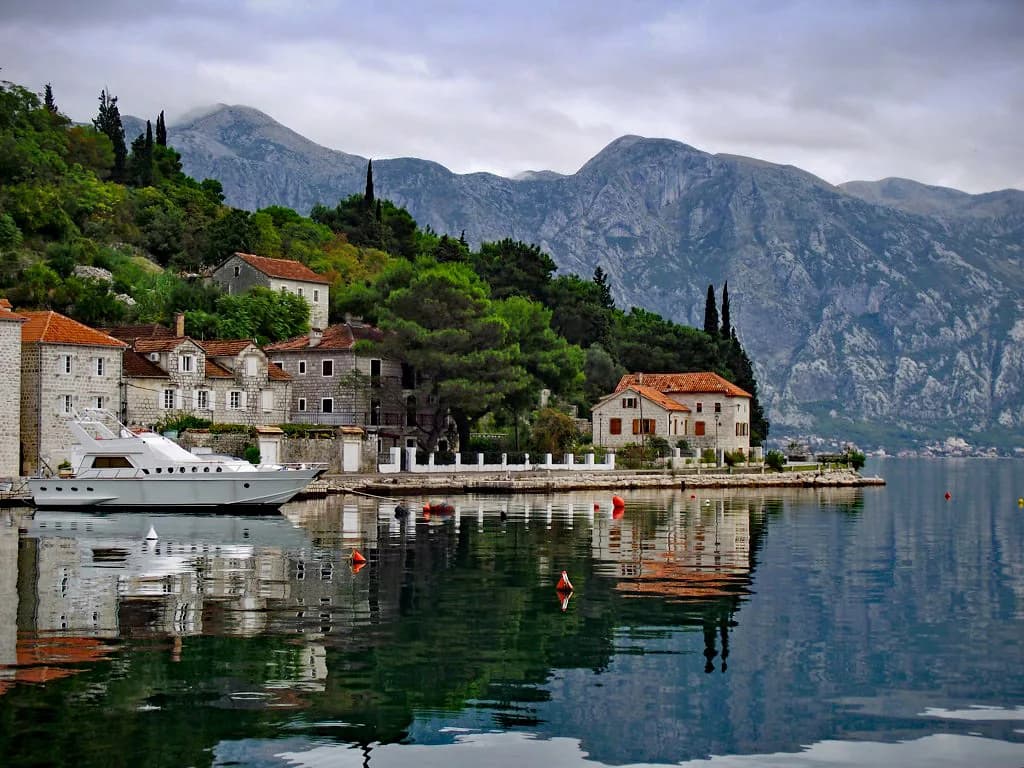
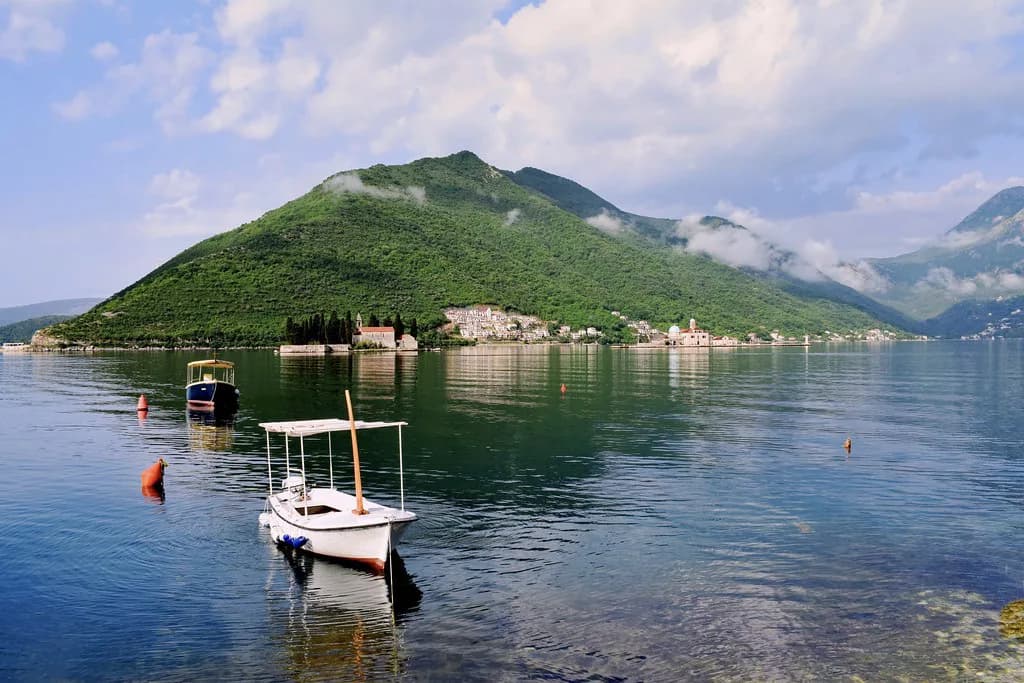
Perast is a short drive or bus ride up the bay from Kotor, a baroque waterfront of Venetian-style palaces and churches pressed between the water and the mountain. It is small — an hour covers the promenade — but the setting is the point, especially in the softer light of early morning or evening. This is also where boat trips run out to Our Lady of the Rocks.
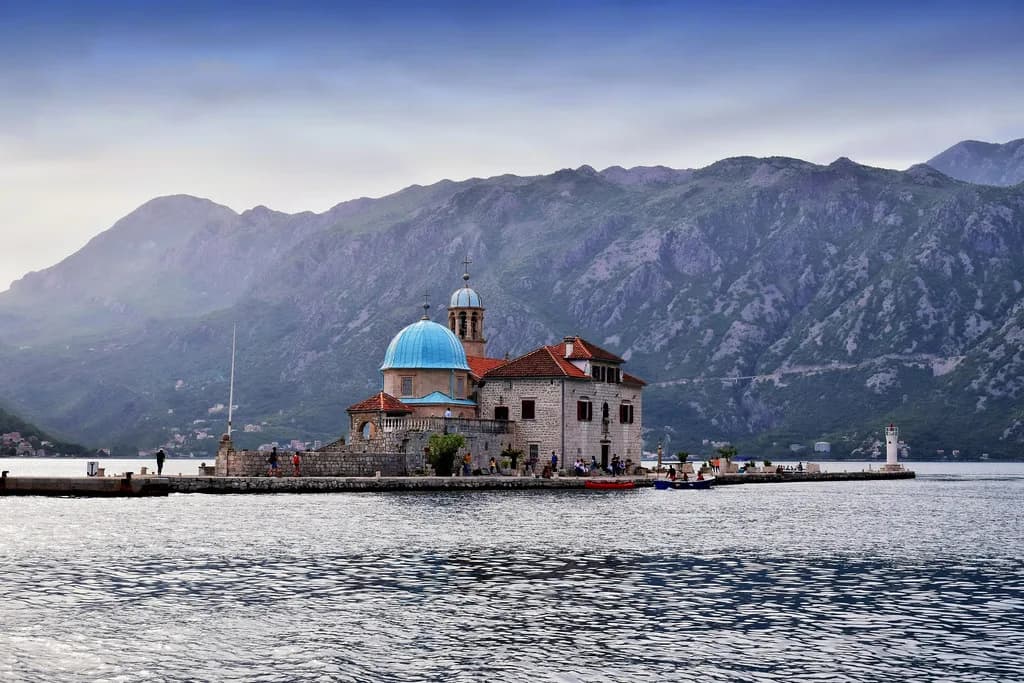
Our Lady of the Rocks is a church on a tiny man-made island in the bay, reachable by short boat crossings from Perast. Boats also leave from Kotor, and some bay cruises combine the island with a stop at the Blue Cave. Set aside half a day for the island plus Perast rather than trying to squeeze both into an hour.
One honest note: Perast is heavily photographed and can feel overrated if you arrive at midday in August with three tour groups. Stay for a meal after they go, or come out of season, and it earns its reputation.
Budva and the Budva Riviera
Budva is Montenegro's main beach town, and it is a mixed bag: a walled old town with a citadel and narrow stone streets, surrounded by modern high-rises and a busy coastal strip. The old town is worth an evening; the surrounding town is functional rather than lovely. Come for the beach and the citadel, not for architectural charm. If you are weighing the two main coastal towns, our Budva verdict pairs well with asking is Kotor worth visiting before you commit to a base.
Walk the old town walls for views over the harbour and coastline, then follow the coastal path around to the Ballerina of Budva statue and its viewpoint over the Adriatic. The Riviera's beaches run from town beaches to coves and rocky spots like Ploče, some of them blue-flagged for cleanliness. Expect pebbles and crowds in July and August.
Budva works best as a base for the southern coast, with day trips to Sveti Stefan, Lake Skadar and Stari Bar within easy reach. If you want quiet, the bay side is a better choice; if you want beach access, restaurants and evening life on foot, Budva delivers.
Sveti Stefan
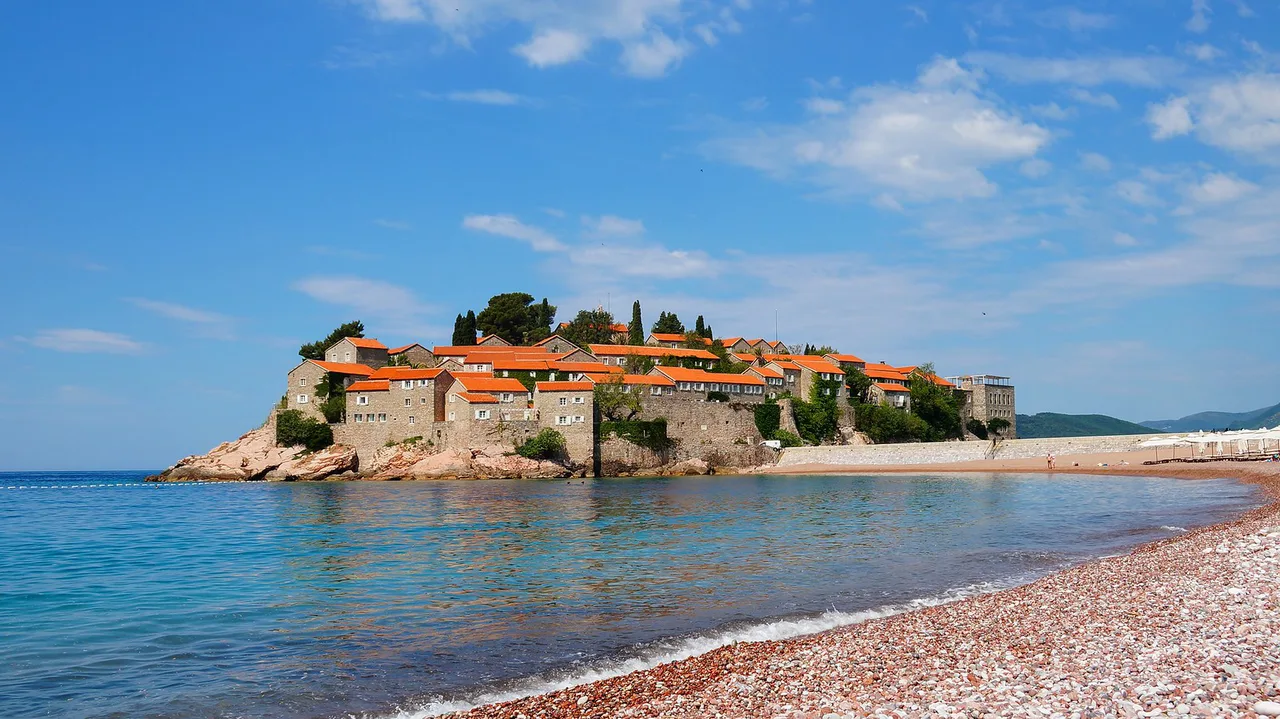
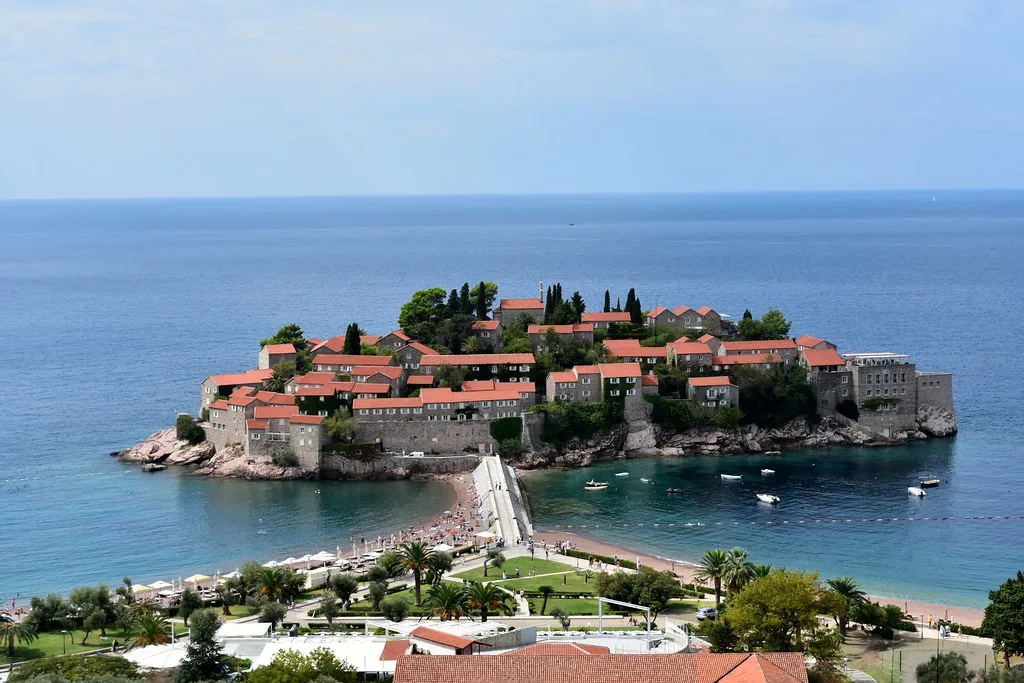
Sveti Stefan is the postcard image of Montenegro: a fortified island village turned resort, linked to the mainland by a narrow causeway, with two beaches on either side. The island itself closes outside the summer season, so in spring and late autumn you see it from the outside only. The beaches and the walkway remain worth the trip.
It sits just south of Budva, making it an easy half-day stop rather than a base. Come early for parking and a quieter beach, and continue along the coast toward Petrovac if you have time.
Lovćen National Park
Lovćen rises directly behind Kotor, reached by a famously tight serpentine road of hairpin bends. At the top, Njegoš's mausoleum sits on the summit, and the temperature drops noticeably compared with the bay below — snow can linger into spring. Bring a layer even when Kotor is warm.
Entry to the national park costs around €2 per person and can be paid by card, while the mausoleum charges a small additional fee that must be paid in cash. Plan for that stop, because there is nowhere on the summit to withdraw money. The drive itself is the other attraction: the views over the bay from the switchbacks are the best in the country.
Lake Skadar National Park
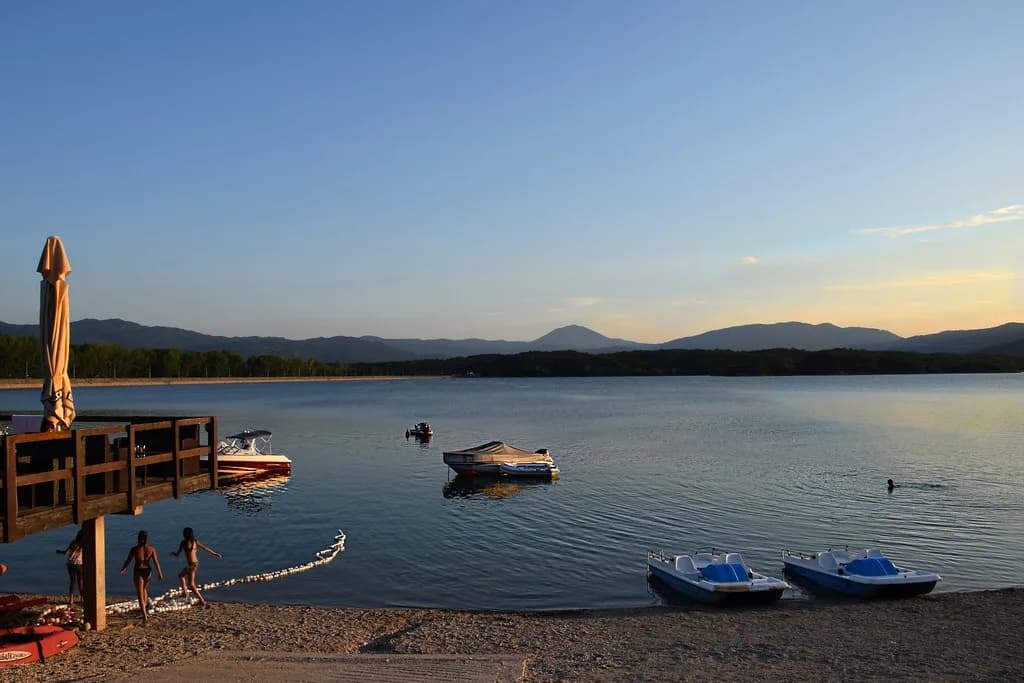
Lake Skadar is the largest lake in the Balkans, shared with Albania, and its wetlands shelter more than 280 bird species, including the Dalmatian pelican. The scale is the surprise: at around 400 square kilometres, it feels more like an inland sea than a lake. Boat trips run from Virpazar and as day tours from Kotor, Budva and Ulcinj.
The standout land view is Pavlova Strana, a bend above the lake where the water loops around islands and hills. Approach it on the established road rather than trusting a satnav shortcut, which can send you down a narrow dirt track. Kayaking and birdwatching reward an overnight stay near Virpazar more than a rushed day trip.
Durmitor National Park and Žabljak
Durmitor is the north at its most dramatic: a high plateau of limestone peaks, glacial lakes and deep canyons, with Žabljak as its small mountain hub. Black Lake is an easy walk from town, Sedlo Pass is a scenic drive, and Bobotov Kuk is the highest summit for serious hikers. The Tara Canyon, Europe's deepest river gorge, cuts through the park and offers rafting and ziplining.
This is the place to spend two nights rather than one, because the driving is long and the weather changes fast at altitude. Black Lake gets crowded in midsummer, so hike early. Durmitor also has the best-developed tourist infrastructure of Montenegro's mountain parks, which makes it the easiest northern base.
Biogradska Gora and Kolašin
Biogradska Gora is a small, dense national park with one of Europe's last primeval forests at its centre, wrapped around Biogradsko Lake. It is a gentler mountain stop than Durmitor, good for a lake loop, a picnic and quiet trails. Kolašin, nearby, is the gateway town and a stop on the Belgrade–Bar railway line that runs from the Serbian capital to the coast.
Kolašin is also dairy country, with farm cheese sold along the road, and it makes a sensible overnight between the coast and Durmitor. Combine it with a scenic train ride if you are traveling without a car, or use it as a break on the drive north.
Cetinje and Ostrog Monastery
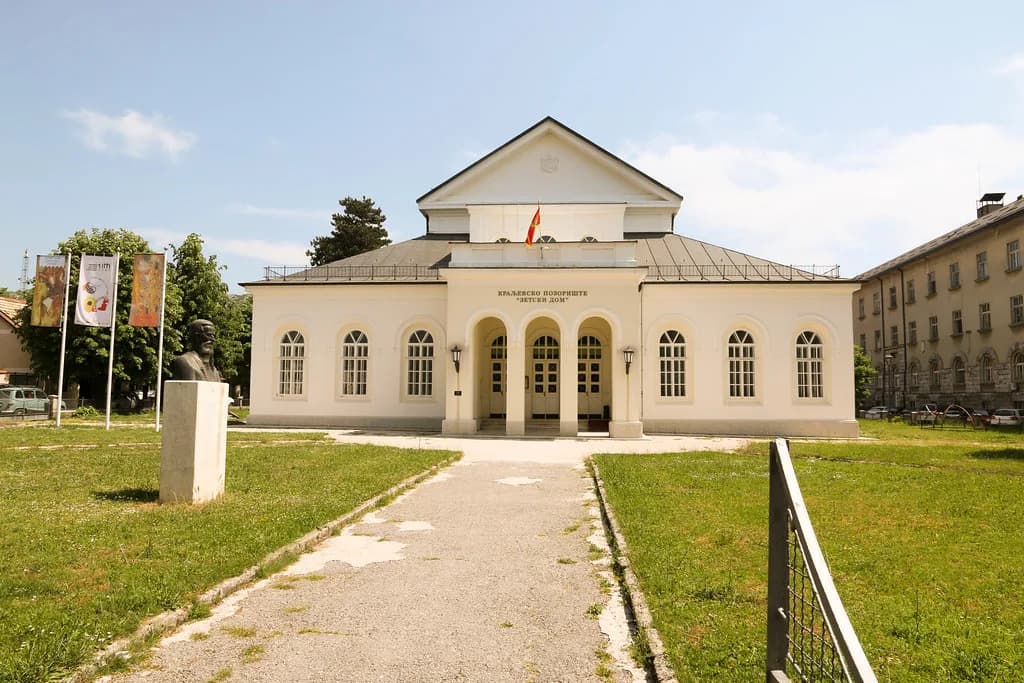
Cetinje is Montenegro's old royal capital, a small valley town of monasteries, museums and European-influenced architecture, sitting under Lovćen and acting as a gateway to the national park. It is a half-day stop rather than a base, but it explains the country's history better than any coastal town.
Ostrog Monastery, near Nikšić, is the country's most striking religious site: chapels and cells built into a sheer cliff face, still an active pilgrimage destination. Dress modestly and expect crowds at weekends. It is doable as a long day trip from the coast, but it is a more comfortable stop en route between the bay and the north.
Bar and Stari Bar
Bar is Montenegro's main port, and most travelers pass through it without stopping. The reason to pause is Stari Bar, the ruined hilltop old town about an hour's drive from Budva, a sprawl of broken walls, churches and gateways with views down to the coast. It is atmospheric and usually quiet.
There is an entry fee beyond the old town walls of around €2, paid in cash, and no cash machine nearby. Bring small notes. Combine it with a stop at the coast on the drive south toward Ulcinj.
Herceg Novi and the Luštica peninsula
Herceg Novi sits at the mouth of the Bay of Kotor, a terraced town of steps, gardens and waterfront cafés, and a short ferry hop from the Luštica peninsula. The Lepetane–Kamenari ferry crosses the bay in about five minutes and saves a long drive around the water. It is one of the most useful shortcuts in the country.
The Luštica side is quieter and less developed, with small coves and views back across the bay. It suits travelers who want the bay's scenery without Kotor's crowds and who have a car to reach the beaches.
Which places to combine, and which to drop
With a week, build the trip around Kotor with a Perast boat trip, two or three nights around Budva or Sveti Stefan, and two nights in Durmitor if you can manage the drive. Drop Stari Bar, Herceg Novi or Biogradska Gora first; keep Lovćen as a half-day from Kotor.
With four or five days, choose one zone. The bay and the coast combine easily on foot and short drives, while the mountains deserve their own trip. Trying to do Kotor, Skadar Lake and Durmitor in four days means most of your time is spent in the car.
Getting there and around
Montenegro has two main airports: Tivat, close to the bay, and Podgorica, better for the interior and Lake Skadar. Dubrovnik in Croatia is a common alternative for the southern coast, with a drive of roughly 2 to 2.5 hours to Kotor. Flying into one airport and out of the other avoids backtracking on a one-way route.
A car makes the mountains and lakes far easier, and car hire is widely available at both airports and in the coastal towns. Roads are generally good, but they are narrow and winding, especially the Lovćen serpentine and the approaches above Lake Skadar. If you want to be car-free, base yourself in Kotor or Budva and use tours for the mountain days.
Typical costs and when to go
Montenegro uses the euro, which keeps budgeting simple for European travelers. Coastal prices in July and August rise sharply, while the mountains and the shoulder months are considerably cheaper for the same standard. The Central Bank of Montenegro publishes exchange and currency information, and cards are widely accepted in towns.
The best months for walking and sightseeing are late spring and early autumn, with warm but not punishing temperatures and fewer cruise passengers. July and August bring the hottest weather and the biggest crowds on the coast, while the mountains are cooler at any time of year. Inland areas are at their best in early summer, when the lakes and trails are quiet.
For a rough sense of level, coastal Montenegro is generally cheaper than Croatia for food and accommodation of similar quality, though peak August narrows the gap. Use the shoulder months if you want the same scenery without the peak-season premium.
Who should choose a different region
If you want guaranteed beach weather, flat coastal promenades and a resort-style strip, Croatia's Istria or Greece's islands will serve you better. Montenegro's beaches are small and pebbly, and its coast is mountainous rather than sandy. Travelers looking for a single-base beach week will be frustrated by the driving needed to see the best of the country.
If you want city culture and museums, Montenegro is thin compared with Belgrade or Sarajevo; Cetinje is interesting but small. Come here for landscape, water and old stone towns, not for urban energy.
Plan Your Visit
Pick a bay base, add a coastal night and one mountain base, and Montenegro delivers more variety per kilometre than almost anywhere in the Balkans. The key decisions are how many nights to give Durmitor and whether you can travel in the shoulder months; get those right and the trip plans itself.
Check your own government's travel advice for entry rules before booking, and reserve the Kotor fortress and boat trips around the weather rather than a fixed daily schedule. The country rewards flexibility.
Frequently Asked Questions
What are the best places to visit in Montenegro for a first trip?
Kotor and the Bay of Kotor, Perast with Our Lady of the Rocks, Budva and the Budva Riviera, Sveti Stefan, Lovćen National Park and Lake Skadar make the strongest first-trip list. Durmitor National Park is the best mountain addition if you have three or more nights away from the coast.
Is Kotor or Budva better as a base?
Kotor wins for scenery, old-town atmosphere and access to the bay, and it is the better base for Perast, Lovćen and the fortress. Budva wins for beaches, restaurants and evening life, and sits closer to Sveti Stefan, Stari Bar and the southern coast. Travelers who want both usually split the nights rather than picking one.
Where do you fly into for Montenegro?
Tivat Airport is closest to the Bay of Kotor, while Podgorica Airport is better placed for Lake Skadar and the interior. Many visitors fly into Dubrovnik in Croatia and drive or take a bus to Kotor in about two to two and a half hours.
What is the best month to visit Montenegro?
Late spring and early autumn are the sweet spot: warm weather, fewer cruise passengers and comfortable conditions for walking. July and August are hottest and busiest on the coast, while the mountains are cooler at any time of year. Winter suits Durmitor and the ski areas rather than the coast.
How many days do you need in Montenegro?
Five days covers the Bay of Kotor and the Budva coast without rushing, including Perast and Lovćen. A week adds a mountain base such as Durmitor or Lake Skadar. Ten days lets you link the coast and the north with time to spare.
Are the best places in Montenegro on the coast or in the mountains?
The coast and the Bay of Kotor hold the historic towns and the water, while Durmitor, Biogradska Gora, Lovćen and Lake Skadar hold the landscapes. The strongest trips combine the two, since driving between them takes only a few hours.
Sources
Trip-decision notes
Optional updates when we publish or revise a destination verdict.
You might also like
Continue reading
More guides you'll find useful