Kotor in September: Weather, Crowds and If It's Worth It
Kotor in September brings warm sea, thinner crowds and a real chance of rain. Here is the weather, the cruise pattern and who should come now.
On this page
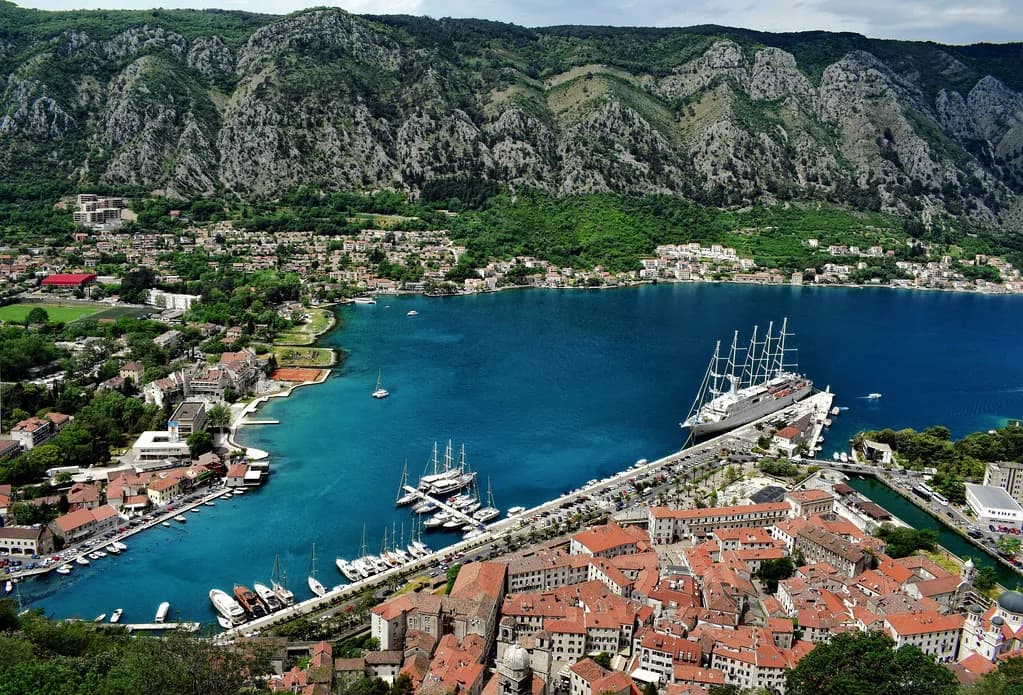
September is worth it in Kotor if you want to swim in the bay and climb the fortress walls without July's crush. The month sits in the sweet spot between summer heat and autumn rain, and the water off the Bay of Kotor is still inviting. What you give up is certainty: a wet spell can wipe out a hiking day, and cruise ships still disgorge passengers into Old Town around midday.
This guide treats September as a decision rather than a postcard. It covers typical temperatures, where the crowds actually come from, which day trips and beaches work best, and how September compares with May and October for hikers, swimmers, families and budget travelers.
The verdict
Yes, September is one of the two strongest months to visit Kotor, alongside May. The summer peak has passed, the sea retains its warmth, and the light on the bay is softer than in August. It is not a quiet month, though: the town's geography funnels everyone through the same few squares, so a busy day still feels busy.
Treat September as a high-value compromise rather than an off-season secret. You get near-summer swimming with fewer August-level crowds, in exchange for shorter evenings and a higher chance of a washout. If your trip hinges on guaranteed dry weather, September will occasionally disappoint; if it hinges on warm water and a walkable old town, it delivers.
Who September suits, and who should pick May or October instead
September suits swimmers who want the bay at its most comfortable, hikers willing to dodge a rainy day, and couples or friends who want Old Town Kotor without the August throng. It also suits travelers combining Kotor with Perast, Budva and the Lustica Peninsula, since the coastal roads and boat trips are still fully running.
Choose May instead if you prefer greener slopes, cooler climbs and a fresher feel, and pick October if you want the quietest version of the bay and do not mind the sea turning brisker. Families tied to school holidays should weigh late June or early September carefully; the shoulder weeks are calmer but not empty. Our month-by-month best time to visit Kotor comparison sets out those trade-offs in more detail.
September weather in Kotor: typical highs, lows and rain risk
September in Kotor typically runs warm rather than hot, with average highs in the mid-20s Celsius (roughly mid-70s to low 80s Fahrenheit) and overnight lows in the mid-teens Celsius (around 60 Fahrenheit). Data for the month puts the range at about 16 to 24°C (61 to 76°F), which describes pleasant daytime walking and cooler evenings.
Rain is the real variable. September can deliver long dry stretches and then a sharp, thundery spell that lasts a day or two, so build one flexible day into your plan rather than booking every hour. Pack a light rain shell and a layer for evenings; the difference between a sunny waterfront lunch and a cool, damp afternoon is a jacket, not a change of itinerary.
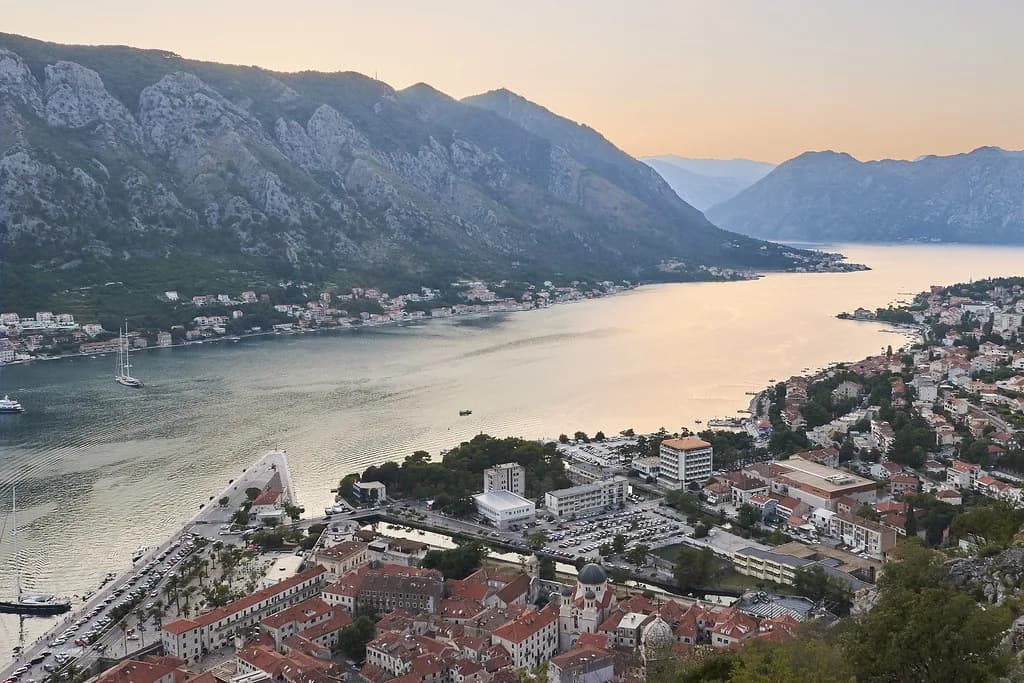
The mountains that frame the Bay of Kotor influence local conditions, and the town sits at the foot of steep slopes where weather can change quickly. Use a short-range forecast for Kotor itself rather than a countrywide outlook.
Sea and swimming in the Bay of Kotor
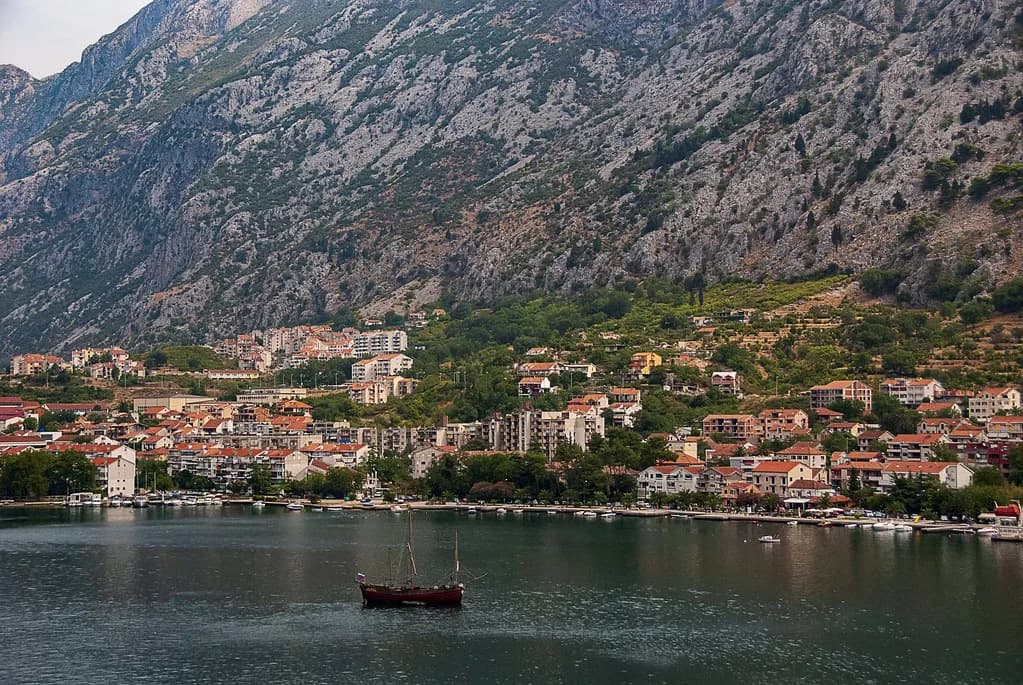
The bay holds its summer heat into September, which is exactly why swimmers rate the month so highly. Water temperatures stay comfortable for most people, and the sheltered bay is calmer than the open Adriatic. Mornings tend to be the smoothest time for a swim, before the day's boat traffic and afternoon breeze pick up.
Near Old Town, the waterfront and the small beaches along the bay road give you easy access without a car. For a longer swim-and-laze day, drive or take a boat toward the Lustica Peninsula, where Zanjice Beach sits in a sheltered cove and the water stays calm. Parking at Zanjice is limited, so arriving early matters more than any other planning step.
Crowds and cruise ships: timing Old Town and the walls
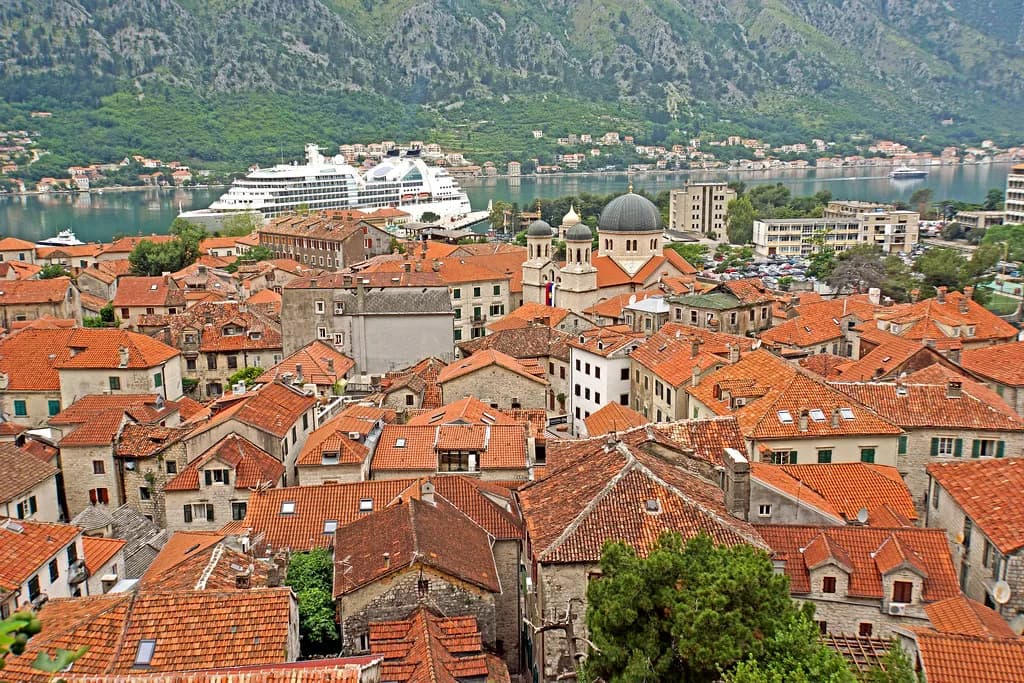
September thins the crowds but does not erase them, because cruise ships still call at Kotor and dock just outside the walls. On those days Old Town gets congested around midday, so the smart move is to reverse the usual order: climb early, explore the squares in the late afternoon, and use the middle of the day for a boat trip or a drive around the bay.
Two separate crowd problems overlap in September. The first is the midday cruise surge, which is predictable from the port schedule and concentrated in Old Town Kotor. The second is residual summer volume on weekends, when regional visitors arrive by car; that one is heaviest around the waterfront and the paid lots near the gates.
If you want the fortress almost to yourself, start at opening time and be on the upper switchbacks before the tour groups form. The same logic applies to St. Tryphon's Cathedral and the squares: early morning and after four in the afternoon are the calmer windows.
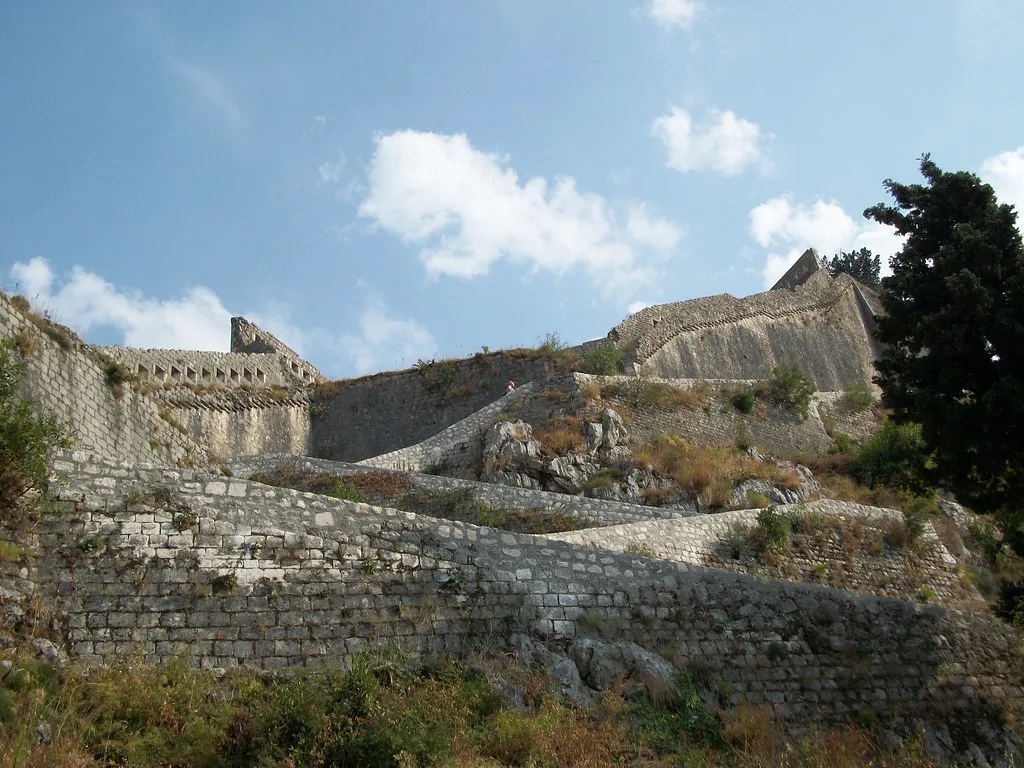
Climbing the Ladder of Kotor to St. John's Fortress
The climb to St. John's Fortress, also called San Giovanni, is the defining Kotor experience and the best reason to be here in September rather than August. The route begins behind Old Town, where a ticket office marks the start of the ascent, and gains height quickly through ruins, chapels and viewpoints over the bay.
It is a genuinely steep hike on uneven stone, with heat and exposed sections making it harder than the distance suggests. Go early, carry more water than feels necessary, and turn around if a storm builds over the ridges. September's lower temperatures make the upper walls far more comfortable than in midsummer, when the same climb becomes a slog.
Old Town essentials: St. Tryphon's, St. Luke's and the South Gate
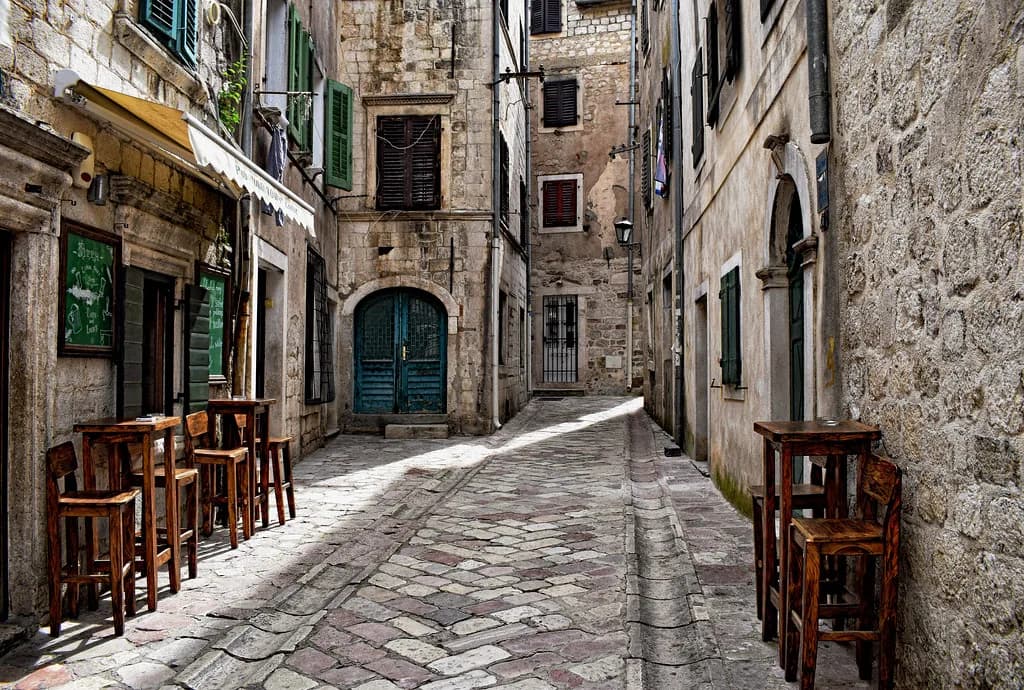
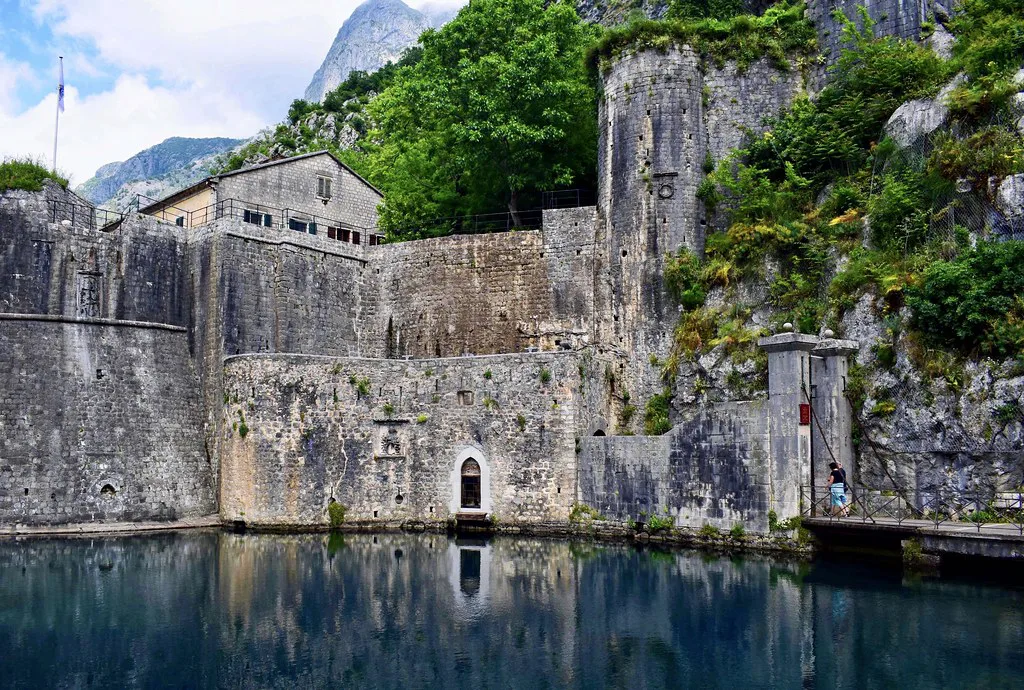
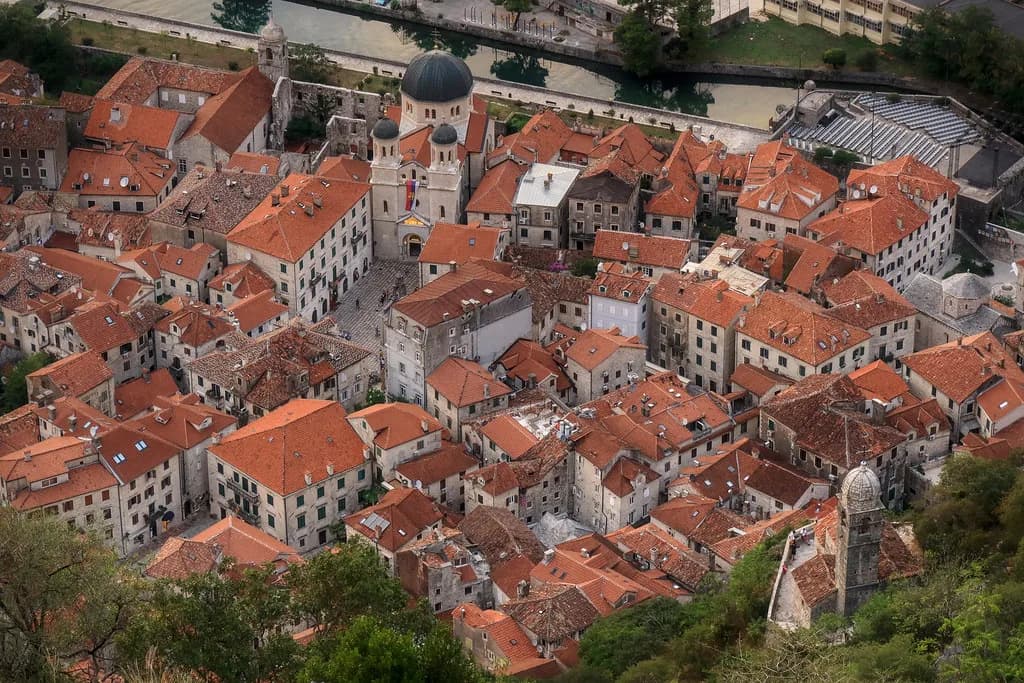
Old Town Kotor rewards slow wandering more than ticking off sights. The South Gate, also known as the Gurdic Gate, is the most photogenic way in, with its fortified passage and drawbridge feel. Inside, St. Tryphon's Cathedral is the largest church in town and the anchor of its religious history, while the small St. Luke's Church on its own square blends Byzantine and Roman elements.
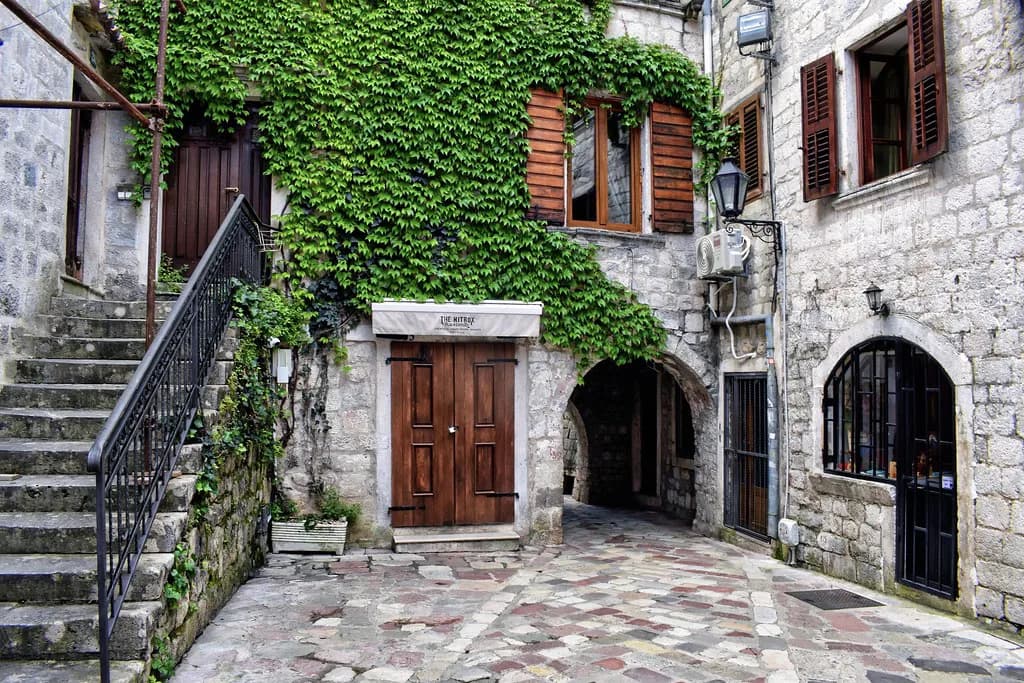
The lanes between them are the point: squares, chapels and stone passages that open unexpectedly onto a bakery or a shaded courtyard. Allow an unhurried couple of hours, and return in the evening when day-trippers have gone and the walls glow.
Day trips that work well in September
Perast, a short drive north of Kotor, is the classic half-day trip: a compact waterfront of palazzos and clocktowers facing the two islets, with boats running out to Our Lady of the Rocks. September's calmer light and thinner crowds make the village far more enjoyable than in August.
Rose, on the Lustica Peninsula, is a small harbor village with swim ladders along the waterfront and a handful of restaurants; it makes sense as a summer day out and still works in early September. Pair it with Zanjice Beach for a full loop of the peninsula. The Blue Grotto can be reached by boat from the Kotor area or from Zanjice, and a private boat buys you quieter water inside the cave.
Budva and Sveti Stefan are an easy drive down the coast. Budva's old town sits apart from its beach bars, while Sveti Stefan is viewed from the surrounding beaches rather than visited, since the islet itself is a resort. Both are busier than the Lustica villages, which is the trade-off for their convenience.
Beaches worth the drive
Jaz Beach, west of Budva, is large enough to absorb September's remaining crowds, with umbrellas and sunbeds but breathing room that the town beaches lack. Quieter coves hide at the eastern end for those who want to lay out a towel away from the bar music.
South of Sveti Stefan, Galija Beach offers a beach-club version of the coast with loungers, a bar and a restaurant, and Sveti Stefan Beach next to the tombolo is the free option with the iconic view. Zanjice remains the best pick for calm water on the Lustica side. All three involve a car; none is walkable from Old Town.
How many days you need in Kotor
Two full days cover Old Town and the fortress comfortably, plus one bay excursion. Five to six days turns Kotor into a base for Perast, Budva, Sveti Stefan and the Lustica beaches without rushing, which is the version most September visitors actually enjoy. A single day is enough only for a cruise-style taste of the walls and squares.
Build the itinerary around mornings: climb or swim early, sightsee in the middle hours, and keep late afternoon free for Old Town as the light drops. That pattern absorbs both cruise surges and the risk of a wet afternoon, and it leaves room to swap a beach day for a boat trip if the weather turns.
What September costs
September pricing sits below the August peak and above the autumn trough. Accommodation in and around Old Town Kotor costs more than the inland towns, and the premium is highest in the first half of the month, when demand from regional travelers is still strong. Expect mid-season rates rather than bargains; later in September, prices soften along with demand.
Montenegro uses the euro, which simplifies budgeting for travelers from the eurozone and removes the currency-exchange guesswork. Meals, boat trips and parking near the gates add up, so treat the fortress climb and the waterfront as the low-cost parts of the day and plan your spending around the paid excursions. Check current fees with the ticket office before you commit.
Getting there: Dubrovnik versus Podgorica and Tivat
Kotor has no commercial airport of its own, so you arrive via Tivat, Podgorica or Dubrovnik in Croatia. Tivat is closest to the bay; Podgorica involves a longer inland transfer; Dubrovnik is a popular choice because the drive down the coast is spectacular and the border crossing is straightforward in low season.
The Dubrovnik route carries a real risk: border waits vary wildly, from minutes to a couple of hours, so leave a generous buffer on the return leg if you are catching a flight. Rental cars taken across the border may require a green card from the rental company. Book the crossing formalities with the rental desk at pickup rather than at the border.
Kotor or Budva for a September base
Kotor wins for scenery, history and access to the bay's quieter corners, and its Old Town is a pleasure to walk in September once the midday ships leave. Budva wins for beach convenience and a broader spread of evening activity, at the cost of more traffic and a less distinctive old core.
For hikers and anyone who wants the fortress, the boat trips and Perast within easy reach, base in Kotor. For families who want sand and shallow water on the doorstep, Budva is the more practical choice, with Kotor as a day trip, and our Budva verdict sets out whether that trade suits your trip.
Plan Your September Trip
September is the month to come if you want to swim in the Bay of Kotor and climb St. John's Fortress without the August crush. Go early for the walls, keep one day flexible for rain, and use the middle of the day for boats, beaches or the drive to Perast.
Skip September if guaranteed sunshine is non-negotiable and you would rather trade warm water for a quieter, cooler bay in October. Otherwise, book the first half of the month for the best swimming and accept that a shower or two is part of the deal.
Explore more Kotor trip-decision guides
Frequently Asked Questions
Is Kotor worth visiting in September?
Yes for most travelers. September combines warm sea, comfortable hiking temperatures and thinner crowds than July and August. The caveats are a real chance of rain and midday cruise-ship surges in Old Town, both manageable with early starts and a flexible day.
What is the weather like in Kotor in September?
Typical conditions are warm rather than hot, with average highs in the mid-20s Celsius and lows around the mid-teens Celsius. Rain becomes more likely than in midsummer, so plan one flexible day and carry a light rain shell for afternoons.
Is the sea warm enough to swim in Kotor in September?
Yes for most people. The sheltered bay retains its summer warmth into September, and mornings are usually the calmest time to swim. Water temperatures vary year to year, so check a local marine forecast before planning a long swim.
Is Kotor crowded in September?
Less crowded than August, but not empty. Cruise ships still call and fill Old Town around midday, while weekends bring regional visitors by car. Climb the fortress early and explore the squares in the late afternoon to sidestep the worst of it.
How many days do you need in Kotor?
Two full days cover Old Town and the fortress, plus one bay excursion. Five to six days lets you add Perast, Budva, Sveti Stefan and the Lustica beaches without rushing, which suits most September visitors.
Is Kotor or Budva better in September?
Kotor suits hikers, history lovers and travelers who want the bay's quieter corners. Budva suits families and beach-focused visitors who want sand and evening activity on the doorstep. Both work well as a base, with the other as a day trip.
Is Montenegro worth visiting in September?
Yes. The coast is still warm, the sea is swimmable and the summer peak has eased, making September one of the best months for the Bay of Kotor and the coastal towns. Expect some rain and book the first half of the month for the best odds of dry, sunny days.
Sources
Trip-decision notes
Optional updates when we publish or revise a destination verdict.
You might also like
Continue reading
More guides you'll find useful