How to Get to Kotor, Montenegro: Airports, Buses and Ferries
How to reach Kotor by air, bus, car or ferry, with airport choices, cross-border bus times and the bay crossing, so you pick the route that fits your trip.
On this page
The easiest way to reach Kotor is to fly into Tivat and take the short mountain road across to the bay, or to ride an intercity bus from Dubrovnik or another Balkan city straight to a station a few minutes' walk from Old Town. Kotor has no rail link at all, so every arrival is by road, air or water.
Your choice really comes down to three trade-offs: Tivat for speed, Podgorica for flight choice at the cost of a longer transfer, or a cross-border bus for scenery and a low fare at the cost of time. Drivers coming from Croatia can cut across the bay on the Kamenari–Lepetani ferry instead of looping around the water.
The verdict: which arrival route suits which trip
Fly to Tivat if your priority is getting to the bay with minimal fuss and you can find a flight that fits; the airport sits roughly 8 km from Kotor, about 15 minutes by the mountain cut-through or around 40 minutes the long way around the bay. Fly to Podgorica if Tivat's regional flight list is too thin, then accept a road transfer of around one and a half to two hours on the M2.3.
Take the bus if you are already in the region and want to arrive in the middle of things without parking headaches; coaches from Dubrovnik, Split, Mostar, Trebinje, Tirana and Shkoder all connect to Kotor, and the bus station is only a few minutes' walk from Old Town. Drive only if you plan to use Kotor as a base for Perast, Lake Skadar and the mountain parks, because a car is a liability inside the walled town and on the narrow bay roads.
Before you commit to Kotor at all, weigh what the town actually offers against the rest of the coast; if you are still deciding between a bay stop and a beach stop, the Kotor verdict and the Kotor vs Budva comparison will settle it faster than any timetable. Once you are going, our guide to how many days in Kotor helps you book the right number of nights around your arrival.
The nearest airports: Tivat and Podgorica
Tivat Airport (TIV) is the close-in option, located about 4.9 miles from the city center and served mainly by regional airlines, which means seasonal and limited routes rather than a big long-haul hub. From the terminal you can take a bus or a taxi, or pick up a rental car; the mountain road shortens the trip dramatically compared with the shoreline route.
Podgorica Airport (TGD) is the fallback that most travelers use when they want a wider choice of airlines, and it connects to Kotor by bus or private car. Budget the transfer as a half-day event rather than a quick hop, and time your arrival so you are not driving the bay road after dark on your first night.
Both airports put you on the same final stretch into Kotor, so the decision is less about distance and more about which flight you can actually book. Compare total door-to-door time, not just the flight, before you pick a ticket.
Flying into Dubrovnik, Split and Tirana instead
Dubrovnik is the most common foreign gateway for travelers combining Croatia with the Bay of Kotor, and the drive south through Herceg Novi takes under three hours. Buses cover the same corridor with a published journey time of about 2 hours 20 minutes from Dubrovnik to Kotor, which is competitive with the hassle of collecting a rental car at the border.
Split is a long haul by coach at roughly 7 hours 10 minutes, so treat it as an overnight-bus or multi-stop journey rather than a casual transfer. Tirana is even longer at about 7 hours 45 minutes, while Shkoder to Kotor comes in around 4 hours 40 minutes, which makes northern Albania the more sensible pairing if you are coming from that side.
Crossing a border by road means passport checks, and on summer weekends the queue at the Croatian–Montenegrin crossings can eat an hour or more of a short trip. Build slack into any same-day flight connection and keep your documents to hand rather than buried in a bag.
Which passport you need and what it must show is a matter for the official Montenegrin government pages, not for a transport guide, so settle that before booking anything.
Arriving by bus: routes and journey times from the region
Coaches are the workhorse of Balkan travel and Kotor is well connected to its neighbors: services run from Dubrovnik and Split in Croatia, Sarajevo, Mostar and Trebinje in Bosnia and Herzegovina, Tirana and Shkoder in Albania, and Belgrade in Serbia. Flixbus runs comfortable, bookable coaches on several of these routes, and booking ahead is worthwhile in July and August.
From Bosnia and Herzegovina, Mostar to Kotor is roughly 6 hours 10 minutes and Trebinje around 5 hours, so a morning departure gets you into the bay by late afternoon. Fares vary by operator and season, and the one-way Split–Kotor figure that appears in aggregator listings is indicative rather than a published tariff, so confirm the price when you book.
Within Montenegro, buses also link Kotor with Budva, Podgorica and the rest of the country, though routings can be indirect and a short hop on the map may take longer than expected. Around the bay, a bus runs from Kotor and Tivat roughly hourly, but summer traffic makes them late or occasionally absent, so have a fallback.
If your onward plan is the bigger beach town down the coast, our guide on how to get to Budva covers the short connection from the bay.
The Kotor bus station and the walk into Old Town
The main bus station sits just outside the walls, a few minutes on foot from the Sea Gate, which is the strongest practical argument for arriving by coach rather than renting a car you then have to park. Taxis wait outside Old Town but are harder to flag down in the smaller bay villages unless you have a number to call.
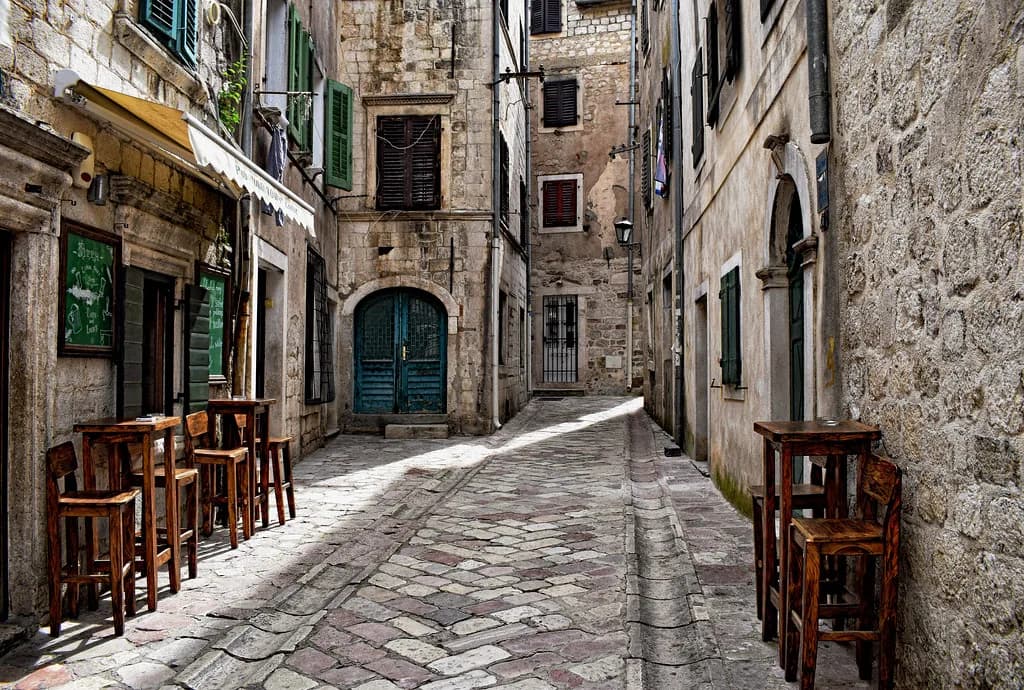
Arrive in daylight if you can: the first walk through the gate and the lanes is the best introduction to the town, and the streets empty out early in the morning before the day-trippers arrive.
Driving to Kotor: routes from Croatia, Bosnia and Albania
From the north, the classic drive comes south from Dubrovnik through Herceg Novi and along the bay, taking under three hours in good conditions. From the south, you come up the coast from Podgorica or from Albania, either cutting inland directly to Kotor or swinging through Tivat.
Roads around the bay are narrow, and the shoreline route is slow when cruise coaches and summer traffic are out; if you are not a confident driver, the bus is the calmer choice. Rental cars can be picked up at the Port of Kotor, Tivat Airport or downtown, with daily rates quoted from around EUR25, which is indicative and depends on season and vehicle.
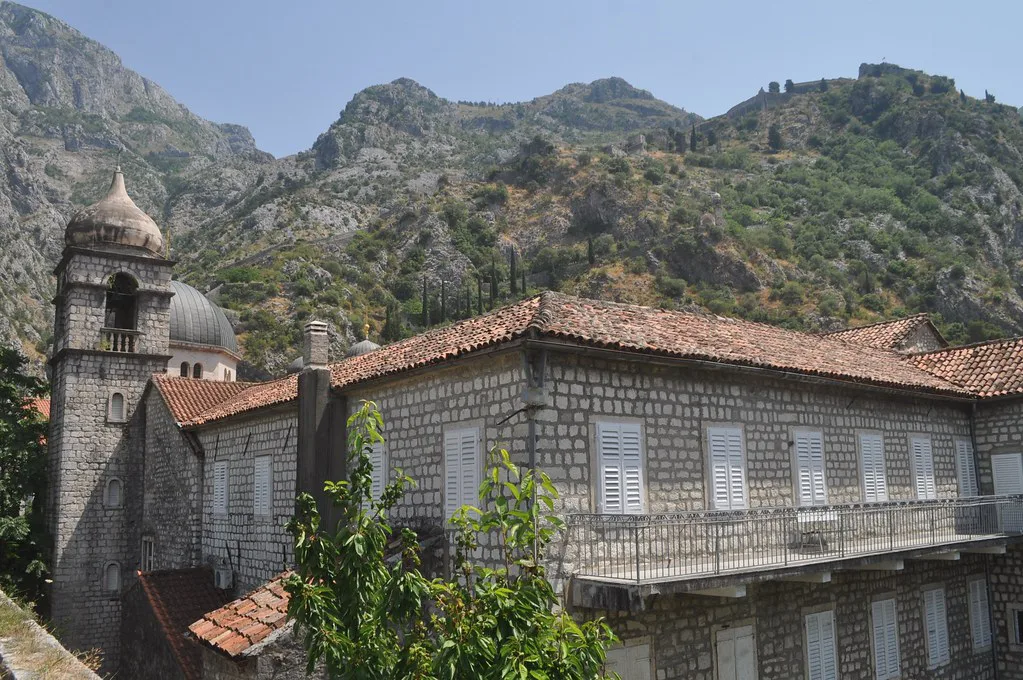
The Kamenari–Lepetani ferry across the bay
Drivers coming from Croatia can skip the long loop around the bay by taking the Kamenari–Lepetani ferry, which runs continuously, takes about ten minutes and saves a significant detour. Pedestrians cross free, while cars pay a small fare of a few euros; you can stay in the vehicle and pay on board, so the crossing adds almost no planning burden.
Take it if you are heading from Herceg Novi toward Kotor, Tivat or Budva and want to save road time; skip it if you are driving around the bay deliberately, since the shoreline villages of Dobrota, Prčanj and Stoliv are the point of that route.
The no-train reality and what to do instead
There is no train to Kotor, so rail is not an option for the final leg no matter where you start. The nearest thing to a rail-and-road combination is to reach a coastal city such as Bar by other means and continue by bus or car, but for most travelers the plane-plus-transfer or direct coach is simpler.
Water is a partial substitute: ferries from Italy are usually associated with the port at Bar rather than Kotor itself, and onward travel from Bar to Kotor is by road. Treat any Italy crossing as a two-stage journey and book the sea leg directly with whichever ferry company actually sails it, such as the lines running out of Bar.
Taxis and private transfers from Tivat Airport
A taxi from Tivat Airport to Kotor is the fastest door-to-door option and avoids the parking problem entirely, with the mountain cut-through keeping the ride short. Taxi tariffs start at around EUR1 with a ride within the city center costing about EUR5, but an airport transfer to Kotor is a longer trip, so agree the fare before you get in.
If you are crossing from Albania, shared taxis or pre-booked transfers can work out cheaper per person than a bus for a small group, though the price depends heavily on the driver you hire and the season. Ask for the total vehicle price, not a per-person figure, and check that it covers luggage.
Cruise ships and arriving by water
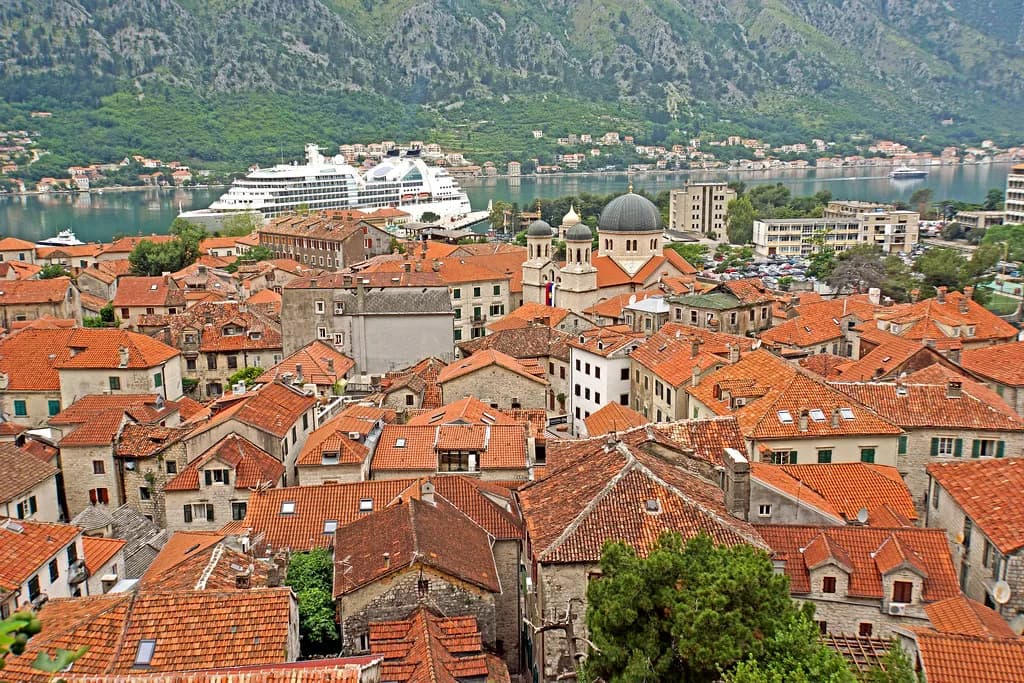
Kotor is a cruise port, and on days when ships are in the Old Town is at its busiest and the water at the town's compact beaches is less appealing. Ship calls are irregular rather than following a fixed daily pattern, so if you have flexibility, check the port's call list for your dates before you decide which day to arrive.
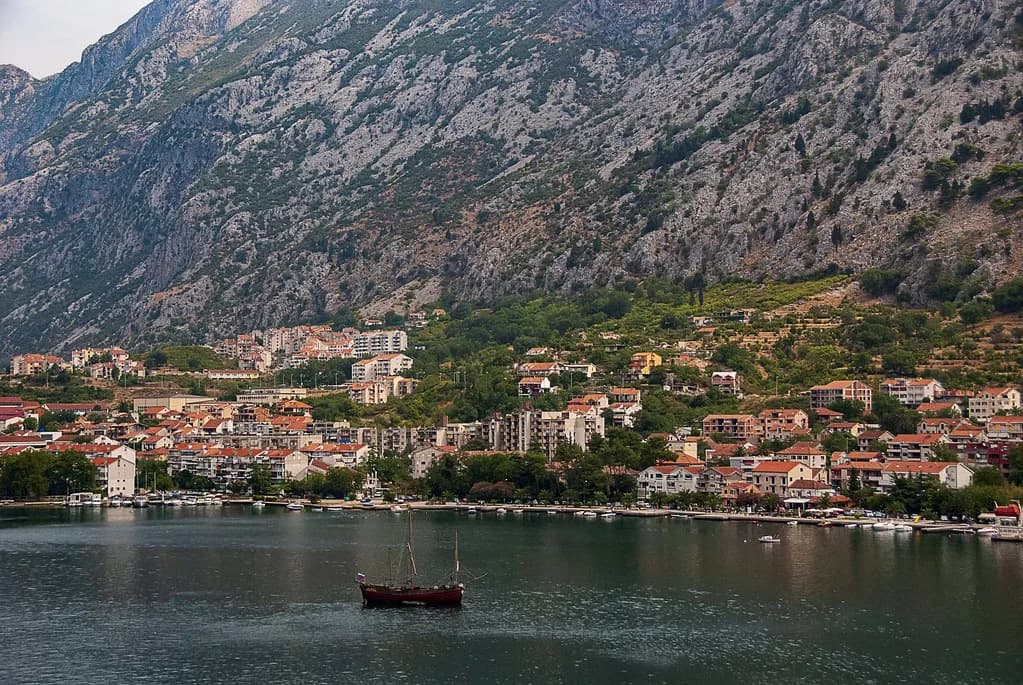
A boat trip on the bay is a good way to arrive at Perast and the island church of Our Lady of the Rocks without dealing with road traffic, and tours range from about an hour to a full day. If you want a quieter version of the same scenery, base yourself in a bay village and visit Kotor by water or bus.
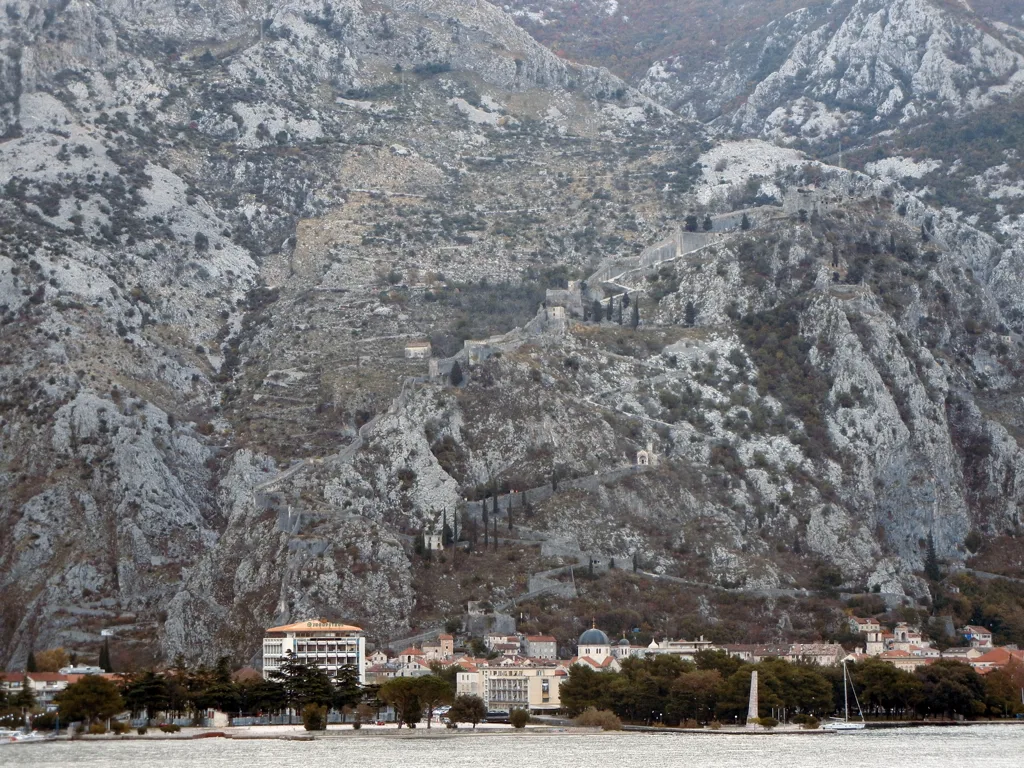
Getting out: day trips to Perast, Budva and Lake Skadar
Perast is only a 20-minute drive from Kotor and is easily reached by car, bus or boat, making it the obvious half-day escape when the Old Town crowds peak. For a bigger contrast, Lake Skadar National Park is about 1 hour 20 minutes by road and adds a very different landscape of water, birds and wine country.
Budva, Bar and Sveti Stefan are the usual coastal day trips, and Durmitor National Park is around two hours away for hikers who want mountains. Each of these is easier with a car, so if day trips are central to your plan, rent one for those days rather than the whole trip.
Getting around once you are in Kotor
Old Town is small enough to explore on foot, and the lanes are best taken slowly, with the walk up to the Castle of San Giovanni rewarding you with the views that define the town. Start early or late to avoid the heat, and allow around an hour for the climb at a steady pace.
Local buses and taxis cover the short hops outside the walls; a single local bus ride is quoted at around EUR1.30, and the figures vary between listings, so treat them as a rough guide. If you are weighing costs more broadly, the Kotor costs guide puts transport alongside food and entry tickets.
Drawbacks and what can slow you down
Summer is when everything is open and the bay is at its liveliest, but it is also when cruise passengers, traffic and full coaches collide. May and September bring milder weather and thinner crowds, though some businesses outside Kotor's Old Town close in the quieter months, so staying in a bay village in the off-season means less choice.
In the bay villages, taxis are hard to flag down and the internet and power can be patchy, which matters if you are working remotely or relying on a booking app. Buy a local SIM or set up an eSIM before you arrive, and keep a printed bus booking as backup.
Montenegro uses the euro, and the country is generally pricier than Albania and Bosnia and Herzegovina while sitting just below Croatian prices, so budget accordingly. Costs shift with season and cruise traffic, so check current local prices rather than relying on a single quoted figure.
Who should fly, who should ride the bus, who should drive
Fly to Tivat if time is short and you can find a suitable flight; it is the fastest way into the bay. Fly to Podgorica if you are coming from further afield and need a bigger airline choice, then accept the longer road transfer.
Ride the bus if you are in Dubrovnik, Split, Mostar, Trebinje, Tirana or Shkoder and want to arrive without parking worries; the station is close enough to walk into Old Town with luggage. Drive if you are combining Kotor with Perast, Lake Skadar and the mountain parks and want the freedom to stop; use the Kamenari–Lepetani ferry to skip the bay loop.
Arrive by boat if you want the classic view of the walls from the water, but book it as an excursion rather than counting on a scheduled crossing. Whatever you choose, plan around the town rather than through it, and check current sailing dates and prices before you travel.
Plan Your Visit
Kotor is easy to reach once you decide which trade-off you can live with: speed from Tivat, choice from Podgorica, scenery from a cross-border bus, or freedom from a car. Pick your route first, then count your nights against what the bay actually offers.
Find out how many days in Kotor you need, or check whether the town is worth visiting in the first place if you are still weighing it against the rest of Montenegro.
Explore more Kotor trip-decision guides
Frequently Asked Questions
Which airport do you fly to for Kotor?
Tivat Airport is the closest, about 4.9 miles from the city center, but it is served mainly by regional airlines. Podgorica Airport has a wider choice of flights and connects to Kotor by bus or private car, so choose between convenience and flight availability.
How long does it take to get to Kotor from Dubrovnik?
The drive from Dubrovnik down through Herceg Novi takes under three hours in normal traffic. Buses on the same route are quoted at about 2 hours 20 minutes, though border queues can add time in summer.
Is there a ferry from Dubrovnik to Kotor?
There is no direct passenger ferry between Dubrovnik and Kotor. The practical options are a bus, a rented car, or a private transfer along the coastal road.
Is there a train to Kotor?
No, Kotor has no rail connection. Travelers reach it by air, coach or car, with ferries serving the bay and the wider coast rather than providing a rail link.
How do you get from Tivat Airport to Kotor?
Take a taxi, a local bus or a rental car. The mountain cut-through road is about 8 km and takes roughly 15 minutes, while driving around the bay takes closer to 40 minutes.
How do you get from Podgorica to Kotor?
Bus or private car is the usual route, following the M2.3 and taking around one and a half to two hours depending on traffic and stops.
Do you need a car in Kotor?
Not for the town itself, since Old Town is walkable and the bus station is close to the walls. A car helps for day trips to Perast, Lake Skadar and the national parks, but parking and narrow roads are a nuisance.
Is the Kamenari ferry worth taking?
Yes, if you are driving from Croatia toward Kotor, Tivat or Budva and want to skip the long loop around the bay. It runs continuously, takes about ten minutes, and costs pedestrians nothing and cars a few euros.
Sources
Trip-decision notes
Optional updates when we publish or revise a destination verdict.
You might also like
Continue reading
More guides you'll find useful