Latvia eSIM: Which Plan Works Outside Riga
A Latvia eSIM works well in Riga, but rural parks and the coast need the right carrier network. Compare plan types, prices and limits before you buy.
On this page
Buy a Latvia eSIM before you fly if your trip is Riga plus day trips to Jūrmala or Sigulda, and pick a plan on a rural-strong network if Gauja National Park, the Ķemeri bogs or Cape Kolka are on your route. The country is small, the mobile market is competitive, and prices are in the euro, so the decision is less about whether an eSIM works and more about which network and data model your itinerary needs.
The practical split is simple: in Riga and along the coast every network performs, while outside the cities the carriers separate. Plan shapes differ too, from small fixed-data bundles to unlimited plans with daily high-speed allowances. Here is how to match a plan to the trip you are actually taking, and how this fits into the wider question of whether Latvia is worth visiting.
The verdict
For most travelers, a fixed-data eSIM on a network that reaches the countryside is the better buy than unlimited, because a week of maps, messaging and booking apps rarely needs more. Choose unlimited only if you work remotely, stream video or tether a laptop. If your trip stays inside Riga, carrier choice barely matters and the cheapest small plan will do.
Skip the eSIM entirely if you are in Latvia for two or three days, staying in hotels with solid Wi-Fi, and mainly need directions on foot through Riga Old Town and the central market. A roaming add-on from your home operator can cover that for less hassle, though it usually costs more per gigabyte. Everything in between is where a travel eSIM earns its place.
Why Latvia is an easy eSIM country
Coverage in populated and tourist areas is good, with 4G and 5G available across the main towns and along the highways, so activation is rarely the problem. The country uses the euro, which means plan prices in EUR match your other travel costs without conversion guesswork. Latvia is in the EU, and EU-wide roaming rules apply to local operators' own customers, but a travel eSIM is a separate product with its own terms.
Activation is standard across providers: you receive a QR code by email, install the profile on a compatible phone before departure, and switch it on when you land. Your home SIM can stay in the device for bank verification codes while data routes through the eSIM, as long as you set the travel plan as the data line and leave data roaming off on your home number. Providers describe setup as a three-step process of choosing a plan, scanning the code and activating on arrival.
Latvia's three mobile networks and what that means for coverage
Latvia has three main networks: LMT (Latvijas Mobilais Telefons), Tele2 and Bite Latvija. LMT has the deepest rural reach, which matters in Gauja National Park, around Cape Kolka, across the Ķemeri bogs and in the Latgale lake country near Daugavpils. Tele2 performs well in cities and on main roads, and Bite is strongest in Riga and along the coast but has less rural depth.
What this means in practice is that you should check the carrier behind any plan rather than the brand on the app store. A comparison of Latvia plans notes that Nomad and Jetpac run on LMT plus Tele2, Holafly on Bite plus LMT, and Airalo on Bite alone, so an Airalo plan suits a city break but is the weaker choice for a park-and-coast circuit. Any plan will work in Riga, while the countryside is where the network list decides your experience.
Unlimited vs fixed-data plans: which suits a Latvia trip
Fixed-data plans suit most Latvia itineraries: a few gigabytes cover maps, messaging, ride-hailing and restaurant searches for a week, and you pay once. Quibity's Latvia page lists small bundles from 1 GB over 7 days up to 20 GB over 30 days, with a 5 GB option that fits a one-week trip. Those tiers cost less than unlimited, and the money saved goes further on a country where everyday spending is moderate.
Unlimited plans make sense when you stop counting: remote work, video calls, photo backups or tethering. Holafly sells unlimited data for Latvia in day increments, and Quibity's unlimited option carries a fair-usage rule with a high-speed allowance per 24 hours before speeds drop. Read the allowance before you buy, because unlimited plans are never truly uncapped and the daily high-speed figure is what determines whether video calls stay usable.
What a Latvia eSIM typically costs
Prices vary more by data model than by destination, so treat any figure as a snapshot rather than a fixed rate. At the time of writing, Quibity's Latvia page listed 1 GB for 7 days at EUR 4.40, 3 GB for 15 days at EUR 6.10, 5 GB for 15 days at EUR 8.00 and 20 GB for 30 days at EUR 25.40, with unlimited plans billed around EUR 3.00 per day. These are modest sums against the cost of roaming on a home tariff.
Holafly prices Latvia in US dollars, with a 3-day unlimited plan at USD 11.90, 7 days at USD 27.50 and 30 days at USD 76.50, and the per-day rate falls as the trip lengthens. Both currencies reflect each provider's billing base rather than a difference in what you get. Check the price in your own currency at checkout, and weigh the total against what a week in Latvia costs overall.
Data-only reality: no local number, WhatsApp still works
Travel eSIMs for Latvia are data-only: no Latvian phone number, no traditional calls or SMS. Messaging and calls through internet apps such as WhatsApp keep working with your existing number, so you can reach accommodation, guides and family without a local SIM. That covers nearly every traveler's needs, since restaurants and Bolt drivers are reached through apps rather than voice calls.
The exception is anything that requires a real phone number, such as some banking confirmations or delivery callbacks. Keep your home SIM active with data disabled so verification texts still arrive, and set the eSIM as the line for mobile data. If you genuinely need a Latvian number, buy a local prepaid SIM from one of the three operators instead, though that means a shop visit and identification.
Hotspot and tethering rules
Tethering is where unlimited plans diverge. Quibity lists hotspot support on its Latvia plans and allows tethering under fair use, while warning against sharing with an unreasonable number of devices or running high-bandwidth activity. That means using your phone as a hotspot for a laptop is fine; turning it into a router for a group is not.
Holafly allows sharing 1 GB per day with other devices, so a 7-day plan gives up to 7 GB of sharable data rather than unlimited tethering. If you plan to work from a laptop, size the plan around that and treat the hotspot allowance as the real limit. Plainly, an unlimited phone plan is not an unlimited broadband plan.
Coverage where it matters: Riga and Jūrmala
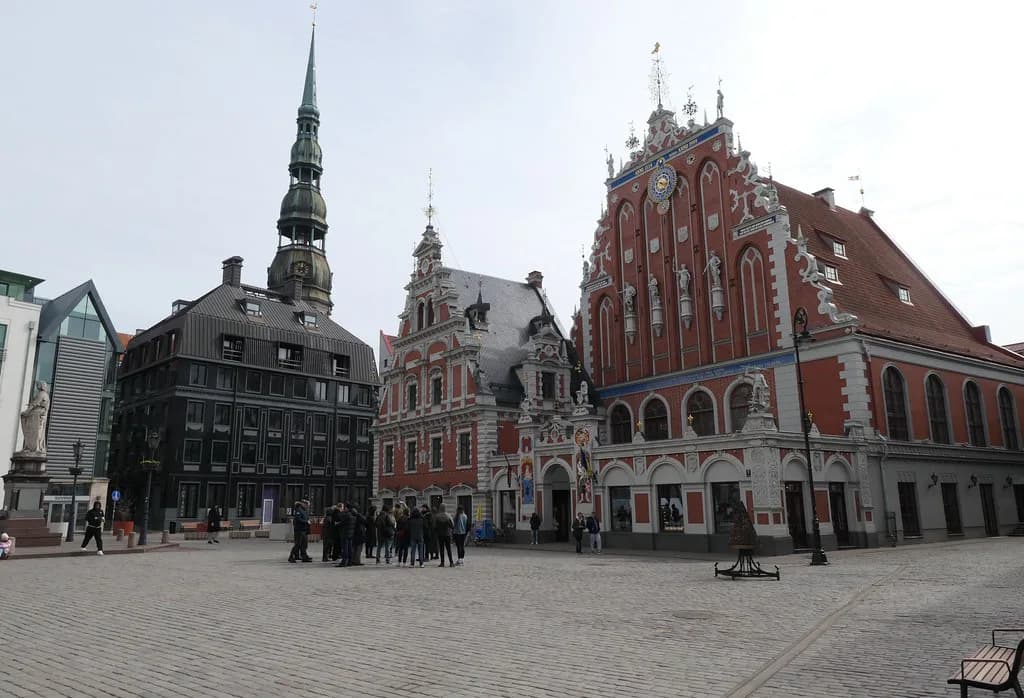
In Riga all three networks perform, from the Old Town and Central Market to the Art Nouveau district and the airport, so the cheapest suitable plan wins here. Jūrmala, the beach resort 30 to 40 minutes from the capital by train, sits along the Gulf of Riga and is well covered too. For a city-and-beach trip there is no coverage argument for paying more.
The practical concern in Riga is security rather than signal. Public café and hotel Wi-Fi is common, and a data plan with a built-in VPN, such as Saily's NordVPN bundle, is a convenience if you will use open networks. Otherwise use your eSIM data for banking and leave the café Wi-Fi for reading.
Coverage where it matters: Gauja National Park, Ķemeri and the Kurzeme coast
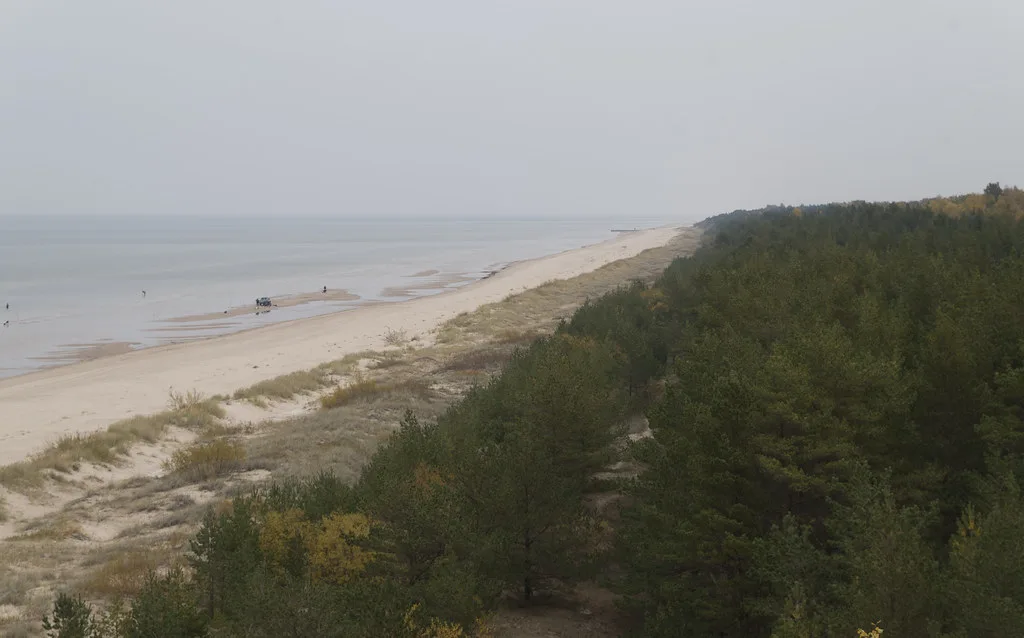
This is where the plan choice pays off. Gauja National Park around Sigulda and Cēsis, the Great Ķemeri Bog boardwalk, and the long Kurzeme coast out to Cape Kolka all sit away from dense infrastructure, and coverage thins in forest, wetland and remote coastal stretches. An LMT-based plan is the safer bet for these routes, and downloading offline maps is the sensible backup whatever you buy.
If your Latvia trip is part of a longer Baltic circuit, these rural days are also where a Latvia-only plan and a regional plan stop behaving the same way. Match the plan to the itinerary rather than the arrival city. Travelers choosing between the three countries can weigh our Estonia verdict and compare Latvia vs Lithuania before committing the route.
Setting up before you land at Riga Airport
Install the eSIM at home on reliable Wi-Fi, name it clearly, and leave it switched off until you land. At Riga Airport (RIX), turn on the eSIM, enable data roaming on that line and set it as the primary data source; maps and a Bolt ride then work from arrivals. The profile installs once, so if you delete it or change phones mid-trip you need a new one.
Plan your onward transport before you fly, since the same data connection you rely on for a ride into the center also covers a rental car booking. If you are collecting a car at the airport for the park-and-coast route, our guide to renting a car in Latvia covers the practical side.
Using one eSIM across the Baltics
A regional Europe plan can cover Latvia, Estonia and Lithuania on one profile, which suits a Tallinn–Riga–Vilnius route without buying three separate plans. Airalo's EU plus UK plan is one example that includes Latvia alongside its neighbors. The trade-off is that regional plans often run on a single carrier per country, so check which network is behind the plan if rural days are planned.
For a trip that is mostly cities, one regional plan is simpler and usually cheaper than stacking national ones. For a Latvia-heavy itinerary with Gauja, Ķemeri and the coast, a Latvia plan on a rural-strong network still beats the convenience of a single multi-country product.
Common mistakes
The first is buying on brand alone without checking the underlying carrier, which matters the moment you leave Riga. The second is assuming unlimited means uncapped high-speed data rather than a daily allowance followed by reduced speeds. The third is installing the eSIM after landing on airport Wi-Fi you cannot access, or deleting the profile when troubleshooting and discovering it cannot be reinstalled.
A fourth is leaving the home SIM as the data line, which can trigger roaming charges while the travel plan sits idle. Set the eSIM as the data line, keep data roaming off on the home number, and confirm the plan is active before you leave the airport. A couple of minutes at the gate in the departure lounge is the easiest place to get this right.
Who should skip the eSIM
Travelers on a short city break with good hotel Wi-Fi and no rural days can manage with a home roaming add-on or downloaded maps and offline translation. Anyone staying long enough to want a local number, or who needs to make ordinary voice calls to Latvian businesses, is better served by a prepaid SIM from LMT, Tele2 or Bite. Neither group needs to spend on a travel eSIM.
Everyone else benefits, particularly on an eight-to-fourteen day loop that takes in Riga, Gauja and the Kurzeme coast, where having working data on the road saves time and avoids wrong turns. Prices are modest enough that the decision should turn on coverage and data shape, not on saving a few euro.
The verdict by traveler type
City-break travelers should buy a small fixed-data plan and stop worrying about brands, since Riga and Jūrmala are well covered by all three networks. Park-and-coast travelers should choose a fixed plan on LMT or a Bite-plus-LMT product, and download offline maps for Gauja, Ķemeri and the road to Cape Kolka.
Remote workers and long stays should take unlimited with a clear daily high-speed allowance, and check the hotspot rule before relying on it for a laptop. Baltic-circuit travelers can use one regional plan if cities dominate, but should check the per-country carrier if the itinerary runs into rural Latvia.
Whoever you are, buy before you fly, install on home Wi-Fi, and confirm the plan is active at Riga Airport with the eSIM set as the data line. That covers the whole decision, and what's left is the trip itself.
Explore more Latvia trip-decision guides
Frequently Asked Questions
Can I use an eSIM in Latvia?
Yes. Travel eSIMs for Latvia are widely sold, and compatible phones install them from a QR code or app before you fly. Coverage is good in Riga, Jūrmala and the main towns, so activation is rarely an issue. The choice matters mostly outside the cities, where the underlying network determines signal.
Which network gives the best coverage outside Riga?
LMT has the deepest rural reach, which matters in Gauja National Park, around Cape Kolka, across the Ķemeri bogs and in the Latgale lake country. Tele2 is strong in cities and on highways, and Bite is strongest in Riga and along the coast. Check which carrier sits behind a plan before buying if your route leaves the capital.
Is unlimited data worth it for a Latvia trip?
Only if you work remotely, stream a lot or tether a laptop. For a week of maps, messaging and booking apps, a fixed plan of a few gigabytes costs less and is easier to budget. Unlimited plans also come with daily high-speed allowances and hotspot limits worth reading before you pay.
Does a Latvia eSIM include a phone number?
No. These are data-only products with no Latvian number, so traditional calls and SMS do not work on the eSIM itself. WhatsApp and other internet apps keep working with your existing number. Keep your home SIM active with data off for verification texts, or buy a local prepaid SIM if you need a real number.
Can I use my eSIM as a hotspot in Latvia?
It depends on the plan. Some allow tethering under fair use, while others cap sharable data, for example 1 GB per day on an unlimited plan. If you plan to work from a laptop, size the plan around the hotspot allowance rather than the headline data figure.
Will one eSIM work across Latvia, Estonia and Lithuania?
Yes, with a regional Europe plan. These cover the three Baltic countries on one profile, which suits a multi-city route. The trade-off is that regional plans often use a single carrier per country, so a Latvia-only plan on a rural-strong network remains better for park and coast days.
Do I need data roaming turned on for an eSIM in Latvia?
Yes. Turn on data roaming for the travel eSIM line so it can connect to the local network, and set it as the primary data line. Leave data roaming off on your home SIM so you do not incur charges. Do this after landing, since plans typically start when the eSIM first connects.
Sources
Trip-decision notes
Optional updates when we publish or revise a destination verdict.
You might also like



Continue reading
More guides you'll find useful