Mostar vs Sarajevo: Which Bosnian City Fits Your Trip?
Mostar wins on scenery and compact charm, Sarajevo on food, history and choice. Compare the two by time, budget, day trips and traveler type.
On this page
For most first-time visitors with three days or more, Sarajevo is the better single base, and Mostar is the better single sight. If you can only manage one overnight and your priority is that one iconic image of the Stari Most, choose Mostar; if you want a city to eat, wander and learn in for two or three days, choose Sarajevo. If your schedule allows, the connection between them is quick enough that the question becomes how to split your nights, not which city to cut.
The verdict: who should pick Mostar, who should pick Sarajevo, who should pick both
Pick Mostar if your trip is short, if you are coming overland from Split or Dubrovnik, or if your main interest is Ottoman-era stone architecture and the Neretva valley. Pick Sarajevo if you want depth: museums, a large old bazaar, a serious cafe and food scene, and a capital that works as a base for day trips in several directions. Pick both if you have at least four nights in Bosnia and Herzegovina, because the journey between them takes about two hours by car and roughly 2.5 to 3 hours by train, with direct bus and train connections.
Travelers who want one memorable image and a compact, walkable center land on Mostar. Travelers who want variety — a synagogue, a mosque, a Catholic church and an Austro-Hungarian streetscape within a short walk — land on Sarajevo. Anyone building a wider Balkan route should read is Bosnia worth visiting before committing nights to either city.
Mostar in brief: the Old Bridge, the bazaar streets and the Neretva
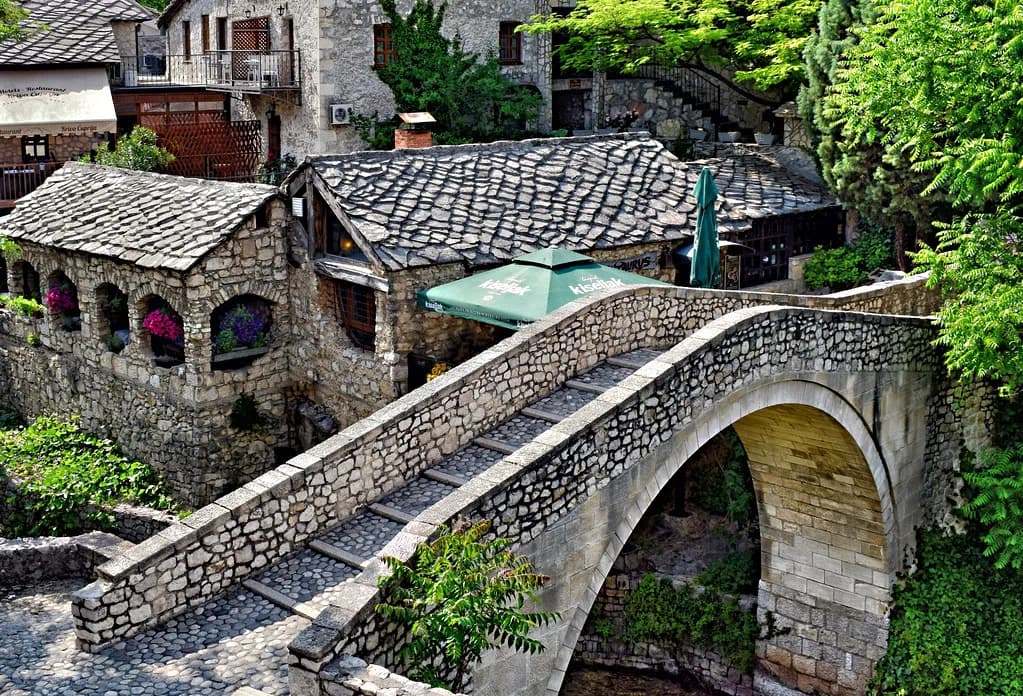
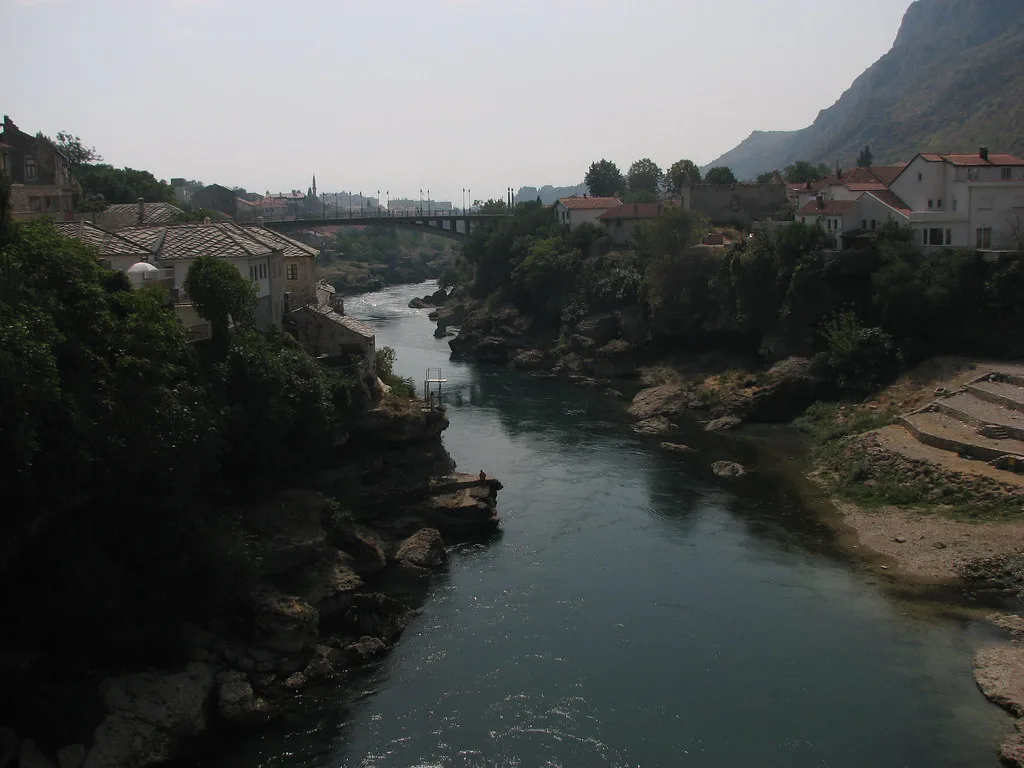
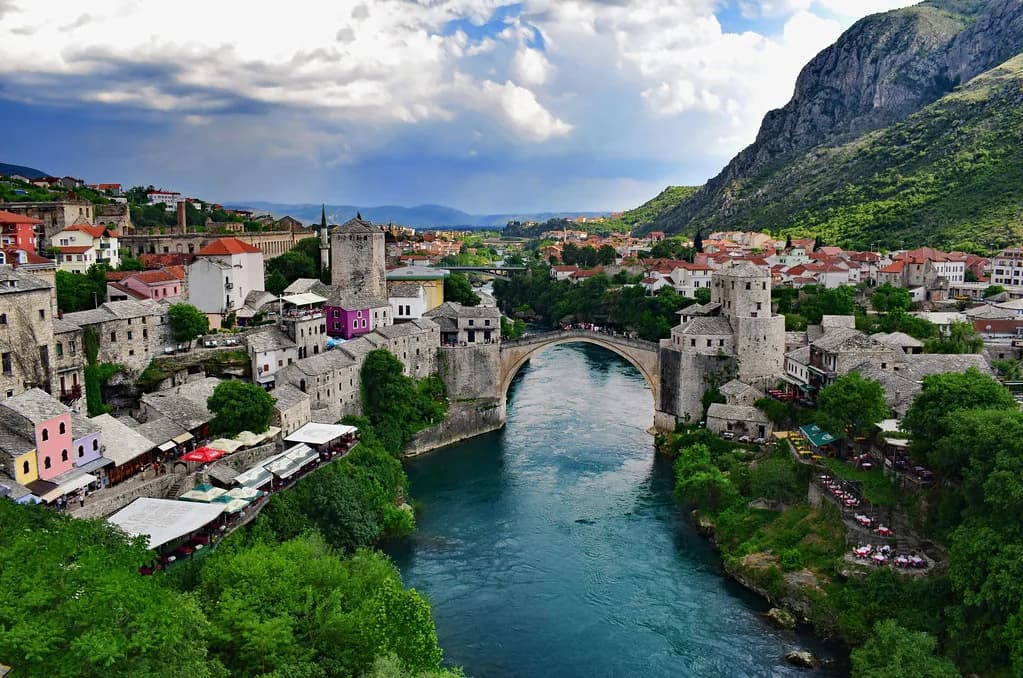
Mostar's headline is Stari Most, the rebuilt Ottoman bridge that earned the old town UNESCO World Heritage status and anchors a tight grid of cobbled lanes, small mosques, copper shops and courtyards. The old bazaar is small enough to walk in an afternoon, which is exactly why day-trippers can see the highlights and leave. The bridge divers are part of the spectacle: they traditionally collect tips from the crowd on the bridge before jumping, so the performance depends on a critical mass of onlookers.
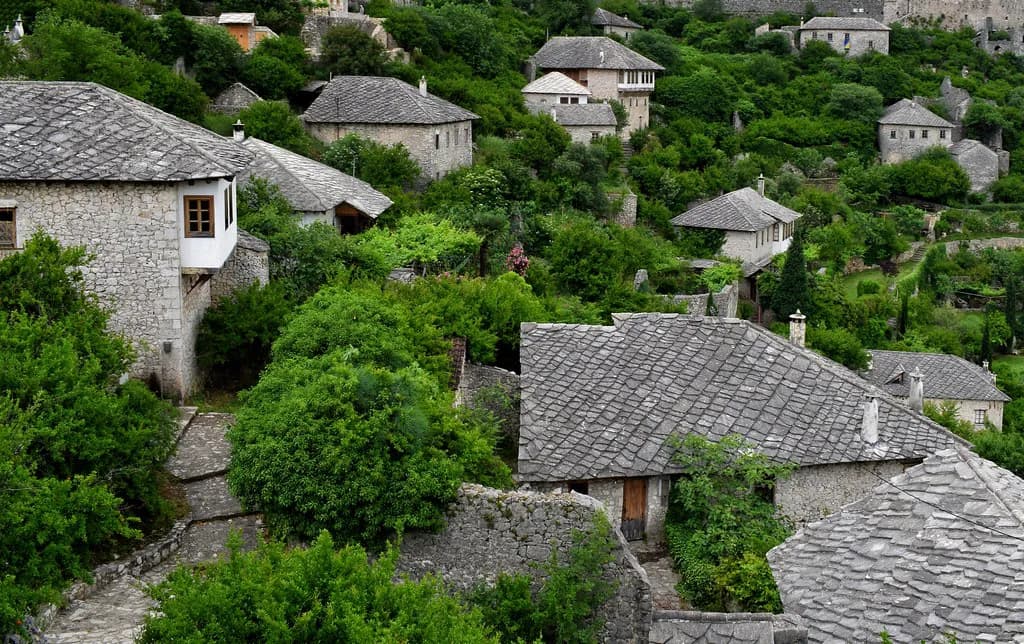
The Neretva runs emerald green beneath the bridge, and the surrounding Herzegovina landscape is Mediterranean in character, with rivers, waterfalls and swimming spots within an hour of town. That proximity to nature is Mostar's second argument: Blagaj Tekke, a dervish house set against a cliff and spring, and the Kravice waterfalls are both easy half-day add-ons. If you are basing yourself in Mostar for that, renting a car in Bosnia gives you the most flexibility, since the region's sights are spread out.
Sarajevo in brief: Baščaršija, Ferhadija Street and the Ottoman–Austro-Hungarian seam
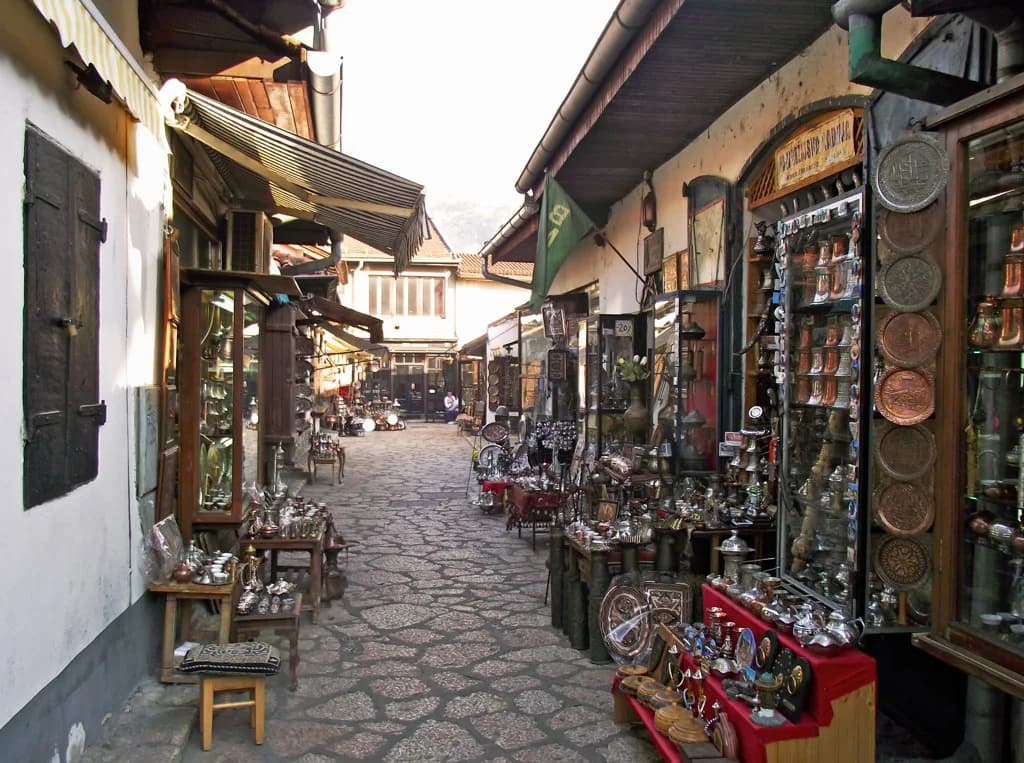
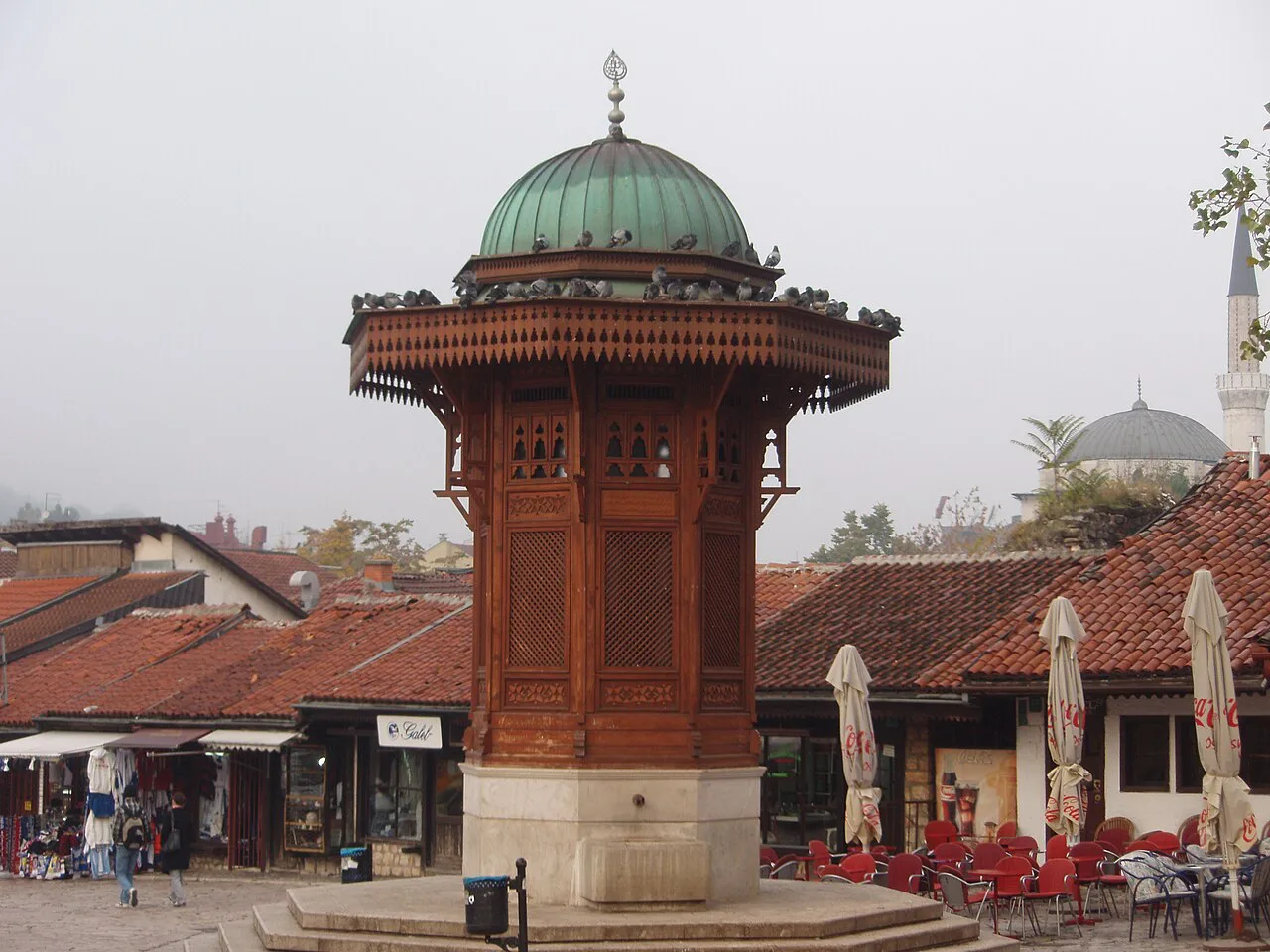
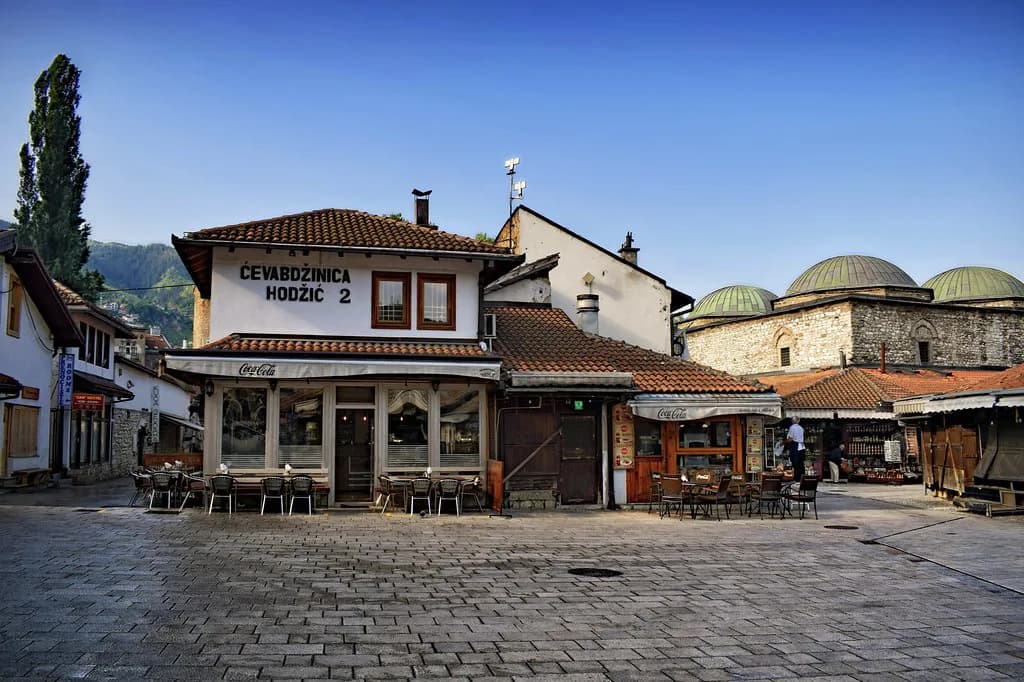
Sarajevo's old core is built around Baščaršija, the Ottoman bazaar quarter, where the Sebilj fountain, the Gazi Husrev-beg Mosque, the clock tower and the covered Bezistan market sit within minutes of each other. Walk west along Ferhadija Street and the architecture shifts into the Austro-Hungarian city, which is where the 'European Jerusalem' label comes from: a mosque, a synagogue, a Catholic church and an Orthodox church stand close together. Vijećnica, the yellow city hall, is the standout interior, with Moorish detail and a small museum in the basement.
The 20th century is unavoidable here too. Latin Bridge is where Archduke Franz Ferdinand was assassinated, and the nearby Museum of Sarajevo 1878–1918 explains the event. For the 1990s war, the War Childhood Museum and Gallery 11/07/95 are the places to spend time; you will also notice buildings still marked by shell damage and the concrete 'Sarajevo roses' filled in where mortars landed.
Old town: which is more impressive to walk
Mostar wins on the single block. The lanes around Stari Most are more finely preserved, more atmospheric at dusk and more photogenic, and the bridge itself gives the old town a focal point that Sarajevo lacks. Sarajevo wins on scale and variety: Baščaršija is larger, livelier with actual daily commerce, and it flows into a European city rather than stopping at a tourist zone.
One honest caveat applies to Mostar: restaurants clustered right around the bridge have a reputation for reheated dishes and inflated drinks, so walk a few minutes from the bridge for lunch and dinner. Sarajevo's old bazaar keeps more of a working-city feel, and locals eat there alongside visitors.
Sights and museums: Sarajevo's depth versus Mostar's single headline
Mostar's sightseeing fits into a few hours: the bridge, the bazaar, the mosques and one or two galleries. Sarajevo fills two or three days without effort, and it gives you a cable car up Mount Trebević with a short ride and a view over the city, plus the abandoned 1984 bobsleigh track near the top station, now covered in street art. Both cities sit within a country whose overall tourism case is underrated, which the Bosnia and Herzegovina verdict covers.
The winter of 1984 gives Sarajevo a different layer: the Olympic mountains are close enough for a half-day hike or a quick evening walk, and Trebević is the easiest to reach. In summer the city also stages free cultural events, which adds value if you are staying more than a night.
Day trips: Kravice and Blagaj from Mostar, the Olympic mountains and Sutjeska from Sarajevo
From Mostar, the best day trips are short hops: Blagaj Tekke and the Kravice waterfalls are both within roughly an hour's drive, and Herzegovina's wine country and rivers fill out a full day. From Sarajevo, the range is wider but the drives are longer: Jajce and Travnik to the north, the Sutjeska National Park for hiking, and Visoko for the so-called pyramids are all realistic day trips, though some are long.
Both cities work well as day-trip bases, so this criterion is close to a tie. The difference is direction: Mostar points you south into Herzegovina and toward the Croatian coast, Sarajevo points you north and east toward mountains and historic towns.
Getting there: Sarajevo airport, Mostar by road from Split and Dubrovnik
Sarajevo International Airport has the far better flight connections of the two, and Mostar is reachable from there by bus or train. Mostar's overland option is also strong: it can be reached in under three hours from Dubrovnik or Split, and Mostar is the most common day tour out of Dubrovnik. If you are hiring a car in the EU and crossing into Bosnia and Herzegovina, budget extra time and cost for the border formalities, or consider flying in directly.
For flights and routes, check Sarajevo airport's own site rather than a third-party aggregator. Note that Bosnia and Herzegovina uses the convertible mark rather than the euro, so plan cash and cards accordingly, which the money in Bosnia guide explains.
Getting between the two by train, bus and car
The Sarajevo–Mostar connection is one of the easiest intercity links in the Balkans: about two hours by car and roughly 2.5 to 3 hours by train, with direct buses and trains. The train route through the Neretva canyon is the scenic option and worth taking even if a bus would be slightly quicker.
A car gives you the flexibility to stop at Blagaj or Kravice en route, but the train is the better choice if you want the scenery without the driving. Either way, the journey itself is one of the best arguments for visiting both cities rather than choosing between them.
Weather and seasons: continental Sarajevo versus Mediterranean Mostar
Sarajevo has a continental climate with hot summers and cold, snowy winters; snow on the Olympic mountains makes it a ski city in season. Mostar is Mediterranean, with hot summers and mild, rainy winters, and spring and autumn are the most comfortable times for outdoor activity in both cities. Plan Sarajevo for late spring through early autumn, and Mostar for spring or autumn if you want to avoid summer heat and crowding.
October is a sweet spot for both: Herzegovina stays mild while Sarajevo cools, and the crowds thin. The Bosnia in October guide is a useful starting point for the shoulder season.
Typical costs: how the two compare
Both cities are in the same general price band and both are affordable by Western European standards, with Sarajevo slightly pricier as the capital and Mostar's tourist core charging more than its outskirts. Accommodation, food and activities cost broadly similar amounts, though Mostar offers better deals outside the summer season; for booking prices, compare listings directly rather than trusting a figure in an article.
A day tour to Mostar from Dubrovnik is priced as a package, which can make Croatia-based trips convenient but less flexible. If you are budgeting, remember that Bosnia and Herzegovina uses the convertible mark, so exchange or withdraw locally and check what the currency buys before you arrive.
Crowds and day-trippers in Mostar's old town
Mostar's old town fills with day-trippers in summer and empties after sundown, so staying overnight changes the experience considerably. The same streets that feel cramped at midday are quiet and atmospheric in the early morning and evening. If you are visiting as a day trip, arrive early or late rather than at midday.
Sarajevo receives fewer coach groups relative to its size, so the bazaar stays busy without feeling overwhelmed. That is one of the practical reasons to choose Sarajevo over Mostar if you dislike crowds.
Traveler types: families, solo travelers, food-led trips, history-led trips
Families generally do better in Sarajevo, which offers more parks, interactive museums, better infrastructure and a broader choice of accommodation. Mostar's old town is stressful with small children in summer, though the surrounding Herzegovina countryside offers ample family-friendly nature. Solo travelers also favor Sarajevo, which has more social activity, tours and meetups, while Mostar can feel quiet in the evenings outside peak season.
Food-led travelers should prioritize Sarajevo, where the bazaar and beyond offer a growing scene of modern and traditional restaurants, while Mostar's bridge-side restaurants are more uneven. History-led travelers get more from Sarajevo's museums and war sites but should not skip Mostar's Ottoman bridge and bazaar, which tell a different part of the story.
How many days each city deserves
Mostar's core fits into a day, but staying one night gives you the quiet evening and morning that make the trip worthwhile. Sarajevo deserves at least two full days, and three if you plan a day trip to the mountains or a museum-heavy schedule. A sensible combined route is two nights in Sarajevo and one in Mostar, using the train between them.
If you have only two nights total, choose Sarajevo and take the train to Mostar as a long day trip, or the reverse if the bridge is your priority. Cutting one city entirely is better than trying to squeeze both into a rushed single day.
The verdict, restated
Choose Mostar for the bridge, the stone lanes and a Herzegovina base if your time is short or you are coming from Croatia. Choose Sarajevo for museums, food, nightlife, families, solo travel and a deeper sense of the country. If you have four nights or more, take the train between them and get both, because the journey is part of the trip. If you are weighing this same coastal-base-or-capital decision further down the Adriatic, our Zadar trip guide applies the same logic to Croatia.
Whichever you pick, weigh the country's broader case, carry some convertible mark, and leave room for the landscape between the two cities.
Explore more Bosnia and Herzegovina trip-decision guides
Frequently Asked Questions
Which is better, Sarajevo or Mostar?
For most travelers with three days or more, Sarajevo is the stronger base thanks to its museums, food scene, larger old bazaar and better flight connections. Mostar is the better choice if you have only a day or two, are coming overland from Split or Dubrovnik, or mainly want the Stari Most and the Herzegovina landscape.
Is Mostar worth visiting if I only have one day?
Yes, if you arrive early or stay late. The old town is compact enough to see in a few hours, but it fills with day-trippers in summer and empties after sundown, so an overnight stay gives you a noticeably different experience.
How many days do you need in Sarajevo and Mostar?
Two full days in Sarajevo and one night in Mostar is a sensible split. Sarajevo rewards a third day if you want a mountain day trip or several museums, while Mostar's core fits into an afternoon plus an evening.
Is it better to fly into Sarajevo or come to Mostar from Split or Dubrovnik?
Sarajevo International Airport has the better connections, and you can reach Mostar from there by bus or train. Coming overland from Split or Dubrovnik takes under three hours, but cross-border car hire can add cost and paperwork, so flying in directly is simpler.
Can you visit Mostar and Sarajevo on the same trip?
Yes. The two cities are about two hours apart by car and roughly 2.5 to 3 hours by train, with direct bus and train connections. The train through the Neretva canyon is the scenic option and worth doing in at least one direction.
Is Sarajevo or Mostar better for families?
Sarajevo generally suits families better, with more parks, interactive museums, better infrastructure and a wider choice of accommodation. Mostar's old town gets crowded and stressful in summer, though the surrounding Herzegovina countryside offers plenty of family-friendly nature.
Which city is cheaper, Mostar or Sarajevo?
Both are in a similar price band and both are affordable by Western European standards. Sarajevo is slightly pricier as the capital, while Mostar's tourist core around the bridge charges more than the rest of town; you will usually find better deals outside the summer season.
Should I stay overnight in Mostar or visit on a day trip?
Stay overnight if you can. Day-trippers arrive in the middle of the day and leave by evening, so the old town is at its best in the quiet early morning and after sundown, and the bridge divers draw smaller, calmer crowds.
Sources
Trip-decision notes
Optional updates when we publish or revise a destination verdict.
You might also like
Continue reading
More guides you'll find useful