Getting Around Lithuania: Trains, Buses, Ferries and Cars
Buses beat trains on speed and frequency, trains win on comfort, and the Curonian Spit is best by bike. Here is how to move around Lithuania without a car.
On this page
Getting around Lithuania without a car is straightforward on the main corridor: Vilnius, Kaunas and the coast are linked by frequent intercity buses and comfortable long-distance trains, and city transport inside the two big cities covers the center well. Where the public network thins out is the coast beyond Klaipėda and the countryside, so the decision is less about whether you can manage than about how much of the rural and coastal fringe you want.
If your trip is a first look at the country, base yourself in the cities and use buses and trains; if you want the Curonian Spit at your own pace or villages off the main lines, a rental car or a bicycle changes the trip. This guide weighs each mode against the corridors you will actually travel, and you can pair it with is Lithuania worth visiting to decide whether the country earns a place on your itinerary at all.
The verdict
Lithuania is a public-transport country by Central European standards: express buses are the fastest and most frequent way between cities, trains are the more comfortable option on long hauls, and flat terrain makes bicycles genuinely practical rather than a novelty. You do not need a car for Vilnius, Kaunas, Klaipėda or the Curonian Spit.
Rent a car only if your list includes places the network serves poorly or you want to move on your own schedule along the coast. The trade-off is real: four-lane highways link the main cities and driving is easy in between, but parking in the medieval centers is difficult and from November to March rental cars come fitted with winter tires.
How the country is laid out
Lithuania is small enough that no internal journey eats a day: Vilnius sits in the southeast, Kaunas in the center, and Klaipėda with the Baltic coast in the west, with Palanga just north of Klaipėda as the beach gateway to the Curonian Spit. That geometry means almost every trip is a single hop between two of those points rather than a chain of connections.
The country is roughly a quarter the size of the UK, which is why travelers routinely combine the capital, the former capital and the coast in under a week. Plan the coast as its own base rather than a day trip from Vilnius, because the distances look short on a map but the interesting stops are spread along the shore.
Buses between cities
Buses are slightly quicker, more frequent and more expensive than trains, and they are the default choice on most intercity corridors. Buy long-distance tickets in advance and choose an express service, marked ekspresas, to skip the frequent village stops; paying on board is possible but does not guarantee you a seat.
The national bus network is extensive and reaches towns and villages along the routes, which makes it the most useful single tool for a car-free trip. Routes and schedules are published online and tickets can be bought in advance through the national bus booking site.
Trains with Litrail
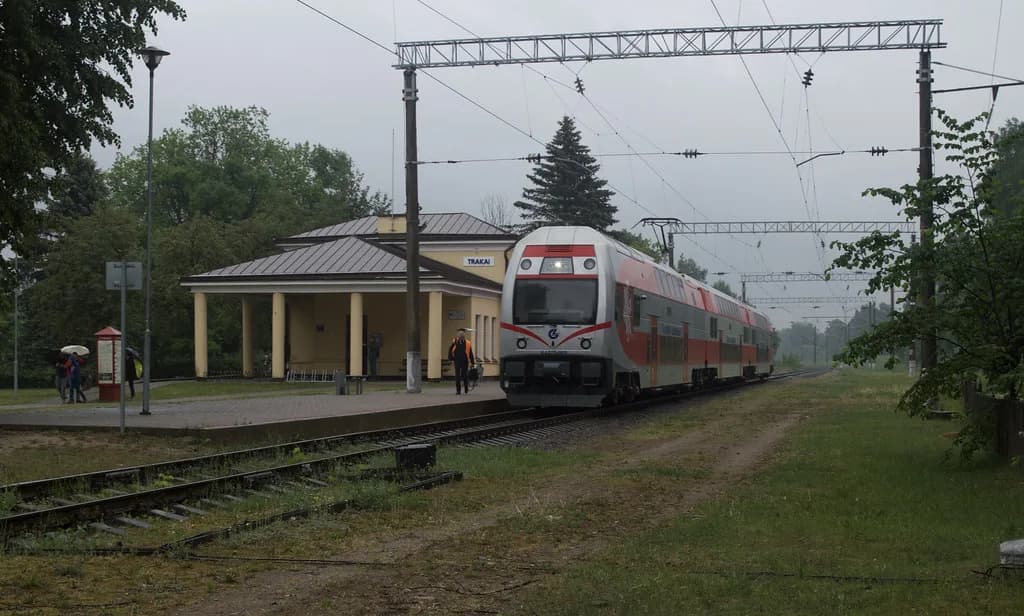
Long-distance trains are run by Litrail and are the comfortable option: slower and less frequent than buses on many routes, but with more room and a smoother ride on the longer legs. Services split into passenger trains, keleivinis traukinys, and fast trains, greitas, and the fast services usually require a reservation.
Buy long-distance rail tickets in advance at the station, where long-distance and suburban sales are handled at separate windows. On timetable boards, look for isvyksta for departures and atvyksta for arrivals, which saves a lot of squinting at the wrong column.
Getting around Vilnius and Kaunas
In Vilnius and Kaunas, public transport is frequent and efficient, with buses, trolleybuses and route taxis covering most of the city and reaching the sights you will actually visit. The old towns themselves are walkable, so city transport is mainly about getting between the center and the bus or train station, or out to districts beyond the historic core.
Both cities reward slow wandering more than transport planning: Vilnius Old Town and the view from Gediminas Castle Tower are on foot, and the riverside paths along the Neris and Vilnia are easy walking. Treat the tram, trolleybus and bus network as backup for tired legs and bad weather rather than the backbone of a city day.
The Curonian Spit by bicycle
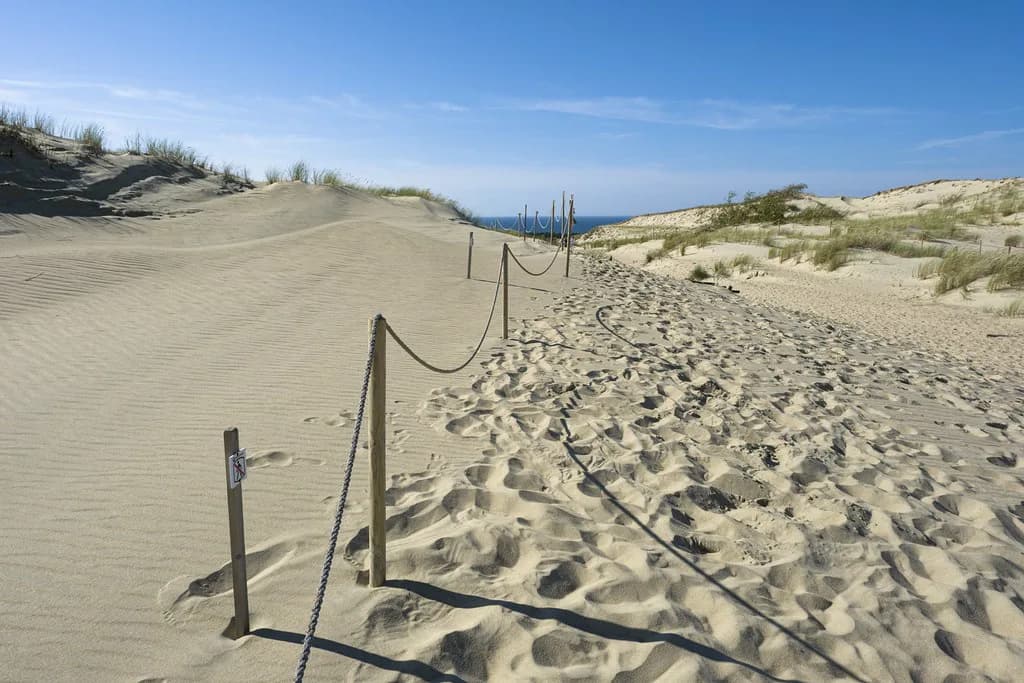
The Curonian Spit is best explored by bicycle, and rentals are inexpensive and plentiful along the spit. The terrain is flat, the distances between villages are manageable, and cycling lets you stop at the dunes and pine forest lookouts that a bus timetable will not accommodate.
Bring or rent a bike rather than a car for the spit: the road is narrow, parking near the main sights is limited, and the pleasure of the place is in moving slowly between Nida and the lagoon-side villages. If you come in the shoulder season, check that rental shops are still operating before you build a day around them.
Driving and car rental
Four-lane highways link the main cities and driving between them is easy, while roads are well maintained and good for cycling. Parking in the cities is the weak point, because medieval street layouts leave little room, so a car is a liability in Vilnius and Kaunas old towns even when it is an asset everywhere else.
Rental cars are available at all major transport hubs and in the major cities, so picking one up on arrival or before heading west is simple. Read the terms from your chosen supplier, since winter equipment and cross-border rules vary between companies; our guide to renting a car in Lithuania walks through what to compare.
Ferries to Klaipėda
Overnight cruise ferries reach the port city of Klaipėda from Sweden at Karlshamn and from Germany at Kiel and Sassnitz, operated by DFDS and TT-Line. You can travel as a foot passenger, as a cyclist, or with a car or motorhome, which makes the ferry a genuine alternative to flying in from northern Europe.
Arriving by sea puts you directly in position for Palanga and the Curonian Spit without crossing the whole country first. Schedules and crossing times change by season, so check the DFDS and TT-Line timetables before you commit to a date.
Cycling across Lithuania
Lithuania is relatively flat and a pleasure to cycle, with hire widespread and buses, trains and ferries increasingly able to carry bikes. That combination makes multi-day riding between towns realistic rather than an expedition, and the country publishes marked cycling routes for visitors.
Away from the coast, the forest and lake country around Aukštaitija National Park is the obvious target for riders who want quieter roads and water stops. Weather is the limiting factor rather than terrain, so build in a rest day and keep plans flexible if rain sets in.
Getting to Lithuania and onward links
Vilnius and Kaunas are the main arrival points by air, and Klaipėda receives the overnight ferries from Sweden and Germany. From there, the bus and rail networks handle the internal legs, and the same long-distance buses connect onward to Latvia and Poland.
For entry rules and document requirements, use your own government's official travel page rather than a commercial guide, since the rules depend on your nationality and change without notice.
When a car is worth it
A car earns its cost when your itinerary includes rural sights, small towns and coastal stops that buses serve rarely or slowly, or when you are traveling with luggage, children or a tight schedule. It loses on city days, where parking in the medieval centers is awkward and you will leave the car standing.
A practical compromise is to travel between cities by bus or train and pick up a rental car only for the western or rural leg. That keeps the hard driving and parking out of Vilnius and Kaunas while still giving you freedom where the network thins.
Typical costs and paying for transport
Lithuania uses the euro, so transport is priced in the same currency as most of the rest of the eurozone and no exchange arithmetic is needed on arrival. Buses cost more than trains on comparable routes, and express services cost more than stopping ones, so paying a little extra buys speed.
Fares and ticket prices change, so compare current prices with is Lithuania expensive before fixing a daily budget; the country sits at the cheaper end of the eurozone for transport and everyday spending.
Drawbacks to plan around
Rural services are sparse and evening departures thin out, so a late arrival or a remote village can leave you with few options. The practical fix is to travel the long legs in the morning, book express buses ahead for a seat, and avoid building an itinerary that depends on a last connection.
The climate is semi-continental: summers are mild with an average around 18°C (64°F), the interior often warmer, while winters average around 0°C (32°F) with snow starting in November. Those are typical conditions rather than forecasts, but they explain why cycling and rural bus-hopping are far more pleasant from late spring to early autumn.
In winter, snow and short daylight make self-driving and cycling less appealing, and rental cars come with winter tires from November to March. If your dates fall in that window, weight the trip toward cities and rail rather than the coast and the spit.
Who should choose what
City-focused travelers and first-timers should skip the car entirely: buses and trains cover Vilnius, Kaunas, Klaipėda and the spit, and city transport handles the last stretch inside town. Budget travelers get the best value this way, since the bus and rail network is cheap and frequent on the main corridors.
Cyclists should head for the coast and the lake districts, bringing or renting a bike and using trains and buses for the transfers. Families and travelers with rural priorities should rent a car for the western leg only, keeping it out of the old towns.
Travelers coming from Scandinavia or northern Germany have a third option: the overnight ferry into Klaipėda, which turns transport into part of the trip. If you are still weighing the country against its neighbors, our Lithuania verdict sets out who tends to love it and who should look elsewhere, and our Latvia verdict does the same for the next country up the coast.
Plan Your Trip
Build the trip around buses for speed, trains for comfort and a bike for the Curonian Spit, and you can see Lithuania's main draws without ever renting a car. Add a rental only for the rural and coastal fringe, and keep the old towns car-free.
Check seasonal schedules and rental terms directly with Litrail, the bus operators and the ferry companies before booking, then lock in express seats and winter equipment as your dates require. That done, the transport side of a Lithuania trip is one of the least stressful in the region.
Explore more Lithuania trip-decision guides
Frequently Asked Questions
Is it easy to get around Lithuania without a car?
Yes, on the main corridors. Vilnius, Kaunas and Klaipėda are linked by frequent intercity buses and long-distance trains, and city transport covers the centers of Vilnius and Kaunas. The gaps appear in rural areas and on the coast beyond the main towns, where services are sparse and evening departures thin out, so a car or a bicycle helps if you want those places.
Are trains or buses better in Lithuania?
Buses are slightly quicker, more frequent and more expensive than trains, and express services cut out the village stops. Trains are slower and less frequent on many routes but more comfortable for long legs, and fast trains usually require a reservation. For most city-to-city hops, take the bus; for a longer ride where comfort matters, take the train.
Do you need a car to visit the Curonian Spit?
No. The spit is best explored by bicycle, with rentals inexpensive and plentiful and the terrain flat. Bringing a car adds parking problems at the popular stops without adding much freedom, since the distances between villages are short.
Can you take a bike on Lithuanian trains and buses?
Buses, trains and ferries are increasingly able to carry bikes, and cycle hire is widespread across the country. Space can be limited on busy services, so ask when you book whether a bike can be carried.
How do you get from Vilnius to Kaunas?
Take an intercity bus or a long-distance train. Bus services are more frequent and slightly quicker, while trains are the more comfortable choice and run as passenger or fast services, the latter usually needing a reservation. Book ahead for a guaranteed seat on either.
How do you reach Klaipėda from Sweden or Germany?
Overnight cruise ferries run to Klaipėda from Karlshamn in Sweden and from Kiel and Sassnitz in Germany, operated by DFDS and TT-Line. You can travel as a foot passenger, as a cyclist, or with a car or motorhome, which makes the ferry a practical way to bring your own vehicle into Lithuania.
Is there Uber in Lithuania?
Check the ride-hailing apps directly for the city you are visiting, since availability can differ between Vilnius and smaller towns. For getting between cities, the intercity bus and rail networks are the reliable options, and city buses cover the centers.
Is Lithuania cheap for transport?
Lithuania uses the euro, and transport sits at the affordable end of the eurozone, with buses costing more than trains on comparable routes and express services costing more than stopping ones. Fares change, so compare current prices before fixing a daily budget.
Sources
Trip-decision notes
Optional updates when we publish or revise a destination verdict.
You might also like

Continue reading
More guides you'll find useful