Renting a Car in Lithuania: Is It Worth It for Your Trip?
Renting a car in Lithuania makes sense for the Curonian Spit, Trakai and national parks, but not for Vilnius and Kaunas alone. Here is the honest trade-off.
On this page
Rent a car in Lithuania only if your trip reaches past Vilnius, Kaunas and Klaipėda. The coast, the dunes and the lake districts reward a car generously; the three main cities punish one with parking zones, one-way systems and rentals sitting idle while you walk.
The workable pattern for most travelers is a hybrid: trains and buses between cities, then a short rental for the rural leg. That keeps the rental days low and the driving on the roads where a car actually earns its keep.
The verdict
Rent a car if Lithuania means the Curonian Spit, Trakai, Aukštaitija National Park or the rural lake country. Skip it if your itinerary is Vilnius, Kaunas and a day in Klaipėda, where the compact centers are walkable and the rail links are good enough.
The distinction matters because Lithuania is a small country with a well-maintained main road network linking Vilnius, Kaunas and Klaipėda by arterial highways, while rural routes narrow once you leave them. That geography favors a car for the second half of a trip and penalizes one in the first half.
A reasonable split for a ten-day trip is three or four rental days: collect on the way out of Kaunas or Klaipėda, drive the coast and the parks, and drop the car before returning to city time. Travelers weighing the country as a whole can start with the wider question of whether Lithuania is worth visiting.
Who will love driving Lithuania
Drivers who want the Curonian Spit at their own pace will find the car close to essential. The spit is a narrow UNESCO-listed band of sand dunes and pine forest reached from Klaipėda, and having your own vehicle lets you move between viewing points and settlements without waiting on seasonal transport.
The same applies to Aukštaitija National Park, a lattice of lakes, forests and traditional villages where the interesting stops sit well off the main routes. Travelers who build a trip around the best places to visit in Lithuania quickly notice that the strongest rural sights cluster away from rail lines.
Families and photographers gain the most: flexible stops, no luggage handling between buses, and the ability to be somewhere at the hour the light is right. If your itinerary is a loop of rural lakes and forest, a car is not a luxury but the only sane structure.
Who should stick to buses and trains
A Vilnius-and-Kaunas city break does not need a car at all. Parking in central Vilnius runs on color-coded zones with mobile payment apps, so even a short stop means reading signage and paying before you walk away, and the Old Town is best covered on foot.
Travelers on a tight budget should also think twice. A rental ties up money in idle days and adds fuel and parking on top, and the overall cost picture is easier to judge against a broader look at whether Lithuania is expensive.
Solo travelers and anyone uneasy about winter driving can cover the headline sights by public transport and take a guided day trip for the outliers. The trade-off is fixed departure times and less freedom at the dunes, which many people happily accept.
Where a car actually earns its keep
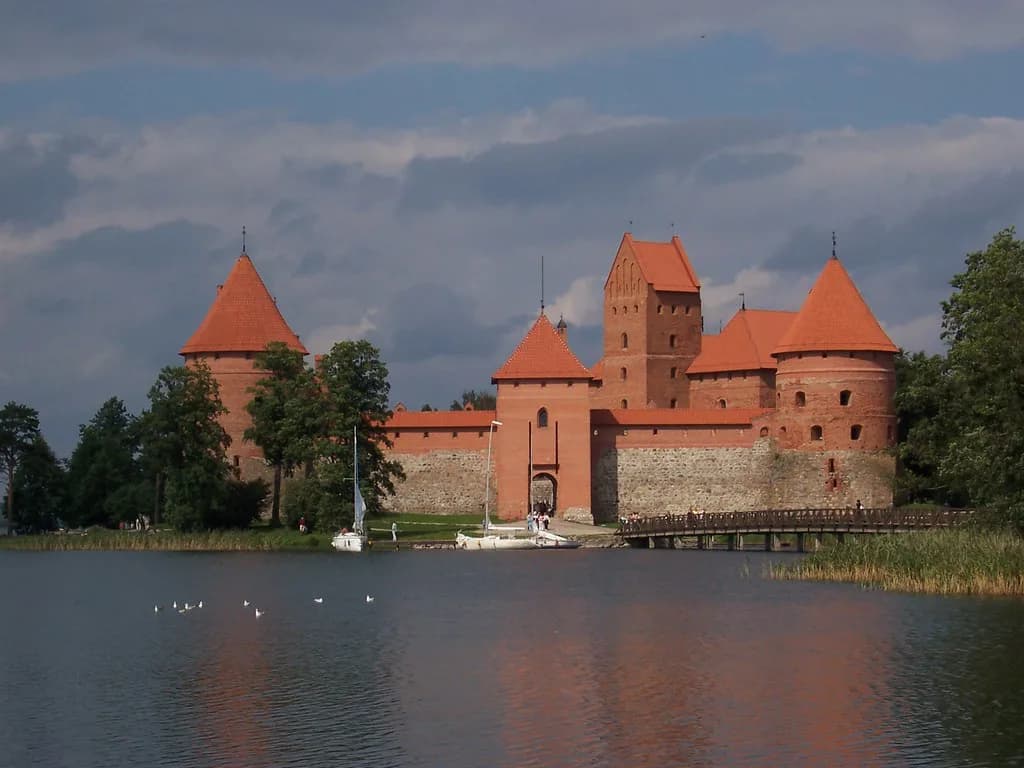
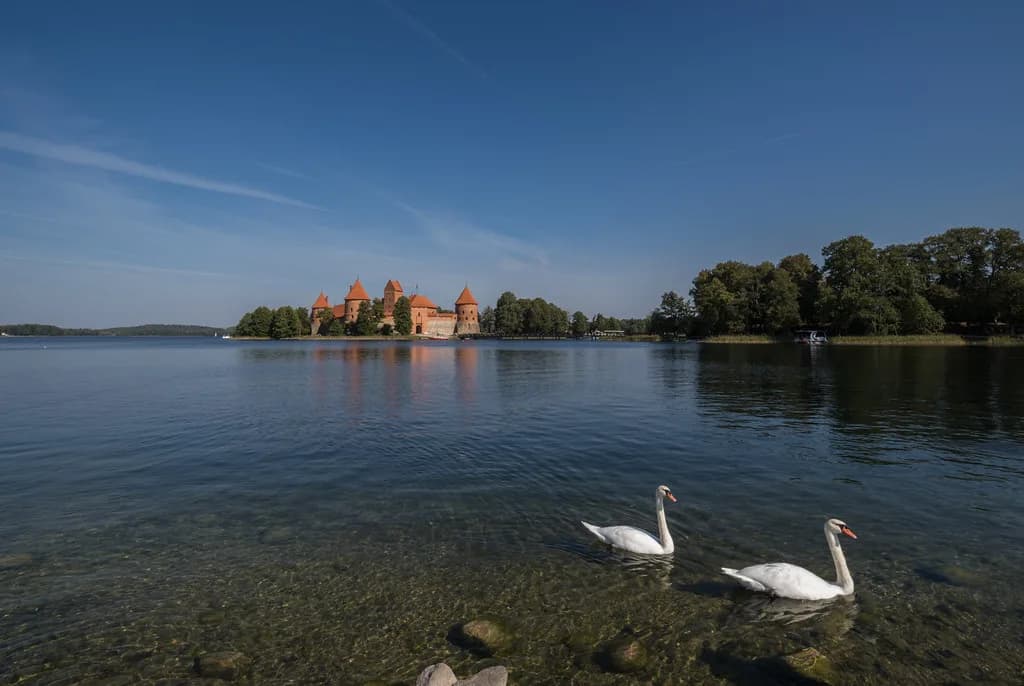
Trakai Island Castle is the classic justification: a red-brick castle on an island in Lake Galvė, roughly half an hour from Vilnius by road and awkward by anything else. A half-day rental from the capital covers it comfortably.
The Curonian Spit is the second. From Klaipėda you cross to the spit and drive south through pine forest and dune viewpoints toward Nida, a stretch that rewards slow progress and unplanned stops. Travelers going in late spring often find the shoulder season the better fit, as our guide to Lithuania in May explains.
Aukštaitija National Park and the surrounding lake districts are the third, and the Hill of Crosses near Šiauliai is a fourth for anyone routing north. Both sit on rural roads where a compact car is more than adequate and an SUV buys nothing but fuel consumption.
Where a car becomes a liability
Vilnius Old Town is the clearest case. The streets are narrow, parking is zone-based and paid by app, and a car sitting at the hotel all day is money spent on nothing. Arrive by train, stay central and walk.
Kaunas has the same problem at smaller scale: a compact center, paid parking and one-way streets that turn a five-minute walk into a ten-minute loop. Klaipėda is more forgiving, but in July and August the coast around Palanga fills up and parking near the beach becomes a hunt.
Peak-summer demand hits the rental fleet as well as the roads. Rates climb sharply in June through August, so a coastal itinerary in high season costs more both to rent and to park than the same route in June or September.

Typical costs and seasonal price swings
Daily rates typically run from about 15 to 40 EUR in low season, according to EconomyCarRentals, while peak summer demand can push them to roughly 40 to 90 EUR. Treat those as ballpark figures from one broker, not a quote, and compare total prices including insurance.
Booking early improves both rate and vehicle availability, especially for automatics and for airport pickups in July. Fuel, parking and any one-way fee sit on top of the daily rate, and Alamo notes that one-way costs are shown in advance at booking rather than at the counter.
If your dates are flexible, price the same route in two different months before committing. Seasonality here moves the total more than the choice of rental company does.
Automatic versus manual, compact versus SUV
Choose the car by where you will park it, not by preference. A compact is easier in historic centers and on narrow rural roads, and it costs less in fuel; an SUV only makes sense if you are carrying a family and a lot of luggage through the parks.
Automatics are available but thinner on the ground and pricier, so book one well ahead if you do not drive manual. Alamo lists extras such as GPS, child seats and winter tyres as bookable add-ons, so decide before you arrive rather than at the desk.
Picking up: airports and city branches
Pickup points are concentrated at Vilnius Airport, Kaunas Airport and Palanga Airport, with city branches in Vilnius, Kaunas, Klaipėda, Palanga, Druskininkai and Šiauliai. Avis lists exactly these Lithuanian locations, which makes the airport-versus-city choice a matter of convenience and surcharge rather than availability.
Collecting at Vilnius Airport and dropping in Palanga turns a scattered itinerary into one clean south-to-north line. For city-center rentals, check whether the branch is open at the hour you need; airport desks generally keep longer hours than downtown offices.
A physical credit card in the main driver's name is required at pickup, and the deposit is taken against it. Debit cards and someone else's card are a common reason rentals stall at the counter.
One-way rentals and crossing into Latvia, Estonia or Poland
One-way rentals inside Lithuania are straightforward: pick up in Vilnius and return in Palanga, or the reverse. Costs for the drop-off location appear in the booking, so you can compare the fee against the price of doubling back.
Cross-border trips into Latvia, Estonia or Poland are a different matter. Alamo warns that conditions and restrictions may apply when a rental car leaves Lithuania, and travelers should raise the route with Alamo before booking rather than assuming a standard car is cleared for it.
If a multi-country loop is the plan, book the cross-border permission at the same time as the car. Turning up at the counter with a route through Latvia and no prior arrangement is the failure mode to avoid. The same logic applies if you are still deciding whether the Baltic states beyond Lithuania earn a place on the route — our Estonia verdict and guide to whether Latvia is worth visiting cover the neighbouring legs.
Rules of the road that catch US drivers out
Driving is on the right, which US drivers handle easily, but headlights must be on year-round, day and night. That single rule catches more visitors than any other, and modern rentals often handle it automatically.
Lithuania's main roads are well maintained and signs are clear, but rural routes are narrower and shared with agricultural vehicles, so plan rural legs for daylight. Fuel stations are frequent along the main routes and thinner on minor ones, which matters on long park days.
Standard passenger cars face no tolls on Lithuanian roads, per the same source, so there is no vignette to buy for a normal rental. Do not extend that to vans or heavier vehicles without confirming the category with the rental company.
Winter tyres and November-to-April driving
Winter tyres are mandatory from November to April, so a rental in those months should come fitted rather than as an afterthought. Confirm the tyres at booking, because the requirement sits with the car, not with the weather on your particular day.
Outside those months, rural roads are easy and the driving is unremarkable. Inside them, short daylight and gritted-surface conditions make long rural legs a poor plan; keep winter rentals to short hops between towns and let trains handle the rest.
How many days you need a car
Three to four rental days cover the classic car-worthy loop: Trakai from Vilnius, then the Curonian Spit from Klaipėda, with a park or two folded in. Beyond five days, the marginal value drops fast unless you are actively touring the lake districts.
Match the car days to the shape of the trip rather than to the length of the holiday. The best time to visit Lithuania for a driving trip is late spring or early autumn, when daylight is long, roads are quiet and rates sit below the summer peak.
Verdict by traveler type
City-break travelers: skip the car. Vilnius and Kaunas are walkable and rail-linked, and parking turns a simple day into admin. Coast-and-dunes travelers: rent for three or four days and route Klaipėda to Nida and back.
National-park travelers: rent, choose a compact, and plan rural legs for daylight. Multi-country travelers: rent only after the cross-border permission is confirmed in writing, or use trains between capitals and rent locally for the rural stretches.
Plan Your Visit
The decision comes down to route shape. If your Lithuania includes dunes, castles and lakes, a car for a few days is the difference between a smooth trip and a logistical slog; if it is Vilnius and Kaunas, leave the car out and spend the money on a better room or a longer stay.
Book the rental for the rural leg only, reserve an automatic early if you need one, and confirm winter tyres if you travel between November and April. Sort out entry and document rules on the official government page before you book anything.
Explore more Lithuania trip-decision guides
Frequently Asked Questions
Is renting a car in Lithuania worth it?
It is worth it if your trip goes beyond Vilnius, Kaunas and Klaipėda, particularly for the Curonian Spit, Trakai Island Castle, Aukštaitija National Park and the rural lake districts. For a city-only itinerary, parking zones and walkable centers make a rental more hassle than it saves.
Do you need a car to visit the Curonian Spit?
A car gives you the most freedom to move between dune viewpoints and settlements along the spit at your own pace. There are alternatives, but they come with fixed timings, so decide based on how much you value unplanned stops.
How much does car rental cost in Lithuania?
Daily rates typically sit in a modest range in low season and rise sharply in the June-to-August peak, according to broker figures. Compare totals including insurance, and price your exact dates rather than relying on averages.
Are winter tyres mandatory in Lithuania?
Yes, winter tyres are required from November to April. Confirm the rental car comes fitted with them at the time of booking, since the requirement applies to the vehicle regardless of conditions on your travel day.
Can I rent a car in Vilnius and drop it off in Palanga?
Yes, one-way rentals within Lithuania are available, with drop-off costs shown when you book. It is a practical way to run a south-to-north route without driving back.
Is driving in Lithuania easy for American drivers?
Driving is on the right and the main road network is well maintained, so most US drivers adapt quickly. The main adjustments are headlights on year-round, narrower rural roads and paid, zone-based parking in city centers.
Can I take a Lithuanian rental car into Latvia, Estonia or Poland?
Cross-border use may be allowed with conditions or restrictions, and it is not automatic. Raise the route with the rental operator before booking and get the permission confirmed rather than assuming it at the counter.
Do I need to pay tolls on Lithuanian roads?
Standard passenger cars do not pay tolls on Lithuanian roads, so there is no vignette to buy for a normal rental. Heavier vehicles and vans are a separate category, so check the rental agreement if you are booking one.
Sources
Trip-decision notes
Optional updates when we publish or revise a destination verdict.
You might also like

Continue reading
More guides you'll find useful