Lithuania in July: Weather, Crowds and Where to Go
Lithuania in July brings the warmest, busiest weeks of the year. See typical temperatures and rainfall, what July adds, and who should pick another month.
On this page
July gives Lithuania its warmest, liveliest weeks: long daylight, outdoor tables in Vilnius, and the only stretch when the Baltic coast feels like a proper beach holiday. It is also the month when the headline sights fill up and the Curonian Spit ferry queue becomes the day's main event.
This guide separates inland heat from coastal cool, names the one public holiday that shapes the month, and tells you who should shift to May or September. For the bigger question of whether the country earns a trip at all, start with is Lithuania worth visiting.
The verdict
July suits beach-goers, lake swimmers, festival crowds and anyone who wants the Curonian Spit at full summer. Skip it if your idea of a Baltic trip is empty cobbles, cheap rooms and museum halls to yourself — that is May or September.
City-breakers get a fair deal: Vilnius in July is warm rather than hot, with the Old Town, Užupis and the castle hill all comfortably walkable. Travelers combining Lithuania with Latvia or Estonia should book intercity legs early, because July is peak season across the Baltics, and it is worth weighing is Estonia worth visiting before locking in a longer Baltic circuit.
Travelers who want the country's verdict before committing to a month should read the wider case for going at all. If July is your only window, plan around the coast and book the Spit crossing in advance rather than treating it as a spontaneous detour.
July weather in Vilnius and on the coast
Typical July conditions in Vilnius run from an average low of about 12°C (54°F) to an average high of about 22°C (72°F), with roughly 77 mm of rain across the month, according to a published climate chart. Daily highs build slightly through the month, from around 71°F to 73°F, and rarely exceed the mid-80s°F.
Treat these as averages, not forecasts: July rain usually arrives as short, heavy showers rather than all-day drizzle, and a light jacket earns its place on evening walks. Vilnius sits inland and warms faster than the coast.
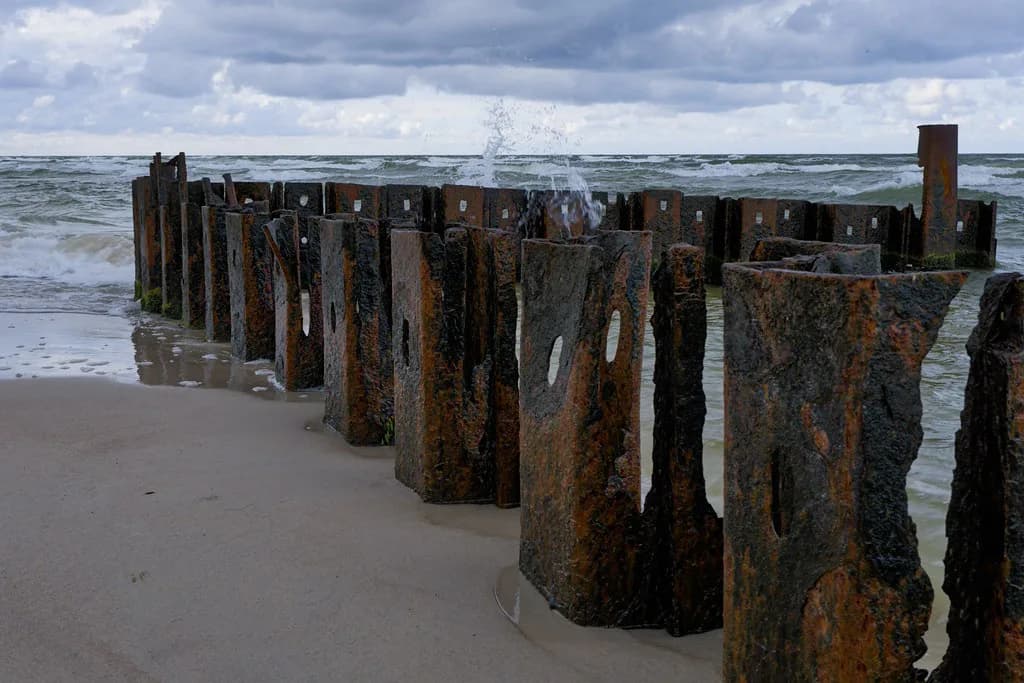
The Baltic coast and the Curonian Spit run cooler because of the sea breeze, which can drop temperatures sharply even on a sunny afternoon — pack layers in case the beach weather does not hold all day. Beach time in Lithuania is generally best from June to August.
What July adds to a Lithuania trip
July means long northern evenings, outdoor concerts and terraces that stay busy past dark. It is the month when lakes around Trakai, Ignalina and Aukštaitija National Park are genuinely warm enough for swimming, and when the Curonian Spit's cycle paths are at their best.
The date that shapes the month is King Mindaugas' Coronation Day on 6 July, a Lithuanian public holiday. Expect state ceremonies and a festive mood in Vilnius around it, and plan museum visits for other days if you want quiet.
Outdoor season is fully open: cafés spill onto the streets, ferries run to the Spit, and the country's summer calendar fills up. The trade-off is that everyone else knows this too, so weekends at the coast and around Trakai are when you feel the crowds most.
Vilnius in July
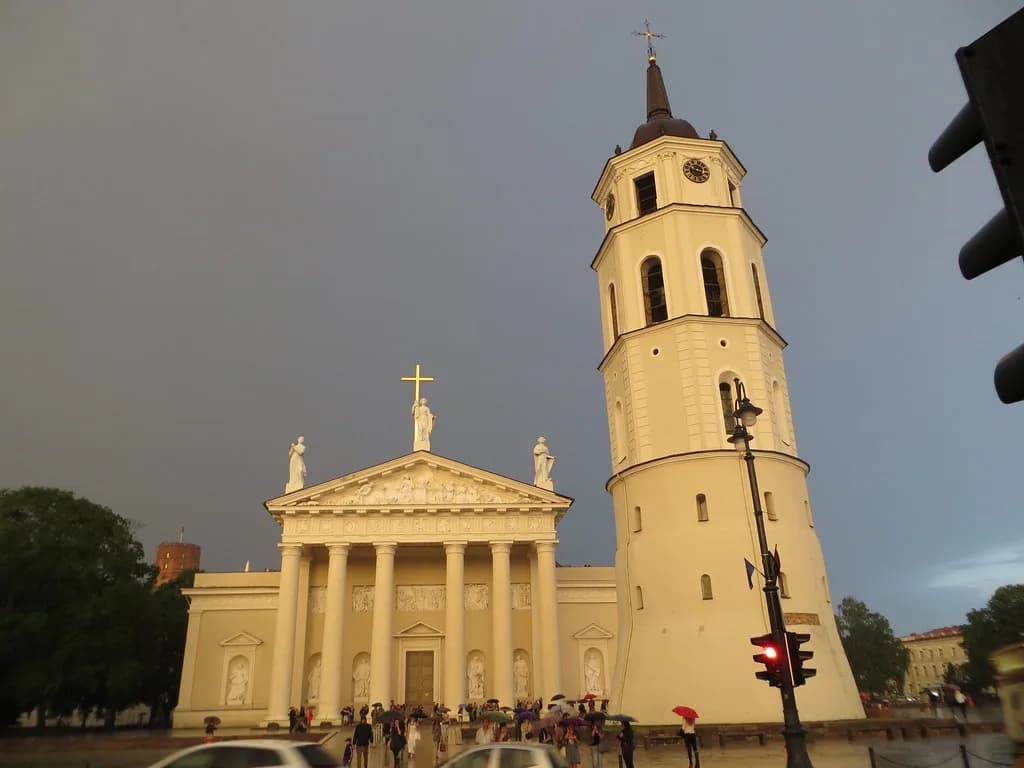
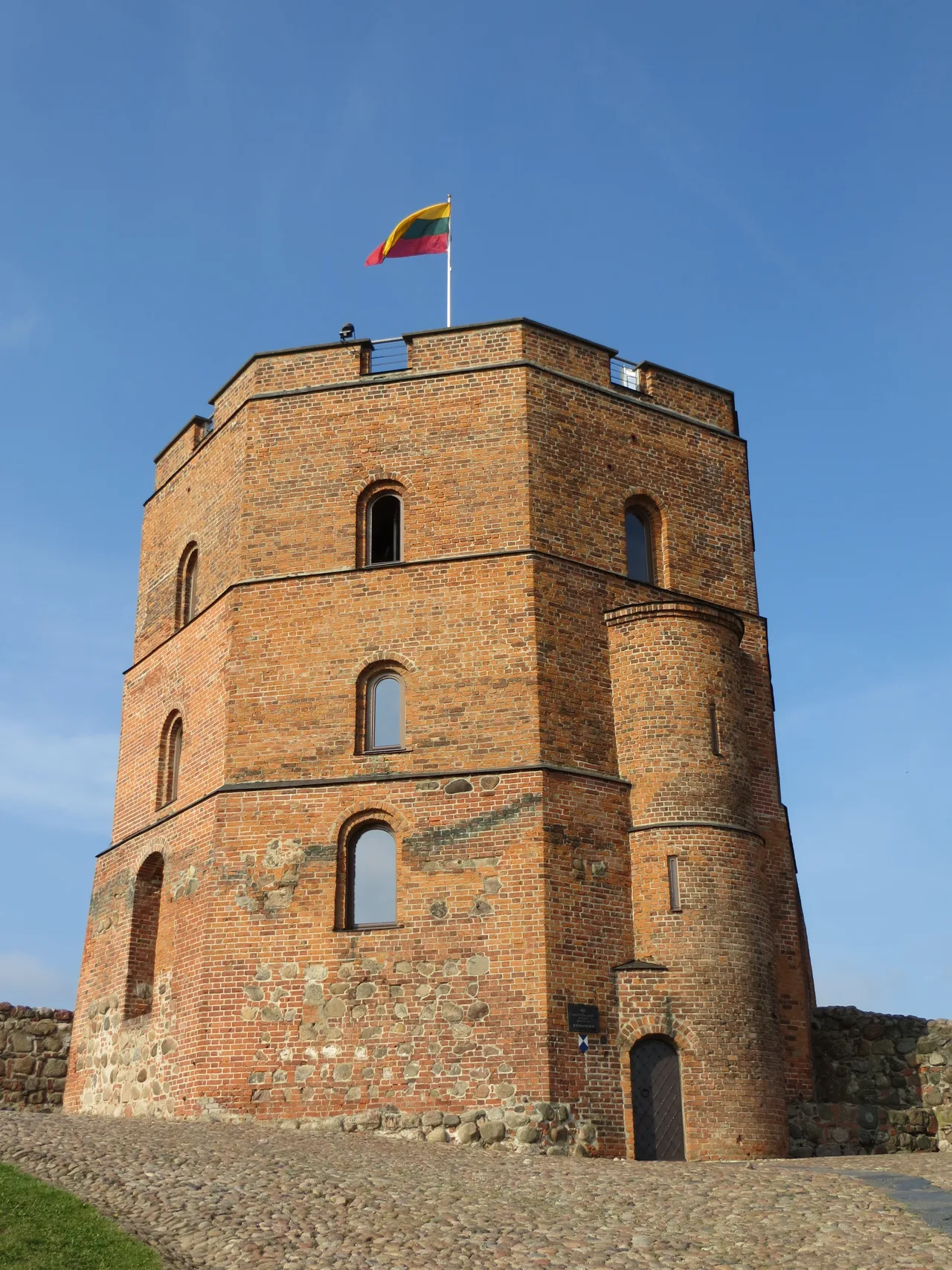
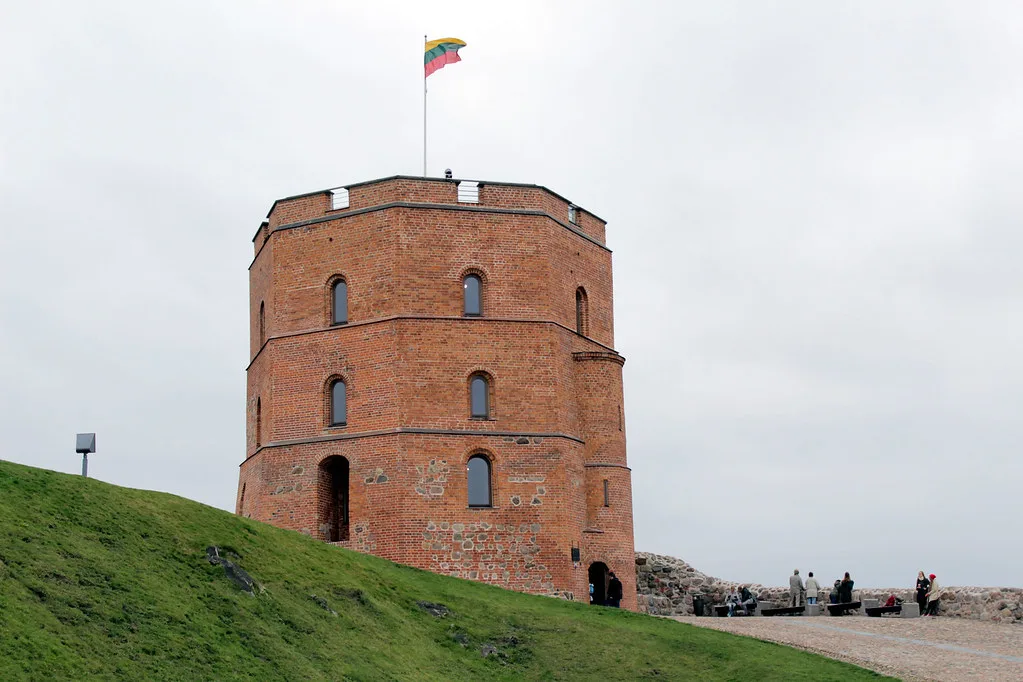
The Old Town rewards a slow couple of days: baroque and gothic churches, the neoclassical Town Hall and the 16th-century university courtyards off Pilies and Šv. Jono streets. Gediminas Castle Tower gives the classic city view, and the walk up is short enough to do twice — once in the morning, once at sunset.
Cross the river into Užupis, the self-proclaimed artists' republic with its wall-mounted constitution, murals and the bronze angel. It is a good afternoon for browsing and coffee rather than hard sightseeing, and it pairs naturally with the Bernardine Cemetery.
For context on the 20th century, the Museum of Occupations and Freedom Fighters, housed in a former KGB headquarters and prison, is the most substantial indoor stop in the city. Budget a couple of hours and go early in the day; it is not light viewing.
Trakai Island Castle as a day trip
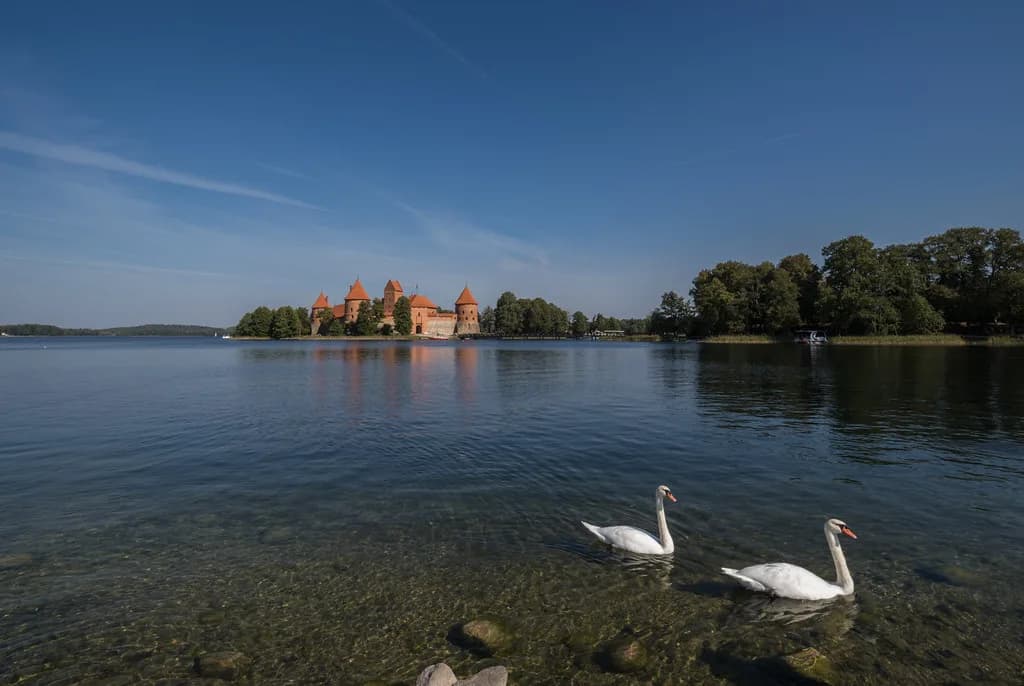
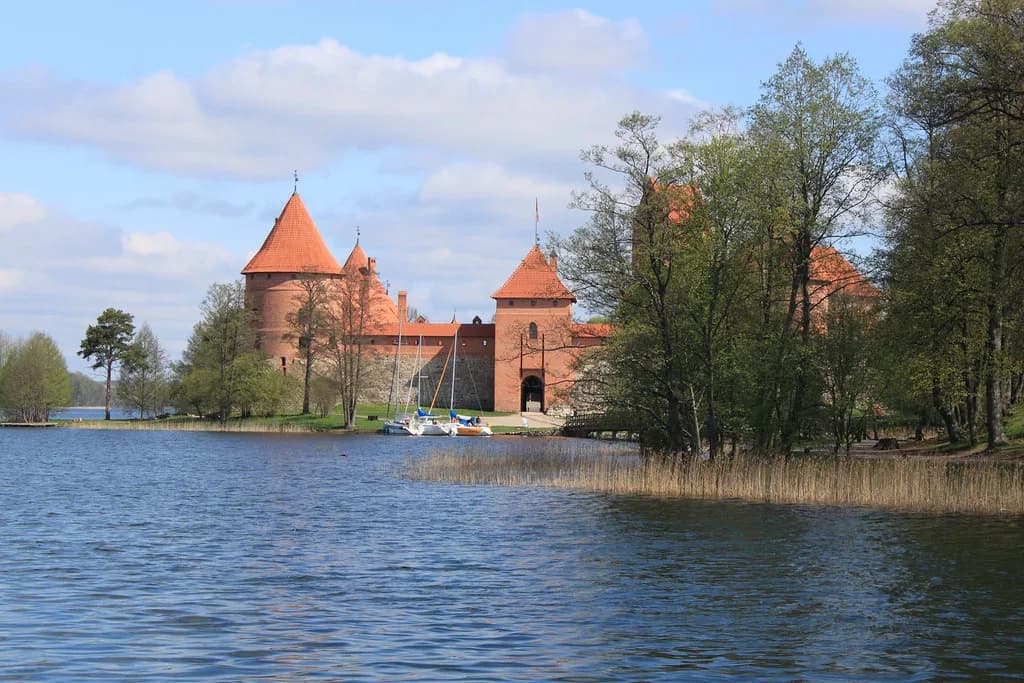
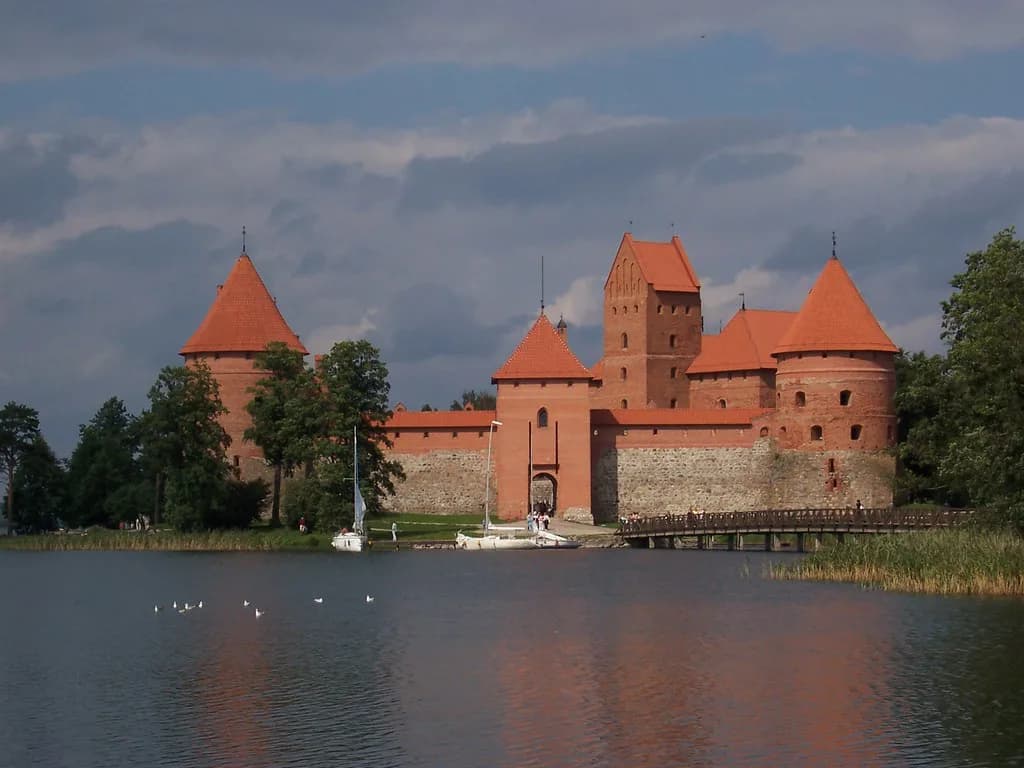
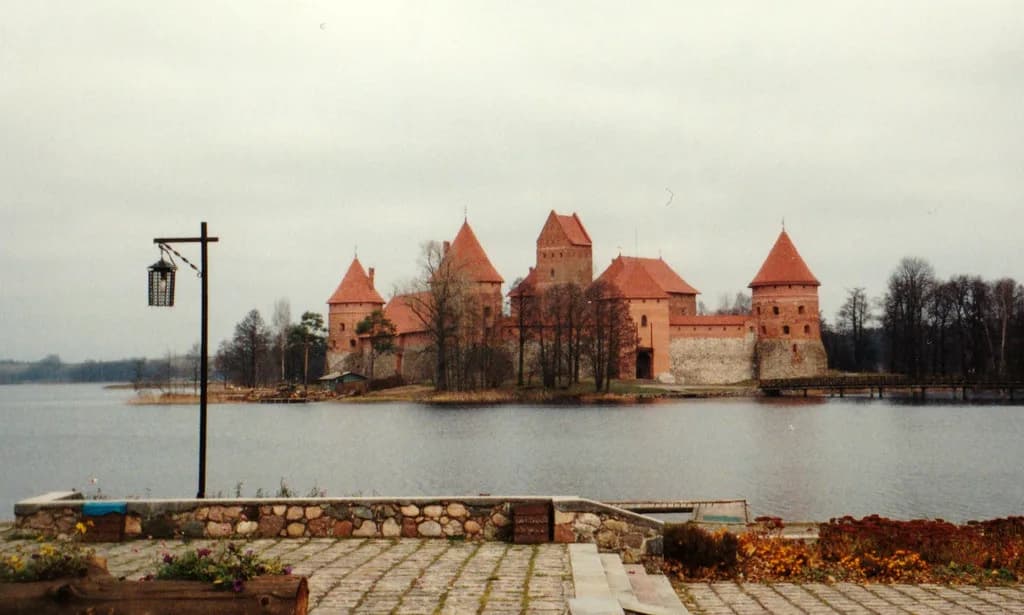
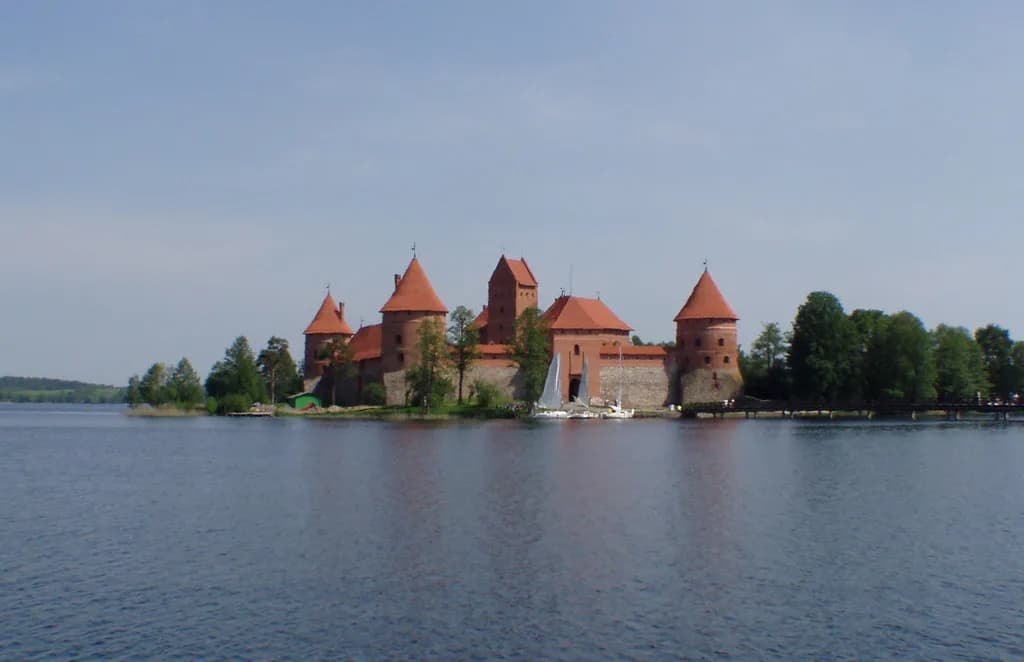
Trakai Island Castle, a red-brick fortress on an island in Lake Galvė, is the most rewarding half-day out of Vilnius. You approach over a wooden footbridge, tour the Grand Duke's chambers and armory, and finish with kibinai — the local lamb or beef pastry — in one of the lakeside places.
Trains from Vilnius reach Trakai in roughly half an hour, and a return ticket reported by travelers costs about €6, though fares change and are worth checking when you book. The station sits roughly 3 km from the castle, so either walk the lakeside path or take a short taxi.
In high summer, arrive at opening time to beat the tour groups, and expect parts of the castle to be closed for renovation at any time of year. Without a car, the train plus a local taxi is the simplest option; with one, you can add the Karaite village and lakes.
Kaunas and the coast
Kaunas, Lithuania's second city, makes a strong one- or two-night stop on the way west. Its 16th-century Town Hall on the old square anchors a compact old town, and the interwar modernist architecture is the reason the city holds UNESCO status — July is a good month to walk it.
From Kaunas, continue to Klaipėda and the Curonian Spit. The Spit is a 98-km sand peninsula of pine forest, resort villages and dunes, shared with Russia's Kaliningrad region and protected as a UNESCO World Heritage Site.
The Curonian Spit in July
Nida is the Spit's most polished village: the Parnidis Dune with its sundial, the Thomas Mann house, and long beaches on the Baltic side. Juodkrantė, with Witches' Hill and its carved wooden figures, is quieter and easier to reach from the ferry at Smiltynė.
The bottleneck is the ferry between Klaipėda and Smiltynė. Travelers report multi-hour waits for cars in high summer, and some find the national park entrance fees expensive relative to what they get — arriving on foot or by bike avoids the car queue entirely.
The Spit's cycle paths are excellent, and a common pattern is ferry to Smiltynė, bus or bike to Nida, then ride north through Preila and Pervalka. Trakai Castle gets crowded in July too, but the Spit ferry is the bigger logistical risk of a summer trip.
Drawbacks
Peak-season prices hit accommodation in Vilnius, Klaipėda and Nida hardest, so July bookings should be made well ahead. Mosquitoes are a real nuisance around lakes and the Spit in warm, damp weather, and slightly more so than many visitors expect.
Weather is changeable: a July week can mix 25°C afternoons with cool, windy days on the coast. Build slack into your itinerary so a washed-out beach day can swap for a museum or an old-town afternoon instead of becoming a wasted day.
Castles, museums and the Spit are busiest at weekends, when domestic visitors join foreign tourists. Shifting Trakai to a weekday and reserving the Spit for a midweek crossing makes a noticeable difference.
How many days you need
Give Vilnius two full days, plus one for Trakai. Add two nights on the Curonian Spit — one for Nida and the dunes, one for the northern villages — and a night each in Kaunas and Klaipėda, and a July trip settles at seven to nine days without rushing.
A shorter trip works too: three days in Vilnius with a Trakai day trip is a satisfying city break, while a coastal-only week based around Klaipėda and the Spit is the better beach plan. Trying to do both in under five days means spending July in transit.
Getting there and around in high season
Vilnius and Kaunas are the main air gateways, with Klaipėda served by Palanga airport for the coast. Trains link Vilnius, Kaunas and Klaipėda, and buses fill the gaps to smaller towns; book long-distance legs early in July, when the Baltic routes sell out.
A car makes the Spit, Hill of Crosses and lake country much easier, but it also puts you in the ferry queue. For a Vilnius–Trakai–Kaunas–Klaipėda route, rail and bus cover everything, with local taxis for the last few kilometers.
Who will love July and who should choose another month
Beach-goers, swimmers, festival crowds and families with school holidays will get the most from July. So will anyone who wants the Curonian Spit and the Baltic coast at their warmest, with long evenings and everything open.
Crowd-averse travelers, photographers who want empty streets and budget travelers should aim for May or September, when old-town cobbles and dunes are quieter and rooms cost less. Birdwatchers often prefer March–April or September–October for migration.
If your dates are fixed by school terms, July is still a good choice — just plan the Spit crossing and Trakai visit around the busiest days. Compare Lithuania in June for a quieter, cooler version of the same trip.
Plan Your July Trip
July gives Lithuania its best beach and lake weather, its longest evenings and its liveliest calendar, at the cost of higher prices and busy headline sights. The fix is simple: book the Spit crossing and accommodation early, put Trakai on a weekday, and leave room for a rainy day indoors.
If you want the same country with fewer people, May or September delivers it. For entry rules and travel documents, use your own government's official travel advice page before booking. Whichever month you choose, decide the shape of the trip first: cities and castles, or coast and dunes.
Explore more Lithuania trip-decision guides
- Is Lithuania Expensive? What a Trip Really Costs
- Lithuania in April
- Lithuania in May
- Lithuania in October
- Lithuania in September
- Lithuania Plug Type
- Renting a Car in Lithuania
- Do They Speak English in Lithuania? What to Expect as a Traveler
- Getting Around Lithuania
- Kaunas vs Vilnius
- Lithuania Itinerary
- Lithuania Travel Tips
- Money in Lithuania
- The Best Cities in Lithuania, Ranked by What You Actually Want
- Tipping in Lithuania
Frequently Asked Questions
Is July a good time to visit Lithuania?
Yes, if you want warm weather, long evenings and the coast at its best. Vilnius averages around 12°C (54°F) at night and 22°C (72°F) by day in July, with roughly 77 mm of rain across the month. The trade-offs are peak-season prices and busy headline sights, so book the Curonian Spit crossing and Trakai visit ahead.
How warm is the Baltic Sea in Lithuania in July?
The sea breeze keeps the coast cooler than inland Vilnius, and temperatures can drop sharply on a sunny afternoon, so bring layers even in midsummer. Beach time in Lithuania is generally best from June to August. Check the Lithuanian hydrometeorological service for current sea temperatures before you commit to a beach day.
What is open in Lithuania in July?
Outdoor season is fully open in July: cafés spill onto the streets, ferries run to the Curonian Spit, and lakes around Trakai and Aukštaitija National Park are warm enough for swimming. King Mindaugas' Coronation Day on 6 July is a public holiday, so plan museum visits for other days if you want quiet.
Is Vilnius or the coast better in July?
Vilnius suits city-breakers who want the Old Town, Užupis and Gediminas Castle Tower without summer heat, while the Curonian Spit and Klaipėda suit beach-goers. The Spit brings the ferry bottleneck and cooler sea breezes. If you have a week, do both: Vilnius and Trakai first, then the coast.
How many days do you need in Lithuania in July?
Seven to nine days lets you cover Vilnius, Trakai, Kaunas, Klaipėda and the Curonian Spit without rushing. Three days in Vilnius with a Trakai day trip works as a city break, while a coastal-only week based around Klaipėda and the Spit is the better beach plan.
Sources
Trip-decision notes
Optional updates when we publish or revise a destination verdict.
You might also like
Continue reading
More guides you'll find useful