Do They Speak English in Lithuania? What Travelers Will Find
About three in ten Lithuanians speak English as a foreign language, with the strongest concentration among younger people and in Vilnius.
On this page
Yes, you can travel through Lithuania in English, but you should not assume every counter, bus stop and museum desk will run in it. The realistic picture is a young, urban, well-connected population where English is normal in Vilnius and common in Kaunas and Klaipėda, thinning out in smaller towns and among older generations. That split matters more than any single national percentage.
Plan for English in the cities, a translation app on your phone for everything else, and a handful of Lithuanian phrases to open conversations. That combination covers almost every situation a short trip throws at you.
The verdict
English is enough for a city-based trip to Lithuania. Vilnius in particular runs on it in hotels, cafés, museums and among younger locals, and the same largely holds in Kaunas and Klaipėda. If your itinerary is the three main cities plus Trakai Island Castle, you will rarely be stuck.
Outside that circuit, English gets patchier. Regional buses, rural cafés, small-town post offices and older shop assistants are where a phrasebook or offline translation app earns its place. Nothing about that makes Lithuania hard to travel; it simply means you should not treat English as a guarantee.
Weigh the language question against everything else the country offers before you commit, then decide where it sits among your options; is Lithuania worth visiting sets out the coast, the cities and the honest drawbacks in one place.
How widely English is spoken, in numbers
The 2021 census recorded that 31.1% of Lithuanians speak English as a foreign language, a figure that reflects the whole population rather than tourists' everyday encounters, and it is rising as older generations give way to younger ones. Around three in ten is a fair working estimate for the country as a whole.
A separate official survey cited by the Lithuanian Ministry of Foreign Affairs puts the share speaking English at about 30.4%, alongside 63% for Russian, 8.5% for Polish and 8.3% for German. The two sources are close enough to confirm the broad picture: English is a real second language here, but Russian still has more speakers nationally.
Those national averages hide the age gap that visitors notice immediately. English is concentrated among students, professionals and anyone who has worked or studied abroad; the generations that grew up under Soviet schooling were taught Russian instead, so their English is often minimal.
Where English works best: Vilnius, Kaunas and Klaipėda
Vilnius is the clear winner. English is widespread in the Old Town's cafés, the museum circuit and among the capital's large student and tech workforce, and most visitor-facing businesses operate in it as a matter of course. If you only have a couple of days, the best places to visit in Lithuania cluster around this axis, and you will not need Lithuanian to see them.
Kaunas and Klaipėda are close behind. Both are university and port cities with young populations and plenty of exposure to foreigners, so restaurants, hostels and ticket desks handle English comfortably. The difference from Vilnius shows up less in the center and more in the suburbs and industrial edges, where you may be the first English speaker of the day.
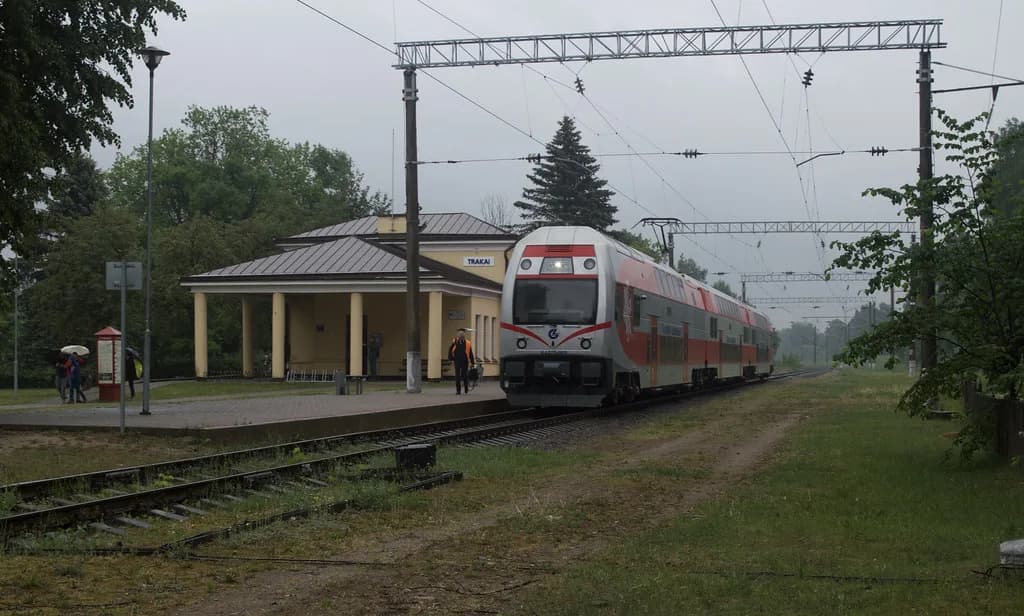
Beyond the big three, the drop is noticeable. Towns like Trakai are used to day-trippers, but smaller places along the Curonian Spit and in the national parks run on Lithuanian and, in tourist season, some German and Polish. If your itinerary leans rural, renting a car in Lithuania gives you the flexibility to reach these places without depending on staffed ticket windows. A car also lets you skip roundabout conversations entirely when you would rather just drive.
Who speaks English: age and the Russian-language generation
Age is the single most reliable predictor of English in Lithuania. Under about 40, English is standard in cities, and many younger Lithuanians speak it well enough for a relaxed conversation. Above that line, the odds fall sharply, and Russian becomes the more likely second language.
That history is worth understanding rather than treating as trivia. Lithuania spent decades under Soviet occupation, and Russian carries complicated associations for many people, especially older Lithuanians who remember the period directly. The practical rule for visitors is simple: start in English and add Lithuanian pleasantries, and let the other person suggest Russian if it helps. Do not open with Russian as a default assumption.
English versus Russian: which to try first
Try English first, every time. It is the neutral option, it signals that you are a visitor rather than someone making assumptions, and among younger people it has a much better hit rate. If the conversation stalls, smile, point, and try a translation app on your phone before reaching for Russian.
Getting around without Lithuanian: transport, restaurants and shops
City transport is the easy part. Ticket machines and apps in Vilnius and Kaunas work in English, signage at major stops and stations is bilingual, and the airport-style environment of a modern Baltic capital is designed for people who do not read Lithuanian. Trains and long-distance buses between the main cities are similarly straightforward to book online.
Restaurants and shops are a mixed bag. In central Vilnius you can order, ask questions and pay in English without friction; in a small-town café, the menu may exist only in Lithuanian, and the person behind the counter may prefer to hand you a plate rather than explain it. Pointing at what the next table has is a perfectly respectable strategy.
Museums are usually well covered, with English labels and audio guides in the major institutions, though smaller regional museums may print only Lithuanian panels. If a specific exhibition matters to your trip, look it up on the museum's own site before you go rather than discovering the gap at the ticket desk.
Useful Lithuanian phrases and how Lithuanians react to attempts
A few words go a long way. Labas means hello and laba diena is the polite daytime version; ačiū is thank you; prašau covers please and here you are; and atsiprašau is excuse me. Ar kalbate angliškai? asks whether the person speaks English, and the answer may well be taip.
Lithuanians tend to respond warmly to attempts at their language, even clumsy ones, because the language is central to a national identity that was suppressed for decades. You are not expected to learn it for a week's visit. Opening with a greeting in Lithuanian and then switching to English is a gesture most people appreciate rather than a test you can fail.
When you will need a translation app
Load an offline Lithuanian pack before you fly, because the situations where you need it are exactly the ones with poor connectivity. Rural bus timetables, pharmacy labels, small-town menus, ticket machines in regional stations and any conversation with someone over 60 are the realistic use cases.
Downloading the pack costs nothing and takes a minute, and it covers the gap between an English-friendly capital and a country where a third of the population speaks English at all. Treat it as standard kit alongside your charger and you will never be stuck. Separate practical details, such as the plug type, are worth sorting before departure so you are not hunting for an adapter on arrival.
Questions travelers ask about English in Lithuania
The questions below come up repeatedly from people weighing a trip, and the answers depend on where you are going and who you are talking to rather than a single national figure. Where the season affects how many English-speaking staff are around and how busy the cities feel, our guide to the best time to visit Lithuania explains the trade-offs by month.
Plan Your Trip Around English Where It Works
Lithuania is comfortably manageable in English for a city-focused trip, and mildly frustrating in English the moment you leave the main urban corridor. Build your itinerary around Vilnius, Kaunas and Klaipėda, add a translation app for rural days, and learn five words of Lithuanian as a courtesy. That is the honest formula, and it works.
If you are still deciding whether the country earns a place on your itinerary, our honest verdict for travelers covers what Lithuania does well and where it falls short, from the Baltic coast to the museum-heavy capital. Settle that question first; the language issue then becomes a small logistical detail rather than a reason to skip the trip. The same decision is worth running for the neighbours, and is Estonia worth visiting applies the identical test just up the coast.
Explore more Lithuania trip-decision guides
- Lithuania in April
- Lithuania in August
- Lithuania in July
- Lithuania in June
- Lithuania in May
- Lithuania in October
- Lithuania in September
- Getting Around Lithuania
- Kaunas vs Vilnius
- Lithuania Itinerary
- Lithuania Travel Tips
- Money in Lithuania
- The Best Cities in Lithuania, Ranked by What You Actually Want
Frequently Asked Questions
Do they speak English in Lithuania?
Yes, widely enough to travel comfortably, though not universally. The 2021 census found that 31.1% of Lithuanians speak English as a foreign language, and that share is concentrated among younger people and in the main cities rather than spread evenly across the country.
Can I get around Vilnius with only English?
In practice, yes. English is particularly widespread in the capital among students, professionals and visitor-facing businesses, and transport signage and ticket machines at major points are set up for non-Lithuanian speakers. Smaller venues and older staff are the likeliest exceptions.
Do young people in Lithuania speak English?
Usually, in cities. English has become the default foreign language for Lithuanians who have grown up since independence, many of whom have studied or worked abroad. The generational contrast with people schooled under the Soviet system is sharp.
Should I speak English or Russian in Lithuania?
Start with English. Russian has more speakers nationally, roughly 63% according to official survey figures, but it carries difficult historical associations for many Lithuanians. If English fails, wait for the other person to suggest Russian.
Is English enough in restaurants and shops outside the big cities?
Often not. Small-town cafés, regional bus counters and rural shops may operate entirely in Lithuanian, and menus may have no translation. An offline translation app and some pointing cover most of these situations without much trouble.
What Lithuanian phrases are worth learning?
Labas for hello, ačiū for thank you, prašau for please, and atsiprašau for excuse me will carry you a long way. Ar kalbate angliškai? asks whether someone speaks English. Attempts are received warmly even when the conversation switches to English immediately.
Sources
Trip-decision notes
Optional updates when we publish or revise a destination verdict.
You might also like
Continue reading
More guides you'll find useful