Lithuania in September: Weather, Crowds and Whether to Go
September in Lithuania brings mild days, thinning crowds and the first autumn colour, but shorter daylight and a cold Baltic Sea change the plan.
On this page
Yes, September is one of the strongest months to visit Lithuania, provided you want city walking, castle day trips and forest country rather than beach weather. Daytime temperatures settle around 17°C (63°F) and summer crowds drain out of Vilnius and Trakai, so the same itinerary costs less and moves faster. The trade is a colder sea, shorter evenings and a real chance of frost inland by the final week.
The verdict
September splits into two quite different trips. The first half still carries enough warmth for full days on foot, while the last week turns golden in the forests and cold after dark. Decide which half you want before you book, because it changes what you pack and how you sequence outdoor days.
For city and nature travelers, this is the best value month on the calendar. Accommodation and flights drop noticeably from the July and August peaks, and you compete with fewer people for restaurants, museums and guesthouses. If you are still weighing the country as a whole, our case for whether Lithuania is worth visiting covers the wider trade-offs.
Who will love September in Lithuania
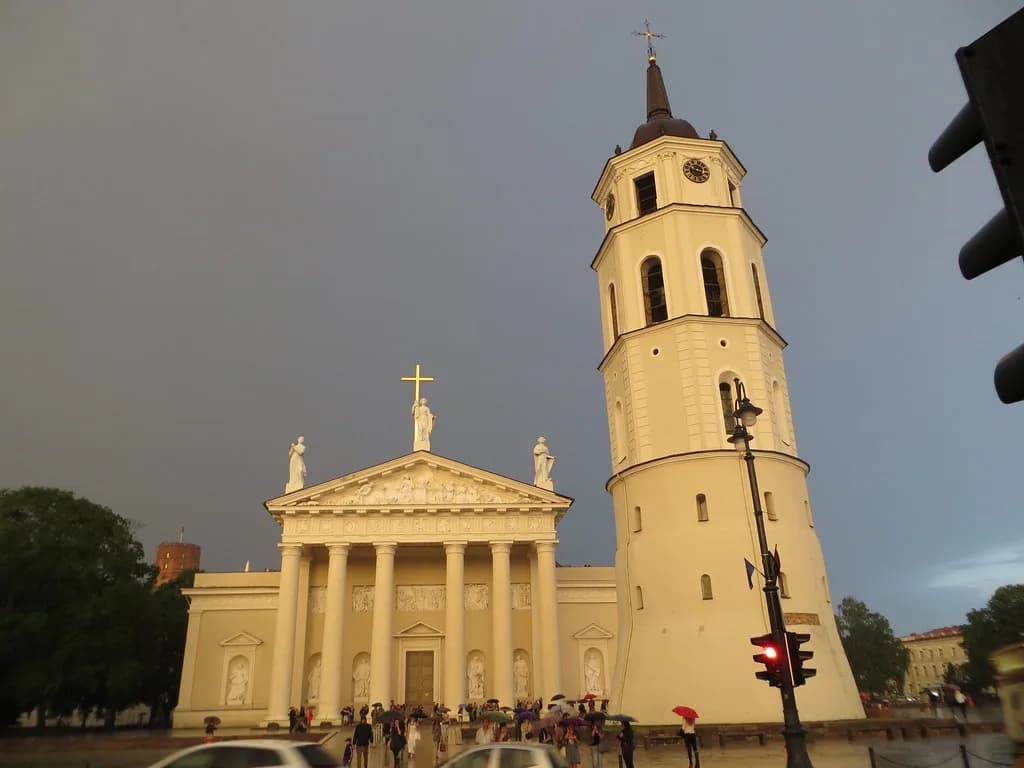
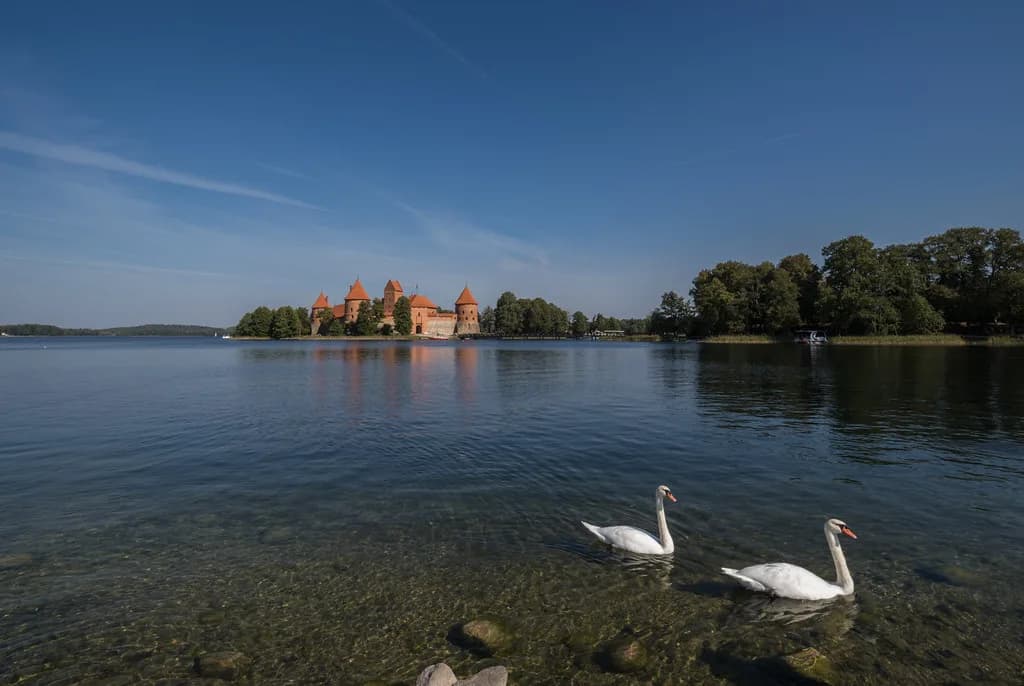
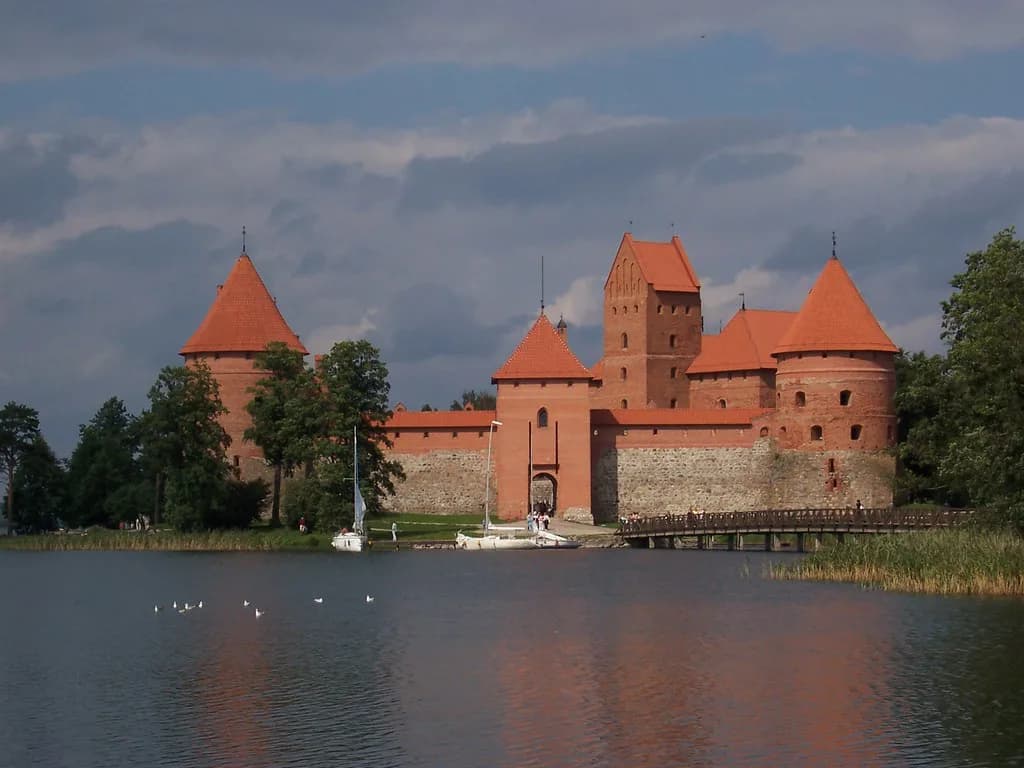
Walkers, photographers and anyone who dislikes queues get the best of the month. Vilnius Old Town, which in July can feel like single file between Pilies Street and the Cathedral, returns to a normal rhythm, and you can photograph St. Anne's Church without dodging selfie sticks. Midweek mornings at Trakai Island Castle are quiet enough to cross the footbridge alone.
Foragers and birders should aim squarely at September. Dzūkija National Park in southern Lithuania becomes the centre of the country's mushroom season, with guided walks from Druskininkai teaching identification and cooking. Out on the Curonian Lagoon, migration peaks at Cape Ventė, where a bird-ringing station has operated since 1929, and canoe trips run from the Klaipėda area through channels thick with reeds.
Who should pick a different month
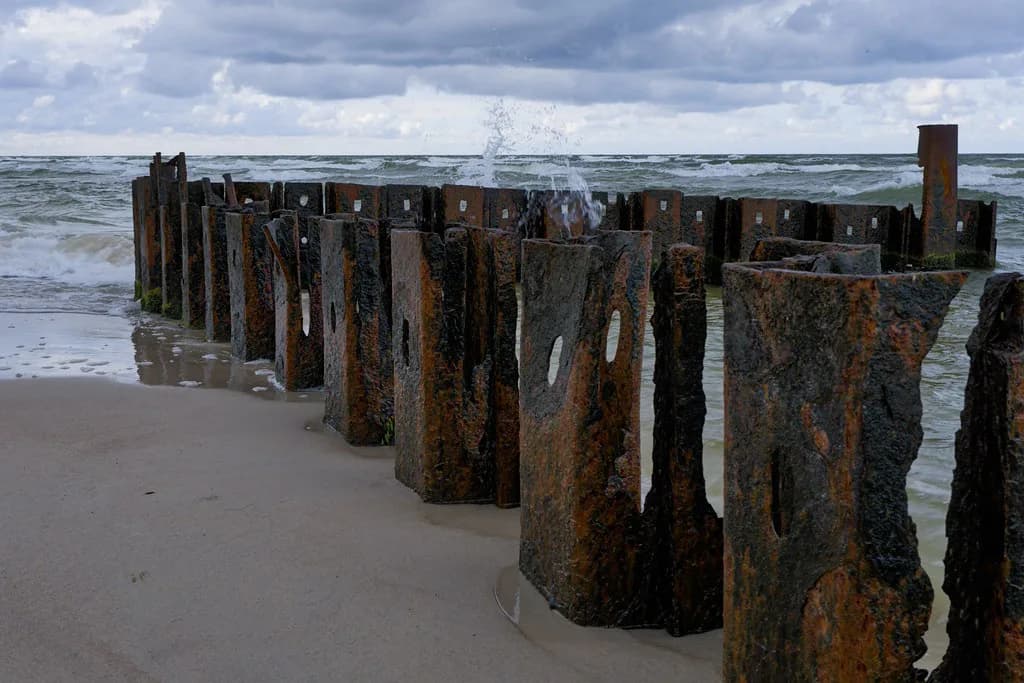
Beach travelers should look at July or August instead. By mid-September the Baltic off Palanga and Nida sits around 14–16°C (57–61°F), which is knee-deep water at best, and some seasonal beach cafés and rental outfits near Palanga begin closing in the second week. The coast still rewards dune walks and pine forest, but it is no longer a swimming holiday.
Anyone who needs long evenings outdoors should also think twice. Lithuania sits near 55 degrees north, so daylight contracts fast: early September gives roughly 14 hours of usable light, and by the 30th you are down to about 11.5. Sunsets arrive before seven in the final days, which shortens anything you planned for after dinner.
September weather: typical highs, lows and rainfall
Expect Vilnius to average around 17°C (63°F) by day and 8°C (47°F) at night across the month, with roughly 56 mm (2.2 in) of rain spread over short, unpredictable showers rather than all-day soakings. The monthly minimum and maximum figures from the same climate chart show a steady slide, not a cliff edge. Treat all of this as typical conditions and not a forecast.
The number that catches first-time visitors is the daily swing. A sunny midday at 17°C (63°F) can be followed by an evening at 8°C (47°F), and clear nights away from cities drop lower still. Layering matters more than a heavy coat, because you will be adding and shedding through the day.
Inland and in the east, the first ground frost can arrive in late September. If you are camping or staying in a rural guesthouse without central heating, the final week can be genuinely cold at night. Fog is also common at dawn near the lakes and river valleys around Trakai, which can delay early drives by an hour or two until it burns off.
Coastal versus inland: the Baltic Sea and the Curonian Spit in September
The Curonian Spit changes character entirely once the sunbathers leave. The dunes near Nida, some rising to 60 m (197 ft), keep their strange lunar light without the crowds, and the lagoon side is flat and calm for paddling among reed beds full of migrating birds. Daytime temperatures on the water hover around 15–17°C (59–63°F), warm enough to paddle hard without overheating.
Canoe operators mostly run from Klaipėda, and September departures thin out as group sizes shrink, so book seven to ten days ahead rather than turning up. Bring a windproof layer for the afternoon lagoon breeze and expect to step in mud at the put-in. The Thomas Mann house above the lagoon in Nida is a short walk up and worth it for the view in the slanting light.
Inland wins on flexibility. Vilnius, Kaunas and Trakai stay fully operational through the month, whereas the seaside loses beach services and swimming while keeping its walks. If you have one week and want both, front-load the coast in early September and finish with the lakes and forests as they turn.
Vilnius in September: the Old Town without the summer procession
This is the month to walk the largest surviving medieval old town in Eastern Europe properly. Start early at the Gate of Dawn, where the chapel above the gate still draws pilgrims, then work north through the university courtyards that date to the 1570s. The cobblestones on Pilies Street no longer radiate stored heat, and the lower sun sharpens the red-brick Gothic of St. Anne's Church.
The Museum of Occupations and Freedom Fights, in the former KGB headquarters on Gedimino prospektas, preserves its basement detention cells, and a quiet weekday visit carries more weight than a summer one pressed by tour groups. Climb Gediminas Tower in late afternoon for the view over the Neris River as the light turns golden. Allow at least four hours for a thorough Old Town walk, and wear shoes with grip because the cobbles are slick after rain.
Food is part of the reason to be here in September. Cepelinai, the potato dumplings the size of a small football, sit well after a cold morning, and Halės Turgus, running since 1906, is the place for smoked fish, local cheese and dense dark rye bread. Order one dumpling as a starter rather than two as a main unless you want a slow afternoon.
Trakai and the lakeland day trip
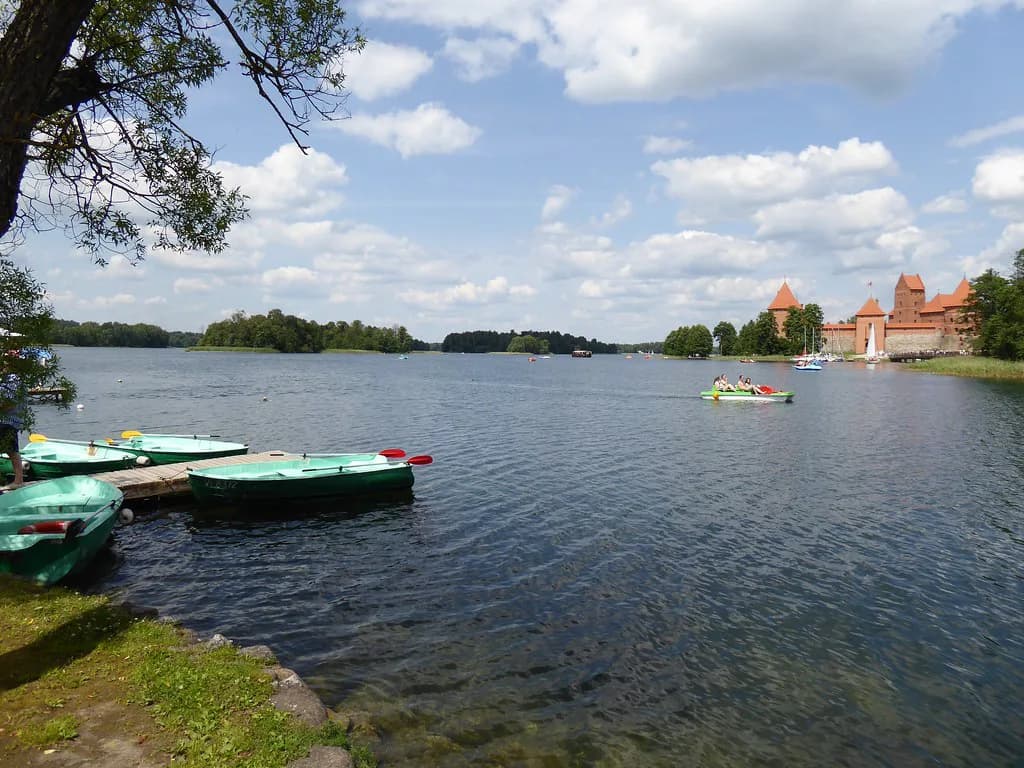
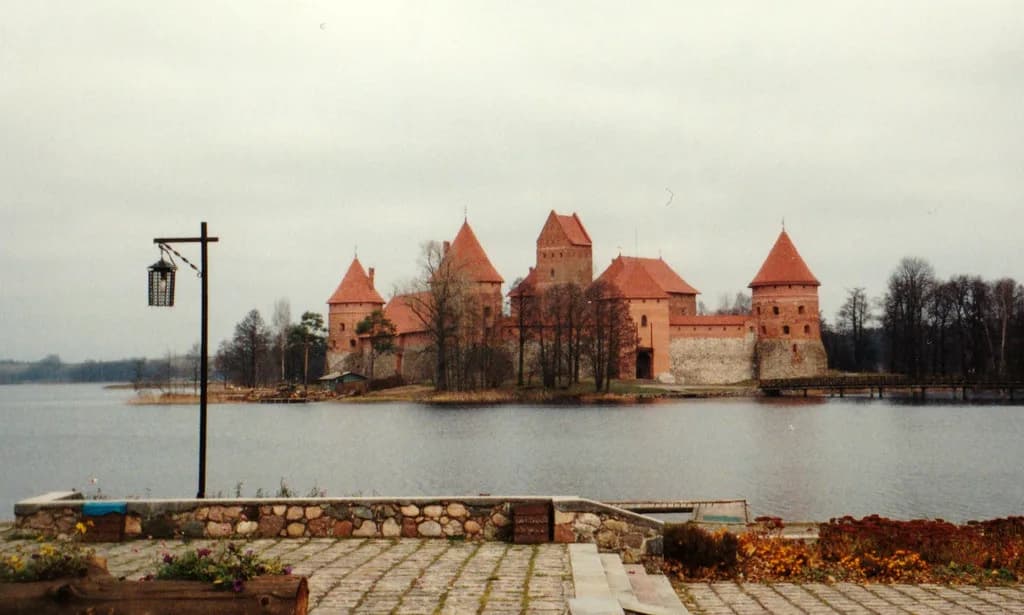
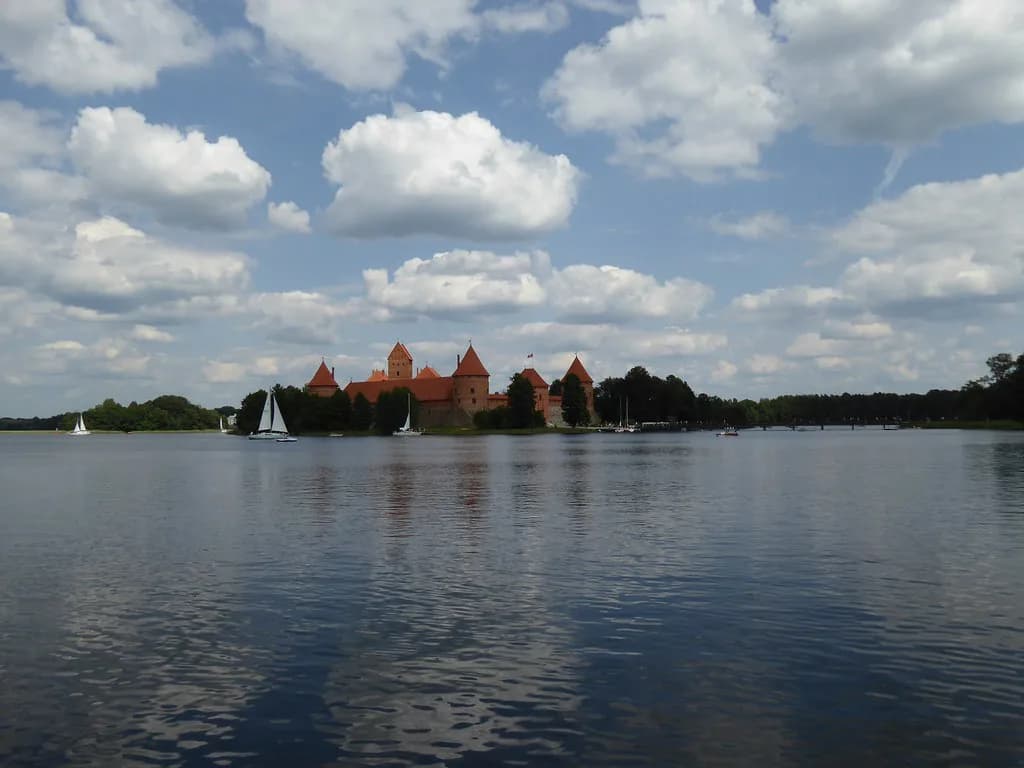
Trakai Island Castle sits on Lake Galvė about 28 km (17 mi) west of Vilnius, and in September the birch and oak woods around it turn amber and copper. Buses and trains from Vilnius run frequently and take roughly 30–40 minutes, which makes this the easiest day trip of the trip without a car. Go on a weekday morning for the emptiest bridge and the stillest reflection.
The Karaim village beside the castle is the other reason to come. Descendants of Turkic settlers brought here in the 14th century still live locally and still make kibinai, crescent pastries filled with mutton and onion. Eat them hot from a paper bag on the lakeshore, with the castle behind you. Kayak rentals still operate in early September but mostly wind down by mid-month.
Kaunas and its interwar modernism
Kaunas, Lithuania's second city and its interwar capital, holds a concentration of 1920s and 1930s modernist architecture that earned UNESCO recognition. September's lower sun catches the chalky rendered facades along Laisvės alėja, the 1.6 km (1 mi) pedestrian boulevard, in a way summer's overhead light flattens out. With thin tourist traffic you can stop and study a doorway without blocking the pavement.
Give Kaunas a full day. Street art clusters in the lanes off Vilniaus Street, and the Ninth Fort on the city's northern edge, a former military fortification turned Holocaust memorial, deserves unhurried time; the September quiet adds a solemnity the site warrants. Kaunas is about an hour from Vilnius by train with frequent departures, so it works as a day trip or an overnight.
Autumn colour and foraging in Dzūkija and around Druskininkai
Dzūkija National Park covers 550 sq km (212 sq mi) of pine and mixed forest in southern Lithuania, and September turns it into the centre of the national mushroom obsession. Families head out on weekend mornings for baravykai (porcini), voveraitės (chanterelles) and raudonviršiai, and guided walks from Druskininkai teach identification, picking and cooking in small groups.
Practicalities matter here. Weekend excursions run through the month, midweek trips by arrangement, and booking three to five days ahead is sensible. Wear long trousers and sturdy waterproof boots, because the forest floor is uneven and reliably damp, and pack a mid-layer since the cover runs cooler than open ground. Some trips include transport from Vilnius, about 130 km (81 mi) north.
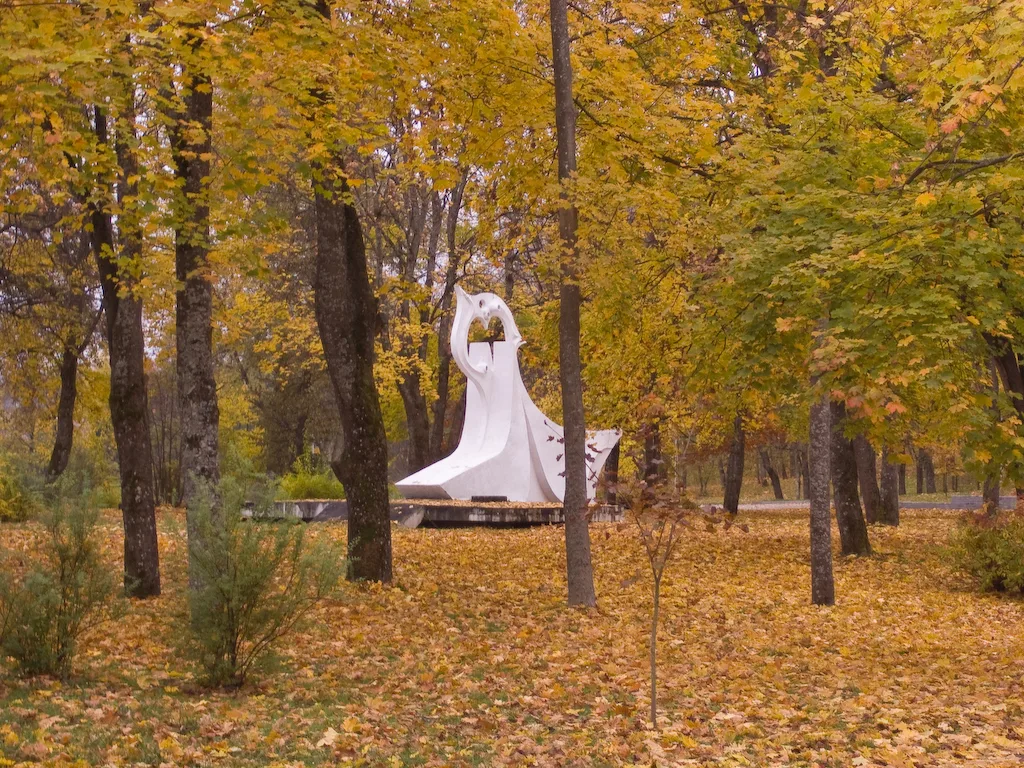
The colour arrives in sequence, which helps you plan. Birch groves around Trakai go gold first, oaks in Dzūkija follow a week or two later, and the Neris River valley outside Vilnius is worth a walk in the final week. Early September still gives comfortable full-day walking, while the last week calls for warmer layers and shorter outdoor days.
Bird migration at the Nemunas Delta and Cape Ventė
Where Lithuania's longest river spreads into the Curonian Lagoon, September turns the delta into a migration corridor. Thousands of raptors, storks, geese and waders pass over Cape Ventė, and the ringing station there has been running since 1929. Paddling the channels, with reeds towering on both sides, is among the quietest nature experiences in the Baltic states.
Book guided canoe trips from the Klaipėda area at least a week ahead, since group sizes stay small and departures depend on weather. The delta sits low and exposed, so damp air at water level feels colder than the thermometer suggests; dress warmer than the forecast. Bring binoculars if you own them and waterproof footwear you do not mind muddying.
Shorter days and cooler evenings: planning around daylight
Daylight is the constraint that shapes a September itinerary. Early in the month you have around 14 hours of usable light; by the 30th it is about 11.5, and the sun drops fast once it starts. Front-load outdoor plans into the first half of the month and keep the back half for cities, museums and markets.
Two habits make the month easier. Carry a compact rain jacket you can deploy in a minute, and keep a scarf or buff for evening walks along rivers where damp air makes 10°C (50°F) feel colder. A small torch helps on poorly lit Old Town lanes and forest trails after sunset.
Crowds, prices and the shoulder-season trade-off
September is cheaper than the July–August peak across accommodation and flights, and the value-to-experience ratio is arguably the best of any month. You get the same restaurants, museums and guesthouses with fewer people competing for them, and Trakai's footbridge is peaceful on a weekday morning rather than a queue.
The trade-off is everything tied to warm water and long evenings. Some Palanga beach services close in the second week, kayak rentals around Trakai wind down by mid-month, and the boardwalk atmosphere fades into something more contemplative. Accept that and the month rewards you; expect a beach holiday and it will disappoint.
If your dates are fixed to the start of the month you get a warmer, greener version of the same trip. Lithuania in August is busier and hotter, while Lithuania in October trades the colour for noticeably shorter days and colder city wandering. If a Baltic comparison is on the table, our Estonia verdict and is Latvia worth visiting both weigh up similar shoulder-season trade-offs.
How many days you need in September
Five to seven days covers the core well: two or three in Vilnius, a day trip to Trakai, a full day in Kaunas and a night or two on the coast or in Dzūkija. With a week, add the Curonian Spit or a foraging and birding day rather than another city. Ten days lets you link Vilnius, Kaunas, the Nemunas Delta and Nida without rushing the drives.
Build the plan around the daylight arithmetic rather than the map. Put castles, dunes and forests in the first half of your trip and keep the final days for museums and markets, so a late-September sunset does not cut an outdoor day short. Foggy mornings around Trakai and the Nemunas basin are a reason to schedule lake drives after breakfast.
Getting around Lithuania in September
Buses and trains handle the Vilnius–Kaunas–Trakai triangle comfortably, with Kaunas about an hour from Vilnius and Trakai 30–40 minutes out, both frequent enough to turn up without much planning. The bigger distances, to Nida via Klaipėda or into Dzūkija, reward a car, especially once you want to stop at viewpoints and forest trails.
If you drive, plan around morning fog and short evening light rather than long days on the road. September conditions are mild but the low sun and damp surfaces on rural roads slow you down more than the distances suggest, and an early start at Cape Ventė or in Dzūkija often means driving in mist.
Typical costs in September
Accommodation and flights fall from their summer peaks in September, which is the main saving, and the month is generally cheaper than July and August across most of Lithuania. Beyond that, check current transport fares, museum tickets and any castle entry directly rather than relying on older figures. The currency is the euro.
Eating and drinking well is not the expensive part. Market halls such as Halės Turgus and the Karaim kitchens in Trakai keep everyday food affordable, and cepelinai or kibinai cost little for how filling they are. Set your budget around accommodation and car hire, which swing most between seasons.
Is September right for your trip? A verdict by traveler type
City walkers, photographers, foragers and birders should book September without hesitation; they get the best combination of weather, price and empty streets. Couples who want long evenings on terraces should lean toward the first half of the month, when daylight still stretches.
Beach families and swimmers should choose July or August instead and treat the Baltic as the main event. Travelers with only a late-September window can still have an excellent trip, but should plan around early sunsets and cold nights and expect a contemplative coast rather than a resort one.
Plan Your Visit
September is Lithuania's best-value month for the kind of trip the country does best: old towns on foot, island castles, forest country and a coast that rewards looking rather than swimming. Book early in the month for warmth and light, late for colour and quiet. Pack layers for a 10°C (18°F) daily swing and keep the outdoor days at the front of your itinerary.
If you are still choosing between months, the wider picture of the best time to visit Lithuania will settle the rest. For everything else, the current guidance sits on the official government travel page.
Explore more Lithuania trip-decision guides
Frequently Asked Questions
What is the weather like in Lithuania in September?
Vilnius averages around 17°C (63°F) by day and 8°C (47°F) at night over the month, with roughly 56 mm (2.2 in) of rain falling in short showers. The first inland ground frost can arrive in late September, and daily temperature swings of about 10°C (18°F) catch first-time visitors out. Treat these as typical conditions rather than a forecast.
Is September a good time to visit Lithuania?
Yes, for city and nature travel. Crowds thin dramatically after August, accommodation and flights drop from their peak, and the forests start turning in the final week. The compromises are a cold Baltic Sea, shorter daylight and chilly evenings, so it suits walkers, photographers and foragers better than beach travelers.
Can you swim in the Baltic Sea in Lithuania in September?
Rarely by mid-month. Water off Palanga and Nida falls to around 14–16°C (57–61°F), which is knee-deep at most for most people, and some seasonal beach cafés and rental outfits near Palanga begin closing in the second week. The coast still works well for dune walks, pine forest and quiet photography.
How many days do you need in Lithuania in September?
Five to seven days covers Vilnius, a Trakai day trip, a full day in Kaunas and a night or two on the coast or in Dzūkija. Ten days lets you add the Curonian Spit and the Nemunas Delta without rushing. Keep outdoor days in the first half of the month to work around the shrinking daylight.
Is September cheaper than summer in Lithuania?
Yes. Accommodation rates and flights fall noticeably from the July and August peaks, and you face less competition for restaurants and museums. Fares and castle entry prices change, so check current details before you book. Lithuania uses the euro.
What is there to do in Lithuania in September?
Walk Vilnius Old Town and the Museum of Occupations and Freedom Fights without summer groups, cross the bridge to Trakai Island Castle on a quiet weekday morning, and explore Kaunas's UNESCO-listed interwar modernism. Outside the cities, the Curonian Spit and Dzūkija offer paddling, foraging and bird migration at Cape Ventė.
Sources
Trip-decision notes
Optional updates when we publish or revise a destination verdict.
You might also like
Continue reading
More guides you'll find useful